
A good garden doesn't just happen by accident. It's the result of a thoughtful plan, a blueprint that turns a patch of dirt into a beautiful, living extension of your home. This is where the real magic begins—not with a shovel, but with a piece of paper.
Laying the Foundation for Your Garden Design
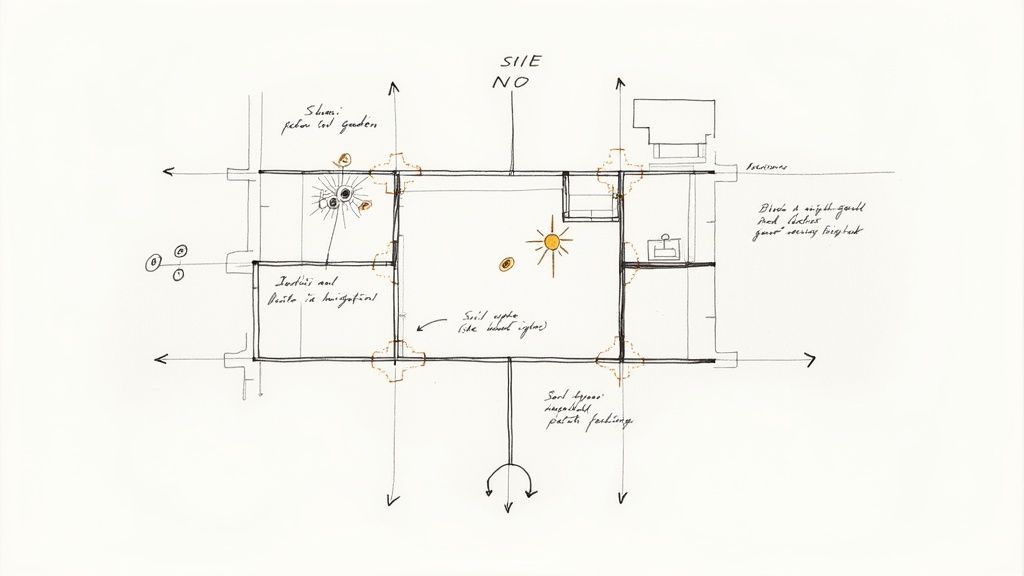
Before you even think about visiting a nursery, the most important work happens right in your own backyard, just by observing. A solid plan stops you from making expensive mistakes later on and ensures the garden you create will actually thrive in our unique New Zealand conditions.
It all starts with a site analysis. This sounds technical, but it’s really not. It’s about spending time on your property, watching how the light moves and feeling the wind. You’re getting to know your garden’s unique personality.
Get to Know Your Patch
First, grab a pencil and paper and sketch a rough map of your property. Don't worry about it being perfect. Pace out the general dimensions and mark down any permanent features you have to work with—the deck, the washing line, that big old pōhutukawa you want to keep. This simple map is your canvas.
Now, start adding the details that really matter:
- Follow the Sun: Where does the sun hit first thing in the morning? Which spots are baked in the afternoon heat, and which stay cool and shady? This alone will tell you where your sun-loving tomatoes can go and where the delicate ferns will be happiest.
- Feel the Wind: Is there a corner of the garden that gets hammered by the southerly every time it blows through? That spot might need a tough hedge for a windbreak or be the perfect place for hardy, low-growing natives that don't mind a bit of a battering.
- Get Your Hands Dirty: Dig up a bit of soil. Is it sandy and crumbly, or does it feel like heavy, sticky clay? This is a game-changer for plant selection; you want to choose plants that love the soil you have, not ones that will struggle from day one.
- Frame the Views (and Hide the Nasty Bits): Stand at your kitchen window or on your deck. What do you see? Pinpoint the best views you want to enhance with your planting. At the same time, make a note of the less-than-lovely things you’d rather not look at, like the neighbour’s shed or your compost bins.
A proper site analysis is the bedrock of any good garden design. It means you’re working with nature, not fighting against it. That saves you a world of time, money, and heartache down the track.
To help you get started, here's a simple checklist to guide your observations.
Your Essential NZ Site Analysis Checklist
Taking the time to walk through these points on your own property will give you a powerful foundation for every decision you make from here on out.
| Element to Assess | What to Look For | Why It Matters for Your Design |
|---|---|---|
| Sunlight | Track sun and shade patterns throughout the day (morning, noon, late afternoon). | Determines plant placement—full-sun, part-shade, or full-shade lovers. |
| Wind | Identify the direction of prevailing winds and any sheltered or exposed "wind tunnels". | Helps you position windbreaks, choose hardy plants, and place delicate specimens. |
| Soil Type | Check for clay, loam, or sand. Is it wet and boggy or dry and free-draining? | Informs plant choice and tells you if you need to improve the soil with compost. |
| Existing Features | Note down trees, buildings, paths, fences, and anything you can't (or don't want to) move. | These are the "bones" of your design that you'll need to work around or integrate. |
| Views | What are the best views from key spots (windows, deck)? What are the eyesores? | Guides you on where to create focal points and where to plant screens for privacy. |
| Slope & Drainage | Does water pool anywhere after rain? Is the land flat or sloped? | Impacts plant choice (some plants hate "wet feet") and hardscaping decisions like paths. |
By the end of this process, your simple sketch will have transformed into a rich map full of crucial information.
What Is This Garden For?
With a clear picture of your site, you can now ask the most important question of all: what do I actually want to do out here?
This is your chance to dream a little. Do you envision a productive veggie patch bursting with greens? Or maybe a peaceful, low-maintenance retreat filled with native grasses that bring in the tūī and fantails?
Have a look around at different landscaping ideas for NZ gardens to see what styles you're drawn to. Making a simple wish list can really help clarify your priorities and make sure the final design is a perfect fit for your family.
As you start this journey, remember that a solid plan is your best friend. For more detailed guidance, check out these excellent tips on how to plan a garden. It’s this upfront thinking that creates a space you’ll genuinely love for years to come.
Your garden should feel like it belongs to your home, not just tacked on as an afterthought. The goal is to create a seamless flow from your indoor living spaces to your outdoor ones, making the whole property feel like one cohesive thought.
A good place to start is right at your front door. Look at your house. Is it a modern, minimalist build with sharp, clean lines? That might call for a contemporary garden with structured planting and bold hardscaping. On the other hand, if you're in a classic weatherboard villa, you have the perfect canvas for a rambling, romantic cottage garden, packed to the brim with colourful perennials.
Finding Your Inspiration
Inspiration is everywhere, especially here in New Zealand. A trip to your local botanic gardens—whether it's the Auckland Domain Wintergardens or the Christchurch Botanic Gardens—is one of the best ways to see what really thrives in our climate and how the pros put plants together.
But you don't have to go that far.
- Take a walk around your neighbourhood: See what your neighbours are growing successfully. Take note of the styles that catch your eye and what seems to flourish in your local soil.
- Go down the rabbit hole online: Platforms like Pinterest and local gardening magazines are an absolute goldmine of ideas. Save anything you love to a digital (or physical) mood board.
- Look to our roots: The story of garden design in New Zealand is a unique mix of indigenous Māori practices and European influences. Early settlers were focused on practical kitchen gardens, but by the late 1800s, more decorative and professionally designed landscapes started popping up. This rich history is a fantastic source of inspiration. You can learn more about how NZ gardens have evolved at rnzih.org.nz.
Popular Garden Styles for Kiwi Homes
While your garden should always be a personal reflection of your taste, some styles just work particularly well with our climate and lifestyle.
| Style | Key Features | Best For |
|---|---|---|
| NZ Native Bush Retreat | A celebration of native plants like ferns, flaxes (harakeke), and grasses. It creates a low-maintenance space that’s a haven for local wildlife. | Anyone wanting a garden that feels uniquely Kiwi and gives back to the local ecosystem. |
| Cottage Garden | An informal, dense mix of traditional flowers, herbs, and edibles. Think roses, lavender, and foxgloves all jostling for space. | Those who love a romantic, colourful, and slightly wild look that shifts and changes with the seasons. |
| Modern Minimalist | All about clean lines, geometric shapes, and a carefully chosen, limited plant palette. Often features ornamental grasses, succulents, and strong structural plants. | Perfect for properties with contemporary architecture, creating a sleek and uncluttered outdoor room. |
| Formal Garden | Built on symmetry, order, and neatly clipped hedges (like buxus) to create a structured and elegant atmosphere. | Homeowners who appreciate traditional design, classic elegance, and a sense of calm control. |
Pulling It All Together with Design Principles
Once you’ve landed on a style you love, a few simple design principles will help you create a garden that looks and feels unified. Think of them as the basic grammar of garden design—they provide the structure that makes everything work together.
Using principles like repetition and balance is what makes a garden feel intentional, not just a random collection of plants. It’s how you guide the eye through the space and create a sense of calm, even in the charming chaos of a cottage garden.
A few key ideas to play with:
- Repetition: Repeating a plant, colour, or even a shape creates a wonderful sense of rhythm. For example, planting clumps of the same ornamental grass throughout your garden beds instantly ties the whole design together.
- Balance: This doesn't have to mean perfect symmetry. While a formal garden might have identical plantings on either side of a path, you can also create asymmetrical balance by offsetting a large feature tree on one side with a grouping of smaller shrubs on the other.
- Focal Points: Every good garden has a hero moment. This could be a striking sculpture, a gorgeous specimen tree like a Japanese maple, or a brightly coloured pot that instantly draws your gaze and gives it a place to rest.
By blending your inspiration with these core ideas, you can start to translate that vision in your head into a real-life landscape design that truly feels like an extension of your home.
Building the Bones of Your Garden with Hardscaping
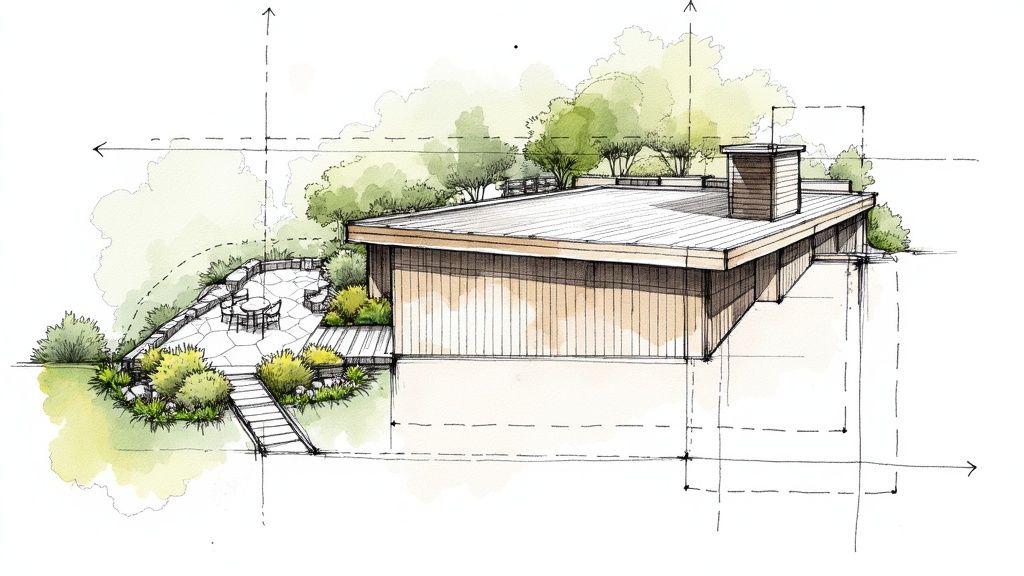
While plants give a garden its soul and colour, it's the hardscaping that gives it structure. These are the non-living parts—paths, patios, retaining walls, decks. Think of them as the skeleton of your landscape. They create the framework that defines different zones, directs how you move through the space, and makes the garden usable all year round, even when the flowers aren't in bloom.
It’s always a good idea to plan these structural elements right at the start. Trust me, it’s a whole lot easier to lay a patio or build a deck before you’ve planted a beautiful garden all around it.
Choosing Materials That Suit Your Style
The materials you pick will have a massive say in the final vibe of your garden. Here in New Zealand, we’re lucky to have a fantastic range of options that can work with any style of home, from a classic old villa to a sleek new build.
Think about how different materials match the look you're after:
- Local Stone: Using schist or river stones instantly gives a natural, rugged feel that ties your garden into the wider Kiwi landscape. For a bit of inspiration on using stone thoughtfully, it's worth looking at how other traditions approach it, like in the careful placement of Natural Stone in a Japanese Garden.
- Timber Decking: You can’t go wrong with a classic pine or kwila deck. It’s the perfect way to extend your living area outside and create that ideal spot for a summer barbie.
- Concrete & Pavers: These are your go-to for a clean, modern look. They come in a huge variety of colours and textures, making them incredibly versatile for everything from paths to patios.
Creating Flow and Function
Good hardscaping isn't just about looking good; it needs to make your garden work better for you. A cleverly placed path does more than just keep your shoes clean—it draws the eye forward and invites you to wander and explore. It might meander through your garden beds for a sense of discovery or run dead straight for a more formal, intentional look.
Patios and decks essentially become your outdoor rooms, hubs for eating, relaxing, and entertaining. The trick is to make the transition from inside to outside feel seamless. A deck that sits flush with your living room floor, with wide sliding doors opening onto it, will feel like a genuine extension of your home.
Hardscaping is your chance to solve problems. A tricky sloping section can be completely transformed with retaining walls and terraces, turning a challenge into a series of stunning, usable levels.
Retaining walls, often made from timber sleepers or concrete blocks, can even pull double duty as built-in seats or the foundation for raised garden beds. If you're keen on using timber, our guide on raised wooden garden beds has some great tips that can be adapted for all sorts of garden features. When you integrate these elements with a bit of thought, you end up with a garden that’s not only beautiful but truly built to last.
Choosing Plants for a Thriving NZ Garden
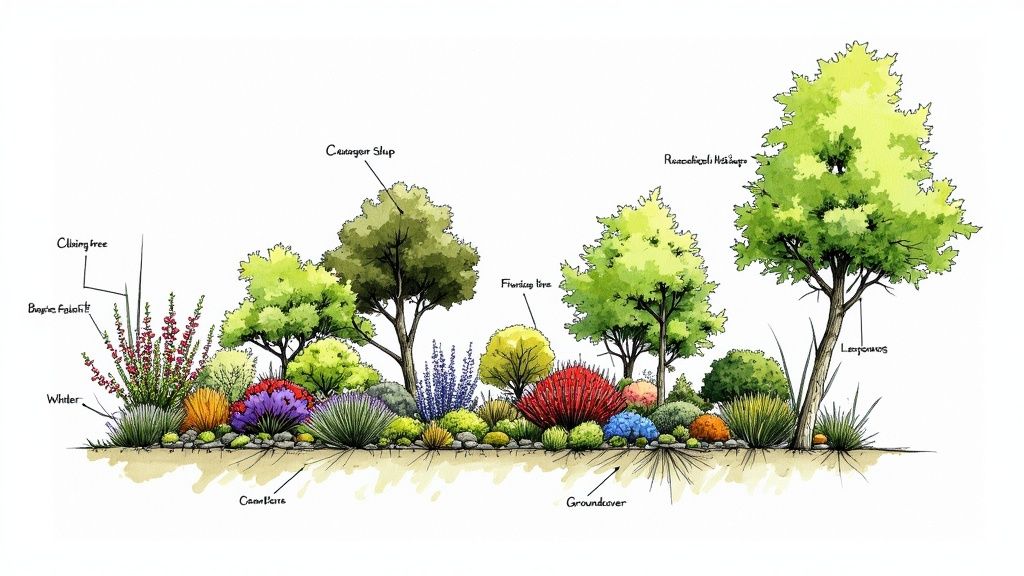
With the 'bones' of your garden set by the hardscaping, it's time for the fun part: breathing life and colour into the space. The right plants will soften the hard edges of paths and patios, layer in beautiful textures, and turn your backyard into a living, breathing ecosystem.
This isn't just about grabbing the prettiest flowers at the garden centre. Successful gardening really comes down to one core idea: 'right plant, right place'. Getting this right saves you endless frustration (and money!) and ensures your plants don't just survive, but truly flourish.
Match Plants to Your Unique Environment
Before you even think about heading to the nursery, go back to your site analysis notes. Remember that corner that gets blasted by the afternoon sun? Or the damp, shady spot behind the shed? These observations are your best friend.
A stunning hydrangea that craves moisture and shade will look miserable and scorched in a hot, dry patch, no matter how much you water it. Conversely, a sun-loving succulent will rot in a boggy area. Working with your garden's microclimates, not against them, is the secret to a low-maintenance, happy garden.
This approach isn't new. Since the mid-19th century, New Zealand's botanic gardens have been massive centres for plant trials, figuring out what grows well here. Early gardeners quickly learned that many European species struggled in our unique climate, forcing a long history of adaptation. This trial-and-error legacy reinforces just how vital it is to choose species suited to our local conditions from the get-go.
Creating Interest All Year Round
A truly great garden has something to offer in every season. You want to avoid that sad, bare look that can happen in the middle of a Kiwi winter. The trick is to plan for a succession of highlights, thinking in layers of flowers, foliage, and structure.
Here's a quick look at what we mean:
Plant Selection Guide for NZ Seasons
Thinking about your garden through the lens of seasons ensures there's always something new to enjoy. This table offers a starting point for planning a garden that provides continuous colour, texture, and interest throughout the year.
| Season (Southern Hemisphere) | Planting Focus | Example Plants for NZ Gardens |
|---|---|---|
| Summer (Dec - Feb) | Bold flowers, lush foliage, heat-tolerant species. | Agapanthus, hydrangeas, lavender, echinacea, daylilies. |
| Autumn (Mar - May) | Rich foliage colour, late-season flowers, berries. | Japanese maples, Miscanthus grasses, sedums, asters. |
| Winter (Jun - Aug) | Structural form, winter flowers, interesting bark. | Camellias, aloes, hellebores, witch hazel, red-stemmed dogwood. |
| Spring (Sep - Nov) | A burst of fresh colour, flowering trees, bulbs. | Rhododendrons, magnolias, cherry blossoms, daffodils, tulips. |
By layering plants from each category, you build a dynamic garden that evolves beautifully as the months go by, offering a different scene with each season.
Don’t just think about flowers. Foliage is the backbone of your garden. A mix of different leaf shapes, sizes, and colours—from the silvery leaves of astelia to the deep green of griselinia—creates a rich, layered look that lasts all year.
The Power of Native Plants
There’s something incredibly rewarding about weaving New Zealand natives into your garden design. They are perfectly adapted to our soils and climate, which usually means they’re more resilient and require less fuss once they get their roots down.
But the benefits go far beyond easy care. Natives are absolutely essential for supporting our local wildlife. The nectar-rich flowers of harakeke (flax) are a magnet for tūī and bellbirds, while coprosma berries provide a feast for kererū.
When you plant natives, you're doing more than just creating a garden; you're helping to build a valuable habitat. For a deeper dive, check out our guide to creating a thriving NZ native garden and make your space a vibrant part of the local ecosystem.
Cultivating Community Through Shared Gardens
A great garden design doesn't have to stop at your fence line. In fact, some of the most impactful designs are the ones that spill out into the wider neighbourhood, bringing people together. Across New Zealand, there's a real groundswell of Kiwis applying landscape principles to underused public spaces, transforming forgotten corners into vibrant, shared gardens.
These projects are incredible community builders. They take a sad-looking patch of grass and turn it into a place where neighbours can properly connect, share a bit of gardening know-how, and grow fresh food for their tables. It’s about cultivating more than just plants—it’s about growing social connections and a genuine sense of belonging.
The whole idea of community gardening has really taken off lately. A national survey back in 2020 found that over half of New Zealand's community gardens popped up in the last 11 years. Auckland seems to be a real hub for it, with 42% of the country's shared gardens located there. It really points to a bigger shift in how we think about our green spaces and shared responsibility in our towns and cities. You can dig into the numbers yourself in this insightful Aotearoa community gardens report.
Designing for a Shared Space
Planning a community garden needs a totally different mindset from designing your own backyard. The focus isn't on your personal taste anymore; it's all about creating a space that works for everyone, no matter their age or physical ability.
A few key things you have to get right are:
- Accessibility: Think wide, level paths made from something like packed gravel or pavers. You want to make sure someone with a pram or a wheelchair can get around easily and feel included.
- Zoning: You've got to create distinct areas for different activities, otherwise it can get a bit chaotic. This could mean having a quiet spot with a bench, a dedicated composting zone, and separate plots for individual whānau alongside the bigger communal beds.
- Shared Resources: A well-built, lockable tool shed is an absolute must. If you stick it somewhere central, it’s just easier for everyone to grab what they need and, just as importantly, put it back.
The best shared gardens I’ve ever seen were designed with a huge amount of input from the very people who were going to use them. It’s got to be a collaborative process. That’s how you make sure the space genuinely meets the community's needs and gives everyone a sense of ownership right from the get-go.
These spaces prove that thoughtful landscape design can do so much more than just make a private property look good. By turning a simple grass verge or a neglected bit of parkland into a thriving garden, we can create hubs that boost food security, grow friendships, and truly strengthen the fabric of our neighbourhoods.
Common Garden Design Questions Answered
Jumping into a garden and landscape design project can feel a bit overwhelming. You’ve got ideas, sure, but a heap of questions too. Getting those sorted out early on is the key to moving forward with confidence, dodging expensive mistakes, and ending up with a space you genuinely love.
Let's dig into some of the most common queries we hear from fellow Kiwi gardeners.
How Much Should I Budget?
This is the big one, isn't it? The cost. For a full-blown landscape project, a good rule of thumb is to set aside somewhere between 5-15% of your home’s value. That figure should cover the whole shebang – from design fees and materials to the plants themselves and the labour to put it all together.
Of course, if you're just looking to refresh a garden bed or pop in a small patio, your costs will be much, much lower. The most important thing is to be realistic about what you can spend and figure out what parts of the project matter most to you.
When Should You Call in a Professional?
The classic DIY vs. hire-a-pro dilemma. If your project is a biggie—we're talking major earthworks, retaining walls, or tricky drainage solutions—getting an expert involved is a smart move. Honestly, they can save you a world of hurt, not to mention a lot of time and money by preventing major structural blunders.
A professional designer can also bring a fresh pair of eyes to the table, pulling together a cohesive plan you might never have thought of.
But, if your vision is clear, your site is pretty straightforward, and you love getting your hands dirty, going the DIY route can be incredibly satisfying.
You could also find a happy medium:
- Book a design consultation. You can hire a designer for a one-off chat to help you nail down your ideas. They'll give you a master plan, and you can then chip away at it yourself over time.
- Tackle it in phases. Break the project into smaller, more manageable jobs. Maybe you handle all the planting yourself but bring in the pros for the heavy-lifting hardscaping.
Here's a tip: Don't forget about the upkeep. A common slip-up is underestimating the ongoing maintenance. Your stunning new garden will need regular care to look its best, so factor in time for weeding, pruning, and feeding right from the get-go. That way, your outdoor space stays an asset, not a chore.
Planning for Long-Term Success
A truly great garden is one that evolves with you. As you're making choices, try to think a few years down the track. That cute little sapling you plant near the house? In ten years, it could be a massive tree with roots causing all sorts of trouble. Always, always consider the mature size of plants before you even think about digging a hole.
Picking the right materials is just as crucial for long-term success. Sure, treated pine might seem like the cheaper option for a deck now, but investing in a more durable hardwood or a quality composite can save you a fortune on repairs later on.
Thinking sustainably also means choosing plants that will actually thrive in our climate, which cuts down on the need for endless watering or chemical sprays. By making these thoughtful choices from the start, you're setting yourself up for a resilient, beautiful garden that you'll be enjoying for years to come.
Ready to bring your garden vision to life with the perfect plants? Explore the incredible selection from trusted New Zealand sellers at Jungle Story. Find everything you need, from native shrubs to exotic flowers, all in one place. Start building your dream garden today by visiting https://junglestory.co.nz.