
Welcome to the world of native gardening, where the unique flora of New Zealand takes centre stage. Creating a garden with native plants is more than just landscaping; it's about building a small piece of Aotearoa's natural heritage in your own backyard. From our rugged coastlines to misty forests and alpine tops, native plants offer a diverse palette to create stunning, resilient, and ecologically significant gardens that feel truly at home.
This guide moves beyond generic advice to explore eight distinct native garden ideas NZ, providing actionable steps to help you cultivate a space that thrives in local conditions. A native garden supports our precious wildlife, from tīrairaka (fantails) to native bees, and connects you deeply with the land. Integrating your garden's aesthetic with your home's interior can create a seamless flow between inside and out. To fully embody the spirit of Aotearoa in your outdoor spaces, it helps to understand the broader context of New Zealand home decor styles and trends.
Whether you have a sprawling section or a small urban courtyard, there's a native garden design waiting to be discovered. We will delve into specific concepts, from creating a miniature forest understorey to designing a coastal haven or a productive kai (food) garden. Each idea comes with practical plant suggestions, layout tips, and maintenance advice, empowering you to create a thriving native sanctuary. Let's begin exploring the possibilities.
1. The Layered Native Forest Garden
This approach mimics the structure of New Zealand's native bush, creating a multi-tiered, resilient ecosystem in your own backyard. It involves strategically planting a canopy of taller trees, an understory of medium-sized shrubs, and a ground-level carpet of ferns, grasses, and low-growing plants. The goal is to replicate nature’s blueprint, resulting in a self-sustaining garden that supports immense biodiversity and requires less maintenance over time.
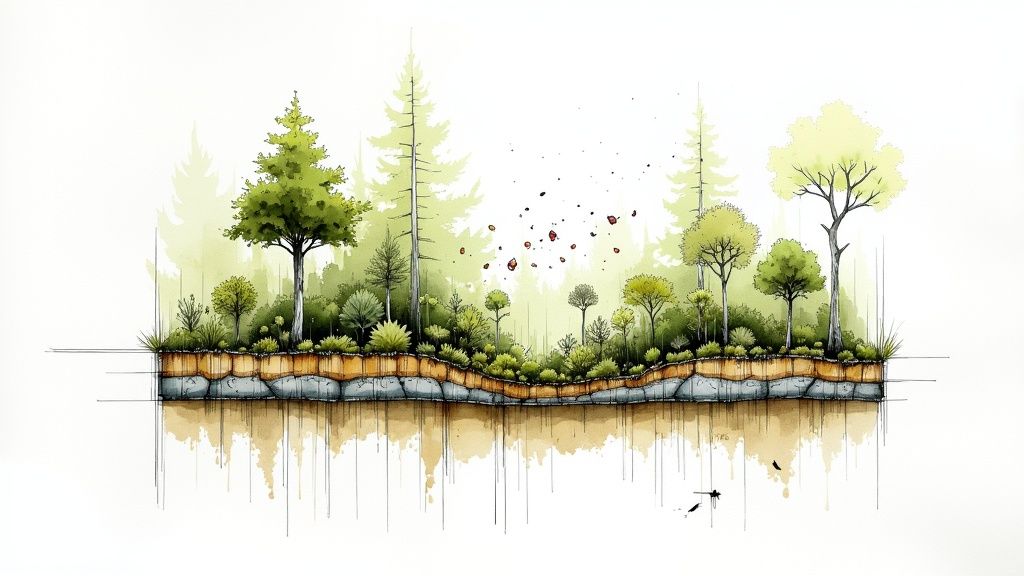
By layering plants according to their natural height and light requirements, you establish a microclimate that conserves moisture, suppresses weeds, and provides shelter for native birds and insects. This is one of the most impactful native garden ideas nz for those wanting to create a genuine ecological habitat rather than just a collection of plants. For an in-depth guide on plant selection for this style, you can explore more about creating a native bush garden on junglestory.co.nz.
How to Implement a Forest Garden
To get started, focus on establishing the "bones" of your forest with fast-growing pioneer species.
- Canopy Layer: Begin with taller trees like tōtara, rimu, or tītoki. If space is limited, smaller trees such as kōwhai or cabbage trees (tī kōuka) work beautifully.
- Understory Layer: Add shrubs that thrive in partial shade, like kawakawa, rangiora, or various hebe species. These fill the mid-level and provide crucial habitat.
- Groundcover Layer: Finish with a carpet of ferns (such as asplenium), native grasses (like carex), and creeping plants (like mīkīmiki) to cover the soil.
Key Insight: The best time to plant is during the cooler, wetter months from autumn to late winter (May to August). This allows the root systems to establish properly before the stress of summer heat arrives, giving your forest garden the strongest possible start.
2. Pōhutukawa and Rātā Coastal Planting
This approach celebrates New Zealand's iconic coastal trees, creating a stunning and hardy garden centred around the majestic Pōhutukawa (Metrosideros excelsa) and various Rātā species. It's a design perfectly suited to coastal properties, particularly in the northern half of the North Island, that embraces the rugged beauty of the coastline. The goal is to establish these magnificent flowering trees as focal points, surrounded by companion plants that thrive in similar salt-laden, windy, and sandy conditions.
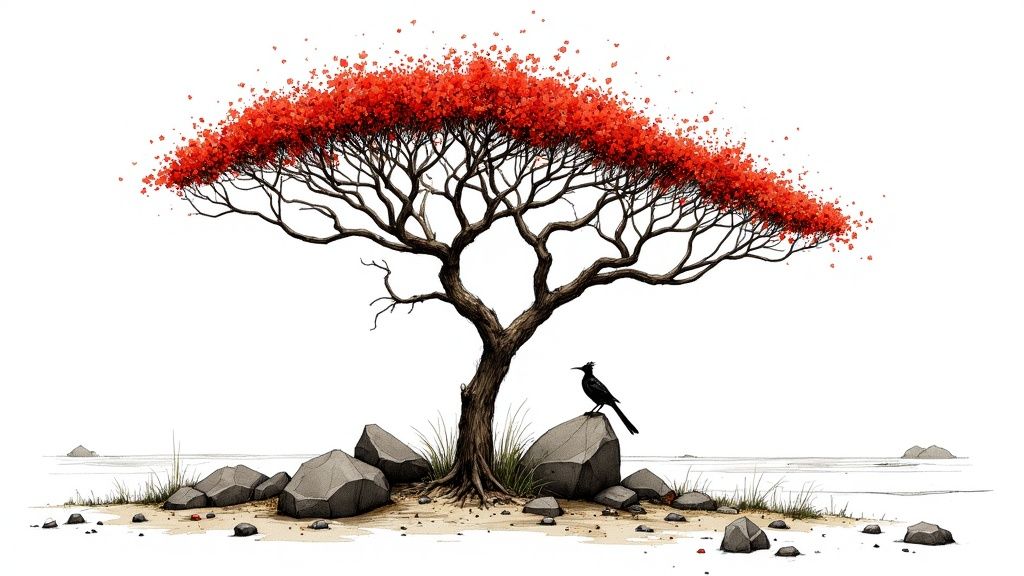
By designing with these signature trees, you create a garden that is not only visually spectacular during their summer bloom but also incredibly resilient and significant to local ecology. This is one of the most culturally resonant native garden ideas nz, reflecting a deep connection to Aotearoa's coastline and providing a vital food source for native birds like tūī and bellbirds. To complement these trees, you can explore the hardiness of native grasses that thrive in coastal environments on junglestory.co.nz.
How to Implement a Coastal Garden
Success with Pōhutukawa and Rātā relies on replicating their natural coastal habitat and providing protection during establishment.
- Select the Right Species: Choose Pōhutukawa for frost-free coastal areas. For slightly more inland or colder regions, consider Northern Rātā (Metrosideros robusta) or Southern Rātā (Metrosideros umbellata), which are more cold-tolerant.
- Prepare the Ground: These trees demand excellent drainage. Amend heavy clay soils with sand and compost to prevent root rot. Planting on a slight slope or mound can also improve water runoff.
- Companion Planting: Surround your feature trees with other salt-tolerant natives like harakeke (flax), houpara (Pseudopanax lessonii), and taupata (Coprosma repens) to create a protective buffer and a cohesive look.
Key Insight: Young Pōhutukawa and Rātā are vulnerable to strong, salt-laden winds. Construct a temporary windbreak using shelter cloth or plant a fast-growing, dense "nurse crop" of tough shrubs like Coprosma or Muehlenbeckia to protect the young trees for their first few years. This protection is critical for healthy establishment.
3. Alpine and Subalpine Native Rock Gardens
This design captures the breathtaking beauty of New Zealand's high-country landscapes, creating a specialised garden that showcases unique alpine flora. It involves building up rocky substrates and using gritty, free-draining soils to mimic the harsh, exposed conditions of an alpine meadow. The result is a stunning, low-maintenance garden that thrives on neglect once established, featuring fascinating cushion plants, delicate alpine daisies, and tough, compact shrubs.
By recreating these specific conditions, you can grow plants that would perish in standard garden soil. This is one of the most rewarding native garden ideas nz for enthusiasts in cooler climates or those with a passion for rare and unusual plants. For inspiration, the alpine collections at the Christchurch and Dunedin Botanic Gardens are world-class examples of this style in practice.
How to Implement a Rock Garden
Success with alpine plants is all about drainage. The focus is on creating a habitat that prevents waterlogging, especially during winter.
- Create the Structure: Build a raised bed or mound using a mix of local rock, gravel, and sand. A substrate mix of up to 50% horticultural grit or sand is ideal.
- Select Key Plants: Feature iconic species like New Zealand edelweiss (Leucogenes), celmisia (mountain daisies), and cushion plants such as raoulia or hebe pinguifolia.
- Arrange Thoughtfully: Place rocks and boulders strategically to create microclimates. This provides sheltered pockets for more delicate species and retains a small amount of moisture at the root level.
Key Insight: Plant your alpine garden in spring. This allows the plants to establish strong root systems throughout the warmer months before they face their first cold, wet winter. In hotter regions like Northland or Auckland, providing light afternoon shade is crucial to prevent scorching.
4. Native Shade and Groundcover Planting Strategy
This strategy focuses on transforming difficult, shady areas into lush, green sanctuaries using a palette of native ferns, groundcovers, and shade-loving plants. It's the perfect solution for those challenging spots under large trees, along the south side of buildings, or in narrow side-yards where sunlight is scarce. By embracing shade-tolerant species, you can create a verdant, low-maintenance understory that suppresses weeds and cools the soil.
This approach creates a tranquil, textured garden that thrives where other plants might fail. It’s an effective way to establish a resilient ecosystem, reminiscent of the forest floor seen in places like the Auckland Domain or Hamilton Gardens. As one of the most practical native garden ideas nz, it solves a common problem with an elegant, ecological solution. To discover a wide range of suitable plants, you can explore more about native ground cover options on junglestory.co.nz.
How to Implement a Shade and Groundcover Strategy
Success in a shade garden comes down to excellent soil preparation and smart plant selection.
- Prepare the Soil: Shaded areas, especially under trees, often have poor, dry soil. Before planting, generously amend the area with compost and organic matter to improve moisture retention and nutrient levels.
- Select Diverse Ferns: Combine different fern species for a rich tapestry of textures and forms. Use hardy species like pika-pika (Polystichum) for structure and delicate Asplenium species for finer detail.
- Plant Densely: Arrange your groundcover plants closely together. This dense planting helps to outcompete weeds from the start and quickly establishes the lush, carpeted look you're aiming for.
- Layer with Other Shade Lovers: Incorporate other shade-tolerant natives like rengarenga lilies (Arthropodium cirratum) or the native iris (Libertia) to add different heights and seasonal flower interest.
Key Insight: After planting, apply a generous layer of leaf litter or fine bark mulch. This mimics the natural forest floor, helping to retain crucial soil moisture, suppress weed growth, and slowly break down to enrich the soil over time. Consistent watering for the first two years is vital for establishment.
5. Wetland and Water-Edge Native Garden Design
This design transforms damp, boggy, or low-lying areas of your property into thriving ecosystems. Instead of fighting against waterlogged soil, this approach embraces it by creating a specialised garden that mimics New Zealand’s natural wetlands, ponds, and stream edges. It involves selecting native plants that flourish in moist or aquatic conditions, creating a habitat that sustainably manages water while attracting a unique array of wildlife, including amphibians and aquatic birds.
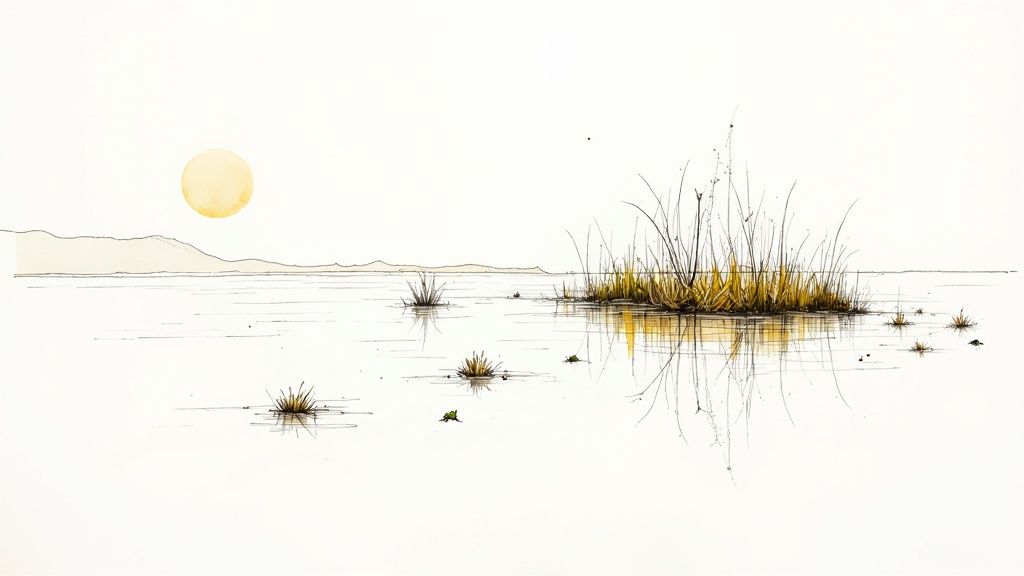
Creating a wetland garden is one of the most rewarding native garden ideas nz for those with suitable conditions, as it supports fragile ecosystems and adds immense ecological value. From large-scale restorations at places like Tāwharanui Regional Park to urban rain gardens in Christchurch's 'Blue Green Network', this concept is highly adaptable. For those looking to build a structured pond as part of their design, incorporating water features can provide a focal point and enhance habitat diversity.
How to Implement a Wetland Garden
Begin by assessing your site's water levels, noting whether areas are permanently wet or only seasonally waterlogged. This will guide your plant selection.
- Permanent Wet Zones: For areas consistently under or near water, use true aquatics and swamp plants. Rushes (juncus species), sedges (carex species), and raupō (bulrush) are excellent choices for the water's edge.
- Moisture-Loving Margins: On the damp banks and boggy ground surrounding the water, plant species like harakeke (flax), toetoe, and moisture-loving shrubs such as the swamp māhoe.
- Structural Elements: Introduce logs or rocks to create varied habitats for insects and perches for birds. Consider different water depths to support a wider range of plant and animal life.
Key Insight: Avoid introducing exotic water plants like oxygen weed, which can quickly become invasive and choke out native species. Stick to NZ natives to ensure your wetland remains a balanced, healthy, and self-sustaining ecosystem that benefits local fauna.
6. Pollinator-Focused Native Flower Garden
This design strategy centres on attracting and supporting New Zealand's native pollinators, such as our unique solitary bees (Leioproctus), butterflies like the Red Admiral (kahukura), and nectar-loving birds like the tūī and korimako (bellbird). The approach involves prioritising flowering natives across all seasons to provide a consistent food source, effectively turning your garden into a vital stop on a 'pollinator highway'.
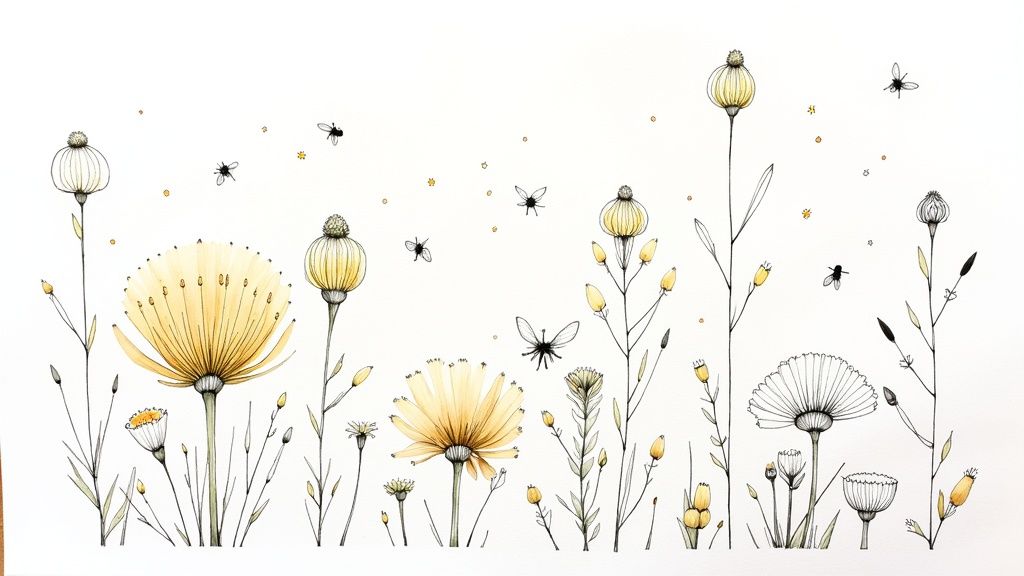
By creating a garden that feeds and shelters these essential species, you contribute directly to local biodiversity and the health of the wider ecosystem. This is one of the most rewarding native garden ideas nz because you can witness the direct impact of your work as your garden buzzes with life. Initiatives like the 'Pollinator Paths' in urban centres showcase how even small residential gardens can link together to create significant ecological corridors.
How to Implement a Pollinator Garden
To create an effective pollinator haven, think beyond just flowers and consider the entire life cycle of the creatures you want to attract.
- Plant in Drifts: Group plants of the same species together in clumps rather than scattering them individually. This creates a larger, more visible target for pollinators, making foraging more efficient.
- Ensure Year-Round Flowers: Plan your planting to have something in bloom throughout the year. Kōwhai provides spring nectar, pōhutukawa and rātā are essential in summer, harakeke (flax) offers winter food, and hebes can flower at various times.
- Provide Habitat and Water: Leave some areas of bare, undisturbed soil for ground-nesting native bees. Retain old logs or create a "bug hotel" for shelter. A shallow dish of water with pebbles for landing spots will provide a crucial water source.
- Choose the Right Plants: Opt for single-flowered native varieties, as complex double flowers can make it difficult for pollinators to access nectar and pollen.
Key Insight: Avoid using pesticides and insecticides, as these chemicals can be indiscriminate and harm the very pollinators you are trying to attract. A healthy, biodiverse garden will naturally develop its own balance of pests and predators, reducing the need for chemical intervention.
7. Native Edible Garden (Kai Garden) Approach
This culturally significant approach focuses on cultivating native edible plants, creating a garden that is both productive and deeply connected to Aotearoa's heritage. A kai garden integrates traditional Māori food species and growing methods, celebrating kai Māori while promoting sustainability and food sovereignty. It’s more than just a vegetable patch; it's a living pantry that tells a story of the land and its people.
Creating a kai garden is an excellent way to connect with traditional knowledge, grow unique flavours, and support local ecosystems. This is one of the most rewarding native garden ideas nz for those interested in self-sufficiency and cultural heritage. From native berries to root vegetables, the diversity of edible natives offers exciting opportunities for any gardener. For more on traditional Māori horticulture, you can explore the resources at Te Ara - The Encyclopedia of New Zealand.
How to Implement a Kai Garden
Start by researching the traditional edible plants native to your specific region, as they will be best suited to your local climate and soil conditions.
- Key Edibles: Incorporate plants like kūmara, taewa (Māori potatoes), and taro in raised beds for good drainage. Plant native spinach (kōkihi/Tetragonia) as a hardy groundcover and pūhā as a nutritious green.
- Fruiting Species: Add native fruiting trees and shrubs. Consider karaka for its berries (note: they require specific preparation to be safe to eat), kawakawa for its peppery leaves used in teas, and harakeke (flax) for its edible nectar.
- Traditional Practices: Research and follow the maramataka (the Māori lunar calendar) for optimal planting and harvesting times. This aligns your gardening activities with natural cycles.
Key Insight: Building a strong community connection is central to the kai garden philosophy. Share your knowledge, seeds, and harvest with neighbours and local groups to keep traditions alive and strengthen community bonds. It enriches the experience beyond simple food production.
8. The Dracophyllum and Montane Shrubland Garden
This design channels the stark, sculptural beauty of New Zealand’s alpine and subalpine landscapes, creating a dramatic and hardy garden with unique architectural forms. It uses distinctive montane shrubs like Dracophyllum (Dragon Leaf), mountain-adapted pittosporums, and other tough, wind-resistant species. The goal is to create a garden that thrives in exposed, elevated, or windswept locations where more delicate plants would falter, celebrating texture and form over traditional floral displays.
By embracing plants that have evolved in harsh conditions, you can craft a low-maintenance, resilient garden that looks striking year-round. This is one of the more specialised native garden ideas nz, perfect for gardeners in challenging sites or those wanting to create a living sculpture park. This approach is beautifully showcased in places like the Matakana Estate gardens and in plantings across exposed areas from Cape Reinga to Stewart Island.
How to Implement a Montane Garden
To achieve this look, focus on grouping plants to create varied textures and forms while ensuring they have the sharp drainage they need.
- Key Architectural Plants: Use Dracophyllum species as your focal points. Their spiky, pineapple-like tufts provide incredible structure. Complement them with hardy natives like mountain tōtara (Podocarpus nivalis) or certain celmisia species.
- Textural Fillers: Intersperse your feature plants with smaller shrubs and tussocks. Species like mountain flax (Phormium cookianum), silver tussock (Poa cita), and certain hebes will add movement and soften the edges.
- Ground Layer: Use low-growing, tough groundcovers like scree-loving Raoulia or sand coprosma (Coprosma acerosa) to cover the soil, suppress weeds, and complete the alpine aesthetic.
Key Insight: These plants are naturally adapted to low-nutrient soils and do not require fertiliser. In fact, adding rich compost or fertiliser can be detrimental. Plant them in autumn to allow their roots to establish before summer and be patient, as this style of garden can take five to ten years to reach its full, spectacular effect.
8-Point Comparison of NZ Native Garden Ideas
| Design | Implementation Complexity 🔄 | Resources & Maintenance ⚡ | Expected Outcomes 📊⭐ | Ideal Use Cases 💡 | Key Advantages ⭐ |
|---|---|---|---|---|---|
| Native Forest Garden Design | High — multi-layer planning, careful species mix | High upfront planting cost; low maintenance once established | High biodiversity, wildlife habitat, carbon sequestration (⭐⭐⭐) | Larger properties, restoration projects, wildlife corridors | Self-sustaining ecosystem, soil improvement, strong native attraction |
| Pōhutukawa and Rātā Coastal Planting | Moderate — species-specific and site-sensitive | Moderate — initial protection/staking; low long-term care | Strong visual/focal impact; shelter and bird attraction (⭐⭐) | Northern coastal sites, shoreline focal trees, culturally significant landscapes | Very resilient to salt/wind; iconic NZ character; great screening |
| Alpine & Subalpine Native Rock Gardens | Moderate — substrate construction and microhabitats | Low ongoing water/maintenance; sourcing specialist plants can be hard | Drought-tolerant, unique year-round form and texture (⭐⭐) | Elevated or cold sites, rockeries, small urban plots in South Island | Low water need, distinctive aesthetic, suits exposed sites |
| Native Shade & Groundcover Strategy | Low–Moderate — soil prep and correct fern selection | Moderate — moisture management; dense planting reduces weeding | Lush understory, weed suppression, humid microclimate (⭐⭐) | Under trees, shaded courtyards, north/south-facing urban walls | Solves shade problems, low-input once established, textural interest |
| Wetland & Water-Edge Native Garden Design | High — requires water-ecology knowledge, possible consents | Moderate–High — hydrology management; seasonal maintenance | High ecosystem services: filtration, flood control, habitat (⭐⭐⭐) | Ponds, swales, boggy land, restoration and stormwater sites | Water purification, amphibian/bird habitat, flood mitigation |
| Pollinator-Focused Native Flower Garden | Moderate — seasonal succession planning required | Moderate — plant grouping, protection from predators, low pesticides | Boosts native pollinators and crop pollination (⭐⭐) | Urban gardens, pollinator corridors, nearby vegetable plots | Supports pollinator conservation, colourful seasonal blooms |
| Native Edible Garden (Kai Garden) | Moderate–High — blends cultural methods with cropping | Moderate–High — labour for traditional methods; climate-dependent | Food production, cultural education, community resilience (⭐⭐) | Community/kai gardens, cultural centres, educational projects | Food sovereignty, cultural value, seed-saving and teaching |
| Dracophyllum & Montane Shrubland Garden | Low–Moderate — simple planting but slow establishment | Low — minimal fertiliser/amendment; requires patience | Architectural form, wind resistance, long-lived shrubs (⭐⭐) | Exposed coastal, high-wind or poor-soil sites, elevated gardens | Sculptural texture, excellent wind tolerance, low-input longevity |
Cultivating Your Piece of Aotearoa
Embarking on the journey of creating a native garden is more than a simple landscaping project; it is an act of restoration and a celebration of New Zealand's unique ecological heritage. Throughout this guide, we've explored a diverse range of native garden ideas nz can be proud of, from the lush, layered canopy of a native forest garden to the rugged, sculptural beauty of an alpine rockery featuring iconic Dracophyllum. Each design offers a distinct way to connect with the land and create a space that is both beautiful and deeply meaningful.
We've seen how a coastal garden can harness the resilience of pōhutukawa and rātā to create a vibrant, salt-tolerant sanctuary, and how a well-planned wetland area can manage water while providing a critical habitat. By focusing on pollinator-friendly species or establishing a traditional kai garden, your outdoor space becomes an active participant in the local ecosystem, supporting native birds, insects, and providing sustenance. The key takeaway is that native gardening is incredibly versatile, offering solutions for every condition, whether it's deep shade, a windswept coast, or a sun-drenched slope.
Key Principles for Success
As you move forward, remember these core principles that underpin every successful native garden:
- Right Plant, Right Place: Honour the natural inclinations of your chosen species. A plant adapted to a dry, montane environment will struggle in a damp, shaded corner. Observing your local conditions is the first and most crucial step.
- Layering and Structure: Think in three dimensions. Combine towering trees, mid-level shrubs, and sprawling groundcovers to create visual depth and ecological complexity, mimicking the structure of natural ecosystems.
- Patience and Observation: A native garden evolves over time. It doesn't offer the instant gratification of some exotic annuals, but rewards patience with enduring, resilient beauty. Watch how it changes with the seasons and adapts to your care.
Your Next Steps
The inspiration provided in these native garden ideas is your starting point. The next practical step is to turn these concepts into a tangible plan. Begin by assessing your specific site: take note of the soil type, sun exposure, and local climate. Sketch a rough layout of your desired design, considering pathways, features, and planting zones. From there, you can develop a plant list that aligns with your vision and environmental conditions.
Creating your own piece of Aotearoa is a profoundly rewarding endeavour. It’s a chance to cultivate a garden that is not only low-maintenance and climate-resilient but also rich with the stories and spirit of New Zealand. By choosing native plants, you are actively contributing to the biodiversity of our nation, one garden at a time. The result is a space that truly feels like home, a landscape that is authentically and beautifully ours.
Ready to bring your native garden vision to life? Explore the extensive collection of high-quality native plants on Jungle Story, from majestic trees to delicate groundcovers, all sourced from trusted New Zealand growers. Find the perfect species to start your project and begin cultivating your own piece of Aotearoa today at Jungle Story.