
Got a bare wall, a plain fence, or an empty-looking pergola? Climbing plants are the perfect way to turn any vertical space into something truly special. Whether you’re after iconic natives that tell a story of Aotearoa or beautiful introduced species that flourish in our climate, the right climber can give you privacy, bring in the birds, and add life to your garden all year round.
Your Guide to NZ Climbing Plants
Climbers are nature’s vertical specialists, perfectly adapted to scale walls, wrap around posts, and cascade over structures. Think of them as living architecture. Instead of taking up precious ground space like a shrub or tree, they grow upwards, turning overlooked surfaces into vibrant green canvases. It’s this upward-ho habit that lets them find sunlight in crowded forests—or in your garden, cover an ugly fence with a curtain of leaves and flowers.
For Kiwi gardeners, choosing the right climber means working with our unique conditions. Our climate varies so much, from the subtropical north to the cooler south, and that really dictates which plants will do well. This guide is all about helping you navigate the wonderful world of NZ climbers, so you can pick something that won't just survive, but will absolutely thrive.
Why Grow Climbers in Your Garden?
Bringing climbers into your garden isn't just about making things look good; they have a heap of practical benefits too. They're incredibly versatile and can solve a few common garden problems while making the whole space feel better.
- Create Natural Privacy Screens: A trellis covered in a dense climber like Star Jasmine is a far more beautiful way to screen out the neighbours than a solid fence.
- Attract Native Birds and Bees: Many climbers, especially our natives like Kōhia or Climbing Rātā, produce flowers and fruit that are a vital food source for tūī, bellbirds, and bees.
- Soften Hard Landscaping: Got a harsh brick wall, concrete fence, or a metal shed? A climber can soften those hard lines, helping to blend them seamlessly into the garden.
- Maximise Small Spaces: If you're working with a small courtyard or a balcony, growing vertically is a game-changer. You can have a lush garden without giving up valuable floor space.
At the end of the day, climbing plants add a dynamic layer of depth, colour, and life. They draw your eye upward, creating a sense of scale and transforming flat, boring surfaces into living, three-dimensional features.
Celebrating New Zealand's Native Climbers
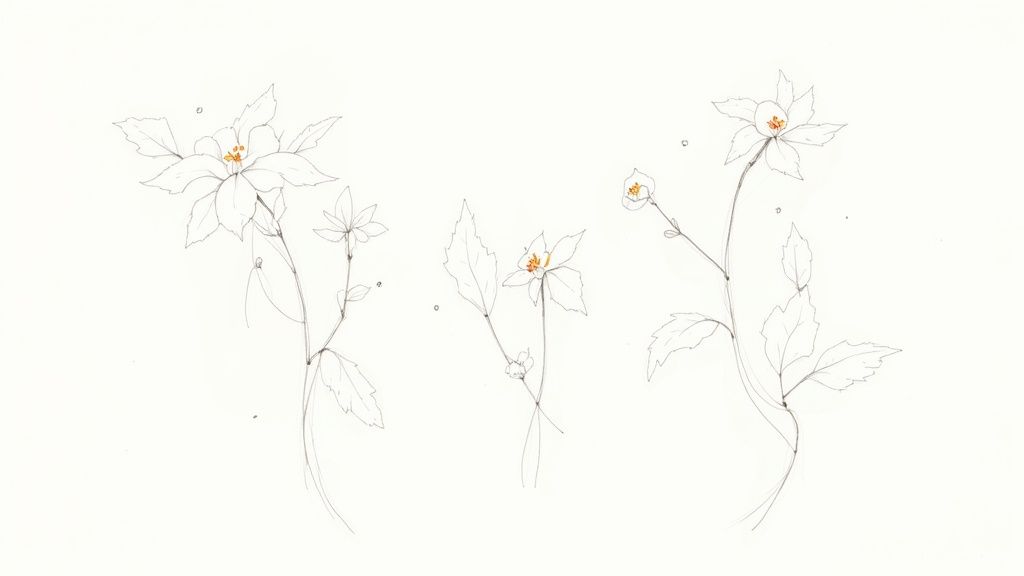
If you're looking to create a garden that feels authentically Aotearoa, then welcoming our native flora is the best place to start. Native NZ climbing plants are the true heart and soul of our local ecosystems, perfectly adapted to our unique climate and absolutely vital for supporting our native wildlife.
These climbers are much more than just plants; they're storytellers. Each one carries a piece of our natural heritage, offering a way to connect with the whenua (land) on a deeper level. From the forest floor to your backyard fence, they bring a distinct Kiwi character that you simply can't find anywhere else.
By choosing a native climber, you're not just adding a bit of beauty to your garden. You're actively helping to restore a small piece of New Zealand's precious biodiversity.
Meet the Stars of the Native Climbing World
New Zealand’s native climbers each have their own unique personality and charm. Getting to know them is the first step in deciding which one is right for your garden, whether you're in a frosty South Island valley or a warm coastal Bay of Plenty spot.
To help you get started, here's a quick look at some of the most popular native climbers you might find.
Popular Native NZ Climbers at a Glance
| Botanical Name | Common Name | Flowering Season (NZ) | Ideal Location |
|---|---|---|---|
| Clematis paniculata | Puawhānanga | Late Winter – Spring | Sunny spot with cool roots; sturdy trellis/tree |
| Parsonsia heterophylla | NZ Jasmine / Kaihua | Summer | Sun or semi-shade; fence, archway, or scrambling |
| Metrosideros fulgens | Climbing Rātā | Late Summer – Winter | Full sun to part shade; tree trunks, walls, fences |
| Tecomanthe speciosa | Three Kings Climber | Autumn - Winter | Frost-free, sunny, sheltered spot; very vigorous |
This table is just a starting point, of course. The real joy comes from learning the stories behind these incredible plants.
A Closer Look at NZ's Finest
Puawhānanga (Clematis paniculata)
Often called the "flower of the heavens," Puawhānanga is one of our most iconic climbers. Its spectacular blanket of pure white, star-shaped flowers drapes over forest canopies from late winter through spring, a clear sign that the seasons are changing. It's a vigorous grower that loves to climb high to reach the sun, making it perfect for covering a sturdy pergola or a large, established tree.
New Zealand Jasmine (Parsonsia heterophylla & Parsonsia capsularis)
Forget any ideas you have about traditional jasmine; our native Kaihua is far more subtle and enchanting. In summer, its clusters of small, creamy flowers fill the air with an intensely sweet, honey-like scent. This twining climber is less aggressive than some others, making it a wonderful choice for training over an archway or along a fence where its beautiful perfume can be truly appreciated.
Climbing Rātā (Metrosideros fulgens)
For a burst of fiery colour during the cooler months, you really can't go past the Climbing Rātā. From late summer and well into winter (around May to July), it produces brilliant orange-red flowers that are an absolute magnet for tūī and bellbirds. This robust climber uses special roots to cling to surfaces, allowing it to scale tree trunks, rock faces, or a textured brick wall with ease.
By planting these species, you are actively participating in conservation. You create "green corridors" that allow native birds, insects, and lizards to move safely between fragmented habitats, strengthening the local ecosystem one garden at a time.
Why Choosing Native Matters
Opting for native NZ climbing plants gives you benefits that go far beyond just looking good. Because they're perfectly suited to our climate, they often need less water and general fussing than introduced species once they're established.
More importantly, they have co-evolved with our native wildlife for millions of years. This deep connection is what makes planting natives so rewarding—you aren't just decorating a space, you're cultivating a living habitat.
If you're feeling inspired to build a garden that truly reflects the spirit of Aotearoa, have a look at our guide on creating your own NZ native garden.
Exotic Climbers That Flourish in New Zealand

While we've got a fantastic line-up of native climbers, there's no denying the magic that a few well-chosen exotic species can bring to a Kiwi garden. It’s not about planting just anything, though. The trick is to pick the well-behaved, non-invasive ones that are proven performers in our unique climate.
These introduced beauties can completely change the feel of a space, offering up different colours, heady fragrances, and unique textures. They're perfect for creating a specific vibe, whether you're dreaming of a lush tropical hideaway or a classic English cottage garden. Think of them as the go-to solution for adding drama and structure to a boring fence, pergola, or wall.
Top Performing Exotic Climbers
Not every plant from overseas is cut out for our environment, but some have become such beloved staples in New Zealand gardens that it’s hard to imagine our backyards without them. They've earned their place not just for being stunning, but because they thrive here without running wild and threatening our precious native ecosystems.
Here are three absolute standouts that do brilliantly across many parts of the country.
-
Star Jasmine (Trachelospermum jasminoides): This one is probably the most popular climber in NZ, and for very good reason. Its glossy, deep green leaves create a thick screen all year round, but the real show starts in summer. The plant gets absolutely smothered in tiny, star-shaped white flowers that release the most incredible sweet perfume. It's tough, versatile, and you can train it to grow over just about anything.
-
Bougainvillea: If you want a full-on, spectacular splash of tropical colour, nothing comes close to a bougainvillea. It absolutely loves the warmer, frost-free parts of the country—think Northland, Auckland, and the Bay of Plenty. Its vibrant bracts in electric shades of pink, purple, red, and orange are a breathtaking sight all through the warmer months. Just give it a sun-drenched, sheltered spot against a north-facing wall, and it'll thank you for it.
-
Wisteria: The absolute definition of springtime drama. Before its leaves even appear, Wisteria drapes itself in magnificent, cascading chains of purple, blue, or white flowers. These are seriously vigorous climbers, so they need a very strong support structure like a heavy-duty pergola or the side of a house to carry their weight. A well-pruned Wisteria in full bloom is a sight you won't forget.
NZ-Specific Care Tips
Growing these climbers successfully in New Zealand means you've got to tune into our local conditions. The advice you might read from overseas often needs a bit of a tweak for our seasons.
Pruning Wisteria is a perfect example of this. For us here in New Zealand, the main structural prune should be done in late winter, typically July or August. Then, you'll want to do a follow-up trim in summer, around January or February, to keep the growth in check and encourage even more flowers for the next spring.
If you're gardening down in the cooler southern regions, Bougainvillea is going to need some serious frost protection or a happy home in a conservatory. Star Jasmine is generally frost-hardy once it's established, but a bit of protection during its first winter wouldn't go amiss. At the end of the day, always think about your local microclimate when choosing and placing these beautiful NZ climbing plants.
Problem Climbers to Avoid in Your Garden
While a beautiful garden brings a lot of joy, it also comes with a responsibility to look after our unique natural environment. Some introduced climbers, while undeniably attractive, have a nasty habit of escaping our gardens and causing real harm to New Zealand's ecosystems.
Knowing which NZ climbing plants to steer clear of is just as crucial as knowing which ones to plant. Making mindful choices helps preserve Aotearoa's precious flora for generations to come. It’s all about creating beauty in your own backyard without accidentally contributing to a much bigger environmental problem.
The Notorious Old Man’s Beard
If there's one plant that strikes fear into the hearts of Kiwi conservationists, it’s Old Man’s Beard (Clematis vitalba). This highly invasive species from Europe is a serious menace, capable of completely smothering and killing off mature native forests.
Brought over as an ornamental vine back in the 1920s, it has since run rampant. Its management now costs millions of dollars in eradication efforts. You can get the full picture of its impact from the detailed info provided by the Department of Conservation.
The real danger? It can be easily mistaken for our stunning native Puawhānanga (Clematis paniculata). Knowing how to tell them apart is a vital skill for any gardener in New Zealand.
By learning to identify and remove invasive species like Old Man's Beard, you become a guardian of our biodiversity. Every invasive plant removed from a garden is one less threat to the native bush just over the fence.
Telling the Good from the Bad
At a quick glance, the two Clematis species can look similar, but once you know what to look for, a few key differences make telling them apart quite straightforward.
Leaves:
- Old Man's Beard (Invasive): Has five individual leaflets that have slightly serrated or toothed edges.
- Puawhānanga (Native): Has three smooth-edged leaflets. When it's young, the leaves are much thinner and can look quite different.
Flowers:
- Old Man's Beard (Invasive): Puts out smaller, creamy-white flowers (about 2-3 cm across) in large, dense clusters during summer (December to February).
- Puawhānanga (Native): Boasts much larger, pure white flowers (up to 10 cm across). They appear in showy, but less packed, displays in late winter and spring (August to October).
Other Problematic Climbers to Watch For
While Old Man’s Beard gets most of the bad press, several other climbers are known pests in New Zealand and should be avoided or removed if you find them.
- Climbing Asparagus (Asparagus scandens): Don't let the name fool you. This pest forms dense, wiry mats that smother native seedlings and small trees, choking the life out of the forest floor.
- Japanese Honeysuckle (Lonicera japonica): Yes, the flowers smell amazing, but it grows with ruthless aggression, strangling its host plants and blocking out precious light.
- Blue Morning Glory (Ipomoea indica): This vigorous vine is a thug. It can quickly blanket and suffocate everything in its path, from small shrubs to the tallest trees.
Instead of planting these bullies, consider some well-behaved alternatives. If you're after fast coverage without the invasive risk, check out our guide on fast-growing hedges in NZ, which includes some climbing options that can be trained as screens.
How to Plant and Care for Your Climbers
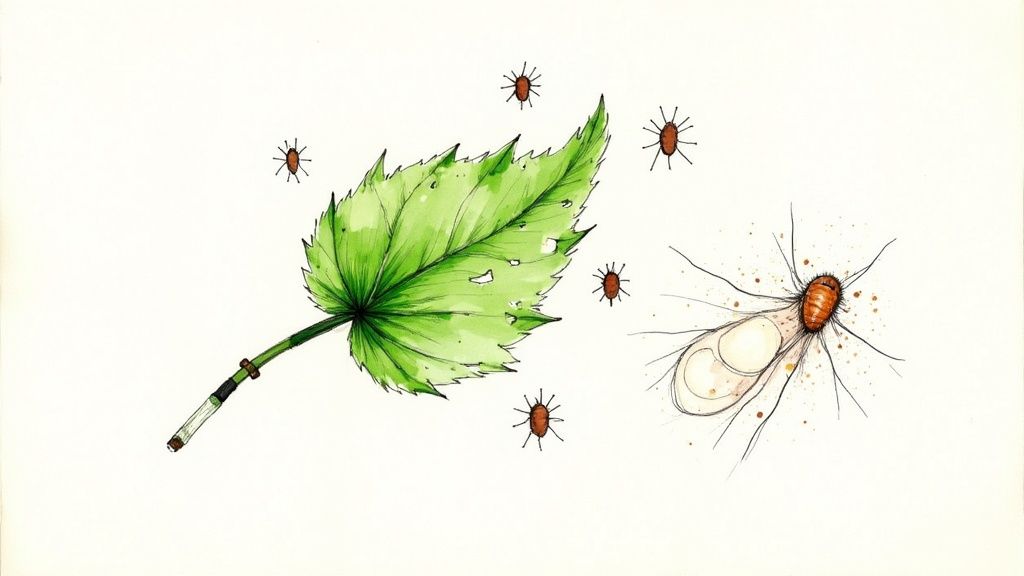
You’ve brought home the perfect climber. Now for the fun part: getting your hands dirty. How you plant and care for your new addition in its first few months is the most critical step toward creating a stunning vertical garden. A little effort now pays off with years of vigorous growth and incredible displays.
Think of it as giving your plant the best possible start in its new home. A strong foundation means a robust root system, which is exactly what your climber needs to start its journey upward, turning a plain wall or fence into a piece of living art.
Let’s walk through the key steps, from digging the hole correctly to providing the right care through New Zealand's unique seasons.
Setting Up for Success
Before you even think about digging, take a look at where you plan to plant. Many NZ climbing plants struggle when planted right up against the base of a wall or fence. This area is often a 'rain shadow', meaning the soil stays dry and is usually quite poor in nutrients.
To give your plant a much better chance, aim to dig your hole about 30-45 cm away from the structure. You can then gently angle the plant back towards its support. This simple trick allows the roots to access better soil and more rainfall, which is a lifesaver during our hot, dry summers.
A crucial tip: make sure your support structure is already in place before you plant. Hammering in stakes or fixing a trellis after the fact can easily damage those delicate new roots, which will seriously set back your climber’s growth.
The Planting Process
Giving your climber a great start isn’t complicated. Just follow these few straightforward steps to help it settle in quickly and grow strong.
-
Dig the Right Hole: Your hole should be at least twice as wide as the plant's pot and just as deep. This loosens up the surrounding earth, making it much easier for the roots to spread out.
-
Enrich the Soil: In a wheelbarrow or on a tarp, mix a good amount of quality compost or well-rotted manure into the soil you dug out. This instantly improves drainage and adds essential nutrients.
-
Position Your Plant: Carefully slide the climber out of its pot. If you see roots circling the bottom, gently tease them apart. Place the plant in the hole, making sure the top of its root ball is level with the ground. Remember to angle it towards the support.
-
Backfill and Water In: Fill the hole back in with your enriched soil mix, firming it gently around the roots to get rid of any air pockets. Finish by giving it a really thorough watering to help the soil settle.
Ongoing Care for Your Climber
Once your climber is in the ground, a little bit of ongoing attention, especially in the first year or two, will make all the difference.
Training and Guidance
Don’t just leave your plant to figure things out on its own. In the early days, you’ll need to guide it. Gently tie the main growing stems to your support using soft garden twine. This encourages the plant to head in the right direction and helps you create that lush, even coverage you're after.
Watering and Feeding
Regular watering is vital, particularly from spring through to autumn when the plant is actively growing. A deep soak once or twice a week is far more effective than a quick, light sprinkle every day.
In spring, an application of a slow-release fertiliser will provide a steady stream of food for the entire growing season. For an extra boost, a liquid feed every few weeks during peak growth will work wonders. You might find that this feeding schedule is similar to what other plants, like herbs, require. For more details, you can check out our handy guide on caring for your herbs.
Got Questions About NZ Climbing Plants?
Even the most seasoned gardeners run into questions when trying a new type of plant. To help you feel a bit more confident as you get started, we've pulled together some straightforward answers to the queries we hear most often from Kiwi gardeners.
What Is the Fastest Growing Climbing Plant in NZ?
This is a classic question, especially if you're trying to screen out a neighbour or cover an ugly fence in a hurry. The best answer really comes down to whether you're after a native or an exotic climber.
For a powerful native option, you can't go past Kōhia, also known as New Zealand passionfruit (Passiflora tetrandra). Once it gets its roots down, it’s a brilliant performer, quickly covering big areas with its lovely deep green leaves.
If you're looking at well-behaved exotics, Star Jasmine (Trachelospermum jasminoides) is famous for its vigorous growth after the first year. It doesn't take long to form a dense, beautifully scented screen.
It’s probably worth mentioning that the fastest-growing climber of all is often the invasive Old Man's Beard. That fact alone really drives home why it's so critical to pick a responsible, non-invasive plant to get that quick coverage you're hoping for.
How Do I Choose the Right Support for My Climber?
The real secret to success is matching the support structure to the plant's own climbing style. Think of it as giving your climber the right tool for the job. Different plants have evolved entirely different ways to get vertical.
- Twiners: Plants like jasmine or wisteria wrap their whole stem around a support. They need something to spiral up, like a sturdy trellis, wires, or poles.
- Tendril Climbers: Passionfruit and sweet peas use delicate, grasping tendrils to hoist themselves up. They’ll need a framework with thin elements they can easily wrap around, like a wire mesh or a lattice screen.
- Self-Clingers: Climbers like Climbing Rātā or Boston Ivy use tiny aerial roots or sticky pads to attach directly to surfaces. They can scale a solid brick wall all on their own but can damage paint or mortar over time.
Always pick a structure strong enough to hold the weight of the mature plant. A flimsy trellis might seem fine for a young wisteria, but it will buckle under the serious weight of the plant once it’s fully grown.
Can I Grow Climbing Plants in Pots in New Zealand?
Absolutely! Growing climbers in containers is a brilliant solution for smaller gardens, balconies, or patios. It lets you add that beautiful vertical element even when you're short on ground space.
The main thing is to choose a big pot—aim for something at least 50cm deep and wide to give the roots plenty of space to grow. Make sure it has good drainage holes so the roots don't get waterlogged. You’ll also need to pop a support structure, like a small trellis or an obelisk, directly into the pot.
Just remember that potted plants dry out a lot faster than ones in the garden. You'll need to keep a close eye on watering, especially during our warm, dry summers, and feed them regularly to top up the nutrients in the container.
Ready to grow your own vertical garden? Find the perfect climber for your spot at Jungle Story, where we connect you with New Zealand’s best growers. Explore our wide selection of native and exotic plants online.