
Choosing the right planter pot for your green friends here in New Zealand is about so much more than just looks—it's one of the most important calls you'll make for their long-term health. The perfect pot is a self-contained little ecosystem, giving your plant's roots just the right balance of moisture, air, and room to grow.
Think of it as finding the perfect home for your plant, one that'll support it from a tiny sprout to a magnificent specimen.
Your Guide to Planter Pots in New Zealand
Welcome to the ultimate guide for Kiwi plant lovers. Whether you're trying to create a lush indoor jungle in your Wellington apartment or designing a sun-drenched garden oasis up in Hawke's Bay, getting your head around planter pots is the first real step to success. The sheer number of options can feel a bit much, but once you break it down, it's actually a simple and pretty enjoyable process.
This guide will walk you through everything you need to know to pick the very best planter pots NZ has to offer. We'll get into how different materials hold up in our unique climate, why pot size and drainage are absolutely non-negotiable for happy roots, and how to match a pot to your plant's needs and your home's style.
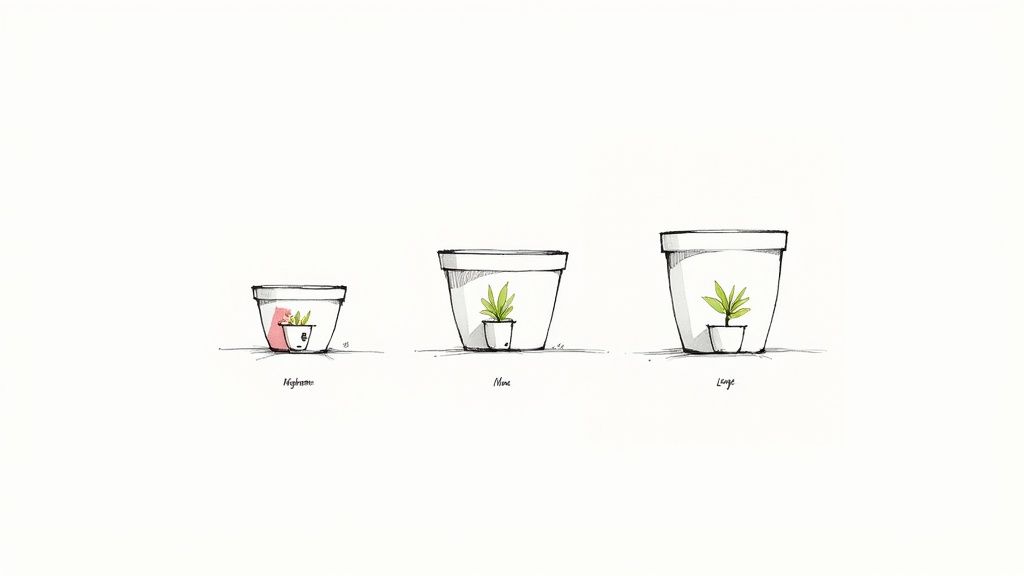
What You Will Learn
Picking a pot is a neat little mix of science and art. You have to consider where your plant comes from, what the weather's doing in your part of the country, and of course, your own personal taste. To help you choose with confidence, this guide covers a few key things:
- Material Matters: We'll compare the usual suspects—terracotta, ceramic, and plastic—and explain how each one holds or releases moisture. This is a huge deal, whether you're dealing with a humid Auckland summer or a dry Canterbury season.
- Sizing and Drainage: You’ll learn why a bigger pot isn't always a better one and discover the secrets to avoiding root rot, probably the most common headache for Kiwi gardeners.
- Styling Your Space: We'll share some inspiration for using pots as actual design features, helping you turn your plant collection into a stunning part of your living space.
- Care and Sourcing: Get some practical tips on where to find great quality pots in New Zealand and how to look after them so they last for years.
By the time you're done here, you'll have the know-how to pick a pot that not only looks fantastic but creates the perfect little world for every single plant in your collection to thrive. A good pot is an investment in your plant's future.
For those of you focused on building that perfect indoor sanctuary, a great place to start is by exploring different kinds of indoor plant pots. Nailing the basics inside sets you up for success when you inevitably decide to expand your jungle outdoors.
Right then, let’s get into finding the perfect home for your green companions.
Understanding Pot Materials for New Zealand Conditions
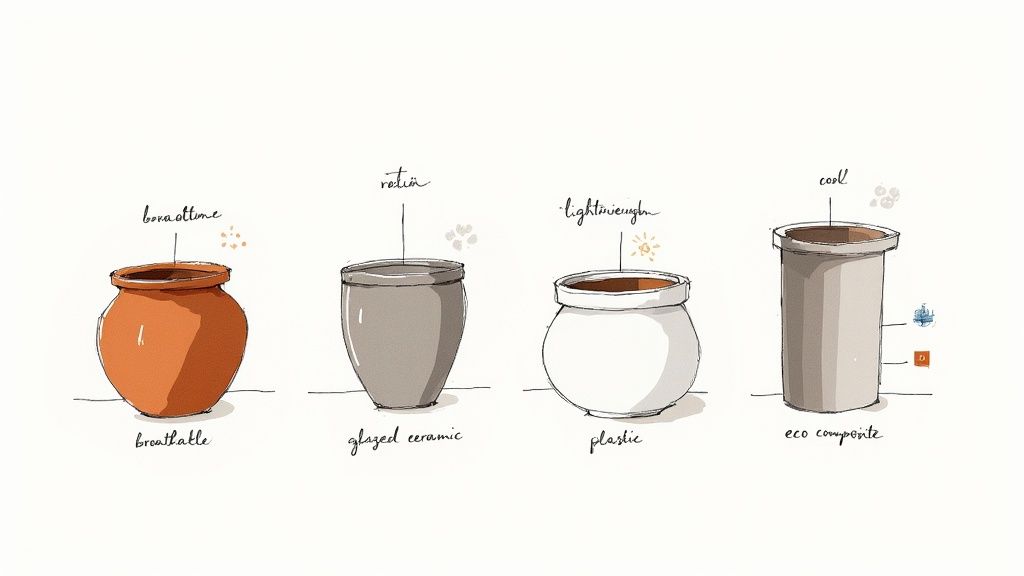
The material of your planter pot is one of the biggest factors in your plant's long-term health. It directly influences how its roots breathe and access water, which is a huge deal given New Zealand’s diverse climates—from the subtropical humidity of Northland to the dry heat of Central Otago. Choosing the right material is less about just looks and more about creating the perfect micro-environment for your plant to truly thrive.
Think of a pot as clothing for your plant's root system. Some plants need a breathable linen shirt, while others are much happier in a waterproof raincoat. Understanding what each material does helps you make the best call for your specific plant, your home, and even your own watering habits.
Terracotta: The Classic Breathable Choice
You know the one—that quintessential, earthy-orange pot you see everywhere. There's a good reason it's so popular. Terracotta is made from natural, porous clay, making it like a breathable fabric for soil. This porosity allows air and water to move right through the sides of the pot, helping the soil dry out evenly and stopping roots from getting waterlogged.
This makes terracotta an absolute winner for plants that hate having "wet feet," like succulents, cacti, and many Mediterranean herbs such as rosemary and lavender. During a humid Auckland summer, a terracotta pot can be the difference between a happy plant and a sad case of root rot. The flip side? This same quality means you'll need to water more often, especially during those hot, dry spells in places like Hawke's Bay.
Glazed Ceramic: Beauty That Retains Moisture
Glazed ceramic pots start life as terracotta but get a coating of liquid glass before being fired again. This glaze seals the pot, making it non-porous and preventing moisture from escaping through the walls. Functionally, a glazed pot acts more like that raincoat, holding onto water for much longer.
This moisture retention is perfect for plants that prefer their soil to stay consistently damp. Think lush ferns, Calatheas, and many tropical foliage plants that would quickly droop in a fast-drying pot. If you live in a drier part of the country or you’re just a bit forgetful with the watering can, glazed ceramics offer a fantastic buffer, keeping your thirsty plants happier for longer.
Key Takeaway: The fundamental difference is porosity. Terracotta breathes, letting soil dry faster, which is great for drought-tolerant plants. Glazed ceramic seals, keeping soil moist for longer, which is perfect for thirsty tropicals.
Plastic and Synthetics: The Versatile Option
Plastic planter pots have become incredibly popular, and it's easy to see why. They're affordable, lightweight, and come in a massive range of colours and styles. Modern plastics are often UV-stabilised to stop them from becoming brittle or fading in the harsh New Zealand sun, making them a durable choice for both inside and out.
Like glazed ceramics, plastic pots are non-porous, so they hold onto soil moisture really well. Their lightweight nature makes them perfect for hanging baskets, large feature plants that you might need to move with the seasons, or for renters who need a garden they can pack up and take with them. It's no surprise that plastic pots hold a dominant 52.8% market share in the global USD 4.56 billion planter market—their convenience is hard to beat.
Choosing between the different types of planter pots NZ gardeners have available is a key skill. You can dive deeper into the specifics in our complete guide to plant containers in NZ.
Eco-Friendly Materials: The Sustainable Shift
More and more Kiwi gardeners are on the lookout for sustainable options, and the market is responding. Eco-friendly pots made from materials like bamboo fibre, rice husks, and recycled plastic are becoming much easier to find. These options offer a fantastic blend of great function and environmental consciousness.
Many of these composite pots are lightweight and durable like plastic, but they're often biodegradable over several years once you're done with them. They're a brilliant alternative for anyone wanting to reduce their environmental footprint without giving up on style or performance. It’s the fastest-growing part of the market, reflecting a big shift towards greener gardening practices right across the country.
To make it even easier, here's a quick side-by-side look at how these materials stack up for the typical New Zealand home and garden.
Planter Pot Material Comparison for New Zealand Gardeners
| Material | Pros (Best For...) | Cons (Watch Out For...) | Ideal NZ Location |
|---|---|---|---|
| Terracotta | Promotes healthy roots by allowing air/water flow. Ideal for succulents, cacti, and herbs. Develops a lovely patina over time. | Dries out quickly, requiring more frequent watering. Can crack in frosty conditions if waterlogged. | Humid regions like Auckland & Northland. Sunny, dry spots everywhere else. |
| Glazed Ceramic | Retains moisture, reducing watering needs. Heavy and stable for top-heavy plants. Wide range of beautiful colours and finishes. | Can lead to root rot if overwatered. Heavier and more difficult to move. Can chip or crack if dropped. | Drier areas like Canterbury or for forgetful waterers. Great for indoor tropicals. |
| Plastic/Synthetic | Lightweight, affordable, and durable. Excellent moisture retention. Huge variety of shapes, sizes, and colours. | Less breathable, can trap too much water. Can become brittle over time with intense sun exposure. | Balconies, hanging baskets, large plants that need moving, and for gardeners on a budget. |
| Eco-Friendly | Sustainable and often biodegradable. Lightweight and durable. Good for conscious gardeners reducing plastic use. | Durability can vary by brand. May have a shorter lifespan than plastic or ceramic. | Anywhere you want a green alternative! Great for annuals, herbs, or starting seeds. |
Ultimately, the best pot material is the one that suits your plant, your environment, and your lifestyle. Don't be afraid to mix and match to find what works for you
Mastering Pot Size and Drainage for Healthy Roots
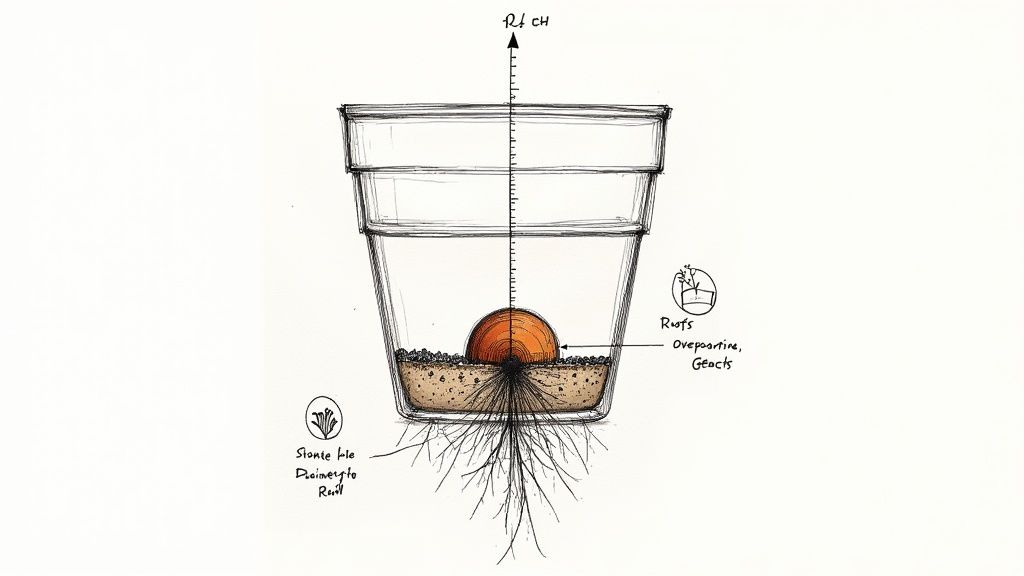
Picking the right pot size and making sure it has great drainage are two of the most important things you can do for your plant's health. It’s also where things most often go wrong.
Get these two steps right, and you're already halfway to a thriving, happy plant. But get them wrong, and you might be setting your green friend up for a tough time before it even has a chance to settle in. The good news is, it's pretty straightforward—no secret knowledge required, just a bit of understanding about what roots really need.
Why Bigger Isn’t Always Better
It’s a common mistake: moving a small plant into a huge pot, thinking you’re giving it tons of room to grow. But this is actually a classic case of ‘overpotting’, and it’s one of the fastest ways to cause problems, especially in New Zealand’s often damp and humid climate.
Think of it like putting a toddler in adult-sized gumboots. They'll just slosh around, unable to get a grip. A small plant in a massive pot feels something similar. The huge amount of soil holds way more water than the little root system can possibly drink, creating a cold, boggy mess. This soggy soil then compacts, choking off oxygen and becoming the perfect breeding ground for root rot.
The goal is to find a pot that lets the soil dry out properly between waterings. It’s all about creating a healthy cycle of moisture and air for the roots, not giving them endless space to swim in.
The Two-Inch Rule for Repotting
So, how do you find that sweet spot when it's time to upgrade? Just follow the ‘two-inch rule’ (or about 5 cm). When your plant has clearly outgrown its home, choose a new pot that’s only about two inches wider in diameter.
For instance, if your plant is in a 15 cm pot, its next home should be a 20 cm one. This small jump gives the roots just enough fresh soil and space to stretch out without creating that dangerous, waterlogged environment. It helps the plant establish itself quickly and keep on growing.
Spotting a Pot-Bound Plant
How do you know it’s time to repot? Your plant will give you some pretty clear signs when it’s feeling cramped. A ‘pot-bound’ plant has used up all its space, and its health will start to suffer if it isn't moved.
Here’s what to look for:
- Roots Escaping: The most obvious clue is seeing roots poking out of the drainage holes.
- Stunted Growth: If your plant stops putting out new leaves during the growing season (spring and summer here in NZ), it might have hit a wall.
- Water Rushes Through: When you water, does it seem to go straight through and out the bottom? This can mean the pot is more roots than soil, with nothing left to hold moisture.
- Lifting Out of the Pot: In serious cases, the root ball can actually push the whole plant up and out of the pot.
If you gently slide the plant out and see a dense, tangled web of roots circling the bottom, it's definitely time for a new home.
Ensuring Excellent Drainage
Even the most perfectly sized pot is no good without drainage. Plant roots need oxygen just as much as they need water, and drainage holes are the only way they’ll get it. Without an escape route for excess water, it will pool at the bottom and suffocate the roots, leading to rot.
If you find a gorgeous decorative pot with no holes, don't worry! Just use it as a ‘cachepot’—a decorative outer pot. Keep your plant in its plastic nursery pot (which has holes) and simply pop it inside.
For outdoor plants, understanding your soil is also key. Learning about improving soil drainage can be a game-changer, helping you create a healthy foundation whether you're planting in pots or straight into the garden.
Styling Your Space With Plants and Pots
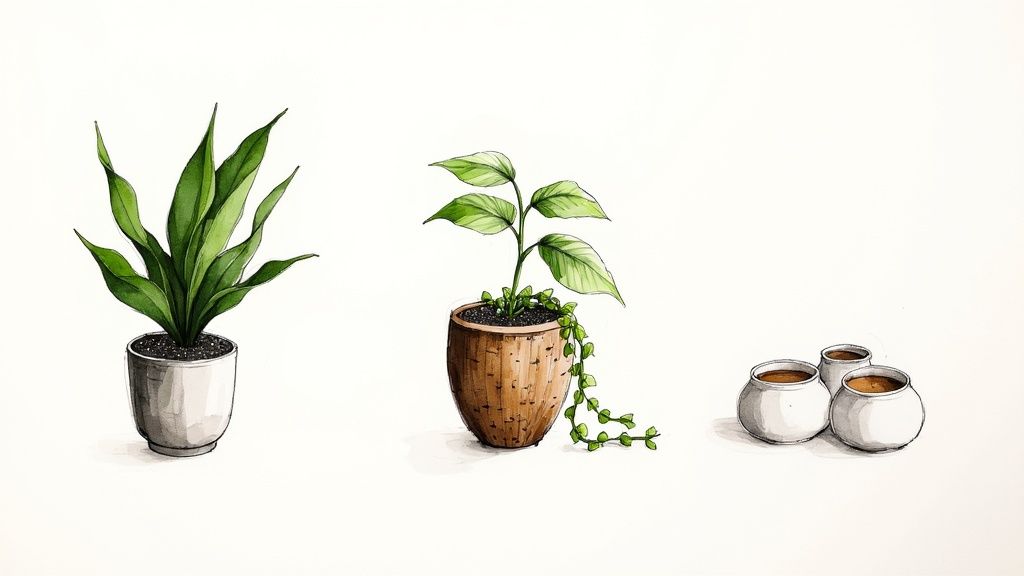
Okay, we’ve covered the practical side of things. Now for the really fun part: making your space look amazing. A planter pot is so much more than just a home for your plant; it’s a design element in its own right. The perfect plant and pot combo can completely transform a room, injecting it with colour, texture, and a whole lot of personality.
This is where you get to think like a designer. See the plant and its pot as a single, beautiful object. Does the pot’s smooth curve complement the sharp lines of a Sansevieria? Does its vibrant colour make the deep green of the foliage pop? Using planter pots nz well is your secret weapon for elevating your home decor from nice to unforgettable.
Matching Pots to Your Interior Style
You wouldn't just throw any old cushion on your sofa, and the same thinking applies here. Your pots should feel like they belong, seamlessly blending with your home's overall aesthetic to create a cohesive, intentional look.
Let's break it down by a few popular styles:
- Modern and Minimalist: This style is all about clean lines and uncluttered spaces. Think sleek, simple pots—a classic black or white cylinder is perfect. Pair it with an architectural plant like a Snake Plant or a ZZ Plant to let the plant's bold form do all the talking.
- Bohemian and Relaxed: If your home has a laid-back, boho feel, lean into natural textures and earthy colours. A rustic terracotta pot or something in woven seagrass is the ideal companion for a cascading Golden Pothos or a lush Philodendron. It’s all about that relaxed, organic vibe.
- Scandi (Scandinavian): Scandi design is light, airy, and deeply connected to nature. Look for pots in soft, neutral tones like grey, white, or muted pastels. Pots with simple geometric patterns or sitting on elegant wooden stands are spot-on for this style, especially when housing a Fiddle Leaf Fig or a classic Monstera deliciosa.
It helps to think about a pot’s personality. A bold, glossy pot feels confident and makes a great statement piece. On the other hand, a matte, earthy pot has a quieter, more calming presence that can beautifully blend into the background.
If you're struggling to picture how it will all come together, try creating a mood board. It's a fantastic way to visualise your ideas, just like the pros do. For some great inspiration, check out these interior design mood board examples.
Practical Styling for New Zealand Environments
Styling isn't just about looks; it's also about making smart choices for your little corner of New Zealand. A pot that’s perfect for a sunny Auckland apartment might not fare so well through a frosty Queenstown winter.
Here’s what to consider for different Kiwi settings:
- Balconies and Decks: Weight is your biggest consideration here. Lightweight fibreglass or quality plastic pots are brilliant because they give you the look without the heft. They're perfect for creating a lush green privacy screen or a little herb garden without stressing your structure.
- Frost-Prone Gardens: If you're in a chilly spot like Canterbury or down in Southland, you need frost-resistant pots for outdoors. Go for materials like concrete, thick glazed ceramic, or fibreglass. They can handle the temperature swings that would crack a waterlogged terracotta pot in a heartbeat.
- Coastal Areas: Living near the sea means dealing with salt spray and wind. You'll want durable, non-porous materials that are easy to clean. Glazed ceramics and heavy-duty plastics are fantastic choices as they prevent salt from building up and harming the pot or your plant’s roots.
Choosing the right material for your local conditions means your beautiful styling will actually last. For some great ideas on what to plant, have a look at our guide to the best plants for outdoor pots in NZ.
Creating Visual Interest with Groups and Layers
One plant is great, but a group of them? That’s where the magic really happens. A little designer trick is to group pots in odd numbers—three or five usually looks more dynamic and natural than an even number.
Play around with different heights, textures, and shapes to create a stunning display. Try putting a tall, slender pot next to a low, squat one, or mix a smooth, glazed finish with a rough, unglazed pot. Using plant stands is another fantastic way to add height and create layers, drawing the eye upwards and making even a small corner feel more expansive and full of life.
Where to Find and How to Care for Your Pots in NZ
So, you’ve found the perfect style and size of pot. The journey doesn't quite end there, though. Now it’s all about getting it home and giving it the right care so it lasts for years to come. Let's get into the practical side of buying and maintaining your collection, from navigating the local market to keeping your pots looking brand new.
Finding great planter pots nz wide has never been easier, but it definitely helps to know where to start looking. From massive garden centres to tiny online boutiques, Aotearoa has a huge range of options for every budget and taste.
Shopping for Pots in Aotearoa
New Zealand’s garden supplies industry is a seriously bustling marketplace. We’re talking an estimated market size of NZ$621.9 million spread across nearly 500 businesses. For us plant lovers, that means more choice and better prices. You can dig into more insights on the growth of the garden retail industry if you're curious.
Here’s a quick rundown of your main options:
- Large Garden Centres: Think of these as your one-stop shops. They offer a massive selection, from basic plastic planters to huge, decorative feature pots. They’re fantastic for getting your hands on different materials and comparing sizes in person.
- Boutique Plant Stores: You’ll often find these gems in urban centres. They tend to curate a selection of really stylish and unique pots, perfect if you’re looking for something a bit special for your indoor jungle.
- Online Retailers: The convenience of shopping online is hard to beat. You get access to a huge variety of pots from all over the country, delivered right to your door. This is often where you’ll stumble upon niche products and local artisans.
Keeping Your Pots in Top Condition
A little bit of care will seriously extend the life of your pots and, just as importantly, protect your plants from disease. A bit of maintenance goes a long way, ensuring your investment looks great season after season.
Think of cleaning your pots as a quick health check-up for your plants. A clean pot prevents nasty soil-borne diseases and pests from hitching a ride when you're repotting. It’s a simple step, but a vital one for a healthy collection.
Before you reuse any pot, always give it a thorough clean. Scrub it out with a stiff brush and a solution of one part bleach to nine parts water. This will kill off any lingering bacteria or fungal spores. Just be sure to rinse it well and let it dry completely in the sun before you use it again.
Protecting Outdoor Pots During a Kiwi Winter
New Zealand winters (from June to August) can be pretty tough on outdoor pots, especially in regions that get heavy frosts like Canterbury and Central Otago. That 'freeze-thaw' cycle—where water seeps into the pot's material, freezes, and expands—can easily crack porous materials like terracotta.
Here are a few tips to protect your outdoor pots from the chill:
- Elevate Them: Use pot feet or even just some small blocks to lift your pots slightly off the ground. This stops the base from sitting in cold, wet soil and improves drainage, which prevents the waterlogging that leads to freezing.
- Choose Frost-Resistant Materials: If you live in a particularly cold part of the country, it’s worth opting for materials like fibreglass, concrete, or high-quality glazed ceramics that are specifically designed to handle frosty conditions.
- Wrap Them Up: For those really treasured pots that might be a bit vulnerable, you can wrap them in bubble wrap or hessian sacking during the coldest spells. It provides a simple layer of insulation to shield them from extreme temperature drops.
A Few Common Potting Questions
Even after you've got the basics down, a few questions always seem to pop up. We get asked these all the time, so let's run through some clear, practical answers to help you troubleshoot and grow with confidence.
Do My Pots Really Need a Drainage Hole?
In almost every case, yes. Think of drainage as the number one defence against root rot, which is a surprisingly common killer of indoor plants. That little hole at the bottom isn't just for show—it’s a vital escape hatch for excess water, letting your plant's roots breathe.
But what if you've fallen head-over-heels for a gorgeous decorative pot that doesn't have one? These are often called ‘cachepots’, and you don’t have to put them back on the shelf. The trick is to keep your plant in its original plastic nursery pot and simply pop it inside the decorative one. When it's time to water, you can lift the inner pot out, give it a good soak, let it drain completely, and then place it back in its stylish home. No soggy soil, no water-damaged furniture.
A pot without drainage is like a bathtub without a plug—it’s only a matter of time before things get waterlogged. The cachepot method gives you the best of both worlds: beautiful style and happy, healthy roots.
How Often Should I Be Repotting My Plants?
This really depends on how quickly your plant is growing, but a good rule of thumb is to give your plants a check-up each spring as they head into their main growing season. Most of your houseplants will probably need a new home every 12 to 18 months. Slower growers, on the other hand, might be perfectly happy in the same pot for years.
Keep an eye out for these classic tell-tale signs that it’s time for an upgrade:
- Roots are making a break for it through the drainage holes.
- Your plant’s growth has stalled during spring or summer.
- Water rushes straight through the pot without seeming to soak in.
- The plant is starting to look a bit top-heavy and might tip over.
What's the Difference Between Indoor and Outdoor Pots?
It all comes down to two things: durability and materials. Here in New Zealand, outdoor planter pots nz wide need to be tough enough to handle whatever our weather decides to throw at them. We're talking harsh UV rays, torrential rain, and for many of us, winter frosts. Materials like concrete, fibreglass, and certain UV-stabilised plastics are built for that kind of punishment.
Indoor pots are more about the looks and don't need to be quite so rugged. The one non-negotiable, however, is that they must be waterproof or come with a saucer. The last thing you want is a water stain ruining your floors or furniture.
Ready to find the perfect home for your leafy friends? At Jungle Story, we've brought together a stunning collection of high-quality planter pots to suit every plant, personality, and home. Come have a look and give your plants the beautiful, healthy environment they deserve. Shop our planter pots today!