
Figuring out which plants will actually enjoy the shady spots in your garden can feel a bit like a puzzle. But it's often simpler than you'd think. Plenty of stunning plants, from lush native ferns to surprisingly colourful flowers, don't just tolerate low light—they absolutely thrive in it, turning those tricky corners into your garden's best features.
Transform Your Shady Spots Into Garden Highlights
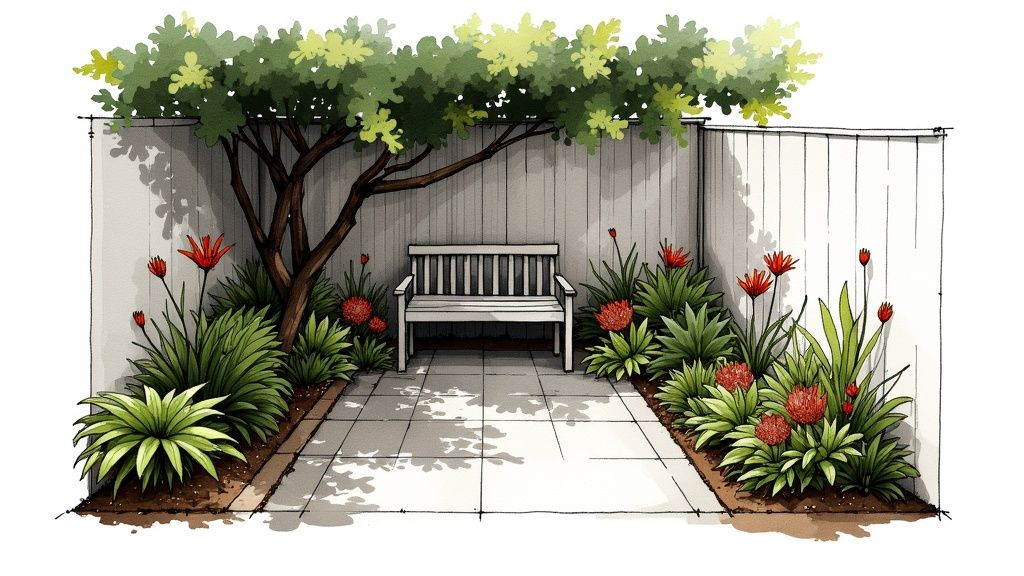
That shaded area you've been struggling with isn't a problem; it's an opportunity. It's a chance to create a peaceful, green space packed with texture and life. There's a common belief that a brilliant garden needs heaps of sun, but that's just not true. With a bit of know-how, you can cultivate a beautiful display in even the most shadowed parts of your yard.
Of course, New Zealand's diverse climate has a big say in what you can grow. The cooler, damper conditions down south are worlds away from the humid, subtropical pockets you'll find up north. The real secret to success is learning to work with your environment, not against it.
Understanding Your Unique Garden Environment
Before you even think about buying plants, take some time to get to know the kind of shade you're working with. A spot that gets a bit of gentle morning sun is a completely different beast to the deep, year-round shade under a massive pōhutukawa tree. This guide will walk you through figuring out your garden's specific light conditions.
For a bit more inspiration on what’s possible in your backyard, have a look through our collection of garden ideas for NZ.
We're here to give you a clear path forward, covering everything you need to know to choose, plant, and look after plants that will flourish in the shade.
The secret to a successful shade garden is simple observation. Understanding how light moves across your property throughout the day, and through the seasons, is the single most important step you can take.
Think of this guide as your practical handbook for creating a knockout shade garden, from establishing an evergreen backbone to adding seasonal pops of colour. By the time you're done, you'll see those shady spots as the best bits of your garden.
Here’s what we’ll cover:
- Identifying Shade Types: Learn the difference between full, partial, and dappled shade.
- Evergreen Champions: Discover plants that provide year-round structure and colour.
- Flowering Wonders: Find beautiful blooms that brighten the darkest corners.
- Design & Maintenance: Get practical tips for creating and caring for your shade garden.
How to Figure Out the Type of Shade in Your Garden
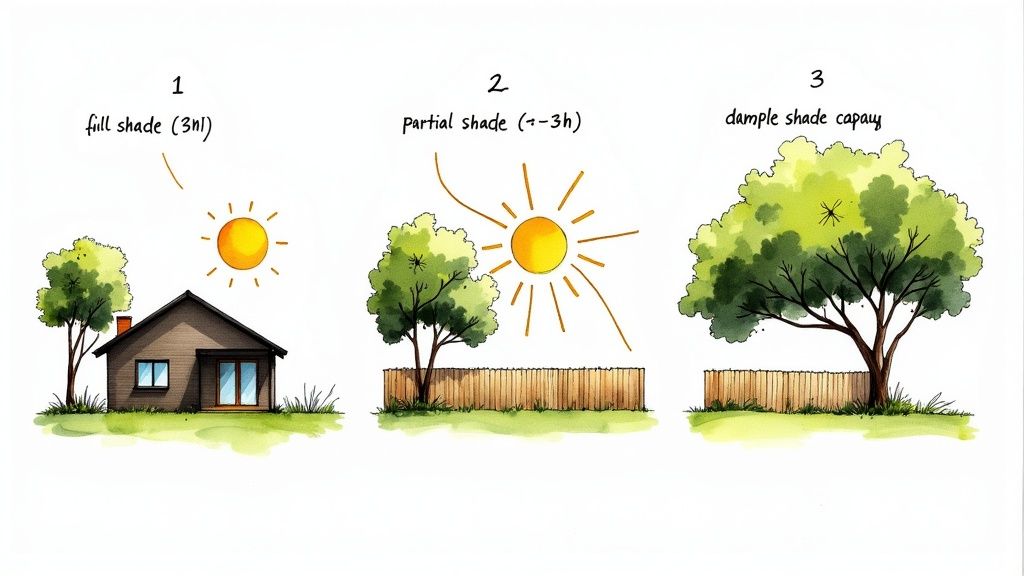
Before you even think about buying plants, you need to become a bit of a shade detective. It’s a simple truth of gardening: not all shade is created equal. Getting this right from the start is the single most important step you can take towards a garden that doesn’t just survive, but truly thrives.
Think of it this way: you wouldn't send a sun-loving beachgoer to climb Aoraki/Mount Cook without the right gear. Plants are exactly the same; they have their own specific needs, and it's our job to meet them.
The shadows in your garden are always on the move. They drift across the lawn as the sun makes its daily journey and change dramatically with the seasons. A spot that’s deep in shade during our winter might get a surprising amount of sun in summer when the sun sits higher in the sky. Getting a handle on these patterns is what empowers you to pick plants for shade nz gardens that will flourish.
The Three Main Types of Garden Shade
To make things easier, gardeners usually break shade down into three main categories. Getting familiar with them is your first step to mapping out your garden’s hidden potential. Each one creates a unique little world for different kinds of plants.
-
Full Shade: This is the big one. We're talking less than three hours of direct sun a day. You'll often find this on the south side of the house, tucked under dense evergreens, or in those narrow gaps between buildings. The light here is gentle and indirect.
-
Partial or Semi-Shade: This is the happy medium, describing spots that get between three to six hours of direct sunlight. Often, this means lovely morning sun followed by cool afternoon shade – the perfect setup for plants that wilt under the harsh afternoon heat.
-
Dappled Shade: This is the one every gardener dreams of! It's that beautiful, shifting light you find under deciduous trees or plants with an open canopy, like our native ponga (silver ferns). The sunlight filters through the leaves, creating a moving mosaic that so many understorey plants absolutely adore.
A Quick Guide to New Zealand Garden Shade Types
To help you get started, this table breaks down the different types of shade you might find in your garden. Use it as a quick reference to match your conditions with the right kinds of plants.
| Shade Type | Daily Direct Sunlight | Common Characteristics | Ideal Plant Types |
|---|---|---|---|
| Full Shade | Less than 3 hours | Consistent, indirect light. Often found on the south side of structures or under dense canopies. Can be damp. | Ferns, Hostas, Hellebores, many native groundcovers. |
| Partial Shade | 3 to 6 hours | A mix of sun and shade. Often morning sun and afternoon shade, which protects from intense heat. | Hydrangeas, Camellias, Fuchsias, Heucheras. |
| Dappled Shade | Filtered sunlight all day | Light filters through an open tree canopy, creating a shifting pattern. Soil is often rich in leaf litter. | Rhododendrons, Clivias, Mondo Grass, native ferns like Asplenium. |
This table is a great starting point, but remember that observation is always your best tool.
Charting the Shadows in Your Own Garden
Honestly, the best way to understand your garden's light is just to watch it. You don’t need any fancy gear – just your eyes and a bit of patience. Spend a full day checking in on the spots you want to plant and see how the light moves.
A great little trick is to snap a photo of your garden bed every couple of hours throughout the day—say, at 9 am, 12 pm, and 3 pm. This visual diary will quickly show you which areas get sun, when, and for how long.
Don’t forget to do this at different times of the year, especially in the middle of winter and the peak of summer. The sun's low angle from June to August casts incredibly long shadows, while the high summer sun from December to February can sneak into spots you thought were shaded all year round.
This little bit of homework is so important. The amount and quality of light directly affect a plant's ability to make food, produce flowers, and fight off disease. By properly identifying your shade, you’ve already won half the battle. You can now step into the garden centre with the confidence to choose plants that are perfectly suited to their new home, setting them up for a long and happy life.
Evergreen Plants for Year-Round Structure and Colour
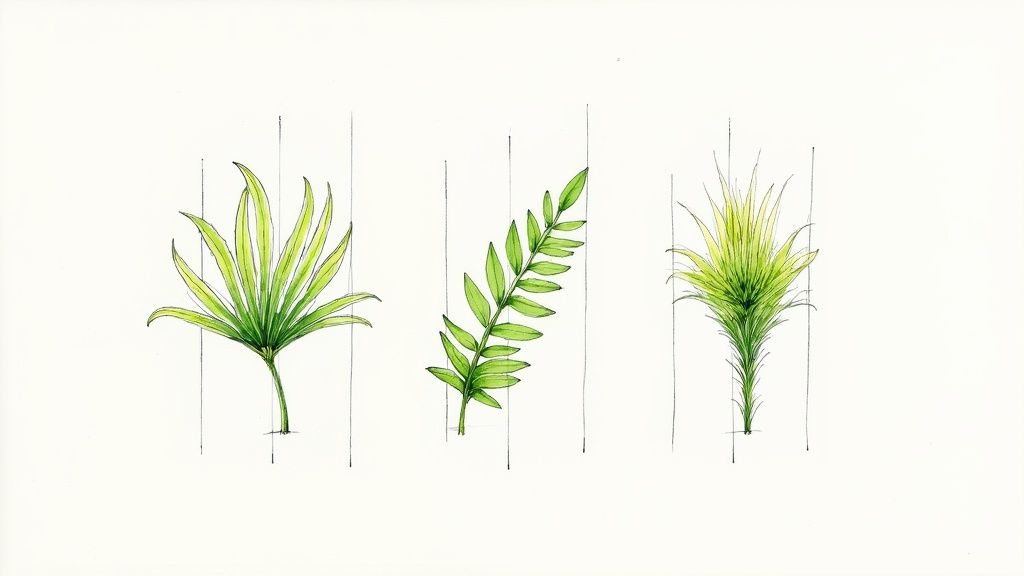
Flowers are fantastic, but they come and go. The real heroes of a shady garden are the evergreens. These are the plants that give your garden its bones, providing a lush, green framework that looks good even in the depths of winter. They’re the dependable backdrop that makes everything else pop.
Without a solid evergreen structure, a garden can feel a bit lost and empty for half the year. Choosing the right evergreens for shady NZ conditions means you’re creating a garden with presence 365 days a year. It's about building a living scaffold that your seasonal plants can weave through.
Top Evergreen Choices for NZ Shade
Here in New Zealand, we're lucky to have an incredible lineup of natives and exotics that thrive in low-light spots. These picks are champions of resilience and beauty, perfect for creating that stunning, layered look.
- Renga Renga Lily (Arthropodium cirratum): If you have a dry, shady spot, this is your plant. It’s arguably one of the most useful plants in the country. Its broad, flax-like leaves form beautiful clumps, and in late spring it sends up delicate sprays of white, star-shaped flowers. Incredibly tough and forgiving.
- Hen and Chicken Fern (Asplenium bulbiferum): A gorgeous native fern with graceful, arching fronds that bring a soft, feathery texture to any corner. It gets its name from the tiny baby plantlets that form on the leaves – you can just pot them up for more free plants! It loves a damp, sheltered position.
- Corokia species: These native shrubs are absolute masters of structure. Their tangled, wiry branches and tiny leaves add a sculptural, almost minimalist vibe. Varieties like Corokia 'Frosted Chocolate' offer cool foliage colour, while little yellow star-like flowers pop up in spring.
These plants form the resilient core of any great shade garden. To see how you can fit them into your own space, check out our guide on creating a beautiful NZ native garden.
Building Layers with Texture and Form
A truly captivating shade garden is about more than just flowers; it’s a masterclass in foliage. The real magic happens when you start playing with the subtle variations in leaf shapes, sizes, and colours to create a visual tapestry.
Think of it like you're painting, but your palette is made of leaves. Try placing the bold, wide leaves of a Renga Renga Lily next to the delicate, lacy fronds of a fern. That contrast alone creates instant depth and makes the whole planting feel more complex and interesting.
Don’t be shy about using colour within the green spectrum, either. A plant with lime-green or chartreuse foliage acts like a natural spotlight, brightening up a dark corner. On the flip side, plants with deep, almost-black leaves can add a touch of mystery and drama.
The most sophisticated shade gardens are often those that rely least on flowers. They achieve their beauty through a masterful combination of foliage textures, from glossy and smooth to matte and feathery, creating a calm and enduring green sanctuary.
When you focus on these elements, you’re designing a space that’s just as compelling in July as it is in January.
Flowering Plants That Will Brighten Any Dark Corner
One of the most stubborn myths in gardening is that a shady garden has to be a flowerless one. Not true at all. While your evergreens are doing the important work of creating structure, it’s that surprising pop of colour from a flowering plant that really makes a dark corner sing. Plenty of beautiful plants have evolved to put on a show with less light, giving you a vibrant palette for even the most neglected spots.
The trick to choosing the right flowering plants for shade nz gardens is all about timing and placement. Some, like Hellebores, offer up their beautiful blooms in the cooler months, which is a real bonus when most of the garden is asleep. Others, like the classic Hydrangea, wait until the warmth of summer to start their spectacular show.
Classic Choices for Seasonal Colour
Some flowering plants are so dependable in the shade they’ve earned their status as garden classics. They’re tough, beautiful, and a perfect match for New Zealand’s temperate climate, putting on a stunning display without demanding a lot of fuss.
Here are a few trusted favourites you can't go wrong with:
- Hostas (Plantain Lilies): We mostly grow them for their incredible leaves, but don't forget the flowers! In mid-summer, Hostas send up elegant spikes of bell-shaped flowers in soft lavender or white. They float above the foliage, adding a lovely, delicate height to the plant.
- Hydrangeas: The undisputed star of the partially shaded garden. Hydrangeas produce enormous globes of flowers that last from summer right through into autumn. Famously, you can influence the colour of many varieties with your soil’s pH – they'll go brilliant blue in acidic soil and a vibrant pink in more alkaline conditions.
- Hellebores (Winter Rose): These are the true heroes of the winter garden. From about June through to August, their unique, downward-facing flowers appear in shades of white, green, pink, and deep, moody burgundy, often with stunning speckles. They are incredibly tough plants and will live for years.
Adding Annuals for a Pop of Brilliance
Think of perennials as the long-term structure of your garden. Annuals? They’re the fun, seasonal accessories. They give you an intense burst of colour for just one season, letting you completely change up the look of your garden every single year.
For this job, Impatiens are the absolute champions. These low-growing plants are happiest in shady, moist spots and will produce a non-stop blanket of flowers in nearly every colour imaginable—from bright pinks and reds to soft whites and oranges, all summer long. They're perfect for brightening up borders, pots, and hanging baskets in those areas that never see direct sun.
Shade doesn’t mean a lack of colour; it just means choosing plants that have adapted to show off without needing bright sunshine. It's a chance to play with a more subtle, and often more rewarding, selection of plants.
Native Flowering Plants for Shady Spots
Looking to our own backyard, New Zealand has some gorgeous native options that bring both flowers and ecological benefits to shady gardens. Planting natives is a wonderful way to support local bird and insect life, creating a garden that's not just beautiful but is also a thriving part of the local ecosystem.
To understand the power of native shade, just look at the kahikatea. The kahikatea forest ecosystem in New Zealand once covered huge areas, but today only about 2% of it remains. Kahikatea (Dacrycarpus dacrydioides), our native white pine, is unique to New Zealand and creates dense canopies that provide deep shade and regulate the microclimate in our swamp forests. Protecting these disappearing forests is critical for our native biodiversity. You can learn more about these vital habitats from the Department of Conservation's guide to NZ wetland forests.
For your own garden, consider the Fuchsia excorticata, or kōtukutuku. As the world's largest fuchsia, this deciduous tree produces delicate, drooping flowers that change from greenish-yellow to purple-red. It loves damp, shady conditions and is a magnet for nectar-loving birds like the tūī and bellbird. Another great choice is Parataniwha (Elatostema rugosum), a native groundcover with amazing textured leaves and small, subtle pinkish flowers that add a quiet interest to the garden floor.
Your Guide to Designing and Maintaining a Shade Garden
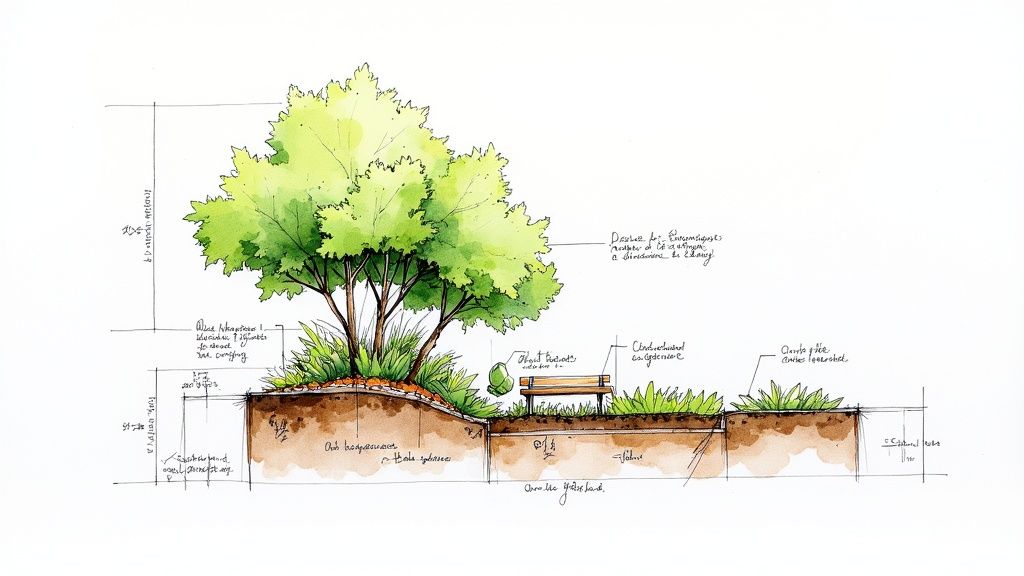
So, you’ve got a list of stunning plants that will thrive in the shadows. Now for the fun part: weaving them together into a healthy, gorgeous shade garden. The trick isn't to fight against the low light, but to lean into it. Think of it as a creative challenge to play with depth, texture, and light in a whole new way.
Let’s move past the individual plants and look at the bigger picture. We’ll walk through the fundamentals of great shade garden design and cover the essential care tips to keep your leafy sanctuary looking its best in our unique New Zealand environment.
Creating Depth with Layering
One of the most powerful design moves you can make, especially in a shady spot, is layering. It’s a bit like creating a living sculpture. When you arrange plants by their final height, you build a sense of depth that stops the garden from looking flat or one-dimensional.
It’s pretty simple. Start with your tallest characters at the back of the border – think tree ferns (ponga) or taller shrubs. Next, bring in your medium-sized plants like Hydrangeas or larger ferns. Finally, tuck in your low-growing groundcovers and smaller gems like Hostas or Heucheras right at the front.
This technique naturally draws your eye through the space, making it feel bigger and more immersive. It’s also exactly what nature does on the forest floor, and you can’t get a better example of a perfect shade garden than that! For a deeper dive into structuring your outdoor space, our guide to garden and landscape design is packed with fantastic ideas.
Using Colour and Light to Your Advantage
In a dark corner, foliage is your secret weapon. Flowers are great for a seasonal pop of excitement, but it's the leaves that do the heavy lifting all year round.
A common trap in shade gardening is relying only on dark green plants. This can make a dim space feel even gloomier. The real magic happens when you introduce light and contrast with smart plant choices.
Keep an eye out for plants with variegated leaves (splashed with white or cream) or those with zingy chartreuse or lime-green foliage. These plants are like natural highlighters; they pull light into the garden and create bright spots that really pop against a dark backdrop. A well-placed clump of golden Mondo Grass or a variegated Hosta can light up a corner just as well as any flower.
Mastering Shade Garden Soil and Water
Getting the soil right is make-or-break for a successful shade garden. Shady spots often come with one of two tricky soil types: either it's dry shade under big, thirsty trees, or it's constantly damp in a poorly drained area.
-
For Dry Shade: The big challenge here is competing with tree roots for water and nutrients. Forget about deep digging, as you could damage them. Instead, top-dress the area with a generous layer (5-10 cm) of compost or well-rotted leaf mould every spring. This slowly feeds the soil from above. And mulch? It's non-negotiable. It helps lock in every precious drop of moisture.
-
For Damp Shade: Drainage is everything. If the area is a bit boggy, work in organic matter like compost to help break up heavy clay. Or, you can just embrace the dampness and pick plants that love having "wet feet," like many of our native sedges (Carex) or the magnificent Gunnera.
When it comes to watering, always aim for a deep, infrequent soak rather than a light daily sprinkle. This encourages the roots to grow down deep, making them much more resilient during dry spells.
Managing Pests and Weeds
Those cool, damp, shady spots are basically a five-star resort for slugs and snails. These classic NZ garden pests can demolish tender plants like Hostas overnight. Stick to pet-safe slug baits, set up some beer traps, or encourage natural predators like thrushes to help keep them under control.
Invasive weeds can also be a real headache. Some, like Tradescantia fluminensis (wandering willy), are masters of low-light survival. This notorious weed is incredibly clever, constantly balancing new growth with the decay of older stems to perfectly optimise its access to light in dense canopies. It’s how it outcompetes our native groundcovers so effectively, and a good reminder of why we need to manage it in our own gardens.
A bit of regular hand-weeding and a thick layer of mulch are your best defences. By staying on top of these simple jobs, you’ll make sure your beautiful garden remains a healthy, balanced space for your chosen plants for shade nz to flourish.
Got Questions About Your Shady Spots?
Even the most seasoned gardener can get stumped by a shady corner. It's one thing to have a plan, but it's another to deal with the reality of bone-dry soil under a massive pōhutukawa or figure out what on earth will actually grow in that perpetually dim part of the garden.
If you've got questions, you're not alone. Let's dig into some of the most common queries we hear from fellow Kiwi gardeners.
What Are the Best Low-Maintenance Plants for Deep Shade?
For those really challenging, deeply shaded spots, you need plants that are seriously tough. The trick is to look for species that have evolved to thrive on the forest floor, where light is a luxury and they have to compete for every resource.
Here are a few of my go-to, practically bomb-proof favourites that ask for very little once they're settled in:
- Native Ferns: Honestly, you just can't beat our local ferns. The Hen and Chicken Fern (Asplenium bulbiferum) and Kiokio (Blechnum novae-zelandiae) are absolute troopers, bringing a beautiful, soft texture to the darkest corners.
- Hardy Groundcovers: If you need to cover some ground, the native Gunnera prorepens is a great choice. For a non-native option, Ajuga reptans (Bugleweed) is incredibly reliable and gives you lovely spikes of blue flowers as a bonus.
- Renga Renga Lily (Arthropodium cirratum): This native is a true superstar. It handles deep, dry shade with incredible grace, forming lush, strappy clumps. It might not flower as much without the sun, but its foliage alone is more than enough reward.
These guys are champions of self-sufficiency. Get them established, and all they'll really need is a drink during a long dry spell and a top-up of mulch each year to keep them happy.
How Can I Improve the Soil Under a Big Tree?
Ah, the classic challenge: gardening under a large, established tree where the soil is dry, compacted, and webbed with roots. The first rule is simple: don't fight the tree. Trying to dig through that root mass is a losing battle that will only end up hurting the tree.
The secret is to work with the conditions, not against them.
Forget about digging. Instead, think of it like making a lasagne. Every autumn and spring, add a generous 5-10 cm layer of organic goodies—good compost, leaf mould, or well-rotted manure—right on top of the soil. The worms and microbes will pull it all down for you, no spade required.
This slow-and-steady approach gradually builds up a beautiful, rich layer of soil without disturbing the tree's essential roots. A thick layer of mulch is also non-negotiable here; it locks in every last drop of moisture. When you're ready to plant, choose smaller, drought-tolerant shade lovers that will have a much easier time getting settled.
Can I Actually Grow Veggies or Herbs in the Shade?
While you won't be harvesting sun-worshippers like tomatoes or capsicums, you can absolutely grow food in a shady garden! The key is to shift your focus to plants we grow for their leaves, as they're far more forgiving of lower light levels than fruiting crops.
Plenty of leafy greens will do surprisingly well in partial shade, which for us in New Zealand generally means about 3-5 hours of direct sun a day. They might grow a bit slower and be a little less productive than their sun-drenched cousins, but you'll still get a decent, delicious harvest.
Your best bets for a shady veggie patch are:
- Leafy Greens: Lettuce, rocket, silverbeet, spinach, and kale are all fantastic options.
- Herbs: Mint (best kept in a pot unless you want it everywhere!), parsley, coriander, and chives will happily grow in shadier spots.
Just make sure the soil is rich with compost and drains well to give them the best possible head start. With the right plant choices, you can enjoy fresh ingredients from even the gloomiest parts of your garden.
At Jungle Story, we believe every part of your garden has the potential to be beautiful. Whether you're looking for tough native ferns or vibrant flowering perennials, our marketplace connects you with trusted NZ sellers to help you find the perfect plants for shade nz. Explore our extensive collection and start creating your lush, leafy retreat today at https://junglestory.co.nz.