
Welcome to your ultimate guide for revitalising your outdoor space in Aotearoa. Whether you have a sprawling lifestyle block, a compact urban courtyard, or a breezy coastal patch, the right garden design can transform your property into a personal sanctuary. We're moving beyond generic advice to bring you nine distinct and actionable garden ideas NZ gardeners can implement right now. This comprehensive list is tailored specifically for our unique climate, seasons, and stunning native flora.
We will explore everything from low-maintenance native bush gardens that support local wildlife to productive, multi-layered food forests and water-wise Mediterranean designs perfect for our sun-drenched summers. Each concept is packed with practical tips, plant suggestions suited to New Zealand conditions, and real-world examples to get you inspired. Forget abstract concepts; this guide provides a clear roadmap for creating functional, beautiful, and sustainable outdoor spaces. Let's dig in and cultivate the garden you've always dreamed of, perfectly adapted for life in New Zealand.
1. Native New Zealand Bush Garden
A Native New Zealand Bush Garden is a design that exclusively celebrates Aotearoa's unique indigenous flora. This style aims to recreate the layered, textured feel of our natural ngahere (forest), featuring native trees, shrubs, ferns, and ground covers that are perfectly adapted to local conditions. The result is a resilient, low-maintenance garden that provides a vital habitat for native birds, insects, and lizards.
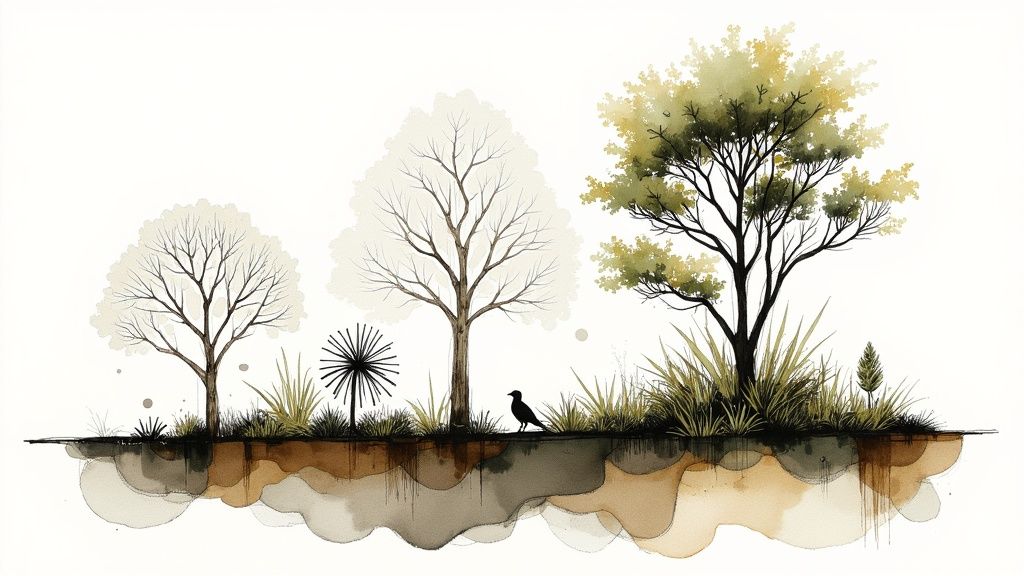
This approach is one of the most sustainable and rewarding garden ideas NZ offers, as it connects your property to the wider ecological landscape. Once established, these gardens require minimal watering, fertilising, or pest control because the plants have evolved to thrive in New Zealand's specific climate and soil.
How to Create Your Own Bush Haven
Creating your own native sanctuary involves more than just planting a few flaxes. It’s about building a small, functioning ecosystem. For inspiration on how to layer different plant species, you can learn more about creating a terrarium, which miniaturises these same ecological principles.
Actionable Tips for Success:
- Start with a Nurse Crop: Begin with fast-growing, hardy pioneer species like mānuka (Leptospermum scoparium) and kānuka (Kunzea ericoides). These create a sheltered microclimate that protects slower-growing, more sensitive plants as they establish.
- Eco-Source Your Plants: Purchase plants grown from seeds collected in your local area (known as eco-sourcing). These plants are genetically better suited to your specific regional conditions, increasing their survival rate. Many local native plant nurseries specialise in this.
- Group by Habitat: Arrange plants according to their natural preferences. Plant moisture-loving ferns like Asplenium and Blechnum in damp, shady spots, and place hardier shrubs like coprosmas and hebes in sunnier, more exposed areas.
- Use Natural Mulch: Apply a thick layer of natural mulch, such as tree fern fibre or bark chips. This suppresses weeds, retains soil moisture, and mimics the natural forest floor, enriching the soil as it breaks down.
2. Coastal Garden Design
A Coastal Garden Design is a style specifically crafted to thrive in the challenging conditions of New Zealand's extensive coastline. This approach focuses on using salt-tolerant, wind-resistant plants and clever design to create a beautiful and resilient space that withstands sea spray, sandy soil, and persistent winds. The result is a garden that feels harmonious with its seaside setting, offering texture, colour, and shelter.
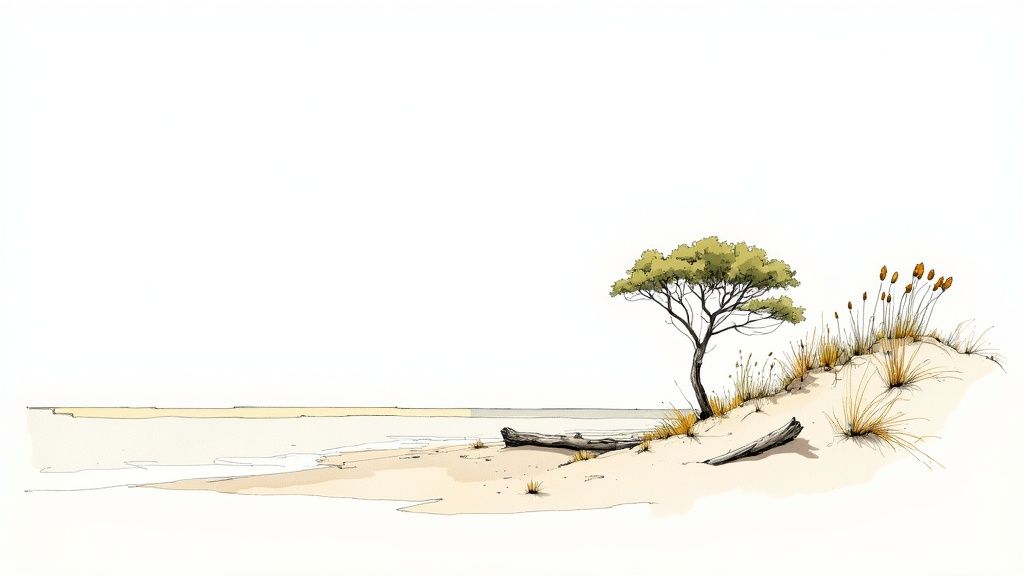
Embracing the maritime climate is key to success with this, one of the most practical garden ideas NZ gardeners can adopt for seaside properties. By selecting plants that have naturally adapted to these environments, such as those seen on the Coromandel Peninsula, you create a self-sustaining ecosystem that requires less intervention. These gardens are not just about survival; they are about creating a stunning landscape that complements the raw beauty of the ocean.
How to Create Your Own Seaside Oasis
Building a thriving coastal garden means working with nature, not against it. It involves creating shelter and selecting hardy plants that can handle the tough conditions. Expert advice often centres on building a robust framework of plants and structures to protect more delicate species within.
Actionable Tips for Success:
- Establish a Windbreak: Use iconic New Zealand natives like pōhutukawa (Metrosideros excelsa) and tī kōuka (cabbage trees) as a primary line of defence against wind. Their strong root systems and resilient foliage create a crucial shelter belt.
- Layer with Hardy Textures: Plant tough species like harakeke (New Zealand flax) and various coastal grasses (e.g., pīngao, Ficinia nodosa). These plants add movement and texture, tolerate salt spray, and help stabilise sandy soils.
- Improve Your Soil: Coastal soils are often sandy and low in nutrients. Improve soil structure and water retention by incorporating large amounts of compost and organic matter before planting.
- Create Sheltered Pockets: Use fences, low walls, or boulders to create microclimates within the garden. These sheltered pockets protect less hardy plants from the worst of the wind and salt, allowing for a greater variety of plantings.
3. Edible Food Forest
An Edible Food Forest is a dynamic gardening approach based on permaculture principles, designed to mimic a natural woodland ecosystem while yielding an abundance of food. This multi-layered system strategically combines fruit and nut trees, berry bushes, perennial vegetables, herbs, and ground covers into a largely self-sustaining garden. The result is a resilient, productive space that builds soil fertility and supports a diverse range of beneficial insects and microorganisms.
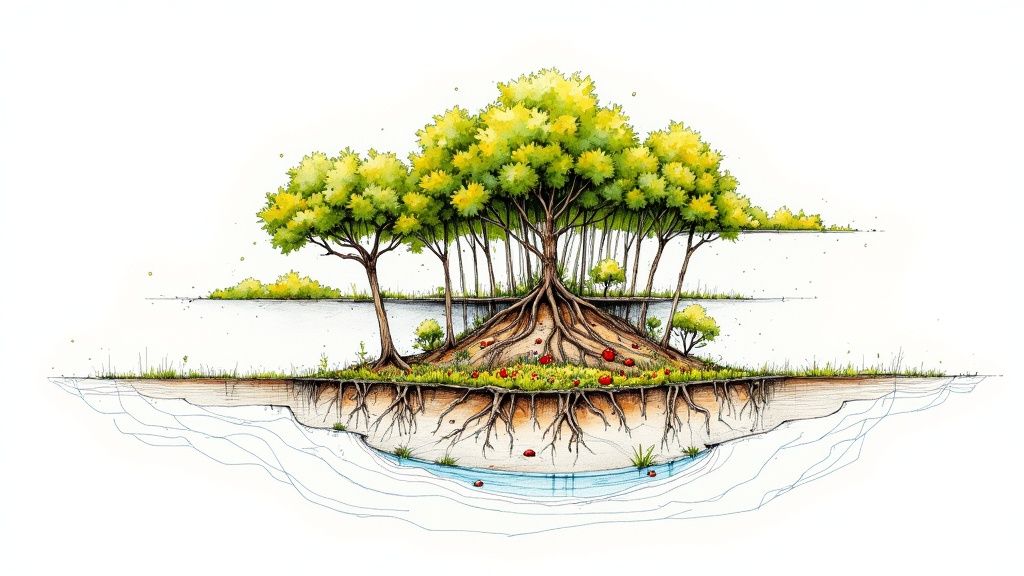
This method is one of the most rewarding and sustainable garden ideas NZ gardeners can adopt, creating a closed-loop system that reduces waste and labour over time. Pioneered in Aotearoa by figures like Kay Baxter of the Koanga Institute, this style of gardening works with nature to create food security. Once established, the forest floor shades out weeds, and deep-rooted plants draw up nutrients, minimising the need for external inputs.
How to Grow Your Own Productive Ecosystem
Building a food forest involves thoughtful planning of plant guilds, which are companion plantings that support a central element, usually a fruit tree. You can discover more about choosing the right fruit trees NZ to form the backbone of your garden. The goal is to create a living system where each plant contributes to the health of the whole.
Actionable Tips for Success:
- Start with Soil Builders: Begin by planting nitrogen-fixing support species like tagasaste (tree lucerne), kōwhai, or comfrey. These plants improve the soil structure and fertility, creating a healthy foundation for your food-producing plants to follow.
- Plant in Guilds: Arrange plants in beneficial communities. Around a central fruit tree, plant a ring of nitrogen-fixers, pest-repelling herbs like tansy or nasturtium, and ground covers like strawberries or native violets (viola filicaulis) to suppress weeds.
- Incorporate Water-Wise Plants: Select species that are well-suited to your local climate to minimise irrigation needs. In drier regions, consider drought-tolerant options like figs, olives, and pomegranates.
- Start Small and Expand: Don't try to plant the entire forest at once. Begin with a small guild around one or two trees and observe how it develops. Gradually expand the area each season as you gain confidence and resources.
4. Mediterranean Climate Garden
A Mediterranean Climate Garden embraces plants from regions with hot, dry summers and mild, wet winters, making it a brilliant, water-wise choice for many parts of New Zealand. This style features a stunning mix of aromatic herbs, silver-leafed shrubs, sculptural succulents, and iconic trees like olives and citrus. The result is a sensory, sun-drenched space that is both beautiful and resilient in the face of summer drought.
This garden design is one of the most practical and stylish garden ideas NZ gardeners can adopt, particularly in areas like Hawke's Bay, Marlborough, and Central Otago. It focuses on plants that thrive with minimal fuss, reducing water consumption and maintenance once established. Inspiration can be found in the sun-baked gardens of Waiheke Island and dedicated sections of our botanical gardens.
How to Create Your Own Slice of the Med
Building a Mediterranean garden is about capturing the essence of a sun-drenched landscape through smart plant choices and hard landscaping. It’s a style championed by many Kiwi garden experts for its suitability to our changing climate.
Actionable Tips for Success:
- Prioritise Excellent Drainage: Mediterranean plants detest wet feet, especially in our winter. Amend heavy clay soils with sand and compost, or build raised beds and gravel gardens to ensure water drains away freely.
- Plant in Autumn: Plant your Mediterranean selections in autumn. This allows their root systems to establish over the cooler, wetter months (April-August), preparing them to face the heat and dryness of their first summer.
- Use a Silver and Grey Palette: Create a cohesive look by using plants with silver or grey foliage, such as lavender, Santolina (cotton lavender), and Convolvulus cneorum. These colours reflect sunlight, helping the plants stay cool and tying the whole design together.
- Incorporate Gravel and Stone: Use gravel as a mulch and for pathways. It suppresses weeds, conserves moisture, and reflects heat, creating the perfect microclimate for plants like rosemary, thyme, and rock roses (Cistus).
5. Vertical Garden Systems
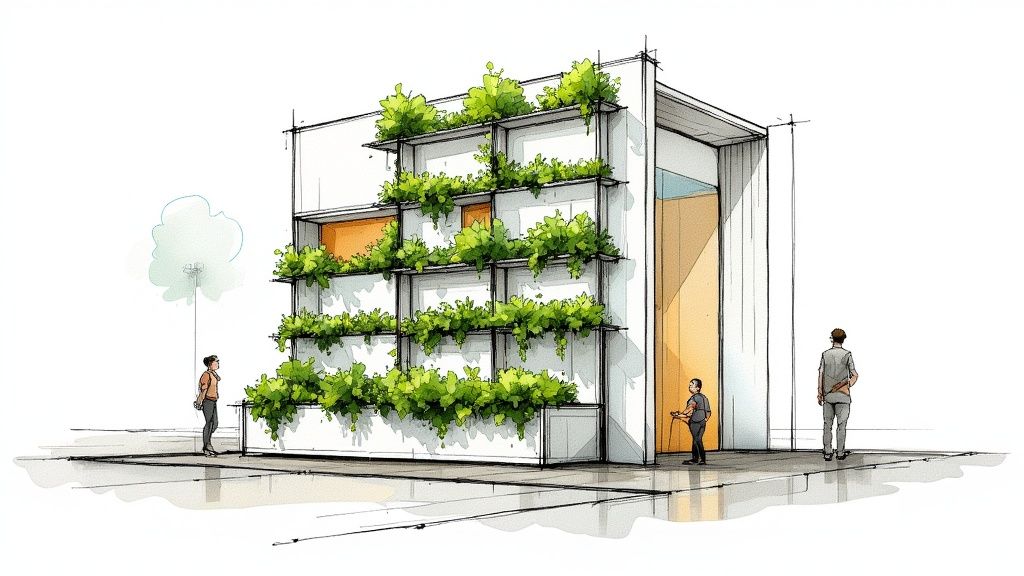
A Vertical Garden System is a space-saving solution that grows plants on vertical surfaces, making it perfect for New Zealand's increasingly dense urban environments. This approach transforms walls, fences, and balconies into productive, living green spaces, ideal for apartment dwellers in Auckland, those with compact courtyard gardens in Wellington, or anyone looking to maximise their growing area on a smaller property.
These systems range from simple pocket planters and DIY pallet gardens to sophisticated modular and hydroponic towers from local specialists. This method is one of the most innovative garden ideas NZ enthusiasts can adopt, allowing for the cultivation of herbs, leafy greens, strawberries, and ornamentals in even the tightest of spaces.
How to Build Your Own Green Wall
Successfully establishing a vertical garden means thinking differently about sunlight, water, and soil weight. The principles are similar to container gardening, but with gravity as a key consideration. You can find related inspiration for space-saving planting techniques when you explore ideas for hanging baskets, which share many of the same challenges and rewards.
Actionable Tips for Success:
- Choose Lightweight Growing Media: Standard potting mix can be heavy and compact easily. Use a lighter blend containing coco coir, perlite, and vermiculite to reduce the structural load on your wall and improve aeration for plant roots.
- Start with Herbs and Leafy Greens: These plants are generally fast-growing, shallow-rooted, and highly productive, making them ideal for vertical systems. Varieties like lettuce, rocket, parsley, mint, and thyme thrive in these conditions.
- Install Drip Irrigation: Consistent watering is crucial, as vertical planters dry out quickly. A simple, automated drip irrigation or soaker hose system ensures every plant receives adequate moisture without wasteful runoff, especially important during hot Kiwi summers.
- Ensure Adequate Sunlight: Before installing, observe how sunlight moves across the chosen wall. Most edible plants need at least 5-6 hours of direct sun. Position your garden to maximise exposure, and consider rotating plants if some levels are more shaded than others.
6. Rain Garden and Water-Wise Design
A Rain Garden is a strategically designed, sunken garden bed that collects, holds, and filters rainwater runoff from hard surfaces like roofs, driveways, and patios. This water-wise design uses layers of soil, gravel, and specific plants to clean stormwater before it slowly soaks into the ground, reducing pressure on public drainage systems and recharging groundwater. The result is a beautiful, functional garden feature that actively manages water resources.
This sustainable approach is one of the most practical garden ideas NZ has to offer, especially given our country's variable climate of heavy rainfall events and periods of drought. By capturing and utilising rainwater, you create a self-irrigating system that reduces water bills and prevents polluted runoff from entering our streams and harbours. This method is championed by organisations like Auckland Council through its water-wise initiatives.
How to Create Your Own Water-Wise Oasis
Building a rain garden is about creating a small-scale, natural water treatment system. It involves careful site selection and layering to ensure water is managed effectively, even during significant downpours. You can see excellent examples of this in action at Christchurch's Ōtākaro Avon River Corridor and various Wellington community projects.
Actionable Tips for Success:
- Design for Deluges: Plan your rain garden to handle a 1-in-10-year rainfall event for your area. It should be sized to temporarily hold the water volume from your connected hard surfaces, allowing it to drain within 24-48 hours.
- Plant in Moisture Zones: Arrange plants according to their water tolerance. Use moisture-loving native species like oioi (Apodasmia similis) and various carex sedges in the lowest, wettest part of the basin. Plant more drought-tolerant species like certain hebes or dianella on the sloped sides and edges.
- Create an Overflow System: Incorporate an overflow path or pipe near the top of the garden. This ensures that during extreme weather, excess water is safely directed away from buildings and into the conventional stormwater system, preventing flooding.
- Use a Bioretention Soil Mix: The soil is the filter. Use a free-draining mix of sand, topsoil, and compost. This combination allows water to penetrate easily while providing a medium for plants to trap pollutants.
7. Japanese-Inspired Zen Garden
A Japanese-Inspired Zen Garden brings the principles of tranquility, simplicity, and natural beauty to a New Zealand setting. This design style focuses on creating a serene, contemplative space using carefully selected elements like stone, water, and plants. It’s less about vibrant flower displays and more about creating a structured, peaceful atmosphere that encourages mindfulness and reflection. The goal is a garden that feels both artfully designed and deeply natural.
This approach is one of the most thoughtful garden ideas NZ enthusiasts can adopt, transforming a simple backyard into a personal sanctuary. By combining classic Japanese techniques with plants and materials suited to our local environment, you can create a unique space that offers year-round structure and a calming presence. These gardens are often designed to be appreciated from a specific vantage point, such as a deck or window.
How to Create Your Own Zen Space
Crafting a Japanese-inspired garden is an exercise in restraint and intention. Every element is chosen for its symbolic meaning and aesthetic contribution. The design should evoke a sense of calm and harmony, often drawing inspiration from larger natural landscapes like mountains and oceans, but on a miniature scale. For a stunning local example, look to the Hamilton Gardens' Japanese Garden of Contemplation for inspiration.
Actionable Tips for Success:
- Incorporate Local Stone: Use New Zealand schist, river stones, or greywacke to create pathways, rock arrangements (ishi-gumi), and features. The natural colours and textures of local stone ground the design in its Aotearoa context while honouring the Japanese aesthetic.
- Borrow the Landscape: Utilise the Japanese principle of shakkei or "borrowed scenery." Frame existing views of distant hills, mature trees, or even the sky to make your garden feel larger and more connected to the world beyond its boundaries.
- Focus on Evergreen Structure: Select plants that provide year-round form and texture. Native options like mini toetoe (Chionochloa), certain coprosmas, and graceful ferns can be used alongside traditional choices like Japanese maples (Acer palmatum) and mondo grass.
- Embrace Asymmetry and Simplicity: Avoid perfect symmetry. Arrange elements like rocks, plants, and lanterns in balanced but asymmetrical groupings, often in threes or fives. This creates a more natural and dynamic composition, leaving space for the eye and mind to rest.
8. Cottage Garden Style
A Cottage Garden is an informal, romantic design that celebrates abundance, blending ornamental and edible plants in a dense, joyful tapestry of colour and texture. This traditional English style has been lovingly adapted across New Zealand, creating charming, productive spaces that feel both personal and timeless. It ditches rigid lines and formal layouts in favour of a seemingly spontaneous but carefully curated profusion of flowers, herbs, and vegetables growing together.
This approach is perfect for gardeners who love a hands-on, evolving space that offers continuous interest throughout the seasons. A well-planned cottage garden is a feast for the senses and a haven for pollinators. From the iconic gardens at Larnach Castle to countless rural homesteads, this style embodies a sense of heritage and warmth that resonates deeply within New Zealand’s gardening culture.
How to Create Your Own Cottage Haven
The key to a successful cottage garden is creating controlled chaos. It’s about orchestrating a mix of plants that support each other, ensuring there’s always something flowering, fruiting, or ready to harvest. Sourcing heritage seeds from local providers like the Koanga Institute can ensure varieties are well-suited to this style.
Actionable Tips for Success:
- Choose Resilient Varieties: Select plants that can handle your local climate. In warmer, more humid parts of the North Island, opt for disease-resistant roses and perennials. In cooler South Island regions, choose frost-hardy varieties.
- Embrace Heritage Plants: Incorporate New Zealand heritage flowers and vegetables. Plants like the 'Māori potato' (taewa) and old-fashioned sweet peas or dahlias add an authentic, local touch and are often well-suited to our conditions.
- Plan for Vertical Growth: Maximise your space with climbing plants. Use sturdy trellises, arches, or obelisks for climbing roses, clematis, beans, and passionfruit to draw the eye upward and add a sense of enclosure.
- Practise Succession Planting: To ensure your garden is never bare, plan for continuous colour. As one plant finishes flowering, have another ready to take its place. Plant spring bulbs between summer-flowering perennials, and sow new annuals every few weeks.
9. Alpine and Rock Garden
An Alpine and Rock Garden is a specialised design that mimics the rugged, windswept beauty of New Zealand’s mountain environments. This style uses stones, gravel, and carefully selected alpine plants to create a miniature mountain landscape, perfect for properties with natural slopes or for adding dramatic texture to a flat area. The result is a stunning, low-water garden that showcases plants adapted to harsh, free-draining conditions.
This is one of the most structurally interesting garden ideas NZ enthusiasts can try, especially in regions with a strong alpine identity like Canterbury and Otago. It celebrates resilience and subtle beauty, focusing on unique plant forms, foliage textures, and delicate flowers. The design revolves around providing excellent drainage, as alpine plants are more sensitive to winter wet than to cold itself. For inspiration, the Christchurch Botanic Gardens' rock garden is a magnificent example.
How to Build Your Own Mountainscape
Creating an authentic rock garden is about understanding the needs of high-altitude plants and replicating their natural habitat. The key is controlling drainage and carefully placing rocks to create planting pockets that offer shelter and specific sun exposures, much like a natural mountain crevice. The New Zealand Alpine Garden Society provides a wealth of specialised knowledge for enthusiasts.
Actionable Tips for Success:
- Use Local Stone: Select local rock, such as schist in Otago or greywacke in Canterbury, to give your garden an authentic sense of place. Arrange stones in naturalistic drifts, burying at least one-third of each rock to ensure stability and a realistic appearance.
- Prioritise Drainage: The most critical element is drainage. Create scree beds or mounds using a mix of coarse sand, gravel, and minimal topsoil. This lean, gritty medium prevents roots from becoming waterlogged, especially during wet NZ winters.
- Plant in Autumn or Spring: Establish alpine plants in autumn or early spring. This allows their root systems to settle in before the extremes of summer heat or the depths of winter, giving them the best chance of survival.
- Choose Suitable Species: Start with hardy New Zealand natives like the vegetable sheep (Raoulia spp.), mountain daisies (Celmisia spp.), and dwarf hebes. These plants are perfectly adapted to local conditions and offer incredible texture and form.
Garden Style Comparison Matrix
| Garden Type | Implementation Complexity 🔄 | Resource Requirements ⚡ | Expected Outcomes 📊 | Ideal Use Cases 💡 | Key Advantages ⭐ |
|---|---|---|---|---|---|
| Native New Zealand Bush Garden | Moderate - patience needed | Moderate - initial native plant cost | Supports native wildlife, low maintenance once mature | Conservation, native habitat restoration | Low maintenance, drought tolerant, wildlife support |
| Coastal Garden Design | Moderate - requires salt/wind knowledge | Moderate - salt-resistant plants and materials | Thrives in coastal climates, wind and salt tolerant | Coastal properties, maritime microclimates | Adapted to coastal conditions, low water use |
| Edible Food Forest | High - requires permaculture design | High - diverse plants and water systems | Year-round food production, soil health enhancement | Food production, sustainable gardening | High productivity, self-fertilizing, biodiversity |
| Mediterranean Climate Garden | Moderate - drainage and drought adaptations | Low to moderate - drought-tolerant plants | Water-efficient, year-round structure and aroma | Warm, dry summer regions | Water efficient, culinary and therapeutic use |
| Vertical Garden Systems | High - structural and irrigation setup | Moderate to high - system materials and maintenance | Maximizes space, easier crop access | Urban small spaces, balconies, indoor gardens | Space-saving, privacy screens, reduced pests |
| Rain Garden & Water-Wise Design | Moderate to high - hydrology understanding | Moderate - earthworks and plant varieties | Reduces runoff, saves water bills, environmental benefits | Sustainable landscaping, urban stormwater control | Water savings, erosion control, habitat creation |
| Japanese-Inspired Zen Garden | Moderate - quality materials and design control | Moderate - stone, plants, materials | Peaceful, low-maintenance contemplative space | Small urban gardens, meditation spaces | Timeless, low maintenance, formal tranquility |
| Cottage Garden Style | Moderate to high - ongoing maintenance | Moderate to high - diverse plantings and water | High biodiversity, continuous harvest, romantic appearance | Informal garden styles, heritage and mixed uses | Biodiversity, continuous blooms, adaptable |
| Alpine and Rock Garden | High - site-specific soil and drainage | Moderate to high - specialized plants and stone | Showcases alpine flora, dramatic and drought-tolerant garden | Mountainous or rocky environments | Low maintenance, hardy plants, dramatic effect |
Bringing Your New Zealand Garden Vision to Life
From the rugged beauty of a native New Zealand bush garden to the structured peace of a Japanese-inspired Zen space, we have explored a diverse palette of garden ideas tailored for Aotearoa's unique landscapes. Each concept, whether it's the productive chaos of a cottage garden or the resilient design of a coastal plot, offers a distinct way to connect with nature and enhance your home. The journey through these nine distinct styles demonstrates that a stunning garden is not about having a huge section or an unlimited budget; it's about smart design, thoughtful plant selection, and aligning your vision with your local environment.
The most crucial takeaway is the importance of synergy. The best garden ideas for NZ are those that work with our climate, not against it. A water-wise rain garden cleverly manages our sometimes-heavy rainfall, while a Mediterranean-style garden thrives in our sun-drenched northern regions. Choosing a theme that suits your specific location, from a windy Wellington coast to a frosty Central Otago basin, is the foundational step towards a garden that flourishes with minimal struggle.
Your Actionable Next Steps
To move from inspiration to implementation, consider these practical steps:
- Assess Your Site: Before buying a single plant, take time to observe your space. Note the sun's path throughout the day, identify windy spots, check your soil type, and understand the microclimate of your property. This initial analysis will guide all future decisions.
- Start Small and Scale Up: You don't need to transform your entire backyard overnight. Begin with a single garden bed or a small corner dedicated to your chosen theme. This makes the project manageable, allows you to learn as you go, and provides a rewarding sense of accomplishment that fuels further progress.
- Develop a Phased Plan: Create a simple sketch and a timeline. Phase one might be soil preparation and hardscaping. Phase two could be planting foundational trees and shrubs. Phase three might involve adding perennial flowers and ground covers. This organised approach prevents overwhelm and helps manage costs.
Ultimately, crafting your garden is a deeply personal and rewarding process. It’s an opportunity to create a sanctuary for relaxation, a productive source of food, or a vibrant habitat for native wildlife. By embracing these garden ideas, you're not just decorating an outdoor area; you are cultivating a living extension of your home that will evolve and bring joy for years to come. Be patient, embrace the process of trial and error, and enjoy the profound satisfaction of watching your New Zealand garden vision take root and grow.
Ready to start planting? Explore Jungle Story for an extensive online marketplace featuring everything from rare native plants and edible seedlings to stylish pots and essential gardening tools from trusted NZ sellers. Find the perfect specimens to bring your garden ideas to life at Jungle Story.