
Picture this: a garden that’s less work, grows healthier plants, and fits neatly into whatever space you have. That’s the magic of a raised garden bed. Think of it as a purpose-built garden box that sits above the ground, giving you total command over the growing environment. This guide will show you exactly why this method is popping up in backyards all across New Zealand.

Why Raised Garden Beds Are Perfect for Kiwi Backyards
Raised garden beds are a simple but incredibly effective answer to many of the classic challenges we face as Kiwi gardeners. Whether you're dealing with Auckland's heavy clay or trying to dodge those unpredictable spring frosts down in Canterbury, gardening in a contained, elevated bed gives you a massive advantage.
It's like having a blank canvas for your garden. Instead of fighting with your existing soil—which might be compacted, rocky, or just plain lacking in nutrients— you get to create the perfect mix from day one. This control is a complete game-changer, whether you're growing vibrant veggies, fragrant herbs, or a riot of colourful flowers.
Solving Common New Zealand Gardening Problems
Let's be honest, many of us are working with less-than-perfect ground conditions. Raised garden beds tackle these problems head-on by creating a self-contained, optimised little ecosystem for your plants.
- Superior Drainage: After a wet winter or a classic Kiwi downpour, waterlogged soil can literally drown your plant roots. Raised beds let all that excess water drain away freely, which means no root rot and much happier plants.
- Faster Soil Warming: The soil in an elevated bed warms up much quicker in spring compared to the ground. This gives you a fantastic head start on the growing season, letting you plant earlier and enjoy a longer harvest.
- No More Heavy Clay: If your backyard is solid, dense clay, you know what a back-breaking mission it is to dig. A raised bed lets you skip that battle entirely. Just fill it with a beautiful, light, fertile soil mix and you're good to go.
A raised garden bed gives you the power to create a thriving garden almost anywhere, no matter what your native soil is like. It’s how you turn those tricky spots into green, productive oases.
More Than Just a Box of Dirt
Beyond fixing soil and drainage woes, this way of gardening brings a lovely, organised feel to your outdoor space. The defined edges look tidy and make jobs like weeding and watering so much easier to manage. This accessibility is also a huge part of what makes them so popular for community projects. If you're curious about the bigger picture, you can see how they contribute to urban grow community initiatives.
At the end of the day, raised garden beds make successful gardening feel much more achievable for everyone, from seasoned green thumbs to complete beginners. They’re a controlled, productive, and genuinely enjoyable way to grow your own food and flowers.
The Key Benefits for New Zealand Gardeners
For Kiwi gardeners, raised beds aren't just a trend; they offer real-world solutions to some of our most common gardening headaches. Whether you're dealing with soggy soil in a rainy region or just want to get a jump-start on the growing season, the advantages are massive. It’s no wonder so many of us are making the switch.
One of the biggest wins is getting total control over your soil. Forget wrestling with heavy clay, nutrient-poor sand, or compacted ground that’s tough as rock. A raised bed is your blank canvas. You get to build the perfect growing mix from the ground up—light, fluffy, and absolutely packed with all the good stuff your plants will love.
This means you can create the perfect home for whatever you want to grow. Got a craving for kūmara? They need deep, loose soil to thrive. Fancy growing some blueberries? They’re fussy and need acidic soil. With a raised bed, you can nail those specific conditions, which is the secret to healthier plants and bigger harvests.
Conquer the Climate and Extend Your Season
Let's be honest, New Zealand's weather can be all over the place. But a raised bed gives you a bit of an edge, helping you manage the climate in your own backyard.
- Fantastic Drainage: If you're gardening somewhere that gets a lot of rain, like the West Coast or Northland, you know how quickly soil can turn into a swamp. Raised beds are a lifesaver, letting all that excess water drain away freely. No more waterlogged roots, no more rot.
- A Head Start in Spring: The soil in a raised bed warms up much faster than the ground does in spring because the sun and air can get to it from all sides. For those of us in cooler spots like Otago and Southland, this is gold. It means you can get planting earlier and squeeze a bit more out of the growing season.
Think of a raised garden bed as your garden's personal microclimate. You can warm it up faster, ensure it drains perfectly, and fill it with the exact nutrients your plants crave, giving you a distinct advantage no matter the season.
Easier on Your Back
Gardening should be a pleasure, not something that leaves you with an aching back for days. This is where the simple genius of a raised bed really shines, making it easier and more enjoyable for everyone, no matter your age or mobility.
When your garden is at a comfortable height, there’s far less bending and kneeling involved. Weeding, planting, and picking your produce suddenly become much more relaxed tasks. It’s a small change that can make a massive difference, turning gardening from a chore into a genuinely therapeutic escape.
A Fortress Against Pests and Weeds
A raised bed acts like a mini fortress for your precious plants. Those raised walls create a physical barrier that makes it a whole lot harder for common critters like slugs and snails to munch on your tender seedlings. It's a natural line of defence that can seriously cut down on pest damage without you having to reach for any sprays.
On top of that, you’re starting with a clean slate. By filling your bed with fresh, weed-free soil and compost, you avoid importing a tonne of weed seeds from the get-go. This means way less time spent on your hands and knees pulling out pesky weeds all season long.
Growing your own food is becoming more important, too. With our best farmland often squeezed by urban growth, backyard gardening is a powerful way to boost our food security. Back in 2017, New Zealand produced over 1.1 million tonnes of vegetables, but that capacity is under threat. Raised beds help us grow more food in smaller urban spaces. You can read more about how this supports New Zealand's domestic vegetable production.
Choosing the Best Materials for Your Garden Bed
The foundation of any great raised garden bed is what you choose to build it with. This decision isn't just about looks; it shapes how long your garden will last and how it'll handle New Zealand’s unique climate. From the classic, rustic charm of timber to the sleek lines of modern metal, your choice sets the tone for your entire gardening space.
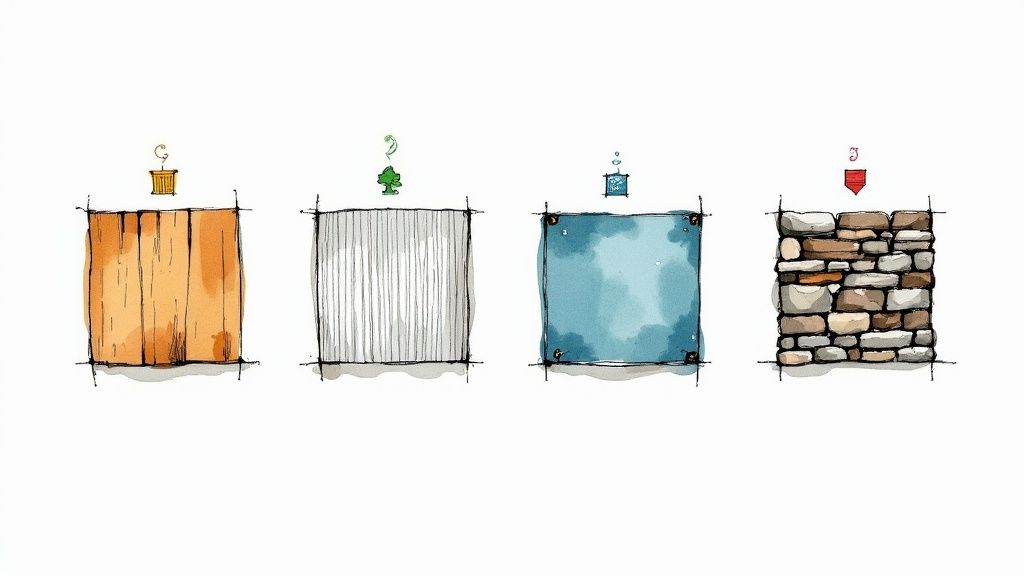
Let's walk through the most popular options available to Kiwi gardeners. We’ll weigh up the pros and cons of each to help you land on the perfect fit for your budget, style, and gardening dreams.
Classic Timber: A Timeless Choice
When you picture a raised bed, timber is probably the first thing that comes to mind, and for good reason. It has a natural, earthy look that just melts into any backyard landscape.
But not all woods are created equal, especially when you factor in durability and food safety. Here in New Zealand, our damp climate means we have to be smart about our timber choices, particularly if we want to grow veggies without any chemical worries.
While treated pine is common and fantastic at resisting rot, many gardeners growing edibles prefer to go untreated. That’s where macrocarpa really shines. It's a naturally durable timber that can stand up to our damp, changeable weather for years without needing chemical treatments, making it a top pick for food gardens.
For gardens focused on flowers or ornamentals where longevity is everything, it's also worth understanding options like pressure-treated timber.
Modern Corrugated Metal
If you're after a more contemporary vibe, corrugated metal – usually steel or galvanised iron – is a fantastic and increasingly popular choice. These beds bring a sleek, almost industrial-chic look to the garden and are incredibly durable.
Metal beds are brilliant at shrugging off the elements, from harsh sun to relentless rain, without warping or rotting. They also warm up faster in the spring, which can give your plants a welcome head start on the growing season. The upfront cost might be a bit higher than some timber options, but their long life often makes them a great investment.
A huge plus for metal raised beds is their incredible lifespan. A well-made one can easily last for 20 years or more with barely any upkeep, outlasting many types of untreated timber.
Stone or Brick: An Enduring Statement
For a permanent and seriously striking garden feature, you just can't beat stone or brick. These materials create a timeless, established feel and can be customised to perfectly match your home's architecture or existing landscaping.
Building with stone or brick is definitely more labour-intensive and costly, often needing a bit of masonry skill to get right. The payoff, however, is a structure that’s built to last for generations. These beds also do a great job of retaining heat, which can help protect your plants' roots during those cooler nights.
Other Material Options
Beyond the big three, a few other materials are worth a look:
- Recycled Plastics: A great eco-friendly choice, these are made from recycled materials and are extremely durable. They won't rot, splinter, or break down, offering a low-maintenance solution that lasts for decades.
- Concrete Blocks: A budget-friendly and super simple DIY option. Cinder blocks are easy to stack and arrange into any shape you like, though some people find their look a bit less natural than wood or stone.
If you want to take a deeper dive into timber specifically, our guide on raised wooden garden beds has even more insights and tips.
A Quick Comparison for Kiwi Gardeners
Choosing a material can feel overwhelming, so I've put together this simple table to help you compare the top contenders based on what matters most to gardeners here in New Zealand.
Comparison of Raised Garden Bed Materials in New Zealand
| Material | Durability (NZ Climate) | Average Cost | Food Safe? | Aesthetic |
|---|---|---|---|---|
| Untreated Macrocarpa | High (10-15 years) | Moderate | Yes | Natural, Rustic |
| Treated Pine | Very High (15+ years) | Low to Moderate | With caution | Classic, Paintable |
| Corrugated Metal | Excellent (20+ years) | Moderate to High | Yes | Modern, Industrial |
| Stone or Brick | Exceptional (Lifetime) | High | Yes | Timeless, Formal |
| Recycled Plastic | Excellent (20+ years) | Moderate | Yes | Simple, Utilitarian |
Ultimately, the best material for your raised bed is the one that ticks all your boxes – it should fit your budget, match your garden's style, and suit how much (or how little) maintenance you want to do down the track.
Finding the Perfect Spot and Size
Right, let's get this sorted. Figuring out where to put your new raised garden bed is probably the most important decision you'll make. It’s a bit like choosing the perfect spot to build a house – a great location sets you up for success from day one, while a bad one just creates headaches down the track. The spot you choose directly impacts how well your plants will grow, so it pays to get this part right.
The great thing about a raised bed is you don't need a huge, perfectly flat lawn to get started. They're incredibly flexible. Your mission is simply to find the best possible compromise between sun, water access, and convenience that your backyard has to offer.
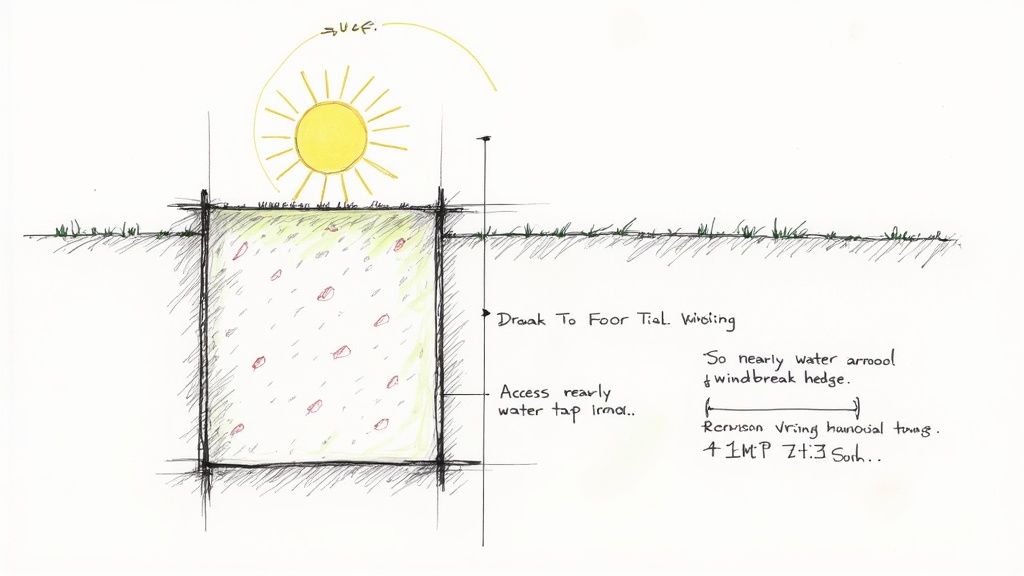
Become a Sun Detective
Sunlight is the number one ingredient for a stonking good veggie garden. Most of the crowd-pleasers like tomatoes, capsicums, and beans need a solid six to eight hours of direct sunlight every day to give you a decent harvest. Before you even think about building, you need to become a sun detective in your own backyard.
Spend a day just watching your yard. See where the sun is hitting at different times – maybe check at 9 am, midday, and then again at 3 pm. Don't forget that here in New Zealand, the sun tracks lower across the northern sky in autumn and winter, which means longer shadows. Your best bet is usually on the northern side of any big structures like your house, the garage, or a tall fence to really soak up that precious sunlight.
Think About Practical Access
Gardening is more than just popping seeds in the ground. You'll be lugging in soil, hauling out weeds, and eventually, carrying out your delicious produce. You have to think about the logistics:
- Water Source: How close is the nearest tap? Trust me, dragging heavy watering cans across the garden gets old really fast, especially in the middle of a dry summer. Placing your bed within easy reach of a hose will save you a world of effort.
- Pathways and Access: Make sure you leave enough room to walk comfortably around the entire bed. You'll need space to kneel down for weeding and, ideally, to get a wheelbarrow in and out without a drama.
- Shelter from the Wind: We all know how windy it can get in New Zealand. Finding a spot with a bit of protection from the prevailing southerly or a gusty nor'wester will stop your plants from getting battered or drying out too quickly. A fence, a hedge, or even the side of the house can work wonders as a windbreak.
Choose the Right Dimensions
The size of your raised bed should be all about comfort and common sense. The goal is to be able to reach every corner of your garden without ever stepping on the soil, which squashes it down and makes it harder for roots to grow.
The golden rule for width is this: make sure you can comfortably reach the centre of the bed from the side. For most of us, that means a maximum width of 1.2 metres if you can get to it from both sides, or about 75 centimetres if it’s pushed up against a wall or fence.
The length is much more flexible – it can be whatever fits your space. Just be aware that really long wooden beds can sometimes start to bow outwards from the weight of the soil unless you add some extra support in the middle. This is where raised metal garden beds really shine; they're built to resist that pressure. Given New Zealand’s varied climate, from humid coastlines to frosty inland spots, their resilience is a huge plus. While a wooden bed might give you 5-15 years, a quality metal one can last up to 50 years, making it a brilliant long-term investment. You can learn more about why metal garden beds are ideal for New Zealand conditions.
Creating The Ultimate Soil Mix For Your Bed
Now that your raised garden bed has the perfect home, it’s time to talk about what goes inside it. The soil is the absolute heart and soul of your garden. It’s where your plants will find the water, air, and nutrients they need to grow strong and healthy.
One of the biggest advantages of a raised bed is getting to create a superior soil mix from scratch. You get to build a thriving ecosystem right from the ground up.
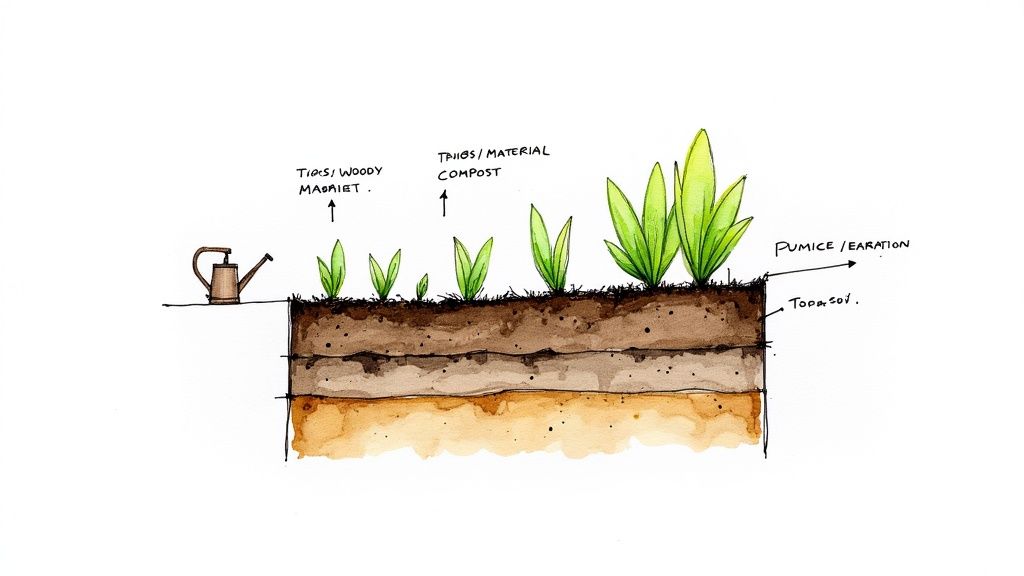
Forget about battling with heavy clay or struggling with sandy soil. Here, we get to play soil scientist and craft the perfect blend that will make your veggies and flowers sing. We’ll start by building a nutrient-rich base, then top it off with the ideal growing medium.
The Lasagna Method: Building a Healthy Base
A fantastic, budget-friendly way to fill the lower half of a deeper raised bed is with the "lasagna" or hügelkultur method. It’s a clever technique that involves layering organic materials that slowly break down over time.
This process creates a long-lasting source of nutrients while also improving drainage and moisture retention. It's a brilliant way to recycle garden waste and build incredibly fertile soil. Think of it like building a compost pile directly in your bed:
- Cardboard Foundation: Start by laying down a layer of plain cardboard at the very bottom. This acts as a natural weed mat, smothering any grass or weeds underneath.
- Brown Layer: Next, add a thick layer of "brown" carbon-rich materials. Think small twigs, branches, dried leaves, and wood chips. This layer creates air pockets for excellent drainage.
- Green Layer: Follow this with a layer of "green" nitrogen-rich materials like lawn clippings, vegetable scraps, and coffee grounds.
- Repeat: Keep alternating brown and green layers until the bed is about halfway full, finishing with a brown layer on top.
This base will compost down slowly, feeding your soil and attracting beneficial microorganisms. Over the years, it turns the bottom of your bed into a rich, spongy reservoir of goodness.
The Perfect Recipe for Your Top Layer
The top 30cm of your raised bed is the most critical zone. This is where your plants' roots will do most of their growing, so you need a balanced, light, and fertile mix.
A tried-and-true recipe for success is the simple one-third blend. Aim for a mix that is roughly:
- 1/3 Quality Topsoil: This forms the mineral base of your soil, providing structure and essential trace elements.
- 1/3 Rich Compost: This is the powerhouse ingredient, packed with organic matter and beneficial microbes that feed your plants.
- 1/3 Aeration Material: This component keeps the soil light and fluffy, preventing compaction and ensuring roots get plenty of oxygen.
This balanced blend ensures your plants have everything they need: topsoil for substance, compost for nutrition, and pumice or perlite for perfect drainage and aeration. It's the ultimate recipe for a happy and productive raised garden bed.
Sourcing these ingredients is straightforward. Garden centres and landscape suppliers across New Zealand sell bagged topsoil and compost. For aeration, pumice is a great locally available option, while perlite and vermiculite are also excellent choices for keeping the mix light and airy.
If you’re keen to produce your own nutrient-rich compost, you can learn more from our guide on how to start composting at home.
Mixing these components together creates a soil that is far superior to typical garden dirt. It holds moisture without becoming waterlogged, provides a steady stream of nutrients, and gives roots the freedom to grow deep and strong—setting the stage for a truly magnificent harvest.
A Seasonal Guide to Planting and Maintenance
Your raised garden bed is built, filled with beautiful soil, and sitting there just waiting for you. Now the real fun begins—turning that empty box into a thriving, year-round source of fresh food.
The secret to success with a raised bed is getting in tune with the rhythm of the seasons. It's all about tailoring what you plant and how you care for it to match New Zealand’s unique climate. This guide breaks down the year into a simple framework, so you know exactly what to do from the first signs of spring to the depths of winter. A little bit of planning makes all the difference.
Spring Planting and Care (September - November)
Spring is when everything seems to explode with life. As the soil in your raised bed finally starts to warm up, it’s the perfect time to get a huge variety of quick-growing vegetables and herbs in the ground.
This is the moment to sow seeds for:
- Leafy Greens: Get lettuces, rocket, spinach, and silverbeet planted for a non-stop supply of fresh salad fixings.
- Root Vegetables: Pop radishes, beetroot, and spring onions into the soil for some of your earliest harvests.
- Legumes: Peas and broad beans absolutely love the mild spring weather and will be ready to pick before the summer heat really kicks in.
Once your seedlings start poking through, keep the soil consistently moist but never soggy. Spring weather can be all over the place, so a layer of mulch like pea straw or lucerne is a great idea to protect the soil and hold in some warmth. Now's also the time to start thinking about summer favourites. Getting tomato seedlings started now will set you up for a massive summer crop.
Summer Maintenance (December - February)
Summer in a raised garden bed is all about three things: watering, feeding, and harvesting. That elevated soil can dry out incredibly fast under the hot Kiwi sun, so staying on top of your watering is non-negotiable.
A deep, thorough watering every two or three days is way more effective than a quick sprinkle every day. It encourages plant roots to dig deeper into the cooler soil, making them much tougher during dry spells.
During these peak growing months, your plants are hungry. A fortnightly feed with a liquid fertiliser, like a seaweed tonic or some worm tea, will give them the boost they need for healthy growth and big yields. And keep picking those leafy greens and beans—the more you harvest, the more they'll produce!
Autumn Focus (March - May)
Autumn is a crucial transition period in the garden. As your summer crops finish up, it’s time to clear out the spent plants and get your raised bed ready for the cooler months. This is the perfect opportunity to revitalise your soil by adding a fresh 5-10cm layer of compost.
It's also the prime planting season for hardy winter veggies that will actually thrive as the temperature drops:
- Brassicas: Plant seedlings of broccoli, cauliflower, cabbage, and kale.
- Root Crops: Sow carrots, parsnips, and turnips directly into the soil.
- Alliums: Get your garlic cloves and onion seedlings in the ground now for a harvest next summer.
Winter Protection and Planning (June - August)
Growth definitely slows down in winter, but your garden doesn’t have to grind to a halt. The crops you planted back in autumn will keep maturing, giving you fresh produce right through the coldest months.
To give your plants a hand, protect them from the harshest frosts by covering your raised bed with a frost cloth or a cloche on particularly cold nights. It’s a simple step that can make a massive difference. Winter is also the perfect time for a bit of garden dreaming—plan out new crop combinations, flick through seed catalogues, and get excited for spring all over again.
Common Raised Garden Bed Questions
As you start getting your head around raised garden beds, a few questions are bound to pop up. It’s totally normal. To help you get going with confidence, we’ve answered some of the queries we hear most often from Kiwi gardeners.
Think of this as your quick-start guide for getting the basics sorted. Nailing these little details right from the beginning will set you up for a fantastic, productive garden.
How Deep Should My Raised Garden Bed Be?
The honest answer? It really depends on what you’re hoping to grow. Different plants have different needs, so matching your bed's depth to your future veggies is a smart first step.
- A depth of 20-30cm is absolutely fine for most leafy greens like lettuce and spinach, and it’s plenty for a good range of common herbs.
- For anything with deep roots, like carrots, parsnips, or kūmara, and for bigger plants like tomatoes, you’ll want a bit more room to move. Aim for a deeper bed of 30-45cm.
A good rule of thumb is that deeper beds are generally more forgiving. They hold onto moisture for longer and give roots plenty of space to stretch out, which makes for stronger, healthier plants, especially when a hot, dry summer rolls around.
What Goes on the Bottom of the Bed?
Before you get excited and start tipping in soil, what you put down first can make a huge difference to the health of your bed in the long run.
Always start by laying plain, un-glossy cardboard or a few sheets of newspaper directly onto the ground where your bed will go. It’s a simple trick, but it acts as a brilliant natural weed mat, smothering any grass or weeds underneath. As it rots down, it’ll even add some good organic matter to your soil.
If you’ve got pests like rabbits or moles in your area, laying down a layer of wire mesh first is a wise move for extra protection.
Can I Use Soil From My Garden to Fill It?
While it’s tempting to just dig up soil from another part of your garden, it’s usually not the best idea on its own. Your average garden soil is often heavy, can get compacted easily, and might be full of dormant weed seeds just waiting to cause you headaches later on.
A much better way to go is to use it as just one part of a richer mix. A great recipe is to combine roughly one-third of your garden soil with one-third good-quality compost and one-third something for aeration, like pumice. This blend creates a much lighter, more fertile home for your plants.
How Often Do I Need to Water a Raised Bed?
Raised beds are fantastic for drainage, but that advantage means they can also dry out a lot quicker than a traditional garden patch. This is especially true during a classic Kiwi summer, so regular watering is key.
The easiest way to check is the good old finger test. Just poke your finger about 5cm into the soil. If it feels dry down there, it’s definitely time to give the bed a good, slow soak. Always aim for the base of the plants rather than spraying the leaves.
Ready to create your dream garden? At Jungle Story, we offer a huge selection of plants, seeds, and tools to bring your raised garden bed to life. Start exploring our collections today!