
Yes, Alpinia zerumbet absolutely thrives in many parts of New Zealand. If you're in a subtropical or warmer temperate spot, you're in luck. Its lush, dramatic foliage and unique flowers make it a go-to for Kiwi gardeners wanting to inject a bold, tropical accent into their patch.
Introducing Shell Ginger to Your NZ Garden
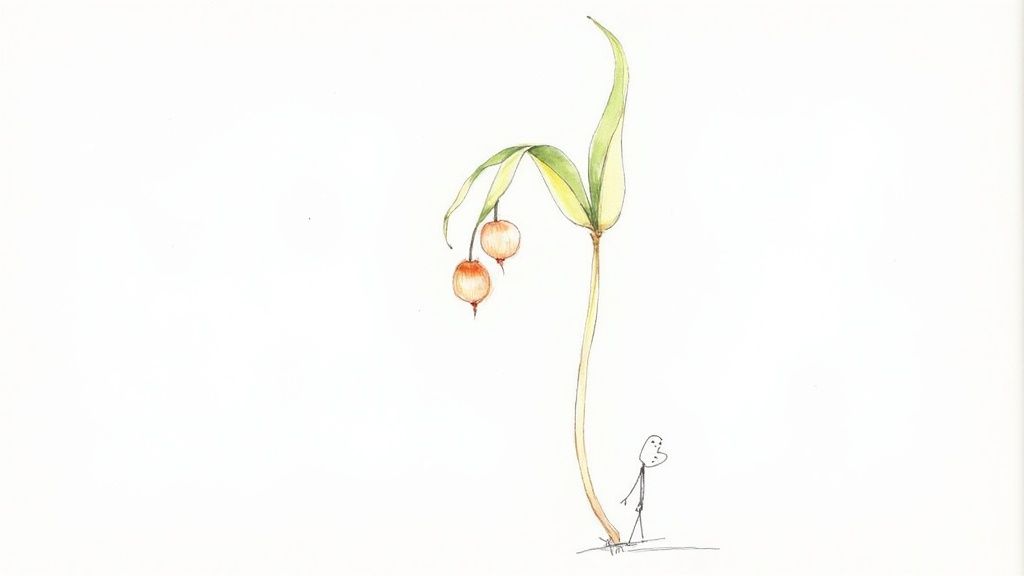
If you've been dreaming of bringing a slice of the tropics to your backyard, then Alpinia zerumbet is your plant. This stunner, often called shell ginger, is quickly becoming a favourite in New Zealand gardens, and for good reason. It delivers a massive dose of drama without demanding too much in return.
Just to be clear, this isn't the ginger you cook with. It's a highly ornamental cousin, grown for its incredible architectural form and lush good looks.
Think of it as the backbone of a subtropical planting scheme. It brings height, texture, and a vibrant green canvas that makes everything else around it look even better. The real magic, though, happens in late summer and autumn. That's when it produces these elegant, drooping clusters of fragrant flowers. The pearly-white blossoms, tipped with pink and yellow, look just like delicate seashells—hence the name.
A Gentle Giant for Kiwi Gardens
Originally from East Asia, Alpinia zerumbet has settled in beautifully across New Zealand. This hardy perennial can reach an impressive 2.4 to 3.0 metres (8 to 10 feet), making it perfect for creating a living screen or a standout focal point. It's so adaptable that you'll find it happily growing in gardens and even naturalised in lowland areas, from the balmy north right down to sheltered city courtyards further south.
While it’s a fantastic statement piece on its own, shell ginger is just one part of the puzzle. For more ideas on how to build your own lush oasis, check out our guide on other spectacular tropical plants for NZ gardens. It’ll help you find the perfect companions that love the same warm, sheltered conditions.
What to Expect from This Guide
In this guide, we're going to cover everything you need to know about growing Alpinia zerumbet here in NZ. We’ll look at the different varieties you can get your hands on, including those stunning variegated forms that add another layer of interest with their patterned leaves.
Choosing the right variety is like picking art for a room; the classic green is a calming, uniform backdrop, while a variegated one is a vibrant, eye-catching centrepiece.
We'll set you up for success from day one, covering how to pick the perfect spot, get your soil just right, and give your shell ginger the seasonal care it needs to really perform. Whether you're an old hand at gardening or just getting started, this guide will give you the confidence to grow this beautiful plant.
Choosing the Right Alpinia Variety for Your Garden
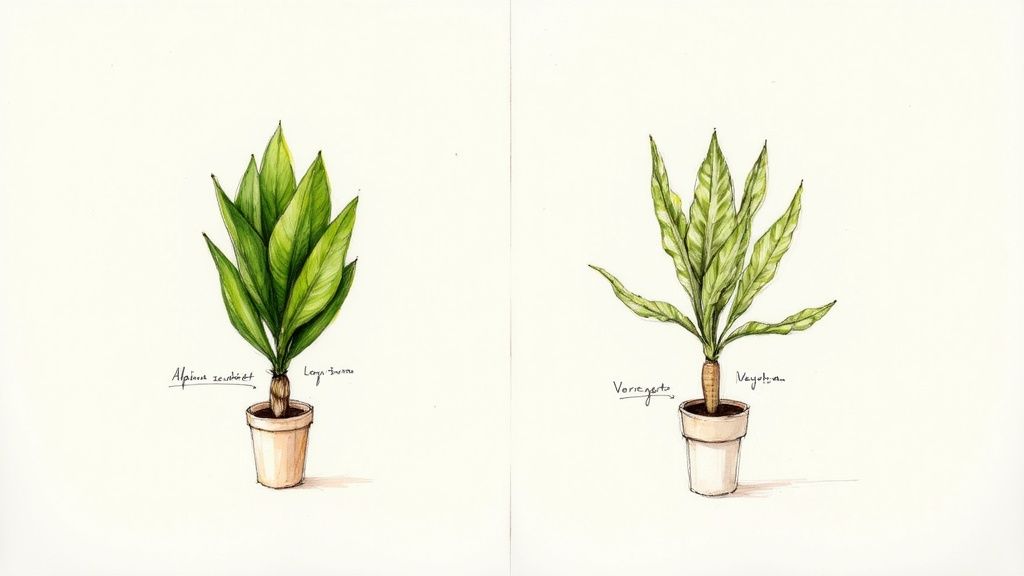
When you start looking into shell gingers, you’ll soon find there’s more than one flavour to choose from. Think of it like picking a feature wall colour; the variety you go with can completely transform the feel of your garden. Picking the right Alpinia zerumbet for your patch in NZ really boils down to the look you’re trying to create.
The choice is pretty straightforward, usually coming down to two main forms you’ll see in New Zealand nurseries: the classic, solid green species and its flashy variegated cousin. Each one brings its own vibe, so knowing the difference is key to getting it right. One offers a lush, understated elegance, while the other is a bold splash of living art.
The Classic Green Alpinia Zerumbet
The original Alpinia zerumbet is the quintessential tropical foliage plant. Its big, spear-shaped leaves are a deep, uniform emerald green, creating a dense and soothing backdrop. This is the one you want if you’re after a bold architectural statement or a privacy screen that grows like the clappers.
Its solid green colour acts as a calming canvas, making other flowers or colourful foliage really stand out. In a planting scheme, it’s the dependable anchor, bringing a sense of structure and established calm to the garden bed. It’s also generally a bit more vigorous than its variegated relative.
The Variegated Cultivar: Alpinia Zerumbet 'Variegata'
For gardeners who want a bit more drama, Alpinia zerumbet 'Variegata' is an absolute showstopper. This cultivar has the same elegant leaf shape, but every leaf is splashed and streaked with shades of creamy yellow or bright white. The effect is painterly and dynamic, instantly grabbing your attention.
'Variegata' is usually a bit more compact than the all-green version, which makes it a fantastic choice for smaller gardens or as a feature plant in a mixed border. That bright variegation is also brilliant for lighting up shadier corners of the garden, where its lighter leaves almost seem to glow.
When you plant a 'Variegata', you're not just adding greenery; you're installing a piece of living sculpture. The random patterns mean no two leaves are ever the same, adding a layer of detail that changes all season long.
To make the decision easier, here’s a simple side-by-side of the two main types of Alpinia zerumbet you'll find for sale across NZ.
Alpinia Zerumbet Varieties in New Zealand
This quick table breaks down the key differences to help you choose the perfect shell ginger for your garden's design and needs.
| Variety Name | Typical Height | Foliage Description | Best Use In NZ Gardens |
|---|---|---|---|
| Alpinia zerumbet (Standard) | 2 to 3 metres | Large, glossy, deep emerald green leaves that create a dense, uniform appearance. | Creating lush privacy screens, filling large spaces with tropical texture, or as a strong architectural backdrop. |
| Alpinia zerumbet 'Variegata' | 1.5 to 2.5 metres | Boldly striped and splashed with cream, yellow, and green, creating a bright, painterly effect. | As a striking feature plant, brightening up shady areas, or adding contrast and excitement to mixed plantings. |
Ultimately, what you pick comes down to your garden and your personal taste. Are you after a tall, dramatic green wall that screams tropical calm, or a shorter, vibrant focal point that adds a splash of light and artistic flair? By weighing up these differences, you can find the perfect Alpinia zerumbet to really shine in your New Zealand garden.
Finding the Perfect Planting Spot in New Zealand
Figuring out where to plant your Alpinia zerumbet is a bit like choosing the best spot for a picnic; you want some sun, but not so much you get fried, and definitely somewhere out of the wind. Get this right, and your shell ginger will thank you with lush, tropical growth. Get it wrong, and it’ll likely sulk.
The secret is to try and replicate its native home in East Asia—a warm, humid spot, sheltered from the nasty extremes. The good news is that plenty of Kiwi gardens have a perfect little nook. Your job is to find or create a 'microclimate', a small pocket in your garden that's a bit warmer and more protected than the rest of the yard.
Your mission is to find a spot with dappled light or bright, indirect sun. Think of the kind of light that filters through a pōhutukawa, or the soft morning sun you get on the eastern side of the house. Direct, harsh afternoon sun, especially during summer, will scorch those beautiful leaves, leaving them yellow and crispy.
Mapping Alpinia Zerumbet's Comfort Zones in NZ
New Zealand’s climate is a mixed bag, so the ideal spot for a gardener in Northland will be quite different from one in Christchurch. Here’s a rough guide for different regions:
- Northland, Auckland, and Coastal Bay of Plenty: You’ve got the most wiggle room in these subtropical havens. They can handle a bit more sun up here but will still appreciate a break from that intense midday heat.
- Waikato, Taranaki, and Lower North Island: Morning sun is your best bet. Look for a spot that gets plenty of light before noon but is shaded during the hottest part of the afternoon. Planting near a north-facing wall can also help create a cosy microclimate by radiating stored heat.
- Nelson, Marlborough, and Sheltered South Island Spots: Site selection is absolutely critical here. You'll need a frost-free, sheltered location, maybe tucked into a protected courtyard or up against a house wall that soaks up the warmth.
No matter where you live, protection from the wind is non-negotiable. The large, elegant leaves of the shell ginger are easily tattered and torn by a classic Kiwi southerly, which completely ruins its lush, tropical look. A spot sheltered by a fence, hedge, or other buildings is a must.
Decoding Light and Soil Requirements
So, what does "dappled light" really mean on the ground? It's basically a spot that gets broken sunlight, never a full-on blast for hours at a time. If you’re trying to fill a shady corner, you might find our guide to the best shade-loving plants for NZ gardens useful.
When it comes to soil, Alpinia zerumbet is pretty fussy. It needs soil that is both rich in nutrients and drains freely. It’s a classic tropical plant demand: it loves consistent moisture but absolutely hates having wet feet. Soggy, waterlogged soil is a one-way ticket to root rot.
Think of the ideal soil as a damp sponge, not a bucket of water. It should hold enough moisture to stay hydrated but let any excess drain away without a fuss. Mixing plenty of compost or other organic matter into your garden bed before planting is the best way to get this balance right.
A Note on Frost Tolerance
Alpinia zerumbet is definitely frost-tender. In areas that only get light frosts, the leaves might die back over winter, but the underground rhizomes will usually pull through if they're well protected. A thick layer of mulch, like bark chip or pea straw, spread in autumn acts like a winter duvet, insulating the rhizomes from the cold. The plant will then burst back into life in spring as the soil warms up.
For those in regions with heavy or prolonged frosts, like inland Canterbury or Otago, your safest bet is to grow shell ginger in a large container. This gives you the freedom to move it onto a sheltered veranda, into a greenhouse, or even indoors during the coldest parts of winter, ensuring it lives to see another summer.
A Seasonal Care Calendar for Shell Ginger
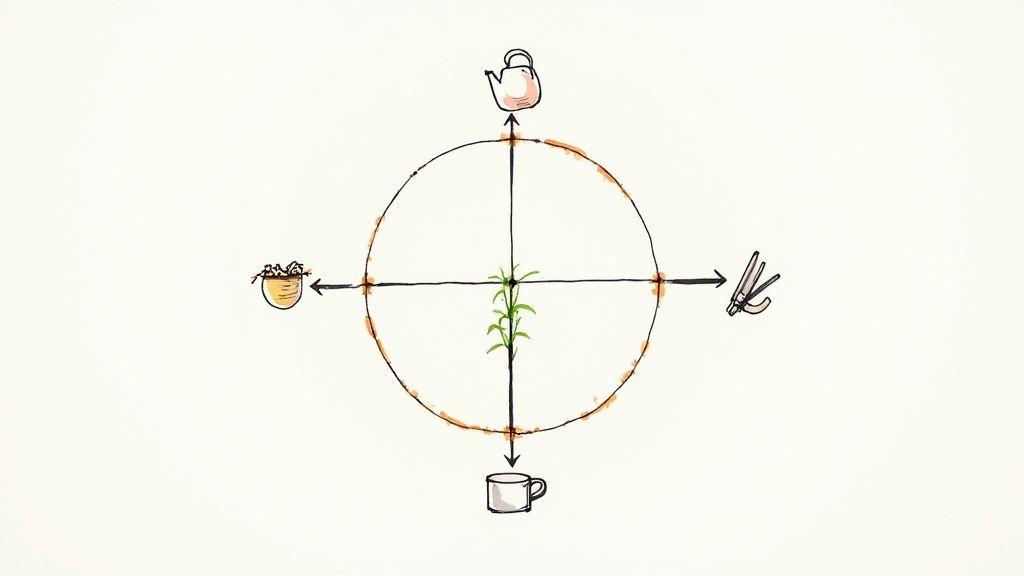
Keeping your Alpinia zerumbet looking its lush, tropical best is all about tuning into the rhythm of the New Zealand seasons. This plant has distinct moods as we move from the fresh growth of spring to the deep sleep of winter. Following a simple seasonal game plan ensures your shell ginger doesn't just survive, but truly puts on a show year after year.
Think of it this way: you’re a personal trainer for your plant. Summer is its bulking season, and winter is for rest and recovery. Each season brings a new focus, from feeding and watering to tucking it in for the cold.
Spring Kick-Start (September – November)
As the soil warms up and the days get longer, your shell ginger starts to stir from its winter nap. Spring is all about giving it the energy it needs for the massive growth spurt just around the corner. This is its most important meal of the year.
First things first, get in there and clear away any tatty, frost-bitten old foliage, cutting it right back to near the ground. This tidy-up makes way for vigorous new shoots to power through. Now, it's time for a good feed.
- Fertilising: A balanced, slow-release fertiliser scratched into the soil around the base is perfect. Even better, a generous top-dressing of rich compost and a few handfuls of sheep pellets will give it a fantastic nutrient boost.
- Watering: Start watering more regularly as new growth appears. The goal is to keep the soil consistently moist, but never a soggy mess.
This first feed really sets the stage for the whole growing season. It’s like a strong coffee in the morning for your plant—pure fuel for pushing out those incredible leaves.
Summer Growth Engine (December – February)
Summer in New Zealand is when your Alpinia zerumbet really hits its stride. All its energy is going into producing that dense, vibrant foliage. Your main jobs now are to keep the water up and provide a bit of extra food to sustain the frantic pace.
Check the soil regularly, especially if your plant is in a pot, as they can dry out in a flash on a hot day. A deep soaking once or twice a week is far better than a light sprinkle every day; it encourages the roots to search deeper for moisture.
A healthy shell ginger in summer is a thirsty plant. A simple rule is to stick your finger about 5cm into the soil; if it feels dry, it’s time to water.
To support this intense growth, a fortnightly liquid feed does wonders. Many Kiwi gardeners swear by a natural, seaweed-based tonic. If you want to dive deeper into why this stuff is so good, you can learn more about using a quality seaweed fertiliser in NZ in our detailed guide. It’s the secret to keeping the leaves a deep, glossy green.
Autumn Wind-Down (March – May)
As the air cools, your shell ginger's growth will naturally start to slow. If your plant is mature and happy in its spot, this is when you might be rewarded with its stunning, shell-like flowers. The focus now shifts from pushing growth to helping the plant prepare for the colder months.
Start to reduce watering as the weather gets cooler and the rain does more of the work for you. You can stop the liquid feeding now, too—the plant is getting ready for dormancy and doesn't need the extra stimulation. Once the flowers have faded, you can snip off the spent stalks to keep things looking tidy.
Winter Protection (June – August)
For those lucky enough to garden in frost-free parts of NZ, winter care is pretty minimal. For most of us, though, this season is all about protection. The goal is simple: insulate the underground rhizomes from frost, which can easily kill the plant.
The single most important job is to apply a thick layer of mulch—at least 10-15 cm deep—around the base of your plant. Anything like these will work a treat:
- Bark chips
- Pea straw
- Good compost
- Pine needles
This protective blanket acts like a duvet, keeping the rhizomes snug and safe from freezing temperatures. The foliage will almost certainly die back after the first decent frost, which is completely normal. Just leave the dead leaves where they are until spring; they add another layer of natural insulation. To see how this fits into a wider garden routine, you might find it helpful to look at a basic guide to year-round garden care for some broader horticultural tips.
Getting More Plants & Keeping Them in Check
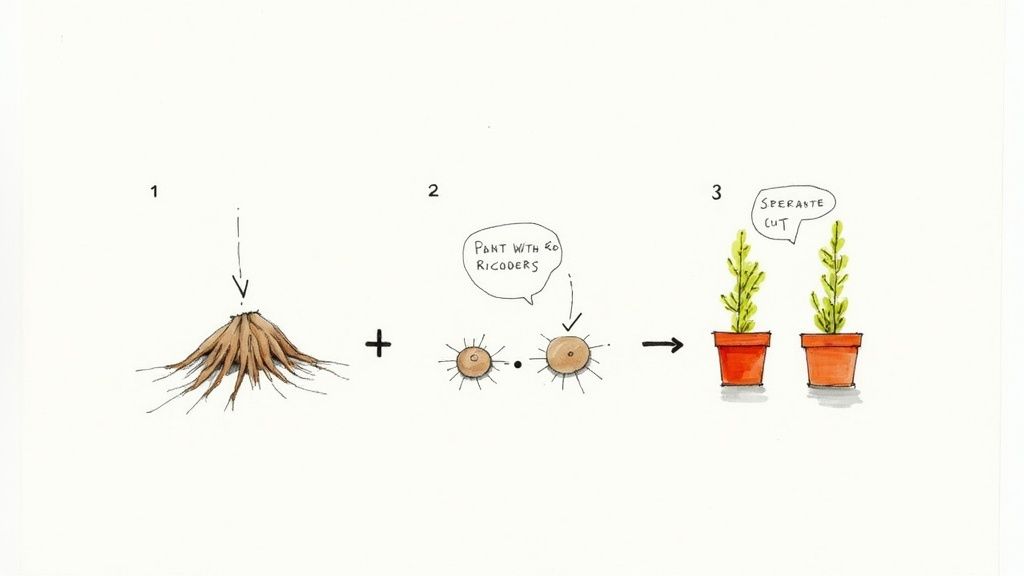
Once you've fallen for the lush, tropical look of shell ginger, you’ll almost certainly want more of it. Who wouldn't? The good news is that multiplying your Alpinia zerumbet is incredibly straightforward.
Of course, with great growth comes great responsibility. While its enthusiasm is fantastic for filling a space, it also means we need to be mindful gardeners here in New Zealand. Keeping this beautiful plant as a treasured guest rather than an unruly tenant is the key.
Multiplying Your Plant Through Division
The easiest and most reliable way to get more shell ginger is by dividing the rhizome — that's the fleshy, ginger-like root system that creeps horizontally under the soil. This method is essentially cloning, which makes it perfect for replicating those stunning variegated forms without losing their unique patterns.
The best time to get this done in New Zealand is in late spring (around October or November), just as the plant is bursting with new energy. This gives your new divisions a full growing season to get their roots down before winter arrives.
It's a simple job. Just follow these steps:
- Lift the Plant: Carefully dig around the entire clump and gently lever it out of the ground or ease it out of its pot.
- Clean and Inspect: Shake off the excess soil so you can get a good look at the rhizome structure. You're looking for healthy, firm sections with several shoots or buds already showing.
- Divide with Care: Using a sharp, clean spade or a sturdy knife, cut the rhizome into generous sections. Make sure each new piece has at least 2-3 healthy shoots and a good chunk of root attached.
- Replant Immediately: Don't let those freshly cut rhizomes dry out. Get your new divisions straight into a well-prepared spot in the garden or into new pots with fresh potting mix.
- Water Well: Give them a good, deep watering to settle the soil around the roots and get rid of any air pockets. You'll want to keep them consistently moist while they settle in.
Propagating by division really is like getting free plants. A single mature clump can easily be split into three or four new plants, giving you more to expand your garden or share with fellow gardeners.
Playing by the Rules: Responsible Management in NZ
Alpinia zerumbet has a vigorous nature that we need to respect, especially in our unique local ecosystems. If left unchecked, it can become a bit of a bully. A single plant can produce over 3,000 seeds per square metre, and these can be spread by water or through dumped garden waste.
On top of that, it also spreads from small rhizome fragments, allowing it to form dense thickets. You can get a better sense of its reproductive capabilities from this detailed plant profile.
To be a responsible gardener in New Zealand, a few simple habits make all the difference.
- Deadhead Spent Flowers: After the beautiful flowers fade in autumn, just snip off the entire flower stalk. This simple step prevents the plant from setting seed and popping up where it's not wanted.
- Contain the Spread: If you're gardening in a smaller space or are worried about it spreading, consider planting it in a large container or installing a root barrier around the garden bed.
- Dispose of Cuttings Properly: This is a big one. Never dump garden waste, especially rhizome pieces, in reserves, parks, or on the roadside. Use your local green waste collection or compost it thoroughly at home to be safe.
Common Questions About Growing Shell Ginger
Even the most seasoned gardeners run into questions, and growing a subtropical beauty like Alpinia zerumbet in New Zealand certainly comes with a few common head-scratchers. Let's dig into some of the most frequent queries so you can grow your shell ginger with total confidence.
Will My Shell Ginger Survive a New Zealand Frost?
This is the big one, especially for anyone gardening outside the balmy upper North Island. The short answer is: it really depends on how hard your frosts get. Alpinia zerumbet is officially frost-tender, which means a decent frost will knock back or kill the leaves.
Here’s how that usually plays out across the country:
- Frost-Free Zones: If you're in coastal Northland or parts of Auckland, you're in luck. Your shell ginger will likely cruise through winter outdoors without a worry in the world.
- Light Frost Areas: In places like Hamilton or sheltered city gardens further south, expect the leaves to get scorched and die back over winter. But don't panic! The underground rhizomes are much tougher. Give them a thick blanket of mulch for protection, and the plant will burst back into life from the ground come spring.
- Heavy Frost Regions: For those in areas with heavy or prolonged frosts, like inland Canterbury, your best bet is to grow it in a large pot. This gives you the flexibility to move it somewhere sheltered—like a covered deck or into a greenhouse—through the coldest part of the year.
Why Are the Leaves on My Alpinia Zerumbet Turning Yellow?
Yellowing leaves can be a bit alarming, but they’re usually just your plant’s way of telling you something isn’t quite right. Think of it as a signal, not a death sentence.
More often than not, the culprit is water. The most common mistake is overwatering or planting in poorly draining soil, which essentially suffocates the roots. Before you water again, always poke a finger into the soil to check if it's starting to dry out. The golden rule is to never let it sit in a soggy puddle.
If you've ruled out watering issues, it might just be hungry. A dose of balanced liquid fertiliser during the spring and summer growing season will often have it greening up in no time. Lastly, check its sun exposure. Yellowing can be a classic sign of sunburn if the plant is getting blasted by harsh afternoon sun. The sweet spot is gentle morning sun with shade from the intense heat of the day.
Think of yellow leaves as a distress signal. By methodically checking water, food, and light, you can almost always figure out what’s wrong and fix it before it becomes a major problem.
How Do I Know When to Repot My Plant?
A shell ginger growing in a container will usually need a bigger home every two to three years. The most obvious sign is the plant becoming 'root-bound'. This is easy to check—you'll see a tangled web of roots circling the inside of the pot or even poking out through the drainage holes.
The best time to repot in New Zealand is spring, right as new growth is kicking into gear. This gives the plant a whole growing season to get settled in its new home before winter rolls around. It's also the perfect opportunity to divide the plant, giving you more to plant elsewhere or share with fellow gardeners.
When you're picking a new pot, fight the temptation to go massive. Choose a container that's just one size up from its current one. This simple step helps prevent the soil from staying wet for too long, which is a leading cause of root rot.
Does My Alpinia Zerumbet Need Pruning?
Pruning a shell ginger is less about plant health and more about keeping it looking sharp and managing its size. A little grooming goes a long way.
Throughout the year, feel free to snip off any yellowing or dead leaves right at their base to keep things looking tidy. Once it has finished flowering in autumn, it’s a good idea to cut back the old, spent flower stalks.
The main haircut happens in late winter or early spring, especially in areas where frost has damaged the foliage. In these colder regions, you can cut the whole plant right back to just above ground level. It might feel a bit drastic, but you’ll be rewarded with a flush of fresh, vigorous new growth as soon as the weather warms up.
At Jungle Story, we're passionate about helping you create the garden of your dreams. From stunning feature plants like Alpinia zerumbet to all the essentials you need to help them thrive, we've got you covered. Explore our full range of beautiful, healthy plants, all ready for delivery across New Zealand. Find your next garden treasure at junglestory.co.nz.