
Imagine being able to step into your garden and harvest your own fragrant cinnamon sticks, right here in New Zealand. The cinnamon plant (Cinnamomum verum) is so much more than the source of a beloved spice; it's a stunning, aromatic evergreen tree that can bring a little touch of the tropics to your home. This guide will walk you through everything you need to know to make this exciting project a success.
Bringing The Scent Of Cinnamon To Your Garden

Growing your own cinnamon is a surprisingly achievable and deeply rewarding experience. Forget thinking of it as a delicate, high-maintenance specimen. It’s a resilient evergreen that, with the right care, can flourish in many parts of Aotearoa. From the warm, subtropical climes of Northland down to a sunny, sheltered spot in a Wellington courtyard, this plant is remarkably adaptable.
The journey from a small potted tree to fragrant quills in your kitchen pantry is a fascinating one. It connects you directly with a spice that has a rich history, once considered more valuable than gold and central to global trade routes for centuries. By growing your own, you're not just cultivating a plant; you're cultivating a piece of living history.
A Quick Guide For NZ Gardeners
This guide is designed specifically with New Zealand conditions in mind, taking our unique seasons and climate into account. We'll cover every stage in detail in the following sections, but here's a quick overview of what your cinnamon plant needs to thrive.
Growing a cinnamon plant is a long-term project that rewards patience. The first harvest typically occurs after two to three years, but the aromatic leaves can be enjoyed much sooner—they're often used for making a fragrant tea.
To get started, here’s a quick summary table that gives you a snapshot of the ideal conditions for a healthy and productive tree.
Cinnamon Plant At-a-Glance Growing Guide for NZ
| Attribute | Details for NZ Gardeners |
|---|---|
| Climate | Prefers warm, humid, subtropical conditions. Thrives in Northland and the Bay of Plenty but can be grown in sheltered spots or pots in cooler areas. |
| Sunlight | Needs a sunny location with protection from harsh afternoon sun and strong winds. Morning sun is ideal. |
| Soil | Requires well-draining, slightly acidic soil rich in organic matter. Avoid heavy, waterlogged clay. |
| Watering | Keep the soil consistently moist but not saturated, especially during the warmer months from December to February. Reduce watering in winter (June to August). |
| Frost | Young plants are frost-tender. Provide protection with frost cloth or move potted plants indoors during cold snaps. |
This table should give you a solid foundation. As you read on, we'll dive deeper into each of these areas to ensure your cinnamon-growing journey is a fragrant success.
Choosing the Right Cinnamon for Your Garden
When you decide to grow a cinnamon plant, you’re faced with a choice that’s a bit more significant than you might first think. Not everything labelled "cinnamon" will give you that sweet, delicate spice you're dreaming of. It’s like choosing between a crisp Granny Smith and a sweet Royal Gala—both are apples, but their flavour and uses are worlds apart.
The same goes for the cinnamon family. To make sure you end up with the plant that produces the world's most sought-after spice, you need to know the main players in the Cinnamomum genus.

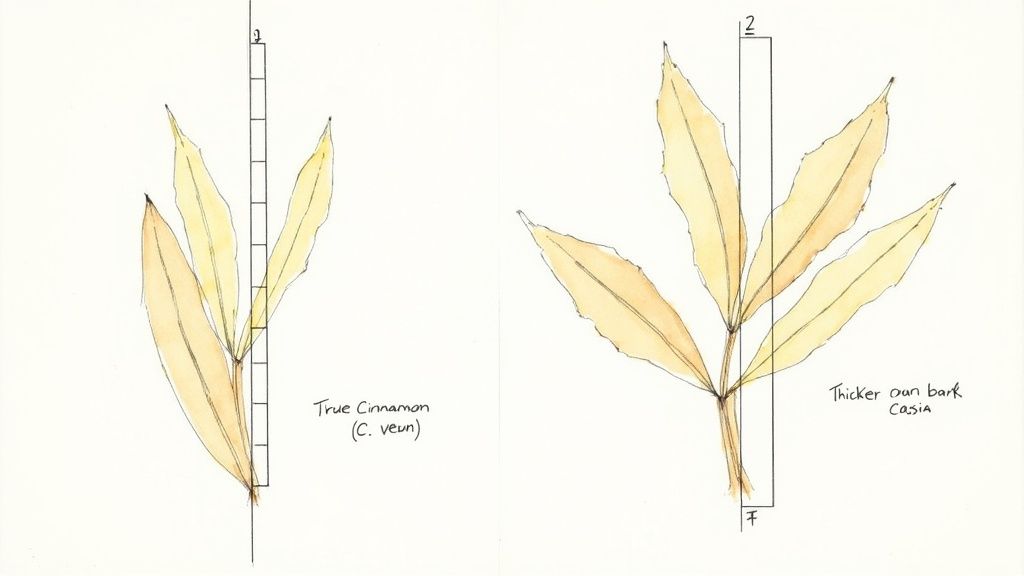
This image shows the clear visual differences between the leaves of True Cinnamon and its common relative, Cassia. Notice how the True Cinnamon leaves are more egg-shaped with strong parallel veins—a key detail to look for when you're picking out a young plant.
The True Cinnamon Champion: Cinnamomum Verum
The undisputed star of the show is Cinnamomum verum, often called Ceylon cinnamon or simply 'True Cinnamon'. This is the one. Native to Sri Lanka, it produces the finest quality spice with a complex, sweet, and wonderfully aromatic flavour, completely lacking the harsh bite of its common cousins.
You can spot a true cinnamon plant by looking for these features:
- Leaves: Young leaves often start with a reddish hue before turning a glossy deep green. They're typically egg-shaped, about 7-18 cm long, and have three to five very distinct parallel veins that run from the base to the tip.
- Bark: The bark is the real giveaway. It's thin, pale tan, and peels away into delicate, paper-like layers that roll into quills as they dry. This fine layering is what makes Ceylon cinnamon so prized.
- Growth Habit: In the garden, it grows as a bushy evergreen shrub or a small tree. It takes very well to pruning, which is actually essential for encouraging the new shoots used for harvesting.
For Kiwi gardeners after the genuine article, getting your hands on a verified Cinnamomum verum is the most important first step. To be sure you're getting the right plant, have a look at options from trusted local sellers who specialise in this prized cinnamon tree.
The Common Cousin: Cassia
The spice most of us find in the supermarket is actually from several related species known as Cassia. While it’s in the same family as True Cinnamon, its flavour is quite different. The main varieties are Cinnamomum cassia (Chinese cinnamon), C. burmannii (Indonesian cinnamon), and C. loureiroi (Saigon cinnamon).
Cassia has a much bolder, spicier, and less subtle flavour due to a high concentration of a compound called cinnamaldehyde. Its bark is thick, dark reddish-brown, and curls into a single, hard scroll when dried—a world away from the delicate layers of True Cinnamon.
While it's perfectly good for hearty baking where you want a strong flavour punch, Cassia just isn't the 'true' cinnamon that spice lovers seek. Its leaves are usually longer and more spear-shaped than C. verum, and the bark is noticeably rougher and thicker, even on young stems.
A Cinnamomum to Avoid: Camphor Laurel
Finally, there’s a member of the Cinnamomum family that New Zealand gardeners should actively avoid: Cinnamomum camphora, or Camphor Laurel. Though its leaves are aromatic, it is a declared invasive pest in parts of Aotearoa, especially in the upper North Island.
It's an aggressive grower that out-competes our native flora, forming dense canopies that block out the sun. Its leaves have a strong camphor smell when crushed and are wavier along the edges compared to the smooth leaves of True Cinnamon. Best to steer clear of this one to protect our local ecosystems.
Creating the Perfect Microclimate in New Zealand
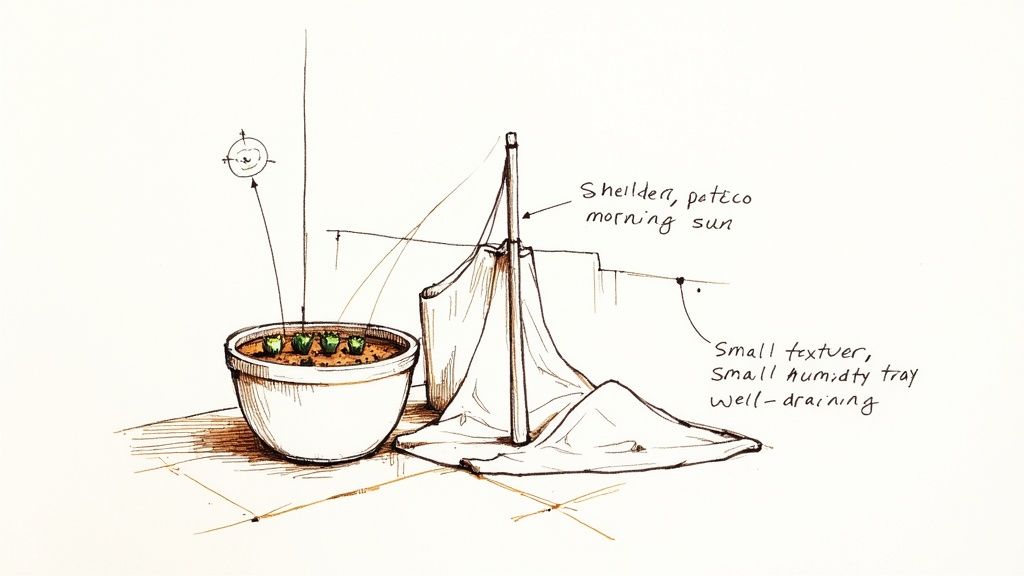
Growing a cinnamon plant successfully in Aotearoa means you need to become a bit of a microclimate architect. The whole game is about mimicking the warm, humid home of its native Sri Lanka, right here in your own backyard. It sounds more intimidating than it really is—it's mostly about picking the right spot and giving the plant a solid foundation to get started.
Think of it like you're setting up a room for a special guest. They need a comfy bed (that’s your soil), the right amount of light, and a bit of shelter from the harsh elements. Nail these basics, and your cinnamon plant will thank you with years of lush, fragrant growth.
Nailing the Soil and Sunlight Formula
The absolute foundation for a happy cinnamon plant is the soil it lives in. It really loves a mix that's rich in organic matter but also drains exceptionally well. Heavy, boggy clay soils are a total non-starter and a fast track to root rot. You'll want to aim for a slightly acidic soil with a pH somewhere between 5.5 and 6.5.
A simple trick to get this right is to work plenty of compost into your garden bed, along with some sand or pumice to help with the drainage. This creates a lovely, loose, airy soil structure that lets the roots breathe and spread out, just like they would in the loamy soils of their tropical homeland.
When it comes to sun, cinnamon plants are a little particular. They adore the soft morning sun but need to be shielded from the scorching afternoon rays, especially during our long, hot Kiwi summers.
- Ideal Spot: A spot with an eastern aspect is perfect. It gets a few hours of direct morning light to kickstart its day.
- Afternoon Shade: Make sure it's sheltered from that intense afternoon sun, maybe by a larger tree, a building, or even some shade cloth. This stops the leaves from getting sunburnt and stressed.
Getting this balance right gives the plant all the energy it needs without the risk of damage, keeping those beautiful glossy green leaves looking their best.
Best Locations and Clever Cold-Climate Strategies
New Zealand's varied climate means your approach will depend a lot on where you live. If you're gardening up in the upper North Island, you're in luck—your conditions are already pretty close to perfect for a cinnamon plant.
The subtropical climates of Northland, Auckland, and the Bay of Plenty are ideal. These regions offer the warmth, humidity, and frost-free winters that allow the cinnamon plant to thrive outdoors with minimal fuss.
But that doesn't mean gardeners in cooler parts of the country have to miss out! With a few smart moves, you can grow this tropical treasure just about anywhere. It's all about creating a sheltered little bubble that protects the plant from the cold.
For those in colder spots like Canterbury or Otago, growing your cinnamon plant in a big pot is a brilliant solution. It gives you total control. You can pop it on a warm, sunny deck through summer (December to February) and then whisk it indoors or into a greenhouse before the first autumn frosts hit.
This flexibility makes it possible to enjoy a whole range of tropical plants in NZ, even if your local weather isn't exactly tropical. A large container—at least 40-50 litres—gives the roots plenty of room to grow and holds moisture much better than smaller pots.
When winter does roll around, protection is everything. A hard frost can seriously hurt or even kill a young cinnamon plant.
Frost Protection Tips for NZ Gardeners:
- Use Frost Cloth: For plants in the garden, drape frost cloth over them on clear, cold nights. Use stakes to make a small tent so the cloth doesn’t actually touch the leaves.
- Mulch Heavily: In autumn, lay down a thick blanket of mulch (like bark or pea straw) around the base. This insulates the soil and protects the root system from freezing.
- Strategic Planting: Tuck your plant in next to a north-facing wall. The wall soaks up heat during the day and radiates it back overnight, creating a warmer microclimate and shielding it from those chilly southerly winds.
By using these strategies, you can create a safe little haven for your cinnamon plant and bring a slice of the tropics to your garden, no matter where you are in New Zealand.
Your Seasonal Guide to Planting and Care
So, you've scouted the perfect spot for your new cinnamon plant. Now for the fun part! This guide breaks down the whole process into simple steps, turning planting and care from a garden chore into a genuinely rewarding ritual. We'll get your plant settled in, then walk through a seasonal calendar made specifically for Kiwi gardeners.
The real secret to a thriving plant is working with its natural rhythm. It's about giving it the right support at the right time—a bit like knowing when to offer a sports team an energy drink versus a recovery meal. From feeding to pruning, every action is timed to match the plant's growth cycle here in the Southern Hemisphere.
Getting Your Plant in the Ground
The best window for planting a new cinnamon tree in New Zealand is spring, from September through to November. This timing is perfect. The soil is warming up, the last frost is behind us, and your plant has a long, gentle season to establish its roots before the summer heat really kicks in.
When you're ready to plant, a little prep goes a long way. A well-prepared hole is the best welcome-home gift you can give your new tree.
Step-by-Step Planting Guide:
- Dig the Hole: Aim for a hole that's twice as wide and just as deep as the pot your plant arrived in. That extra width loosens up the surrounding soil, making it much easier for new roots to explore.
- Improve the Soil: Mix a generous amount of good-quality compost into the soil you've just dug out. This enriches the soil with vital nutrients and improves its overall structure.
- Check the Depth: Gently place your plant in the hole. You want the top of its root ball to sit level with, or even slightly above, the surrounding ground. Planting too deep is a common mistake that can lead to stem rot.
- Backfill and Water: Fill the hole back in with your improved soil mix, firming it down gently. Give the plant a thorough watering to settle the soil and get rid of any sneaky air pockets around the roots.
If you’re planting in a pot, the right medium is everything. A quality, free-draining mix is non-negotiable to prevent waterlogging. For expert advice on picking the perfect foundation for your container plants, check out our guide on potting mix and soil.
A Kiwi Gardener's Seasonal Calendar
Caring for a cinnamon plant is an ongoing conversation, and what it needs changes with the seasons. Here’s how to tune in and respond throughout the New Zealand year.
Spring (September – November)
This is go-time! As the days get longer and warmer, your plant will start pushing out fresh new leaves, which often have a beautiful reddish tinge. It's the perfect moment to give it a boost.
- Fertilising: Apply a slow-release, balanced fertiliser in early September. This will provide a steady supply of food to fuel that spring growth spurt.
- Watering: As the weather warms up, keep the soil consistently moist but never soggy.
Summer (December – February)
Our Kiwi summers can get hot and dry, which can be a bit stressful for a moisture-loving plant. Your main job is to keep it hydrated.
- Watering: Water deeply and regularly, especially during those long dry spells. A layer of mulch around the base will be a lifesaver, helping the soil hold onto moisture and keeping the roots cool.
- Pest Watch: Keep an eye out for common pests like scale insects, which love the warm weather.
Autumn (March – May)
You'll notice growth starting to slow as things cool down. This is a time for the plant to consolidate its energy and get ready for the cooler months ahead.
- Fertilising: Give your plant a second, lighter feed with a slow-release fertiliser around March. Think of it as a top-up to build strength for winter.
- Pruning: Late autumn is a good time for a light prune. Tidy up the shape and remove any dead or crossing branches. This encourages the new shoots that are perfect for future harvesting.
Winter (June – August)
The plant will be mostly dormant over winter. Your focus now shifts to protection, especially for young plants or if you live in a colder part of the country.
- Watering: Cut back on watering significantly. Let the top few centimetres of soil dry out between drinks.
- Frost Protection: If you're in a frost-prone area, have some frost cloth ready to tuck your plant in on those really cold nights.
While growing your own cinnamon is a joy, local production in New Zealand is still very minimal. This scarcity means we rely heavily on imports to satisfy our love for the spice. In fact, between 2010 and 2019, cinnamon imports saw a significant upward trend, peaking at around NZD 1.48 million in 2017. You can explore more data on New Zealand's cinnamon import trends.
By following this seasonal flow, you'll give your cinnamon plant everything it needs to not just survive, but truly flourish in your garden.
How to Harvest and Process Your Own Cinnamon

This is it. The moment all your patient nurturing has been leading up to. Harvesting your own cinnamon is a deeply rewarding experience, one that connects you to centuries of tradition. It’s a bit of an art form, really, transforming a simple garden shrub into one of the world’s most treasured spices.
The journey from a living stem to a fragrant quill is surprisingly straightforward. You won’t need any specialised equipment—just a bit of patience and a gentle touch. Follow these steps, and you’ll turn this seemingly complex task into a satisfying garden achievement.
Knowing When to Harvest
Timing is everything. For the best quality cinnamon, you need to harvest stems when they’re at just the right stage of maturity. Rushing this will only give you a less potent flavour, so patience is a virtue here.
Keep an eye out for stems that are at least two years old. The ideal thickness is about the same as a pencil or your little finger, around 1-2 cm in diameter. At this size, the bark has developed its aromatic oils but is still thin enough to peel and dry easily.
The best time of year to harvest in New Zealand is during the wet season, which usually runs from late autumn through to early spring. All that extra moisture makes the bark more pliable and much easier to slip away from the woody stem.
The Art of Coppicing and Harvesting
To keep a continuous supply of cinnamon coming for years, we use a sustainable harvesting technique called coppicing. This just means cutting the stems right back to near the base of the plant, about 5-10 cm from the ground.
It might feel a bit drastic, but it’s incredibly good for the cinnamon plant. This hard prune stimulates the root system to send up a whole flush of vigorous new shoots, which will become your future harvests. It’s a method that effectively keeps the plant in a constant state of renewal.
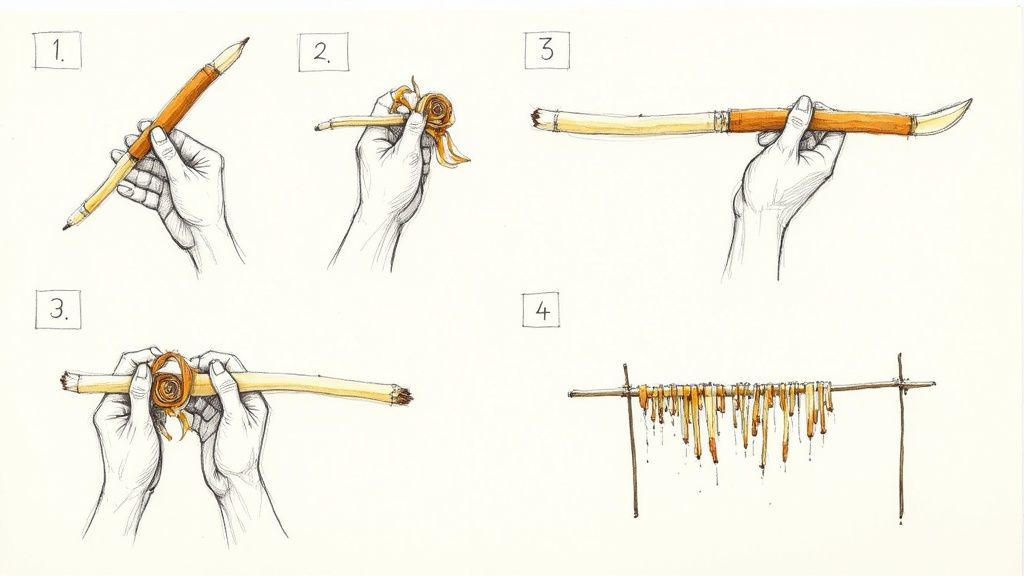
Step-by-Step Harvesting and Peeling:
- Select and Cut: Choose several healthy, pencil-thick stems and snip them close to the base with sharp, clean secateurs or a small pruning saw.
- Scrape the Outer Bark: Using a blunt knife or a bark scraper, gently rub off the thin, greyish outer layer of bark. You’re aiming to reveal the pale, tan-coloured inner bark without digging into it.
- Score the Bark: Make two long cuts down the length of the stem, on opposite sides. This creates two wide strips that will be much easier to remove.
- Peel Carefully: Gently work your knife under one edge of a scored section and slowly peel the inner bark away from the wood. If the stem is moist enough, it should come off in a lovely long, continuous sheet.
- Dry the Quills: Lay your peeled bark strips in a warm, dry, and well-ventilated spot, away from direct sunlight. As they dry over the next few days, they’ll naturally curl into the familiar cinnamon sticks, or ‘quills’.
Once they’re completely dry, your homegrown cinnamon quills can be stored in an airtight container for well over a year. They'll hold onto their beautiful aroma and flavour for far longer than any store-bought alternative.
More Than Just Bark
Don’t forget about the leaves! While you wait for your stems to mature, the aromatic leaves of the cinnamon plant can be picked at any time. You can dry them and use them to make a wonderfully fragrant tea or even add them to rice dishes and curries for a subtle, clove-like flavour.
After successfully harvesting your own cinnamon, you might want to check out some general guides on using seasonings to really make the most of your fresh, homegrown spice.
Tackling Common Cinnamon Plant Problems
Every gardener, no matter how green-thumbed, runs into the occasional hiccup. Growing a cinnamon plant is no exception. It's best to think of it as learning a new language – a yellowing leaf or a sticky stem is just your plant’s way of telling you what it needs. This guide will help you translate those signals into simple, effective fixes to keep your plant happy.
The good news is that most issues are minor and easily sorted with a few tweaks. If you catch them early, you can ensure your cinnamon plant stays a vibrant, productive part of your garden for many years to come.
Pests to Watch Out For
While cinnamon plants are generally quite hardy, they can occasionally attract unwanted guests, especially when the weather warms up. Keeping a watchful eye means you can step in before a small nuisance becomes a real headache.
- Scale Insects: These are the most common pests you'll encounter. They look like tiny, hard bumps, either brown or white, and usually cluster on stems and the undersides of leaves. A tell-tale sign is the sticky "honeydew" they leave behind.
- Spider Mites: These minuscule pests are tough to spot with the naked eye. The first thing you'll likely notice is their fine, delicate webbing between leaves, along with a speckled, yellowed look to the foliage. They love warm, dry air.
For home gardens, you can almost always rely on organic methods. A simple wipe-down with a cloth dipped in soapy water is a great first step. If the pests persist, a good-quality horticultural oil spray will smother them without harming your plant.
Dealing with NZ’s Unique Climate
New Zealand's weather can throw a few curveballs, from surprise frosts to salty sea breezes. Protecting your cinnamon plant from these environmental pressures is crucial for its long-term health.
An unexpected late frost can be brutal, especially for the tender new shoots your plant pushes out in spring. It's always a good idea to have some frost cloth handy if you're in an area prone to cold snaps, even after winter is officially over.
If you're gardening by the coast, salt-laden winds are another challenge. They can quickly dry out and burn the leaves. Planting in a sheltered spot, maybe behind a hedge or a fence, makes a huge difference. Potted plants have the advantage here – you can simply move them to a more protected spot when a gale is forecast.
Figuring out other common symptoms is usually a process of elimination:
- Yellowing Leaves: Nine times out of ten, this points to overwatering. Make sure your pot or garden bed has excellent drainage, and always let the top few centimetres of soil dry out before you water again.
- Slow or Stunted Growth: Your plant might just be hungry. A lack of nutrients can really slow things down. A feed with a balanced, slow-release fertiliser during the main growing seasons (spring and autumn) should perk it right up.
While New Zealand’s local cinnamon production is still in its early days, our appetite for the spice is strong. In 2023, the value of the nation’s cinnamon exports actually grew by 15.1%, though imports still make up the vast majority of our supply. You can take a closer look at New Zealand's recent cinnamon trade data to see the full story.
Common Questions About Growing Cinnamon in NZ
To wrap up our cinnamon journey, let's look at some of the most common questions from fellow Kiwi gardeners. Think of this as your quick-fire guide for that extra bit of confidence before you get started.
Harvest Timelines and Indoor Growing
How long until I can harvest my cinnamon plant?
Growing cinnamon is a lesson in patience, but it's well worth the wait. You're looking at about two to three years before your first harvest. This time allows the plant to build a strong root system and for the stems to grow to the ideal thickness – roughly the diameter of a pencil. This first trim is important as it also encourages the plant to produce more new shoots, setting you up for plenty of harvests in the future.
Can I grow a cinnamon plant indoors in colder parts of NZ?
You absolutely can! For gardeners in cooler spots like Otago or Southland, growing your cinnamon in a large pot is the perfect solution. It lets you create a little mobile microclimate for your plant.
Find it a warm, sunny spot inside, like near a north-facing window that gets heaps of light. You can even move it out to a sheltered patio over summer (December to February), but make sure to bring it back inside well before the first autumn frost hits. Just remember that potted plants will need watering more often than those in the garden.
Flavour and Uses Beyond the Bark
Is homegrown cinnamon the same as from the supermarket?
It can be much, much better! If you plant 'True Cinnamon' (Cinnamomum verum), you’ll be growing what's known as Ceylon cinnamon. This variety is famous for its sweet, delicate, and complex flavour – often considered far superior to the punchier, spicier Cassia cinnamon that’s most common in supermarkets. Honestly, the incredible aroma and taste of freshly harvested and dried cinnamon from your own garden is an experience store-bought spice just can't match.
Are the leaves of the cinnamon plant useful?
They certainly are! While the bark is the main event, the aromatic leaves are a fantastic bonus. You can pick them at any time, dry them out, and use them to brew a fragrant tea. They can also be steeped in oils or liquids to add a subtle, clove-like flavour to savoury dishes. It’s a great way to enjoy the fruits of your labour while you wait for the stems to mature enough for the main harvest.
Ready to start your own aromatic adventure? At Jungle Story, we have healthy, high-quality True Cinnamon plants ready to be delivered to your door. Find your perfect cinnamon plant and explore our full range of edible and ornamental greenery at https://junglestory.co.nz.