
Picture this: a fragrant, living carpet that smothers weeds, breezes through dry spells, and asks for almost nothing in return. That's the simple magic of creeping thyme, a tough little groundcover that feels right at home in the New Zealand climate. It’s a stunning, low-effort alternative to a traditional lawn or those bare, unloved patches in the garden.
Your Guide to Creeping Thyme in New Zealand
Creeping thyme is more than just another pretty plant; it’s a genuine problem-solver for so many Kiwi garden headaches. Think of it as a living mulch. It doesn’t just look good – it gets to work, spreading into a dense mat that chokes out weeds and saves you hours on your knees pulling them. Its sheer resilience makes it a star performer for our often-unpredictable weather.
This guide is everything you need to get started. We'll walk through the different varieties that have adapted beautifully across the country, from the balmy North Island down to the cooler climes of the South.
Why Choose Creeping Thyme?
For heaps of Kiwi gardeners, creeping thyme is that one plant that ticks all the boxes. It’s the perfect choice if you're looking to bring beauty and function to your backyard without all the fuss.
Here’s a quick rundown of its best features:
- Drought Tolerance: Once it's settled in, it handles dry summer spells like a champ. That’s a massive plus for water-wise gardening.
- Weed Suppression: Its dense, mat-forming habit gives weeds nowhere to go. They simply can't compete.
- Low Maintenance: Seriously low-maintenance. A quick trim after flowering once a year is all it really needs to stay neat and tidy.
- Attracts Pollinators: Come late spring and early summer, it becomes a buzzing hub for bees and other good-guy insects – a real win for garden biodiversity.
Creeping thyme is the ultimate troubleshooter for those awkward garden spots. It thrives where other plants give up, like on sunny banks, in rocky soils, or between paving stones, turning difficult areas into fragrant, beautiful features.
So, whether you're dreaming of a soft, scented pathway, a colourful rockery, or just a gentle border for your garden beds, creeping thyme is an enchanting solution. Let's dig in and see how you can get this incredible plant growing in your own backyard.
Choosing the Best Creeping Thyme for Your Garden
Picking the right variety of creeping thyme is the secret to getting that lush, fragrant groundcover you're picturing. But not all thymes are created equal; some are tougher underfoot, while others put on a more spectacular floral show. For those of us gardening in New Zealand, the real trick is matching the plant to your local climate and what you actually want it to do in your garden.
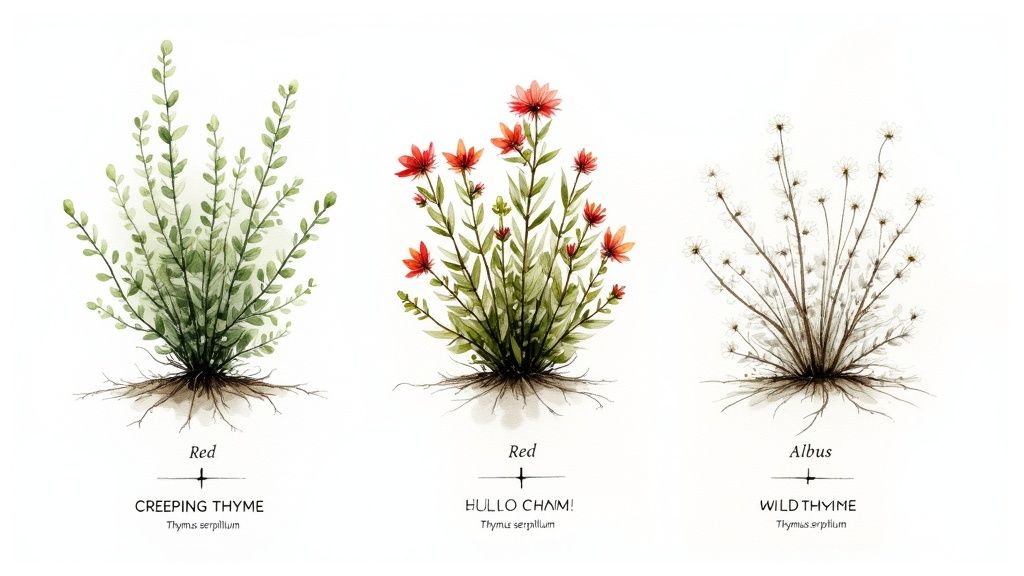
Think of it like choosing the right tool for the job. A delicate, woolly thyme might look beautiful, but it won’t last five minutes on a path you walk down every day. On the flip side, a super-robust variety might be overkill for a quiet rock garden where looks are everything.
Let's break down some of the best-performing options for Kiwi backyards.
Top Varieties for New Zealand Gardens
From the subtropical north to the frosty south, a few creeping thyme varieties consistently do well here. Each brings its own unique combination of colour, texture, and toughness to the garden.
Here are a few popular choices you’ll likely find at local garden centres:
- Thymus serpyllum (Wild Thyme): This is your classic, hard-working groundcover. It forms a dense, dark green mat and in summer is covered in clusters of lovely mauve-pink flowers. It’s one of the best for handling moderate foot traffic, making it a reliable choice for pathways and thyme lawns.
- 'Coccineus' (Red Creeping Thyme): If you're after a real "wow" factor, 'Coccineus' is hard to beat. It absolutely smothers itself in vibrant magenta-red flowers, creating a stunning river of colour. It's slightly less durable underfoot than its wild cousin, but its visual impact is second to none.
- 'Albus' (White Creeping Thyme): A fantastic choice for a more subtle, elegant look. 'Albus' produces a carpet of crisp white flowers that contrast beautifully against its bright green foliage. It’s perfect for planting between light-coloured pavers or in a moon garden.
- Thymus pseudolanuginosus (Woolly Thyme): Valued more for its foliage than its flowers, Woolly Thyme has incredibly soft, fuzzy, grey-green leaves. It’s definitely not one for walking on, as it’s quite delicate. Instead, it excels at softening the hard edges of rocks and walls. It produces very few, if any, pale pink flowers.
To help you decide, here’s a quick comparison of key features to help you select the ideal creeping thyme for your garden's needs and climate.
Comparing Popular Creeping Thyme Varieties in NZ
| Variety Name | Flower Colour | Best For | Growth Habit | NZ Climate Suitability |
|---|---|---|---|---|
| Wild Thyme | Mauve-pink | Pathways, thyme lawns, general groundcover | Dense, mat-forming, very low-growing | Excellent nationwide, very hardy |
| Red Thyme ('Coccineus') | Magenta-red | Colourful borders, rock gardens, between pavers | Spreading mat, slightly taller when in flower | Best in full sun, good drainage is key |
| White Thyme ('Albus') | Pure white | Contrasting plantings, between light pavers | Tight, low mat with a profusion of flowers | Performs well in most regions with sun |
| Woolly Thyme | Pale pink (infrequent) | Softening rockeries, textural contrast, dry banks | Very flat, fuzzy, silver-grey carpet | Thrives in hot, dry spots; dislikes wet feet |
Ultimately, the best choice depends on what you need it to do. Each variety has its strengths, whether that's toughness, a burst of colour, or beautiful year-round texture.
Making the Right Choice for Your Space
To pick the perfect creeping thyme, have a think about what you’re asking it to do. Are you filling gaps in a high-traffic patio, or creating a colourful feature on a dry, sunny bank that no one ever walks on?
The most successful creeping thyme plantings come from a simple principle: right plant, right place. A variety that thrives in a hot, dry Hawke's Bay garden might struggle through a wet West Coast winter if the drainage isn't perfect.
Consider these key factors:
- Foot Traffic Tolerance: For paths and lawns, Thymus serpyllum is your best bet. For areas with little to no footfall, you can choose more decorative options like Woolly Thyme.
- Flowering Display: If a carpet of colour is your main goal, 'Coccineus' (red) or 'Albus' (white) will deliver a spectacular seasonal show.
- Foliage Texture: For year-round interest, the soft, silvery texture of Woolly Thyme provides a wonderful contrast against stones and other green plants.
By weighing these attributes against your garden's specific conditions and your own vision, you can select a creeping thyme that will not just survive, but truly flourish, bringing years of low-maintenance beauty to your outdoor space.
Creating the Perfect Growing Conditions for Thyme
If you remember just one thing about growing creeping thyme in New Zealand, let it be this: it absolutely craves excellent drainage. Think of thyme as a sun-worshipper from the dry, rocky hills of the Mediterranean. It wants to bake in the sun all day and never, ever have its feet sitting in water. Get these two things right, and you're well on your way to a thriving, flowering mat.

The ideal spot is one that gets at least six hours of direct sun every day. Less sun means you’ll end up with leggy, sparse growth and fewer flowers, which really defeats the purpose of planting this beautiful groundcover in the first place. Before you even think about planting, take a day to watch your garden and pinpoint the sunniest, warmest patch you have.
Preparing Your Soil for Success
Let's be honest, many Kiwi gardens are blessed with heavy clay soil. While it’s great for some plants, it holds onto water—the absolute enemy of thyme. This dense, sticky structure is a recipe for root rot, especially during our wet winters. The good news is that with a little prep work, you can transform that clay into the perfect home for your thyme.
Your main goal is to create a gritty, free-draining medium. Here’s how you can do it:
- Add Grit and Sand: For every square metre of garden bed, work in a generous amount of coarse sand (not the fine stuff from the beach) or fine gravel. This physically breaks up the heavy clay particles, creating vital air pockets and little channels for water to escape.
- Incorporate Compost: While thyme doesn’t need super-rich soil, adding a small amount of well-rotted compost will do wonders for the overall soil structure without making it too fertile.
- Consider Raised Beds: If your soil is particularly stubborn or you live in a high-rainfall area, creating a low raised bed filled with a pre-mixed alpine or succulent mix is a foolproof solution.
The most common reason creeping thyme fails in an NZ garden is soggy roots. Amending heavy soil isn't just a suggestion; it's the most critical step for ensuring your thyme survives and thrives through its first wet winter.
Adapting to New Zealand Conditions
The hardy nature of thyme is exactly why it has settled in so well here. The introduction of species like common culinary thyme has a long history in New Zealand, tied to early European settlement. In fact, it was officially noted as naturalised by 1926, showing a remarkable tolerance for the cold, dry, and windy coastal conditions found across so many of our regions.
Beyond just picking the right variety, mastering how to create healthy soil is the real cornerstone of a flourishing garden. Good drainage and aeration aren't just for thyme; they're universal principles. By focusing on improving your soil, you’re not just preparing a spot for one plant, you're building a healthier foundation for your entire garden.
And if you’re looking for more inspiration, you might enjoy our guide to other fantastic ground cover plants for your garden. Taking the time to prepare the site properly now will reward you with a dense, fragrant carpet of creeping thyme for years to come.
A Seasonal Guide to Caring for Creeping Thyme in NZ
Caring for creeping thyme in New Zealand is wonderfully straightforward because it fits so neatly into our distinct seasons. The real trick is simply knowing what to do and when. A little bit of attention at the right time of year will get your thyme established quickly, helping it form that dense, healthy mat you're after and putting on a stunning floral show year after year.
The absolute best times to get creeping thyme into the ground here in NZ are autumn (March to May) and spring (September to November). Planting during these milder months lets the roots settle in and establish themselves without the stress of scorching summer heat or a winter cold snap. When you're planting, space your small plants about 20-30 cm apart. This gives them just enough room to knit together into a solid groundcover.
Planting and Getting Started
When you first plant your creeping thyme, consistent watering is key. For the first few weeks, give them a drink every few days, especially if the weather's a bit dry. The goal is to keep the soil lightly moist, but never soggy. This initial effort helps the plant build a strong root system, which is the secret to its impressive drought tolerance later on.
Creeping Thyme has a growth pattern that’s perfectly suited for Kiwi gardens. In its first year, you can expect a single plant to spread to about 15 cm in diameter. By year two, it can easily reach 40-50 cm across, and by the third year, it often stretches out to 70-80 cm in ideal conditions. And don't worry—as noted by the experts at The Plant Company, it's not considered invasive here.
A Year in the Life of Your Thyme
Summer (December - February):
Once it's established, creeping thyme is famously drought-tolerant. That said, during those really long, dry spells we get in a Kiwi summer, a deep watering once a week will keep it looking lush. After the main flush of flowers finishes up in mid-to-late summer, give the plant a light trim. You can use shears or even a lawnmower on a high setting. This "haircut" tidies up the spent flower heads and encourages new, dense growth.
Autumn (March - May):
This is a pretty low-effort season for thyme care. As the temperatures cool down, the plant will naturally slow its growth. Your main job is to keep the area clear of fallen leaves or other debris. This stuff can trap moisture and smother the plant, which can lead to rot.
Winter wetness, not the cold, is the biggest challenge for creeping thyme in New Zealand. Making sure your plant goes into the cooler months with plenty of airflow and excellent drainage is the single most important thing you can do.
Winter (June - August):
During our wet winters, especially in regions with heavy rainfall, the focus is all on drainage. If your thyme is planted in a well-prepared, gritty bed, it should be perfectly fine. Just hold off on any feeding or heavy pruning while it’s dormant. In the very cold parts of the South Island, you might notice the foliage taking on a bronze tint after a frost—that's completely normal.
Spring (September - November):
As the weather warms up, your thyme will burst back to life. Now is the perfect time for a light feed to fuel all that new growth. A little sprinkle of a general slow-release fertiliser or a handful of compost worked gently around the plants is all it needs. This spring boost gets it ready for the spectacular flowering season just around the corner.
For gardeners looking for plants that don't demand a lot of fuss, creeping thyme is a true star. If you're building a garden that's both beautiful and easy to manage, take a look at our guide on other fantastic low-maintenance outdoor plants that thrive right here in NZ.
Creative Landscaping Ideas with Creeping Thyme
Think of creeping thyme as more than just a gap-filler. It's a genuine design tool for your garden, a way to soften hard edges, connect different areas, and solve a few common landscaping headaches all at once. Its ability to form a dense, fragrant mat makes it a powerhouse for turning boring, practical spots into something special.
So, let's look beyond just using it as a basic groundcover and explore how this incredible plant can really lift your garden design.
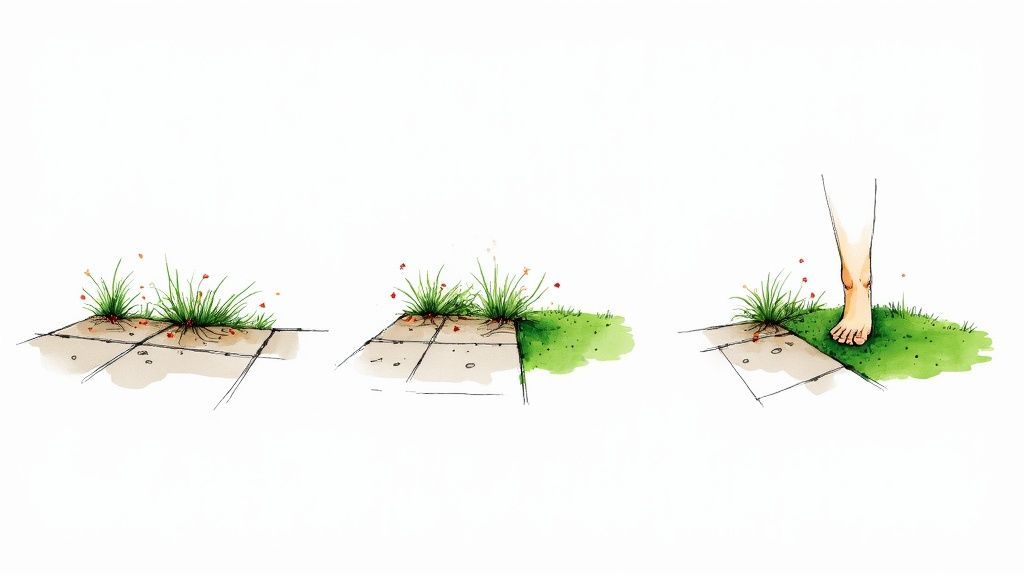
From creating a soft, walkable surface that releases its scent with every step to cascading beautifully over a stone wall, creeping thyme adds texture, colour, and fragrance where other plants might give up. It’s a tough little worker, brilliant at suppressing weeds and shrugging off dry conditions.
Create a Fragrant Thyme Lawn
Imagine replacing a patch of high-maintenance grass with a fragrant, flowering "thyme lawn." It's an idea that’s really taking off here in New Zealand, especially for smaller sections or those quiet corners of the garden that only see light foot traffic. In summer, it will be buzzing with bees, and every time you walk across it, you’ll release that classic herbal scent.
Making one is straightforward. Just prep the soil like you would for a normal lawn—making sure the drainage is excellent—and plant small plugs of a tough variety like Thymus serpyllum. It won’t stand up to a game of backyard rugby, but for a gentle stroll or a sunny spot to relax, it’s perfect.
A thyme lawn is the ultimate sensory experience in a garden. It combines the visual appeal of a green carpet, the tactile softness underfoot, and a beautiful herbal fragrance that mowing a traditional lawn could never match.
Soften Hardscaping and Suppress Weeds
One of the best uses for creeping thyme is tucking it between pavers, flagstones, or into the gaps in crazy paving. It absolutely loves the reflected heat from the stone, and its dense growth is fantastic for choking out those annoying weeds that always seem to find a way through.
This simple trick does a wonderful job of softening the hard edges of paths and patios, making them feel more settled and natural within the garden. As the thyme fills in, it creates a living mortar that not only looks stunning but cuts your weeding chores down to almost nothing.
If you’re keen on exploring other plants for these kinds of spaces, we’ve put together a bunch of ideas in our guide to native ground cover in NZ, which is full of great local alternatives.
Spilling Over Walls and Underplanting
Creeping thyme is a natural fit for rockeries and retaining walls. Plant it along the top edge of a wall, and it will happily cascade over the side, creating a beautiful "spiller" effect that softens the whole structure. Its drought tolerance means it’s perfectly content in the fast-draining conditions you find in these spots.
You can also use it as a living mulch under taller plants like roses or lavender. This sort of underplanting is great for a few reasons:
- It helps hold moisture in the soil.
- It keeps competing weeds at bay.
- It provides an attractive, green base all year round.
By pairing it with taller perennials, you’re creating layers and texture that bring a whole new level of depth and interest to your garden beds.
One of the absolute best things about creeping thyme is how easy it is to make more of it. For free! A few healthy starter plants from a garden centre are all you need to get going. Before you know it, you can generate enough thyme to cover large areas, turning one small purchase into an endless supply for your pathways, rockeries, or that thyme lawn you’ve been dreaming of.
Propagating creeping thyme is incredibly rewarding, and it's simple enough that even a total beginner can get fantastic results. There are three main ways to do it, and they all work a treat in the New Zealand climate. All you need are a few basic tools and a bit of patience.
Simple Division for Instant Impact
The quickest and easiest way to get more plants is by division. Think of it like splitting a big clump into several smaller, ready-to-go plants. This method is best done in early spring (September) as new growth starts to show, or in autumn (March to May) after the intense summer heat has backed off.
It's as simple as digging up an established clump of thyme. Gently shake off the loose soil, and you'll see how it naturally wants to separate into sections, each with its own little root system. You can use your hands to gently pull these sections apart, or a sharp spade for a clean cut. Just make sure each new piece has a healthy amount of both roots and foliage.
Pop these new divisions straight back into the ground, and you've got instant, good-sized plants ready to take off.
Taking Cuttings for More Plants
Taking cuttings is another fantastic technique, perfect for when you want to create a whole army of new plants from just one parent. The best time to do this in NZ is during late spring or early summer (November to January). That's when the stems are full of vigorous new growth but haven't become old and woody yet.
Here’s a simple rundown of what to do:
- Select a Stem: Look for a healthy, non-flowering stem and snip off a piece about 5-8 cm long.
- Prepare the Cutting: Gently strip the leaves from the bottom half of the stem. This is where the new roots will grow from.
- Plant It: You can dip the bare end in a rooting hormone if you have some (it helps, but isn't essential), then place it into a pot filled with a gritty, free-draining potting mix.
- Care for It: Give it a gentle water and find it a warm, bright spot out of direct sun. In just a few weeks, you should see signs of new roots forming.
Propagation is just nature's way of sharing. By dividing or taking cuttings, you're essentially working with the plant's natural desire to spread, turning one healthy thyme into a thriving colony for your garden.
Common Questions About Creeping Thyme
When you first start with creeping thyme, it’s natural to have a few questions. Getting these right from the get-go is often the difference between a lush thyme carpet and a patchy, sad-looking one. Let's tackle some of the most common queries we hear from Kiwi gardeners.
Can It Handle Being Walked On?
This is a big one. Just how much foot traffic can it really take? The answer is it handles light to moderate use remarkably well once it’s properly established.
Some varieties, like the classic Thymus serpyllum (Wild Thyme), are especially tough and a great choice for paths that don't get constant, heavy traffic. If you're planning a main walkway, the best approach is to lay down stepping stones. This gives you a solid surface to walk on, protecting the plants from being completely flattened, while still letting you enjoy that gorgeous scent that releases every time you brush past them.
Does It Stay Green in Winter?
In most of New Zealand’s milder regions, particularly across the North Island, your creeping thyme should stay beautifully green right through the winter.
However, if you're in the colder parts of the South Island or your garden gets a regular dose of heavy frost, it's completely normal to see the foliage take on a bronze hue. It might even die back a little. Don't panic—this is just the plant going dormant. As soon as spring arrives, it will burst back with vigorous new growth.
The single biggest issue for creeping thyme in NZ gardens is poor drainage, especially during our wet winters, as this leads to root rot. Amending heavy soil isn't a suggestion; it's essential for success.
Ready to transform your garden with a beautiful, low-maintenance groundcover? Explore a huge range of creeping thyme varieties and all your other gardening needs at Jungle Story. Find the perfect plants from trusted local sellers and get them delivered right to your door. Visit us at https://junglestory.co.nz to start creating your dream garden today.