
Every Kiwi gardener dreams of a garden that's absolutely thriving, but let's be honest, our native soils often need a bit of a helping hand. Fertilisers for plants are like a vitamin boost, stepping in to provide those crucial nutrients that might be missing from the soil.
Choosing the right fertiliser can be the one thing that turns a struggling houseplant into a vibrant one, or a so-so veggie patch into something truly impressive.
Growing Thriving Plants Starts with the Right Fertiliser
It helps to think of fertiliser not as "plant food," but more like a targeted nutritional top-up. Plants actually make their own food through photosynthesis, using sunlight, water, and carbon dioxide. To power this incredible process, though, they need to draw essential nutrients from the soil to build strong leaves, stems, and roots.
When these soil nutrients run low, plant growth can slow right down, leaves might start to turn yellow, and they become far more vulnerable to pests and diseases.
This is where fertilisers become so important. They replenish the key elements that plants use up over time, making sure they have everything they need to flourish. Whether you're tending to a small collection of indoor plants on an Auckland balcony or managing a sprawling Canterbury garden, knowing how to feed them properly is a cornerstone of great gardening.
Why Fertilising Matters
A well-fed plant is a happy, resilient plant. Giving it the right nutrients at the right time does more than just make it look good; it helps build a robust and healthy ecosystem right in your home or garden.
Here’s what you can expect:
- Vibrant Growth and Colour: Proper nutrition supports the development of lush, deep green foliage and bigger, brighter flowers.
- Stronger Root Systems: Key nutrients like phosphorus are vital for helping plants establish deep, strong roots that anchor them and improve how they absorb water.
- Increased Resilience: A healthy plant is much better at fending off common pests and diseases, which means less need for other interventions.
- Better Harvests: For any edible plants, from herbs to fruit trees, the right fertiliser directly translates to more abundant and flavourful produce.
In essence, fertilising is about proactive care. It’s about anticipating your plant's needs throughout its life, especially during the active growing seasons of a New Zealand spring and summer. This guide will walk you through exactly how to give your plants the fuel they need to be at their absolute best.
What Do Those Numbers on the Fertiliser Bag Mean? NPK Explained
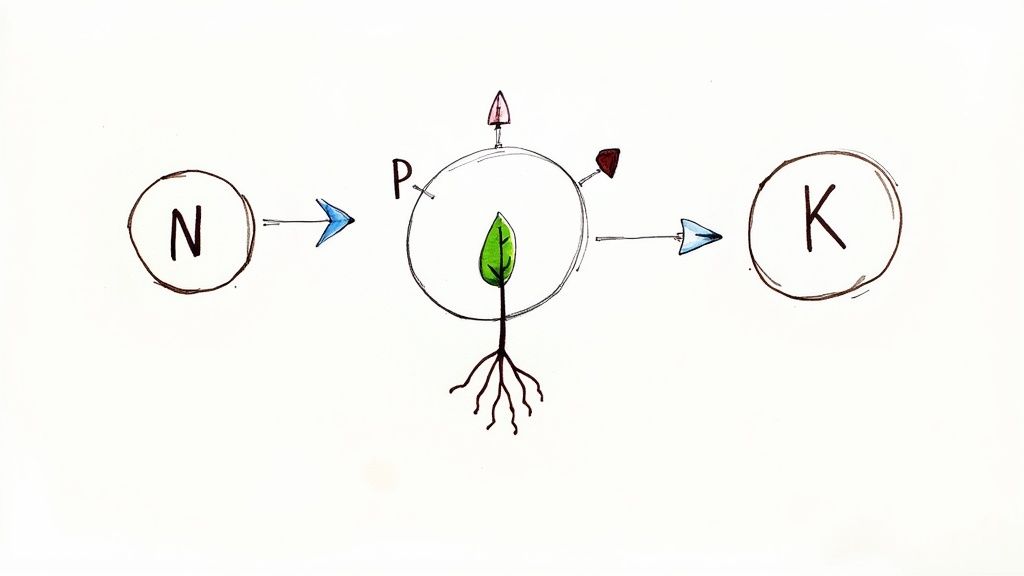
Ever glanced at a bag of fertiliser and felt like you were trying to crack a code? You’ll always see three numbers displayed prominently, something like 10-5-5 or 3-4-6. This is the NPK ratio, and it’s the single most important bit of info on that bag.
Think of it like the nutrition panel on your food. Just as we need a balance of carbs, proteins, and fats, plants need three core elements to thrive. Understanding what these numbers mean is the first step to moving beyond guesswork and choosing exactly what your plant needs to flourish.
The Big Three Plant Nutrients
The letters N, P, and K stand for the three primary macronutrients: Nitrogen, Phosphorus, and Potassium. Every plant needs all three, but the ideal balance changes depending on what you want the plant to do. Is it focused on growing big, lush leaves? Or is it channelling energy into producing flowers and fruit?
Let's break down what each of these heavy lifters actually does.
The Big Three Plant Nutrients and Their Roles
The NPK ratio tells you the percentage of each primary nutrient in the mix, giving you a clear picture of what the fertiliser is designed to do.
| Nutrient (Symbol) | Primary Role | Analogy | Signs of Deficiency |
|---|---|---|---|
| Nitrogen (N) | Fuels leafy green growth | The "accelerator" | Yellowing, pale leaves (especially older ones), stunted growth. |
| Phosphorus (P) | Develops strong roots, flowers, and fruit | The "foundation" | Poor flowering, weak root system, purplish tint to leaves. |
| Potassium (K) | Manages overall plant health and resilience | The "immune system" | Yellowing along leaf edges, poor fruit quality, weak stems. |
Knowing what each nutrient does empowers you to pick the perfect blend. For a leafy indoor plant, a higher 'N' number is great. For your flowering hibiscus, something with a bigger 'P' will get you those brilliant blooms.
Beyond NPK: The Supporting Cast
While Nitrogen, Phosphorus, and Potassium are the stars of the show, plants need a supporting cast of other nutrients too.
Secondary nutrients like calcium (Ca), magnesium (Mg), and sulphur (S) are just as vital, though needed in smaller amounts. Magnesium, for example, is at the very heart of the chlorophyll molecule, and a lack of it can cause leaves to turn yellow. Calcium is essential for building strong cell walls—think of it as the building blocks for a sturdy plant structure.
Thankfully, most good-quality, all-purpose fertilisers include these, so you usually don’t have to worry about adding them separately unless you notice a specific problem. There are also micronutrients like iron and zinc, which are only needed in tiny trace amounts but still play a crucial role.
Here in New Zealand, getting plant nutrition right is a massive deal for our agricultural sector. The 2022 Agricultural Production Census showed that over 735,000 tonnes of superphosphate was the most applied fertiliser, used to add phosphorus and sulphur to our soils.
It just goes to show that whether you’re managing a huge farm or a single pot plant on your windowsill, giving your plants the right food is the secret to success. If you're looking for specific advice for your indoor jungle, our guide to the best fertiliser for indoor plants has you covered.
Choosing Your Approach: Organic vs Synthetic Fertilisers
Stepping into the fertiliser aisle can feel a bit like being asked to choose a side in a long-standing debate. On one hand, you have synthetic fertilisers, engineered for speed and precision. On the other, you have organic options, celebrated for their natural, soil-building properties.
The best choice isn’t about picking a winner; it's about understanding what your garden needs and what your own gardening philosophy is.
Think of it this way: synthetic fertilisers are like a direct infusion of nutrients. They’re made with water-soluble salts that plants can absorb almost immediately. This makes them the perfect 'fast-acting medicine' when you need to fix a nutrient deficiency quickly or give a hungry vege plant a rapid boost during its peak growing season.
In contrast, organic fertilisers are more like a slow, nourishing meal for your entire garden ecosystem. They come from natural materials like compost, blood and bone, or seaweed. These goodies need to be broken down by soil microbes before their nutrients become available to plants, creating a gentle, slow-release effect that feeds both the plant and the soil itself.
The Power and Precision of Synthetic Fertilisers
Synthetic fertilisers offer control and immediacy, which can be incredibly useful. Because their nutrient content is precisely measured and stated as an NPK ratio on the bag, you know exactly what you’re giving your plants. This targeted approach is ideal for tackling specific issues.
For example, if your lawn is looking pale and yellow, a high-nitrogen synthetic feed can bring back its lush green colour in just a matter of days. This speed is their biggest advantage. But, this quick-release nature means they often need to be applied more frequently, and there's a higher risk of overfeeding and causing 'fertiliser burn'—damaging plant roots with too many salts.
The core benefit of synthetic fertilisers is their efficiency. They deliver a concentrated, predictable dose of nutrients right when the plant needs it, making them a powerful tool for achieving specific growth goals, from vibrant blooms to a bumper crop of tomatoes.
Building Long-Term Health with Organic Fertilisers
Organic fertilisers work on a different timeline and with a broader mission. Instead of just feeding the plant, they feed the soil. Options like compost, sheep pellets, and fish meal improve the soil's structure, increase its ability to hold water, and support a thriving community of beneficial microorganisms.
This approach builds a healthier, more resilient garden over time. The nutrients are released slowly as the organic matter decomposes, which massively reduces the risk of nutrient runoff and fertiliser burn. A fantastic example is seaweed fertiliser, which not only provides a rich blend of micronutrients but also contains natural growth hormones that stimulate root development and improve a plant’s overall vigour. You can learn more in our comprehensive guide to using seaweed fertiliser in New Zealand gardens.
While the results from organic options aren't as immediate, the long-term benefits to soil health are undeniable. They create a sustainable, self-regulating system where the soil itself provides for the plants.
The choice between fertiliser types also has wider economic implications. In New Zealand's large-scale agricultural sector, nitrogen fertilisers have historically been dominant. However, recent economic pressures led to a dramatic 46 per cent drop in fertiliser spending in 2023, as farmers grappled with rising interest rates and lower prices for their products. This shift has prompted a wider conversation about balancing immediate productivity with long-term soil fertility and exploring more efficient application methods.
Ultimately, many Kiwi gardeners find a hybrid approach works best. You might use a rich compost to build your garden beds (organic) and then apply a targeted liquid feed (synthetic) to your tomatoes as they start to fruit. By understanding the strengths of each, you can provide both immediate support and long-term vitality for all the fertilisers for plants in your garden.
A Plant-by-Plant Guide to Fertilising Your Garden
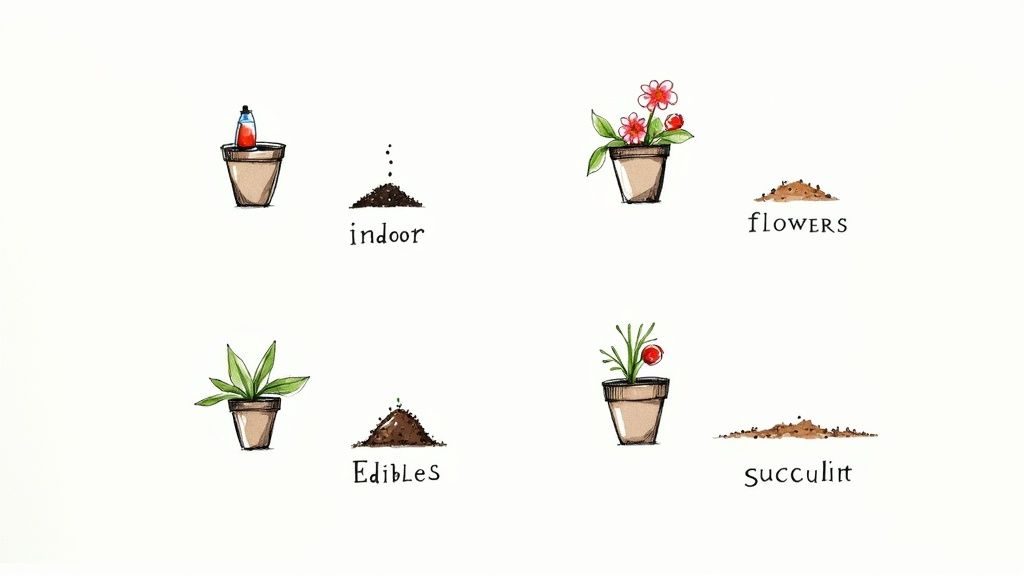
Not all plants have the same appetite. Think of it this way: a marathon runner needs a different diet from a weightlifter, and your plants are no different. Each one has a specific nutrient blend it needs to really thrive. Giving the right fertilisers for plants based on what they are is how you unlock their full potential, from the glossiest leaves to the biggest harvest.
This guide will walk you through the specific needs of the most common plants in Kiwi homes and gardens. By tailoring your approach, you can make sure every plant gets exactly what it needs, when it needs it, right here in our unique New Zealand seasons.
Feeding Your Indoor Jungle
Your houseplants live in a self-contained world—their pots. Unlike garden plants, they can’t just push their roots deeper to find more food, which means they are completely reliant on you for a balanced diet.
For most leafy indoor favourites like Monsteras, Fiddle Leaf Figs, and Pothos, a balanced liquid fertiliser is your best bet. Look for one with fairly even NPK numbers, or maybe a little higher in nitrogen (N) to really push that lush foliage. A good routine is to feed them every two to four weeks during their active growing season, which for us in New Zealand is from spring through summer (September to February).
Once autumn and winter roll in (March to August), the days get shorter and your plants will naturally slow down. It’s vital to cut back on feeding during this rest period—maybe just once every six to eight weeks. This prevents you from overwhelming their dormant roots.
Encouraging Blooms on Outdoor Flowers and Shrubs
When it comes to flowering plants like roses, hibiscus, and camellias, the goal is to switch their energy from making leaves to producing spectacular blooms. This is where phosphorus (P) steps into the spotlight.
Choose a fertiliser with a higher middle number in the NPK ratio—often called a "bloom booster." This provides the critical energy for flower bud formation. For the best results, start with a slow-release granular fertiliser in early spring as soon as you see new growth. You can then supplement this with a liquid feed every few weeks over summer to keep that floral display going strong.
Remember that timing is everything. If you feed for flowers too early or with too much nitrogen, you’ll end up with a gorgeous green bush but very few blooms. Wait until you spot the first signs of spring growth before you start your feeding schedule.
Fuelling Your Edible Garden
If you’re growing your own kai, the right fertiliser directly impacts the flavour, size, and health of your harvest. Organic options like compost, sheep pellets, and fish meal are fantastic choices here because they don’t just feed the plant—they build rich, living soil for the long term.
What your edibles need really depends on what you're growing:
- Leafy Greens: For things like spinach, silverbeet, and lettuce, you want to promote fast, vigorous leaf growth. A nitrogen-rich fertiliser is perfect. A weekly feed with liquid seaweed or fish emulsion will give you tender, healthy leaves.
- Fruiting Crops: Tomatoes, capsicums, and courgettes are hungry plants that need a different strategy. They love nitrogen early on to get established, but once they start flowering, their focus shifts. At that point, switch to a fertiliser higher in phosphorus (P) and potassium (K) to support strong fruit development and help them fight off diseases. We have more tips in our detailed guide on the best fertiliser for your vegetable garden.
Caring for Specialist Plants
Some plants have evolved to survive in pretty tough, nutrient-poor conditions, and a standard fertiliser can actually do more harm than good. These specialists need a much lighter touch.
Succulents and cacti, for instance, are adapted to arid environments and store water in their leaves. They need a special low-nitrogen, cactus-specific fertiliser and should only be fed a few times during their spring and summer growing season. Overfeeding is one of the fastest ways to damage these hardy plants.
Orchids are another great example. In the wild, they often grow on other trees, getting their nutrients from rainwater and decaying debris. Stick to a specially formulated orchid food, often diluted to a quarter or half-strength, and only feed when the plant is actively pushing out new leaves or flower spikes.
When creating a plant-by-plant guide, it's also worth noting that some situations are just plain tricky. For example, finding successful strategies for growing grass in challenging conditions like deep shade often requires its own unique nutrient plan.
To make things even easier, here’s a quick-reference table to help you match your plant to the right food.
Quick Fertiliser Guide for Your Plants
| Plant Type | Ideal Fertiliser Type | Best NPK Focus | Feeding Season (NZ) |
|---|---|---|---|
| Leafy Houseplants | Balanced liquid | High Nitrogen (N) | Sep - Feb (every 2-4 weeks) |
| Outdoor Flowers | Slow-release & Liquid | High Phosphorus (P) | Sep - Mar (as per instructions) |
| Leafy Vegetables | Organic liquid/pellets | High Nitrogen (N) | Sep - Apr (weekly/fortnightly) |
| Fruiting Vegetables | Organic liquid/pellets | High Phosphorus (P) & Potassium (K) | Oct - Apr (once flowering starts) |
| Succulents & Cacti | Specialised, low-nitrogen | Low Nitrogen (N) | Oct - Jan (only 2-3 times) |
| Orchids | Specialised, diluted | Balanced | During active growth (new leaves/spikes) |
This table serves as a great starting point. Always remember to read the instructions on your specific fertiliser, as application rates can vary. With a little bit of know-how, you'll be giving every plant in your care the exact meal it's been craving.
A Seasonal Fertilising Calendar for New Zealand Gardens
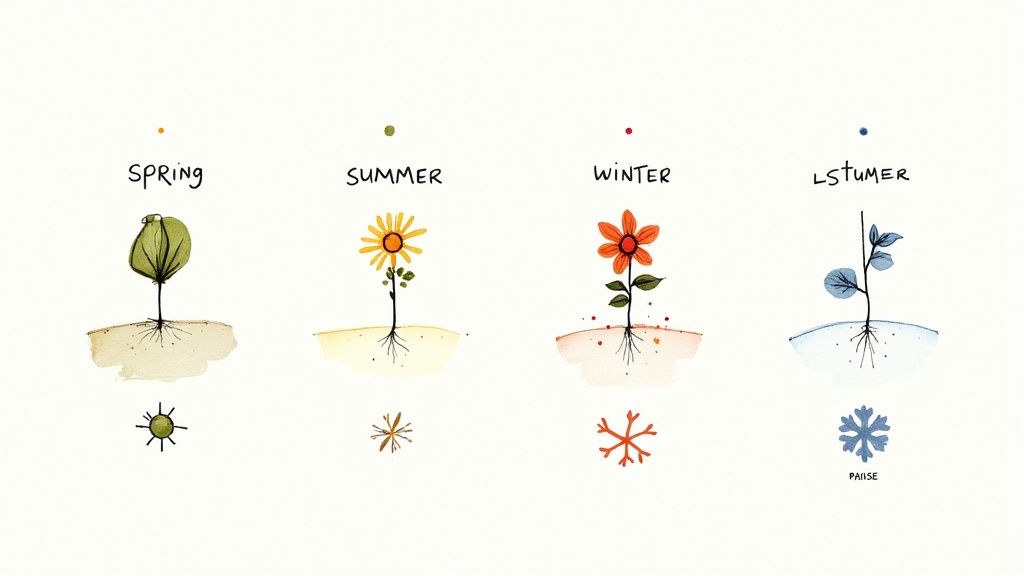
Knowing which fertilisers for plants to buy is only one part of the equation. The real secret to a thriving garden is knowing when to use them. Just like us, plants have different needs as they move through the seasons. If you can line up your feeding schedule with New Zealand’s unique seasonal shifts, you’ll be giving your plants the right fuel at the perfect moment.
Before we jump into the calendar, let's quickly cover the two main ways to apply fertiliser. You can think of it as the difference between a slow-cooked meal and a quick energy shot.
-
Granular Fertilisers: These are dry pellets you simply sprinkle over the soil. They're designed to release nutrients slowly and steadily over weeks, sometimes even months. This makes them a fantastic 'set-and-forget' option for garden beds and established shrubs.
-
Liquid Fertilisers: These are concentrates that you mix with water and apply during your regular watering routine. They give plants an immediate nutrient boost, which is perfect for hungry potted plants or giving flowering crops a quick kickstart.
With those two methods in mind, let’s map out a feeding plan for the Kiwi gardening year.
Spring: September to November
As the days lengthen and the soil warms up, your garden finally wakes from its winter nap. This is without a doubt the most critical time for fertilising, as plants pour all their energy into a massive burst of new growth.
In spring, the goal is all-round development. A balanced, all-purpose granular fertiliser is your best friend for garden beds, providing a steady supply of nutrients for new leaves, stems, and roots. For your potted plants, now's the time to start a regular schedule with a balanced liquid feed to fuel their rapid growth.
Summer: December to February
Summer is showtime. Your plants are working their hardest, producing vibrant flowers and delicious fruit. Their energy needs are at an all-time high, and their focus shifts from general growth to reproduction.
During these hot months, it's a good idea to switch to a fertiliser that's higher in phosphorus (P) and potassium (K). This combination, often sold as a "bloom booster" or "fruit and flower" feed, tells the plant to direct its energy into producing more blossoms and a better harvest. Keep up with regular liquid feeds for annuals and edibles to keep them productive. For more specific seasonal guidance, especially for your lawn, you can explore the best time to fertilize your lawn.
Autumn: March to May
As the weather cools, you’ll notice that growth starts to slow down above ground. Below the surface, however, your plants are busy strengthening their root systems to get ready for the chilly months ahead.
Autumn feeding is all about building resilience for winter. A dose of a fertiliser with higher potassium (K) content will help harden plants off and improve their disease resistance. This is also the perfect time to enrich your soil by adding a thick layer of compost or sheep pellets. These will break down over winter, creating a nutrient-rich foundation for next spring.
Winter: June to August
For most of your garden, winter is a time for rest. It’s a period of dormancy where their metabolism slows right down, and they stop actively growing.
It’s crucial to reduce or completely stop fertilising during winter. Feeding dormant plants can do more harm than good, as their roots aren't actively taking up nutrients. This can lead to a build-up of salts in the soil, which can burn the roots and stress the plant.
This seasonal approach is a huge part of effective, sustainable gardening. Interestingly, New Zealand is known for its intensive agricultural fertiliser use, applying an average of 1,633.4 kilograms per hectare of arable land in 2022. This figure, far above the world average, just goes to show how vital nutrient management is for getting the most from our land—a principle that applies as much to our backyards as it does to our farms.
How to Spot and Fix Common Fertiliser Mistakes
In the plant world, there’s an old saying that more plants are killed with kindness than neglect. We’ve all been there—so eager to see our green friends flourish that we get a bit too enthusiastic with the fertilisers for plants, accidentally causing more harm than good. The real secret to success is learning to read your plant’s signals.
Think of this guide as your plant detective training manual. We’ll cover the tell-tale signs of both underfeeding and the far more common issue of overfeeding, so you can correct your course and keep your plants thriving.
Diagnosing Nutrient Deficiencies
When a plant is missing a crucial nutrient, it’ll often let you know through its leaves. One of the clearest signs is chlorosis, that classic yellowing of the leaves that screams something isn’t right in its diet.
- Yellowing Older Leaves: If the lower, older leaves are turning yellow but the new growth up top is still vibrant and green, you're likely looking at a nitrogen deficiency. The plant is smartly moving this mobile nutrient from its old leaves to fuel the new ones.
- Yellowing New Leaves: On the flip side, if it’s the fresh, new leaves at the top of the plant that are looking pale and yellow, it might be a lack of iron or sulphur. These nutrients are less mobile, so the plant can't easily shift them around.
Fixing a deficiency is usually pretty straightforward. A quick dose of a balanced, liquid fertiliser often does the trick, delivering those much-needed nutrients straight to the roots for fast absorption.
The Dangers of Overfeeding
Giving your plants too much love in the form of fertiliser is a mistake many of us make, and it can cause serious damage. An excess of fertiliser creates a high concentration of mineral salts in the soil. This can literally 'burn' the plant's delicate roots, making it impossible for them to absorb water.
The golden rule of fertilising is simple: less is almost always more. It's far easier to add a little more food to a hungry plant than it is to fix the damage caused by overfeeding.
Keep an eye out for these clear warning signs:
- Crispy, Brown Leaf Tips and Edges: This is the classic symptom of fertiliser burn. The excess salts are scorching the plant from the roots up.
- Stunted or Slowed Growth: A plant that suddenly stops growing, especially during its peak season, could be struggling with overwhelmed roots.
- A White Crust on the Soil Surface: This visible salt build-up is a dead giveaway that there’s too much fertiliser in the pot.
- Wilting, Even with Moist Soil: If your plant looks droopy and thirsty but the soil feels wet, its roots are likely damaged and can’t take up water.
How to Fix Fertiliser Burn
If you suspect you've been a bit too generous, don't panic. You can help your plant recover by flushing the extra salts out of the soil.
Just take the plant to a sink or pop it outside and water it thoroughly. Let the water run freely through the drainage holes for several minutes. This leaching process washes away the harmful salt build-up.
After its shower, let the soil dry out more than you normally would before watering again. Be sure to hold off on any more fertiliser for at least a month to give the roots time to heal.
Got Fertiliser Questions? We've Got Answers
Even the most seasoned gardeners run into questions when it comes to feeding their plants. Let's clear up some of the common queries we hear from fellow Kiwi plant lovers, so you can feed your green friends with confidence.
Can I Just Use One All-Purpose Fertiliser for Everything?
While a good-quality, balanced fertiliser is a brilliant all-rounder for many plants, it’s not quite a one-size-fits-all magic bullet. Think of it like salt in the kitchen – it’s a great base, but you wouldn't use it when a dish really calls for paprika.
Some plants are just fussy eaters. Acid-lovers like azaleas and rhododendrons, for example, do best with a feed made just for them. Likewise, if you're dreaming of a bumper crop of tomatoes, you'll need a fertiliser high in potassium to encourage all that delicious fruit – something a general-purpose mix just doesn't have enough of.
Do New Zealand Native Plants Need Fertiliser?
Most of our incredible native plants have evolved to thrive in New Zealand's unique, low-phosphorus soils. Because of this, they really don't need much in the way of feeding. In fact, a fertiliser that's too rich, especially in phosphorus, can do more harm than good.
If you feel your natives could use a little pick-me-up, a gentle touch is best. Go for a specially formulated low-phosphorus native plant food. Better yet, simply spread a generous layer of good organic compost around the base of the plant in spring. This mimics nature, slowly releasing just the right amount of nutrients.
How Soon Can I Fertilise a Plant I've Just Potted?
Hold your horses on this one! Repotting is a big day for a plant; its roots are inevitably a bit knocked around and stressed. Adding fertiliser straight away is like asking someone to run a marathon right after surgery – it can easily 'burn' those delicate, recovering roots.
Most decent potting mixes already have some slow-release nutrients mixed in, enough to keep your plant happy for weeks, if not months. A good rule of thumb is to wait at least 4-6 weeks after repotting before starting any regular feeding. This gives the plant plenty of time to settle in, recover from the move, and get its roots comfortable in their new home.
Ready to find the perfect meal for your plants? At Jungle Story, we've curated a wide range of organic and synthetic fertilisers to suit every plant in your home and garden. You can explore our collection and find the ideal match for your green friends.