
If you’ve ever looked at your favourite houseplant and wondered where its sparkle went, the answer is usually hiding in the soil. Unlike plants growing freely outdoors, your indoor plant’s pot is a tiny pantry with a very limited stock of food. The right fertiliser is all about restocking that pantry, giving your plant the crucial nutrients it can’t get from sunlight and water alone.
Why Your Indoor Plants Are Secretly Starving
It's a classic mistake to think sunlight and water are all a plant needs. While they're absolutely essential, they’re only two pieces of the puzzle. Plants make their own food through photosynthesis, but they need a whole menu of mineral nutrients from the soil to fuel that process and build strong, healthy cells.
Think of it like this: a plant in your garden is dining at an all-you-can-eat buffet. Its roots can stretch out, always finding new pockets of nourishment in the earth. Your potted plant, on the other hand, is stuck with a packed lunch. It only has access to whatever nutrients were in its potting mix to begin with, and that supply dwindles over time. Every time you water, you're not just giving it a drink; you're helping it absorb those finite minerals, which means the pantry gets emptier and emptier.
The Problem with an Empty Pantry
Once the initial goodies in the potting mix are gone—which can happen in just a few months—your plant starts to go hungry. This nutrient gap is often the real reason behind many common plant woes. Without a top-up, your plant might start sending out distress signals, like:
- Yellowing leaves: This is a classic cry for help, often pointing to a lack of nitrogen.
- Stunted growth: The plant simply doesn't have the building blocks it needs to push out new leaves or stems.
- Weak stems: A lack of essential minerals can lead to a flimsy, droopy structure that can't support itself.
- No flowers: Blooming takes a massive amount of energy, and the specific nutrients required are usually the first to be depleted.
Fertiliser isn't a magic fix for everything, but it is a vital supplement. It’s how you restock the pantry, making sure your plant always has the minerals it needs for lush growth, deep green leaves, and beautiful flowers.
A Look at New Zealand's Fertiliser Habit
For Kiwi gardeners, both indoors and out, understanding the need for fertiliser is second nature. Our country's massive agricultural sector is built on replenishing soil nutrients. To give you some perspective, New Zealand's fertiliser consumption was a staggering 305% of its production in 2022, which shows just how much we rely on importing it to keep things growing.
While most of that is for farms, the principle is exactly the same for the monstera in your living room. Feeding your plants is a standard part of keeping them healthy, whether they're in a huge field or a small pot. If you're curious, you can learn more about the New Zealand fertiliser market and its trends. It all goes to show that giving plants a nutritional boost is a proven practice for promoting healthy life across the board.
Decoding Fertiliser Labels and NPK Ratios
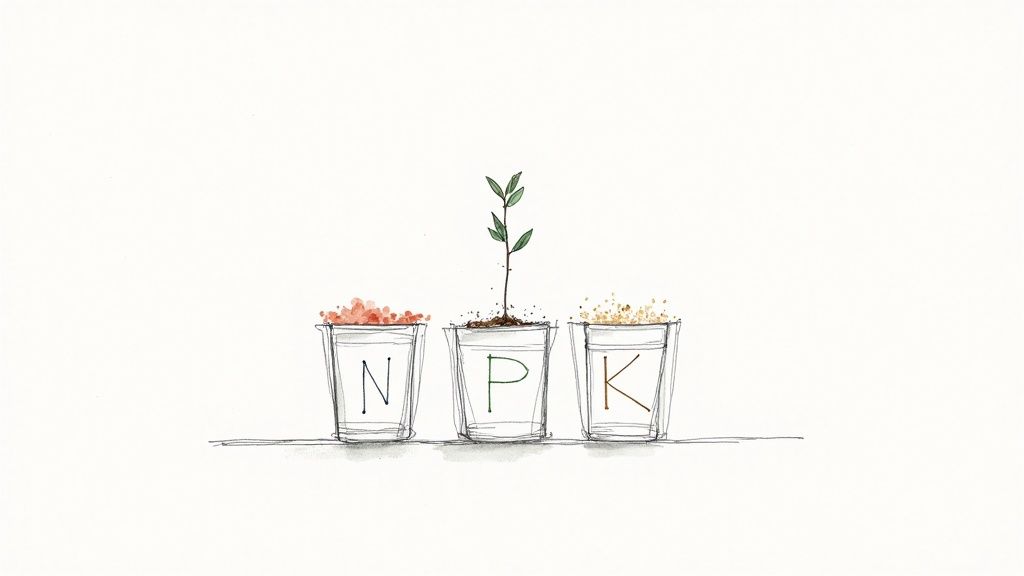
Choosing a fertiliser can feel like trying to read a secret code. You’re standing in the aisle, faced with bottles and boxes covered in numbers, but the most important clue is always the N-P-K ratio. These three letters represent the primary macronutrients every single plant needs to not just survive, but truly thrive.
Think of NPK as a plant's balanced dinner plate, with each component serving a very distinct purpose. Getting your head around this trio is the first real step to confidently picking the right tucker for your indoor greenies.
What NPK Actually Stands For
Those three numbers you see on a fertiliser package, like 10-10-10 or 5-10-5, simply represent the percentage by weight of Nitrogen (N), Phosphorus (P), and Potassium (K). Let's break down what each of these "big three" nutrients actually does for your plant.
-
N is for Nitrogen (The Green Growth Engine): Nitrogen is the absolute superstar for foliage. It’s what your plant uses to produce chlorophyll—the stuff that makes leaves green and powers photosynthesis. A good supply of nitrogen means your plants will have lush, vibrant, and plentiful leaves.
-
P is for Phosphorus (The Root and Bloom Builder): Phosphorus puts its energy into what's happening below the soil and what's about to happen above it. It's essential for developing a strong, healthy root system and is the key ingredient that encourages budding, flowering, and fruiting.
-
K is for Potassium (The Internal Bodyguard): Potassium is all about overall plant health and resilience. It helps regulate water uptake, strengthens cell walls, and boosts the plant's natural defences against pests, diseases, and environmental stress.
These three macronutrients work as a team to support your plant's entire life cycle. When one is missing, you'll start to see specific signs that something isn't right.
Matching the Ratio to the Plant
Not all indoor plants have the same dietary needs, which is why fertilisers come in so many different NPK ratios. A "balanced" fertiliser might have a 10-10-10 ratio, meaning it contains equal parts of each macronutrient. This is a fantastic general-purpose option for many leafy houseplants.
Sometimes, though, you need a more specialised formula. For instance, a fertiliser with a 5-10-5 ratio has double the phosphorus. This is a "bloom booster" formula, perfect for coaxing flowers out of plants like African Violets or Orchids. On the other hand, a high-nitrogen mix would be brilliant for something like a Fiddle Leaf Fig to encourage those big, beautiful leaves.
Choosing the right fertiliser is about matching the NPK ratio to your plant's current goal. Are you trying to encourage leafy growth, strong roots, or brilliant flowers? The numbers on the label will guide you to the perfect formula.
To dive deeper into the science and get more practical tips for feeding your green friends, you can explore our comprehensive guide on indoor plant fertilizer, which covers even more detail for Kiwi plant parents.
NPK Macronutrients at a Glance
To make it even clearer, here’s a simple table summarising the roles of these vital nutrients and the common signs that your plant might be lacking them.
| Macronutrient | Symbol | Primary Function ('The Job') | Signs of Deficiency |
|---|---|---|---|
| Nitrogen | N | Fuels leafy, green growth and chlorophyll production. | Yellowing of older, lower leaves; stunted overall growth. |
| Phosphorus | P | Encourages strong root development and flower/fruit production. | Poor growth, dull or purplish leaf colour, lack of flowers. |
| Potassium | K | Boosts overall plant immunity, disease resistance, and water regulation. | Yellowing or browning along the edges of older leaves; weak stems. |
By learning to read the NPK code, you move from just guessing to making informed decisions for your plants. You can confidently walk down any garden centre aisle and pick out the exact nutritional support your specific indoor plant needs to flourish.
Choosing Your Formula: Organic vs Synthetic Fertilisers
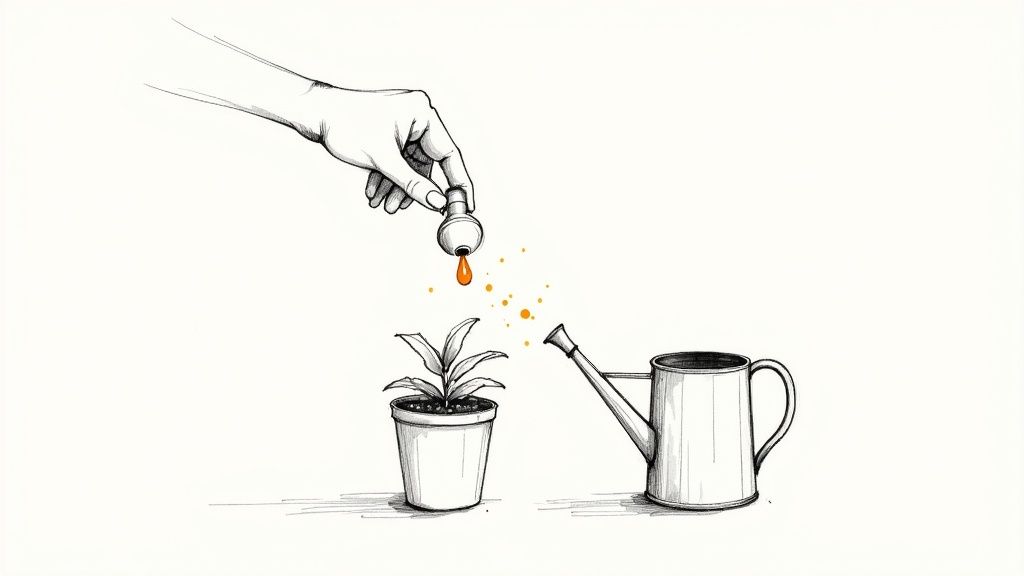
Once you've got your head around the NPK code, the next big decision is whether to go organic or synthetic. This choice often comes down to your personal plant care philosophy and lifestyle, because honestly, both can grow beautiful, healthy plants. There isn't a single "best" answer, but understanding how they work will help you pick the right one for you and your green friends.
A good way to think about it is like this: synthetic fertilisers are a high-performance energy drink for your plants. They deliver a fast, potent, and precisely measured dose of nutrients. Organic fertilisers, on the other hand, are more like a slow-release superfood meal, gently nourishing the plant while also improving the soil it lives in over time.
The Case for Synthetic Fertilisers
Synthetic fertilisers, which you might also see called chemical or inorganic fertilisers, are manufactured from refined minerals and chemical processes. They're specifically designed to deliver nutrients in a form that plants can absorb almost immediately.
This rapid delivery is their biggest advantage. If you notice a plant with yellowing leaves and suspect a nitrogen deficiency, a dose of synthetic liquid feed can show visible improvement in just a matter of days. Because they are so precisely formulated, you know exactly what NPK ratio and micronutrients you're giving your plant.
But all that power comes with a higher risk. It's incredibly easy to overdo it, leading to the dreaded fertiliser burn—a condition where excess mineral salts damage the plant's delicate roots. This can cause crispy brown leaf tips, wilting, and in severe cases, kill the plant. Synthetic options also do very little to improve the long-term health of your potting mix.
Key Takeaway: Synthetic fertilisers offer speed and precision, making them great for a quick nutrient boost or fixing specific deficiencies. Their main downside is the risk of root burn if you're not careful with measuring and dilution.
The Gentle Power of Organic Fertilisers
Organic fertilisers come from natural, living sources. Think things like seaweed extract, compost, worm castings, and even guano (that's seabird droppings!). Instead of feeding the plant directly, they actually feed the beneficial microbes in the soil. These tiny helpers then break down the organic matter, releasing nutrients slowly and naturally for the plant to take up as needed.
This slow-release process is much more forgiving. It’s almost impossible to cause fertiliser burn with most organic products, which makes them a safer bet, especially for beginners. Plus, they do more than just feed the plant; they actively improve the structure and health of your potting mix by adding valuable organic material. This helps with water retention and aeration, creating a healthier home for your plant's roots in the long run.
The main trade-off is speed. Because the nutrients need to be broken down by all that soil life, the results are slower and more gradual. You won't see that immediate turnaround you'd get from a synthetic formula. Some organic products can also have a distinct earthy smell, though many modern indoor formulas are processed to be virtually odourless.
For those keen to explore different feeding options, our detailed guide on fertiliser for indoor plants offers more insights to help you make the best choice.
Comparing Your Options Head-to-Head
To help you decide, let's break down the key differences in a simple comparison table. This can help you match the fertiliser type to your plant care style and what you want to achieve.
| Feature | Synthetic Fertilisers | Organic Fertilisers |
|---|---|---|
| Nutrient Speed | Fast-acting; nutrients are immediately available. | Slow-release; nutrients become available gradually. |
| Ease of Use | Requires precise measurement to avoid burning roots. | Very forgiving; low risk of over-fertilising. |
| Soil Health | Does not improve soil structure. | Enriches soil with organic matter over time. |
| Cost | Often more affordable and highly concentrated. | Can be more expensive for the same nutrient value. |
| Best For | Quick results, correcting deficiencies, hydroponics. | Long-term plant health, sensitive plants, beginners. |
Ultimately, choosing between organic and synthetic formulas is a personal one. You might even find a place for both in your routine—using a gentle organic for regular feeding and a targeted synthetic for a quick boost during peak growing season. The most important thing is to provide your plants with the consistent nutrition they need to thrive in your New Zealand home.
Right, so you've picked out the perfect plant food. What now? Knowing how to apply it is where the real magic happens. It’s a bit like cooking – having the best ingredients is one thing, but your technique is what makes the dish sing.
Thankfully, feeding your indoor plants is a lot less stressful than whipping up a fancy meal. The goal is simple: get those nutrients to the roots safely, without causing any drama. Let's break down the common methods you'll spot on the shelves at your local Kiwi garden centre.
The Go-To Method: Liquid Fertilisers
Liquid fertilisers are easily the most popular choice for indoor gardeners, and for good reason. They give you amazing control and you'll see results fast. Think of it as a direct nutrient IV drip for your plants – because the minerals are already dissolved in water, the roots can slurp them up straight away.
This method is perfect during the big growing season here in New Zealand, which is roughly from spring through summer (September to February), when your plants are feeling particularly hungry. Applying it is dead simple:
- Read the Label: Seriously, don't skip this. Every product is different. Check for the right dilution ratio – it's usually a tiny amount, like a capful, per litre of water.
- Mix it Up: Add the concentrated fertiliser to your watering can. Never, ever pour the concentrate directly onto the soil. This is a one-way ticket to severely burnt roots.
- Water First, Feed Second: This is the golden rule. Always give your plant a small drink of plain water before you add the fertiliser mix. This pre-moistens the soil and stops the roots from getting a nasty shock.
- Feed Evenly: Pour the diluted mix over the soil until you see it start to drain out the bottom. This ensures the entire root system gets a good, even feed.
The real beauty of liquid feeding is the control it gives you. You can easily tweak the strength and how often you apply it. Maybe a weaker dose more often, or a standard dose less frequently – it all depends on what your plant is telling you it needs.
The Set-and-Forget Solution: Slow-Release Options
If you’re a busy plant parent or just a bit forgetful (we've all been there), slow-release fertilisers will be your new best friend. These usually come as little granules, pellets, or spikes that you just pop into the potting mix.
Think of them as little nutrient time capsules. Every time you water, a small, steady amount of food is released into the soil over a long period – often for 3 to 6 months. This "set-and-forget" approach delivers consistent, gentle nourishment without you needing to remember a strict weekly or fortnightly schedule.
- Granules and Pellets: These are usually sprinkled on top of the soil or mixed gently into the first few centimetres. The coating on the granules slowly breaks down with each watering, releasing the nutrients inside.
- Fertiliser Spikes: These are pre-measured, compressed sticks of plant food. You just push them into the soil near the root zone, and they get to work dissolving slowly over time.
While they're super convenient, slow-release options don't offer the same level of control as liquids. You can't really adjust the nutrient flow once they're in the pot. That’s why it's so important to follow the package directions to the letter to avoid overloading the soil with too much food.
Here in New Zealand, our strong gardening culture means you'll find a massive range of options, with big retailers like Mitre 10 and those under the Wesfarmers umbrella stocking a huge selection of both liquid and slow-release products for indoor plant lovers. You can discover more insights into the New Zealand garden supplies market to get a better feel for these trends.
Your New Zealand Seasonal Feeding Schedule

Knowing what to feed your plants is only half the battle; knowing when to feed them is just as important. Here in New Zealand, timing your fertiliser means tuning into the Southern Hemisphere's distinct seasons. Getting this rhythm right is crucial—it ensures you're providing nutrients exactly when your plants can use them, avoiding waste and potential root burn.
Think of your houseplants as having an internal clock that’s perfectly synced with the sun. As the days get longer and brighter, they wake up and get hungry. When the days shorten and cool down, they slow right down for a well-deserved rest. Your feeding schedule should mirror this natural cycle.
The Growing Season Sprint: Spring and Summer
The main event for fertilising happens during the active growing season. For us Kiwis, that’s spring (September to November) and summer (December to February). During these months, the boost in sunlight and warmer temperatures are a clear signal for your plants to kick into high gear, pushing out new leaves, stems, and flowers.
This explosion of growth demands a huge amount of energy and nutrients. By offering a regular supply of fertiliser during this period, you’re giving them the fuel they need to thrive.
- When to Start: Begin feeding in early spring, as soon as you spot the first signs of new growth. This might be tiny new leaves unfurling or fresh shoots popping up.
- How Often: Most indoor plants will be happy with a feed every 2-4 weeks using a diluted liquid fertiliser. But always, always follow the specific product’s instructions for the correct dosage.
This seasonal approach isn't just for us houseplant lovers; it mirrors what happens in agriculture right across the country. For instance, you can see how New Zealand's seasonal fertiliser trends show peak nitrogen applications happening in spring to support pasture growth, aligning perfectly with when our indoor jungles wake up.
The Winter Rest: Autumn and Winter
As we head into autumn (March to May) and winter (June to August), the days get shorter and the light becomes less intense. This is nature’s cue for most houseplants to enter a state of dormancy or semi-dormancy. Their growth slows down dramatically as they hunker down to conserve energy.
A common mistake is continuing to fertilise at full strength during this quiet period. Since the plant isn't actively growing, it simply can't use up the extra nutrients.
Think of it like this: feeding a dormant plant is like serving a huge meal to someone who is fast asleep. The food just sits there, unused, and can eventually cause real problems. Excess fertiliser salts build up in the soil, which can scorch and badly damage the roots.
During these cooler, darker months, it's best to cut back feeding significantly or stop altogether. For most plants, taking a break from autumn until the first signs of spring growth is the safest bet. If you have any of these great indoor houseplants that show growth year-round, you might only need to reduce the frequency to once every 6-8 weeks. Ultimately, learning to read your plant’s signals is the best skill you can develop.
How to Spot and Fix Common Fertilising Mistakes
Even with the best of intentions, it’s all too easy to get your feeding routine a little bit wrong. The good news? Most plants are pretty resilient and will give you clear signals when something’s up. Learning to read these signs is like becoming a plant detective, ready to figure out what’s wrong and fix it before it becomes a bigger deal.
By far, the most common mistake we see is giving plants too much love in the form of fertiliser. Over-fertilising is much more dangerous than under-fertilising because it can quickly scorch a plant’s delicate root system. Think of it like force-feeding someone—the excess just becomes toxic.
Signs of Over-Fertilising
If you’ve been a bit too generous with the plant food, your plant will likely start showing some of these distress signals. Keep a close eye out for them, especially right after you’ve fed your collection.
- Crispy, brown leaf tips or edges: This is the classic symptom of "fertiliser burn." It happens when excess mineral salts in the soil literally scorch the plant from the roots up.
- A white, crusty layer on the soil surface: This is a dead giveaway—it’s a visible build-up of unused salts from the fertiliser. You might also spot it around the pot’s drainage hole.
- Sudden leaf drop: A stressed plant might start shedding its leaves, even ones that look perfectly healthy, as it struggles to cope with the nutrient overload.
- Stunted or weak new growth: Instead of lush new leaves, you might see small, limp ones appearing. This is a sign the damaged roots can't absorb water and nutrients properly anymore.
The Fix Is Simple: Flush the Soil. If you suspect you've overdone it, the best remedy is to give the soil a good rinse. Take your plant to a sink or shower and let lukewarm water run through the potting mix for several minutes. This washes away the excess salts and gives the roots a fresh start. Afterwards, hold off on fertilising for at least a month to give the plant time to recover.
Signs of Under-Fertilising
On the other side of the coin is under-fertilising. This is a much slower, more subtle problem. While it's not as immediately dangerous as over-feeding, a hungry plant is never going to reach its full, glorious potential.
An underfed plant is essentially running on empty, lacking the key building blocks it needs for healthy growth. You'll likely notice a general lack of vigour and vitality.
Here’s what to look for:
- Widespread yellowing of leaves (chlorosis): This often starts with the older, lower leaves turning pale green and then yellow. It’s a tell-tale sign of nitrogen deficiency.
- Slow or non-existent growth: During the New Zealand growing season (spring and summer), a healthy plant should be pushing out new leaves. If yours has been static for months, it's probably hungry.
- Failure to flower: Blooming takes a huge amount of energy and specific nutrients like phosphorus. If your flowering plant refuses to produce buds, it’s a good bet that it needs a nutritional boost.
Luckily, correcting this is straightforward. Simply start a regular feeding schedule with a balanced fertiliser for indoor plants. Begin with a diluted dose to gently reintroduce nutrients without shocking the system, then just follow the product's instructions for ongoing care.
Common Questions About Indoor Plant Fertiliser
Even once you've got the hang of the basics, a few tricky questions always seem to pop up when it comes to feeding houseplants. Getting these details right can make all the difference, taking your plant care from good to great. Let's clear up some of the most common points of confusion for Kiwi plant parents.
Navigating the world of fertiliser for indoor plants might seem a bit complex at first, but it quickly becomes a simple and rewarding part of your routine. These answers should help you feed your plants with confidence, making sure they get exactly what they need, right when they need it.
Can I Use Outdoor Fertiliser on My Indoor Plants?
It’s tempting, but it's generally best to avoid this. Outdoor fertilisers are formulated for the big, complicated world of garden soil. They're often far too potent for the contained ecosystem inside a pot.
Using them can easily overwhelm and scorch the sensitive roots of your houseplants. Always grab a product specifically designed for indoor plants – these formulas have a gentler, more balanced nutrient profile that’s perfectly suited to potted greenery. This prevents the risk of chemical burn and gives your plants the right level of nourishment without the shock.
Should I Fertilise My Plants During a New Zealand Winter?
For most of your houseplants, the answer is no. During the shorter, cooler days of a New Zealand winter, typically from June to August, plants go into a natural dormant phase. Their growth slows right down as they conserve energy.
Feeding a plant during this rest period is like serving a feast to someone who’s asleep. The unused nutrients build up as salts in the soil, which can severely damage the roots. It's best to pause your feeding routine in autumn and only resume in early spring when you see clear signs of new growth.
Is It Safe to Fertilise a Brand New or Sick Plant?
You should definitely hold off in both of these situations. A plant you've just brought home often comes in a potting mix that already has slow-release fertiliser mixed in, so it’s best to wait at least a month or two before adding more. This gives it time to settle into its new environment without being overwhelmed.
And for a sick or stressed plant, fertiliser is not medicine—it's more like being pushed to do a strenuous workout. It can add a lot of stress to an already struggling plant. Your first job is to figure out the underlying issue, whether it's pests, watering problems, or not enough light. Once the plant shows clear signs of recovery, you can reintroduce a very diluted fertiliser to gently support its comeback.
Ready to give your indoor jungle the five-star treatment it deserves? At Jungle Story, we offer a wide selection of premium indoor plant fertilisers and everything else you need to help your green friends thrive. Explore our collection today at https://junglestory.co.nz.