
Let's get one thing straight right from the start: potting mix isn't actually soil. It's a bit of a misnomer, really. Think of it as a purpose-built growing medium, a special blend designed specifically for plants living in containers.
If you've ever tried scooping soil from your garden into a pot, you know what happens next. It compacts, gets waterlogged, and basically tries to drown your plant's roots. A good potting mix is the complete opposite, giving your container plants the perfect balance of aeration, drainage, and nutrients to truly thrive.
Unlocking the Secrets of Potting Mix
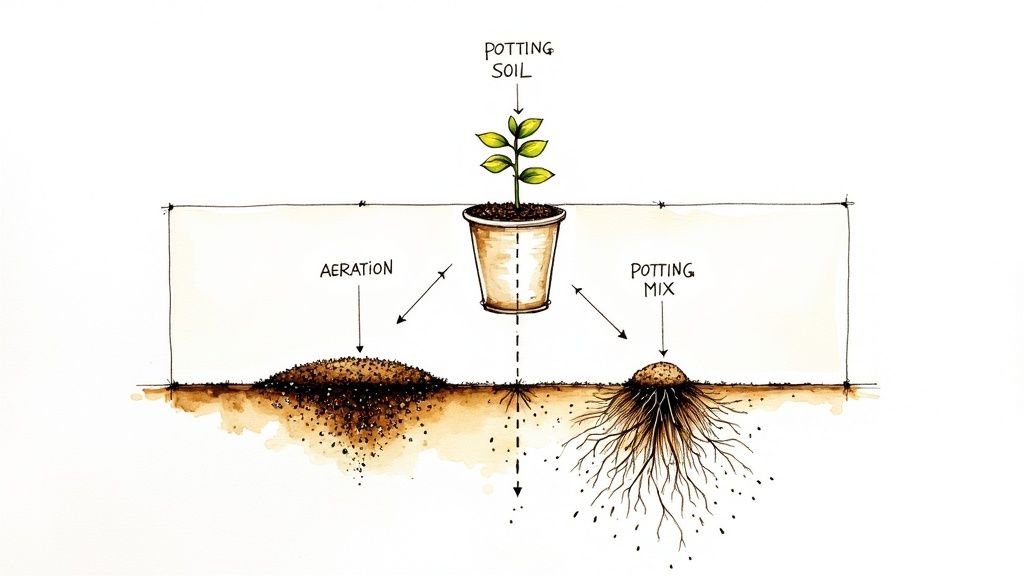
When you open a fresh bag of potting mix, you’re not just looking at dirt; you're looking at a carefully engineered ecosystem. It’s a world away from what’s in your garden beds.
Here’s a helpful way to think about it: your garden soil is like a vast, self-sustaining paddock, while a pot is a small, enclosed apartment. The plant living in that apartment needs a custom-built environment to flourish, and that's exactly what potting mix provides.
Garden soil, once it’s confined to a pot, quickly turns into a dense, heavy brick. It holds way too much water, suffocating roots by cutting off precious oxygen, and it can bring along pests and diseases that are a nightmare in a contained space. This is what leads to common headaches like root rot and sad, stunted growth.
A high-quality potting mix is the foundation of successful container gardening. It’s engineered to do three critical things that garden soil simply can't manage in a pot: give roots structural support, hold moisture without becoming a swamp, and deliver essential nutrients right where they're needed.
The New Zealand Advantage
Here in New Zealand, we're pretty lucky to have access to some exceptional quality mixes. You'll notice a big push towards sustainability, with a strong focus on peat-free, organic, and eco-friendly ingredients. A lot of NZ's reputation for premium, nutrient-rich potting mixes comes from our unique volcanic soils, which offer superior nutrient profiles and beneficial microbes for healthy plants. If you want to dive deeper into this, you can explore detailed insights on the professional potting soil market.
This commitment to quality means Kiwi gardeners can give their plants the best possible head start. Understanding what makes a great potting mix is your first—and most important—step toward a container garden you can be proud of. It ensures your plants have:
- Room to Breathe: Ingredients like pumice and bark create little air pockets, giving roots the oxygen they desperately need.
- Perfect Hydration: Components like coco coir are brilliant at holding water, but they also let the excess drain away freely.
- Essential Nutrition: A balanced blend of compost and other organic goodies provides the food your plants need to grow strong and vibrant.
By choosing the right blend, you’re not just filling a pot. You’re creating the ideal home for your plant’s roots.
The Building Blocks of a Superior Potting Mix
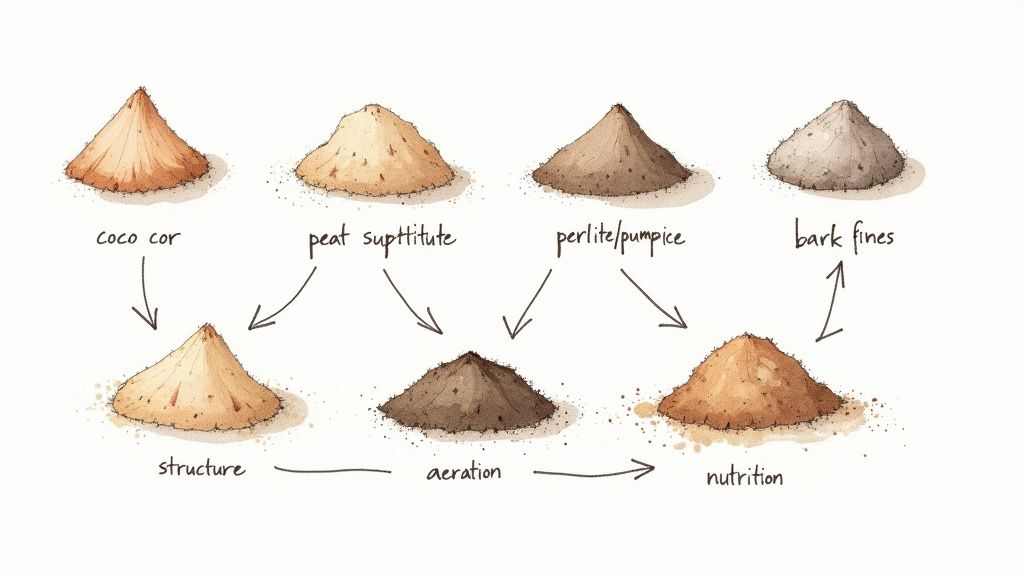
Think of a great potting mix like a sports team. You can't just have a team full of strikers; you need defenders and a solid midfield too. In the same way, a top-tier potting mix soil is all about balance, bringing different ingredients together to do three vital jobs: provide structure, ensure aeration, and deliver nutrients.
It’s a bit like building a house for your plant's roots. You need a solid foundation for stability (structure), good ventilation to keep things fresh (aeration), and a well-stocked pantry for energy (nutrition). Every single component in a bag of potting mix is carefully chosen to play one or more of these roles, creating the perfect home for your plant.
When you understand what each ingredient does, you go from just grabbing a bag off the shelf to really appreciating the science behind it. This knowledge gives you the power to pick the perfect blend for your plants, or even have a go at mixing your own.
Structure and Moisture: The Foundation
The bulk of any good mix is its base material. This is what gives roots something to grip onto and holds onto just the right amount of water. These are the workhorses of the mix, creating a stable yet forgiving environment for your plant to anchor itself.
Two of the most popular base ingredients are coco coir and peat moss. Coco coir, a fantastic, sustainable byproduct of the coconut industry, acts like a natural sponge. It can hold several times its own weight in water and releases it slowly to the roots as they need it.
Peat moss has similar moisture-holding abilities but has come under scrutiny over sustainability concerns. Because of this, many Kiwi gardeners now prefer coco coir or other locally sourced, peat-free alternatives. These materials are key to stopping the mix from drying out too fast, which is a lifesaver for thirsty indoor plants.
Aeration and Drainage: Giving Roots Room to Breathe
A waterlogged pot is a death sentence for most plants. Just like us, roots need oxygen to function, and a dense, swampy mix will quickly suffocate them. This is where aeration ingredients come in—they are literally the ‘lungs’ of your potting mix.
These lightweight, porous materials create tiny air pockets throughout the soil, making sure excess water drains away freely so oxygen can get to the roots.
- Perlite: See those little white specks in your mix? They’re not styrofoam! Perlite is a volcanic glass that’s heated until it puffs up like popcorn. The result is a super light and porous material that’s brilliant for aeration.
- Pumice: Another volcanic rock, pumice is a bit heavier than perlite but provides incredible drainage and structural integrity. It's a non-negotiable for succulents and cacti that demand sharp drainage.
- Bark Fines: These small pieces of composted bark, usually from pine or fir, add both aeration and a little bit of moisture retention. They also break down very slowly, helping the mix keep its structure over time.
Nutrition and Life: The Powerhouse Ingredients
While the base materials build the house, the nutritional components are what actually fuel your plant’s growth. These ingredients are packed with the essential minerals and beneficial microbes that plants crave to produce lush leaves, strong stems, and vibrant flowers.
Compost is the undisputed king here. It’s teeming with a huge range of nutrients and helpful microorganisms that boost the overall health of the soil. A good quality compost acts like a slow-release fertiliser, feeding your plants steadily over time.
A well-formulated potting mix is a living ecosystem in a bag. Ingredients like worm castings don't just add nutrients; they introduce beneficial bacteria and fungi that help roots absorb those nutrients more effectively, creating a healthier, more resilient plant.
Other powerhouse additions include worm castings (a gentle, nutrient-rich soil conditioner) and controlled-release fertilisers. These are tiny pellets designed to break down gradually, releasing a balanced diet of nutrients every time you water.
For a deeper dive into crafting the perfect blend for your houseplants, check out our guide to the ideal indoor potting mix. By getting the right mix of these building blocks, you can provide everything a container plant needs to truly thrive.
Choosing the Perfect Potting Mix for Your Plants
Right, let's talk about choosing the perfect potting mix.
Walking into a garden centre and seeing a wall of soil bags can feel a bit much. They all promise the world—lush leaves, vibrant flowers—and it’s easy to feel lost. But picking the right mix doesn’t need to be a guessing game. The trick is to get inside your plant's head (or, more accurately, its roots) and figure out what it truly needs to be happy in a pot.
It’s a bit like picking the right shoes for an activity. You wouldn’t wear stilettos on a hike, and you wouldn't wear tramping boots to a formal dinner. Every plant family has evolved in a specific environment, and the right potting mix simply recreates that ideal home inside a container. Once you learn to read the labels and connect the ingredients to what your plant wants, you'll be grabbing the perfect bag with total confidence.
Decoding the Needs of Indoor Foliage Plants
Most of the classic indoor plants we love, like Monsteras and Philodendrons, started life on a forest floor. They’re used to dappled light and soil that stays lightly moist but never turns into a swamp. That’s the absolute key to keeping them happy in a pot: a perfect balance of holding onto water while letting the excess drain away freely.
A good-quality, all-purpose premium potting mix is usually a fantastic place to start. Flip the bag over and look for these key ingredients:
- Coco Coir or Peat Substitute: This is the base of the mix, acting like a sponge to hold water and release it slowly to the roots as they need it.
- Bark Fines: These add a bit of structure and help hold moisture, but they also create tiny air pockets as they break down, which roots love.
- Perlite or Pumice: These little white or grey specks are non-negotiable for aeration. They keep the mix from becoming a heavy, compacted brick, which is the number one cause of dreaded root rot.
If you’ve got a plant that's particularly dramatic about having "wet feet," like a Fiddle Leaf Fig, you might want to look for a mix with a bit more bark or pumice to really guarantee that extra water can escape fast.
Catering to Succulents and Cacti
Now, succulents and cacti are the complete opposite of those jungle plants. Hailing from dry, arid environments, their roots are designed for a good drenching, followed by a long period of drying out completely. Their absolute biggest enemy is sitting in damp soil—that’s a one-way ticket to root rot.
For these hardy characters, drainage isn't just a feature; it's everything. You have to grab a bag specifically labelled "Succulent and Cacti Mix."
The whole point of a succulent mix is to let water flush straight through the pot. It should leave the roots with just enough moisture for a quick drink before the soil starts to dry out almost immediately. It needs to feel gritty and sandy, not soft and spongy like a regular mix.
This type of potting mix soil will have way more drainage materials. You’ll see ingredients like coarse sand, pumice, and grit making up most of the blend. These chunky bits create big air gaps that stop water from hanging around the sensitive roots. There’s usually a little compost or coco coir in there to hold a tiny bit of water and nutrients, but the overall vibe is lean and fast-draining.
Fuelling Edible Plants in Containers
Growing your own veggies, herbs, and fruit in pots is so rewarding, but boy, are these plants hungry. Unlike a decorative houseplant, an edible has a massive job to do in a short time—it needs to pump out leaves, flowers, and fruit, which takes a huge amount of energy. Because of this, their potting mix needs to be an absolute powerhouse of nutrients.
Look for a mix labelled for "Vegetable and Herb" or "Container" growing. These are specially designed to fuel that intense growth. They'll have a rich base of high-quality compost and are often boosted with extras like:
- Worm Castings: An amazing, gentle source of a wide range of nutrients and beneficial microbes.
- Sheep Pellets or Blood and Bone: These organic goodies provide a slow, steady supply of the essentials.
- Slow-Release Fertiliser: Often included to make sure the plants have a consistent food source all season long, which here in New Zealand can be from spring right through late autumn.
For a detailed walkthrough on the whole repotting process, our guide on potting plants indoors has step-by-step advice to get your new plant settled in perfectly. Getting this foundation right is the first and most important step.
Creating Your Own DIY Potting Mix in New Zealand
For the hands-on Kiwi gardener, there's something deeply satisfying about creating your own potting mix soil. It gives you complete control over what your plants are growing in, and honestly, it’s often much friendlier on the wallet, especially when you've got a lot of pots to fill. It sounds technical, but it’s simpler than you might think—no chemistry degree required, just a few quality ingredients and a good recipe.
The real magic of a DIY mix is just how adaptable it is. You can create the perfect blend for any plant imaginable, from a spongy, moisture-holding mix for your ferns to a super gritty, free-draining one for succulents.
The trick is to think in "parts" instead of getting bogged down with precise measurements. A "part" can be anything—a scoop, a bucket, even an old yoghurt container. As long as you use the same "part" for each ingredient, your ratios will be spot on. This makes it a breeze to scale your recipe up for a massive planter or down for one tiny pot. All you need is a wheelbarrow or a big tub, your ingredients, and you’re ready to get mixing.
A Classic All-Purpose Recipe
Think of this as your go-to starting point. It's a fantastic recipe for most indoor foliage plants and a huge range of outdoor container plants. It hits that sweet spot of balancing moisture, drainage, and nutrition to create a really versatile and effective growing medium. It's a tried-and-true formula that sets your plants up for healthy root growth from the get-go.
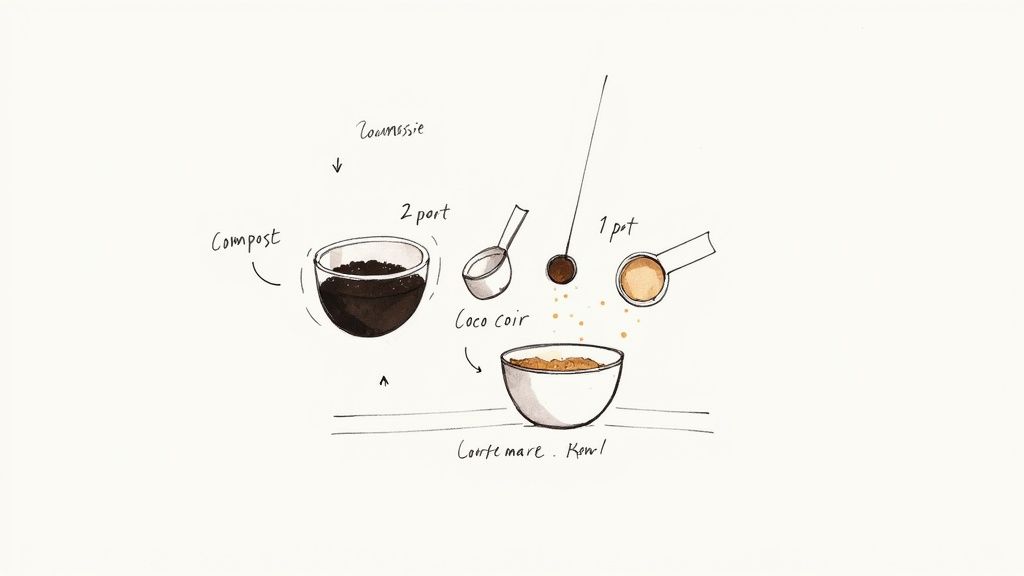
The Basic Formula (in parts):
- 2 parts Coco Coir: This is the base of your mix. It acts like a sponge, holding onto water and releasing it slowly as your plants need a drink.
- 2 parts Quality Compost: Here’s the nutritional powerhouse. It provides a slow, steady release of nutrients and is packed with beneficial microbes. If you fancy making your own, check out our guide on how to start composting at home.
- 1 part Pumice or Perlite: This is your aeration expert. These lightweight bits create tiny air pockets, stop the soil from becoming a solid brick, and let excess water drain away freely. No more soggy roots!
Just tip these into a large container and give them a thorough mix until you have an even, fluffy consistency. And just like that, your all-purpose potting mix is ready for action.
Simple DIY Potting Mix Recipes
Once you've got the hang of the all-purpose blend, customising your mix for different plants is easy. The table below offers a few simple recipes to get you started, using the "parts" system for easy mixing.
| Mix Type | Recipe (in parts) | Ideal For |
|---|---|---|
| All-Purpose Indoor Mix | 2 parts Coco Coir, 2 parts Compost, 1 part Perlite/Pumice | Most houseplants like Pothos, Monsteras, and Philodendrons. |
| Succulent & Cactus Mix | 1 part Coco Coir, 1 part Compost, 2 parts Perlite/Pumice/Sand | Cacti, succulents, and other plants needing sharp drainage. |
| Seed Starting Mix | 2 parts Coco Coir, 1 part Perlite, 1 part Sifted Compost | Delicate seedlings that need a fine, light, and sterile medium. |
| Heavy Feeder Veggie Mix | 1 part Coco Coir, 2 parts Compost, 1 part Perlite/Pumice | Hungry container veggies like tomatoes, cucumbers, and capsicums. |
These recipes are great starting points. Feel free to experiment by adding a handful of worm castings for extra nutrients or a bit more pumice if you find your mix is staying too wet.
Customising Your Mix for Specific Plants
Once you've nailed the basic recipe, you can start tweaking it for plants with more specific tastes. Think of the all-purpose mix as your canvas, and you're the artist, adding a little of this or that to create the perfect environment. This is where you really get to steer your plants toward success.
For plants that can't stand wet feet, like succulents and cacti, you’ll want a much grittier blend. Try adjusting your recipe to something like 1 part coco coir, 1 part compost, and 2 parts pumice or coarse sand. This guarantees water zips through quickly, just like it would in their natural arid homes. If you really want to dive deep, you can learn how to make your own cactus soil for exceptionally happy plants.
On the other hand, for hungry veggies in pots, you need to ramp up the nutrition. A richer blend of 2 parts compost, 1 part coco coir, and 1 part pumice works wonders. You could even throw in a handful of sheep pellets or worm castings to really fuel their growth through our long Kiwi growing season. Sourcing these ingredients from local garden centres is a great way to get quality stuff while supporting local businesses.
How to Troubleshoot Common Potting Mix Problems
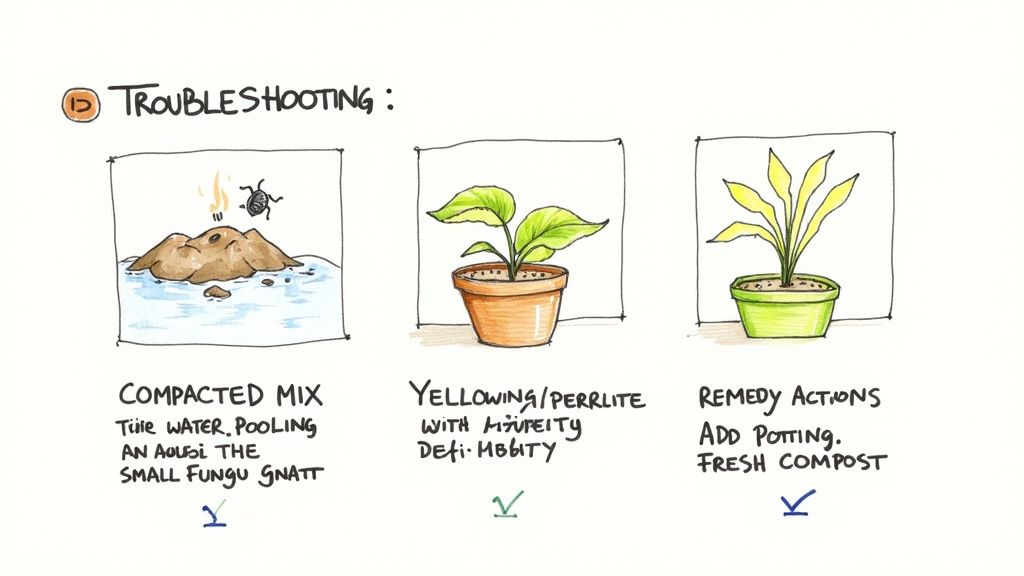
Even with a perfect start, a pot is a closed little world. Over time, that lovely fluffy potting mix soil you started with can run into some snags. Don't stress, though; most issues are surprisingly easy to spot and fix once you know what you're looking for.
Think of yourself as a plant detective. A little regular observation goes a long way in catching problems before they get serious. We'll walk through the most common dramas New Zealand gardeners face, from soil that's turned to concrete to plants that are just plain hungry.
Diagnosing and Fixing Poor Drainage
Ever watered your plant and watched the water just sit on top, refusing to sink in? Or maybe it zips straight through the pot and out the bottom in a flash? Both are classic signs that your mix’s structure is giving up.
This is compaction, and it happens as all the good organic bits in the mix break down and settle. Those crucial air pockets we talked about earlier vanish, turning the mix into a dense, heavy block that literally suffocates the roots. This can quickly lead to root rot, especially in New Zealand’s more humid spots where things struggle to dry out.
Simple Steps to Improve Drainage:
- Aerate the Soil: Gently poke a few deep holes into the mix with something like a chopstick or a skewer. This immediately creates new channels for air and water to get down to the root zone where they're needed.
- Add More Perlite or Pumice: If you can, carefully mix some extra aeration material into the top few centimetres of the soil. It’s a small change that makes a big difference over time.
- Check Drainage Holes: Flip the pot over and make sure the drainage holes aren’t blocked. Sometimes roots grow over them, or they just get clogged with compacted mix.
If the mix is really far gone, your best bet is to repot the plant into a fresh, airy potting mix. It’s like hitting the reset button and giving the roots a brand new, healthy home.
Spotting and Correcting Nutrient Issues
Is your plant looking a bit sad? Yellowing leaves, sluggish growth, or just a general lack of oomph are often the first tell-tale signs that it’s gobbled up all the food in its potting mix. This is totally normal—potted plants depend on you for 100% of their nutrition.
Nutrient deficiency is one of the most common issues out there, especially for hungry plants like container veggies and flowering annuals during their big growth spurt in spring and summer.
A plant showing signs of nutrient deficiency is like a person trying to run a marathon on an empty stomach—it simply doesn't have the fuel to perform. Yellowing leaves (chlorosis) are its way of yelling, "The pantry is bare!"
How to Replenish Nutrients:
- Liquid Feed: For a quick fix, give your plant a balanced liquid fertiliser. It’s an instant shot of easily absorbed nutrients that gets to work right away.
- Slow-Release Fertiliser: For a more long-term "set and forget" solution, gently scratch a controlled-release granular fertiliser into the soil's surface. This will feed your plant steadily for several months.
- Top-Dressing: Add a fresh 2-3 cm layer of rich compost or worm castings to the top of the pot. Every time you water, you'll be washing delicious nutrients down to the roots.
Dealing with Common Potting Mix Pests
Unfortunately, warm, moist potting mix can feel like a luxury resort for some unwanted guests. The number one culprit Kiwi gardeners face, particularly indoors, is the fungus gnat. These tiny, black flies are more annoying than harmful, but their larvae, which live in the soil, can nibble on delicate roots.
Fungus gnats absolutely thrive in soil that's constantly damp. If you see them buzzing around, it’s a massive clue that your potting mix is staying too wet for too long.
Effective Pest Control Strategies:
- Let the Mix Dry Out: This is the most important step. Allow the top 5 cm of the potting mix to dry out completely between waterings. This breaks their life cycle and makes the soil inhospitable.
- Use Sticky Traps: Yellow sticky traps placed near your pots are super effective at catching the adult flies before they can lay more eggs.
- Consider a Soil Topping: A layer of coarse sand or decorative gravel on top of the mix creates a dry barrier that stops adult gnats from getting to the soil to lay their eggs.
By tweaking your watering habits and keeping the soil well-aerated, you create an environment where these pests just can't get a foothold, keeping your plants healthy and happy.
The Bigger Picture of Potting Mix in New Zealand
That weekend trip to the garden centre? It connects you to a much bigger story about New Zealand's environment and economy. The bag of potting mix soil you grab isn't just something to fill a pot with; it’s a product of our country’s vital horticulture industry and a small reflection of our national identity.
When you choose a high-quality, locally made mix, you're directly supporting Kiwi businesses and the primary industries that are so central to our nation's success. New Zealand’s entire horticulture sector is a cornerstone of our exports, with international markets always on the lookout for sustainable, high-calibre growing products. Our premium potting mixes play an unsung but crucial role in upholding that reputation for quality. You can read more about New Zealand's primary industries outlook to see just how important this is.
A Shift Towards Sustainable Gardening
Beyond the dollars and cents, your choice also plugs you into an important environmental movement happening right here at home. For years, peat moss was a go-to ingredient, but there's been a massive industry-wide shift away from non-renewable resources like it.
This move towards sustainability is all about championing locally sourced, renewable alternatives that are simply better for our planet.
Choosing a peat-free potting mix is a small but powerful way to support a healthier environment. It reduces our reliance on finite resources and promotes innovative, circular solutions within New Zealand’s gardening industry.
So, what are these sustainable heroes you'll find in many Kiwi potting mixes these days?
- Bark Fines: A fantastic byproduct of our forestry industry, these add brilliant structure and aeration to the mix.
- Coco Coir: Made from coconut husks, this renewable resource is a champion at holding onto water.
- Premium Compost: Created from recycled green waste, it brings rich organic matter and essential nutrients to the party.
By opting for these modern blends, your container garden becomes part of a larger, greener story—one that values sustainability and reinforces New Zealand's clean, green identity.
Common Questions About Potting Mix
Getting your head around the world of potting mix can throw up a few questions, especially when you're just trying to keep your container plants happy and healthy. Let's dig into some of the most common queries we hear from Kiwi gardeners.
Can I Reuse Old Potting Mix?
You absolutely can, but it needs a bit of a refresh first. After a growing season, potting mix gets compacted and most of its nutrients have been gobbled up by the plant. Think of it like a pantry that needs restocking after a long winter.
To bring it back to life, just break up any clumps and mix in about one-third fresh, high-quality compost. A good sprinkle of a balanced slow-release fertiliser will replenish the nutrients and restore that light, airy structure your plants love.
There's one crucial rule here: never reuse potting mix from a diseased plant. Nasty pathogens can hang around in the soil and will jump straight onto your new plant. It's always safer to just get rid of it and start fresh.
What’s the Difference Between Potting Mix and Seed Raising Mix?
The main difference comes down to their texture and nutrient levels. Seed raising mix is made specifically for tiny, brand-new seedlings. It has a very fine, light consistency that allows those fragile new roots to push through without a fight.
It’s also very low in nutrients on purpose, because seeds actually have all the energy they need to get started. A rich, standard potting mix would be way too strong and could burn the tender new roots. Potting mix is much coarser and packed with nutrients, designed to support a more mature, growing plant.
How Long Does an Unopened Bag of Potting Mix Last?
If you store it properly, an unopened bag of potting mix can last for one to two years. The best spot is somewhere cool and dry, away from direct sun – like a garden shed or the garage. This stops the organic bits inside from breaking down too fast.
Just keep in mind that any organic fertilisers in the mix will slowly lose their punch over time. For the best results, we always recommend using a fresh bag for the current growing season to give your plants the strongest possible start.
Why Are There White Specks in My Potting Mix?
Those little white specks are almost always perlite, and they're a fantastic ingredient in a good quality potting mix. Perlite is a type of volcanic glass that's been heated until it puffs up, creating a super lightweight, porous material that looks a bit like tiny bits of polystyrene.
It's added for one very important reason: to improve aeration and drainage. By creating tiny air pockets throughout the mix, perlite stops the soil from becoming a dense, waterlogged brick. This ensures your plant’s roots get the oxygen they need to breathe and thrive.
Ready to give your plants the perfect foundation to grow? Explore our hand-picked selection of premium potting mixes and soil amendments at Jungle Story. Find the ideal blend for every plant in your collection by visiting us at https://junglestory.co.nz today.