
Ever thought about giving your garden a natural superfood? Something that doesn't just feed your plants, but actually boosts their growth, strengthens their roots, and makes the very soil they live in healthier? That's exactly what you get with a good seaweed fertiliser. For Kiwi gardeners, this tonic from the ocean is a total game-changer, whether you're aiming for vibrant veggies, stunning flowers, or resilient native plants.
Unlock Your Garden's True Potential
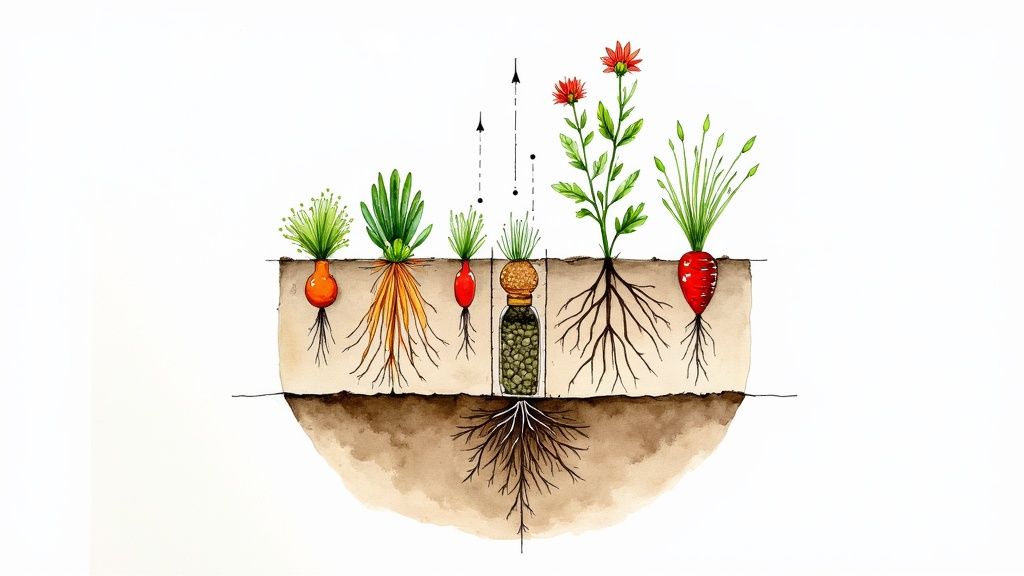
It helps to think of seaweed fertiliser less like a simple plant food and more like a complete multi-vitamin for your garden. It’s absolutely packed with essential nutrients, trace elements, and natural growth-promoting hormones that all work together to build a healthier ecosystem, right from the soil up.
Unlike many synthetic products that give a quick, shallow burst of energy, seaweed works on a much deeper, more sustainable level. It gets the microbial life in the soil buzzing, which in turn helps unlock nutrients that were previously unavailable to your plants. This creates a far more fertile and resilient foundation for everything you want to grow.
A Natural Partner for Your Garden
For those of us gardening in New Zealand, using a quality seaweed fertiliser is a fantastic way to cultivate a garden that’s in tune with our unique growing conditions. The benefits are wide-ranging and contribute to the overall vitality of your plants.
- Stronger Roots: It encourages deep, robust root systems, which makes plants much more resilient to drought during our hot, dry summers.
- Healthier Foliage: The rich mix of micronutrients leads to lush, green leaf growth and more vibrant flowers.
- Improved Soil Structure: It helps improve water retention in sandy soils and aeration in the heavy clay that so many of us deal with across the country.
Using seaweed is about more than just feeding plants; it's about conditioning the soil to create a self-sustaining environment. A healthy soil ecosystem leads to stronger plants that can better resist pests and diseases naturally.
This whole approach fits perfectly with sustainable gardening practices. By nourishing the soil first, you reduce the need for harsh chemical interventions. This makes it an ideal companion to other organic methods, like composting. If you're keen to build the best foundation for your garden, learning how to start composting is a great next step. It’s your roadmap to a healthier, more productive garden.
Why Seaweed Is a Superfood for Plants
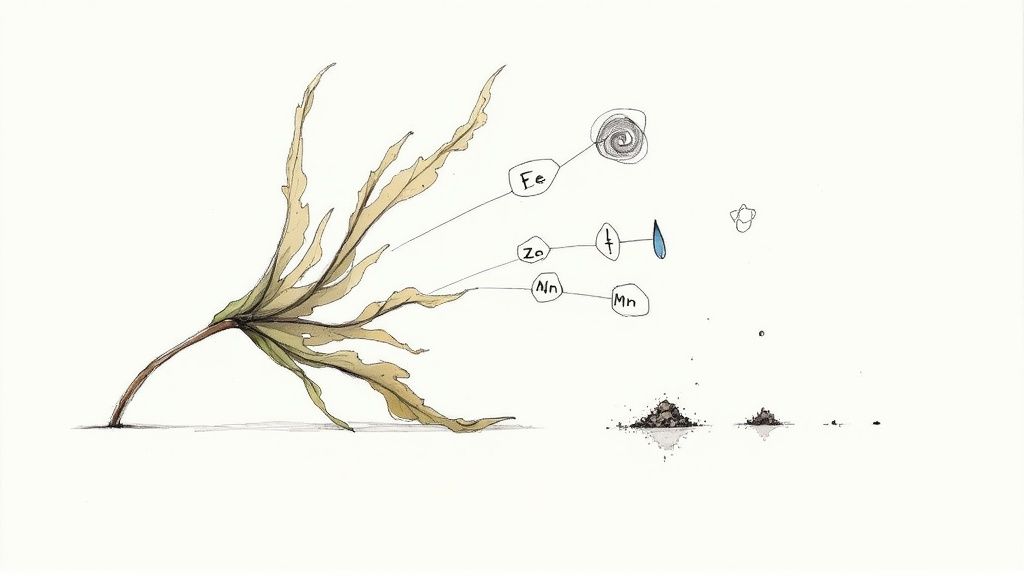
So, what exactly makes seaweed such a game-changer for your garden? The real magic is in seeing it not just as a plant food, but as a powerful biostimulant.
Think of it like this: a standard synthetic fertiliser is basically a sugary energy drink for your plants. It gives them a quick, temporary jolt of nitrogen, phosphorus, and potassium (NPK), but not much else. Seaweed, on the other hand, is a complete, balanced meal packed with everything a plant needs to thrive long-term. It delivers a rich, complex cocktail of goodness that builds health right from the cellular level.
This ocean-derived tonic is absolutely brimming with over 60 essential trace elements and minerals, including things like iron, manganese, zinc, and magnesium. These micronutrients are the vital building blocks for almost every function in a plant, much like vitamins and minerals are for us. They’re crucial for everything from photosynthesis to fending off diseases.
Natural Growth Hormones and Soil Conditioners
Beyond just minerals, seaweed is loaded with naturally occurring plant growth hormones. These are the secret ingredients that really set it apart from anything else you can put on your garden.
- Cytokinins: These hormones are all about promoting cell division. This encourages vigorous, leafy growth and more side shoots, leading to bushier, fuller plants with more spots for flowers and fruit to form.
- Auxins: These are absolutely crucial for root development. They drive the growth of a strong, sprawling root network, allowing plants to pull more water and nutrients from the soil—a huge advantage during our often-dry Kiwi summers.
Seaweed is also packed with a substance called alginic acid, which works as a fantastic soil conditioner. In sandy soils, it helps bind particles together to hold onto more water. In our heavy clay soils, it works to break up compaction, improving drainage and aeration. It tackles two of the most common challenges for gardeners right across New Zealand.
Using seaweed fertiliser is less about force-feeding your plants and more about giving them the tools they need to help themselves. It improves the very structure of your soil and stimulates a plant’s own natural growth processes, leading to stronger, more resilient results.
This powerful combination of nutrients, hormones, and soil conditioners is why it works so well. The science backs it up, too. A 2023 study, for example, highlighted major improvements in seed germination, plant height, and chlorophyll content after seaweed was applied. You can dig into the full report to see the commercial biostimulant findings for yourself.
The benefits really shine when you're growing your own kai. For anyone chasing a bumper crop, knowing what your plants need is key. For more tailored advice, check out our detailed guide on the best fertiliser for vegetables and see how seaweed can fit into a balanced feeding schedule. Ultimately, it just creates healthier plants that are far better equipped to handle whatever the weather throws at them.
Picking the Right Seaweed Product
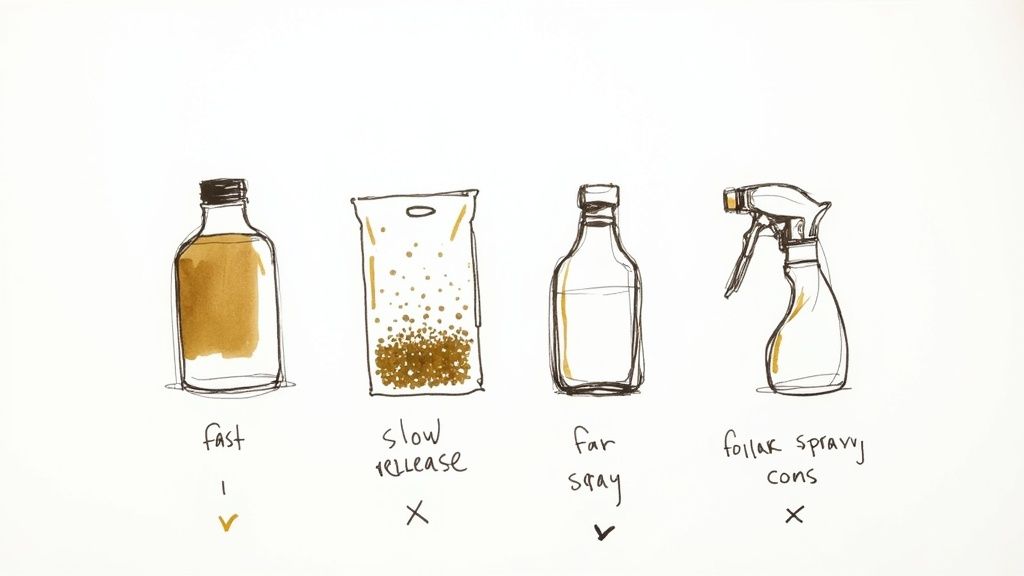
Walking into a garden centre can feel a bit overwhelming when you see the different types of seaweed fertiliser NZ has on offer. But making the right choice is much simpler once you understand what each one does best. The main options you'll find fall into three categories: fast-acting liquids, slow-release granules, and handy sprays.
Your choice really just comes down to your gardening goals right now. Are you trying to give your hungry tomato plants a quick boost, or are you looking to improve the soil structure around your fruit trees for the long haul? Each format is designed for a different job.
Fast Acting Liquid Concentrates
Think of liquid seaweed fertilisers as the sprinters of the gardening world. They’re usually sold as a dark, rich concentrate that you dilute in a watering can before soaking the soil around your plants.
Because all those brilliant nutrients are already in a liquid form, your plant's roots can slurp them up straight away. This makes them perfect for giving plants a quick, noticeable boost, especially during the big growth periods in spring and summer. If your potted plants or leafy greens are looking a bit tired, a liquid feed can deliver visible results in just a few days.
Slow Release Granular Meals
If liquids are the sprinters, then granular or powdered seaweed meals are the marathon runners. You work these dry products directly into the soil or mix them through your compost.
Unlike liquids, they don't provide an instant hit. Instead, they break down slowly over several months, conditioning the soil and releasing their goodness bit by bit. This makes them an excellent choice for long-term soil improvement. Mixing them into the soil when planting new trees, shrubs, or perennials helps build a healthy foundation for years to come.
Granular seaweed meal is a fantastic soil conditioner. It's less about a quick feed and more about investing in the long-term health and structure of your garden soil, improving its ability to retain moisture and support microbial life.
Convenient Foliar Sprays
Foliar sprays are essentially just very diluted liquid seaweed fertilisers, but you apply them directly to a plant’s leaves. It’s an incredibly efficient method because plants can absorb micronutrients and growth hormones through their leaf surfaces much faster than they can through their roots.
A foliar spray is the perfect solution for giving a stressed plant a rapid tonic. It's brilliant for helping plants bounce back from transplant shock or cope with a sudden heatwave. Just remember, it's a supplementary treatment and shouldn't replace regular soil feeding.
Comparing Seaweed Fertiliser Types for Your NZ Garden
To make it even easier, here’s a quick comparison to help you choose the best seaweed fertiliser format based on your gardening needs, from quick boosts to long-term soil health.
| Fertiliser Type | Best For | Application Speed | Primary Benefit |
|---|---|---|---|
| Liquid Concentrate | Container plants, vegetables, and annual flowers needing a quick feed. | Fast | Immediate nutrient uptake for a rapid growth boost. |
| Granular Meal | Improving new garden beds, enriching compost, and long-term feeding of trees and shrubs. | Slow | Long-term soil conditioning and sustained nutrient release. |
| Foliar Spray | A quick pick-me-up for stressed plants or correcting minor nutrient deficiencies. | Very Fast | Rapid absorption of trace elements and hormones through leaves. |
Each type has its place in the garden shed, and many gardeners (myself included!) keep more than one on hand to tackle different jobs throughout the season.
The New Zealand Seaweed Advantage
When you pick up a bottle of seaweed fertiliser made right here at home, you’re getting so much more than a simple garden tonic. You're tapping into the incredible, unique power of our pristine coastal waters and supporting a system that values sustainability from the shoreline all the way to your soil.
The journey of this garden gold starts along our beautiful coastlines. New Zealand is blessed with a rich marine ecosystem, home to some of the most nutrient-packed seaweeds in the world.
Many local products are made from species like the giant bladder kelp, Macrocystis pyrifera, which thrives in the cooler, cleaner waters around the country. This amazing seaweed basically acts like a sponge, soaking up a huge array of minerals and trace elements straight from the ocean.
By choosing a locally sourced seaweed fertiliser, you’re connecting your garden directly to this powerful natural resource. Not only does this ensure a top-quality product, but it also feels right, aligning with those strong Kiwi values of community and looking after our environment.
Supporting Sustainable Local Harvesting
Opting for a New Zealand-made product means you're backing local businesses that have a deep, hands-on understanding of our unique marine environment.
These producers often use sustainable harvesting methods, which ensures the seaweed beds can regenerate and keep thriving for generations to come. It’s a careful approach that protects the delicate coastal ecosystems that are so vital to our country's identity.
On top of that, a shorter supply chain means a smaller carbon footprint. The trip from our coast to your backyard is a lot shorter than for imported alternatives, which is a win for both your garden and the planet. Supporting these local industries also helps build a more resilient, self-sufficient horticultural sector right here in New Zealand.
When you buy local seaweed fertiliser, you're not just feeding your plants; you're investing in the health of our local economy and the preservation of our coastal environments. It’s a choice that reflects a commitment to kaitiakitanga, or guardianship, of our natural resources.
The local seaweed sector is a pretty significant and growing part of our primary industries. In fact, seaweed aquaculture in New Zealand has seen impressive growth, with production volumes tripling over the last two decades.
While marine farming is expanding, especially in places like the Marlborough Sounds, wild harvesting of species like bladder kelp is still a major contributor. It mainly supplies our agricultural and horticultural sectors. If you're curious, you can explore more about the New Zealand seaweed sector framework to see just how important it is.
This local advantage empowers you to make a more informed choice next time you're at the garden centre. By looking for NZ-made brands, you can feel confident you’re getting a product perfectly suited to our conditions, created by people who care about our environment as much as you do.
How to Apply Seaweed Fertiliser for Best Results

Getting the most out of your seaweed fertiliser really just comes down to how and when you use it. While it’s famously gentle stuff, a few simple guidelines will make sure your plants get the full benefit, whether you're looking after a vege patch, a prized rose bush, or some beautiful NZ natives.
The trick is to match the application to what your plant needs right now. A quick liquid feed is perfect for hungry annuals, while a slow-release meal is better for building long-term soil health around established shrubs and trees. Timing is just as important, so you’ll want to line up your feeding schedule with your garden’s natural growth cycles.
Getting the Ratios Right
With liquid seaweed concentrates, getting the dilution right is the most important step. Always, always read the label on the bottle you’ve bought, as the strength can vary quite a bit between brands.
As a general rule of thumb for a soil drench, you’ll mix around 10-20ml of concentrate per litre of water.
If you're doing a foliar spray—applying it directly to the leaves for a quick pick-me-up—you'll want a much weaker solution to avoid any chance of leaf burn. For this, a safe bet is typically 5ml of concentrate per litre of water.
A Key Takeaway: Always dilute liquid seaweed fertiliser according to the package instructions. A little goes a long way, and making it stronger doesn't add extra benefits—it's just wasteful.
Using a granular seaweed meal is much simpler. Just lightly sprinkle it around the base of your plants—about a handful per square metre is plenty—and gently scratch it into the top layer of soil before watering it in.
A Seasonal Guide for Kiwi Gardens
Timing your applications with New Zealand’s seasons will give your garden support precisely when it needs it most. Here’s a simple calendar to follow:
- Spring (September - November): This is when everything is taking off. Apply liquid seaweed every 2-4 weeks to your vegetables, annual flowers, and potted plants to fuel all that vigorous new growth. It's also the perfect time to work granular meal into new garden beds before you plant.
- Summer (December - February): When the heat cranks up, seaweed acts as a brilliant plant tonic. A fortnightly foliar spray can help your plants cope with heat stress and stop them from wilting. Keep up the liquid feeds for hungry crops like tomatoes and courgettes.
- Autumn (March - May): This is another critical feeding window. An application of seaweed fertiliser helps plants strengthen up before winter rolls in. It encourages strong root development in perennials, trees, and shrubs, getting them ready for the cooler months.
- Winter (June - August): You can ease off on frequent feeding now, as most plant growth slows right down. A single application to your garden beds can help support the soil microbes and give hardy winter veges a gentle boost.
For your indoor plants, a regular feeding schedule is also a game-changer. You can find more specific advice in our comprehensive guide on choosing the right indoor plant fertilizer.
Here in New Zealand, seaweed-based products are a fantastic, sustainable alternative to synthetic options. They can be used to improve the soil or as foliar sprays and often contain a great mix of key nutrients. As organic gardening continues to grow in popularity, seaweed products are perfectly positioned to help Kiwi gardeners rely less on synthetic fertilisers. You can discover more insights about New Zealand's fertiliser market on the USDA website.
Common Questions About Seaweed Fertiliser
It's only natural to have a few questions before you start splashing a new product around your garden, no matter how good it sounds. Let's run through some of the most common queries we hear from Kiwi gardeners about seaweed fertiliser, so you can get started with total confidence.
Can I Use Too Much Seaweed Fertiliser?
While seaweed fertiliser is incredibly gentle, you can definitely have too much of a good thing, especially with the liquid concentrates. Think of it like a vitamin supplement – the recommended dose does you good, but necking the whole bottle at once won't make you healthier, and it might just cause a few problems.
The golden rule is to stick to the dilution rates on the packaging. A brew that’s too strong can potentially scorch the leaves, especially on delicate seedlings or on a hot, sunny day. Following the directions isn't just safer for your plants; it's a lot better for your wallet, too. No one wants to waste this precious garden tonic.
Is It Safe For Native NZ Plants?
Absolutely. In fact, it’s one of the best things you can give them. So many of our stunning natives like hebes, harakeke (flax), and pōhutukawa have evolved in soils that are naturally low in phosphorus.
Seaweed fertiliser is an excellent choice for NZ natives because it's naturally low in phosphorus. This allows you to provide a rich blend of trace elements and growth stimulants without the risk of phosphorus toxicity, which can harm or even kill these sensitive plants.
It’s the perfect way to give your natives a gentle boost, encouraging lush, healthy growth without messing with the soil balance they’re used to.
Does Seaweed Fertiliser Make The Garden Smell?
This is a fair question! Some of the liquid concentrates do have a bit of a distinct 'ocean' aroma when you're mixing them up. But honestly, any smell is mild and doesn't hang around.
Once you’ve applied the diluted mix to the soil and watered it in, the scent disappears almost immediately. Your garden will go right back to smelling of damp earth and flowers, not the low-tide mark at the local beach. You can feed your plants without worrying about any lingering pong.
Can I Make My Own From Beach Seaweed?
You sure can, and it’s a brilliant way to whip up your own free garden tonic. If you’re planning to gather seaweed from a local beach in New Zealand, it pays to check the local council rules first. Generally, though, collecting small amounts of beach-cast seaweed (the stuff that’s already washed ashore) for personal use is fine.
Here’s a simple way to do it:
- Collect Freshly Washed-Up Seaweed: Look for seaweed that’s still wet and fresh from the tide. Skip the old, dry, crunchy clumps.
- Rinse It Thoroughly: This is the most important step. Give it a good rinse with the hose to wash off all the excess salt, which can damage your soil and plants.
- Steep It in Water: Pop the rinsed seaweed into a bucket or barrel, cover it with water, and place a loose lid on top.
- Let It Brew: Give the mixture a stir every few days. After a few weeks (it’ll take longer in winter), you’ll have a dark, nutrient-rich seaweed 'tea' ready to dilute and use in your garden.
Ready to give your garden the natural boost it deserves? At Jungle Story, we connect you with trusted local sellers offering a fantastic range of fertilisers and everything else you need to create a thriving green space. Explore our collection and find the perfect products for your garden today at https://junglestory.co.nz.