
While the Snake Plant, Peace Lily, and Spider Plant are fantastic choices for freshening up your home, it's worth understanding why our homes need these green allies in the first place. Picking the right plants is all about tackling those invisible airborne nasties to create a genuinely healthier living space.
Why Your Indoor Air Needs a Breath of Fresh Air
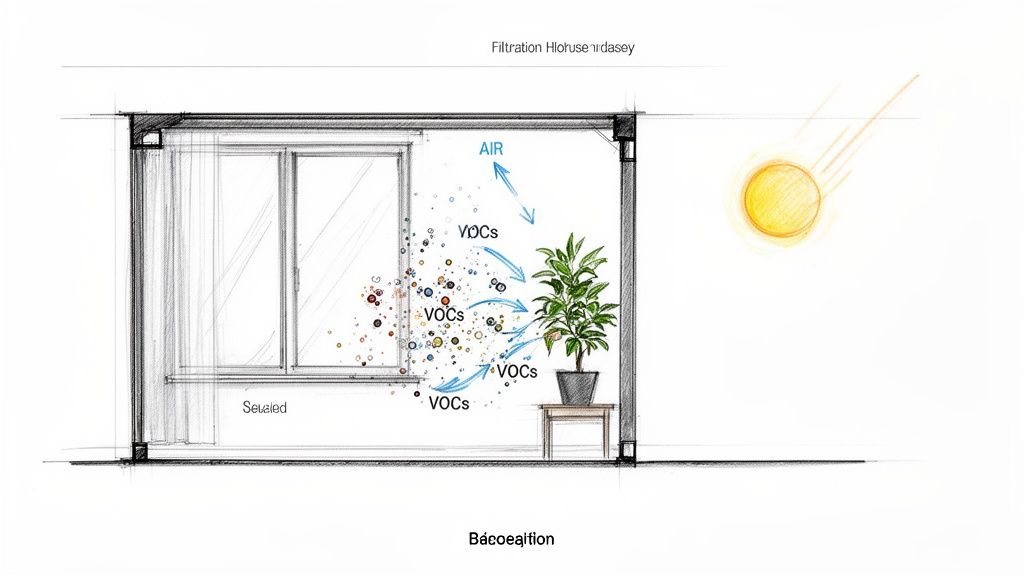
We Kiwis love our pristine outdoor environments, but the air inside our homes often tells a different story. Modern New Zealand homes are built to be warm and energy-efficient, with excellent insulation that keeps us cosy during the cooler months from June to August. The catch? This same feature means our homes can trap a lot more than just heat.
Everyday items in our homes quietly release invisible chemicals known as Volatile Organic Compounds (VOCs). Think of that new car smell—that distinct scent is actually a cocktail of VOCs being released from plastics and adhesives. A similar "off-gassing" happens with a surprising number of common household products.
The Hidden Sources of Indoor Pollutants
These airborne pollutants don't just come from one place; they're woven into our daily lives. Knowing where they come from is the first step toward clearing the air.
Common culprits include:
- Furniture and Building Materials: Pressed wood, carpets, and brand-new furniture often contain formaldehyde.
- Paints and Varnishes: Freshly painted walls or refinished floors can release chemicals like benzene and xylene for weeks.
- Cleaning Products: Many household cleaners, air fresheners, and detergents emit a whole range of VOCs.
- Personal Care Products: Things like hairspray, nail polish remover, and perfumes also contribute to indoor air pollution.
Before we get into the incredible benefits of plants, it’s helpful to understand what indoor air pollution is and how it affects your home and your family’s health.
By sealing our homes for energy efficiency, we've inadvertently created indoor ecosystems that concentrate these pollutants. This makes effective ventilation and natural air filtration more important than ever.
Plants as a Natural Solution
This is where houseplants come in, acting as our silent, living air purifiers. While opening a window is a great start, it’s not always practical during a chilly Wellington winter. Bringing in the best plants for air purification gives you a continuous, natural way to filter these toxins from the air.
These green companions work around the clock, absorbing pollutants through their leaves and the soil. They quietly help to create a healthier, more vibrant living space. This guide will walk you through everything you need to know, from the science behind how they do it to choosing the perfect plants for your home.
How Plants Work as Natural Air Filters
Ever wondered how a simple houseplant actually cleans the air? It’s a pretty clever process that turns your favourite green friend into a silent, living air filter. The science behind it is more straightforward than you might think, involving a fantastic partnership between the plant's leaves, its roots, and the tiny ecosystem buzzing away in the soil.
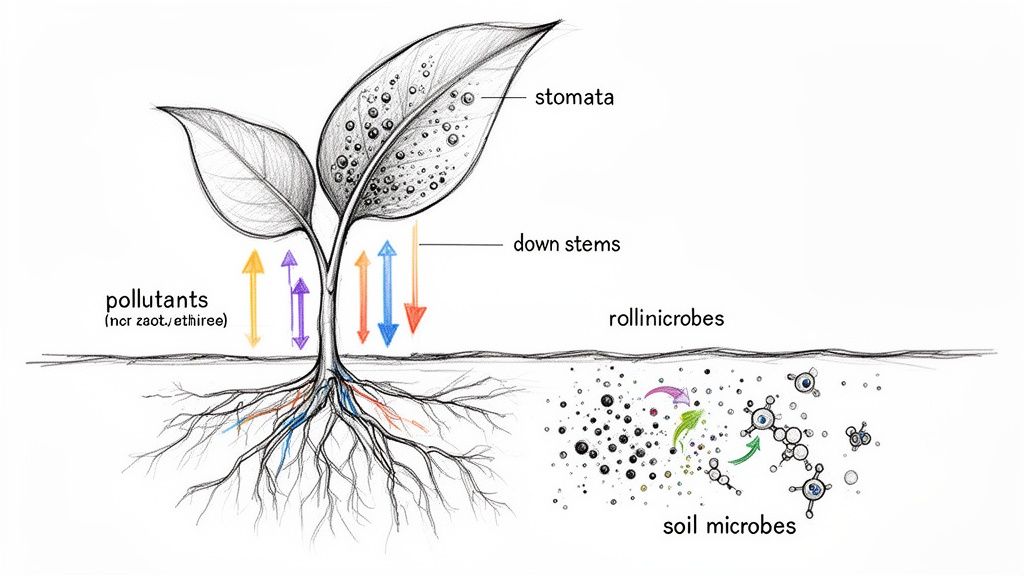
Think of your plant as a small, natural engine. The whole thing kicks off with its leaves, which are covered in tiny pores called stomata. In much the same way we breathe, plants use these pores to draw in airborne particles. This includes some of the nasty stuff you find in homes, like formaldehyde and benzene.
But the leaves are just the first step. Once absorbed, the plant pulls these toxins down through its stems and into the root zone. This is where the real magic happens, thanks to the bustling community of microorganisms living in the potting mix.
The Power Beneath the Soil
Your plant doesn’t tackle these pollutants alone; it has a team of microscopic allies. The soil and root system are teeming with beneficial microbes—bacteria and fungi—that are absolutely critical to this natural filtration system.
These microbes actually feed on the pollutants that the plant delivers to the roots, breaking them down into simpler, harmless bits and pieces. The plant then absorbs these byproducts as nutrients, effectively turning indoor air pollution into its next meal. It's a perfect symbiotic relationship: the plant feeds the microbes, and in return, the microbes clean the air and provide food for the plant.
A healthy root system is the heart of a plant's air-purifying ability. The more vibrant the microbial life in the soil, the more effective the plant is at breaking down airborne toxins.
This natural cycle just keeps on ticking over, gently scrubbing the air in your home 24/7.
From Space Stations to Kiwi Living Rooms
The whole idea of using plants to purify air really took off after the famous NASA Clean Air Study. This research looked for ways to clean the air in sealed environments like space stations. They discovered that common houseplants were surprisingly good at removing VOCs from the air. While our homes aren't quite as sealed as a space station, the same principles apply.
Here in New Zealand, indoor air quality can be a real worry, especially in our cities. A 2017 BRANZ study found big spikes in VOCs inside Wellington homes right after people used common cleaning products and glues. It's a similar story in Auckland, where tests in a newly decorated, airtight house showed VOC levels tripling. This really highlights how our modern, well-insulated Kiwi homes can trap these pollutants inside. You can read more about these findings and their impact on NZ homes.
While a single plant won't transform your entire house overnight, a collection of the right plants can have a powerful, cumulative effect. They all contribute to a healthier indoor environment by continuously filtering the air you breathe. Each plant you add is another hardworking member of your home’s natural air filtration team, helping to make your space a healthier sanctuary.
New Zealand's Top 10 Air-Purifying Houseplants
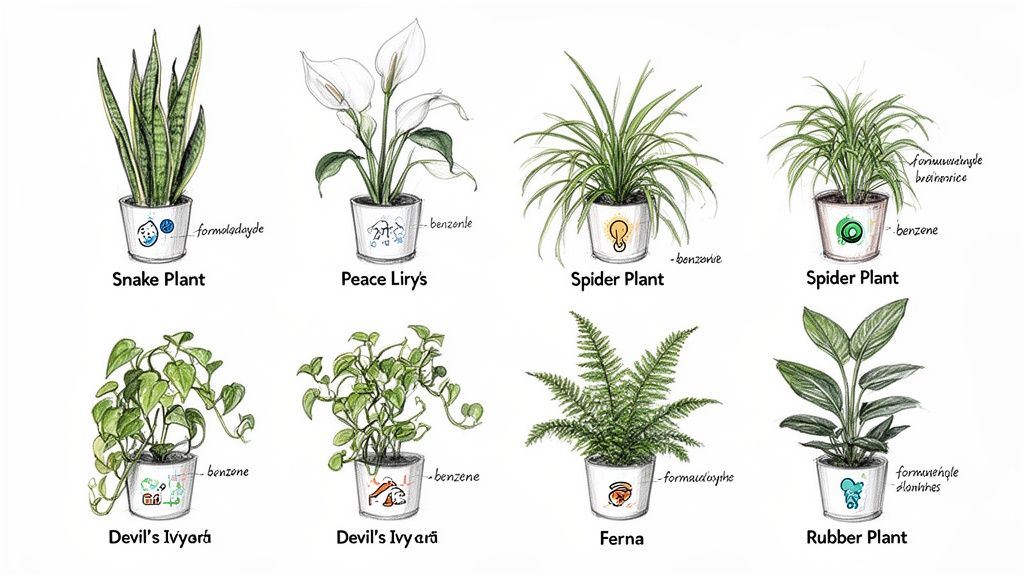
Alright, now that we’ve got the science down, let’s get to the fun part—picking out your new green flatmates. We’ve handpicked ten of the absolute best air-purifying plants that not only work hard but also feel right at home in New Zealand's indoor climate.
Think of each one on this list as a champion in its own right. They all tackle specific airborne nasties while bringing a bit of that essential green into your space. From the practically indestructible to the beautifully elegant, there’s a perfect plant here waiting for you.
1. Snake Plant (Sansevieria trifasciata)
The Snake Plant, or Mother-in-Law's Tongue as it's often called, is the undisputed king of low-maintenance air purifiers. Its stiff, upright leaves are a favourite in modern decor, but its true talent is its incredible resilience and filtering power.
This plant is an absolute powerhouse, tackling a whole list of toxins including formaldehyde, benzene, xylene, and nitrogen oxides. The best part? It’s one of the rare plants that keeps converting CO2 to oxygen overnight, making it the perfect bedroom companion.
- Best For: Bedrooms, living rooms, or any corner that doesn't see much sun.
- Care Level: It practically thrives on neglect. It’s happy in indirect light but will put up with very low light. Let the soil dry out completely before you even think about watering it again.
- Pet Safety: Toxic to cats and dogs if they have a chew, so best to keep it out of their reach.
2. Peace Lily (Spathiphyllum)
With its glossy deep green leaves and striking white flowers, the Peace Lily is as beautiful as it is useful. It’s a great communicator, too—it will dramatically droop when it’s thirsty, taking all the guesswork out for beginner plant parents.
The Peace Lily is particularly good at filtering out ammonia, benzene, formaldehyde, and trichloroethylene. It also helps keep mould spores at bay by absorbing them through its leaves and using them as food. Clever, right?
- Best For: Bathrooms and kitchens where humidity is high, or living rooms with medium, indirect light.
- Care Level: Prefers medium, indirect light and soil that stays consistently moist. Keep it out of direct sun, which can burn its leaves.
- Pet Safety: Very toxic to both cats and dogs, causing serious irritation if chewed. A great choice for pet-free homes or high shelves.
3. Spider Plant (Chlorophytum comosum)
The Spider Plant is a retro classic that has more than earned its spot on this list. Its arching leaves and the way it produces little "spiderettes"—baby plants that hang down like spiders—make it a really fun and rewarding plant to have around.
It’s brilliant at fighting off formaldehyde and xylene, two common culprits found in synthetic materials and cleaning products. It's easy-going and grows fast, making it a super satisfying choice for anyone just starting their plant journey.
A huge plus for the Spider Plant is that it's completely non-toxic to pets. This makes it a top-tier, worry-free choice for Kiwi households with curious cats, dogs, or little ones.
- Best For: Perfect for hanging baskets in living rooms, home offices, or kitchens.
- Care Level: Loves bright, indirect light but adapts well to lower light spots. Water regularly, but give the soil a chance to dry out a bit between drinks.
- Pet Safety: Completely safe for cats and dogs.
4. Devil's Ivy (Epipremnum aureum)
Often called Pothos, Devil's Ivy is arguably one of the easiest and most versatile houseplants out there. Its heart-shaped leaves create lush, trailing vines that can be hung up or trained to climb, adding a touch of the jungle to any room.
This hardy plant is a formidable opponent against formaldehyde, benzene, and xylene. Its ability to tolerate almost any condition, from bright rooms to dim corners, makes it the perfect green solution for nearly any spot in your home.
- Best For: Pretty much anywhere! Living rooms, offices, bedrooms, and even bathrooms.
- Care Level: Incredibly forgiving. It prefers bright, indirect light but does just fine in low light. Let the top inch of soil dry out before watering.
- Pet Safety: Toxic to cats and dogs, causing mouth and stomach irritation if ingested.
5. Aloe Vera (Aloe barbadensis)
Famous for the soothing gel inside its leaves, Aloe Vera is also a surprisingly effective air purifier. It's not just for taking the sting out of a sunburn after a day at a classic Kiwi beach; it's a hardworking member of your indoor plant crew.
Aloe Vera is fantastic at removing formaldehyde and benzene, toxins commonly found in varnishes, floor finishes, and detergents. This makes it a great ally during and after any home renovations.
- Best For: A sunny kitchen windowsill or a bright spot in the living room.
- Care Level: Needs plenty of bright, indirect sunlight. Being a succulent, it requires well-draining soil and infrequent watering to avoid root rot.
- Pet Safety: Mildly to moderately toxic to pets.
6. Boston Fern (Nephrolepis exaltata)
With its lush, feathery fronds, the Boston Fern is a timeless classic that brings a soft, humid feel to a room. It’s a natural humidifier, making it a great companion during dry winter months when the heater is blasting.
This fern is a champion at clearing out formaldehyde and xylene. Its love for humidity makes it the perfect choice for greening up your bathroom.
- Best For: Bathrooms, kitchens, or any room where you can give it the high humidity it craves.
- Care Level: Needs bright, indirect light and soil that's kept consistently moist. It will love you forever if you mist it regularly.
- Pet Safety: Completely safe for cats and dogs.
If you’re looking for more ideas, have a look at our guide on good indoor plants for your home.
7. Areca Palm (Dypsis lutescens)
If you want to make a statement, the Areca Palm is your plant. Its graceful, arching fronds create an instant tropical vibe, turning any room into a lush getaway.
But it’s not just a pretty face. This palm works hard, filtering out formaldehyde, xylene, and toluene. It also releases a good amount of moisture into the air, helping to offset the dry air from heating or air con.
- Best For: A bright living room or entryway with enough space for it to spread its fronds.
- Care Level: Prefers bright, indirect sunlight. Keep the soil lightly moist but never soggy.
- Pet Safety: Completely safe for pets, making it a fantastic large, non-toxic option.
8. Rubber Plant (Ficus elastica)
The Rubber Plant is a stunner, with large, glossy, dark green leaves that give it a strong architectural feel. It’s pretty easy to look after and can grow into an impressive indoor tree, becoming a real focal point.
It’s particularly good at removing formaldehyde. The large surface area of its leaves means it's an incredibly efficient toxin-absorbing machine that looks stylish while it works.
- Best For: Living rooms or dining areas that get bright, indirect light.
- Care Level: Enjoys bright, indirect light and a moderate amount of water. Let the soil dry out between waterings.
- Pet Safety: Toxic to cats and dogs.
9. English Ivy (Hedera helix)
English Ivy is a classic, elegant vine known for its ability to climb and cover things. As a houseplant, its trailing habit is perfect for hanging baskets or letting it spill over shelves and mantelpieces.
This vigorous grower is effective at removing a whole range of pollutants, including formaldehyde, benzene, xylene, and toluene. It's a low-maintenance choice that adds a touch of old-world charm to your space.
- Best For: Hanging in a living room, office, or any cooler spot in the house.
- Care Level: Does well in moderate light and prefers soil that is moist but not waterlogged.
- Pet Safety: Toxic to both pets and people if eaten.
10. Chinese Evergreen (Aglaonema)
The Chinese Evergreen is a gorgeous foliage plant, loved for its wonderfully patterned leaves that can come in shades of green, silver, pink, and red. It’s also one of the most durable houseplants you can find.
This plant is excellent at removing benzene and formaldehyde. Its tolerance for low light makes it one of the best air-purifying options for offices or rooms that don't get much natural sunlight.
- Best For: Offices, bedrooms, or living rooms with low to medium light.
- Care Level: Handles low light conditions like a champ. Water it well, then let the soil dry out before you water it again.
- Pet Safety: Toxic to cats and dogs.
Quick Guide to Top Air-Purifying Plants for NZ Homes
Feeling a bit overwhelmed by the options? No worries. We've put together this quick summary table to help you compare our top picks at a glance. You can see what they're best at removing, how much light they need, and whether they're safe for your furry friends.
| Plant Name | Removes | Light Level | Pet Safe (Cats/Dogs) |
|---|---|---|---|
| Snake Plant | Formaldehyde, Benzene, Xylene | Low to Bright Indirect | No |
| Peace Lily | Ammonia, Benzene, Formaldehyde | Medium Indirect | No |
| Spider Plant | Formaldehyde, Xylene | Bright Indirect | Yes |
| Devil's Ivy | Formaldehyde, Benzene, Xylene | Low to Bright Indirect | No |
| Areca Palm | Formaldehyde, Xylene, Toluene | Bright Indirect | Yes |
| Rubber Plant | Formaldehyde | Bright Indirect | No |
| Boston Fern | Formaldehyde, Xylene | Bright Indirect (High Humidity) | Yes |
| Chinese Evergreen | Benzene, Formaldehyde | Low to Medium Indirect | No |
Hopefully, this little chart makes it easier to find the perfect green companion to help you breathe a little easier at home. Happy planting
Creating a Green Lung in Your Home
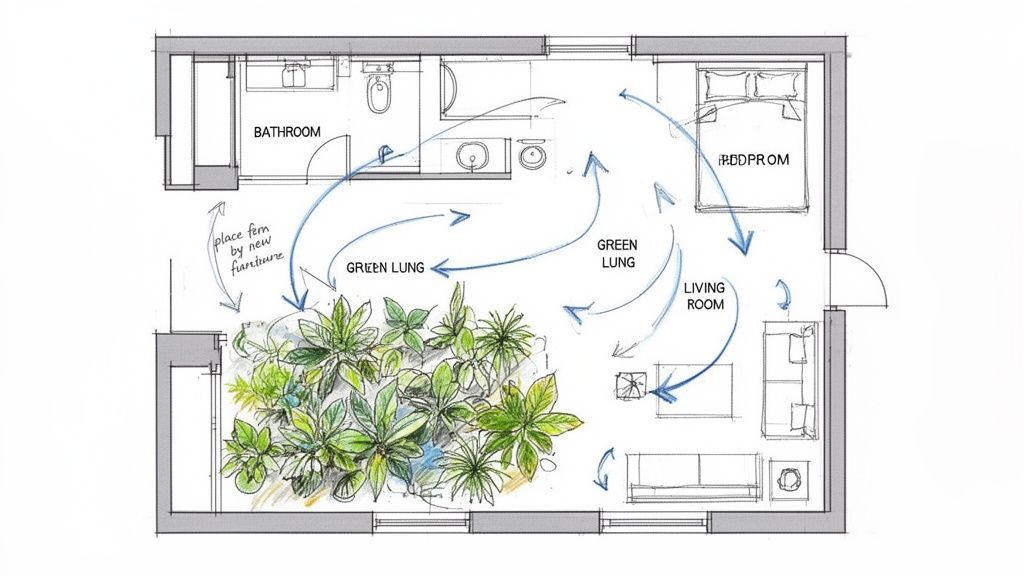
Okay, you’ve met the superstar plants. Now it's time to think less like a plant owner and more like a green designer. To really shift the needle on your home's air quality, you need to create a ‘green lung’—a strategic cluster of plants all working together to filter your air far more effectively.
This is about moving beyond just having plants, and towards building a living, breathing system right inside your home.
Let's be real: the idea that one or two plants can purify an entire house is, unfortunately, a myth. While every single plant helps, you'll only notice a real impact with density and smart placement. A lone Spider Plant in a big lounge is a nice touch, but a group of five to ten plants acting as a team? That’s where the magic happens.
Think of it this way: one open window lets in a bit of fresh air. But opening several creates a proper cross-breeze that clears out a stuffy room in minutes. The exact same principle applies to your indoor jungle.
Strategic Plant Placement
Where you put your plants is just as important as which ones you choose. By positioning the best air-purifying plants in the right spots, you can target specific pollutants where they tend to build up. This turns your collection into a highly efficient, responsive filtration crew.
Here are a few room-by-room strategies for your Kiwi home:
- The Bedroom: New furniture, mattresses, and carpets can off-gas formaldehyde. A Snake Plant or a Boston Fern placed near your bed is a perfect countermeasure. Snake Plants are especially brilliant for bedrooms because they release oxygen at night, which can help you get a more restful sleep.
- The Living Room: This is often the biggest room and the centre of family life. Group a few larger plants like an Areca Palm or a Rubber Plant to form the anchor of your green lung and tackle general pollutants.
- The Kitchen and Bathroom: These spots are magnets for moisture and chemicals from cleaning products. Humidity-loving plants like the Peace Lily or Boston Fern will absolutely thrive here, helping to filter out things like ammonia and even reduce airborne mould spores.
Creating a ‘green lung’ isn't about cramming every square centimetre with foliage. It’s about creating dense, healthy groups of plants in the areas you and your family spend the most time, maximising their purifying power where it truly matters.
The Foundation of a Healthy Air Filter
Here’s a little secret: a plant’s air-purifying power isn't just in its leaves. A huge part of the process happens below the surface. The root system, along with the community of microbes living in the soil, is responsible for breaking down the toxins absorbed by the leaves.
This means your soil's health is directly tied to how well your plant can clean the air.
A plant stuck in a tiny, root-bound pot with old, compacted soil just can't do its job properly. Its roots need space, and the soil needs to be airy enough to support that vital microbial ecosystem.
Getting the pot size right is crucial. Go too big, and the pot can hold excess water, leading to root rot. Too small, and you'll choke the plant's growth. A good rule of thumb when repotting is to choose a new pot that’s only about 2-5 cm wider in diameter than the old one. This gives the roots room to stretch out without getting overwhelmed.
Just as important is the potting mix itself. Never, ever use soil from your garden—it’s far too dense and can bring pests indoors. A top-quality indoor potting mix is formulated to provide the perfect balance of drainage, aeration, and nutrients. For a deeper dive, check out our guide on choosing the best indoor potting mix to give your green lung the strong foundation it needs.
Keeping Your Air Purifying Team Healthy
A healthy plant is a hard-working plant. Simple as that. Think of your indoor jungle as a team, and like any team, it needs the right conditions to perform at its best—especially when its job is keeping your air fresh and clean.
When a plant is just struggling to survive, it doesn’t have any spare energy to filter out airborne toxins. So, by giving your plants what they need, you’re not just keeping them beautiful; you're fine-tuning your home's living air filtration system. This all comes down to a few crucial elements of care, especially tailored for our New Zealand climate.
Mastering the Watering Can
Watering is where most new plant parents trip up, but it gets easy once you realise your plants' needs change with the seasons. During our warmer, brighter months from about September to May, your plants are growing actively and will need more frequent watering. The golden rule? Always check the top few centimetres of soil first. If it’s dry, it’s time for a drink.
Come winter, though, things change. From June to August, when it's cooler and damper here in New Zealand, plant growth slows right down. This means they need significantly less water. Overwatering during winter is one of the fastest ways to cause root rot, so let the soil dry out more thoroughly between waterings.
Pro Tip: When you do water, give it a good soak until water drains from the bottom of the pot. This encourages deep, strong roots, which are the engine room for a plant's air-filtering power.
Keeping Leaves Clean for Better Breathing
A plant's leaves are covered in tiny pores that act like its lungs, absorbing pollutants from the air. When those leaves get a coating of everyday household dust, it's like trying to breathe through a clogged filter. The plant just can’t do its job effectively.
Wiping down the leaves is a simple but vital bit of maintenance.
- How to Clean: Gently wipe the tops and undersides of larger leaves with a soft, damp cloth every few weeks.
- For Smaller Plants: For delicate plants with lots of small leaves, like a fern, a gentle rinse in the shower with lukewarm water works wonders.
- When to Clean: A quick wipe-down once a month is usually plenty to keep them in top condition.
This small task doesn't just make your plants look glossy and vibrant; it directly boosts their ability to clean the air in your home.
Feeding Your Team and Watching for Trouble
Plants get most of their energy from water, light, and air, but a bit of extra nutrition during their growing season gives them a real boost. A balanced indoor plant food, applied from spring through to autumn, provides the essential minerals they need to build strong leaves and root systems. To get it right, you can learn all about choosing the proper indoor plant fertilizer in our dedicated guide.
Finally, keep a close eye out for common pests like spider mites or mealybugs, which often show up as tiny webs or white, fluffy spots. Catching these invaders early makes them much easier to manage. Also, watch for signs of stress like yellowing leaves or wilting, as these can point to issues with watering or light. A happy, healthy plant is the cornerstone of any good air purification strategy.
Got Questions About Air Purifying Plants? We've Got Answers
Even after you’ve picked out the perfect plants and found them a happy spot in your home, a few questions might still pop up. The world of air-purifying plants is fascinating, but it's also filled with a bit of science and a few myths. We're here to clear the air.
Let's dive into some of the most common queries to help you feel totally confident about your growing indoor jungle.
How Many Air Purifying Plants Do I Actually Need?
While some of the original scientific studies packed plants into sealed chambers, you don't need to recreate a rainforest in your lounge to get the benefits. A good, practical goal for the average Kiwi home is about one medium-sized plant (in a 15-20 cm pot) for every 10 square metres of floor space.
The real trick is placement. Focus your green friends in the rooms where you spend the most time, like your living room and bedrooms. A thoughtfully placed collection of five to ten plants in an average-sized lounge can make a real difference you can feel. It's also a great idea to mix it up with different species, as some plants are better at tackling certain pollutants than others.
Can My Houseplants Replace an Electric Air Purifier?
Think of your houseplants and an electric air purifier as partners, not competitors. They work brilliantly together, but they do slightly different jobs.
- Plants: These guys are the marathon runners. They're fantastic at slowly and steadily absorbing gaseous nasties like VOCs from the air over the long haul.
- Electric Purifiers: These are the sprinters. They use HEPA filters to quickly trap fine particles like dust, pollen, pet dander, and mould spores, which is great for fast relief.
For households in NZ dealing with allergies or asthma, using both is the ultimate dream team. The plants handle the airborne chemicals while the machine zaps the tiny particles.
Houseplants and electric air purifiers aren't an either/or choice. Combining the slow, steady filtration of plants with the rapid particle removal of a purifier creates a much healthier indoor environment.
Are All Air Purifying Plants Safe for My Pets and Kids?
This is a really important one for any parent or pet owner. The honest answer is no – many popular and super-effective air-purifying plants like the Peace Lily, Snake Plant, and Devil's Ivy are unfortunately toxic to cats and dogs if they have a nibble.
But don't worry! There are plenty of fantastic pet-safe alternatives that are just as good at cleaning the air.
Some of the best pet-safe air purifiers include:
- The Spider Plant
- The Boston Fern
- The Areca Palm
Always, always double-check a plant's safety profile before bringing it home to curious pets or little ones. We've made sure to point out the pet-safe options in our guide to help you create a green space that's completely worry-free.
Do Air Purifying Plants Need Special Soil?
You don't need a top-secret soil recipe, but using a high-quality, well-draining potting mix is a non-negotiable. Why? Because a huge part of the air-purifying magic happens in the plant's root system and the community of microbes living in the soil—they're the ones who really break down the airborne toxins.
A good indoor mix (usually with ingredients like peat, perlite, and compost) makes sure the roots get the air and moisture they need to do their job properly. Whatever you do, don't just use soil from your garden. It’s way too dense for indoor pots, won't drain well, and can bring in unwanted pests. A premium potting mix is the foundation your green air filters need to thrive.
Ready to grow your own green lung? At Jungle Story, we connect you with New Zealand's best sellers, offering a huge range of healthy, beautiful plants to help you breathe easier. Explore our collection of air-purifying champions and find the perfect green companions for your home today at https://junglestory.co.nz.