
Could you imagine trying to live on water alone? You wouldn't last very long, and neither will your plants. A good fertiliser for plants is basically the well-rounded meal plan they need to grow strong, show off vibrant flowers, and produce healthy fruit. It's often the one thing that separates a struggling, sad-looking plant from a truly flourishing one.
Why Your Plants Need More Than Just Water
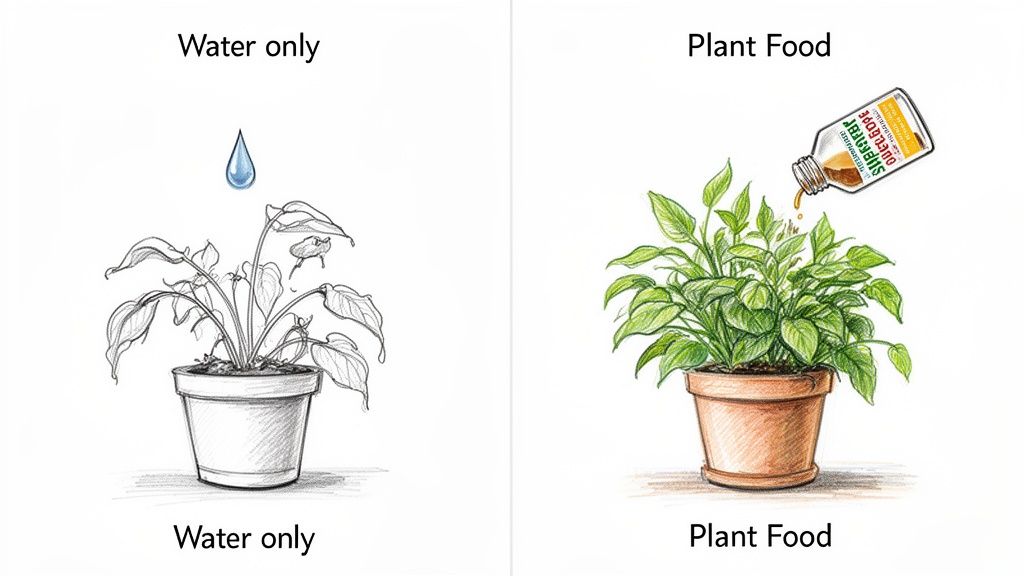
It helps to think of fertiliser as a superfood smoothie for your garden. While water is absolutely essential for keeping your plants hydrated, it just doesn’t have the minerals and nutrients a plant needs to build strong cells, photosynthesise properly, and fend off pests and diseases.
Out in nature, there's a whole ecosystem of decaying leaves and organic matter that's constantly putting nutrients back into the soil. In our Kiwi gardens, and especially with our potted indoor plants, that natural cycle is missing. The plant uses up the nutrients in its soil, and over time, there’s nothing left.
The Nutrient Gap in Potted Plants
This is especially true for the houseplants we love so much. A plant in a pot only has access to whatever is in that container. Every time you water it, some nutrients get washed out the bottom, and the plant eats up the rest as it grows. Sooner or later, the soil is completely spent, and the plant's health will start to suffer unless you step in.
Using quality plant food is how you bridge this nutrient gap. It puts back what’s been lost and gives your plant a concentrated dose of the exact elements it needs to be healthy. When you get it right, you'll see some clear benefits:
- Lush, Vibrant Growth: Nutrients like nitrogen are fuel for making chlorophyll, which is what gives you those deep, healthy green leaves.
- Stronger Roots and Flowers: Key minerals encourage a strong, vigorous root system and help the plant produce more abundant, colourful flowers.
- Increased Resilience: A well-fed plant is simply better at dealing with stress, whether it's a scorching summer's day or a few pesky garden pests.
Fertiliser isn’t a magic fix for a sick plant; it’s more like a proactive wellness plan. Feeding your plants regularly during their growing seasons—usually spring and summer here in New Zealand—makes sure they have the energy they need to really thrive.
Of course, beyond water and food, getting the light right is also a massive piece of the puzzle. Using reliable grow light systems can make a huge difference to your plants' health. This guide will help demystify the world of plant fertiliser, showing you how to choose and use the right products to keep your green friends flourishing.
Decoding the Language of Plant Food
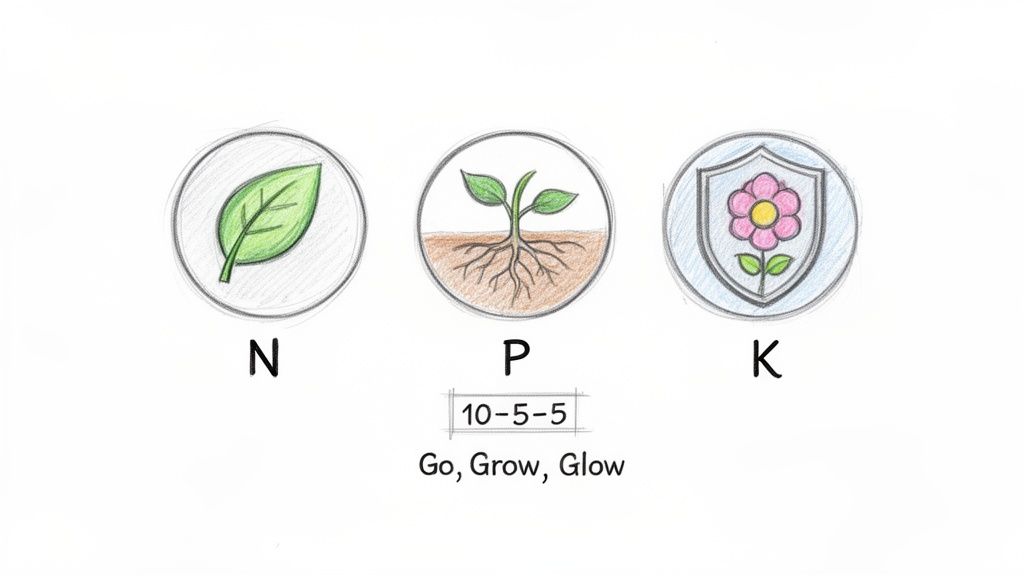
If you’ve ever glanced at a bag of fertiliser, you’ve probably noticed a string of three numbers like 10-5-5 or 4-6-2. This isn't just a random code; it's the most important piece of information on the packet, telling you exactly what's inside.
This is the famous N-P-K ratio, and it represents the percentage of the three most essential plant nutrients, always listed in the same order: Nitrogen (N), Phosphorus (P), and Potassium (K). Think of them as a plant's main food groups, each one playing a huge part in its health and growth.
Getting your head around this simple code is the first big step towards becoming a more confident gardener. It gives you the power to choose the perfect fertiliser for plants in your home and garden, ensuring they get exactly what they need, right when they need it.
The Big Three Macronutrients
Each of the elements in that N-P-K ratio has a very specific job to do. A handy way to remember their roles is with the phrase "up, down, and all around," as each one targets a different part of the plant's life.
Nitrogen (N) is for 'Up'. This is all about lush, leafy growth. A fertiliser high in nitrogen will encourage your plants to produce plenty of vibrant green foliage, making it a brilliant choice for lawns or leafy indoor friends like ferns and monsteras.
Phosphorus (P) is for 'Down'. This nutrient focuses its energy below the soil and on new development. It’s the driving force behind a strong, healthy root system and is absolutely vital for producing vibrant flowers and fruit.
Potassium (K) is for 'All Around'. Think of this as the all-rounder, the one that supports a plant's overall resilience and well-being. It helps regulate water, strengthens cell walls, and improves a plant's ability to handle stress from drought, pests, and temperature swings. For a deeper dive, you might find our guide on choosing the right indoor plant fertiliser helpful.
More Than Just N-P-K
While Nitrogen, Phosphorus, and Potassium get all the attention, they aren't the only nutrients your plants need to thrive. Just like we need vitamins to keep our bodies ticking over, plants rely on a whole range of other micronutrients.
These secondary nutrients and trace elements are needed in much smaller amounts, but they're no less important. They include minerals like:
- Magnesium (Mg): A core part of chlorophyll, which is essential for photosynthesis.
- Calcium (Ca): Helps build strong cell walls and supports healthy root growth.
- Sulphur (S): Important for creating proteins and producing chlorophyll.
- Iron (Fe): Crucial for enzyme functions and making chlorophyll.
A good-quality, well-balanced fertiliser will almost always include these micronutrients to give your plant a more complete diet. Without them, plants can start to look stressed even if they're getting plenty of N-P-K.
Think of it like this: N-P-K provides the main calories for energy and growth, while micronutrients are the essential vitamins and minerals that keep all the internal systems running smoothly. A deficiency in either can lead to problems.
Learning to spot the signs of a nutrient deficiency is a key gardening skill. When you know what to look for, you can act quickly to give your plant the specific food it’s craving. The table below is a quick reference for what the 'big three' do and how to tell if your plant is running low.
Understanding the N-P-K Ratio in Fertilisers
| Nutrient | Primary Role for Your Plant | Common Signs of Deficiency |
|---|---|---|
| Nitrogen (N) | Fuels vigorous leaf and stem growth, creating a lush, green appearance. | Yellowing of older, lower leaves; stunted overall growth and weak stems. |
| Phosphorus (P) | Encourages strong root development, flowering, and fruit production. | Dull, bluish-green or purplish tinge to leaves; poor flowering or fruiting. |
| Potassium (K) | Boosts overall plant vigour, disease resistance, and water regulation. | Yellowing or browning along the edges of older leaves; weak stems. |
By paying attention to these signs, you can start to understand what your plants are telling you and become a much more intuitive gardener.
Choosing Between Organic and Synthetic Fertilisers
When you're standing in the garden centre, one of the biggest decisions you'll make is whether to grab an organic or synthetic fertiliser. There’s no single "best" answer here—the right choice really comes down to your gardening philosophy, what your plants need right now, and what you’re trying to build in the long run.
Think of it like this: organic fertilisers are a slow-cooked, nourishing meal for your garden soil. Synthetic options, on the other hand, are more like a quick, high-energy shot for your plants. Both have their place, but they work in completely different ways.
The Organic Approach: A Slow Meal for Your Soil
Organic fertilisers come from natural, once-living sources. In New Zealand garden centres, you’ll commonly see things like seaweed solution, sheep pellets, blood and bone, fish emulsion, and of course, good old well-rotted compost.
The magic of these products is that they don't feed the plant directly. Instead, they feed the soil. Microorganisms get to work breaking them down, which provides a slow, steady release of nutrients. This process doesn't just nourish your plants; it dramatically improves your soil's structure, helps it hold water, and boosts its overall health over time.
Because the nutrients are released gradually, there's a much lower risk of "burning" your plants' delicate roots. This makes organic options a really forgiving choice, especially if you're new to gardening. You’re not just feeding a plant; you’re building a resilient, living soil ecosystem that will support healthy growth for years to come.
The Synthetic Approach: A Quick Boost for Your Plants
Synthetic fertilisers are manufactured to deliver a precise, concentrated, and fast-acting dose of nutrients right to the plant. They are usually water-soluble, meaning the nutrients are immediately available for the roots to soak up.
This rapid-fire delivery is incredibly effective if you need to fix a specific nutrient deficiency, and fast. If your plant's leaves are turning yellow from a lack of nitrogen, a synthetic feed can often show visible results in just a few days. They're also perfect for hungry, high-demand plants like tomatoes or courgettes during their peak growing season.
The downside? Because they’re so concentrated, it’s much easier to overdo it and cause fertiliser burn. They also do very little to improve the soil underneath; their sole focus is on feeding the plant itself.
The core difference really lies in their philosophy. Organic fertilisers build healthy, living soil that, in turn, supports healthy plants. Synthetic fertilisers bypass the soil biology to deliver nutrients directly and rapidly to the plants themselves.
Why Kiwi Gardeners Are Embracing Organic Methods
You might have noticed a shift happening in gardens across New Zealand. More and more Kiwis are turning to organic methods, putting long-term soil health and sustainability first. It reflects a deeper understanding that a garden is a complete ecosystem, not just a place to stick some plants.
This isn't just a feeling—the numbers back it up. In New Zealand, the organic fertiliser market is booming, projected to grow at an annual rate of around 10-12% between 2025 and 2033. In 2023 alone, the use of organic products in home gardens jumped by over 15% as people chose to nurture their soil without synthetic chemicals. You can dig into more data on these sustainable gardening trends in this detailed market analysis.
Using organic inputs like compost and seaweed solution helps create a healthier, more balanced garden. For instance, many gardeners use liquid seaweed not just as a fertiliser but as a powerful plant tonic to make them more resilient. If you're curious, you can learn all about it in our guide to using seaweed fertiliser in NZ gardens.
Ultimately, choosing between organic and synthetic isn't about one being "good" and the other "bad." It's about deciding what you want to achieve. Do you need a quick fix for a struggling plant, or are you playing the long game to build rich, fertile soil? Many experienced gardeners actually use a hybrid approach—building their soil with organic matter while using a targeted synthetic feed when a plant needs an immediate boost.
Matching the Right Fertiliser to Your Plants
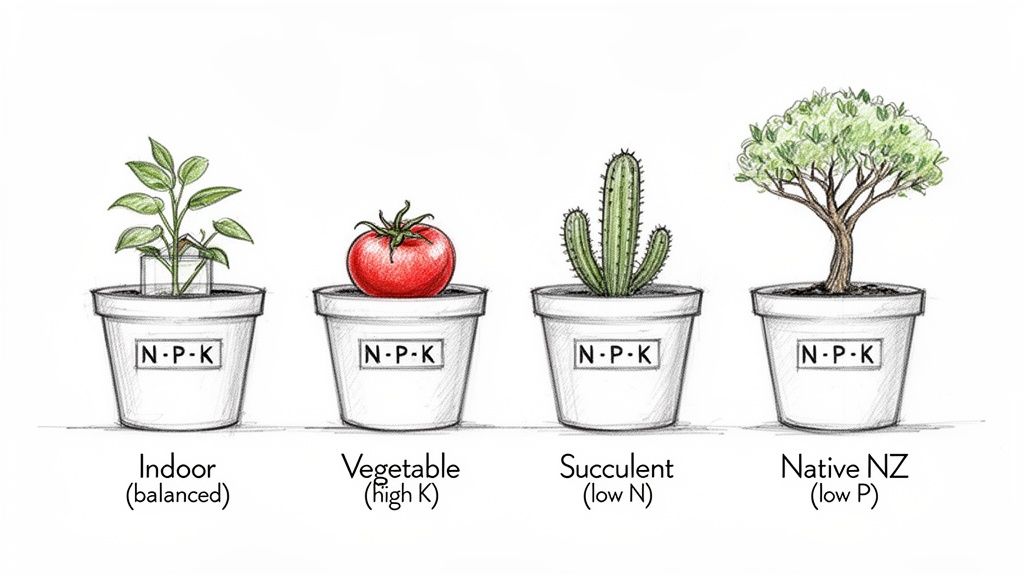
You wouldn’t serve a steak dinner to a rabbit, right? It’s the same with your plants. You can’t expect one type of fertiliser to be the perfect meal for every single plant in your home and garden. Each one has evolved with its own dietary quirks, and matching the right food to its needs is the real secret to helping it shine.
Walking into a garden centre can feel like a bit of an information overload. But once you get a handle on the basic needs of different plant groups, picking the right bag or bottle becomes a whole lot easier. The key is to connect a plant's main job—whether it’s pushing out lush leaves, beautiful flowers, or tasty fruit—back to those N-P-K principles we talked about. This simple bit of knowledge is your superpower, empowering you to choose the ideal fertiliser for plants so your monstera, tomato patch, and pōhutukawa all get exactly what they need to thrive.
Fertiliser for Your Indoor Plants
Your indoor jungle is living in a completely self-contained world, relying on you for every drop of water and speck of food. Because their roots are stuck in a pot, they’re especially sensitive to being overfed, which can cause nasty chemical build-up and burn their delicate roots. For this reason, a gentle, balanced approach is always your best bet.
Look for liquid fertilisers with a nice, balanced N-P-K ratio like 5-5-5 or 10-10-10, and then dilute it to half-strength. This gives them a steady, even spread of nutrients for all-round growth without overwhelming the system. Liquid feeds are perfect for potted plants, as they deliver nutrients directly to the roots in a form they can use right away. During the main growing season here in New Zealand (spring and summer), a feed every two to four weeks is usually plenty.
Feeding Your Vege Garden
When it comes to the vege garden, the end goal is a delicious, overflowing harvest. The nutritional needs of these hard-working plants change quite dramatically as they go from a leafy seedling to a fruit-bearing machine.
- Early Growth: To start, you want to focus on nitrogen (N) to encourage strong, leafy development. This is crucial for things like lettuce and spinach, and for giving all your young seedlings a vigorous start.
- Flowering and Fruiting: Once plants like tomatoes, courgettes, and capsicums start to produce flowers, it’s time to switch gears. Ease off the nitrogen and ramp up the potassium (K). Potassium is the "Glow" nutrient that’s vital for developing high-quality fruit and flowers. A formula with a higher 'K' number, like 5-10-10, is a fantastic choice at this stage.
A classic mistake is to keep feeding high-nitrogen fertiliser all season long. This often leads to massive, bushy tomato plants with hardly any actual tomatoes on them. Shifting the nutrient focus is the key to a successful harvest. For a deeper dive, check out our guide on the best fertiliser for vegetables.
Succulents and Cacti Care
Succulents and cacti are the ultimate survivors, adapted to thrive in harsh, arid places where the soil is nutrient-poor. So, giving them a rich, high-nitrogen fertiliser is one of the fastest ways to cause problems. It leads to weak, stretched-out growth and opens the door to root rot. They much prefer a lean diet.
The perfect food for these plants is a low-nitrogen formula, often with a bit more phosphorus (P) to support healthy roots and encourage flowering. Look for a specialised cactus and succulent food with an N-P-K ratio something like 2-7-7 or 1-7-6. And go easy on it—they only need feeding a few times during their spring and summer growing season. If you're looking for specifics, exploring the best fertilizer for succulents can give you a better idea of their unique needs.
Nurturing Native NZ Plants
Our incredible New Zealand native plants—think pōhutukawa, hebes, and flaxes—have spent thousands of years evolving in soils that are naturally very low in phosphorus. To cope, they’ve developed super-efficient root systems to find every last bit of this scarce nutrient. This means many of them are extremely sensitive to the high levels of phosphorus found in most general-purpose fertilisers.
In fact, applying a high-phosphorus feed can be downright toxic, causing root damage and even killing the plant. When choosing a fertiliser for plants native to Aotearoa, always opt for a specially formulated low-phosphorus blend. These products are designed to provide the gentle, balanced nutrition our natives are used to, allowing them to flourish in your garden just as they do in the wild.
A Seasonal Feeding Guide for Kiwi Gardens
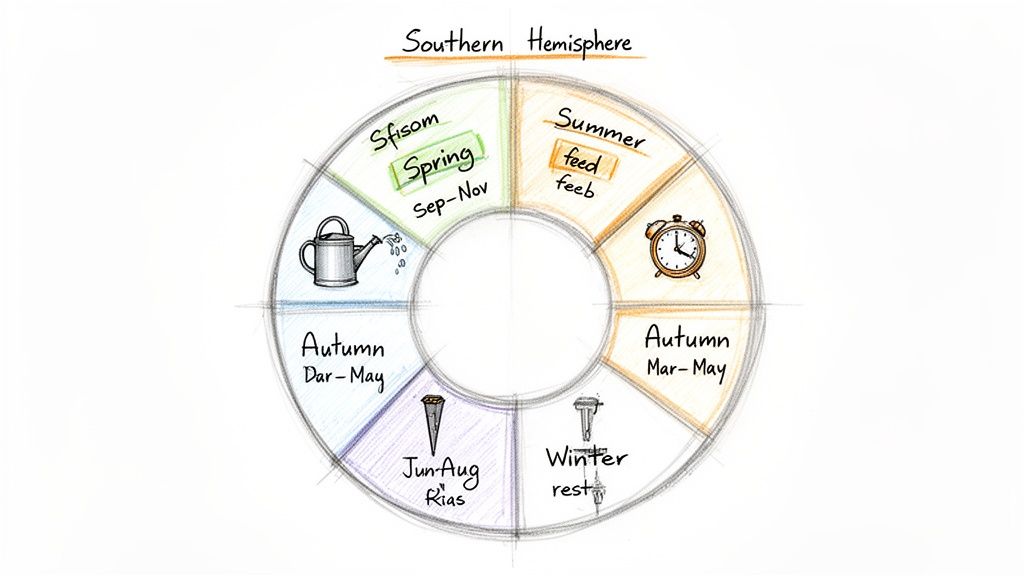
When it comes to gardening, timing isn't just a detail—it's everything. Giving your plants the best fertiliser for plants at the wrong time of year is a bit like serving a three-course meal to someone who's fast asleep. It’s just a waste of good food.
To really get the most out of your fertiliser, you have to sync up your feeding schedule with your plant's natural growth cycle. Here in New Zealand, that means tuning into our Southern Hemisphere seasons.
The main feeding frenzy kicks off in spring and carries right through the summer months. This is when your plants are waking up, bursting with new growth, and are at their hungriest for nutrients. As the days shorten and cool down in autumn, their growth slows, and so does their appetite. By winter, most have entered dormancy—a deep rest to conserve energy. Feeding them then can do more harm than good, as unused nutrients can linger in the soil and burn their roots.
Your NZ Seasonal Fertiliser Calendar
Understanding this natural rhythm is the secret to a thriving garden. Here’s a simple breakdown of how to approach feeding throughout the Kiwi year.
-
Spring (September – November): The growing season is on. Start applying a balanced fertiliser as soon as you spot new leaves, shoots, and buds emerging. This early feed gives your plants the fuel they need for a strong start.
-
Summer (December – February): Growth is now in full swing. This is the time for regular feeding, especially for heavy feeders like your veges and flowering annuals. Consistent nutrition supports lush growth and a spectacular show of blooms or a bountiful harvest.
-
Autumn (March – May): Time to start winding down. Ease off on the feeding as your plants' growth naturally slows. A final, gentle feed in early autumn helps them store up energy for the winter ahead.
-
Winter (June – August): For most plants, stop feeding altogether. Let them rest. The only exceptions are winter-flowering plants or winter vegetables, which might appreciate a very light meal on a mild day.
Keep in mind, this is just a general guide. The best thing you can do is watch your plants. A sudden burst of new growth is a clear signal that your plant is active and ready for a feed, no matter what the calendar says.
How to Apply Fertiliser Correctly
Once you've got the when sorted, you need to know how. The right method depends on the type of fertiliser you're using and what you're trying to achieve.
-
Liquid Feeding: This is where you dilute a concentrated liquid fertiliser in water and apply it with a watering can. It’s fast-acting because it sends nutrients straight to the roots for an immediate boost, making it perfect for hungry potted plants and vegetables.
-
Granular Application: These are little pellets you sprinkle over the soil surface and gently work in. They release their nutrients more slowly every time you water, providing a steady supply over several weeks.
-
Slow-Release Spikes: These are solid fertiliser spikes or tablets that you simply push into the soil. They're designed to break down very slowly, releasing a tiny bit of food over several months—a brilliant "set and forget" option.
No matter which method you choose, there's one golden rule: always water your plants both before and after applying fertiliser. Applying it to dry soil can scorch the delicate roots and cause serious damage. Watering beforehand preps the soil, and watering afterwards helps spread the nutrients evenly while washing any stray granules off the leaves. It's a simple two-step that prevents fertiliser burn and ensures your plants get the full benefit of their meal.
How to Fix Common Fertiliser Mistakes
Even with the best of intentions, it’s all too easy to get a little overzealous with plant food. Don’t worry, we’ve all been there. Learning to spot the signs of a feeding mishap is a crucial skill that turns a good gardener into a great one.
Most issues boil down to one of two things: giving way too much, or not nearly enough. The good news is that once you know how to read your plant’s signals, getting it back on track is usually pretty straightforward. This troubleshooting guide will help you play detective and solve the most common fertiliser problems.
Over-Fertilising: The Overly Loved Plant
Giving too much love in the form of fertiliser is one of the most frequent mistakes we see. It simply overwhelms the plant, making the soil too salty and damaging the delicate root system.
Symptoms to look for:
- Burnt or Brown Leaf Tips: The edges and tips of leaves look scorched and feel crispy.
- Yellowing Lower Leaves: The oldest leaves, right at the base of the plant, turn yellow and might drop off.
- White Crust on Soil: A visible salty, crusty layer forms on the surface of your potting mix.
- Stunted or Limp Growth: The plant suddenly stops growing or looks wilted and sad, even when you’ve watered it.
The Solution: If you suspect you've been a bit too generous, the first step is to flush the soil. Take the plant to a sink or pop it outside and water it thoroughly, letting water pour freely from the drainage holes for several minutes. This helps wash away all those excess mineral salts. After that, hold off on any feeding for at least a month to give the roots a chance to recover.
Under-Fertilising: The Hungry Plant
It’s just as common to forget to feed our plants, especially during the busy spring and summer growing seasons here in New Zealand. An underfed plant simply lacks the fuel it needs to thrive.
Symptoms to look for:
- Pale or Yellowish Leaves: The leaves, especially new ones, look pale green or even yellow (a condition known as chlorosis).
- Stunted Growth: The plant seems stuck in time, pushing out very few new leaves or flowers.
- Weak Stems: The whole structure of the plant appears weak and spindly.
The Solution: Thankfully, this is an easy fix. Just start a regular feeding schedule using a fertiliser for plants that suits its type. Begin with a half-strength dose to avoid shocking its system, then gradually move to the recommended frequency and strength as the plant perks up.
A critical takeaway is that fertiliser is food, not medicine. If your plant is suffering from a pest infestation, disease, or poor lighting, adding fertiliser will only stress it further. Always address the root cause of the problem first before reaching for the plant food.
Finding the right fertiliser is easier than ever, thanks to a wide selection of available products. In fact, New Zealand's fertiliser consumption reached an extraordinary 305% of domestic production in 2022, a figure that highlights our reliance on quality imports for gardening and horticulture. This ensures that whether you need a nitrogen-rich formula for your edibles or a balanced blend for orchids, the perfect product is readily available. You can discover more insights about New Zealand's fertiliser market on IndexBox.
Got Questions About Plant Fertiliser?
Even the greenest thumbs have questions. It's totally normal. Let's run through a few of the most common things Kiwi gardeners ask about feeding their plants. Getting these right can make all the difference.
Can I Just Use One Fertiliser for Everything?
Look, you can, but it’s a bit like feeding a marathon runner and a toddler the exact same meal. A general-purpose fertiliser might keep things ticking over, but it’s far from ideal.
Indoor plants, for example, are stuck in a pot and are incredibly sensitive to getting too much food. Outdoor plants have the whole garden to act as a buffer. Using a feed that’s specifically designed for indoor plants, edibles, or natives will always give you better results. It’s the best way to avoid nasty surprises like root burn or wonky growth.
How Do I Know When to Stop Feeding in Autumn?
This is a great question. As the days get shorter in New Zealand, usually around March and April, you’ll want to start tapering off. Plant growth naturally slows down, so they don’t need the extra fuel.
As a general guide, I stop feeding most of my plants completely by May. They then have a good rest through our winter (June to August). You can get the fertiliser back out in spring, around September, once you see definite signs of new life, like fresh shoots or buds.
Your plants are the real experts here—let them tell you what they need. Once their growth slows right down, it’s a clear signal to pack the plant food away and let them have their winter nap.
Is It Possible to Make My Own Fertiliser at Home?
Absolutely! And it's one of the most rewarding things you can do for your garden. A simple compost bin is a fantastic start, turning your kitchen scraps and garden clippings into what gardeners call "black gold." It’s a brilliant organic soil conditioner.
A worm farm is another amazing option. You get nutrient-packed worm castings and that incredible liquid "worm tea." Both are gentle, slow-release fertilisers that do wonders for your soil structure and give your plants a steady supply of everything they need to thrive.
Ready to find the perfect meal for your green friends? Jungle Story connects you with New Zealand's best growers, offering a huge range of plants and the specialised care products they need to flourish. Explore our marketplace and give your garden the nutrition it deserves at https://junglestory.co.nz.