
Welcome to your complete guide to indoor plant fertiliser, written especially for New Zealand plant lovers. The best way to think about your plant's pot is like a small lunchbox. It starts out full of nutrients, but over time, that food runs out. Fertiliser is simply how you refill it, giving your plant the fuel it needs to truly thrive indoors.
Why Your Houseplants Need More Than Just Water
Have you ever looked at a once-vibrant houseplant and wondered where its spark went? The answer usually goes beyond just sunlight and water. Out in the wild, plants live in a rich ecosystem where fallen leaves and other organic matter constantly break down, replenishing the soil. Houseplants, on the other hand, live in a closed system—their pot.
That potting mix they first came in only contains a limited supply of food. Every time you water, your plant soaks up some of these essential nutrients. But at the same time, water also washes a little more of them out through the drainage holes. Before you know it, the reserves are gone, leaving your plant hungry and struggling to grow.
The Problem with Nutrient-Poor Soil
Without a regular top-up, your plant's growth will eventually grind to a halt. It’s like expecting a marathon runner to perform at their best on nothing but water; they need proper fuel to keep going. For your plants, indoor plant fertiliser is that crucial fuel. It replaces the vital elements that get used up or washed away, ensuring your plant has everything it needs.
This is particularly true here in New Zealand, where our distinct seasons mean different things for our indoor greenery. During the active growing period of spring and summer (from about September to February), plants are putting in the hard work, pushing out new leaves, stems, and flowers. This is when their "appetite" is at its absolute peak.
Feeding your plants isn't about getting bogged down in complex chemistry. It's simply about giving them a balanced meal that copies what they'd find in nature. This one simple step is the real secret to unlocking stronger growth, more vibrant leaves, and beautiful, reliable flowers.
Benefits of a Good Feeding Routine
Sticking to a consistent feeding schedule that’s tailored to our seasons does more than just keep your plants alive—it helps them flourish. For more tips on creating a thriving indoor jungle, you can check out our other plant care articles on our blog.
Here are the main benefits you'll see from using a quality indoor plant fertiliser:
- Vibrant and Lush Foliage: The right nutrients are what give leaves their deep, rich green colour and healthy, glossy shine.
- Stronger Root Development: Healthy roots are the foundation of a healthy plant. They anchor it and allow it to absorb water and nutrients more efficiently.
- Encourages Flowering and Fruiting: For any flowering species, fertiliser provides the extra energy boost needed to produce and sustain beautiful blooms.
- Increased Resilience: A well-fed plant is much better equipped to fight off pests and bounce back from stresses like a sudden cold snap or being moved.
Ultimately, getting to know your plant's dietary needs is a core part of being a good plant parent. By providing the right nutrients at the right time, you’re giving your houseplants the power to not just survive, but to put on a real show in your home.
Decoding the Language of Plant Nutrients
Stepping into the fertiliser aisle can feel a bit like trying to read a foreign language. The bottles are covered in numbers, letters, and symbols that can make even a seasoned plant parent feel a little lost. But trust me, figuring out what’s inside a bottle of indoor plant food is much simpler than it looks.
Think of it as reading a nutrition label for your plants. The most important thing to look for is the NPK ratio—the three core macronutrients every plant needs to not just survive, but truly thrive. These are the "protein, carbs, and fats" of the plant world, and each one plays a massive role in your plant's overall health.
The Big Three Macronutrients: N-P-K
These three letters—N, P, and K—are the absolute foundation of almost every indoor plant fertiliser on the shelf. They stand for Nitrogen, Phosphorus, and Potassium. A really simple way I like to remember what they do is the little phrase: “up, down, and all around.”
-
Nitrogen (N) for ‘Up’: This is the engine behind all that lush, green growth. Nitrogen is what fuels the development of leaves and stems, giving your plants that vibrant, healthy look. If you want your Fiddle Leaf Fig or Monstera to push out big, beautiful new leaves, Nitrogen is the ticket.
-
Phosphorus (P) for ‘Down’: Phosphorus gets to work below the surface, encouraging strong and healthy root systems. It’s also the key ingredient for triggering flowers and fruit. For plants like a Peace Lily or a flowering Hoya, a good dose of Phosphorus is what nudges them into producing those stunning blooms.
-
Potassium (K) for ‘All Around’: This is the great all-rounder, responsible for a plant’s overall health and toughness. Potassium strengthens cell walls, helps manage water uptake, and boosts the plant's natural ability to handle stress, fight off diseases, and cope with temperature swings. It’s the key to a hardy, well-functioning plant.
Getting your head around this trio is the first major step to becoming a really confident plant parent. It allows you to give your plants exactly what they need, depending on whether you're aiming for leafy growth, beautiful flowers, or just general resilience. This targeted approach is a huge part of plant care in New Zealand, where our own agricultural sector relies heavily on these same core nutrients to help our country thrive.
How to Read the NPK Ratio
So, you know what N-P-K stands for. Now, what about those numbers on the bag or bottle? The three numbers you see (like 10-10-10 or 5-10-5) simply represent the percentage of Nitrogen, Phosphorus, and Potassium in that specific product, always in that order.
NPK Ratio Explained: The first number is always Nitrogen (N), the second is Phosphorus (P), and the third is Potassium (K). A 10-10-10 fertiliser contains 10% of each, making it a balanced formula. A 5-10-5 fertiliser contains 5% Nitrogen, 10% Phosphorus, and 5% Potassium, making it higher in the nutrient that boosts blooms.
A balanced fertiliser like 10-10-10 is a fantastic all-purpose choice for most leafy houseplants during their growing season. On the other hand, a bloom-booster formula like 5-10-5 has less Nitrogen and more Phosphorus, which tells the plant to put its energy into producing flowers instead of new leaves.
Beyond the Basics: Micronutrients
While NPK are the stars of the show, plants also need a supporting cast of micronutrients, just in much smaller amounts. You can think of these as the essential vitamins that round out a healthy, complete diet.
Some of the key micronutrients you might see on a label include:
- Magnesium (Mg): This is the central atom in chlorophyll, the molecule that literally makes leaves green. If you've ever seen yellowing between the leaf veins, a magnesium deficiency is a common culprit.
- Calcium (Ca): Absolutely critical for building strong cell walls. Calcium helps prevent new growth from coming in stunted or distorted.
- Sulphur (S): Essential for forming important enzymes and proteins within the plant, keeping all its internal processes running smoothly.
By understanding both the big-ticket macronutrients and these crucial micronutrients, you can start diagnosing plant problems like a pro and choose a fertiliser that gives your green friends the complete nutritional package they need.
Choosing the Right Fertiliser for Your Plants
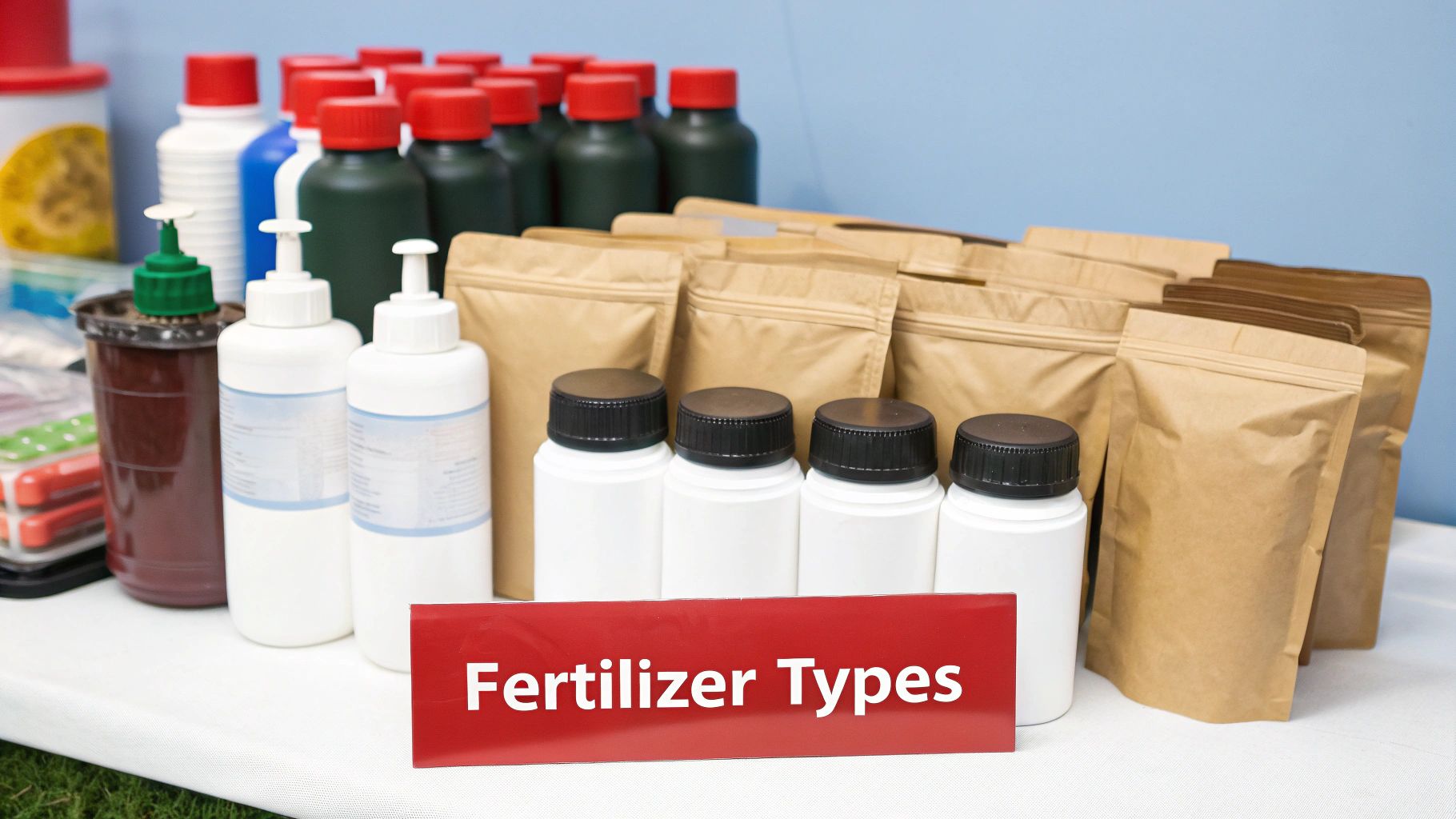
Walking down the fertiliser aisle at your local garden centre can feel a bit overwhelming. Bottles, bags, and spikes all promise lush, vibrant growth, but which one is actually the right choice for your plants and, just as importantly, your lifestyle?
It's actually a lot simpler than it looks. Most of these products are just different ways of delivering those same essential nutrients we talked about earlier. The best one for you really just boils down to convenience, how quickly your plant needs a feed, and whether you'd prefer to go with a synthetic or more natural approach.
Let's unpack the main options you’ll find on the shelves here in New Zealand, so you can confidently pick the perfect match for your plant family.
Liquid Fertilisers for a Quick Boost
Liquid fertilisers are probably the most popular choice for indoor gardeners, and for good reason. They're a concentrated nutrient mix that you simply dilute with water before giving your plants a drink.
Think of it as a quick energy shot for your plant. Because all the good stuff is already dissolved, the roots can slurp it up straight away. This makes liquid feeds perfect for giving a plant a fast-acting boost, especially during the big growing months of spring and summer. If you spot a plant looking a bit pale or tired, a dose of liquid fertiliser can often perk it up in no time.
They are perfect for:
- Giving hungry plants a rapid nutrient fix.
- Easily fitting into your regular watering schedule.
- Having total control over the strength—you can easily water it down to half-strength for sensitive plants or seedlings.
The only real catch is that you need to apply them more often, usually every two to four weeks from about September to February. This makes them a great fit for plant parents who enjoy being hands-on and part of a regular care routine.
Slow-Release Fertilisers for Convenience
If you've got a busy schedule or are a little forgetful when it comes to feeding time, slow-release fertilisers could be your new best friend. These come as little granules, pellets, or spikes that you just mix into the top layer of soil or push down into the pot.
This is the ‘set it and forget it’ method of plant nutrition. Every time you water, these little granules slowly break down, releasing a small but steady stream of nutrients over a long period. Depending on the product, this can last anywhere from three to nine months.
Slow-release options do a great job of mimicking how plants get nutrients in nature—a gentle, continuous meal rather than a single big feast. This significantly lowers the risk of fertiliser burn that can happen if you overdo it with liquid feeds.
It’s incredibly convenient and means your plants are always getting a meal, even when life gets in the way. Just remember to read the packet, as one application at the start of spring is often all you need to see you through to autumn.
Organic Fertilisers for Soil Health
For those who prefer a more holistic approach, organic options feed your plants in a much gentler way. Instead of using concentrated chemical salts, they’re made from natural materials that nourish both the plant and the soil it lives in.
Some popular organic choices you’ll find in New Zealand include:
- Seaweed Tonics: A Kiwi classic! Seaweed is less of a direct fertiliser and more of a powerful plant tonic. It’s loaded with trace elements and natural growth hormones that encourage strong root development and help your plant fend off stress.
- Worm Castings: Also known as vermicast, this is basically worm poo, and it’s absolute gold for your plants. It's packed with beneficial microbes and nutrients that improve the soil's structure and release food slowly over time. You can mix it into your potting mix or just sprinkle it on top.
- Compost: Good, well-rotted compost is another brilliant soil conditioner. It adds a gentle, balanced dose of nutrients and improves the soil's ability to hold water.
The biggest win with organic options is that they actively improve the health of your potting mix, creating a thriving little ecosystem for the roots. They release nutrients slowly and are incredibly gentle, making it almost impossible to over-fertilise. A great strategy is to combine organic soil conditioners with a balanced liquid feed for complete, all-round plant care.
Creating a Simple Plant Feeding Schedule
Alright, you can now confidently pick out the right indoor plant fertiliser. The next step is putting it to use. Creating a feeding schedule isn’t about following strict, complicated rules; it’s more about tuning into your plants and getting in sync with New Zealand’s distinct seasons.
A plant’s appetite is directly linked to its growth. Just like us, they have active periods and times for rest. Understanding this natural rhythm is the real secret to knowing when to reach for the fertiliser and when to leave it on the shelf.
Feeding with the Seasons in New Zealand
For our houseplants here in NZ, the year is pretty much split into two main phases. Timing is everything. Feeding a plant when it’s trying to rest is like waking someone up for a big meal in the middle of the night—it’s not just unhelpful, it can actually cause problems.
-
The Growing Season (Spring and Summer): From roughly September to February, the days are longer and the light is stronger. This is go-time for your plants. They're busy pushing out new leaves, stems, and flowers, which makes them hungriest. A regular feeding schedule during this period will give them the fuel they need.
-
The Dormant Period (Autumn and Winter): From about March to August, less light and cooler temperatures signal to most houseplants that it's time to slow down and save energy. They aren't actively growing, so their nutrient needs drop way down. Feeding them now can do more harm than good.
How to Apply Fertiliser Correctly
Getting your application technique right is just as important as timing. Doing it properly ensures your plant gets all the good stuff without the risk of issues like root burn.
Here’s the golden rule: always water your plant thoroughly before you fertilise. Applying fertiliser to dry soil is a recipe for disaster, as the concentrated salts can easily scorch the delicate roots. Think of it as serving a drink before the main course—it just makes everything go down smoother.
The Weakly, Weekly Method: For liquid fertilisers, a fantastic approach during the growing season is the ‘weakly, weekly’ method. Instead of a full-strength dose once a month, you simply dilute the fertiliser to quarter-strength and apply it every time you water. This provides a gentle, consistent trickle of nutrients that closely mimics how plants feed in their natural habitat.
Step-by-Step Application Guide
Ready to give it a go? Here’s a simple breakdown for applying the most common types of fertiliser safely.
-
For Liquid Fertilisers: Read the label and dilute the concentrate to the recommended strength (or just quarter-strength if you're trying the 'weakly, weekly' method). After giving your plant a good drink of plain water, pour the diluted fertiliser mix evenly over the soil until you see it start to drain from the bottom holes.
-
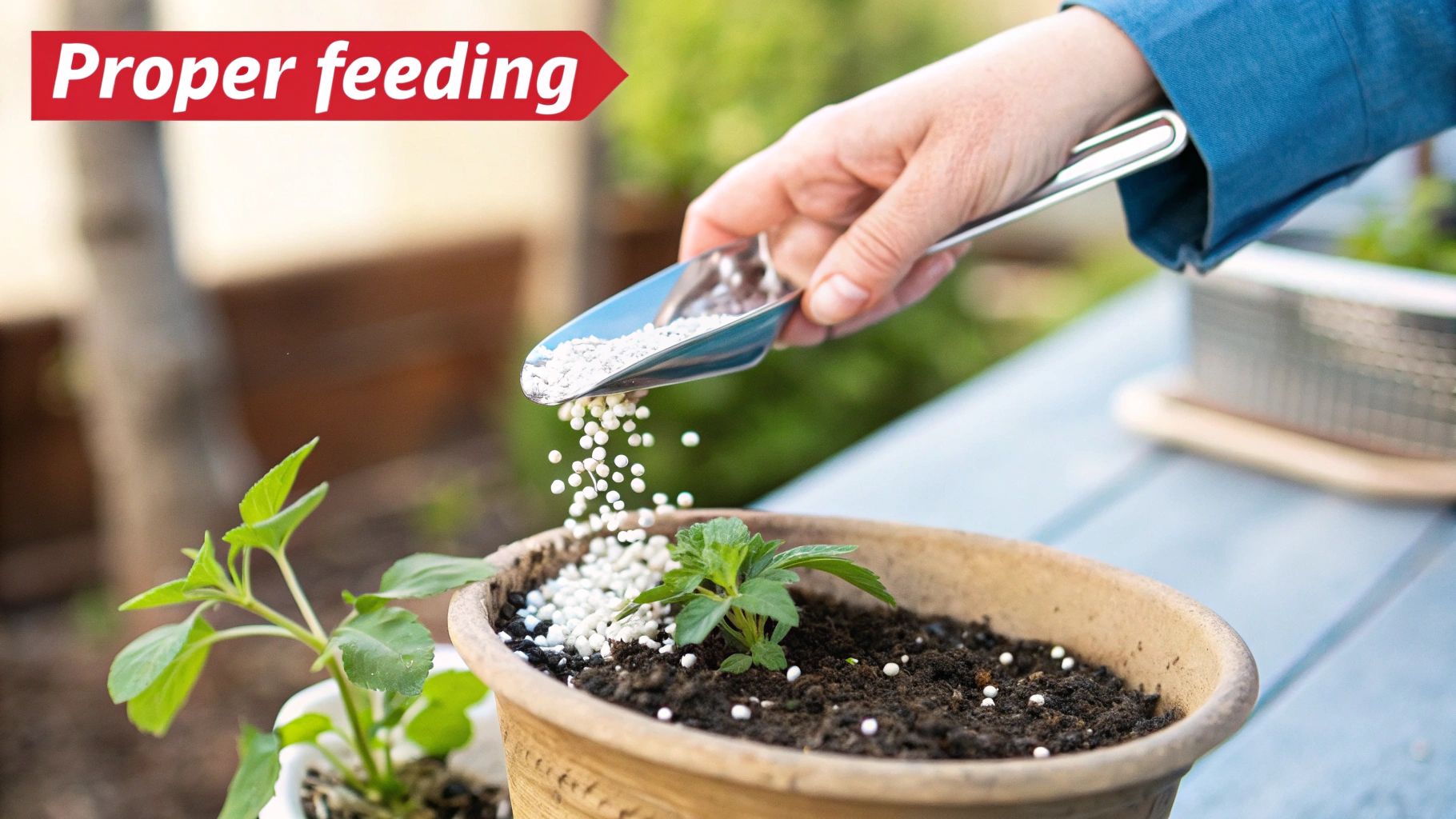
For Granular Fertilisers: Check the packaging to see how much to use for your pot size. Sprinkle the granules evenly across the soil surface, then gently work them into the top centimetre or two. Water the plant as you normally would, which will start dissolving the granules and releasing the nutrients.
By following these simple guidelines, you'll be able to create a feeding routine that keeps your houseplants thriving all year round. For more specific tips on what individual plants need, you can always explore our detailed plant care guides.
Spotting and Fixing Common Fertilising Mistakes
We've all been there. Even with the best intentions, it's easy to get your plant's feeding schedule a little off. The good news? Houseplants are surprisingly forgiving, and most can bounce back beautifully once you know what to look for.
Think of it as learning a new language – your plant's language. They're always trying to tell you what they need; you just have to learn how to interpret the signs. Let's walk through the two most common slip-ups – too much or too little indoor plant fertiliser – and how to get your green friend back on track.
The Problem: Too Much Love (Over-Fertilising)
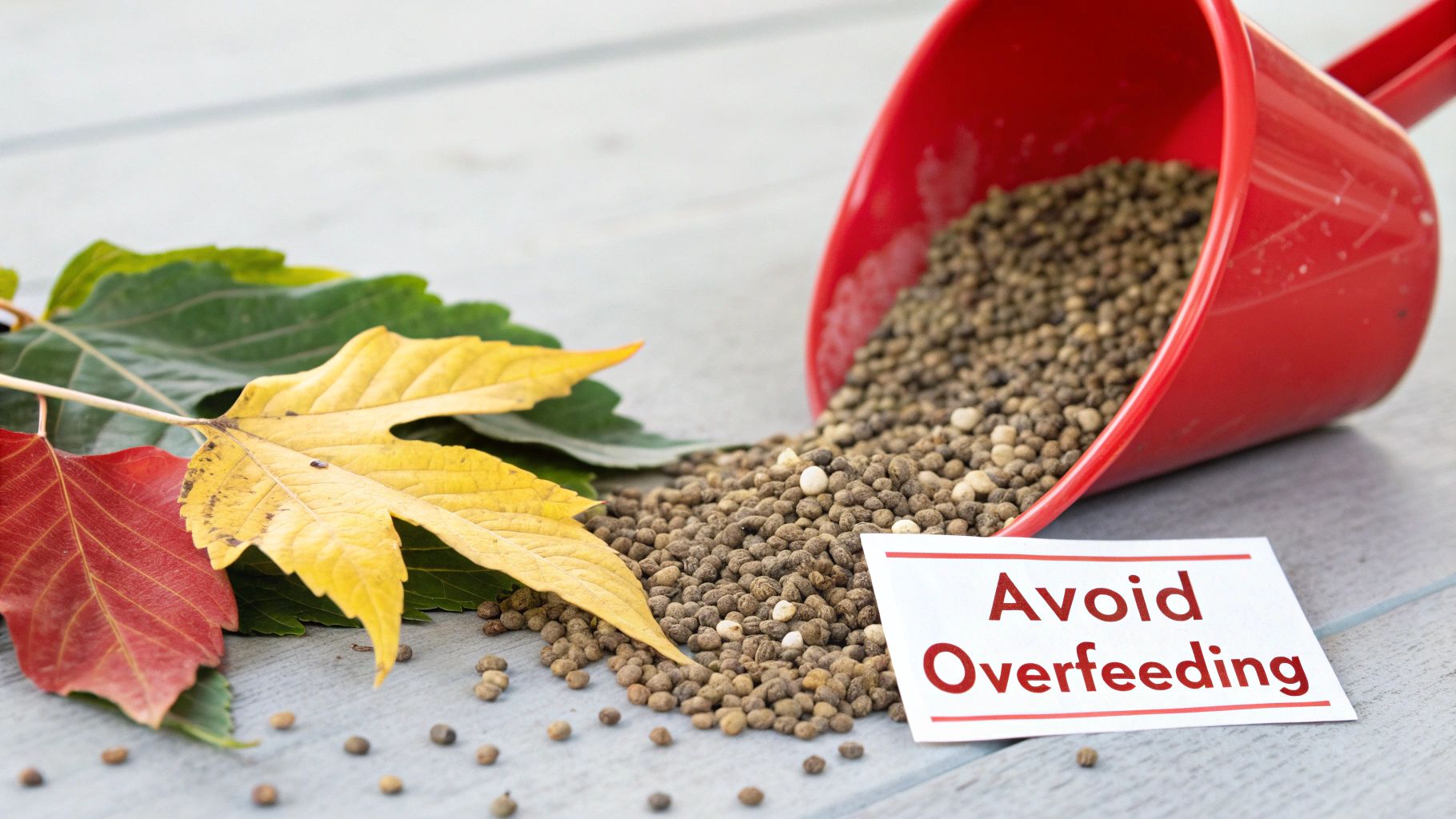
It’s the classic plant parent mistake: giving your plant just a little too much love. Over-fertilising is what happens when all those extra nutrient salts from the fertiliser build up in the soil. Instead of helping, this concentration of salts can actually "burn" the plant's delicate roots, stopping them from absorbing water properly.
You might have a case of over-fertilising on your hands if you notice:
- A White Crust on the Soil: This is the most obvious clue. A salty, whitish crust on the surface of your potting mix is a dead giveaway that nutrients have built up.
- Burnt or Crispy Leaf Tips: The edges and tips of leaves might turn brown, yellow, and feel crispy, even if you’re sure your watering is on point.
- Stunted or Limp Growth: Rather than putting out lush new growth, your plant might look weak, wilted, or just plain sad.
- Yellowing and Dropping Leaves: The plant might start sacrificing its lower leaves, which can turn yellow and fall off as it struggles.
The Fix: How to Correct Over-Fertilising
If you suspect you've been a bit too generous with the plant food, the solution is thankfully simple. You just need to give the soil a good flush to wash away all those excess salts.
- Pop your plant in a sink, shower, or take it outside where water can drain away freely.
- Slowly and thoroughly pour lukewarm water through the pot. You're aiming for a lot of water here – about four times the volume of the pot itself.
- Let the water run straight through the drainage holes. You're literally washing the excess fertiliser out with it.
- Once it's done dripping, let the pot drain completely before putting it back in its saucer and its usual spot.
- Give it a break. Hold off on any more fertiliser for at least a month to give the roots a chance to recover.
The Problem: Running on Empty (Under-Fertilising)
The opposite problem, under-fertilising, is just as common but usually less dramatic and easier to fix. It simply means your plant has gobbled up all the available nutrients in its pot and is now feeling pretty hungry.
Here’s how to tell if your plant needs a feed:
- Pale or Yellowing Leaves: A general washed-out or pale green look, especially on older leaves, is often the first sign. This can point to a nitrogen deficiency.
- Slow or No New Growth: During the growing season (roughly September to February here in New Zealand), a healthy plant should be actively growing. If yours has stalled completely, it’s probably hungry.
- No Flowers: For flowering plants like Peace Lilies or Hoyas, a lack of blooms when you'd normally expect them is a strong hint they need a boost of phosphorus.
- Small, Weak New Leaves: If you are seeing new growth, but the leaves look smaller or weaker than usual, it's a sign the plant doesn't have the energy it needs.
Fixing this is as easy as it sounds: it’s time to feed your plant! Start with a balanced liquid fertiliser at half the recommended strength to gently reintroduce it to nutrients. From there, you can get it onto a regular feeding schedule throughout the growing season.
Simple DIY Fertilisers from Your Kitchen
If you're an eco-conscious plant parent who loves a good budget-friendly hack, your kitchen is a goldmine. You can whip up a gentle indoor plant fertiliser using everyday scraps, giving your plants a boost without spending a cent and cutting down on waste at the same time.
It's important to know that these homemade tonics aren't designed to replace a proper, balanced fertiliser. Think of them more like a healthy smoothie or a vitamin boost for your plants—a fantastic way to provide a little extra nourishment for specific needs.
Banana Peel Tea for a Potassium Boost
Have you ever had a flowering plant that just refuses to bloom? It might be crying out for a bit more potassium. Banana peels are packed with this crucial nutrient, which is the key to encouraging flowers, fruit, and overall healthy growth.
Making 'banana peel tea' couldn't be easier.
- Collect: Grab the peels from one or two ripe bananas.
- Soak: Pop the peels in a jar and fill it with water.
- Steep: Let it all soak for two to three days. The water will gradually draw out the potassium and other minerals.
- Use: Fish out the peels and use the nutrient-infused water to give your plants a drink during their growing season.
This gentle brew is a treat for flowering plants like Hoyas and Orchids. It's also great for edible plants, and if you're keen on growing your own, check out our guide to growing herbs indoors for more tips.
A quick heads-up: DIY fertilisers are quite mild. They offer a nice little boost, but they work best alongside a complete, balanced commercial fertiliser to make sure your plants are getting everything they need to thrive.
Coffee Grounds for Acid-Loving Plants
Before you toss out those used coffee grounds, hold on! Once they've cooled down, they can be a brilliant addition to the soil for plants that prefer more acidic conditions. The grounds add a small amount of nitrogen and improve the soil's texture.
Just be mindful that this isn't for everyone. This trick is best reserved for:
- Ferns (like Boston Ferns)
- Peace Lilies
- African Violets
- Philodendrons
To use them, just sprinkle a thin layer of the cool, used grounds over the topsoil and gently mix them in. Moderation is key here; too much can make the soil too dense, attract unwanted pests, or even cause mould. A light dusting every month or so during the growing season is more than enough.
Answering Your Top Fertiliser Questions
Even with the best intentions, a few questions always seem to pop up once you start feeding your indoor plants. To help out, we've gathered some of the most common queries we hear from Kiwi plant parents. Let's clear up any confusion so you can fertilise with confidence.
Can I Use Outdoor Fertiliser on My Indoor Plants?
It's tempting to use what you have on hand, but we strongly advise against this. Fertilisers designed for the garden are far too powerful for the small, contained environment of a pot.
These outdoor formulas are created for massive volumes of soil and can easily cause chemical burn to the delicate root systems of your houseplants. It’s best to stick with a product specifically made for indoor plants—they're much gentler and provide a balanced diet without overwhelming your plant.
Should I Fertilise My Plants in a New Zealand Winter?
For almost all houseplants, the answer here is a firm no. During our cooler, darker months—usually from about April to August—most plants go into a state of dormancy. Their growth slows right down, so they simply can’t use the extra nutrients.
Think of it like trying to serve a huge meal to someone who is fast asleep. The food will just sit there and can cause problems. It’s best to stop feeding entirely during this rest period and only resume in September when you start to notice signs of new growth.
Are DIY or Organic Fertilisers Enough on Their Own?
Homemade remedies and organic options like worm castings are brilliant for improving soil health and giving your plants a gentle boost. We're big fans! However, they often don't provide the full, balanced range of nutrients a plant needs to truly thrive. They might be rich in one element but completely lacking in another.
A great approach is to use them as a supplement, not a total replacement. Think of them as a healthy side dish. You can use worm castings or a seaweed tonic to condition the soil, then follow up with a balanced liquid indoor plant fertiliser at half-strength during spring and summer. This way, your plants get the best of both worlds.
Why Are My Plant's Leaves Turning Yellow?
Yellowing leaves can be a real head-scratcher. Before you reach for the fertiliser, it’s crucial to check the two most common culprits first: water and light. Overwatering is the number one cause of yellow leaves in houseplants. It suffocates the roots, making it impossible for them to absorb any nutrients, no matter how much fertiliser you add.
Always check the soil moisture before you do anything else. If it feels soggy, let it dry out. If it’s bone-dry, it's time for a good drink. If you’re confident your watering is spot on and you haven’t fertilised in a while during the growing season, then a nutrient deficiency becomes a more likely cause.
Ready to give your plants the perfectly balanced meal they deserve? Explore the wide selection of premium indoor plant fertiliser and everything else your indoor jungle needs at Jungle Story, New Zealand’s favourite online plant marketplace. Shop now at https://junglestory.co.nz.