
Got a dark, neglected corner of your garden that you've given up on? Don't. Those shady spots are a golden opportunity to create something truly special. Shade-loving plants are nature's answer for these areas, perfectly adapted to thrive where direct sun is scarce – think under big trees, alongside south-facing walls, or on sheltered patios. The old saying, right plant, right place, is everything here, and it's the key to a gorgeous garden that just works, without all the fuss.
Embracing the Shadows in Your Garden
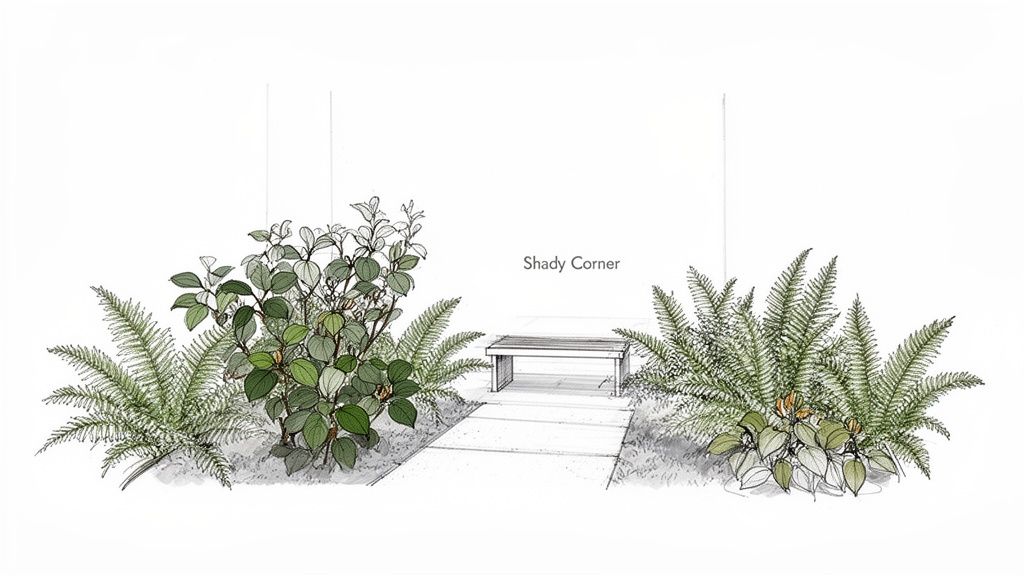
For a lot of Kiwi gardeners, a shady patch feels like a problem. A dead zone where nothing seems to grow. But what if you flipped that thinking? See it as a blank canvas instead. These spots are your chance to play with a whole different palette of plants – ones with incredible foliage, delicate flowers, and rich textures that you just don't get in a sun-baked garden.
Leaning into the shade means you're working with your garden's natural vibe, not fighting it. It’s a smarter, more sustainable way to garden. Plants that are naturally at home in low light are often less thirsty once they're established, which is a massive bonus during our dry summers.
The Benefits of a Shade Garden
A well-designed shade garden isn't just a consolation prize; it's a destination. It becomes a cool, peaceful retreat on a hot day and brings a unique look that sets off the brighter parts of your yard beautifully.
Here are a few of the best things about cultivating shade-loving plants:
- Lush, Year-Round Greenery: Many shade plants are evergreens, like our native ferns or mondo grass, giving you colour and structure all year long.
- Unique Textures and Forms: This is where you can get really creative. Think of the bold, architectural leaves of Hostas next to the soft, feathery fronds of ferns and the glossy, deep green of Clivias. The contrast creates incredible visual depth.
- Water-Wise Gardening: The soil in a shady spot holds onto moisture for much longer, meaning you won't have to water nearly as often as you do for those sunny, exposed beds.
- A Cooler Microclimate: A leafy, shady corner acts like natural air conditioning. It’s an oasis for you, and a welcome habitat for local birdlife too.
By picking plants that have evolved for lower light, you’re setting yourself up for success from day one. You're not trying to force a sun-worshipper to survive in the shadows; you're giving a shade-lover its perfect home.
This guide is your starting point for turning those tricky spots into the most magical parts of your garden. But before we get into all the amazing plants you can choose, there's one skill you need to nail down first: learning to properly read the light in your own backyard. Understanding the different types of shade is the true foundation of a thriving, knock-out shade garden.
Right then, let's get you set up for success.
How to Understand Your Garden's Shade
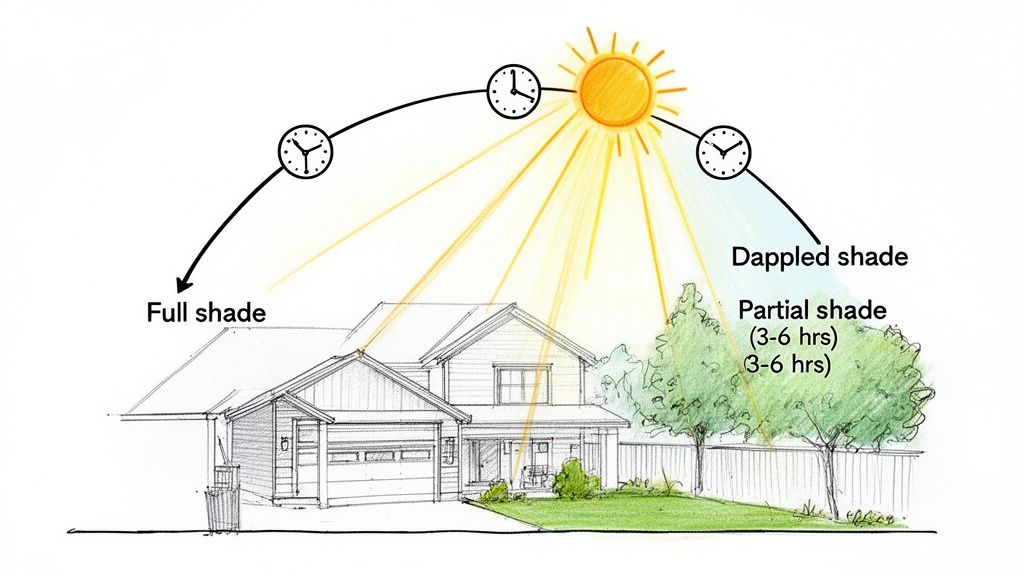
Before you fall head over heels for a lush fern or vibrant Hosta, it's time to play detective in your own backyard. Not all shade is the same, and getting your head around its quirks is the most crucial step towards a garden that doesn't just survive, but truly thrives.
Think of it this way: a plant that enjoys "partial shade" is expecting a few hours of gentle sun to get it going, a bit like a morning coffee. If you pop it in "full shade," where it never sees a direct ray, you're asking it to run a marathon without any fuel. When you map your garden's light properly, you stop guessing and start growing with confidence.
Decoding the Degrees of Shade
Here in New Zealand, the sun's path and intensity shift dramatically between our long summer days and the low-angled light of winter. Learning the different types of shade is what empowers you to pick the perfect shade loving plants for every nook and cranny.
Let's break down the main categories you'll come across:
- Full Shade: This is the deepest, darkest shade. These spots get no direct sunlight at all during the day. Think of the south-facing side of your house or that area tucked under a dense grove of evergreen trees.
- Partial Shade (or Semi-Shade): This is a really common and versatile condition. It describes areas that get between three to six hours of direct sun per day. The key is that it's gentle sun – morning sun is ideal. That afternoon sun in a Kiwi summer can be a bit much for many shade lovers.
- Dappled or Filtered Shade: This is that beautiful, dancing light you find under deciduous trees like maples or silver birches. The sunlight filters through the leaves, creating a moving mosaic of light and shadow that shields plants from the harshest rays.
Just remember, the quality of light matters as much as the quantity. The gentle morning sun hitting an east-facing wall is far kinder to your plants than the scorching afternoon sun beating down on a west-facing fence.
A good way to get a feel for your garden's specific light conditions is to use a simple quick-reference guide.
Matching Plants to Your Specific Shade Type
This table helps you quickly identify your garden's shade levels and points you towards the types of plants that will be happiest in each spot.
| Type of Shade | Light Conditions in NZ | Best Suited For | Example Plant Category |
|---|---|---|---|
| Full Shade | Receives 0 hours of direct sunlight. Often found on the south side of buildings or under dense evergreens. | True shade-dwellers that have adapted to low-light forest floors. | Ferns, some Hostas, Mondo Grass. |
| Partial Shade | Gets 3-6 hours of gentle, direct sun, preferably in the morning. Protected from harsh afternoon sun. | A wide variety of plants that need some sun to flower or maintain leaf colour. | Begonias, Hydrangeas, Astilbes. |
| Dappled Shade | Light is filtered through the canopy of deciduous trees. A constantly shifting pattern of light and shadow. | Understory plants that thrive in the protective environment of taller trees. | Hellebores, Japanese Maples, Ligularia. |
By matching the plant to the light, you're giving it the best possible chance to settle in and put on a beautiful display.
How to Map Your Garden's Sunlight
The most reliable way to figure out your garden's light is to simply watch it. This isn't a one-and-done job, either; light patterns change with the seasons. A spot that’s shady in summer when a deciduous tree is in full leaf might be surprisingly sunny during our winter months from June to August.
Here’s a straightforward method to map it all out:
- Pick a typical sunny day to do your observations.
- Start in the morning, around 9 am. Take a few photos or sketch a rough map of your garden, marking out which areas are in sun and which are in shade.
- Repeat this every two hours through the day—at 11 am, 1 pm, 3 pm, and 5 pm.
- Look at your notes. Add up the total hours of direct sun each spot gets. This will give you a clear picture of your full sun, partial shade, and full shade zones.
Doing this once in summer and once in winter provides the complete story of your garden’s unique microclimates.
Working with Garden Structures
Your house, fences, sheds, and even your neighbour's huge macrocarpa tree all play a big part in your garden's light story. These structures create distinct little microclimates. The base of a south-facing wall, for instance, will be in deep, consistent shade all year round – perfect for true shade lovers.
On the other hand, a north-facing wall can become a real heat trap, reflecting sun and warmth. The trick is to understand how these fixed elements shape the light and temperature. Instead of fighting them, you can lean into these microclimates, creating perfect little pockets for different plants that will absolutely flourish.
Outdoor Plants That Flourish in the Shade
Alright, you’ve scouted your garden and mapped out its shady spots. Now for the fun part: choosing the plants. A shady corner isn't a gardening dead-end; it's a fantastic opportunity to play with rich textures, subtle colours, and structure that looks good all year round. We’ve put together a list of the best outdoor shade loving plants that really hit their stride in New Zealand's unique climate.
Think of this as more than just a list. It's your practical guide to turning those tricky, low-light areas into something special. Whether you're trying to liven up the south-facing side of your house, create a lush carpet under established trees, or design a quiet woodland escape, these are the plants that will get you there.
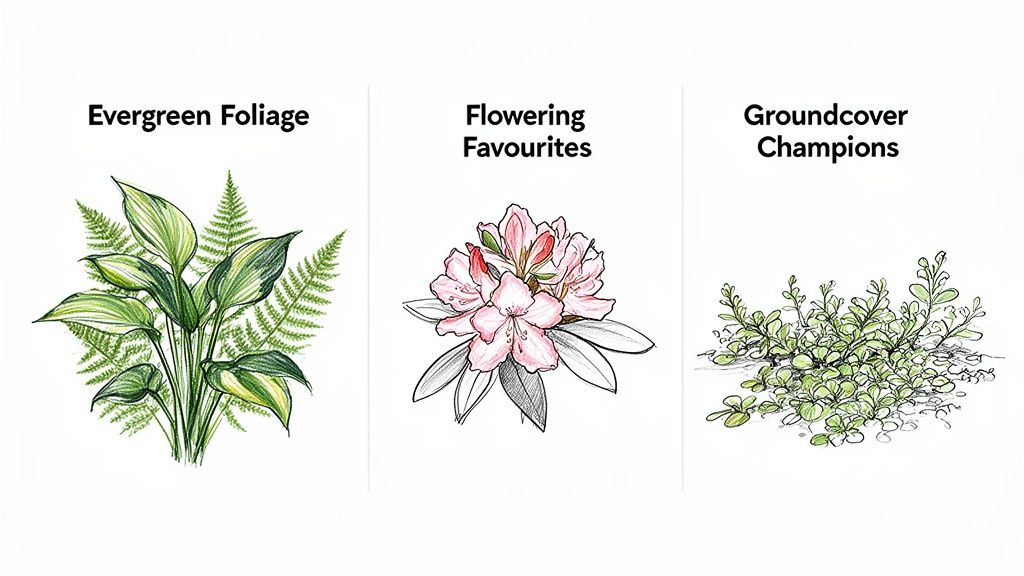
To make things easy, we’ve grouped our top picks into three categories. From the reliable structure of evergreens to the pop of colour from shade-tolerant flowers and the brilliant problem-solving of groundcovers, there’s a perfect plant here for any shady challenge.
Evergreen Foliage Stars
Evergreens are the absolute backbone of a shade garden. They provide structure, colour, and life when everything else has died back for winter. Their real magic is in the incredible variety of leaf shapes, textures, and shades of green, which create a living tapestry that makes everything else look even better.
One of the most iconic choices for a Kiwi garden has to be Kawakawa (Macropiper excelsum). You’ll instantly recognise this hardy native by its glossy, heart-shaped leaves, which are often dotted with little holes from the looper moth caterpillar – a sure sign of a healthy plant! It's perfectly happy in partial to full shade and adds a genuine New Zealand feel to any space.
Another solid choice is Clivia (Clivia miniata), with its deep green, strap-like leaves that form a beautifully elegant clump. It does produce stunning orange trumpet flowers in late winter and early spring, but its handsome foliage provides a strong architectural presence all year long. Clivias are also incredibly tough, handling both dry shade and a bit of neglect once they’re settled in.
If you’re chasing a truly lush, tropical vibe, you just can't go past ferns. In New Zealand, about 10–15% of our land area is still covered with native flora, and our shade-loving ferns are a massive part of that success story. Our temperate climate is home to a huge number of fern species, and around 40% of them are found nowhere else on earth. Planting natives like these in partial shade can cut your maintenance down by up to 50% compared to sun-lovers, because they’re already adapted to our humid microclimates.
Colourful Flowering Favourites
Just because a spot is shady doesn't mean you have to sacrifice colour. In fact, many spectacular plants save their best floral shows for lower light, giving you brilliant pops of colour against a deep green backdrop.
The Hellebore (Helleborus orientalis), often called the Winter Rose, is a true champion of the shade garden. These amazing perennials produce delicate, cup-shaped flowers in a huge range of colours—from pure white and soft pink to deep burgundy and almost black—all through our cooler months from June to August. They are perfect for brightening things up when not much else is happening in the garden.
For a burst of late spring and summer colour, Hydrangeas are a classic for a reason. They thrive in partial shade, where their massive, showy flower heads are protected from the harsh afternoon sun. Here in New Zealand, our typically acidic soils will reward you with gorgeous shades of blue and purple.
Another fantastic option is the Toad Lily (Tricyrtis hirta). This unique perennial has small, orchid-like flowers that appear in late summer and autumn, just as other plants are starting to fade. Their speckled purple and white blooms are so intricate and beautiful, you’ll want to plant them somewhere you can appreciate them up close.
Lush Groundcover Champions
Groundcovers are the ultimate problem-solvers in a shade garden. They’re brilliant for keeping weeds down, holding moisture in the soil, and creating a living carpet of green beneath taller plants. They soften hard edges and really help to tie the whole garden design together.
Ajuga (Ajuga reptans), or Bugleweed, is an incredibly tough and fast-spreading groundcover. It forms a dense mat of lovely foliage, with varieties in deep burgundy, chocolate brown, and even variegated green and cream. In spring, it sends up charming little spikes of blue flowers. Ajuga is especially handy for difficult spots like dry shade under trees where even the lawn gives up.
For a more delicate, refined look, Strawberry Begonia (Saxifraga stolonifera) is an excellent choice. Don't let the name fool you; it's neither a strawberry nor a begonia. This well-behaved plant spreads with runners, forming a lovely carpet of rounded, silver-veined leaves. It isn't invasive and adds a beautiful texture to the front of a shaded border. For more ideas on covering bare patches, have a look at our guide on choosing the best ground cover for plants.
Finally, for that deep, tricky shade, you can always count on Mondo Grass (Ophiopogon japonicus). Available in classic dark green and a striking black variety, this grass-like plant is practically indestructible. It forms dense, tidy clumps and is fantastic for edging paths or filling gaps where nothing else seems to grow, proving that even the most challenging shady spot can be a point of interest.
Top Houseplants for Low Light Homes
Don't have big, sun-drenched windows? No problem. Having a shadier home isn't a challenge; it's an opportunity to grow some of the world's most stunning indoor plants.
Many of the most popular houseplants we love evolved on the floors of dense, tropical forests, perfectly adapted to lower light. This means you can absolutely create a thriving indoor jungle, even in a south-facing room or a quiet corner far from a window. The secret is to stop thinking of it as ‘no light’ and start choosing plants that see shade as their happy place. These guys don’t just tolerate it—they flourish in it.
The Near-Indestructible Favourites
If you're new to the world of indoor plants or feel like you have a 'black thumb', these are your new best friends. They're famously low-maintenance and incredibly forgiving, making them the perfect starting point to build your confidence.
First up is the Snake Plant (Dracaena trifasciata, formerly Sansevieria). With its stiff, architectural leaves, it makes a bold statement and is legendary for its ability to handle very low light. It holds water in its leaves, so the only real way to kill it is with kindness—that is, too much water. Let the soil dry out completely between drinks.
Another champion of neglect is the ZZ Plant (Zamioculcas zamiifolia). Its glossy, deep green leaves look so flawless they’re often mistaken for plastic. Much like the Snake Plant, it’s extremely drought-tolerant because of the large, potato-like rhizomes under the soil that store water. It will happily thrive in a shady spot you forget about.
A quick tip for watering these low-light legends: less light means less photosynthesis, which means the plant uses water much more slowly. Always stick your finger a few centimetres into the soil to check the moisture before grabbing the watering can. Overwatering is the number one mistake people make with shade-loving houseplants.
Champions of Foliage and Flair
Ready for a bit more visual punch? If you’re looking to add unique patterns and textures, these plants deliver incredible foliage that truly comes alive in the shade. They might ask for a little more attention than the bulletproof options, but the reward is massive.
The Cast Iron Plant (Aspidistra elatior) definitely earned its name—it’s just about as tough as they come. Its elegant, deep green leaves can handle deep shade and a fair bit of neglect, which has made it a classic choice for generations of plant lovers needing to fill a dark hallway or corner.
Calatheas, also known as Prayer Plants, are famous for their ornate, patterned leaves that show off incredible shades of deep green, purple, and cream. They get their name from the way they fold their leaves up at night, like hands in prayer, and lower them again in the morning. They do prefer consistently moist soil and a bit of humidity, which makes them a fantastic choice for a bathroom with a window.
- Peace Lily (Spathiphyllum): Well-known for its elegant white spathes (the "flowers") and glossy, dark leaves. The best part? It's great at telling you what it needs—the leaves will visibly droop when it's time for a drink.
- Spider Plant (Chlorophytum comosum): A retro classic that’s ridiculously easy to care for and even easier to propagate. Its arching leaves look amazing in a hanging basket, and it handles a wide range of conditions, including lower light.
- Pothos or Devil's Ivy (Epipremnum aureum): This vining plant is perfect for draping over shelves or spilling from a hanging planter. While the more variegated types might lose a bit of their patterning in low light, the classic green varieties will happily trail through the shadiest parts of your home.
By picking the right plant for the right spot, you can transform any low-light area from a forgotten space into a green oasis. For a deeper dive into what thrives indoors, check out our guide to the best houseplants for low light homes. These plants are living proof you don’t need bright, direct sun to enjoy the beauty of an indoor jungle.
How to Plant and Care for Your Shade Garden
You’ve found the perfect shade-loving plants for your space—now it’s time to get them settled into their new home. A thriving shade garden is always built on a solid foundation, and that starts with the soil. Getting this right from the beginning will save you a heap of effort later on and give your plants everything they need to flourish.
The ground under established trees or along the south side of a house can be a tricky spot. It’s often compacted, tangled with roots, and surprisingly dry because the tree canopy or building eaves act like a giant umbrella, blocking most of the rain. This soil is also frequently stripped of nutrients, as big trees can be very greedy feeders.
Your first mission is to transform this poor, dry ground into a rich, moisture-retentive haven. The secret? A generous dose of organic matter.
Preparing and Planting Your Garden Bed
Before you even think about digging, you need to enrich the existing soil. This isn't just a suggestion; it's the absolute key to helping your new plants establish strong, healthy root systems.
- Enrich the Soil: Spread a thick layer of good-quality compost, well-rotted manure, or leaf mould over the whole area you plan to plant. You’re aiming for a layer at least 5-10 cm deep. Gently fork this into the top 15-20 cm of soil, being careful not to damage any major tree roots.
- Dig the Right Hole: When you dig a hole for your plant, make it about twice as wide as the pot, but no deeper. This simple trick encourages the roots to spread outwards into the lovely improved soil you just created.
- Prepare the Plant: Carefully ease the plant out of its container. If the roots are tightly coiled into a circle (root-bound), gently tease them apart with your fingers. This tells them it's time to grow into their new neighbourhood.
- Planting and Backfilling: Pop the plant in the hole, making sure the top of its root ball sits level with the surrounding ground. Fill the hole back in with your amended soil, firming it gently to get rid of any big air pockets.
- Water Thoroughly: Give your new plant a deep, slow drink of water. This is crucial for settling the soil around the roots and pushing out any last air pockets.
Watering, Mulching, and Feeding
Looking after a shade garden is often less work than one baking in the sun, but a few key habits will keep it looking lush and healthy. Smart watering is non-negotiable; while shady spots feel damp, the soil under a tree canopy can get incredibly dry.
Check the soil moisture by pushing your finger a few centimetres deep. Only water when it feels dry, but when you do, give it a proper, deep soaking to encourage strong roots to grow downwards.
A common mistake is watering a shade garden too often. The surface can look damp because there’s less evaporation, but just underneath, it can be bone dry. Always check the soil before you reach for the hose.
Mulching is your best friend in a shade garden. A 5-7 cm layer of bark chips, shredded leaves, or pea straw works wonders. It helps the soil hold onto precious moisture, keeps the weeds down, and slowly breaks down to add even more organic goodness back into the ground.
Most shade plants aren't particularly hungry. A top-dressing of compost each spring is usually all they need. If you spot sluggish growth or pale leaves, a dose of a balanced, slow-release fertiliser as new growth appears in spring will give them a welcome boost. To ensure your shade-loving plants thrive, understanding the fundamentals of general tree and plant care is crucial.
Finally, keep an eye out for slugs and snails—they adore these cool, damp conditions. Using pet-safe slug bait or setting up a few beer traps are effective, organic-friendly ways to protect your plants from these slimy visitors.
Designing a Lush and Layered Shade Garden
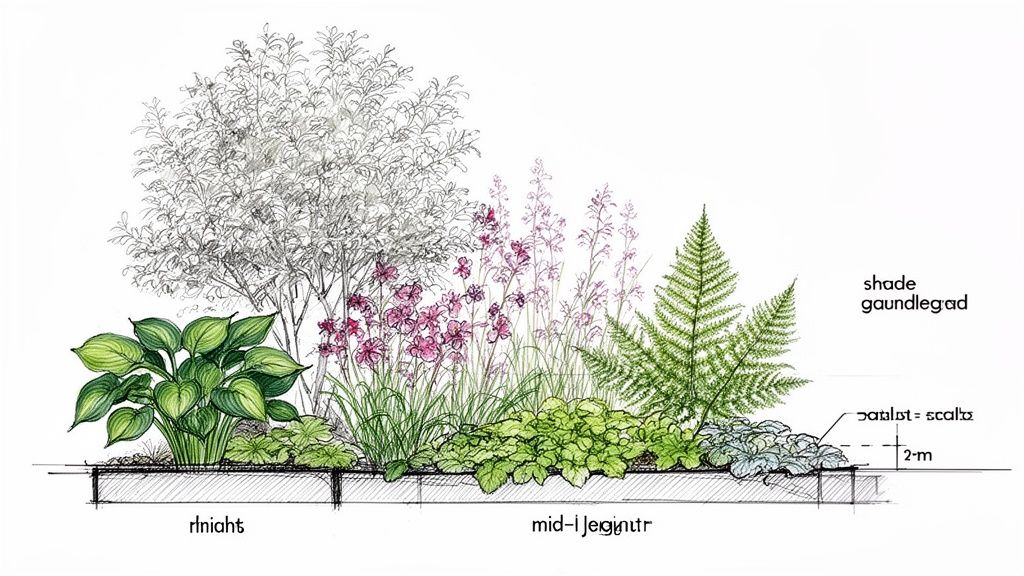
Creating a truly stunning shade garden isn’t just about the plants you pick; it’s about how you put them all together to create a living tapestry. The secret behind that lush, professional look you see in magazines is a simple design trick called layering. Think of yourself as an artist, using plants of different heights and shapes to build depth and fullness from the ground up.
The whole idea is to place your plants strategically based on their size. You’ll want your tallest specimens at the back, mid-sized plants in the middle, and low-growing groundcovers filling in the front. This straightforward approach stops the garden from looking flat and gives every single plant its own space to shine.
Building Your Layers for Visual Impact
First things first, you need a solid backdrop. Tall, elegant shrubs or upright ferns act as a green 'wall', making everything you plant in front of them really pop. These are the structural bones of your garden, giving it a sense of enclosure and privacy.
Next up is the 'body' of the garden, where you bring in your mid-level perennials. This is where the real fun begins, as you get to play with all sorts of textures and colours. The key here is contrast.
- Texture Play: Try pairing the bold, almost architectural leaves of a Hosta with the delicate, feathery fronds of a fern. That difference in texture creates instant visual appeal.
- Colour Variation: Don't settle for one shade of green. Mix it up! Combine deep, glossy greens with vibrant lime, blue-toned foliage, and even variegated leaves to add real depth.
- Form Contrast: Place a clumping, fountain-like plant next to something with a more upright, statuesque form. This keeps the eye moving and makes the design more dynamic.
Finally, the ground layer is what pulls it all together. Spreading groundcovers like Ajuga or Mondo Grass will fill in any gaps, keep the weeds down, and create a lush, carpet-like effect that makes the whole garden feel finished and intentional. For more ideas, check out our complete guide to garden and landscape design.
Introducing Colour with Flowering Shrubs
You can absolutely have spectacular bursts of colour, even in the shade. Rhododendrons have been a favourite in New Zealand gardens since the 19th century, with over 200 varieties loved for their stunning blooms from late winter right through spring. These shrubs do beautifully in dappled light and only need a few hours of sun each day.
Interestingly, research shows that shade gardens featuring rhododendrons retain 25% more moisture in the soil, which is a massive plus for water-wise gardening.
When you're piecing together your shade garden, it's also worth thinking about how structures can add to the look and create little microclimates. Exploring some creative fence designs can offer up some fantastic inspiration. By combining smart layering, interesting textures, and thoughtful pops of colour, you can transform any shady corner into the most captivating part of your garden.
Your Shade Gardening Questions Answered
Even the most seasoned gardeners run into a few head-scratchers when tackling a new project. So, to help you get started on the right foot, we've put together answers to some of the questions we hear most often from fellow Kiwi gardeners wanting to create something beautiful in the shade.
Think of this as your go-to guide for those practical little challenges that can pop up, helping you turn a tricky spot into a thriving garden.
Can I Grow Vegetables or Herbs in a Shady Spot in NZ?
You bet! While your sun-loving tomatoes and capsicums will struggle, many leafy greens actually prefer a bit of a break from the harsh Kiwi sun. Things like lettuce, spinach, silverbeet, and rocket do brilliantly with just three to six hours of gentle, indirect light.
Herbs are much the same. A lot of them are perfectly happy with less direct sun, especially mint, parsley, chives, and coriander. A good rule of thumb is if you're growing it for the leaves, not the fruit, it’s worth a shot in a shadier spot.
My Soil Is Dry and Full of Tree Roots. What Can I Do?
Ah, the classic dry shade dilemma. This is one of those times when it’s much easier to work with the conditions rather than fight against them. The last thing you want to do is start hacking away at large tree roots, as that can seriously harm the tree.
The secret is to build up, not dig down. Simply add a good, thick layer of about 10-15cm of rich compost and some quality garden mix right over the top. This gives your new plants a much better start in life. A heavy layer of mulch on top will be your best friend for locking in moisture, and be sure to pick plants that are known troopers in dry shade, like Clivia or the beautiful Renga Renga Lily.
What Are the Best Flowering Plants for Full Shade?
Finding plants that flower their hearts out in deep shade can be a bit of a challenge, but you've still got some fantastic options. For a splash of seasonal colour, you can't go wrong with Impatiens.
For something more permanent, Hellebores (often called Winter Roses) are absolute stars, putting on a stunning show right through our winter and into early spring. Our native Renga Renga Lily (Arthropodium cirratum) also produces the most elegant sprays of white flowers, even in deep shade. Don't forget certain varieties of Camellia and Rhododendron either; they can also provide a wonderful display without needing direct sun.
Ready to transform those shady corners into your favourite part of the garden? Jungle Story has an incredible selection of shade-loving plants, from lush native ferns to vibrant perennials, delivered right to your door, anywhere in New Zealand.
Browse our collection of shade loving plants at Jungle Story