
Finding the right shade plants NZ gardeners can rely on is the secret to transforming a challenging, dimly lit area into a lush, thriving oasis. Instead of seeing shade as a frustrating limitation, try to think of it as the perfect canvas for an incredible range of foliage and flowers, from our own native ferns to stunning exotic bloomers.
This guide is all about helping you embrace those shady corners and turn them into your favourite part of the garden.
Your Shady Spot Is a Garden Opportunity
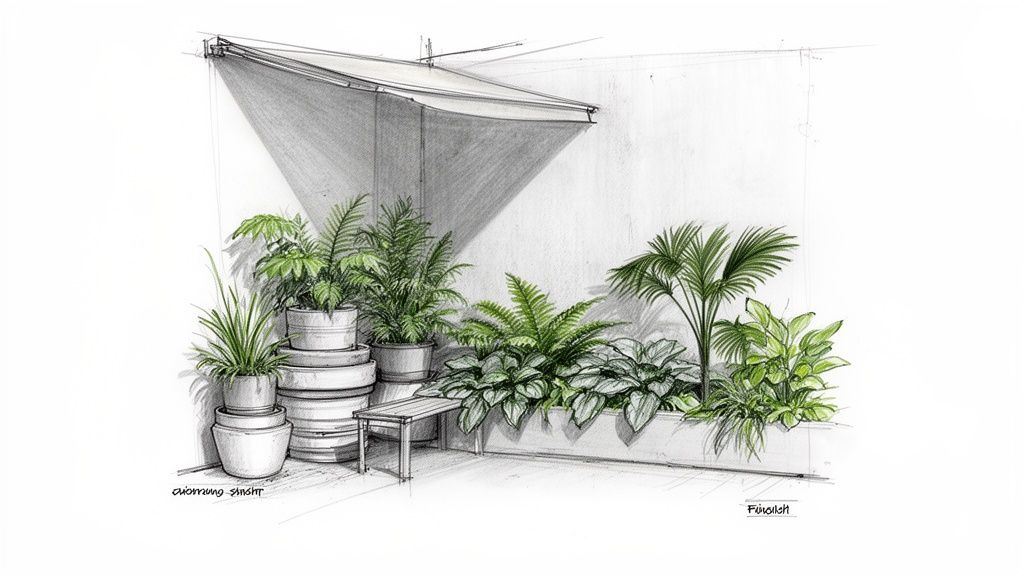
That tricky spot under a big pōhutukawa or along the cool, south-facing side of your house isn't a problem at all. It's actually a unique microclimate just waiting for the right plants to call it home. Many of New Zealand's most beautiful gardens make clever use of shade, creating peaceful retreats with layered textures and subtle, calming colours.
We want to go beyond just listing plants. The goal here is to give you the confidence to really understand your specific conditions and choose species that will truly flourish. We’ll look at the unique rewards of gardening in New Zealand's varied spaces, whether you have a sheltered townhouse courtyard, a balcony that never sees full sun, or a classic suburban backyard with established trees.
Why Shade Gardening Is on the Rise
Across Aotearoa, interest in shade-tolerant plants is growing fast. As our cities grow and change, more Kiwis are gardening in smaller spaces like apartments and townhouses, which often come with shady patios or balconies as their main outdoor area.
You can see this trend reflected in New Zealand's garden supplies industry. In a market pulling in an estimated revenue of $621.9 million, the demand for plants suited to low-light conditions has really taken off, perfectly matching the realities of modern, more compact living.
A shade garden invites a different kind of appreciation. It's less about bright, bold statements and more about the quiet beauty of form, texture, and the interplay of light and shadow. It encourages you to slow down and notice the details.
As you get to know your garden's unique character, you might also find some great ideas in resources dedicated to thoughtful gifts for plant lovers, perfect for sharing your new passion. Our goal is to give you the knowledge to make any dimly lit area a showcase of life.
Understanding the Language of Light and Shade
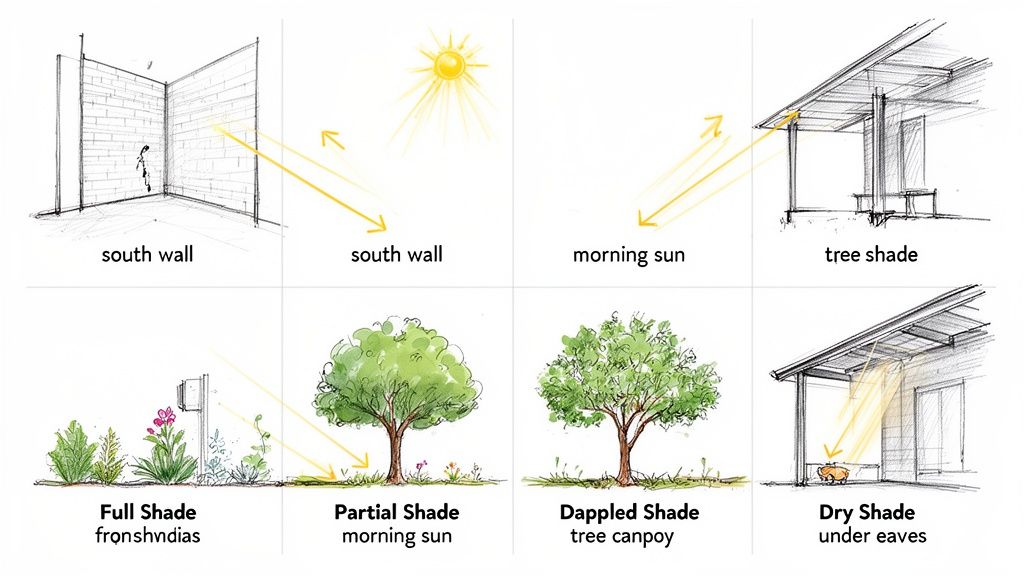
Before you can pick the perfect shade plants NZ gardens have to offer, you first need to become a bit of a light detective. Not all shade is the same. It has its own language, with different ‘dialects’ that dictate which plants will feel right at home. Learning to read this language is the most crucial first step to creating a shade garden you can be proud of.
Think of your garden as having its own unique light map. One spot might get lovely, gentle morning sun but be protected from the harsh afternoon glare. Another might only see brief, flickering light filtering down through the canopy of a big tree. The key is to get out there and watch your space throughout the day to really understand what you’re working with.
Decoding the Four Main Types of Shade
In most Kiwi gardens, shade tends to fall into one of four main categories. Figuring out which type you have is a game-changer—it instantly narrows down your plant choices and sets you up for success.
Let's break them down:
-
Full Shade: This is the most intense version, getting less than three hours of direct sun a day. You'll often find it on the south side of a house or under dense, low-hanging trees. These spots stay cool and dim for most of the day.
-
Partial Shade (or Half Shade): A really common garden situation, this means an area gets between three and six hours of sun daily. The important thing here is when it gets that sun; it's usually the gentle morning light, with protection from the more intense heat of the afternoon.
-
Dappled Shade: This is that beautiful, dancing shade you find under trees with a more open canopy, like a native Pōhutukawa or a silver birch. Light filters through the leaves, creating a moving pattern of light and shadow on the ground.
-
Dry Shade: The trickiest of them all. This is where you have a double-whammy: a lack of both light and moisture. Classic examples are the spots under the eaves of your house where rain rarely hits, or at the base of big, thirsty trees whose roots suck up every last drop of water.
Putting Your Knowledge into Practice
Understanding these terms is one thing; applying them to your own patch is the next. A simple observation exercise can make all the difference. Grab a notebook and pop outside to check on your shady spots a few times during the day—say, 9 am, midday, and 3 pm.
Jot down when direct sunlight hits and for how long. Is the light filtered through leaves, or is it completely blocked by a solid wall? This simple act of watching is what separates frustrating guesswork from confident, successful gardening.
To make it even easier, here’s a quick reference guide to help you identify what you’re working with.
Quick Guide to Garden Shade Levels
| Shade Type | Sunlight Hours (Direct) | Common Location Example | Simple Identification Tip |
|---|---|---|---|
| Full Shade | Less than 3 hours | Along the south side of a building or under a dense evergreen hedge. | The area feels noticeably cooler and stays dim all day. |
| Partial Shade | 3-6 hours | An east-facing garden bed that gets morning sun but is shaded in the afternoon. | Check at 2 pm – if it's in shade then, it's likely partial shade. |
| Dappled Shade | Varies (filtered) | Underneath a deciduous tree like a maple or a silver birch. | Look for a moving, "dancing" pattern of light on the ground. |
| Dry Shade | Varies (often full or partial) | At the base of large conifer trees or under the eaves of the house. | The soil is dusty and dry to the touch, even after light rain. |
This table gives you a solid starting point for mapping out the different microclimates in your garden.
By diagnosing your garden's specific light conditions, you move from just buying plants to strategically choosing companions that are perfectly suited to their environment. It’s the foundational skill for creating a resilient and beautiful shady oasis.
Once you have a clear picture of your garden's light map, you can confidently choose the shade plants NZ conditions will allow to truly flourish, ensuring they get exactly what they need without the struggle.
Our Favourite Native Shade-Lovers
There’s something special about bringing native plants into your garden. When you choose natives for those shady spots, you’re creating a space that feels deeply connected to Aotearoa. These aren't just beautiful plants; they are tough, perfectly suited to our local conditions, and play a huge role in supporting our unique ecosystems.
Planting natives means you’re working with nature, not against it. They’ve spent thousands of years adapting to the filtered light of our bush, which gives them a natural resilience. This often makes them a more reliable and lower-fuss choice than many exotics, helping you craft a garden with an authentic Kiwi identity.
Icons of the Forest Floor
A few native plants are simply synonymous with the lush, green understory of the New Zealand bush. Adding these icons to your garden gives it immediate character and structure, transforming a dim corner into your own slice of native forest.
Ponga (Silver Fern - Cyathea dealbata)
Is there any plant more quintessentially Kiwi than the Ponga? Its majestic, arching fronds are a stunning architectural feature. The silvery-white underside famously seems to glow in the moonlight. Ponga feels most at home in damp, sheltered spots with dappled light—just like its natural forest habitat.
Nīkau Palm (Rhopalostylis sapida)
As the world’s most southerly palm, the Nīkau is incredibly tough. Its elegant, feather-like fronds bring a distinctly tropical vibe, perfect for adding height and drama to a shady courtyard. It's a slow grower, but the reward is well worth the wait. Once established, it’s remarkably tolerant.
Kawakawa (Piper excelsum)
Instantly recognisable by its heart-shaped leaves—often peppered with holes from the Kawakawa Looper Moth—this shrub is a true taonga (treasure). Kawakawa is a fantastic filler for partial shade, giving you lush green foliage all year round. Female plants even produce small, intriguing orange berries.
The Understated Charm of Native Ferns
Beyond the mighty Ponga, Aotearoa is blessed with a huge range of smaller ferns that are perfect for ground cover and adding delicate texture. They are the true backbone of a native shade garden, filling in the gaps with a beautiful green tapestry.
A few of our top picks include:
- Kiokio (Blechnum novae-zelandiae): A hardy, fast-growing fern that can handle a bit more light than others. Its new fronds often unfurl with a lovely pink or reddish tinge, adding a subtle splash of colour.
- Asplenium Ferns: This group includes the tough Hen and Chickens Fern (Asplenium bulbiferum), which grows tiny plantlets on its fronds that you can pot up. They are wonderfully adaptable and thrive in pots or straight in the ground.
- **Delicate Maidenhair Ferns (Adiantum spp.)**: They do ask for consistently moist conditions, but the reward is worth it. The fine, lace-like foliage of our native maidenhairs adds an unmatched touch of elegance to the most sheltered, damp corners.
"By incorporating native plants, you’re not just gardening; you’re participating in ecological restoration. You create a habitat that supports native birds, insects, and lizards, weaving your garden into the wider natural landscape of Aotearoa."
This connection to the wider environment is a huge reason for their growing popularity. As landscaping trends in New Zealand lean more towards sustainability, native species are taking centre stage. Experts are really pushing the 'right plant, right place' idea to help our gardens adapt to a changing climate. Iconic natives like the Silver Fern and Nīkau Palm are perfect for shady spots and, once established with a good mulch of about 100mm, they can sometimes go as long as a decade without needing extra water.
Weaving Together an Authentic Aotearoa Garden
The real magic happens when you start combining these different plants. You can create layers, textures, and a genuine sense of place. Use taller Nīkau Palms for height, Ponga for a dramatic mid-layer, and a carpet of different ferns to cover the ground.
What you end up with is a tranquil, green sanctuary that feels like a natural extension of the New Zealand landscape. To get more ideas on pulling it all together, check out our guide on designing a beautiful NZ native garden. This is about more than just looks; it's about building a resilient, self-sustaining garden that truly belongs.
Growing Exotic Beauties in New Zealand Shade
While our native flora gives a stunning, resilient backbone to any garden, there's a whole world of exotic plants that can introduce incredible layers of colour, form, and texture to your shady spots. New Zealand's temperate climate is remarkably forgiving, letting us grow a huge variety of international performers that truly flourish away from the harsh sun.
Blending these global stars with our local plants creates a rich, diverse, and visually striking garden. They can bring seasonal drama, bold foliage, and unique flower shapes that transform a simple green space into a year-round spectacle. The secret is simply choosing proven varieties that are a good match for our conditions.
The Bold and the Beautiful Foliage Stars
Sometimes, the biggest impact in a shady corner doesn't come from flowers, but from incredible leaves. Exotic foliage plants offer a painter's palette of colours and textures to play with, brightening up dim areas with their vibrant presence.
Hostas (Plantain Lily)
Hostas are the undisputed kings of the shade garden. Their appeal is all in the foliage, which comes in a mind-boggling range of colours, from deep blue-greens to zesty chartreuse and creamy variegations. They form elegant, architectural clumps that look fantastic from spring right through to autumn.
Here in New Zealand, they die back completely in winter. This is a brilliant opportunity for spring bulbs to pop up through the soil before the Hostas re-emerge with fresh, perfect leaves. They love moist, rich soil and are perfect for lining a shady path or creating a lush underplanting beneath trees.
Japanese Maples (Acer palmatum)
For delicate structure and seasonal interest, nothing quite compares to a Japanese Maple. These small, elegant trees are perfect for dappled shade, where their finely cut leaves are protected from the harsh afternoon sun that can easily scorch them.
Their foliage puts on a stunning display, shifting from the fresh greens and reds of spring to the fiery oranges and crimsons of autumn. They create a beautiful, light canopy that allows other shade-loving plants to thrive underneath, making them a perfect feature tree for a sheltered courtyard or a woodland-style garden.
Reliable Bloomers for Low-Light Conditions
Flowers bring a different kind of magic to the shade, offering pops of colour that can feel even more special in a low-light setting. Many exotic plants have adapted to bloom beautifully without needing hours of direct sun.
Choosing the right flowering exotics for your shade garden is like discovering a secret. These plants don't shout for attention with huge, sun-drenched blooms; instead, they offer a more subtle, elegant beauty that draws you in for a closer look.
Hellebores (Winter Rose or Lenten Rose)
Hellebores are a true gift to the Kiwi gardener, putting on a spectacular show when very little else is flowering. Their beautiful, cup-shaped flowers appear in late autumn and bloom right through our winter (June - August) and into early spring.
They come in an array of colours from pure white and soft pink to deep, moody purples and greens. Hellebores are tough, long-lived perennials that thrive in the cool, moist soil found under deciduous trees, providing essential colour during the greyest months.
Rhododendrons and Azaleas
A classic choice for a reason, Rhododendrons and Azaleas are spectacular spring-flowering shrubs that love the acidic soil and partial shade often found under large trees in New Zealand gardens. Their vibrant trusses of flowers in shades of pink, purple, red, and white are simply breathtaking.
By choosing different varieties, you can have a succession of blooms from early to late spring. They provide excellent structure and evergreen foliage throughout the year, making them a solid, dependable choice for adding both height and seasonal drama.
Clivia (Clivia miniata)
If you’re looking for a plant that is almost bulletproof, Clivia is your answer. This South African native is incredibly tough and tolerant of dry shade, making it perfect for those tricky spots where other plants might struggle.
Its strappy, dark green leaves look good all year round, but its time to shine is in late winter and early spring. That’s when it sends up sturdy stems topped with brilliant clusters of vibrant orange or yellow trumpet-shaped flowers, bringing a welcome burst of tropical colour. They are fantastic mass-planted under trees or grown in pots for a splash of colour on a shady patio.
Designing Your Perfect Shady Oasis
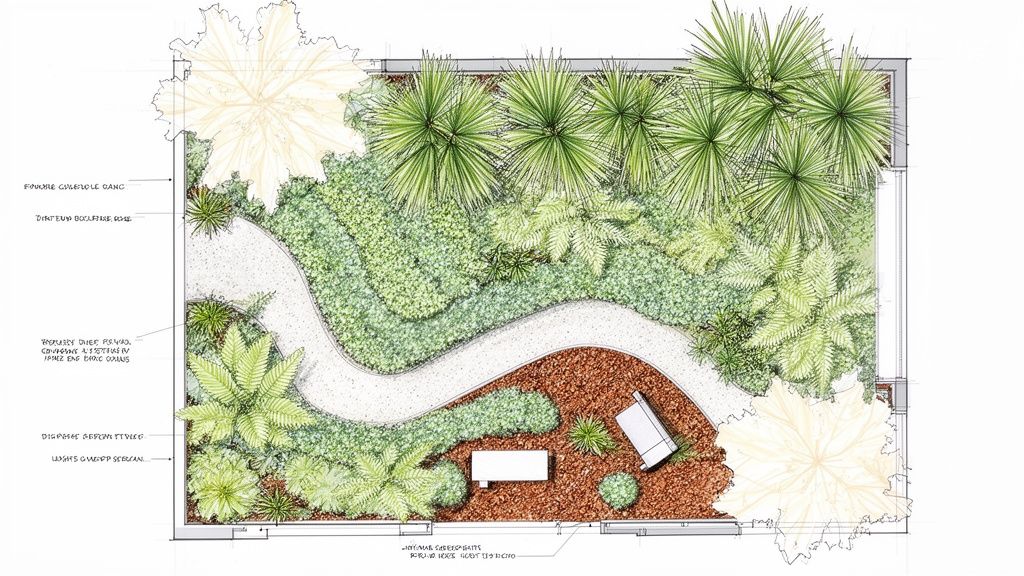
Okay, you've figured out your garden's light conditions and have a list of plants that should thrive there. Now for the really fun part—bringing that vision to life. Designing a shade garden is less about chasing spectacular flowers and more about playing with shape, texture, and subtle shifts in colour. This is your chance to create a serene, beautiful retreat that feels completely intentional.
The secret is to think like an artist, but with foliage instead of paint. A well-designed shady space uses a few clever tricks to create depth, guide your gaze, and transform a forgotten corner into somewhere you actually want to be.
Creating Depth with Layering and Texture
One of the most effective design tools for a shade garden is layering. Think about how plants grow in a native forest—it’s not a flat carpet, but a rich tapestry of different heights. Layering your plants this way gives the garden a wonderful sense of fullness and maturity.
Here’s a simple formula to get you started:
- Back Layer: Against a fence or wall, use taller plants to create a green backdrop and some vertical drama. Things like Nīkau palms, Ponga (silver ferns), or elegant Japanese Maples work beautifully.
- Middle Layer: This is where you fill in the body of the garden bed with mid-sized shrubs and clumping plants. Hostas, Rhododendrons, or native Kawakawa are perfect for adding bulk and interesting shapes.
- Front Layer: Finish the edge of your bed with low-growing ground covers and delicate ferns. This softens the hard lines and invites you to look deeper into the garden.
Beyond just height, contrasting textures are your secret weapon. The visual dance between different leaf surfaces adds a huge amount of interest. Just imagine pairing the bold, smooth leaves of a Hosta right next to the fine, feathery fronds of a maidenhair fern—the contrast makes each plant pop.
Using Colour to Illuminate Dark Corners
While green is definitely the star of the show in a shade garden, colour still plays a vital role in brightening things up. The trick is to use it strategically, almost like lighting, to lift the darkest spots.
In a shade garden, light-coloured foliage is often more impactful than flowers. Variegated leaves with splashes of white, cream, or lime-green act like natural highlighters, catching any available light and making the entire area feel brighter and more vibrant.
Tuck plants with pale or variegated leaves, like certain varieties of Hosta or the silvery tones of Asplenium ferns, into the deepest shade. In the same way, white-flowering plants like the classic Peace Lily (Spathiphyllum) or some varieties of Hellebore can provide brilliant pops of light against a dark, leafy background.
Preparing the Groundwork for Success
Of course, no design will work if the foundation isn't right. Proper soil prep is absolutely critical for any collection of shade plants NZ gardeners put together. The soil in shady spots, especially under big trees, is often poor, dry, and compacted. Before you even think about planting, make sure to dig in plenty of compost and other organic matter to improve the soil’s structure and fertility.
Once everything's in the ground, mulching is your best friend. A good, thick layer of mulch helps hold onto precious moisture, keeps the weeds down, and slowly breaks down to feed the soil.
For a more comprehensive guide on bringing all these design elements together, our article on successful garden landscape design has a heap of extra tips. As you plan your oasis, you might also consider adding structural elements like raised beds; for some material inspiration, have a look at projects using residential sandstone garden beds.
Keeping Your Shade Garden Healthy and Vibrant
A gorgeous shade garden doesn't just happen on its own; it’s the result of consistent, thoughtful care. There’s a common myth that ‘low light’ automatically means ‘no work’, but these special spots really do need their own maintenance playbook to stay lush and healthy year-round.
Success all comes down to understanding the unique conditions at play. Unlike a sun-drenched patch of garden, a shady area holds onto moisture for longer. It's also a five-star resort for pests like slugs and snails, and the soil can get stripped of nutrients by the thirsty roots of large, overhanging trees.
Mastering the Art of Watering in the Shade
Getting the watering right is probably the most critical skill for any collection of shade plants NZ gardeners are tending to. Your goal is to keep the soil consistently moist, but never, ever soggy. Because these areas see less sun, water evaporates much more slowly, which makes it incredibly easy to overdo it.
The good old 'finger test' is your best mate here. Before you even think about reaching for the hose, just poke your finger about 5cm into the soil. If it feels damp, hold off. If it’s dry to the touch, it’s time to give the area a deep, thorough soaking. This encourages the roots to grow downwards, which is far better for the plant than frequent, shallow sprinklings.
For those notoriously tricky dry shade zones—like under the eaves of your house or beneath a massive pōhutukawa—you need a more targeted approach. These spots are basically shielded from rain, and they have greedy tree roots competing for every last drop of moisture. Regular, deep watering is absolutely essential to keep your plants from getting stressed.
Feeding for Foliage and Flowers
Shade plants definitely need the right fuel to perform, but their needs are often a bit more modest than their sun-loving cousins. What you feed them, and when, really depends on what you're growing.
- For Lush Foliage: Plants grown for their spectacular leaves, like Hostas and ferns, do brilliantly with a balanced, slow-release fertiliser applied in the spring. This gives them a steady supply of nutrients for strong, healthy growth.
- For Beautiful Blooms: Flowering shade plants such as Hellebores and Clivias really appreciate a feed that's higher in potassium to get them budding and producing vibrant flowers. Pop this on in late autumn to fuel their winter and spring show.
A fantastic, eco-friendly way to enrich your soil is by top-dressing with your own compost. It improves soil structure, helps it hold moisture, and provides a gentle, slow release of essential nutrients that all shade plants absolutely love. If you're new to making your own 'black gold', you can learn more about how to start composting at home.
Pruning and Pest Control
Good garden hygiene is the secret to keeping your shady oasis looking its best. Pruning is mostly about simple maintenance—snipping off any yellowed or dead leaves to improve air circulation and just keep the plants looking tidy. This simple task can dramatically reduce the risk of fungal diseases, which have a tendency to pop up in damp, shaded conditions.
Finally, you’ll want a game plan for those common shade-loving pests, especially slugs and snails. These slimy critters are big fans of cool, damp environments. Instead of reaching for harsh chemicals, try some eco-friendly options like beer traps, or scatter crushed eggshells or wool pellets around the base of your most vulnerable plants. Encouraging natural predators like birds and hedgehogs into your garden is also an excellent long-term solution.
Got a Question About Your Shady Spot?
Even the most seasoned gardeners run into questions when tackling a new project. To get you started on the right foot, we’ve put together a few answers to the most common queries we hear from Kiwi gardeners about their shady corners.
Think of this as your quick-reference guide for those "what if" moments. Whether you're wondering if you can sneak some veggies into a darker spot or just want to know the easiest plants to start with, we've got you covered.
Can I Grow Vegetables or Herbs in a Shady Spot in NZ?
You absolutely can, but you'll need to adjust your expectations. A shady patch won't give you a bumper crop of sun-worshippers like tomatoes or capsicums, but it's perfect for many leafy greens. Things like spinach, rocket, and silverbeet are often quite happy and productive with less direct sun.
For herbs, mint, chives, and parsley do wonderfully with just a few hours of gentle morning light. The trick is to pick the right plants for the job and make sure your soil is full of nutrients and drains well.
What Are the Best Low-Maintenance Shade Plants for a Beginner?
If you're just dipping your toes into shade gardening, you want plants that are forgiving. For a near-bulletproof option, you can't go past Clivia miniata. They give you a stunning burst of winter flowers and ask for almost nothing in return. The huge range of Hostas are also brilliant for providing lush foliage all season long.
For that classic Kiwi bush vibe, native Asplenium ferns are incredibly tough and resilient. And if you're looking for something for a sheltered patio or indoors, the ZZ Plant (Zamioculcas zamiifolia) is famously hard to kill. Starting with these will really build your confidence.
One of the biggest challenges is making a really dark corner feel alive. The best trick I've learned is to use plants with light-coloured or variegated leaves. They literally bounce light around the space, making everything feel brighter and more vibrant.
How Can I Brighten Up a Very Dark, Fully Shaded Area?
Lighting up a gloomy spot is all about playing with light and colour. Choose plants with pale or variegated foliage – think Hostas with creamy-white edges, silvery ferns, or the almost luminous lime-green leaves of the Chatham Island Forget-Me-Not (Myosotidium hortensia).
Don't forget the non-plant elements, either. A few light-coloured paving stones, a brightly painted pot, or even a small water feature can reflect the available light and make a huge difference. Adding pops of white flowers, like those from a reliable Peace Lily (Spathiphyllum), also works wonders against a dark, leafy background.
Turning a forgotten shady corner into a lush, tranquil retreat is one of the most rewarding things you can do in a garden. It’s a journey of discovery, and with the right plants and a bit of creativity, you'll create a space you’ll love for years. For a huge selection of shade-loving plants, both native and exotic, delivered right to your door, check out the collections here at Jungle Story. Find your perfect green companion and start building your shady oasis today by visiting https://junglestory.co.nz.