
When it comes to growing heliconias in northern New Zealand, the secret to success is all about picking the right players for our team. The best choices are always going to be the hardy, clumping varieties like Heliconia psittacorum 'Lady Di' and, even better, some of the fantastic hybrids that have been bred right here to handle our cooler winters.
Success really boils down to choosing cultivars that have a proven track record in our unique subtropical climate, especially if you're in a relatively frost-free zone like Northland, Auckland, or the Bay of Plenty.
Choosing the Right Heliconia for Your Northern NZ Garden
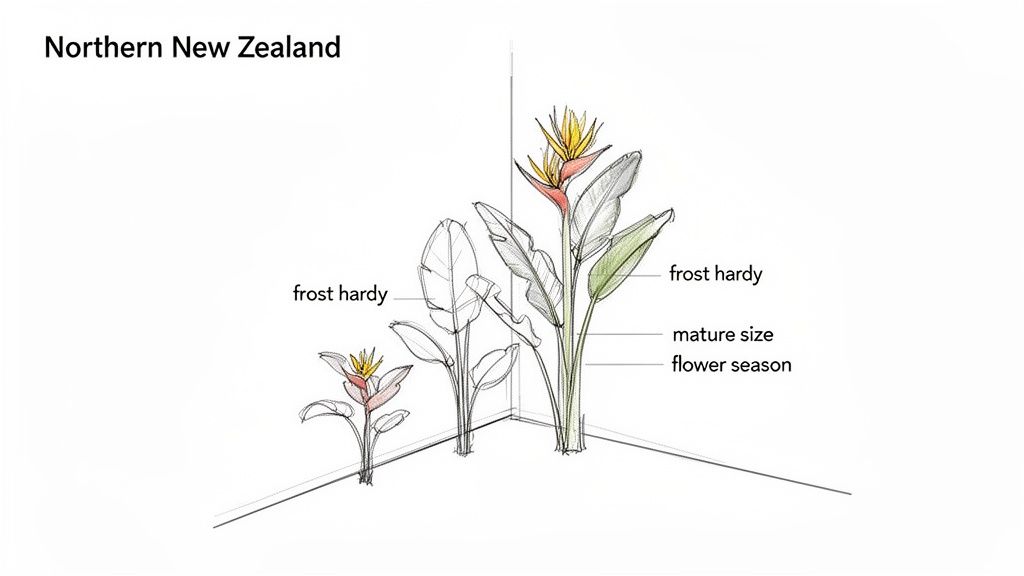
Finding the perfect heliconia for your patch of paradise in Northern New Zealand really just comes down to one thing: choosing the right variety. This guide cuts straight to the chase, showing you which cultivars don't just survive but properly flourish in our one-of-a-kind subtropical climate.
Let's bust the myth that heliconias are strictly for the tropics. We'll introduce you to some incredible hybrids that have been specifically cultivated to handle our conditions, setting you up to create that lush, exotic sanctuary you've been dreaming of, right here at home.
Key Factors for Success
Before we jump into our top picks, it’s worth understanding what makes a heliconia a good fit for our gardens. It’s pretty straightforward, really.
- Frost Tolerance: This is the big one. Even a light frost can scorch the leaves and put a stop to flowering. Choosing hardier varieties isn't just a suggestion; it’s essential.
- Mature Size: Heliconias can range from compact 1-metre plants to absolute giants towering over 5 metres. Knowing the plant's ultimate size and matching it to your space will save you a world of headaches later on.
- Flowering Season: We're looking for cultivars that will put on their best show during our late spring, summer, and autumn (roughly November to April).
Pioneering work by Kiwi breeders has completely changed the game, dramatically expanding the options available to local gardeners. These efforts are all about creating plants that are not just beautiful but tough enough for our specific climate.
This dedicated breeding has been a massive breakthrough. For instance, breeders up in Northland have poured over 20 years into developing hybrids suited to local conditions. One of their success stories, the 'NZ Fireflash Hybrid', boasts an impressive 85% survival rate in unheated greenhouses—a huge leap from the 40% rate you might see with some tropical imports. These dwarf cultivars are just perfect for Auckland backyards.
For a deep dive into all the growing requirements, make sure you check out our comprehensive Heliconia NZ Growing Guide.
Why Our Climate Demands Smarter Plant Choices
Before you even think about which heliconia to bring home, it’s worth getting real about the unique challenges of a Northern New Zealand garden. Our climate can be famously unpredictable—that old ‘four seasons in one day’ saying isn't just a myth—and this is precisely why a bit of thought upfront makes all the difference.
Choosing the right heliconia is a bit like picking the perfect jacket for a tricky day. You need something that can handle a sudden cool snap just as well as a bout of intense humidity. Not all heliconias are created equal, and a variety that thrives in the true, year-round heat of the tropics might really struggle with our cooler winter nights. This is where selecting the best heliconia cultivars for Northern NZ becomes less of a friendly suggestion and more of a non-negotiable for a thriving garden.
Understanding Your Garden Microclimate
One of the biggest game-changers for success is getting to know your garden’s specific microclimate. This just means the small pockets of unique climate conditions on your own property, which can be worlds away from the general regional forecast. A sheltered, north-facing courtyard in Auckland, for example, is a totally different growing environment to an exposed hillside garden up in Northland.
These subtle differences have a huge impact. Think about it: a brick wall that soaks up the sun all day will radiate that heat back at night, creating a warm pocket that can easily protect a plant from a light frost. On the flip side, a low-lying spot in your garden where cold air settles can be several degrees colder than everywhere else.
Getting your head around these little nuances is the secret to unlocking your garden's true potential. Once you start observing how sun, wind, and shade move across your space, you can create the perfect spot for tropicals to not just survive, but properly flourish.
The Frost Factor
Even in the relatively mild north, the odd light frost can be the single biggest hurdle for growing heliconias. Just one cold snap can scorch leaves, ruin developing flower bracts, and set a plant back for an entire season. While an established plant might bounce back, repeated frost damage weakens it over time.
This is exactly why choosing your plant wisely is so important. The hardiest cultivars have been selected or bred specifically to cope with these brief temperature dips. By picking a plant with proven resilience, you give yourself a massive head start and dodge the disappointment of seeing your tropical paradise knocked back by a single cold winter morning. Learning to read your garden’s unique environment empowers you to make an informed choice that will lead to a stunning, low-stress tropical display for years to come.
Top Performing Heliconias for Garden Beds
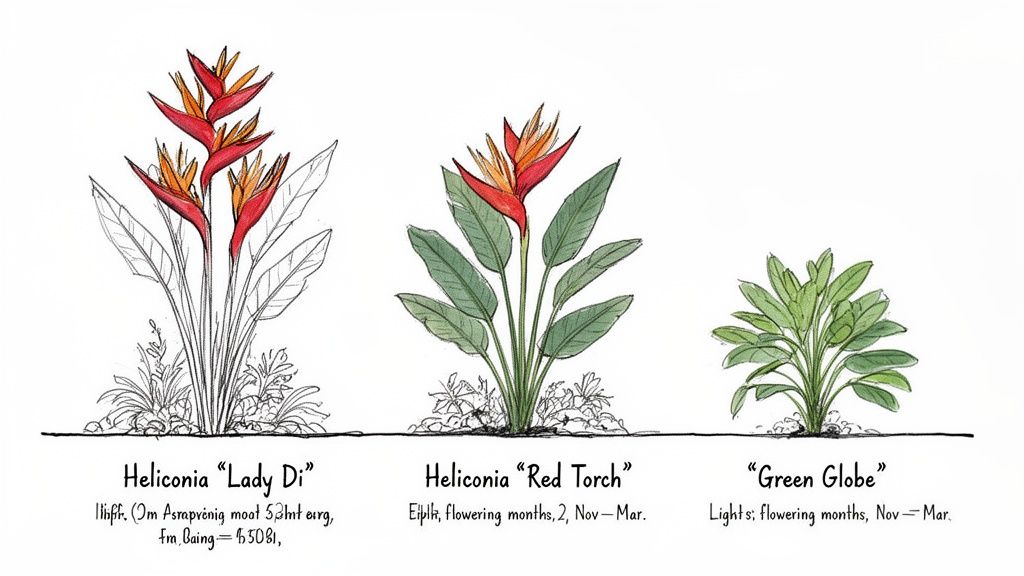
Alright, this is the bit we all love—let’s talk about the absolute stars of the show. These are the heliconias that have proven themselves time and again in Northern New Zealand gardens, thriving when they can get their roots down into the soil. They're the reliable performers, giving you that jaw-dropping tropical look without the constant worry.
We’ve handpicked a few standouts that we know you can count on. In each profile, we’ll get into the nitty-gritty: how they grow, when they flower, and what they need to really put on a show. Think of this as your shortcut to finding the perfect plant to create a lush border or a seriously effective privacy screen.
Heliconia psittacorum 'Lady Di': The Elegant Powerhouse
If there’s one heliconia that has truly earned its place in Kiwi gardens, it’s ‘Lady Di’. This is a clumping variety, so it won’t run wild, and it's loved for its stunningly elegant bracts. The colours are a soft, graceful blend of pink and cream—a more subtle take on the tropical vibe compared to its fiery cousins.
But don’t let that delicate look fool you. ‘Lady Di’ is an absolute trooper and flowers its heart out. It generally grows to a very manageable 1.5 to 2 metres, making it perfect for tucking into garden borders or using as a feature plant that won't swallow your whole backyard. Best of all, its flowering season is incredibly generous, often kicking off in late spring (around November) and powering right through summer into early autumn. That's months and months of colour.
'Lady Di' really is the whole package. It delivers that exotic beauty we're all after, but it’s practical and tough enough for our conditions. It’s compact, it’s a prolific flowerer, and it has the resilience we need up here.
It’s not just us saying it, either. Local trials up in Northland have confirmed just how well it performs, with established clumps pushing out an average of 28 flower spikes each season. A mature plant can easily spread to cover 5 square metres or more, which makes it a fantastic choice for creating a dense, leafy hedge in places like Auckland.
At-a-Glance Guide to Top Heliconia Cultivars
Feeling a bit overwhelmed by the options? Don't worry. We've put together this quick comparison table of our recommended heliconias to help you find the perfect match for your garden at a glance.
| Cultivar Name | Average Height | Frost Tolerance | Flowering Season (NZ) | Best For |
|---|---|---|---|---|
| 'Lady Di' | 1.5 - 2 metres | Low | Nov - April | Borders, Feature Planting |
| H. subulata | 2 - 3 metres | Moderate | Dec - March | Privacy Screens, Fencelines |
| H. tortuosa | 1.5 - 2 metres | Low | Dec - March | Architectural Interest |
Each of these brings something special to the garden, from the sheer flower power of 'Lady Di' to the structural drama of tortuosa. It all comes down to the look you're going for and the job you need the plant to do.
Heliconia subulata: The Tough Privacy Screen
If you're after something taller and more robust to block out the neighbours or hide that old shed, Heliconia subulata is a brilliant choice. This clumping variety is a real workhorse. It’s known for being tough and can handle slightly cooler temperatures than many of its purely tropical relatives.
It typically gets up to 2 to 3 metres tall, and its large, banana-like leaves create a solid wall of green. The flowers are that classic 'lobster-claw' style you picture when you think of heliconias, with vibrant red and yellow bracts that show up reliably all through summer.
- Best Use: Perfect for planting along a fence line for a fast-growing, dense screen.
- Growth Habit: Forms a tight, upright clump that gives you fantastic coverage.
- Soil Needs: Loves rich, free-draining soil. Be sure to mix in plenty of compost or organic matter when you plant.
Heliconia tortuosa: The Curvy Contender
Looking for something a bit different? A real conversation-starter? Heliconia tortuosa is your plant. Its name gives you a clue—the flower bracts have a unique, twisted shape, in a wild mix of red, yellow, and green. It adds a wonderful architectural feel to any tropical planting.
It grows to a similar height as 'Lady Di', around 1.5 to 2 metres, and is another well-behaved clumping variety. It’s happiest in a warm, sheltered spot with dappled sunlight, where you can really appreciate its unusual flowers. To get a closer look at this unique beauty, you can check out the Heliconia tortuosa available through our sellers. Its quirky form makes it a must-have for any serious collector.
Growing Stunning Heliconias in Pots and Small Spaces
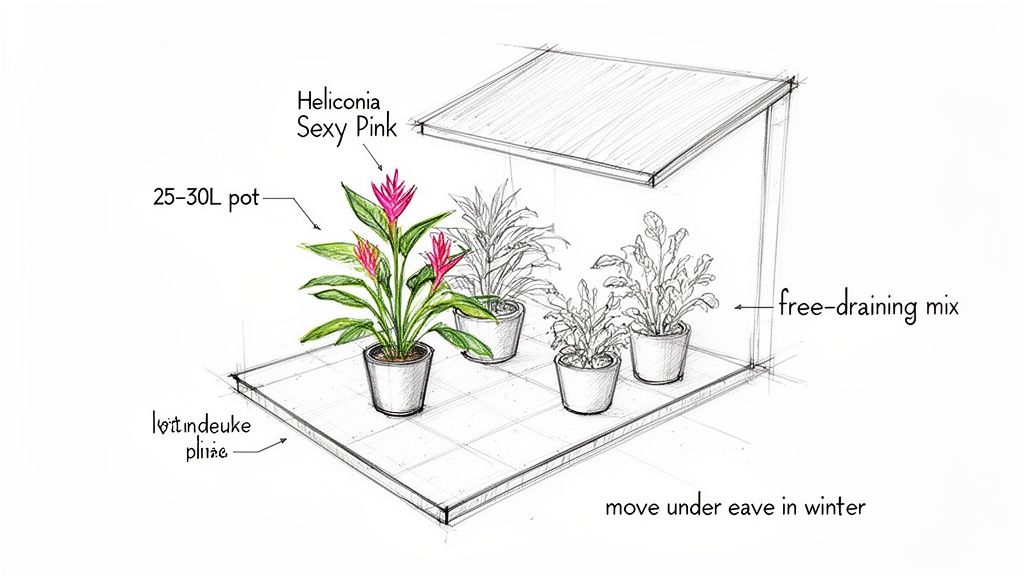
You absolutely don't need a sprawling garden to create your own slice of tropical paradise. For those of us with a sunny deck, a small courtyard, or any kind of limited space, growing heliconias in pots is the perfect answer. It gives you the ultimate flexibility to move your plants around, chasing the sun or bringing them into shelter for winter.
Container gardening really opens up a world of possibilities, especially for renters and small-space gardeners. The real secret is choosing dwarf cultivars that are naturally happy with a more restricted root run. With the right plant and a little love, you can get that incredible jungle vibe happening on any patio or balcony.
Champion Cultivars for Containers
When you’re picking a heliconia to grow in a pot, you want something compact and well-behaved that won’t try to take over its new home too quickly. Two standout performers are celebrated for their manageable size and fantastic flowering, making them ideal for container life.
- Heliconia psittacorum 'Andromeda': A super popular and vibrant choice, 'Andromeda' brings a fiery explosion of red and orange to any space. It usually stays under 1.5 metres in a pot and flowers its heart out all through the warmer months.
- Heliconia 'Sexy Pink': This one is the absolute hero for potted displays. As a true dwarf, it grows to a neat 1.0-1.5 metres and is famous for its stunning, upright pink and white bracts. Its non-invasive, clumping habit means it behaves beautifully in a container.
Choosing a dwarf variety isn't just about size; it's about performance. These compact cultivars are bred to channel their energy into producing an abundance of flowers rather than excessive leafy growth, giving you maximum impact in a minimal footprint.
Heliconia 'Sexy Pink': A Closer Look
Heliconia 'Sexy Pink' is a real standout for Kiwi container gardeners. Recent trials up in Whangārei, mirroring guidelines from the Pacific Bulb Society, have shown just how well it performs in our climate. Over a four-year period, it consistently pumped out around 26 flower spikes per clump—a whole 20% more than some of the medium-sized varieties.
It's perfectly suited to the large 40-50L pots we sell through Jungle Story, making the transition from an indoor feature to an outdoor star totally seamless.
Setting Up for Potted Success
Getting the basics right from day one is the key to a thriving potted heliconia. The right pot and potting mix will set your plant up for a long and healthy life.
- Choose the Right Pot: Go for a large container, at least 40-50 litres, to give the rhizomes plenty of room to expand. Excellent drainage is completely non-negotiable, so make sure it has lots of holes in the bottom.
- Create the Perfect Mix: Heliconias hate having 'wet feet'. You can whip up a fantastic free-draining mix by combining a quality potting mix with about 20% orchid bark and 10% pumice. This recipe keeps the soil aerated and stops it from getting waterlogged.
- Overwintering Your Treasure: This is where pots are brilliant. As winter rolls in, you can simply move your heliconia to a sheltered spot, like under the eaves of the house or into a greenhouse, to protect it from frost.
For a bit more inspiration on container gardening, have a look at our guide on choosing the best plants for outdoor pots in NZ.
A Seasonal Care Guide for Thriving Heliconias
Getting your heliconia in the ground is just the beginning of the adventure. The real secret to a garden overflowing with those incredible, bird-like flowers is consistent care, and it all starts with the soil.
Think of it this way: you’re building a five-star home for your plant’s roots. Heliconias absolutely demand a rich, well-draining soil. This is non-negotiable. Waterlogged soil, especially during our cool, wet winters, is the fastest way to rot their precious rhizomes.
Before you even think about planting, work generous amounts of good quality compost and organic matter through your garden bed. This isn't just about food; it improves the soil's entire structure, helping it hold onto moisture without becoming a bog. It’s the perfect balance these tropical beauties crave.
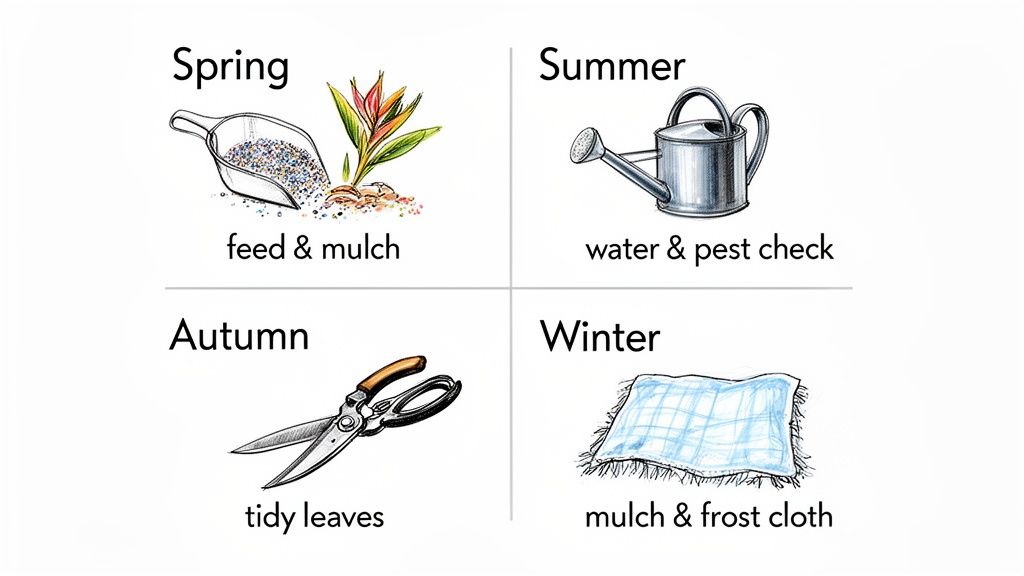
Your Southern Hemisphere Heliconia Calendar
The best way to get spectacular results is to sync your gardening chores with our local seasons. Each one brings a different focus, keeping you one step ahead of your heliconia’s needs.
-
Spring (September - November): As the ground warms up and you spot those first new shoots, it’s time to get things moving. Give them a balanced slow-release fertiliser and top up the mulch. This gives them the kick-start they need for a massive season of growth.
-
Summer (December - February): This is go-time. Water deeply and regularly, especially during those long, dry spells. The goal is to keep the soil consistently moist, but never, ever soggy. Keep an eye out for pests like mealybugs and check the leaves for fungal spots after humid weather.
-
Autumn (March - May): You'll notice growth starting to slow down now. It’s a good time for a tidy-up. Snip off any old, yellowing leaves and cut back spent flower stems right to the base. This helps with airflow and pushes the plant's energy back down into the rhizomes for winter.
-
Winter (June - August): Time to tuck them in. A thick blanket of mulch around the base of younger or more exposed plants will provide some much-needed insulation. If a rare frost is on the cards, throwing some frost cloth over them for the night can make all the difference.
Handling Common Garden Pests
While heliconias are generally pretty tough, they can sometimes attract a few unwanted guests. You might spot mealybugs, which look like little bits of white fluff, clustered on new growth. Fungal spots can also pop up on the leaves when it’s been really humid.
The best defence is always a healthy plant. A strong, well-fed heliconia is naturally much better at shrugging off pests and diseases. Regular checks mean you’ll spot any trouble early before it turns into a real battle.
For most minor issues, a simple organic spray is all you need. A diluted mix of neem oil or a good insecticidal soap will see off mealybugs without harming the good bugs in your garden. Making sure there's good airflow around your plants is also a brilliant way to prevent fungal problems from taking hold.
Follow these simple seasonal steps, and you’ll be well on your way to becoming a confident heliconia grower, rewarded with a stunning show year after year.
Your Heliconia Questions, Answered
Growing these tropical showstoppers is an adventure, and it’s natural to have a few questions pop up along the way. We get it. Here are some of the most common queries we hear from fellow gardeners in Northern New Zealand, with straightforward answers to help you get the best out of your plants.
Think of this as your go-to guide for those "what if" moments. From flowering timelines to making your garden a haven for native birds, we've got you covered.
How Long Until My New Heliconia Flowers in Auckland?
It’s tempting to want those incredible flowers straight away, but a little patience goes a long way. When you plant a healthy rhizome in spring (think September-October), it spends its first year focusing on building a strong root system and pushing up lush, leafy growth.
You can usually expect the first spectacular flowers to show up in its second summer, often from December through March. The exception? If you start with a more mature, potted plant, you might just get lucky with flowers in your very first season. To really get things humming, give them a consistent feed with a high-potassium fertiliser during the growing months—it’s the secret to more prolific blooms.
Can I Grow Heliconias South of Auckland?
Absolutely, but you’ll need to be a bit more strategic. While the subtropical north is their happy place, heliconias can put on a fantastic show in sheltered spots around Hamilton, Tauranga, and similar climates.
Success in cooler zones really boils down to two things: picking the hardiest cultivars you can find and being diligent with frost protection. These aren't just suggestions; they're essential for anyone pushing the boundaries of where these tropicals can grow.
Tucking them against a north-facing wall that soaks up the sun's heat is a great start. When a cold snap is forecast, you'll need to be ready with frost cloth. For the most reliable results, growing in large containers is often the smartest move. This way, you can haul them under an eave or even into a garage during the absolute coldest parts of winter.
Do Heliconias Attract Native New Zealand Birds?
They sure do! The vibrant, nectar-heavy flowers are like a dinner bell for our native birds. The beautiful Tūī and Bellbirds (Korimako) find them completely irresistible.
Planting heliconias isn't just about adding that jaw-dropping tropical vibe to your garden; you're also doing a great thing for local wildlife. By providing a reliable food source, especially when they flower from late summer into autumn, you're helping sustain our precious native bird populations.
What Are the Best Companion Plants for a Tropical Look?
Creating that immersive, jungle-like feel is all about layering textures and forms. The key is to pair your heliconias with other plants that thrive in similar conditions—rich, moist soil and a bit of shelter from the harshest sun.
- Canna Lilies: Their bold foliage and equally vibrant flowers are a no-brainer. They add another fantastic layer of colour and texture.
- Elephant Ears (Alocasia and Colocasia): Nothing says 'tropical' like the huge, dramatic leaves of these plants. The contrast is simply stunning.
- Ornamental Gingers (Alpinia): They love the same conditions and bring their own unique flowers and often a beautiful fragrance to the party.
- Bromeliads and Ferns: These are perfect for tucking in underneath as a lush, green groundcover, really filling out the space.
To add some vertical height and complete the picture, consider adding a few Bangalow or Kentia palms. Before you know it, you'll have a multi-layered oasis that feels like a true tropical escape.
Ready to create your own tropical paradise? At Jungle Story, you can explore a stunning selection of the best heliconia cultivars for Northern NZ, alongside a huge range of companion plants. Find the perfect additions for your garden and have them delivered right to your door. Begin your jungle journey today at https://junglestory.co.nz.