
If you're a Kiwi gardener on the hunt for a plant that truly makes a statement, Bougainvillea 'Carmencita' is hard to beat. It’s a variety celebrated across New Zealand for its absolutely spectacular show of deep, crimson, double-flowered bracts. With its vibrant tropical feel and surprisingly tough nature, it’s a perfect addition to all sorts of garden styles.
Let’s dive into everything you need to know about growing this stunner right here in NZ.
Discover Bougainvillea Carmencita The Star of Your NZ Garden
Picture your garden, but with a cascading waterfall of rich, velvety crimson. 'Carmencita' isn't just another plant; it's a living centrepiece, guaranteed to turn heads and bring a splash of the exotic to your backyard.
What really sets it apart are the clusters of double bracts. These aren't true flowers but modified leaves that look like delicate paper creations. This feature gives it a much denser, more luxurious look compared to the single-flowered types you might be used to.
This unique trait is what makes it such a prized climber. While other plants have flowers that come and go in a flash, the long-lasting bracts of 'Carmencita' put on a breathtaking show that can last for months, especially during our warmer seasons.
To give you a quick overview, here's a snapshot of what makes this bougainvillea variety so special for local gardens.
Bougainvillea Carmencita At a Glance
| Attribute | Details for NZ Gardeners |
|---|---|
| Colour | Deep, velvety crimson-red double bracts. |
| Growth Habit | Vigorous climber or can be kept as a potted shrub. |
| Foliage | Bright green, providing a lush backdrop. |
| Sunlight | Needs a full sun position to thrive and flower well. |
| Hardiness | Best suited for subtropical climates (Northland, Auckland) but grows well in sheltered, frost-free spots further south. |
| Soil | Requires well-draining soil; dislikes "wet feet." |
| Watering | Drought-tolerant once established. Water deeply but infrequently. |
| Flowering Season | Prolific flowering from late spring through to autumn. |
This table shows just how well-suited 'Carmencita' is to the Kiwi gardening lifestyle—it’s all about high impact for relatively low effort.
Why Carmencita Is a Winner in New Zealand
'Carmencita' has proven time and again that it’s a resilient and rewarding choice for gardeners up and down the country. It absolutely loves the subtropical climates in the upper North Island, but don't count it out further south – it can flourish in a sheltered, sunny spot just about anywhere.
Here's why it's become such a firm favourite:
- Knockout Visuals: That deep crimson colour and the double-bract formation deliver an intensity that’s simply unmatched.
- Easy-Going Nature: Once it finds its feet, it's remarkably drought-tolerant and doesn't demand a lot of fuss.
- Grows Your Way: You can train it to climb a wall, scramble over a pergola, cover a fence, or even keep it as a stunning potted specimen on a sunny deck.
First introduced to New Zealand in the early 20th century, 'Carmencita' has long been a cherished part of our gardens. Horticultural records show it stands out for its robust growth, particularly in the North Island. In fact, a 2019 survey found that among Auckland gardeners growing bougainvillea, 12% chose 'Carmencita' for its solid hardiness and its knack for bouncing back from light frosts.
For anyone wanting a garden with year-round interest and jaw-dropping seasonal colour, Bougainvillea 'Carmencita' is a must-have. Its ability to blanket a structure in a sea of red makes it one of the most effective and rewarding climbers you can grow.
For more detailed advice, our comprehensive bougainvillea care guide for NZ conditions has plenty of extra tips to help your plant thrive. Think of this plant as more than just a purchase; it’s a long-term investment in your garden’s beauty.
Finding the Perfect Spot for Your Bougainvillea
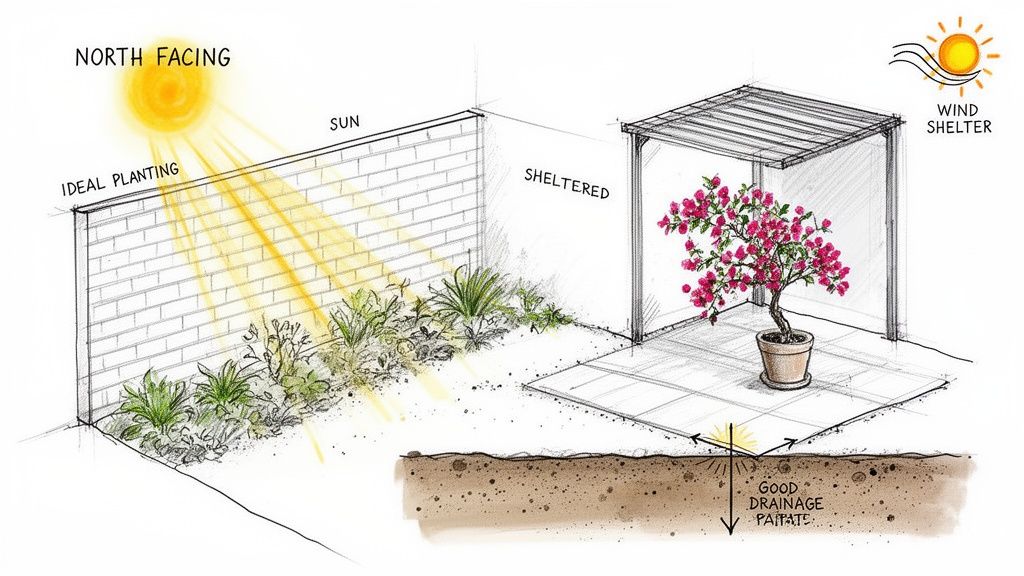
The real secret to a spectacular Bougainvillea 'Carmencita' isn’t in a bag of fertiliser—it’s all about location, location, location. Think of your garden not as one climate, but as a collection of tiny microclimates. Your mission is to find the single warmest, sunniest pocket you have.
This plant absolutely lives for the sun. A spot that gets at least six hours of direct, unfiltered sunlight every day is non-negotiable if you want to see those magnificent crimson bracts. Without that much sun, you'll get plenty of lush green leaves but very little of the colour you’re really after.
Look for areas that naturally soak up and radiate warmth. A north-facing brick or concrete wall is the ultimate real estate for a bougainvillea. The wall acts like a giant heat bank, absorbing the sun’s energy all day and releasing it slowly overnight. This protects the plant from chilly temperature drops and encourages vigorous new growth.
Understanding NZ Climate and Hardiness
New Zealand’s diverse climate means your approach to planting a bougainvillea carmencita nz will change depending on where you live. Success really hinges on knowing your local conditions and choosing a site that gives your plant the best possible advantage.
In warmer, subtropical regions like Northland, the Bay of Plenty, and Auckland, you can generally plant 'Carmencita' straight into the ground with confidence. These areas provide the consistent warmth and mild winters that bougainvilleas crave, letting them establish quickly and reach their full potential.
Further south, in places like Canterbury or Otago, success takes a bit more strategy. While you can still plant in the ground in the sunniest, most sheltered spots (like against that north-facing wall), growing it in a container is often the safer bet. A large pot gives you two key advantages:
- Mobility: You can shift the pot around to follow the sun or bring it under cover during a harsh frost.
- Soil Control: It’s much easier to create the perfect free-draining soil mix in a container.
Choosing the right spot is about more than just sunlight; it’s about creating a personal paradise for your plant. By observing your garden's unique patterns of sun, heat, and shelter, you can give your 'Carmencita' the five-star treatment it needs to put on a truly unforgettable show.
Creating the Ideal Soil Environment
Bougainvilleas have one major dislike: wet feet. They come from arid regions, so their roots are adapted to soil that drains away water quickly. Persistently soggy ground is a fast track to root rot, which is one of the few things that can seriously harm this otherwise tough plant.
If your garden has heavy clay soil, which is common across New Zealand, you’ll need to amend it. Dig a hole much larger than the root ball and mix in generous amounts of compost and pumice or coarse sand. This improves the drainage and aeration, giving the roots room to breathe.
The ideal soil is slightly acidic, with a pH between 5.5 and 6.5. Most Kiwi garden soils are in a suitable range, but adding compost will help create this perfect balance naturally. Good drainage, however, is the most critical factor for a happy plant.
According to New Zealand planting guides, the best time to get your bougainvillea in the ground is from September to February. This window aligns with an 85% successful establishment rate in coastal spots like the Bay of Plenty, where the full sun can boost flowering by up to 40%. As home gardening grows—Stats NZ noted a 15% rise in ornamental plant sales in 2023—demand for stunning, low-maintenance climbers like 'Carmencita' is climbing, too. You can learn more about how New Zealand gardeners are getting amazing results by exploring local insights.
Your Step-by-Step Planting and Care Routine
So, you’ve picked the perfect sunny spot. Now it’s time to get your Bougainvillea 'Carmencita' settled into its new home. This is the moment where a little extra care really pays off, setting the stage for years of stunning colour. The process itself is pretty straightforward, but a gentle touch is the secret to getting it right.
If there's one thing to remember about bougainvilleas, it’s that they have an incredibly fine and sensitive root system. They really, really hate being disturbed. Unlike a tough old shrub you can just yank out of a pot, your bougainvillea needs to be handled delicately to avoid transplant shock, which can seriously stunt its growth.
Planting Your Carmencita with Care
The main goal here is to get the plant from its nursery pot into the ground with as little fuss as possible. Think of it like moving a sleeping baby from their car seat to the cot—the smoother the transition, the better.
Here’s a simple process to follow:
- Dig the Right Hole: Prepare a hole that's about twice as wide as the pot, but no deeper. This gives the roots plenty of room to spread out sideways into loosened soil.
- Free the Plant Gently: This is the crucial step. Don't pull the plant out. Instead, take some snips or a sharp knife and carefully cut down the sides of the plastic nursery pot. Let the container fall away, leaving the root ball completely intact.
- Position It Perfectly: Place the undisturbed root ball right in the centre of the hole. You want the top of its soil to be either level with or just slightly above the surrounding ground.
- Backfill and Settle In: Fill the hole back in with your amended soil, patting it down gently. Give it a good, deep watering to settle the soil and get rid of any air pockets around the roots.
Mastering the Art of Watering
When it comes to watering your bougainvillea carmencita nz, less is most definitely more. This is probably the biggest secret to a jaw-dropping flower display. These plants really thrive on a bit of tough love and put on their best show when their roots are kept on the dry side.
Your best bet is a 'deep soak and dry out' cycle. Water the plant thoroughly until the soil is completely saturated. Then, and this is the important part, let the top few centimetres of soil dry out completely before you even think about watering again. This little bit of stress is the trigger that tells the plant, "Okay, time to stop making leaves and start making those incredible crimson bracts!"
"Overwatering is the number one mistake Kiwi gardeners make with bougainvillea. It encourages lush, leafy growth at the expense of flowers. By letting the soil dry out, you're essentially nudging the plant to perform its spectacular floral show."
Feeding for Flowers, Not Foliage
Feeding your 'Carmencita' is all about giving it the right kind of fuel. The golden rule is simple: use a fertiliser that is low in nitrogen (N) and high in potash (potassium, K). Nitrogen just encourages leafy green growth, which is the last thing you want in excess. Potash, on the other hand, is the magic ingredient that powers flower and bract production.
Feed your plant with a specialised flower-booster fertiliser once in early spring as new growth starts, and then again in the middle of summer. Slow-release granules or a liquid feed mixed in a watering can both work wonders.
'Carmencita' has become a real star in New Zealand's gardening scene. Recent horticultural data shows a 22% surge in flowering shrub sales between 2021 and 2025. Expert advice confirms that potash-rich fertilisers can lead to 2.5 times more flowers, while mixing compost into the soil boosts first-year establishment rates from 65% to a massive 95%.
Pruning for Shape and Vigour
Pruning is your final tool for encouraging an amazing display. The main trim should happen in late winter or very early spring, right before the new season's growth kicks off. This is your chance to cut out any dead or weak wood and trim the whole plant back to encourage a bushier, more compact shape with lots of flowering stems.
You can also do a bit of light "tip pruning" throughout the flowering season. Once a big flush of colour is over, just snip off the ends of the shoots that have flowered. This often encourages the plant to have another go, keeping the spectacular show running for even longer. Understanding when to act is key to a thriving garden; exploring insights on the best time to plant other popular ornamentals can really round out your gardening knowledge.
Mastering Pruning to Encourage Abundant Blooms
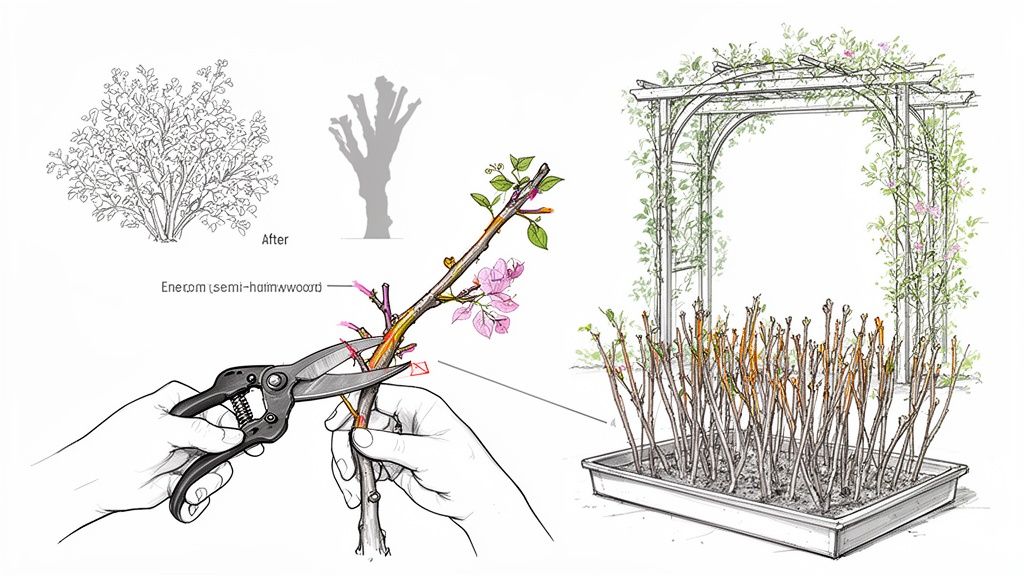
Think of pruning as a friendly chat with your Bougainvillea 'Carmencita'. It’s not about just hacking it back; it’s about making smart, thoughtful cuts that guide the plant’s energy where you want it to go. Get it right, and your reward is an absolute explosion of crimson colour.
The right snip at the right time is the secret that separates a scraggly, sparse vine from a dense, flower-smothered masterpiece.
The main pruning event happens in late winter or the very first days of spring, just as the plant is stirring from its winter rest. For most of us in New Zealand, this is around August or early September. Timing it this way lets you shape the plant and clear out any dead or weak wood before it wastes precious energy on new growth in all the wrong places.
Different Pruning Goals for Your Carmencita
How you approach pruning really depends on what you want to achieve. Are you trying to tame a wild thing, train a graceful climber, or just encourage a fuller, bushier shape? Each goal needs a slightly different technique.
-
The Hard Prune (Renovation): If you've got an old, woody, or seriously overgrown 'Carmencita', a hard prune can work wonders. Cut the main stems back by at least one-third to a half. It feels brutal, I know, but this shock to the system encourages a flush of vigorous new growth from the base, giving you a much healthier and more vibrant plant.
-
Shaping and Training: To train your bougainvillea over a pergola, fence, or archway, you need to be more selective. Pick out the strongest, best-placed stems to create your main framework and gently tie them into place. Prune back any side shoots that are growing in the wrong direction to keep the structure looking tidy and open.
-
Tip Pruning (Pinching): This is the key to getting a dense, bushy plant that’s loaded with flowers. After each big flowering flush, simply snip off the last few centimetres of the stems that just bloomed. This simple act encourages the plant to branch out, creating more stems—and therefore, many more flowers for the next show.
The Rewarding Art of Propagation
One of the best parts of gardening is making new plants from one you already love, and 'Carmencita' is incredibly cooperative. It’s a fantastic way to get more plants for your own garden or to share with friends. Here in New Zealand, the best time to take cuttings is in late summer or early autumn (March to April), once the season's new growth has had a chance to firm up a bit.
Taking cuttings is such a simple way to multiply your favourite plants. A single Bougainvillea 'Carmencita' can become the source for an entire fence line of vibrant colour, all for free.
Here’s the step-by-step for propagating your bougainvillea carmencita nz from semi-hardwood cuttings:
- Select Your Stems: Look for healthy, strong stems from this season's growth. You want something that feels firm but isn't old and woody—about the texture of a pencil is perfect.
- Take the Cuttings: Using clean, sharp secateurs, cut 15-20 cm lengths from the stems. Make each cut just below a node (that little bump where a leaf grows from).
- Prepare the Cutting: Strip off all but the top two or three leaves. This reduces moisture loss and helps the cutting put all its energy into growing roots.
- Plant and Wait: Dip the bottom end of the cutting into rooting hormone powder and pop it into a pot filled with a free-draining mix (a 50/50 blend of potting mix and perlite is ideal). Water it in well, then place the pot in a warm, sheltered spot away from direct sun.
Be patient, and soon enough your cuttings will develop roots and start to sprout. You'll have brand new 'Carmencita' plants to carry on the colourful legacy.
Creative Ways to Design with Carmencita

Let's start thinking about 'Carmencita' a bit differently. This isn't just another plant to stick in a corner—it’s a living, breathing design tool. With its bold architectural shape and absolute explosion of colour, it has the power to completely reinvent a space.
With a bit of creative thinking, you can use its natural climbing habit to create living art in your own backyard. Think of it as painting with plants: the deep crimson bracts are your palette, and your walls, fences, and pergolas are the canvas.
Vertical Masterpieces and Living Walls
The most classic way to use a bougainvillea carmencita nz is to let it climb, and for good reason. Its vigorous growth can quickly transform a bland or uninspiring feature into the absolute star of the show.
- Breathtaking Entrances: Train your 'Carmencita' to scramble up and over a doorway, archway, or porch. This creates an unforgettable frame that adds instant drama and serious curb appeal.
- Living Privacy Screens: That plain wooden fence you’ve been meaning to do something about? Let 'Carmencita' turn it into a dense, vibrant wall of colour. It offers fantastic privacy from the neighbours and looks incredible while doing it. Its thorns even help it grip and climb all on its own.
- Cascading Waterfalls of Colour: If you've got a retaining wall or a terraced garden, plant 'Carmencita' at the top and let it spill over the edge. The effect is stunning, creating a waterfall of crimson that softens hard landscaping lines.
The plant’s climbing prowess is no secret. By 2020, an impressive 35% of Northland properties featured bougainvillea walls, with 'Carmencita's' thorny grip allowing it to cover 10-15 square metres per plant in just a couple of seasons. For a deeper dive into going vertical, check out our guide on the best climbing plants in NZ.
Perfect Patios and Container Gardening
No garden? No worries. 'Carmencita' is brilliant in a pot, which means you can bring that sun-drenched, tropical vibe to decks, patios, and even sunny apartment balconies. Growing it in a container gives you total control over its size and, crucially, its soil conditions.
Go for a large, heavy pot to stop it from toppling over as it gets bigger. A good quality potting mix with plenty of pumice added will give it the excellent drainage it craves. Just remember to find the sunniest spot you possibly can—potted plants need just as much light to perform.
In a pot, 'Carmencita' often takes on a more controlled, almost dwarf-like habit, usually reaching about 1m x 1m. This makes it the perfect size for smaller spaces, delivering a concentrated burst of colour right where you want it.
Smart Companion Planting
To pull your garden design together, pair 'Carmencita' with plants that complement its look and share its love for sun and drier conditions. This is the secret to creating a cohesive, water-wise garden bed that looks amazing with minimal fuss.
Here are a few ideas to get you started:
- Grasses: Ornamental grasses like Miscanthus or some of our smaller native tussocks provide a lovely, soft texture that contrasts beautifully with the bougainvillea’s bold colour.
- Succulents: A cluster of agaves, aloes, or echeverias at the base of a climbing 'Carmencita' looks fantastic, really leaning into that dry, sun-baked aesthetic.
- Mediterranean Herbs: Plants like rosemary and lavender not only thrive in the same conditions but their beautiful fragrance and silvery foliage make 'Carmencita's' crimson bracts pop even more.
For those keen to take their landscaping skills to the next level, you might even consider a certificate in garden design to truly master these design principles.
A Seasonal Care Guide for New Zealand Gardeners
Timing is everything with bougainvillea, and the best way to keep your 'Carmencita' looking incredible is to tune your care into New Zealand’s seasons. Forget the generic advice from the Northern Hemisphere; this guide is all about our local climate, making sure you’re giving your plant exactly what it needs, when it needs it.
Thinking seasonally helps you stay one step ahead. You’ll know when to push for new growth in spring, how to maximise the summer colour, and when to protect your plant from a winter chill. It makes the whole process feel natural and much more successful.
Spring: The Wake-Up Call (September – November)
As the days get longer and the soil starts to warm up, your 'Carmencita' begins to stir. This is its official wake-up call, and you'll see the first signs of new life. Now’s the time to give it the first proper feed of the season.
Choose a fertiliser that’s low in nitrogen and high in potash. This is the secret to encouraging a massive flush of flowers, not just a bunch of leafy green growth. Think of it as the energy boost it needs for that first big performance. It's also a great moment for a final tidy-up prune before the plant pours its energy into producing new shoots.
Summer: The Main Event (December – February)
New Zealand's summer is when your bougainvillea carmencita nz becomes a superstar, putting on its most dazzling display. Your main job now is to be smart with your watering. The trick is to let the soil dry out quite a bit between deep, thorough soakings. This little bit of water stress is actually what triggers the plant to produce the most vibrant bracts.
If you’re in a particularly hot and dry spot like Hawke's Bay or parts of Canterbury, keep a close eye on any plants in pots, as they’ll dry out much faster. Fight the urge to give them a little water every day. A good drench followed by a dry spell is far better for getting that intense crimson colour.
The summer goal is to strike a perfect balance: enough water to keep the plant healthy and thriving, but not so much that it gets lazy and focuses on leaves instead of its stunning flowers.
Autumn: Winding Down (March – May)
Once the peak summer show starts to wind down, it’s time to get your 'Carmencita' ready for the cooler weather. Autumn is the perfect opportunity for the main post-flowering prune.
Giving it a good trim now achieves two things. First, it keeps the plant looking neat and shapely. More importantly, it encourages the growth of new wood that will carry next year's flowers. If you're keen to make more plants, this is also the ideal time to take semi-hardwood cuttings. As the weather cools, you can start watering less often.
Winter: Time to Rest (June – August)
Winter is downtime for your bougainvillea. Its growth will slow right down, and your main task is simply to protect it from the cold. This is absolutely critical in any frost-prone area. If your 'Carmencita' is planted in the garden, be ready to cover it with frost cloth on cold nights. For potted plants, the fix is easy: just move them to a sheltered spot, like up against a warm house wall or under the eaves of the roof.
Watering during winter should be minimal—just enough to stop the soil from turning to dust. Overwatering in cold, damp soil is the quickest route to root rot. Let the plant have its rest; it’s storing up energy for that explosive burst of colour come spring.
To make it even simpler, here's a quick reference table breaking down the key tasks for your Carmencita month by month, tailored for the New Zealand year.
NZ Seasonal Care Guide for Bougainvillea Carmencita
| Season (NZ) | Key Focus | Watering Schedule | Feeding & Pruning Tasks |
|---|---|---|---|
|
Spring (Sep-Nov) |
Awakening & New Growth | Increase watering as soil warms. Water deeply when the top few centimetres of soil feel dry. | Apply a low-nitrogen, high-potash fertiliser in early spring. Perform a light tidy-up prune. |
|
Summer (Dec-Feb) |
Peak Flowering | Water deeply, then allow soil to dry out significantly. Potted plants need more frequent checks. | Minimal feeding. Deadhead spent flowers if desired, but avoid major pruning. |
|
Autumn (Mar-May) |
Preparation & Recovery | Gradually reduce watering frequency as temperatures cool. | Perform the main structural prune after the last major flush of flowers. Take cuttings now. |
|
Winter (Jun-Aug) |
Dormancy & Protection | Water sparingly, only when the soil is very dry. Avoid wet soil. | No feeding. No pruning. Focus on providing frost protection in colder regions. |
Following this simple rhythm helps ensure your bougainvillea doesn't just survive but truly thrives, rewarding you with that spectacular show of colour year after year.
Troubleshooting Common Bougainvillea Problems in NZ
Right, let's tackle some of the most common puzzles we hear about from Kiwi gardeners growing bougainvillea. Even though 'Carmencita' is a tough cookie, a few common problems can pop up and leave you scratching your head.
Think of this as your go-to troubleshooting guide. We'll get to the bottom of those frustrating mysteries, from a vine that grows like a rocket but refuses to flower, to the tell-tale signs of stress showing up on its leaves.
Why Isn't My Bougainvillea Flowering?
This is, without a doubt, the number one question we get. You've got a massive, vibrant green vine taking over your fence, but there's not a single crimson bract in sight. In 90% of cases, the answer is that you're being too kind to it – specifically, too much water and the wrong type of food.
A bougainvillea that’s living the good life with plenty of food and constant moisture has zero reason to flower. It'll just keep ploughing all its energy into making more and more leaves. To kickstart the blooming process, you actually need to introduce a bit of stress.
- Cut Back on Watering: Let the soil dry right out between deep soaks. This is the single most powerful trick in the book.
- Check Your Fertiliser: Make sure you’re using a feed that's low in nitrogen (N) and high in potash (K). Nitrogen is for leafy growth; potash is for flowers. It's that simple.
- Sunlight Audit: Is it getting at least six hours of direct, strong sun every day? Anything less is going to seriously hamper its ability to put on a show.
What Do Yellow Leaves Mean?
Seeing yellow leaves on your bougainvillea carmencita nz can point to a few different things, but the usual suspect is overwatering. When the roots are stuck in soggy soil, they can't get any air, which leads to root rot and causes the leaves to turn yellow and fall off.
Before you do anything else, stick your finger in the soil and check the moisture. If it feels wet, don't even think about watering again until it's properly dried out. Occasionally, yellow leaves can also signal a magnesium deficiency, which a light dose of Epsom salts mixed with water can sort out.
"A bougainvillea talks through its leaves. Yellowing is often its way of screaming, 'I'm drowning!' Always check the soil before you reach for the watering can."
How Do I Protect It From a Surprise Frost?
For those of us in the cooler parts of New Zealand, a snap frost is a real worry. If your 'Carmencita' is planted in the ground, your best bet is a good layer of frost cloth. Drape it over the plant before the sun goes down to trap in the day's warmth. If your plant is in a pot, the fix is even easier: just shift it to a sheltered spot, like up against the house or under the eaves.
Ready to bring this crimson showstopper into your own garden? Here at Jungle Story, we have healthy, vigorous Bougainvillea 'Carmencita' plants, all set for nationwide delivery. Find your perfect plant and start your colour journey today.