
Say hello to the Calathea Dottie, a houseplant that truly brings the drama. It’s famous for its moody, almost-black leaves, which are spectacularly painted with hot pink pinstripes. Often called a Rose-Painted Calathea, this tropical show-off is the perfect way to add a touch of dark elegance to your home here in New Zealand.
Meet the Dramatic Calathea Dottie
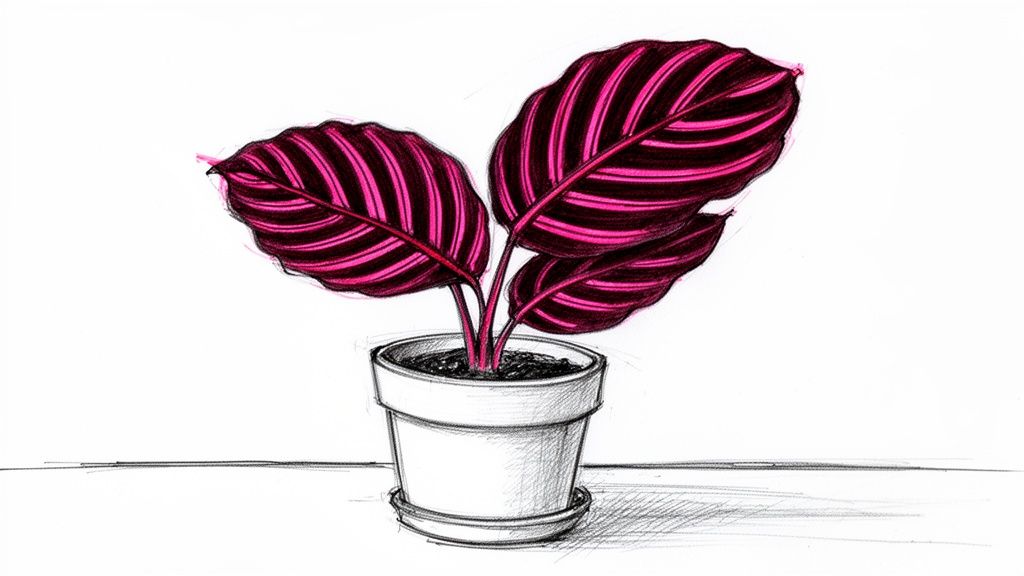
If you're after a plant that turns heads, the Calathea Dottie is an absolute showstopper. Its large, round leaves look like they've been hand-painted, with a deep burgundy-green canvas that makes those bright pink brushstrokes just pop. For an extra layer of beauty, flip a leaf over to see its rich purple underside.
This stunning look makes it a huge favourite among Kiwi plant enthusiasts who aren't afraid of a bit of drama in their greenery. Now, it does have a reputation for being a little fussy. But don't let that put you off! The real secret to success is simply understanding where it comes from.
From Rainforest Floor to Your Living Room
Originally from the humid, shady floors of South American rainforests, the Calathea Dottie is hardwired to thrive in very specific conditions. It’s used to soft, dappled light filtering through a thick canopy of trees, soil that stays consistently moist, and seriously high humidity. The trick is to mimic a little slice of this tropical paradise inside your home.
Instead of thinking of it as a "difficult" plant, think of it as one that's just very clear about what it needs. Once you learn to read its cues—a droopy leaf, a crispy edge—you’ll quickly become a more tuned-in and successful plant parent.
The Calathea Dottie isn’t just a static decoration; it’s an active part of your home. As a member of the 'prayer plant' family, its leaves perform a daily dance, rising at night and lowering during the day in a process known as nyctinasty.
This little ritual is fascinating to watch and adds a dynamic quality that makes the plant feel genuinely alive. Observing this daily rhythm is one of the true joys of caring for this species.
Why Kiwi Plant Lovers Adore This Plant
Even with its specific demands, the Calathea Dottie is an incredibly rewarding plant to have around for a few great reasons:
- Stunning Visual Impact: That unique colouring creates an amazing contrast against neutral-toned walls and simple pots.
- Pet-Friendly Nature: It's completely non-toxic to cats and dogs, so you can have it in your home without worry if you've got furry mates.
- Engaging Care Routine: It really encourages you to pay attention to your indoor environment, from humidity levels to the quality of light.
By embracing what this plant needs, you won’t just end up with a beautiful Dottie, you’ll also sharpen your own skills as a home gardener. Let's get into exactly how to create the perfect environment for it to flourish.
Creating the Perfect Indoor Jungle Environment
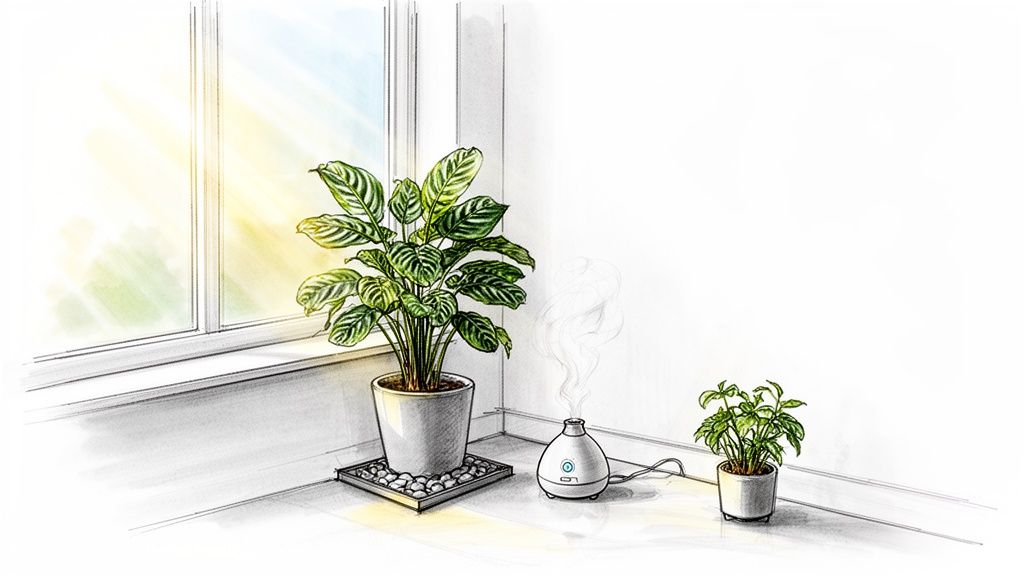
To keep your Calathea Dottie truly happy, you have to think like a rainforest. This plant grew up under a thick, protective canopy of trees, so your mission is to mimic that sheltered, warm, and humid world right inside your home. Nailing these three key elements—light, temperature, and humidity—is the secret to unlocking its stunning potential.
Don't worry, this isn't as complicated as it sounds. It really just comes down to being mindful of where you place your plant and how you manage the air around it. Once you find that sweet spot, your Dottie will reward you with vibrant, healthy growth and its famous daily leaf movements.
Finding the Perfect Light
That common advice, "bright, indirect light," can feel a bit vague, so let's break down what that actually means in a New Zealand home. Direct sunlight is the number one enemy of a Calathea Dottie. Its delicate, dark leaves are simply not built for harsh rays and will scorch in a heartbeat, leaving behind brown patches and faded colour.
You want to aim for the kind of soft, filtered light you’d find on a forest floor. An east-facing window is a fantastic choice, offering gentle morning sun that won't cause any damage. A spot a metre or so back from a north-facing window also works beautifully, as it gives consistent brightness without the intense midday heat. Just be sure to avoid west-facing windows altogether—that afternoon sun is far too strong.
Maintaining a Cosy Temperature
Your Calathea Dottie is a tropical plant through and through, meaning it has zero tolerance for the cold. It absolutely thrives in a consistent temperature range of 18°C to 24°C, which luckily is pretty close to where most of us keep our homes. The real danger isn't just a chilly room, but sudden drops or spikes in temperature.
Keep your Dottie well away from sources of thermal stress. This means draughty windows, doors that are always opening and closing, and direct blasts from heat pumps or air conditioning units. Sudden chills or hot, dry air can shock the plant, leading to sad, drooping leaves.
A stable environment is everything. If you can place it in a room that stays consistently warm day and night, it will feel right at home. This stability prevents the plant from getting stressed, which in turn helps it fend off other potential problems.
Conquering the Humidity Challenge
Humidity is, without a doubt, the most critical piece of the puzzle for a thriving Calathea Dottie. It's also often the trickiest part to get right in a modern Kiwi home, especially with heat pumps running. These plants crave high humidity levels, ideally somewhere between 50% and 60%. If the air gets too dry, you’ll quickly see the first tell-tale sign of trouble: crispy, brown leaf edges.
Fortunately, there are several easy and effective ways to boost the moisture in the air around your plant:
- Group Your Plants: Plants naturally release moisture through transpiration. By clustering your Dottie with other humidity-loving friends, you create a wonderfully humid little microclimate.
- Use a Pebble Tray: Find a shallow tray, fill it with a layer of pebbles and water, and sit your plant pot on top (making sure the pot isn't sitting in the water). As the water evaporates, it will humidify the air right where your plant needs it most.
- Regular Misting: A light misting with a fine spray bottle a few times a week gives a nice, temporary boost. It's best to use filtered or rainwater to avoid leaving mineral spots on those beautiful leaves.
- The Bathroom Haven: A bright bathroom can be a perfect spot for a Calathea Dottie. The steam from showers naturally creates the high-humidity environment it absolutely adores.
- Invest in a Humidifier: For the most reliable and consistent results, a small electric humidifier is a fantastic investment. Learning how to use an essential oil diffuser effectively can also be a great help here, as many diffusers can double as personal humidifiers, providing that steady moisture your Dottie craves.
Nailing the Watering and Feeding Routine
Getting the watering and feeding right is where you really start to bond with your Calathea Dottie. This plant isn't shy about telling you what it needs, and finding that perfect balance is your best defence against dreaded crispy, brown leaves. It's all about consistency, not just how much or how often.
The golden rule for watering your Calathea Dottie is to keep its soil consistently moist but never waterlogged. Picture a well-wrung-out sponge – that’s the goal. It should feel damp to the touch, but definitely not sopping wet. Letting the soil dry out completely will only stress your plant, but letting it sit in a puddle is a fast track to root rot.
How to Water the Right Way
Finding a good watering rhythm is easier than it sounds. Forget a strict calendar schedule and instead, get into the habit of checking the soil every few days. The most reliable way to do this is the good old 'finger dip test'.
Just poke your finger about two centimetres into the topsoil. If it feels dry at that depth, it’s time for a good drink. Still feel some moisture? Hold off for another day or two and check again. This simple trick helps you adapt to the changing seasons and conditions inside your home.
When you do water, be thorough. Pour water evenly over the soil surface until you see it start to drain out of the bottom of the pot. This makes sure every single root gets a chance to hydrate. Let it drain for about 15 minutes, then make sure to tip out any excess water from the saucer or cover pot. Leaving it sitting in water is a big no-no.
Why Your Water Quality Is a Game-Changer
Ever feel like you’re doing everything right, but you’re still getting those frustrating brown tips on the leaves? The problem is often in your water. Calatheas are notoriously sensitive to the minerals, chlorine, and fluoride commonly found in New Zealand tap water.
Over time, these chemicals can build up in the soil and cause what we call 'leaf burn', which shows up as those crispy, brown edges and tips. Simply switching your water source can be a total game-changer for keeping those gorgeous leaves looking their best.
Here are the best options for your fussy friend:
- Rainwater: Honestly, this is the absolute gold standard. It’s naturally soft, slightly acidic, and completely free of the additives that Calatheas just can't stand. Keep a bucket outside to collect some!
- Filtered Water: A standard filter jug from the kitchen is a great, convenient alternative that removes most of the chlorine and other impurities.
- Distilled Water: You can grab this from the supermarket. It’s a pure option with no minerals at all, making it a safe bet.
A Feeding Schedule for New Zealand Seasons
Feeding gives your Calathea Dottie the nutrients it needs to push out that stunning new foliage, but its appetite changes with our seasons here in New Zealand. The main thing to remember is to only fertilise when the plant is actually growing.
During the warmer growing season, from September through to February, your plant is in full swing. Feed it with a balanced liquid fertiliser every 4-6 weeks. It's crucial to dilute the fertiliser to half the strength recommended on the bottle to avoid burning its delicate roots. For a deeper dive, check out our complete guide on choosing the right indoor plant fertiliser.
As the weather cools for autumn and winter (from March to August), your Calathea’s growth naturally slows right down. During this rest period, you need to stop fertilising completely. This allows the plant to have a proper rest. Feeding it now would do more harm than good, leading to nutrient buildup in the soil. You can start up your feeding routine again in spring to give it the perfect boost for the new growing season.
A quick reference guide can make seasonal adjustments a breeze.
Calathea Dottie Seasonal Care Calendar for New Zealand
| Season (NZ) | Watering Frequency | Light Exposure | Fertilising Schedule |
|---|---|---|---|
| Spring (Sep-Nov) | Increase as temps rise; check soil every 4-6 days. | Bright, indirect light. Avoid direct sun. | Start feeding every 4-6 weeks with half-strength fertiliser. |
| Summer (Dec-Feb) | Most frequent; check soil every 2-4 days. | Keep in bright, indirect light. Watch for leaf scorch. | Continue feeding every 4-6 weeks. |
| Autumn (Mar-May) | Gradually decrease as days shorten; check every 6-8 days. | Light levels are lower; ensure it still gets enough. | Stop feeding by the end of March to prepare for dormancy. |
| Winter (Jun-Aug) | Least frequent; check soil every 7-10 days. | Find the brightest indirect spot. Avoid cold draughts. | No fertiliser. Let the plant rest. |
Following this calendar helps you stay in sync with your Dottie's natural growth cycle, ensuring it gets exactly what it needs, when it needs it.
Choosing the Right Soil and When to Repot
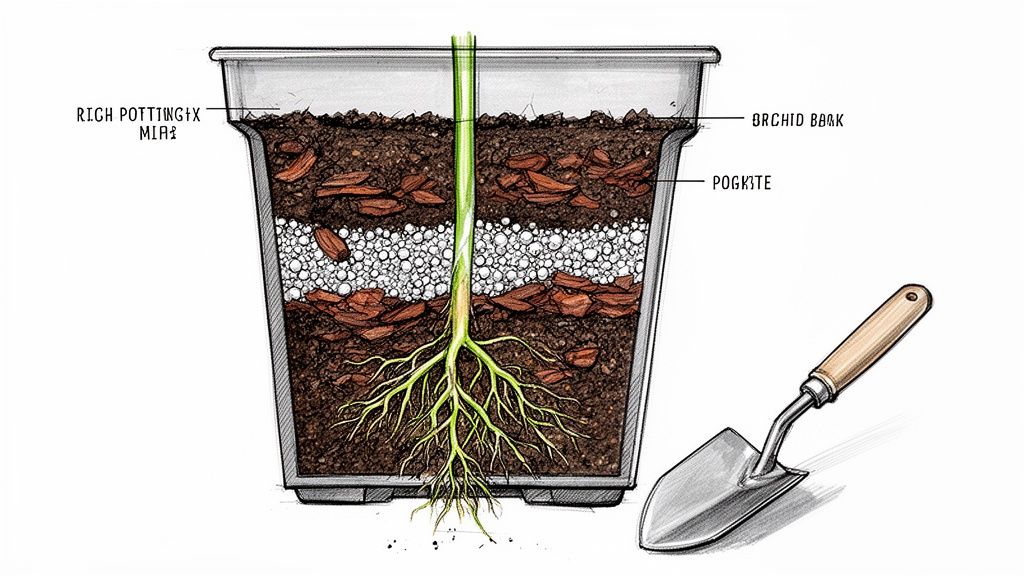
Think of your plant's soil as its home's foundation. For a Calathea Dottie, getting this foundation right is everything. These plants have very fine roots that are quite prone to rot, so the goal is to create a potting mix that can hold a bit of moisture without ever becoming a swamp. It's a tricky balance, but totally achievable.
The perfect soil for a Dottie is light, airy, and full of organic goodness that lets any extra water escape easily. If the soil is too heavy and dense, it will suffocate the roots, which quickly leads to yellowing leaves and a very sad-looking plant. You're basically trying to recreate the loose, rich floor of a rainforest.
Crafting the Perfect Potting Mix
You don't have to be a soil expert to whip up a fantastic home for your Dottie. A high-quality, peat-based potting mix is an excellent starting point, but it's usually a bit too dense on its own. The real secret lies in adding amendments to improve drainage and get some air flowing around those delicate roots.
Here’s our go-to recipe for a happy Calathea Dottie:
- Two parts premium indoor potting mix to provide the base nutrients.
- One part perlite to create little air pockets, stop the soil from compacting, and boost drainage.
- One part orchid bark to add chunkiness, which further improves airflow and stops things from getting waterlogged.
Just give these a good mix before you pot up your plant. This blend creates the ideal environment for strong, healthy roots, giving your Dottie the support it needs to thrive. For a deeper dive, check out our guide on choosing the best indoor potting mix for all your houseplants.
Knowing When It’s Time for a New Home
Calatheas actually prefer to be a little bit snug in their pots, so you'll probably only need to think about repotting every one to two years. Repotting too often can cause unnecessary stress. It’s far better to let your plant give you the cues rather than sticking to a rigid schedule.
Keep an eye out for these tell-tale signs that your Dottie is ready for an upgrade:
- You can see roots poking out of the drainage holes.
- The whole plant looks like it's pushing itself up and out of the pot.
- Water rushes straight through when you water it, a sign there’s more root than soil.
- Growth has slowed right down or stopped completely during the growing season.
In New Zealand, the best time to repot your Calathea Dottie is during its main growing season in late spring or early summer, usually between October and December. This gives the plant plenty of time and energy to settle into its new home and put on some vigorous new growth.
When you do decide it's time, pick a new pot that is only 2-4 centimetres wider than the old one. A pot that's too big holds excess soil, which stays wet for too long and brings back that dreaded risk of root rot. Gently loosen the root ball, pop it in the new pot with your fresh soil mix, and give it a good drink.
Troubleshooting Common Calathea Dottie Problems
Even the most loved Calathea Dottie can throw a bit of a tantrum now and then. But don’t panic! Think of these little visual cues less as failures and more as your plant’s way of talking to you. Learning to read the signs is what turns a good plant owner into a great one.
Think of this section as your personal plant detective guide. We'll walk through the most common dramas, from browning leaves to unwanted creepy crawlies, and give you simple, actionable steps to get your Dottie back to its moody, magnificent self. Most of these issues are surprisingly easy to fix once you know what you’re looking at.
Decoding Leaf Issues
The first place your Calathea Dottie will show any unhappiness is its leaves. A quick look at their colour and feel will tell you almost everything you need to know.
Problem: Crispy Brown Leaf Edges
This is, hands down, the number one complaint from Calathea owners. If you're seeing crunchy, brown tips, the air is simply too dry. Your plant is dreaming of the humid rainforests it comes from.
- Solution: You need to up the humidity. Try grouping it with other plants, setting it on a tray of pebbles and water (don't let the pot sit in the water), or running a small humidifier nearby. A good misting can also give it a quick, temporary boost.
Problem: Yellowing Lower Leaves
Seeing the bottom leaves turn yellow and go a bit soft? Overwatering is almost always the culprit here. The soil is staying soggy for too long, essentially drowning the roots so they can't breathe or take up nutrients.
- Solution: Step away from the watering can. Let the top couple of centimetres of soil dry out completely before you even think about watering again. Make sure its pot has great drainage and you’re always tipping out any leftover water from the saucer.
Problem: Fading Leaf Colour and Brown Patches
Are those incredible pink pinstripes looking a bit washed out? Has the deep, dark foliage faded to a dull green? This is a classic case of too much direct sun. The harsh rays are literally bleaching the colour from the leaves, giving your plant a nasty sunburn.
- Solution: Move it somewhere it will get plenty of bright, but strictly indirect, light. A spot near an east-facing window or a few metres back from a north-facing one is usually perfect.
Here's a key tip: a happy Calathea Dottie has bold, high-contrast colours. If the foliage looks dull or faded, the very first thing you should check is its light situation.
Tackling Common Pests
Because they adore warm, humid spots, Calatheas can sometimes attract a few of the usual indoor plant pests. Catching them early is the secret to getting rid of them before they can really settle in.
Spider Mites
These are probably the most common uninvited guests you'll find on a Calathea Dottie. They're tiny little arachnids that are almost impossible to see, and they absolutely love dry conditions. The first giveaway is usually some very fine, silky webbing under the leaves or where the leaf joins the stem. You might also notice tiny white or yellow speckles on the leaves from their feeding.
- Treatment: First, isolate your plant to stop the mites from spreading to your other greenery. Give the leaves a good shower with lukewarm water, paying special attention to the undersides to knock them off. For a more serious attack, spray the whole plant down with a diluted neem oil solution or an insecticidal soap, and repeat every 5-7 days until you're sure they're all gone.
Mealybugs
These look like tiny bits of white cotton fluff, and they love to hide out in all the nooks and crannies, especially where the leaves meet the stems. They suck the sap from your plant, which leads to sad, yellowing leaves and stunted growth.
- Treatment: If you've only spotted a few, dip a cotton bud in rubbing alcohol and just dab them directly to remove them. If you're dealing with a bigger infestation, a neem oil or insecticidal soap spray will do the trick. Just be sure to check your plant every few days to catch any stragglers that pop up.
How to Buy and Style a Healthy Plant in NZ
Bringing a Calathea Dottie home is such a thrill, but picking the right one from the get-go really makes all the difference. Whether you're at your local garden centre or browsing online, remember you're not just buying a plant—you're choosing a new flatmate. Taking a few moments to inspect it properly will save you a world of hassle later on.
A healthy plant just looks vibrant. You’re looking for deep, richly coloured leaves with that signature bold pink pinstripe. The foliage should feel firm and have a bit of a gloss to it, not be limp, wilting, or dull. Give the plant a gentle shake; a happy specimen will feel sturdy and well-anchored in its pot.
Your Health Checklist Before You Buy
Before you head to the checkout, pop on your plant detective hat for a minute. A quick but thorough inspection can stop you from accidentally bringing home pests or underlying health issues.
Here’s what to look for:
- Leaf Inspection: Check the tops and, more importantly, the undersides of the leaves. Keep an eye out for fine webbing, tiny dots, or any sticky residue—these are classic signs of pests like spider mites.
- No Crispy Edges: Try to avoid plants that already have a lot of browning or crispy edges. While you can usually fix this at home with a bit of TLC, it's always better to start with a plant that isn't already stressed from low humidity.
- Check the Soil: The soil should be slightly moist to the touch, but definitely not sopping wet. If it feels waterlogged, the plant might already be in the early stages of root rot.
- Look for New Growth: Spotting small, furled-up new leaves is a fantastic sign. It shows the plant is healthy, actively growing, and ready to thrive in its new home.
It also helps to know what to expect price-wise. Across New Zealand garden centres, a standard potted Calathea Dottie will usually set you back between NZ$25 and NZ$45. Many Kiwi sellers also run promotions like flat-rate or free shipping on bigger orders, which is worth considering if you want to find more guidance on how to buy plants online in NZ.
Styling Your Calathea Dottie at Home
Once you’ve got your perfect plant, the real fun begins: finding its spot in your home. The Calathea Dottie’s dark, dramatic foliage makes it an incredible styling piece that can easily become the focal point of any room. It’s an interior designer’s dream.
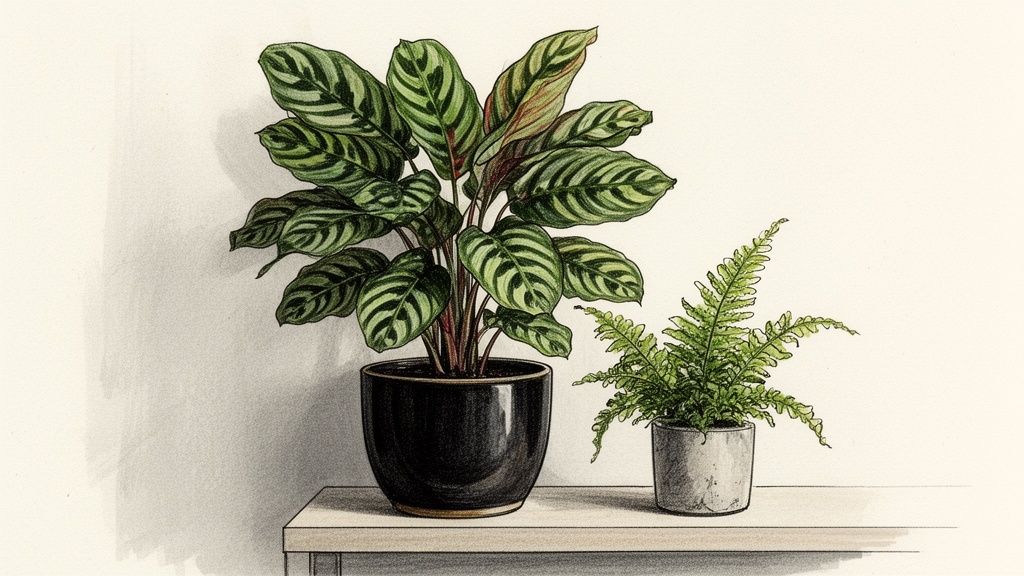
The secret to styling a Calathea Dottie is contrast. Its deep, almost-black leaves and vibrant pink lines create a stunning visual pop against lighter, neutral backdrops.
Try placing it on a light-coloured timber shelf, against a crisp white wall, or in a simple ceramic pot in a bright, airy room. This kind of contrast really lets the plant’s unique colouring shine. It also looks amazing grouped with other plants to create a lush, indoor jungle vibe. Pair it with plants that have different leaf shapes and textures—like the feathery foliage of a fern or the trailing vines of a pothos—to build a display with real depth and interest.
Frequently Asked Questions About Calathea Dottie Care
Even with the best care guide, it's natural to have a few questions pop up when you bring home a plant as unique as the Calathea Dottie. This little section is designed to give you quick, clear answers to the most common queries we hear from our fellow Kiwi plant lovers.
Is Calathea Dottie Safe for Pets?
This is one of the best things about the Dottie – the peace of mind. The Calathea Dottie is completely non-toxic to cats, dogs, and other curious pets. So, if your furry friend decides to have a little nibble, you don’t need to panic. It's a stunning and safe choice for any home with four-legged family members.
Why Do the Leaves Move Up and Down?
That gentle daily dance is one of the most enchanting parts of owning a Calathea! The official term for this movement is nyctinasty, and it’s simply the plant's natural reaction to the daily light cycle. As evening draws in, the leaves rise up as if in prayer, and then they lower again in the morning to soak up the daylight. It’s a beautiful sign of a healthy, happy plant and a genuine joy to watch.
This fascinating movement is also a handy visual cue. If you notice your Dottie has stopped ‘praying’, it could be a subtle sign that it isn’t getting enough light to properly regulate its daily rhythm.
Can I Use Normal Tap Water?
You can, but it’s best to avoid it if you can help it. Calatheas are well-known for being sensitive to the fluoride, chlorine, and mineral salts found in a lot of tap water. Over time, these can build up in the soil and are a common cause of those dreaded crispy, brown leaf tips.
For a happier plant with flawless foliage, give one of these a try instead:
- Rainwater: This is the absolute gold standard—naturally soft and just what your Dottie craves.
- Filtered Water: A simple benchtop water filter can remove most of the harsh chemicals.
- Distilled Water: A safe, reliable option you can easily pick up from the supermarket.
The Calathea 'Dottie' isn't just a fleeting trend; its popularity has made it a major player in New Zealand's indoor plant scene. In fact, you'll often find that Calathea varieties make up 12–18% of the potted foliage stock at major NZ plant retailers—a testament to just how much Kiwis love these dramatic beauties. You can see how widely available they are and explore similar varieties on The Plant Company.
Ready to add this dramatic beauty to your urban jungle? At Jungle Story, we connect you with New Zealand's best sellers to help you find the perfect Calathea Dottie. Explore our marketplace today and bring a touch of the rainforest home. Find your next plant at https://junglestory.co.nz.