
Think of fertiliser as a nutritional top-up for your plants. It’s packed with essential elements that might be missing or have been used up in the soil. Just like we need vitamins to feel our best, plants need a balanced diet to grow strong, push out vibrant flowers, and develop healthy roots. Using the right plant food at the right time is the real secret to helping your garden reach its full potential.
Why Your Plants Need More Than Just Water
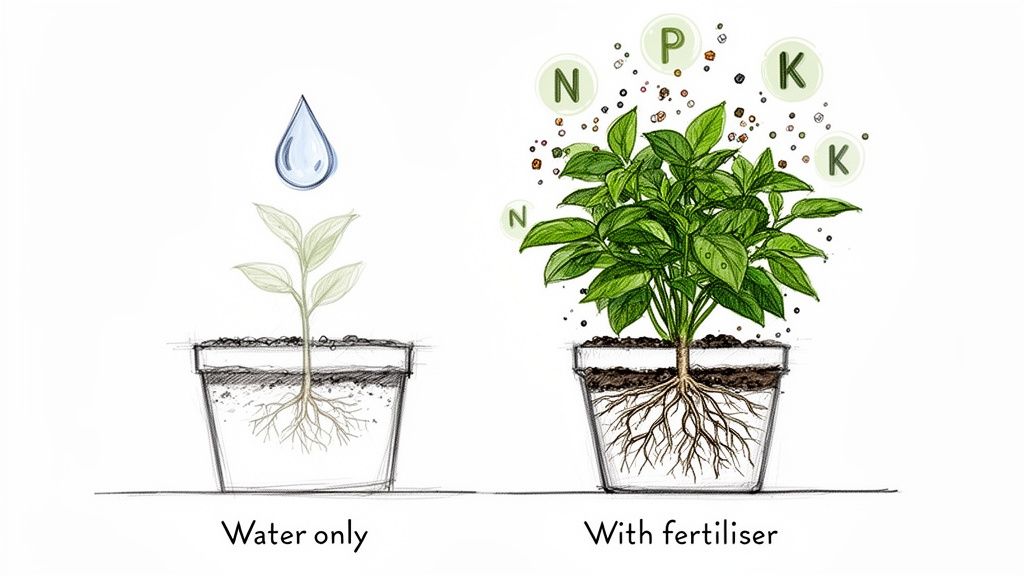
It’s a common myth that sunshine and water are all a plant needs. While they're absolutely fundamental, they aren’t the whole story. Imagine the soil is a pantry; over time, as your plants grow, they use up all the available food, leaving the shelves bare.
Even the richest garden soil or the best potting mix will eventually run out of steam. Every new leaf, flower, or root extension draws minerals from its surroundings. If these nutrients aren't replenished, you'll notice growth slowing down, leaves might start to yellow, and your plant will become an easy target for pests and diseases.
The Role of Fertiliser in Plant Health
A good quality fertiliser acts like a multivitamin, putting those essential nutrients back into the soil. This guide is here to give you, as a Kiwi gardener, the confidence to feed your plants properly. We'll walk you through everything you need to know to make sure your green friends don't just survive, but truly thrive.
In this guide, you will learn to:
- Decode the Basics: Get to grips with the crucial nutrients plants need and what those letters on the bag (N-P-K) actually mean for their health.
- Choose Wisely: Weigh up the pros and cons of organic versus synthetic options to find what best fits your gardening style.
- Time it Right: Learn how to apply fertiliser effectively through New Zealand’s seasons, especially during the active growing periods of spring and summer.
A plant's environment is crucial for its health, and it extends beyond just water and nutrients. Exploring different ways to create optimal conditions, such as through sustainable greenhouse solutions, can significantly boost growth and vitality.
Our goal is to take the guesswork out of feeding your plants and help you avoid common slip-ups like over-feeding. By the end, you'll have the know-how to pick and use the perfect fertiliser for plants in your collection.
Decoding the Language on the Fertiliser Bag
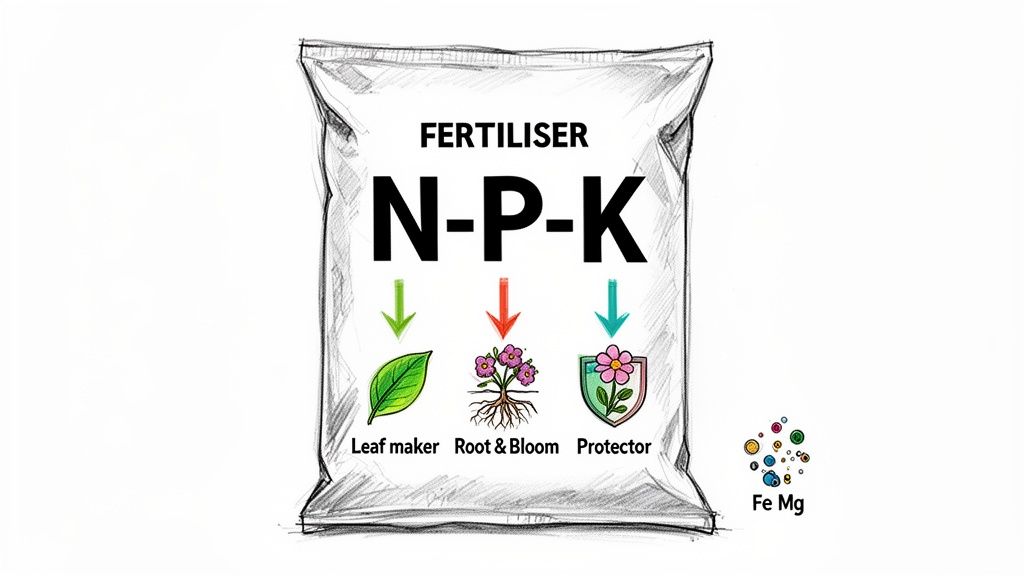
Stepping into the fertiliser aisle can feel like trying to read a foreign language. Bags covered in numbers, letters, and chemical names can be pretty intimidating. But trust me, cracking this code is the first big step toward becoming a more confident and successful gardener. At the heart of it all is a simple acronym: N-P-K.
These three letters stand for the primary macronutrients that form the foundation of almost every fertiliser for plants. They are always listed in the same order, and the numbers tell you the percentage of each nutrient in the bag by weight. So, a bag labelled 10-5-10 contains 10% Nitrogen, 5% Phosphorus, and 10% Potassium.
Think of these three as the core members of your plant’s nutrition team, each with a very specific job. Getting their balance right is absolutely crucial for healthy, well-rounded growth, from the deepest roots to the freshest new leaves.
The Big Three NPK Nutrients Explained
Let's break down what each of these key nutrients actually does for your plant. A simple way to remember their roles is to give them a job title.
-
Nitrogen (N) is The Leaf Maker: This nutrient is all about driving vigorous, green, leafy growth. As a key part of chlorophyll, it’s what helps plants turn sunlight into energy. If you’re after a lush, dense lawn or a ficus with big, beautiful leaves, a nitrogen-rich formula is your best friend.
-
Phosphorus (P) is The Root and Bloom Builder: Phosphorus focuses its energy below the ground and on flower production. It helps establish strong, healthy root systems—vital for soaking up water and other nutrients. It also plays a critical role in encouraging your plants to set abundant flowers, fruits, and seeds.
-
Potassium (K) is The Plant Protector: Think of potassium as the general manager of the plant's overall health and wellbeing. It helps regulate all sorts of internal processes, from moving water around to building resistance to diseases and temperature stress. A plant with enough potassium is tougher, more resilient, and better equipped to handle whatever life throws at it.
Beyond NPK: The Unsung Heroes
While NPK gets most of the spotlight, a complete plant diet relies on a supporting cast of micronutrients. These are elements needed in much smaller quantities, but they're no less important. They’re the 'fine-tuning' components that ensure all the plant’s systems run smoothly.
Common micronutrients you might see on a fertiliser label include:
- Magnesium (Mg): A central part of the chlorophyll molecule, essential for photosynthesis.
- Sulphur (S): Helps form important enzymes and proteins.
- Iron (Fe): Crucial for energy production and that deep green leaf colour.
- Manganese (Mn): Aids in photosynthesis and enzyme activation.
- Zinc (Zn): Important for hormone regulation and enzyme function.
A good quality, balanced fertiliser will contain a mix of these trace elements. Without them, your plants might show signs of deficiency even if they’re getting plenty of NPK.
Choosing a complete fertiliser for plants means looking beyond just the three big numbers. The inclusion of micronutrients provides a more rounded, nutritious meal that supports every aspect of plant function, leading to more robust and resilient growth.
To help you play plant detective, the table below breaks down the roles of these key nutrients and the common signs of deficiency to look for. This quick reference can help you identify problems early and choose the right feed to get your plants back on track.
The Role of NPK and Key Micronutrients in Plant Health
| Nutrient | Symbol | Primary Function (Analogy) | Signs of Deficiency |
|---|---|---|---|
| Nitrogen | N | The Leaf Maker: Promotes lush, green foliage growth. | Yellowing of older, lower leaves; stunted growth. |
| Phosphorus | P | The Root & Bloom Builder: Supports root development, flowering, and fruiting. | Poor flowering; purplish or dark green leaves. |
| Potassium | K | The Plant Protector: Boosts overall health, resilience, and disease resistance. | Yellowing/browning along the edges of older leaves. |
| Magnesium | Mg | The Photosynthesis Powerhouse: Central to chlorophyll production. | Yellowing between the veins of older leaves. |
| Sulphur | S | The Protein Partner: Essential for creating proteins and enzymes. | General yellowing of new, young leaves. |
| Iron | Fe | The Greening Agent: Crucial for chlorophyll and energy transfer. | Yellowing between the veins of new leaves (interveinal chlorosis). |
Seeing these signs is your plant's way of telling you it's hungry for something specific. By understanding this language, you can respond with the perfect meal to nurse it back to full health.
Choosing Between Organic and Synthetic Fertilisers
Once you have a handle on what nutrients your plants are craving, the next big decision is what kind of fertiliser to use. The whole organic versus synthetic debate can feel a bit much, but it helps to think of it like a meal for your plant.
Organic fertilisers are the slow-cooked, wholesome meal of the plant world. They come from natural sources—things that were once alive—like seaweed, animal manure, or compost. They work by feeding the whole ecosystem in your soil. The microbes get to work, breaking down the nutrients and making them available for your plants to enjoy at their own pace.
Synthetic fertilisers, on the other hand, are more like a fast-acting energy drink. They’re manufactured to deliver a precise, concentrated hit of nutrients in a form plants can absorb almost immediately. This approach feeds the plant directly, bypassing the soil biology.
The Organic Approach: Nurturing the Soil
The real magic of organic fertilisers is their focus on building healthy soil for the long haul. When you add organic matter, you're improving the soil's structure, helping it hold onto water, and creating a thriving home for all those beneficial microorganisms.
This approach builds a resilient, self-sustaining garden ecosystem. Some popular organic choices here in New Zealand include:
- Blood and Bone: A classic slow-release blend that provides a gentle, steady source of Nitrogen and Phosphorus.
- Sheep Pellets: Fantastic for conditioning the soil while slowly releasing essential nutrients.
- Seaweed Tonics: These are packed with trace elements and natural growth hormones that help reduce plant stress. You can dive deeper into their benefits in our guide to using seaweed fertiliser in NZ.
The main trade-off is that the nutrients are released slowly, so they aren’t the best option if you have a plant that needs an immediate rescue. Their nutrient content can also be less exact than their synthetic counterparts.
The philosophy behind feeding organically is simple: healthy soil grows healthy plants. By nourishing the life within the soil, you create a foundation that supports strong, resilient growth for years to come.
This sustainable focus is a big reason why natural options are becoming so popular. New Zealand's organic fertiliser market is growing fast, driven by a shift towards eco-friendly practices in everything from large-scale farming to our own back gardens. It’s a movement that aligns perfectly with NZ’s green ethos, supporting everyone from indoor plant collectors to keen home gardeners.
The Synthetic Method: Fast and Precise Feeding
Synthetic fertilisers are built for one thing: speed. Their biggest advantage is that the nutrients are water-soluble and ready for the plant to slurp up right away. This makes them perfect for fixing a specific nutrient deficiency in a hurry or giving a hungry plant a quick boost during its peak growing season.
These products also offer very precise NPK ratios, so you know exactly what you’re feeding your plants. Common synthetic options include:
- Controlled-Release Granules: These tiny coated pellets are designed to release nutrients gradually over several months, providing a steady, consistent feed.
- Liquid Feeds: These are concentrates you dilute with water and apply directly to the soil or leaves for an instant nutritional kick.
But there are risks. Because synthetic fertilisers are so concentrated, it’s really easy to overdo it and cause 'fertiliser burn,' which can scorch your plant's roots and leaves. They also do very little to improve the long-term health or structure of the soil itself.
Making an Informed Choice
So, which one is right for you? Honestly, it depends on your gardening style, your plants, and your goals. There's no single "correct" answer, and plenty of savvy Kiwi gardeners actually use a combination of both.
| Feature | Organic Fertilisers | Synthetic Fertilisers |
|---|---|---|
| Nutrient Release | Slow and gradual | Fast and immediate |
| Soil Health | Improves soil structure and microbial life | Does not improve long-term soil health |
| Application | Less risk of burning plants | Higher risk of burning if over-applied |
| Nutrient Precision | Variable NPK ratios | Precise and consistent NPK ratios |
| Environmental Impact | Generally lower, builds soil carbon | Higher energy use in production |
| Best For | Building long-term soil fertility | Quick fixes and targeted feeding |
Matching the Right Fertiliser to Your Plants
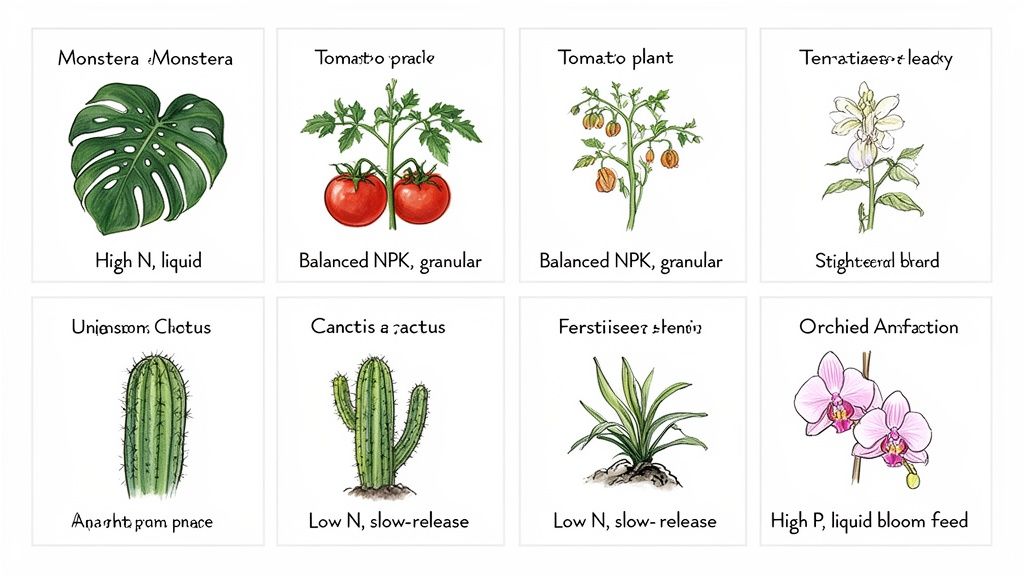
You wouldn't serve the same meal to a toddler and a marathon runner, right? It’s the same deal with our plants. Each one has a different job to do, and that means they have different dietary needs. A one-size-fits-all approach to plant food might keep them ticking over, but it won’t help them truly thrive.
The real secret to unlocking spectacular results is tailoring the fertiliser for plants based on what they are.
Think about what your plant is trying to achieve. Is it pushing out enormous, dramatic leaves? Is it working hard to grow delicious fruit? Or is it a slow-growing desert dweller that barely needs a thing? Answering these questions points you straight to the perfect NPK ratio.
The good news? You don't need a different bag for every single pot. Most plants can be grouped into broad categories with similar needs, which makes choosing the right feed much, much simpler.
Lush Indoor Foliage Plants
For the indoor jungle favourites—Monsteras, Philodendrons, and Fiddle Leaf Figs—the goal is simple: big, beautiful, green leaves. These guys are the marathon runners of foliage production, and their fuel of choice is Nitrogen.
A fertiliser with a higher first number in its NPK ratio, like a 10-5-5, is the perfect brew. This nitrogen-heavy blend directly supports chlorophyll production and vigorous leaf growth, giving you that lush, vibrant look you’re after.
- Best Formulation: Liquid fertiliser is a fantastic choice for indoor plants. It’s easy to dilute into your watering can during the active growing months of spring and summer, giving you precise control and preventing waste.
- Top Tip: Most of our indoor plants take a bit of a nap over the Kiwi winter (June to August). It's best to cut back on feeding significantly or stop altogether until you spot new growth in spring.
For a deeper dive, check out our complete guide to indoor plant fertilizer.
Productive Edible Plants
When you’re growing your own food—think tomatoes, chillies, or herbs—the nutritional focus shifts as the plant grows up. Young plants need a good dose of Nitrogen at the start to build a strong frame of stems and leaves.
But once they start to flower (which later become fruit), their appetite for Phosphorus and Potassium skyrockets. Phosphorus (P) is crucial for developing flowers and fruit, while Potassium (K) dials up the flavour and keeps the whole plant healthy.
With fruiting veggies like tomatoes, a common trick is to start with a balanced feed, then switch to a high-Phosphorus 'bloom' or 'fruit and flower' formula as soon as you see the first blossoms. This tells the plant to put its energy into making fruit, not just more leaves.
Look for a fertiliser made specifically for veggies or tomatoes. It will often have a higher middle number (P), something like a 5-10-5 ratio, for the fruiting stage.
Resilient Succulents and Cacti
Succulents and cacti are tough cookies, adapted to survive in harsh, low-nutrient soils. Their needs are completely different from a hungry tomato plant. In fact, over-fertilising is one of the quickest ways to kill them with kindness.
These plants need a specialised, low-strength fertiliser. Look for a formula with a low, balanced NPK ratio, like a gentle 2-2-2.
- Best Formulation: A heavily diluted liquid feed is by far the safest option.
- Application Timing: Only feed them a couple of times during their main growing season in spring and summer. Never fertilise a succulent or cactus during its winter dormancy—this can cause weak, stretched-out growth and lead to root rot.
Vibrant Flowering Plants
For plants prized for their incredible blooms, like orchids or gardenias, Phosphorus is the magic ingredient. It’s the ‘Bloom Builder’ nutrient, playing a vital role in helping the plant set buds and produce vibrant, long-lasting flowers.
A high-Phosphorus fertiliser, often sold as a 'bloom booster,' is the perfect choice. These formulas have a much higher middle number—think 5-10-5 or even 10-30-10. Using this type of feed at the right time encourages the plant to switch its focus from growing leaves to producing flowers. Many dedicated orchid foods are formulated this way to give them the specific kick they need to put on a stunning show.
Mastering the Art of Fertilising in New Zealand
Choosing the right fertiliser for plants is only half the battle. Knowing when and how to use it is what really makes a garden sing.
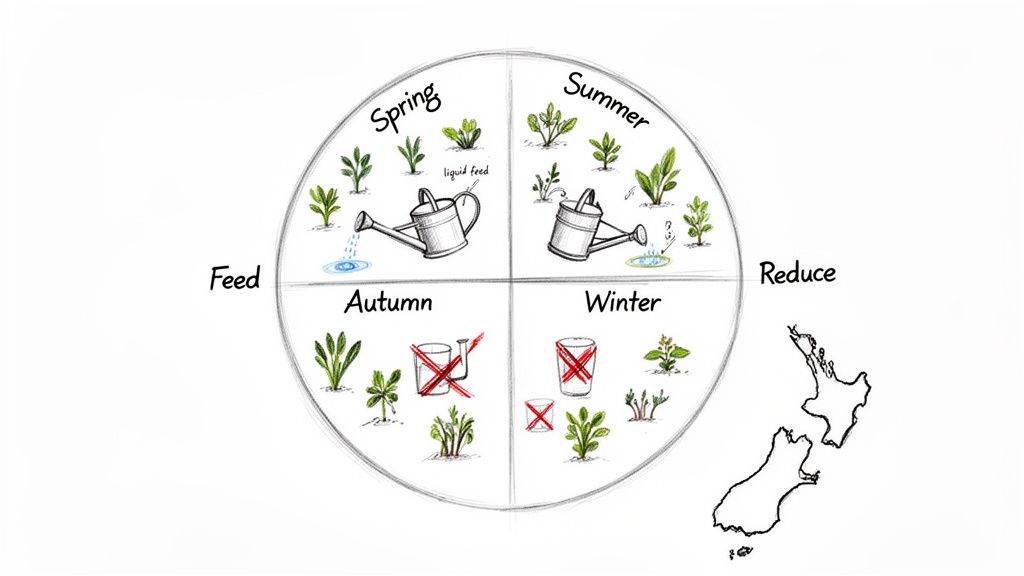
Luckily, here in New Zealand, our distinct seasons give us a pretty clear roadmap. The golden rule is simple: feed plants when they are actively growing.
This is prime time in spring and summer, roughly from September through to February. The days are longer, the weather's warmer, and your plants are in full-on growth mode. They're hungry and thirsty, ready to soak up any nutrients you give them.
But as we drift into the cooler, shorter days of autumn and winter, that growth slows right down. Plants enter a kind of semi-dormancy, and their appetite plummets. Continuing to feed them during this quiet time is like trying to force-feed someone who’s asleep—the unused nutrients just build up in the soil and can end up damaging the roots.
Timing Your Application for Peak Performance
Once you've got your seasonal schedule sorted, it's time to nail the application. Different fertilisers call for different techniques, and each has its own perks.
-
Liquid Feeding: This is your fast-acting option. You just dilute a concentrated liquid feed in your watering can and apply it as you water. The nutrients are immediately available to the roots, which makes it perfect for giving houseplants a quick boost or keeping hungry veggies happy.
-
Granular Application: For a more 'set and forget' approach, you can't beat slow-release granules. You just sprinkle them over the soil surface and gently work them in. Every time you water, a little more of the coating dissolves, releasing a steady stream of nutrients over several months. It's a lifesaver for established shrubs and outdoor pots.
-
Top Dressing: This is the old-school, gentle approach. It's as simple as spreading a layer of organic goodies like compost or sheep pellets around the base of your plants. It acts as a very slow-release feed that also does wonders for improving your soil structure over time.
How to Read the Label and Avoid Fertiliser Burn
Seriously, the most important instructions you'll ever read are on the fertiliser packet. They aren't just vague suggestions; they're carefully calculated doses designed to give your plant exactly what it needs without causing harm. Ignoring them is the fastest way to get 'fertiliser burn', where a build-up of nutrient salts literally scorches the plant's roots, leaving you with sad, brown, crispy leaf tips.
Always, always follow the dilution rates on the label. It's so tempting to think 'just a little bit extra' will mean more growth, but it's far more likely to cause damage. If in doubt, it’s always safer to under-fertilise than to over-fertilise.
A great little tip is to apply any liquid fertiliser early in the morning. This gives the plant the entire day to absorb the nutrients before the sun gets too intense. And make sure to water the soil before and after applying a liquid feed—this helps spread the nutrients evenly and prevents any shock to the roots.
For a really detailed walkthrough on feeding your edible garden, check out our guide to the best fertiliser for vegetables for some more specific tips.
What’s Trending in Your Garden Shed? A Look at Fertiliser
Ever wonder why new organic options suddenly pop up at the garden centre, or why a particular type of plant food is all the rage? The fertilisers available to you aren't just random; they’re often a direct reflection of what’s happening in New Zealand's massive agricultural and horticultural scene.
Getting a handle on these bigger trends can make you a much smarter gardener. It's all about connecting the dots between the bag of sheep pellets you see on the shelf and the market forces that put it there. When you see the bigger picture, you get a real appreciation for the value and innovation behind the products you choose.
Why Market Confidence Matters for Your Plants
After a bit of a quiet spell, New Zealand's fertiliser market has seen impressive growth for the first time in years. This reflects a renewed sense of confidence among everyone from large-scale farmers to home gardeners like us. You can get into the nitty-gritty of the numbers with these market insights and trends on IndexBox.io.
This rebound is fantastic news for plant lovers. Whether you're nurturing a rare variegated Monstera or growing your own veggies, healthy soil is the goal, and a confident market helps us get there.
This renewed energy has a brilliant ripple effect that makes its way right into your garden shed. It gives manufacturers and suppliers the confidence to invest, innovate, and bring a much wider variety of products to market.
For you, this means:
- So Much More Variety: You'll start seeing more specialised options, from feed designed for orchids to low-phosphorus blends perfect for our native plants.
- Cool New Innovations: Companies are more likely to develop new formulas, like better controlled-release granules or more effective organic seaweed tonics.
- A Stable Supply: A healthy market ensures the products you rely on are actually in stock, especially when you need them most during the spring and summer growing rush.
The Big Shift to Eco-Conscious Choices
Another huge trend shaping what you see on the shelves is the growing hunger for sustainable, eco-friendly options. As more Kiwis look for ways to garden that are kinder to the planet, the demand for high-quality organic fertilisers has gone through the roof.
This isn't just a small, niche movement anymore—it’s a powerful force driving the whole industry. In response, suppliers are bringing a richer selection of organic goodies to the table than ever before. It's now much easier to find great products like sheep pellets, blood and bone, and potent fish emulsions that do a fantastic job of building healthy soil for the long haul.
By understanding these market dynamics, you’re no longer just buying a product. You're making a properly informed investment in your garden's future. You’ve graduated from being a simple consumer to a knowledgeable gardener who sees the story behind the bag.
This awareness helps you make smarter decisions for your plants. It gives you the power to choose products that not only feed your plants what they need but also line up perfectly with your own gardening philosophy.
Common Questions About Fertilising Plants
Even once you've got the basics down, a few specific questions always seem to pop up when it's time to actually feed your plants. We get asked these all the time, so here are some quick, clear answers to help you fertilise with confidence.
Can I Use One Fertiliser for All My Plants?
While having a balanced, all-purpose fertiliser on hand is a great start, it’s probably not the perfect meal for every single plant in your collection. Think of it this way: a general-purpose seasoning is fine, but you wouldn’t use it for every single dish you cook. The same logic applies here.
Lush, leafy indoor plants crave more nitrogen to keep their foliage vibrant, while a flowering plant will want a phosphorus boost to produce those beautiful blooms. Using a feed tailored to the plant’s specific needs is the difference between a plant that just survives and one that truly thrives.
What Are the Signs of Over-Fertilising?
It’s easy to kill a plant with kindness, and giving it too much fertiliser can often do more harm than good. You’ll want to learn the warning signs so you can catch it before any real damage is done.
Keep an eye out for these tell-tale signs:
- A crusty, white salt build-up on the surface of the soil.
- The tips or edges of the leaves turning yellow or brown—this is a classic case of ‘fertiliser burn’.
- Sudden, unexplained leaf drop, even if the plant seems healthy otherwise.
- Slowed or stunted growth, even though you’ve been feeding it regularly.
If you think you've overfed a potted plant, the best thing to do is flush the soil. Just water it thoroughly a few times, letting all the excess drain out the bottom. This helps wash away the harmful build-up of nutrient salts around the roots.
Do Native New Zealand Plants Need Fertiliser?
This is a fantastic question. Most of our native plants are beautifully adapted to New Zealand’s naturally low-nutrient soils, which means they need very little, if any, extra fertiliser.
In fact, many of our natives are quite sensitive to high levels of certain nutrients, especially phosphorus. For most native plants in a garden, a single feed with a specialised, low-phosphorus, slow-release native plant food in spring is plenty. Often, just improving the soil with some good quality compost is a much better long-term strategy.
At Jungle Story, we're passionate about helping you find the perfect match for every plant in your home and garden. From specialised feeds to general-purpose nutrients, explore our full range of plant care products online.