
Growing a fig tree here in New Zealand is a lot easier than you might think, and honestly, it's one of the most satisfying things you can add to your garden. These hardy trees are right at home in our climate. Just give them a sunny spot, and they'll reward you with heaps of sweet fruit without demanding much in return.
This guide will walk you through everything you need to know to get your own little fig paradise started.
Why Figs Thrive in New Zealand Gardens
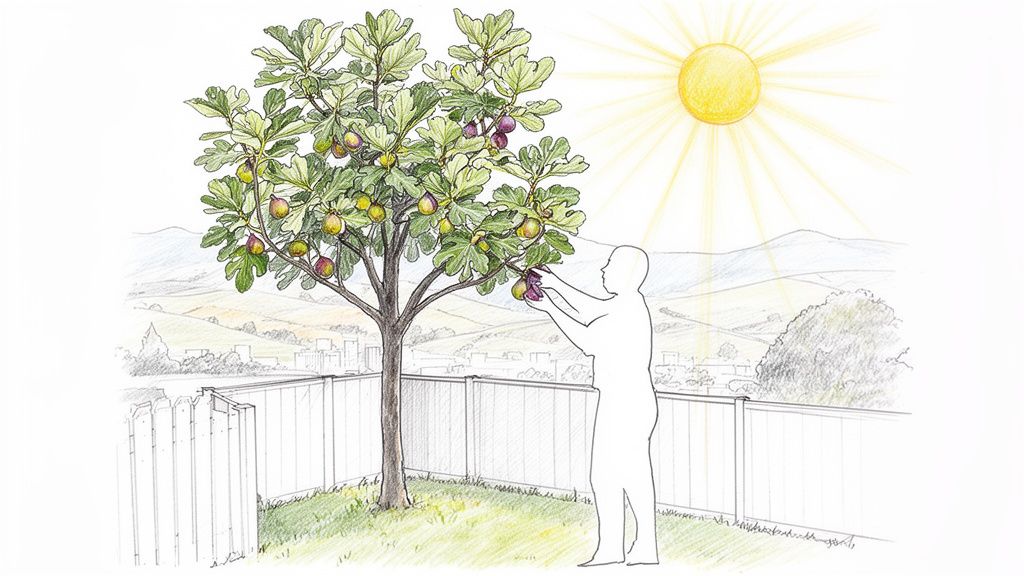
Picture this: stepping out into your backyard on a warm summer afternoon to pick a sweet, sun-warmed fig straight off the branch. That's not some dream from a Mediterranean holiday—it's a reality for gardeners all over New Zealand. Fig trees, or Ficus carica, are just perfectly suited to our unique climate, making them a fantastic and surprisingly low-effort choice for pretty much any backyard.
A big part of their appeal is just how adaptable they are. Whether you've got a tiny urban courtyard, a classic suburban patch, or a sprawling lifestyle block, there’s a fig tree that will happily make itself at home. They aren’t too fussy about soil, and once they’re established, they're remarkably drought-tolerant, easily handling the dry summer spells we often get.
A Perfect Match for Kiwi Climates
One of the key reasons figs do so well in NZ is our long growing season and decent sunshine hours. Figs need a good dose of sun to ripen their fruit to that perfect, jammy sweetness, and most parts of the country can deliver that from late spring right through to autumn.
The way figs have been grown here over the years has also made a huge difference. Early growers figured out which specific varieties were best suited to local conditions. As commercial and lifestyle growers learned more, they focused on propagating plants from cuttings (vegetatively) instead of seed, which guarantees you get a tree with the same great qualities. You can actually read more about the history of fig growing over on lifestyleblock.co.nz.
Thanks to all that selective work, we now have a legacy of fantastic, proven performers to choose from.
More Than Just Fruit
Aside from the delicious harvest, fig trees bring a lot more to the table, making them a brilliant addition to any garden design. Here’s why they’re such a great fit:
- Architectural Beauty: With their huge, distinctive leaves and sculptural branches, fig trees add a bold, structural look to the garden. They also provide lovely, dense shade in summer.
- Low Maintenance: Compared to other fruit trees, figs need less pruning and are less bothered by major pests and diseases. This makes them ideal if you're looking for a big reward with minimal fuss.
- Container Friendly: Many varieties grow brilliantly in large pots, so even if you only have a small deck or patio, you can still enjoy a homegrown harvest.
A well-chosen fig tree is more than just a plant; it's a long-term investment in your garden's beauty and your pantry's flavour. With the right start, a single tree can provide abundant fruit for decades.
Choosing the Right Fig Variety for Your Climate
Getting your variety choice right from the get-go is the single most important decision you'll make for a bumper fig harvest. New Zealand's climate is famously diverse, stretching from the subtropical north to the frosty south, so a tree that thrives in Northland might just shiver its way through the season in Canterbury.
Think of it like picking a coat. A light jacket is fine for an Auckland winter, but you'd be miserable in the same gear down in Invercargill. It’s the same with figs. Some varieties need long, hot summers to properly ripen their fruit, while others are tough enough to produce a decent crop even when the growing season is a bit short.
Nailing this choice means your tree will be a happy, productive member of your garden for decades.
Understanding Breba vs. Main Crop Figs
Before you start picking names, it helps to know about the two types of crops a fig tree can produce. This little bit of knowledge makes it much easier to read plant labels and choose a tree that actually suits your climate and when you want to be eating fresh figs.
- Breba Crop: This is your early bird harvest. These figs grow on last year's woody branches and ripen in early summer, usually around December–January. Varieties that produce a good breba crop are a fantastic choice for cooler regions, giving you a reliable harvest even if the summer doesn't get hot enough to ripen the main crop.
- Main Crop: This is the big one. The main crop grows on the new, green shoots from the current season. These figs develop all summer long and ripen from late summer into autumn, typically from February to April. For most varieties, this is where the bulk of your harvest will come from, and it needs plenty of sun and warmth to develop properly.
Some superstar varieties give you both, offering a long, staggered harvest. Others specialise in one or the other.
Top Fig Varieties for New Zealand Gardens
While there are hundreds of fig varieties worldwide, a handful have proven themselves as reliable performers in Kiwi gardens. They’re self-fertile (so you only need one tree) and well-suited to our conditions. Let’s look at some of the most popular choices.
'Brown Turkey' is the old faithful of the fig world here in New Zealand. It's incredibly hardy and will reliably produce fruit almost anywhere in the country, handling cooler temperatures much better than most. You’ll get a decent breba crop and a very generous main crop of medium-sized, brownish-purple figs with sweet, amber flesh.
Another excellent option, especially for those wanting massive fruit, is 'Mrs Williams'. This one is famous for its very large, flavourful figs with dark skin and a rich, red interior. It does best in warmer regions with long summers, like the Hawke's Bay or Bay of Plenty, where its main crop has plenty of time to mature.
If it's pure flavour you're after, 'Brunoro Black' (sometimes sold as 'Black Brunswick') is hard to beat. It produces small to medium, almost black figs with a deep red, intensely sweet, jammy flesh. It's a heavy main cropper and really needs a warm, sunny spot to develop that incredible flavour. For a more detailed look at your options, check out our guide to fig varieties in NZ.
Don't forget your garden's own microclimate! A sheltered, north-facing wall can create a pocket of warmth that lets you grow varieties usually reserved for warmer parts of the country.
Comparing Your Options
Choosing can be tough, so here’s a quick table to help you compare these popular varieties at a glance. Think about your local climate and what matters most to you—is it rock-solid reliability, impressive size, or gourmet flavour?
Fig Variety Comparison for New Zealand Gardens
To help you choose the best fig for your garden, here’s a comparison of some popular varieties available in New Zealand, highlighting their key characteristics.
| Variety Name | Best Suited Climate | Fruit Flavour and Size | Ripening Season (NZ) | Key Features |
|---|---|---|---|---|
| Brown Turkey | Nationwide, very hardy | Medium size, sweet amber flesh | Early Summer (Breba) & Autumn (Main) | The most reliable and adaptable all-rounder for any NZ garden. |
| Mrs Williams | Warmer northern regions | Very large, rich red flesh | Late Summer to Autumn (Main) | Excellent choice for gardeners wanting impressively large, tasty fruit. |
| Brunoro Black | Warm, sheltered spots | Small-medium, intense flavour | Autumn (Main) | A gourmet variety prized for its exceptionally sweet, jam-like figs. |
Ultimately, the best variety is the one that will thrive where you live. By matching the tree to your climate, you’re setting yourself up for years of delicious, home-grown figs.
How to Plant Your Fig Tree for a Strong Start
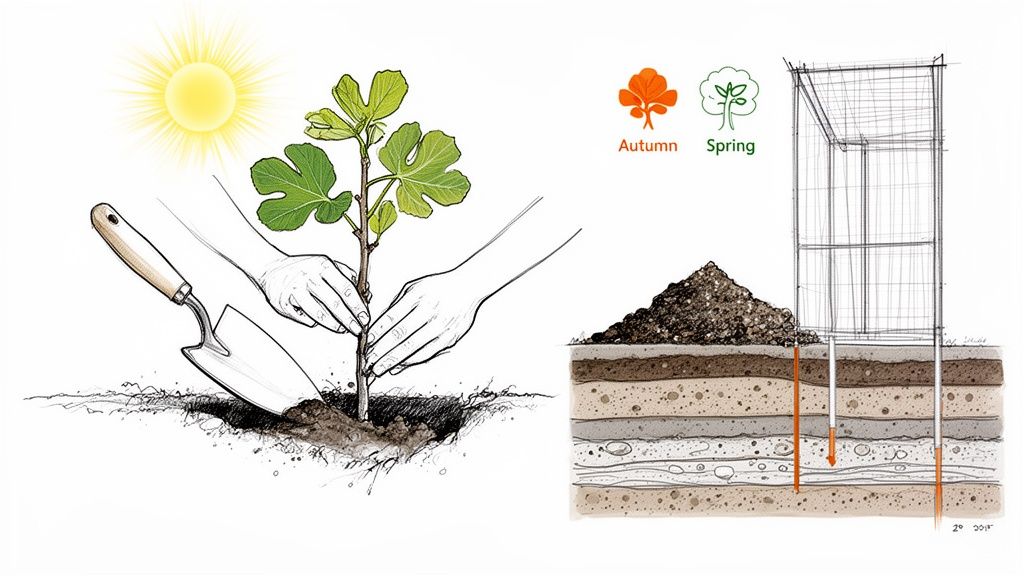
Giving your new fig tree the best possible start is like building a solid foundation for a house; get it right, and you're setting the stage for decades of healthy growth and delicious fruit. That little bit of extra effort at planting time really does pay off down the track.
The good news is that planting a fig is a pretty straightforward job. It all boils down to three things: timing, location, and soil. Nail these, and your tree will establish a strong root system well before it has to worry about putting energy into leaves and fruit.
Choosing the Best Planting Time in NZ
In gardening, timing can be everything. The best time to get your fig tree in the ground really depends on which part of New Zealand you call home. Our climate is so varied that a single rule just won't cut it.
- For Warmer, Northern Regions: If you're gardening in places like Northland, Auckland, or the Bay of Plenty where frosts are a rare event, autumn is the perfect time. The soil is still warm enough for the roots to grow and get settled over winter. This gives your tree a massive head start for an explosion of growth come spring.
- For Cooler, Southern Regions: Down in Canterbury, Otago, or Southland where you get proper frosts, it's much safer to plant in spring. Just wait until the danger of the last frost has passed. This gives the vulnerable young tree the entire growing season to get established before it has to face its first cold winter.
Finding the Perfect Spot
Figs are total sun-worshippers. To get that rich, sweet flavour, they need a spot that gets absolutely baked in sun. Have a good look around your garden and scout out the prime real estate.
The ideal home for your fig tree will get at least six to eight hours of direct sunlight every day. A spot against a north-facing wall or fence is the dream ticket. The wall soaks up heat during the day and radiates it back at night, creating a cosy microclimate that figs adore.
Shelter is just as important. Figs might be tough, but they hate being thrashed by strong winds, particularly those cold southerlies. Wind can tear up the leaves, stress the tree, and dry the soil out in a flash. A sheltered, sun-drenched corner is what you're aiming for.
A happy fig has warm roots and sun-drenched leaves. The more sun it gets, the sweeter and more plentiful your fruit will be. Choose its forever home carefully—figs really don't like being moved once they've settled in.
Preparing the Soil for Planting
Figs aren't overly fussy about soil type, but they have one deal-breaker: good drainage. They absolutely detest having 'wet feet', and waterlogged soil is the quickest way to invite root rot.
Before you even think about digging, check your soil. If you've got heavy clay, you'll need to improve it. Working in plenty of compost and maybe some gypsum will help break up that dense structure and let water drain away. On the other end of the spectrum, if your soil is very sandy, adding lots of compost and organic matter will help it hold onto the moisture and nutrients the tree needs.
Here's your step-by-step planting guide:
- Dig a Generous Hole: Make the hole at least twice as wide and about the same depth as the tree's root ball. This gives the roots plenty of loosened soil to spread out into.
- Enrich the Soil: Mix a good amount of well-rotted compost or a quality garden mix into the pile of soil you just dug out. This is the tree's first meal in its new home.
- Check the Depth: Gently place the tree in the middle of the hole. The top of its root ball should be level with, or even slightly higher than, the surrounding ground. Planting too deep is a classic mistake and can suffocate the trunk.
- Backfill and Water: Fill the hole back in with your lovely enriched soil, patting it down gently to get rid of any big air pockets. Give the tree a deep watering to help the soil settle in around the roots.
- Apply Mulch: Finish the job by spreading a 5–7 cm layer of mulch (like bark chips or pea straw) around the base of the tree. Just make sure to keep the mulch from touching the trunk itself, as this can cause it to rot. This mulch layer is fantastic for keeping moisture in, weeds down, and the roots cool during summer.
Caring for and Pruning Your Fig Tree
Once your fig tree is happily settled in its new spot, keeping it healthy is pretty straightforward. Figs aren't needy, but a bit of regular attention to watering, feeding, and pruning will pay you back with lush growth and baskets of delicious fruit.
The trick is to remember where figs come from. They're native to the Mediterranean, a place famous for hot, dry summers and mild, wet winters. If you can replicate those conditions in your garden, you’re giving your tree exactly what it needs to thrive.
Watering for Sweet Success
Getting the watering right is a bit of a balancing act, especially in summer when the fruit is swelling. You're aiming for consistently moist soil, but you never want it to be a bog.
During a typical New Zealand summer (December to February), your tree will be at its thirstiest. A good, deep watering once or twice a week is usually enough for a tree planted in the ground. The best way to know for sure is to just check the soil; if it feels dry a few centimetres down, it's time for a drink.
Figs in pots are a different story. They dry out much quicker and might need watering every day or two when the weather gets hot. Let the top couple of centimetres of potting mix dry out between waterings to dodge the dreaded root rot.
Feeding Your Fig Tree
To get a truly impressive harvest, your fig tree needs fuel. Luckily, a simple feeding routine is all it takes to give it the nutrients for both leafy growth and fruit.
The most important feed of the year is in late winter or early spring (around August or September), just as the tree is waking up. This is its kick-starter for the whole season.
Here’s a simple plan to follow:
- Early Spring (August/September): Spread a generous layer of quality compost around the base of the tree. Top it off with a handful of a balanced fertiliser like blood and bone or sheep pellets.
- Early Summer (December): As the fruit starts to form, you can give it an optional second feed. A fertiliser higher in potassium (potash) at this stage can help boost the fruit's size and sweetness.
Stay away from high-nitrogen fertilisers. They'll just encourage a jungle of leaves instead of the fruit you're actually after.
Think of pruning as a conversation with your tree. You’re gently guiding its energy towards producing high-quality fruit, rather than wasting it on tangled, unproductive growth. A few smart cuts in winter make all the difference come harvest time.
Pruning Your Fig Tree in NZ
Pruning seems to be the part of fig care that worries people the most, but it doesn't need to be complex. The main goal is to create an open, vase-like shape. This structure lets sunlight and air get right into the centre of the tree, which is vital for ripening fruit and keeping fungal diseases at bay.
The best time for a proper structural prune in New Zealand is during winter dormancy. Aim for July or early August, before you see any new buds starting to swell. Pruning now minimises stress on the tree and gets it ready for a productive season ahead.
Your pruning mission has a few key steps:
- Tidy Up: Start by cutting out any wood that’s dead, damaged, or looks diseased. Also, snip off any branches that are crossing over each other or growing back into the middle of the tree.
- Open the Centre: You want a clutter-free interior. Pick 3 to 5 strong, well-spaced branches to form your main framework and get rid of any weaker shoots that are competing with them.
- Encourage Fruiting Wood: Most figs fruit on the new growth from the current season. With that in mind, you can trim back last year’s branches by about one-third. This prompts the tree to send out lots of new, fruit-bearing shoots in the spring.
Always use sharp, clean secateurs or a pruning saw for nice, clean cuts. If you're new to this, our guide on how to prune fruit trees has more detailed techniques that work perfectly for figs, too. This simple annual trim is the secret to a healthy, manageable, and incredibly productive tree.
Managing Common Pests and Diseases
One of the best things about growing figs in New Zealand is just how remarkably trouble-free they are. Compared to a lot of other fruit trees, they tend to shrug off most common garden ailments. A healthy, well-cared-for fig tree is its own best defence—naturally resilient and robust.
Of course, no plant is completely immune, and a couple of issues can crop up from time to time. The good news? They're usually easy to manage if you're proactive. When it comes to garden pests, prevention is always better than a cure.
The Number One Fig Thief: Birds
If you face one challenge, it will almost certainly be birds. Just as your precious figs begin to soften and sweeten, they become an irresistible beacon for blackbirds, wax-eyes, and other feathered friends. One morning your figs are almost perfect; the next, they're pecked and ruined.
The most effective, guaranteed solution is netting.
- Drape Netting: For smaller trees, simply draping bird-proof netting over the canopy and securing it around the base is a quick and easy fix.
- Build a Frame: For larger, more established trees, building a simple frame from timber or PVC pipe around the tree makes a world of difference. It makes draping and removing the net much easier and stops it from snagging on branches.
When your figs start to show their first blush of colour and soften slightly, that's your cue to get the nets on. Acting at this early stage ensures your entire crop is protected before the birds realise the buffet is open for business.
Dealing with Fig Rust
The main disease you're likely to encounter is fig rust. It’s a fungal issue that appears as small, yellowish-orange spots on the upper side of the leaves. If you flip a leaf over, you'll see corresponding rusty-brown pustules underneath. It typically shows up in late summer and autumn, especially when conditions are humid.
While it looks a bit alarming, fig rust rarely causes serious harm to the tree itself. A heavy infection might cause the leaves to drop a bit early, but that's usually the worst of it. The best defence is good airflow, which is exactly why that open-vase pruning shape we talked about earlier is so important.
If you do spot signs of rust, a preventative spray can help keep it in check. You can find out more about using organic solutions like neem oil for plants in our detailed guide, which can be an effective way to manage fungal issues.
Overall, the pest and disease pressure on a fig tree in NZ is refreshingly low. As local horticultural suppliers like Tharfield Nursery note, figs “aren’t as prone to disease as some other fruit crops.” For most home gardeners, bird protection is the main job. By focusing on good pruning, proper watering, and proactive bird control, you’ll find your fig tree is one of the easiest and most rewarding fruit crops you can possibly grow.
Harvesting Your Figs at Peak Sweetness
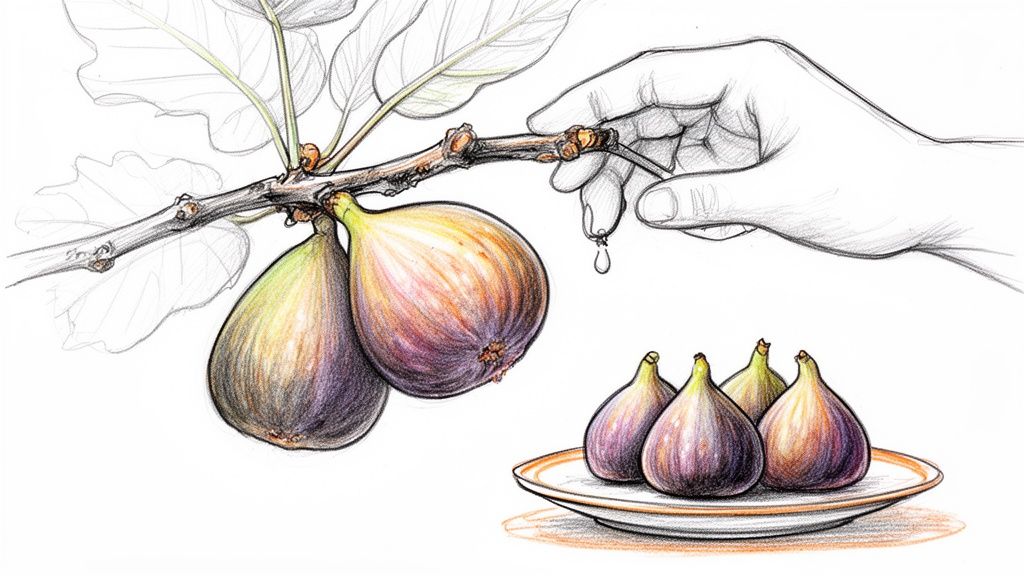
After months of patient care, this is the moment you've been waiting for—the harvest. It's the sweet reward for all your effort, but timing is everything. Unlike a lot of other fruit, figs don't ripen after they're picked, so getting them at their peak is the key to that incredible, jammy flavour.
Picking an under-ripe fig is always a disappointment, while one left too long can spoil right there on the branch. Thankfully, a perfectly ripe fig gives you several clear signals that it’s ready. If you learn to read these cues, you can confidently pick your fruit at the perfect moment every single time.
Knowing When to Pick Your Figs
Forget about what the calendar says; your fig tree will tell you exactly when its fruit is ready. You just need to use your eyes and your hands to spot a fig at its absolute peak.
Keep an eye out for these three unmistakable signs of ripeness:
- Colour Change: The fruit will deepen into its final, mature colour. Depending on your variety, this could mean going from green to a rich purple, deep brown, or even a lovely yellowish hue.
- A Gentle Softness: Gently squeeze the fig. An unripe one will feel hard and unyielding, but a ripe one will be soft and give slightly, much like a perfect peach.
- The Neck Droop: This is the classic giveaway. As the fig fills with sugar and water, it gets heavy. Its 'neck'—the short stem connecting it to the branch—will soften and bend, causing the fig to hang or droop downwards.
Once a fig starts to droop, it's usually ready to be picked within a day or two. This is the ultimate signal from your tree that the fruit has reached maximum sweetness and is good to go.
How to Harvest and Enjoy Your Bounty
When you’ve spotted a perfectly ripe fig, harvesting is simple. The fruit is delicate, so a gentle touch is all you need to avoid bruising the soft skin.
Grasp the fig by its neck and give it a gentle upward lift. A truly ripe fig will come away from the branch with minimal effort, practically falling into your hand. If you have to pull or twist hard, it’s not quite ready—just give it another day.
Once picked, your fresh figs are ready to enjoy immediately. They’re best eaten fresh, still warm from the sun, but they're incredibly versatile in the kitchen. Try them sliced over yoghurt, tossed into a summer salad with goat's cheese and prosciutto, or grilled on the barbecue with a drizzle of honey. You can also make delicious jams or preserves to capture that taste of summer for months to come.
Got a Few Fig Questions?
Even with a solid plan, a few questions always pop up when you're getting to know a new plant. Here are some of the most common queries from Kiwi gardeners about their fig trees, with clear, straightforward answers to help you get the best results.
Does My Fig Tree Need a Pollinator in New Zealand?
This is one of the best things about growing figs here—the answer is a simple no. Virtually all fig varieties sold in New Zealand are self-fertile, what we call 'common figs'.
They are parthenocarpic, which is just a fancy way of saying they can produce fruit all on their own, without needing pollination. You only need one tree to get a fantastic crop because the specific pollinating wasp that other fig types rely on doesn't live in NZ.
Can I Grow a Fig Tree in a Pot?
Absolutely. Growing a fig tree in a large container is a brilliant option, especially for smaller gardens, patios, or for gardeners in cooler regions where a bit of extra shelter is needed. A pot gives you complete control over the soil and lets you move the tree to a protected spot over winter.
Just be sure to choose a container that's at least 50–60cm in diameter to give the roots enough space to thrive, and check that it has plenty of drainage holes. Potted figs do need more frequent watering and feeding than their garden-planted cousins, as they rely entirely on you for nutrients and moisture, but they can be incredibly productive.
Growing a fig in a pot is a great way to naturally restrict the tree's size. It keeps things manageable and makes for a highly productive feature in almost any space—perfect for urban gardeners wanting a taste of homegrown fruit.
Why Is My Fig Tree Not Producing Fruit?
It’s always a bit frustrating when your tree looks healthy but isn't delivering the goods. More often than not, it comes down to one of four common culprits, and thankfully, they're all pretty easy to sort out.
- Age: The tree might simply be too young. Fig trees typically need 2–3 years in the ground to establish a strong root system before they have the energy to start producing fruit consistently.
- Sunlight: Figs are serious sun-worshippers. They need at least six hours of direct, bright sunlight every day to power up and form ripe fruit. Anything less and they'll struggle.
- Pruning: You might be pruning too hard or at the wrong time of year. A heavy-handed prune can easily snip off the very wood that was set to produce your next crop.
- Care: Inconsistent watering or a lack of nutrients can put the tree under stress. A stressed tree will always prioritise survival over making fruit, so it shuts down production.
When Is the Best Time to Prune My Fig Tree in NZ?
Getting your pruning timing right is the key to shaping a healthy tree and encouraging a bumper harvest. The ideal time for any major structural pruning in New Zealand is during its winter dormancy.
Aim for July or early August, after the last leaves have dropped but before any new buds start to swell. This lets the tree heal from the cuts without wasting precious energy and sets it up for vigorous, fruit-bearing growth in spring. Try to avoid heavy pruning in autumn, as this can stimulate new growth that’s vulnerable to damage from late frosts. A light summer trim to remove suckers or wayward shoots is perfectly fine, though.
Ready to start your own fig-growing journey? Explore a wide range of fruit trees, garden supplies, and expert advice at Jungle Story. Find the perfect plants for your Kiwi garden and have them delivered right to your door. Start browsing now at https://junglestory.co.nz.