
You might know it as Gotu Kola, or perhaps by its scientific name, Centella asiatica. Either way, you're talking about the same remarkable herb, a plant celebrated in Ayurvedic and Chinese medicine for thousands of years. Often called the 'herb of longevity', its story stretches from ancient traditions right into modern gardens, and it's now finding a well-deserved home across New Zealand.
Discovering Gotu Kola: The Herb of Longevity
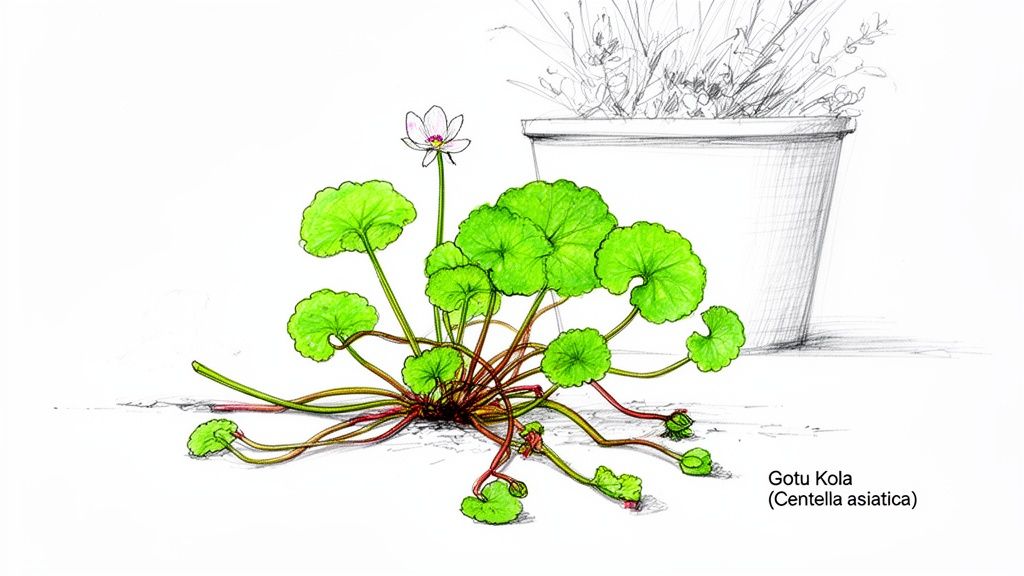
Shrouded in a bit of myth and legend, Gotu Kola has a rich history as a cornerstone of traditional wellness. In Ayurveda, it's revered as a Medhya Rasayana—a special class of plants believed to rejuvenate the mind and nourish the nervous system. This deep-rooted heritage makes it so much more than a simple garden herb; it’s a plant with a story to tell.
Its "herb of longevity" nickname comes from tales of ancient masters and monks who used it to deepen their meditation and enhance mental clarity. While those stories are age-old, modern interest is booming, with people exploring its potential for everything from cognitive support to skin health. This has propelled Centella asiatica out of traditional apothecaries and into the spotlight of contemporary skincare and supplements.
A Perfect Fit For New Zealand Gardens
Despite its tropical Asian origins, Gotu Kola is surprisingly adaptable and can thrive beautifully in New Zealand's temperate climate. Its resilience and versatility make it a fantastic choice for all sorts of Kiwi gardeners.
- For the Indoor Plant Enthusiast: Its low, trailing habit looks stunning in a hanging basket or pot, bringing a splash of vibrant green to any room.
- For the Edible Gardener: The leaves are completely edible. You can toss them in salads, blend them into smoothies, or brew a calming tea for a true garden-to-table experience.
- For the Landscaper: In warmer, frost-free parts of the country, it forms a lush, attractive ground cover in moist, shady spots.
The real secret to success with Gotu Kola in most of New Zealand is understanding what it loves and hates. It craves moisture and can't stand frost, which is why growing it in containers is often the easiest and most effective method for gardeners from Invercargill to Wellington.
Think of this guide as your complete resource for all things gotu kola centella asiatica. We'll walk you through identifying its unique fan-shaped leaves, exploring its many uses, and giving you practical, NZ-specific advice for growing and caring for this incredible plant.
Whether you're just starting your gardening journey or you're an experienced green thumb on the hunt for something new, you’ll find everything you need right here. For more ideas on growing useful plants, check out our guides to other amazing herbs you can grow at home.
How to Identify Gotu Kola in Your Garden
Learning to spot gotu kola centella asiatica is surprisingly simple once you know what to look for. Forget digging through complicated botanical guides; this humble herb has a few distinct traits that make it easy to recognise, whether it’s in your garden, a pot, or even popping up in a damp patch of lawn.
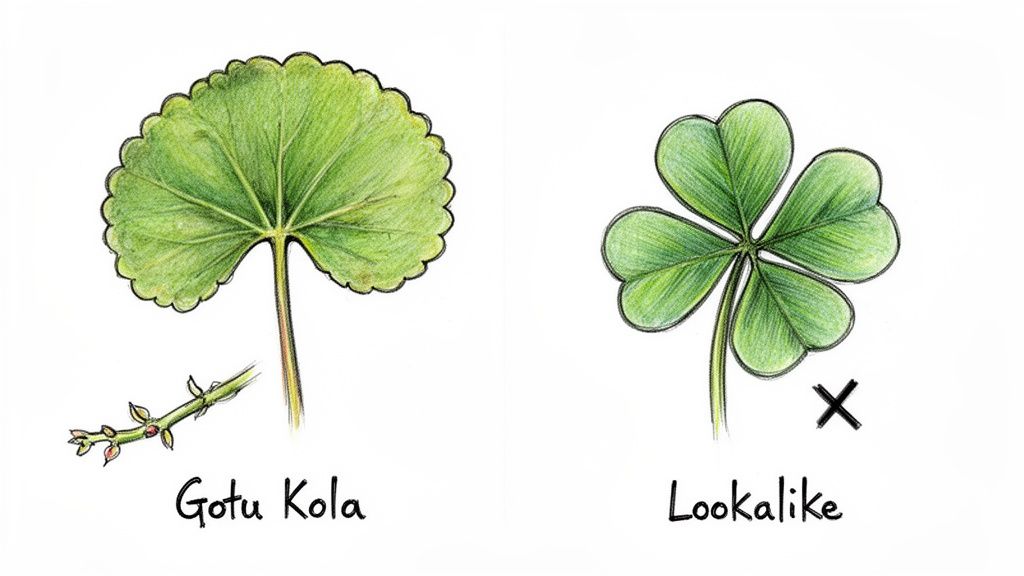
The first thing that will catch your eye is the leaves. They’re the plant's most recognisable feature, shaped like a small, bright green fan or a kidney. Unlike the perfectly round leaves you might see on other ground covers, Gotu Kola’s leaves have gently scalloped or wavy edges, giving them a charming, almost frilly look.
These unique leaves grow from slender, creeping stems called stolons. These stems, which often have a reddish-green hue, are the secret to the plant’s spreading habit. They snake along the ground, rooting down at points called nodes to form a dense, lush mat. This growth pattern is exactly what makes Centella asiatica such a fantastic ground cover in the right conditions.
The Key Identifiers
To be sure you've found Gotu Kola, keep an eye out for these defining features all together. It’s a bit like a game of spot-the-difference; once you see these traits in combination, you can be confident you’ve got the right plant.
- Fan-Shaped Leaves: This is your biggest clue. Each leaf is a single, undivided fan or kidney shape, not a cluster of smaller leaflets like a clover.
- Scalloped Edges: Look closely at the leaf margins. They aren't smooth but have a distinctive, wavy or scalloped edge.
- Creeping Stems (Stolons): You’ll see reddish-green stems running along the soil, connecting the plants into a network.
- One Leaf Per Node: A single leaf on its own long stalk (the petiole) grows up from each point where the stem has rooted into the ground.
Distinguishing Gotu Kola from Lookalikes
Here in New Zealand, a couple of other common plants can cause a bit of confusion. One frequent doppelgänger is Dichondra repens, also known as Mercury Bay weed. While it’s a similar creeping ground cover, Dichondra has perfectly round or kidney-shaped leaves with smooth edges—it’s missing the signature scalloped margin of Gotu Kola. Another is Hydrocotyle, or Waxweed, which can have similar leaves, but they are often more deeply lobed.
The crucial difference is always in the details. While other plants might share its low, creeping habit, none of them combine the unique fan-shaped leaf, scalloped edge, and singular leaf-per-node structure of true Centella asiatica.
Spotting the Subtle Flowers
Gotu Kola does flower, but its blooms are so discreet they're incredibly easy to miss. During the New Zealand summer, from around December to February, you might find tiny, inconspicuous blossoms nestled right down at the base of the plant. These flowers are usually white or a soft pinkish-white and appear in small clusters.
They aren't showy, but spotting them is a great final confirmation that you've correctly identified this valuable herb. By learning to recognise its unique combination of leaves, stems, and growth habit, you’ll be able to spot gotu kola centella asiatica with confidence wherever you find it growing.
Exploring the Benefits and Uses of Centella Asiatica
Now that you can confidently spot gotu kola centella asiatica out in the wild (or in your garden), let's get into why this humble herb is so treasured. It's more than just a pretty ground cover; Centella asiatica has a long and respected history in traditional wellness systems like Ayurveda and Traditional Chinese Medicine, valued for its incredible effects on both the mind and body.
The herb is often called an adaptogen. Think of it as a natural thermostat for your body, helping it adapt to stress and find its balance. It doesn't force anything; instead, it gently guides your system back to a state of calm equilibrium. This balancing act is the secret behind its many uses.
For centuries, it's been revered as a powerful brain tonic. Traditional wisdom, now backed by modern interest, points to its ability to support cognitive functions like memory and concentration. It’s thought to nourish the nervous system, helping to quiet a racing mind and bring about a sense of mental clarity.
A Tonic for the Mind
One of the most celebrated benefits of Centella asiatica is its connection to brain health. In Ayurveda, it’s known as a Medhya Rasayana—a special class of herbs that rejuvenate the intellect and nervous system.
Its effect is calming and restorative, not stimulating. You won't get that sharp jolt like you do from a cup of coffee. Instead, Gotu Kola is said to gently enhance focus and soothe mental fatigue, making it a favourite for anyone needing to concentrate for long periods or simply feel more grounded throughout a busy day.
If some herbs turn up the volume on your brain, Gotu Kola is more like a skilled sound engineer, subtly adjusting the levels to create clarity, harmony, and peace.
A Powerhouse for Skin Health
Beyond its benefits for the mind, gotu kola centella asiatica is an absolute superstar in the skincare world. Its healing and regenerative properties are so potent that it's become a go-to ingredient in countless creams, serums, and ointments designed to soothe and repair the skin.
This is all thanks to the plant's active compounds, like triterpenes, which are known to support the body’s natural healing. They work in a few key ways:
- Supporting Collagen Production: They encourage your skin to produce more collagen, the protein that keeps it firm and elastic. This helps maintain a youthful, supple appearance.
- Aiding Wound Healing: Traditionally, the herb is used to speed up the healing of minor cuts, scratches, and scars by promoting tissue regeneration.
- Improving Circulation: It’s believed to boost microcirculation, which helps deliver vital nutrients and oxygen to skin cells for an all-over healthy glow.
Its skin-enhancing properties are a big part of its appeal. To explore other natural ways to support your skin as it ages, you might want to look into the best supplements for aging skin.
How to Use Your Homegrown Gotu Kola
Bringing the goodness of this amazing herb into your daily routine is refreshingly simple. With a fresh supply growing right in your garden, you have plenty of easy options.
The Herb Federation of New Zealand suggests that munching on just two fresh leaves a day can be a great way to support general health. Here in New Zealand, Centella asiatica is a water-loving, creeping perennial that’s frost-tender, making it a perfect indoor plant for home gardeners.
Here are a few simple ways to use it:
- In Salads and Smoothies: The easiest way is to toss a few fresh leaves into your daily salad or blend them into a green smoothie. They have a mild, slightly sweet, and herbaceous taste that gets along well with other greens.
- As a Calming Tea: Brew a simple tea by steeping a tablespoon of fresh or dried leaves in hot water for about 10 minutes. It's the perfect way to unwind in the evening. This method is quite similar to how you’d prepare other beneficial plants, like the one we cover in our guide to growing Moringa in New Zealand.
- In a Fresh Juice: For a refreshing and nutrient-packed drink, combine a handful of Gotu Kola leaves with veggies like cucumber and celery in your juicer.
As with any new herb, it’s always a good idea to start with a small amount to see how your body feels. Moderation is key, and it’s wise to chat with a healthcare professional before making any big changes to your wellness routine.
Successfully Growing Gotu Kola in New Zealand
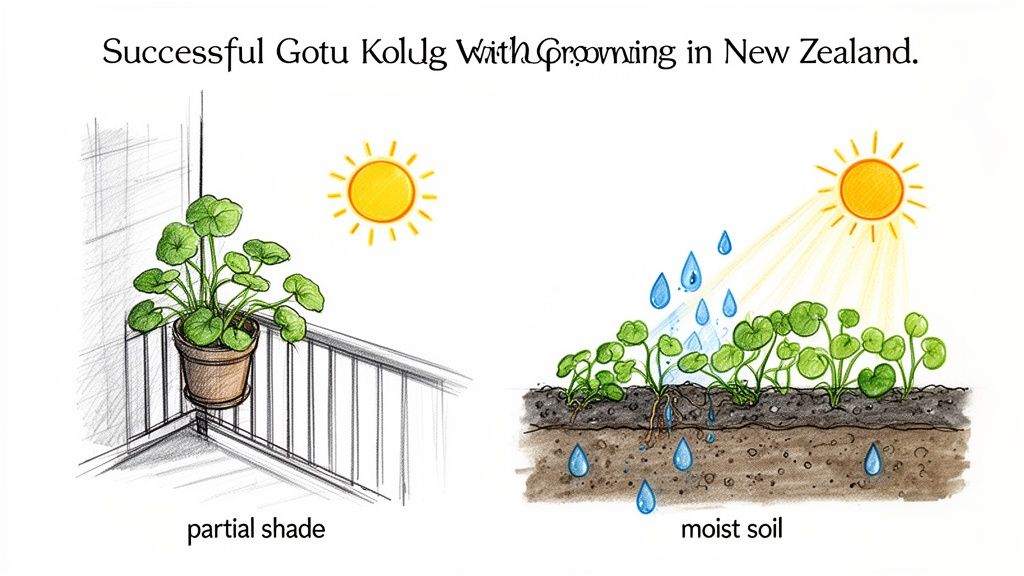
Growing a lush patch of gotu kola centella asiatica in New Zealand is an incredibly rewarding experience, and it's much easier than you might think. The secret to success isn't complicated; it all comes down to getting three key things right: the soil, the perfect amount of light, and consistent moisture. Nail these, and this amazing herb will absolutely flourish.
Gotu Kola originally hails from the warm, humid wetlands of Asia, which gives us some big clues about what it loves. This isn't a plant that enjoys being parched or baked in the harsh Kiwi sun. It much prefers conditions that remind it of home—damp, shady, and sheltered.
Think of it like a fern; it just wants to be kept comfortable and cool. This makes it a fantastic choice for those tricky, shaded spots in the garden where other plants tend to struggle. It also explains why it adapts so beautifully to being grown indoors in pots.
Mastering The Ideal Soil Conditions
The foundation of any healthy plant is its soil, and for Gotu Kola, this is especially true. It thrives in soil that stays consistently moist but never becomes a swamp. You're aiming for the texture of a damp sponge—it holds plenty of water but still has air pockets for the roots to breathe.
A rich, well-draining soil loaded with organic matter is the gold standard. This kind of mix retains the moisture Centella asiatica craves without letting its roots sit in stagnant water, which is a fast track to root rot. It really pays to prepare soil for planting properly from the get-go.
For potted plants, a high-quality potting mix is a must. You can easily improve a standard mix by adding extras like coco coir or perlite to boost both moisture retention and drainage. If you want to create the perfect blend, our guide on choosing the right potting mix and soil has all the details you'll need.
Light And Water: A Balancing Act
Finding the sweet spot for light is crucial for gotu kola centella asiatica. While it needs light to grow, it’s very sensitive to direct, intense sun. The strong New Zealand sun, especially in summer, can easily scorch its delicate leaves, causing them to turn yellow and wilt.
The perfect location is one that gets partial shade or dappled sunlight—think of the gentle light filtering through the leaves of a large tree. An east-facing spot that catches the soft morning sun but is protected from the harsh afternoon heat is often ideal. Indoors, a bright room away from a sun-drenched window is perfect.
Watering is simple: keep the soil consistently moist. Never let it dry out completely. A quick finger test is the best way to check—if the top centimetre of soil feels dry, it’s time for a drink. You can ease off the watering slightly during the cooler winter months when the plant's growth naturally slows.
Why Pots Are Perfect For Kiwi Gardeners
For most of us in New Zealand, growing Gotu Kola in containers is the most practical and successful approach. Why? Because the plant is frost-tender, meaning it simply can't handle freezing temperatures. A single frost can be enough to badly damage or even kill an outdoor plant.
Growing Centella asiatica in a pot gives you total control over its environment. You can quickly move it indoors or to a sheltered spot when a cold snap is on the way. This clever strategy allows gardeners from the chilly south to the milder north to enjoy this wonderful herb.
While gotu kola centella asiatica was first recorded in New Zealand in Auckland's Mt Albert area way back in 2006, its sensitivity to cold has stopped it from spreading widely in the wild. In New Zealand, it typically flowers from December to February. For home gardeners, this means managing it in pots or providing a thick layer of mulch for protection is the best way forward.
Only in the very warmest, truly frost-free parts of the upper North Island can it be grown successfully outdoors all year round as a ground cover. For everyone else, embracing pot culture is the simplest path to a lush, healthy harvest.
For a quick overview, here's a handy table to guide your growing setup.
Gotu Kola Growing Guide for New Zealand Climates
| Growth Factor | Indoor Cultivation (Pots/Containers) | Outdoor Cultivation (Warmer Regions) |
|---|---|---|
| Light | Bright, indirect light. Near a window but out of direct sun. | Dappled sunlight or partial shade. Under trees or on an east-facing side of the house is ideal. |
| Soil | High-quality, well-draining potting mix. Add coco coir for moisture. | Rich, loamy soil with plenty of organic matter. Must retain moisture but drain well. |
| Watering | Keep soil consistently moist but not soggy. Water when top cm is dry. | Water regularly, especially in dry spells. Never allow the soil to dry out completely. |
| Frost Protection | Easily move pots indoors or to a sheltered spot before frosts. | Requires a frost-free climate. Can be protected with a thick layer of mulch in marginal areas. |
| Temperature | Thrives in average room temperatures, between 18°C and 25°C. | Prefers warm, humid conditions. Struggles below 10°C. |
This table should help you create the perfect environment for your Gotu Kola, whether it's living on your kitchen bench or in a shady corner of your garden.
How to Propagate, Harvest and Store Your Herb
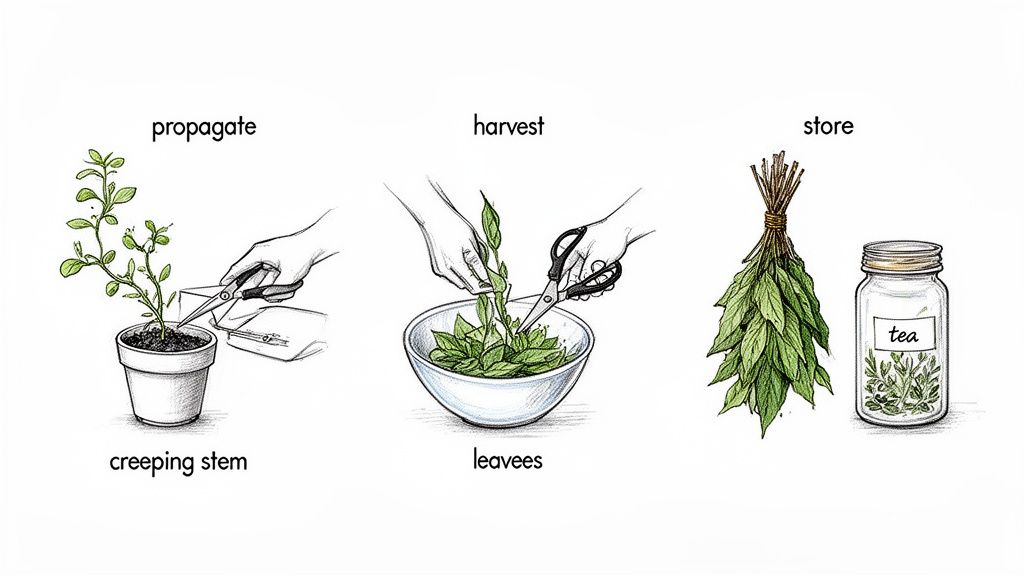
One of the best things about growing gotu kola centella asiatica is just how generous it is. With a tiny bit of effort, you can easily multiply your plants to share with friends or just expand your own patch. This whole process, called propagation, is wonderfully simple because it just piggybacks on the plant’s natural desire to spread.
Gotu Kola sends out creeping stems, known as stolons, which put down roots wherever they touch moist soil. All we're doing is giving these stolons a helping hand to create new, independent plants. It’s a really satisfying and sustainable way to make sure you’ve always got a fresh supply on hand.
Simple Steps to Propagate Gotu Kola
Multiplying your plant is a straightforward job you can tackle almost any time of year. You just need a healthy parent plant, a sharp pair of scissors, and a new pot filled with moist, well-draining soil.
- Select a Healthy Stem: Look for a vigorous, long stolon that has several healthy leaves and little bumps where roots are starting to form (these are the root nodes).
- Take Your Cutting: Using clean scissors, snip off a piece of the stem that's at least 10-15 cm long. Make sure it has at least two or three leaves and a few of those root nodes.
- Plant the Cutting: Lay the cutting flat across the surface of the moist soil in your new pot. Gently press it down so the root nodes are making good contact. You can even use a small stone or a bent piece of wire to hold it in place if you need to.
- Keep it Moist: Pop the pot in a shady, sheltered spot and keep the soil consistently moist—but not soggy. In just a few weeks, your cutting will develop a strong root system and start pushing out new growth.
When and How to Harvest Your Leaves
Once your gotu kola centella asiatica is well-established and growing happily, you can start harvesting. The great news is that in New Zealand's temperate climate, especially if you're growing in pots, you can often harvest all year round. That said, the plant is at its most energetic during the warmer months from spring through to autumn.
A good rule of thumb is to never harvest more than one-third of the plant's leaves at any one time. This sustainable approach leaves it with plenty of energy to recover and produce lush new growth for your next harvest.
Always use clean, sharp scissors to snip the leaf stalks close to the main stem. A clean cut helps the plant heal quickly and lowers the risk of disease. In fact, light, regular harvesting actually encourages the plant to become bushier and more productive.
Interestingly, research from the University of Auckland's Food Science Programme has even looked into the bioactive compounds in leaves grown right here in NZ, confirming their quality. Local herbal experts suggest enjoying two fresh leaves daily for general wellness. The plant typically flowers from December to February in our summer, which is considered a period of peak vitality. You can explore the findings on NZ-grown Gotu Kola if you'd like to dive deeper.
Smart Storage for Year-Round Use
Storing your harvest properly means you can enjoy the benefits of Centella asiatica long after you’ve picked it. You’ve got two main options, depending on how you want to use it.
- For Fresh Use: If you're planning to toss the leaves into salads or smoothies within a few days, wrap them in a damp paper towel. Then, place them inside a sealed container or bag in your fridge's crisper drawer. This will keep them fresh and vibrant for up to a week.
- For Long-Term Storage (Drying): Drying is your best bet for preserving leaves to use in teas and infusions. Simply tie small bunches of stems together and hang them upside down in a warm, dry, well-ventilated spot away from direct sun. Once they're completely brittle, crumble the leaves and store them in an airtight glass jar in a dark cupboard. They'll hold onto their potency for several months.
Managing Common Pests and Growing Issues
While Gotu Kola is a famously resilient and easy-going herb, a little bit of know-how can help you tackle any challenges that pop up. The good news is that most issues are minor and easily fixed with organic, garden-friendly solutions, keeping your plants healthy and your harvest pure.
Like many leafy greens, Gotu Kola can occasionally attract a few common garden pests. In New Zealand’s often damp, mild conditions, there are two main culprits to watch out for. Keeping a close eye on your plants means you can spot these visitors early before they cause any real trouble.
The most frequent unwanted guests are aphids—those tiny, sap-sucking insects that cluster on new growth—and slugs and snails, which are drawn to the plant's lush, moist leaves. Regular checks under the leaves and around the base of the plant will help you catch them in the act.
Eco-Friendly Pest Control
Keeping your pest management natural is especially important if you plan on eating your Gotu Kola. Harsh chemical sprays are completely unnecessary and can harm the beneficial insects in your garden. Instead, these simple, organic methods are highly effective:
- Aphids: A sharp spray of water from a hose is often enough to knock them right off. For a more stubborn problem, a weak solution of soapy water (just a few drops of dish soap in a litre of water) sprayed directly on the insects will do the trick.
- Slugs and Snails: These nocturnal feeders are best dealt with by simply hand-picking them off your plants in the evening. You can also set simple beer traps or sprinkle diatomaceous earth around the base of your pots to create a barrier they won’t cross.
Troubleshooting Common Growing Problems
Beyond pests, you might notice your plant showing signs of stress. Don't worry—this is usually just its way of telling you it needs a small adjustment in its care routine.
Yellowing leaves are the most common complaint, and it's almost always a signal of either too much direct sun or improper watering. If your plant is getting blasted by the harsh afternoon Kiwi sun, move it to a shadier spot. If the soil is either waterlogged or bone dry, adjust your watering schedule to keep it consistently moist but never swampy.
Remember: Gotu Kola loves consistency. Sudden changes in its environment, especially with water and light, can cause temporary stress. Finding a good spot and sticking to a regular watering routine is the key to a happy plant.
Finally, while its spreading nature is a plus for ground cover, it’s also something you'll need to manage. The plant's creeping stems will eagerly root into any available moist soil. This is exactly why we strongly recommend container planting for most New Zealand gardeners. It keeps the plant contained, healthy, and prevents it from venturing where it’s not wanted, ensuring you remain in control.
Gotu Kola FAQs
To wrap things up, let's go over a few of the most common questions we get from Kiwi gardeners about growing and using gotu kola. Think of this as a quick-fire round to give you that final boost of confidence.
Is Gotu Kola Difficult to Grow in New Zealand?
Not at all, especially if you grow it in a pot! Gotu Kola is incredibly manageable as long as you give it consistent moisture and—this is the big one—protect it from frost. This makes it a really rewarding herb for beginner gardeners.
For most of New Zealand, from the cooler South Island cities right up to the central North Island, the perfect strategy is to treat it as a potted plant. You can simply move it indoors or to a sheltered spot for winter. In the warmest, completely frost-free parts of the upper North Island, you might even get away with it as a lush ground cover. Plus, its knack for rooting from cuttings is seriously satisfying to watch.
How Quickly Does Gotu Kola Spread?
When it’s happy, Gotu Kola is a vigorous grower. It sends out creeping stems, called stolons, which eagerly put down new roots wherever they touch moist soil. In the right spot, it can form a dense, green mat quite quickly.
While this is great if you want a ground cover in a specific area, it's also exactly why we recommend keeping it contained.
Planting gotu kola in pots or well-defined garden beds in New Zealand is the best way to manage its spread. This stops it from becoming a bit of a garden thug or escaping into the local environment, giving you all the benefits without the worry.
This controlled approach means you can enjoy its beauty and health benefits without it taking over your patch.
Can I Eat the Gotu Kola I Grow at Home?
Yes, absolutely—and this is one of the best parts of growing your own! The leaves are the main part of the plant used for both culinary and wellness purposes. You can toss a couple of fresh leaves into your daily salad, blend them into a green smoothie, or brew them into a calming herbal tea.
If you plan on eating your plant, it's super important to avoid any chemical pesticides or sprays. Always stick to organic pest control methods. Like with any new herb, it’s a good idea to start with a small amount to see how your body gets on with it. A common starting point is just one or two fresh leaves per day.
Where Can I Buy Gotu Kola Plants in New Zealand?
Jungle Story is a fantastic place to find healthy gotu kola plants. Because we’re a multi-vendor marketplace, you can browse listings from various trusted sellers and specialist growers from all over the country.
This gives you easy access to healthy starter plants ready for your home and garden. Just have a look in the 'Edible Plants' or 'Herbs' categories on the Jungle Story website to find your perfect Centella asiatica and get it delivered right to your door.
Ready to start your journey with this incredible herb? At Jungle Story, we connect you with New Zealand's best growers. Find your perfect Gotu Kola plant and a huge range of other edible and ornamental plants by exploring our marketplace today. Visit us at https://junglestory.co.nz to get started.