
On the hunt for the best hanging planters NZ locals are raving about? You’ve landed in the right spot. These gorgeous, space-savvy planters are much more than a passing trend; they’re a brilliant way for Kiwis to invite a bit of the outdoors in, especially when floor space is tight.
Why Hanging Planters Are Popping Up in Kiwi Homes
Staring at a bare wall or a tricky, unused corner? Hanging planters have quickly become the go-to for plant lovers all over New Zealand, from bustling Auckland apartments to cosy Wellington townhouses. As our homes get a bit more compact, the need for clever, stylish design just grows. This is where the magic of going vertical really starts to shine.
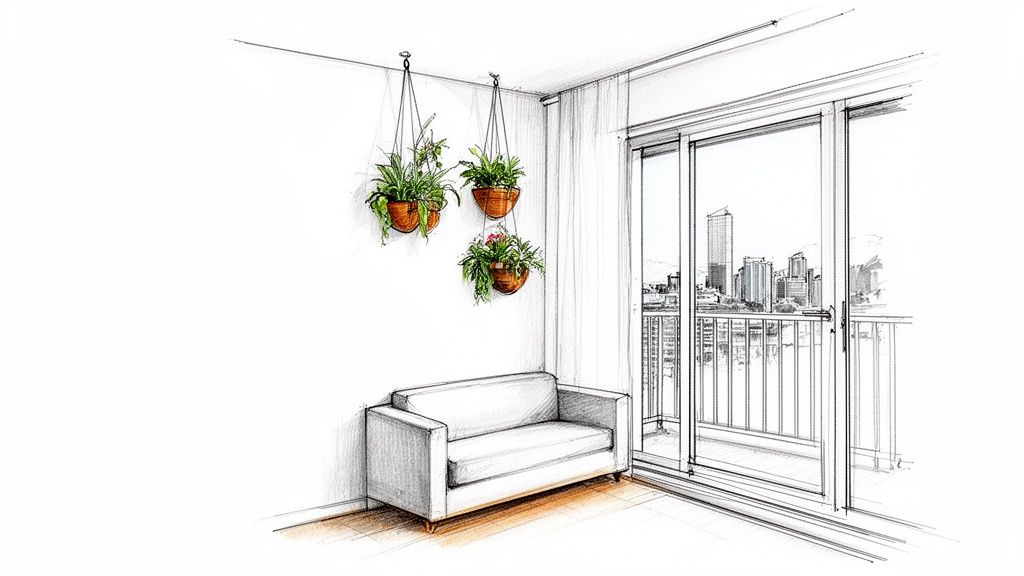
But it’s not just about saving a bit of floor space. It’s about making a style statement and bringing a little piece of nature inside. A beautifully placed hanging planter can transform an empty ceiling corner into a conversation starter, add a splash of living colour to a neutral palette, or create a gentle cascade of green that softens the hard lines of a room.
The Rise of Vertical Greenery in New Zealand
It’s no surprise that hanging planters are so popular here. It's a direct response to modern city living and the fact that most of us don't have a huge backyard anymore. For anyone looking for clever storage and space hacks for tiny homes or just trying to make a small flat feel bigger, hanging planters are a game-changer. They let you:
- Maximise Your Space: Use all that empty vertical real estate, freeing up floors, shelves, and windowsills.
- Create Visual Wow-Factor: They draw your eyes upward, which can make a room feel taller and more dynamic.
- Breathe Easier: Pop some air-purifying plants in them and you’ve got a natural air filter, even in the smallest home.
- Keep Plants Out of Trouble: Hang delicate or toxic plants well out of reach of curious pets and toddlers.
This isn't just a feeling; it's a real shift in how we shop. While the garden supply industry has its ups and downs, what we're seeing is a huge move towards smaller, more contained gardening solutions. This has seen a boom in online shops and boutique retailers offering a massive range of macramé hangers, ceramic ceiling pots, and all sorts of unique options.
Your Guide to Getting Started
Thinking about jumping on the hanging garden bandwagon? It's genuinely easier than you might think. This guide is all about giving you honest, practical advice to get you started with total confidence.
We’re going to walk you through everything—from picking the perfect planter for our unique Kiwi climate to getting it hung up safely and, most importantly, keeping your new green mates happy and thriving. Let's turn your space into the vertical garden you've been dreaming of.
Finding the Perfect Hanging Planter for Your Space
Feeling a bit swamped by all the options out there? You’re not alone. Choosing the right hanging planter can feel like a huge decision, but it's much simpler once you know what to look for. Think of this as your practical guide to the world of hanging planters NZ suppliers have on offer, helping you find the perfect match for your home, your plant, and your lifestyle.
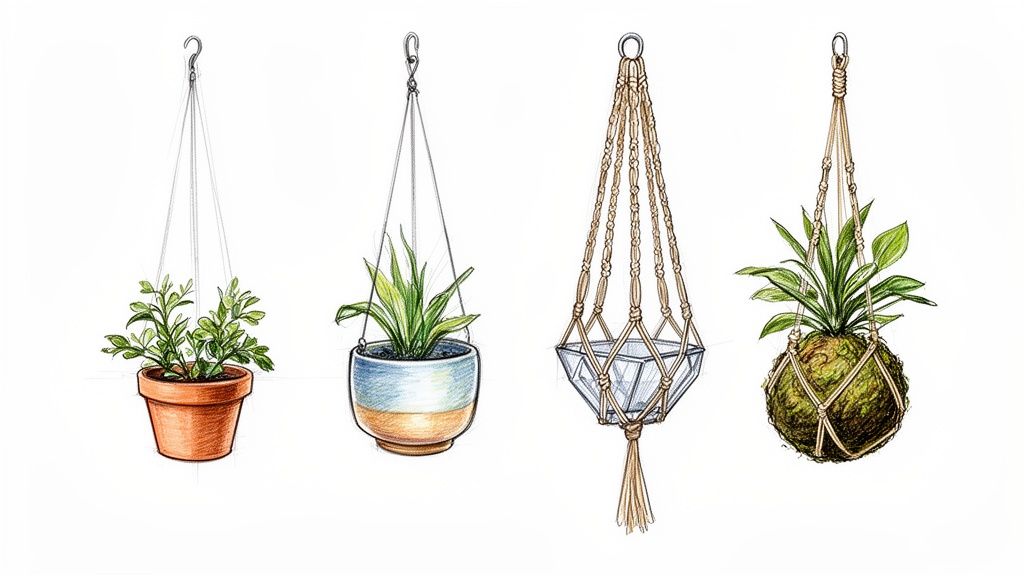
Let's get straight into the real-world pros and cons of the most common materials you'll find. From classic terracotta to modern recycled plastics and natural fibres like macramé, each one has its own personality and its own set of perks.
Materials Matter More Than You Think
The material of your hanging planter directly affects how often you'll need to water, where you can safely hang it, and which plants will actually be happy inside it. It’s a bit like choosing a home for your plant—some prefer a breezy, rustic villa, while others need a modern, moisture-retaining apartment to truly thrive.
A porous terracotta pot, for example, is fantastic for succulents that despise wet feet but might dry out a bit too quickly in a sunny Hawke's Bay summer. On the flip side, a lightweight, self-watering plastic planter could be a lifesaver for a thirsty Boston fern in a dry, centrally heated living room.
Matching Styles to Your Home and Plants
Beyond the practical stuff, the style of your hanging planter is a chance to show off your personality. Today's options go way beyond the standard white plastic pot, with a huge range of designs to complement any Kiwi home.
You might find yourself drawn to:
- Sleek Geometric Designs: Think metal or ceramic planters with clean lines that look right at home in a minimalist or contemporary space.
- Bohemian Macramé Hangers: Woven from natural fibres like cotton or jute, these add a soft, textural element that’s perfect for a relaxed, beachy vibe.
- Traditional Kokedama: These Japanese 'moss balls' have such an earthy, organic look, turning the plant's root ball into a living piece of art.
- Classic Ceramic and Terracotta: Timeless and incredibly versatile, these materials fit beautifully into just about any decor, from rustic farmhouses to modern urban apartments.
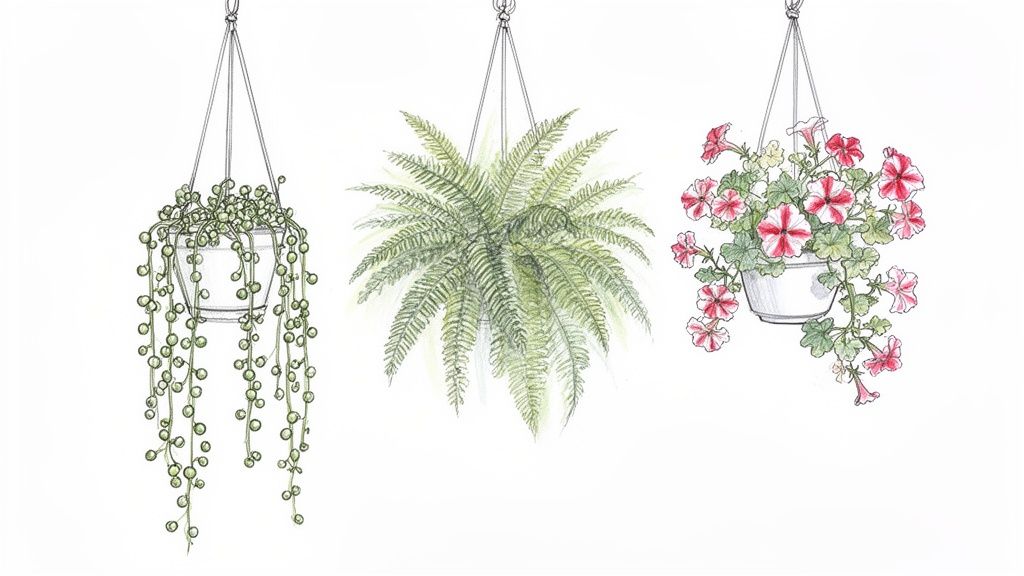
Choosing a planter isn't just about what looks good on its own; it's about how it works with your plant and your room. A dramatic trailing plant like a String of Pearls looks stunning in a simple, understated pot that lets the foliage be the star.
The rise of eco-consciousness here in New Zealand is also shaping our choices. Sustainability and a focus on indoor wellbeing are having a real impact on the types of hanging planters people are buying, from recycled-plastic ceiling pots to natural fibre kokedama slings. We’re increasingly looking for eco-friendly and organic gardening solutions, a trend that's amplified by DIY projects and a desire for locally sourced materials.
This lines up with what’s happening globally, with data showing strong growth in segments like bamboo, coir, and recycled polymers. In fact, the market is projected to grow at over 5% annually between 2025 and 2034.
And hey, if you're looking for more guidance on selecting the right pot for any situation, our broader guide on planter pots in NZ offers a wealth of additional tips.
To make your decision a bit easier, here’s a quick comparison of the most popular materials and how they hold up in New Zealand conditions.
Hanging Planter Material Comparison for NZ Conditions
| Material | Best For | Pros for NZ Climate | Cons for NZ Climate |
|---|---|---|---|
| Terracotta | Succulents, cacti, and plants that prefer dry soil. | Excellent breathability, which helps prevent root rot in humid coastal areas. | Dries out very quickly in hot, dry summers (e.g., Central Otago) or windy spots, requiring frequent watering. |
| Glazed Ceramic | Moisture-loving plants like ferns, Pothos, and Philodendrons. | Retains moisture well, reducing watering frequency. Available in a huge range of colours and styles. | Heavy, requiring very secure mounting. Can crack if exposed to a sudden, hard frost outdoors. |
| Plastic/Recycled Plastic | A wide variety of plants, especially for beginner gardeners. | Lightweight, durable, and excellent at retaining moisture. Often available in self-watering models. | Less breathable than natural materials. Dark colours can overheat roots in direct summer sun. |
| Macramé/Natural Fibres | Holding existing nursery pots for a decorative look. | A lightweight and stylish way to display plants. Adds natural texture to interior design. | The hanger itself doesn't hold soil. The material can degrade over time if left outdoors in the rain. |
| Metal | Modern, minimalist displays with plants in liner pots. | Very durable and strong. Offers a sleek, industrial aesthetic. | Can rust if not properly coated for outdoor use. Heats up significantly in direct sunlight, potentially damaging roots. |
As you can see, there's a perfect material for every plant and every spot in your home, whether you're battling salty sea breezes or dry indoor air. It's all about balancing looks with the practical needs of your plant.
Choosing Plants That Thrive in Hanging Baskets
The secret to a stunning hanging garden isn't just about the pot; it's about pairing the right plant with its perfect home. We need to move beyond generic advice and focus on what actually flourishes in New Zealand's unique conditions, from a humid Auckland summer to a crisp Christchurch winter. Honestly, a great plant choice is the difference between a thriving aerial display and a sad, struggling one.
To make things simple, I’ve broken down my top picks to help you find the ideal green companion for your hanging planters NZ. We'll cover everything from lush indoor trailers to hardy outdoor bloomers, complete with straightforward care tips to set you up for success.
Lush Indoor Trailing Plants
Indoor hanging baskets are a brilliant way to add a cascade of greenery to living rooms, kitchens, or even your home office. These plants generally love the stable temperatures and indirect light found inside most Kiwi homes.
-
Pothos (Epipremnum aureum): Often called Devil's Ivy, this plant is nearly indestructible and an amazing choice for beginners. Its heart-shaped leaves, often splashed with yellow or white, look fantastic trailing from a high shelf or ceiling. It’s also incredibly forgiving, tolerating lower light and the occasional forgotten watering.
-
String of Pearls (Senecio rowleyanus): For a truly unique look, this succulent is an absolute showstopper. Its long, delicate stems are covered in bead-like leaves that spill beautifully over the pot's edge. Just give it bright, indirect light and minimal water—it’s perfect for a sunny spot near a window. Just be careful not to overwater, as it's prone to root rot.
-
Heartleaf Philodendron (Philodendron hederaceum): Very similar to Pothos but with distinctly softer, heart-shaped leaves, this is another easy-care favourite. It thrives in moderate, indirect light and adds a touch of lush, tropical elegance to any space.
Here’s a pro tip for indoor hanging plants: give them a quarter-turn every couple of weeks. This little trick ensures all sides get some light, preventing the plant from becoming thin or 'leggy' on one side and encouraging full, even growth.
Hardy Outdoor Choices for Shady Spots
Got a sheltered porch, a covered balcony, or a spot under the eaves? These can be perfect homes for hanging plants that prefer cooler, shadier conditions. They offer protection from the harshest sun and strongest winds.
-
Fuchsia: With their elegant, drooping flowers that look like tiny dancers, fuchsias are a classic choice for hanging baskets. They provide beautiful colour from late spring through autumn and thrive in partial shade, away from the hot afternoon sun. The key is to keep their soil consistently moist.
-
Ferns (e.g., Boston Fern, Maidenhair Fern): The delicate, arching fronds of a fern add a soft, graceful texture to any spot. They absolutely love the humidity and dappled light of a shady outdoor area. The main thing for a happy fern is consistent moisture; never let the soil completely dry out.
If you want to dive deeper into the world of aerial greenery, you can find a fantastic list of the best hanging plants for NZ homes in our dedicated article.
Sun-Loving Flowers for Bright Balconies
If you have a balcony or patio that gets baked in the sun, you can create an incredibly vibrant, colourful display that lasts all season long. These sun-worshippers are built to handle direct light and produce an absolute abundance of flowers.
-
Trailing Petunias (e.g., Calibrachoa, Surfinias): These are the undisputed champions of sunny hanging baskets. They produce a massive cascade of colourful, trumpet-shaped flowers right through the warmer months. They are hungry plants, so a regular dose of liquid fertiliser during their growing season (spring and summer) will keep them blooming like crazy.
-
Trailing Geraniums (Pelargonium peltatum): Known for their incredible resilience, ivy-leaf geraniums are a fantastic choice for hot, dry spots. Their thick, waxy leaves help them conserve water, and they produce bright clusters of flowers in shades of red, pink, and white. They are particularly tough and can handle a bit of wind better than more delicate flowers.
How to Install Your Hanging Planters Safely
There's nothing quite like a beautiful hanging planter to bring a space to life. But all that beauty relies on one crucial thing: safety. A planter that comes crashing down isn't just a mess; it's a real hazard. Let's walk through the essential steps to get your aerial garden secure, so you can be confident it's staying exactly where it belongs.
Before you even think about picking up a drill, you need to figure out the total weight your ceiling or wall has to hold. This is the single most common mistake people make, and getting it wrong can lead to disaster.
Calculate the True Weight
The weight listed on the planter's tag is just the start. To get the real number, you have to account for everything that adds to the load.
- Start with the Planter: Weigh the empty pot and its hanger (the macramé, chain, or whatever you're using).
- Add Soil and Plant: Pop your plant and potting mix in, then weigh it all again.
- Factor in Water: This is the game-changer. Give your plant a really good watering until it's completely saturated. Let any excess drain out, then weigh the whole setup one last time. You’ll be stunned how much weight water adds—it can often double the dry weight.
This final, soaked-through weight is your true installation weight. This is the non-negotiable number you must use when choosing your hooks and hardware. Never, ever rely on the dry weight.
Locate Structural Support
Once you know your true weight, you have to find a solid anchor point. Your standard GIB or plasterboard ceiling just isn't designed to hold that kind of weight on its own. It will fail under the load of even a medium-sized planter.
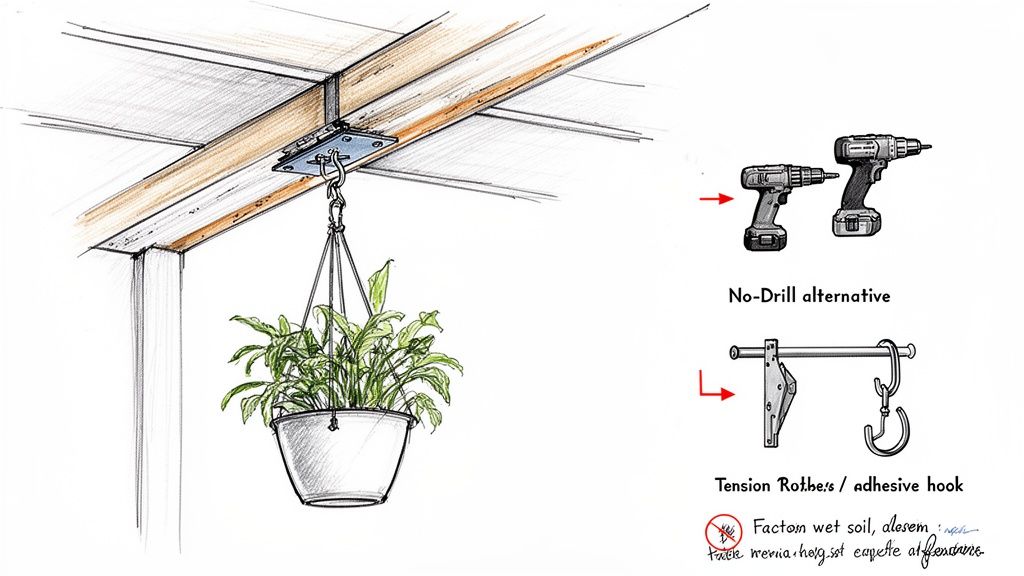
What you're looking for is a ceiling joist or a wall stud. These are the timber beams that make up your home's skeleton. A stud finder is the easiest way to locate them; it’s a simple electronic tool that detects the dense wood behind your plasterboard. No stud finder? You can try the old-school knock test. A hollow sound means empty space, while a solid, dull thud tells you you've found a beam.
Drilling directly into these solid timber supports is by far the safest and most reliable way to hang anything heavy. If you're planning larger vertical gardens or custom structures, it’s worth understanding pressure-treated lumber for outdoor durability.
Choose the Right Hardware
With your weight calculated and your joist located, it's time to pick your gear. The hook, bracket, and chain you choose must be rated to hold more than your calculated true weight. Don't cut corners here.
- For Heavy Planters (over 7 kg): Always go for a screw-in hook with a deep, coarse thread made for wood. Make sure it screws at least 3-4 cm directly into the centre of a joist.
- For Lighter Planters (under 7 kg): If a joist just isn't an option, a toggle bolt can sometimes work in plasterboard, but it's a much less secure method best saved for very light setups.
Steer clear of those small, cup-style hooks or anything that doesn't anchor firmly into a structural support. When in doubt, always go a grade stronger with your hardware than you think you need.
No-Drill Options for Renters
Renting and holes are a no-go? Don't stress, you can still get that vertical greenery look.
- Tension Rods: A strong tension rod (like the ones for shower curtains) can be fitted securely inside a window frame or an alcove. It's a brilliant solution for hanging a few lightweight plants.
- Over-the-Door Hooks: These are perfect for popping a smaller planter on the back of a bedroom or office door.
- Adhesive Ceiling Hooks: For the ultra-lightweights (think air plants or a tiny succulent), a high-quality adhesive hook with a clear weight rating can do the trick. Just be sure to check that weight limit and follow the instructions to the letter.
Mastering the Art of Hanging Plant Care
Looking after hanging plants is a bit of a different game compared to their pot-bound mates on the floor. Being suspended up in the air means they get a lot more airflow around their roots, which can be both a blessing and a curse.
While it's fantastic for root health, it also means the soil can dry out surprisingly fast. Nailing their unique needs is the secret to getting that lush, thriving look we're all after.
The most common trap people fall into is getting the watering all wrong. It's so easy to either overdo it and end up with root rot, or completely forget and leave your plant parched and stressed. Forget trying to stick to a rigid schedule; the best way to know if it's time to water is to just get your hands dirty.
Stick your finger about 2-3 cm deep into the potting mix. If it feels dry, it's time for a drink. If you can still feel some moisture, give it another day or two. This simple touch test is way more reliable than guessing.
Watering Without the Mess
Let's be honest, watering a plant hanging over your head can be a bit awkward. But a few simple tricks can make it a clean and effective job. The aim is to give the soil a proper drenching until water starts running out of the drainage holes, making sure the entire root system gets a good drink.
Here are a few mess-free ways to do it:
- The Take-Down Method: This is easily the most effective way. Just take the planter down and pop it in a sink, bucket, or even the shower. Water it thoroughly, let it drain completely for about 15-20 minutes, and then hang it back up.
- The Ice Cube Trick: For smaller indoor planters, placing a handful of ice cubes on the soil is a great little hack. The water melts and soaks in slowly, which stops a sudden flood from overflowing the saucer.
- The Long-Spout Watering Can: Grabbing a watering can with a long, skinny spout is a game-changer. It lets you get the water right onto the soil, avoiding the leaves and cutting down on drips.
Feeding for a Flourishing Display
Hanging plants only have access to the nutrients in their pot, and these get used up or washed away every time you water. Keeping them well-fed is essential, especially during New Zealand’s main growing seasons.
Think of fertiliser as a power-up for your plants. It gives them the essential energy they need to push out lush leaves and vibrant flowers, keeping them healthy and strong.
For most hanging plants, a feed every 2-4 weeks from spring through summer (that's roughly September to February for us) is perfect. Use a balanced liquid fertiliser, but dilute it to half-strength. When things cool down in autumn and winter, you can ease off, feeding just once every 6-8 weeks or stopping completely for plants that go dormant.
Pruning for Fuller Growth
Pruning is your secret weapon for creating those full, bushy hanging baskets that everyone envies. It stops plants from getting "leggy"—all long, sparse stems with just a few leaves—and encourages them to branch out for a denser, more attractive shape.
Don't be shy about giving your trailing plants a regular haircut. Simply pinching back the tips of the stems forces the plant to send out new side shoots. It’s a simple move that can turn a straggly-looking plant into a lush cascade of green. A good trim in early spring is the best way to set your plant up for a season of vigorous growth.
Of course, the foundation of all happy plants is what's going on under the surface. For a deeper dive into creating the perfect base for your indoor greenery, check out our guide on choosing the right indoor potting mix.
Troubleshooting Common Hanging Plant Problems
Even the greenest of thumbs runs into a bit of trouble now and then. Your leafy friends can be a bit dramatic, showing signs of stress when something’s not quite right. But don't panic, it happens to all of us. This is your go-to guide for figuring out what's wrong and getting your vertical garden back in top shape.
Let’s have a look at a few of the usual suspects and how to sort them out. Think of it as a quick check-up for your high-flying greenery.
Problem: Yellowing Leaves
Seeing leaves turn yellow is probably the most common call for help from a plant. It’s a bit of a tricky one, because it’s the plant's way of telling you its watering routine is off, but it could mean two completely opposite things.
Solution: Check the Soil First
Before you reach for the watering can (or decide to hold off), the best thing to do is get your hands dirty. Stick a finger about 3-4 cm deep into the soil.
- Is the soil soggy or wet? You’ve likely been a bit too generous with the water. The roots are essentially drowning and can’t take up nutrients, which leads to those yellow leaves. Just step away from the watering can and let the soil dry out completely before you water it again.
- Is it bone dry? The plant is thirsty and is dropping leaves to save moisture. Time for a good drench. Pop the whole planter into a sink or bucket of water for 20 minutes or so, let it have a proper drink, and then make sure it drains fully before you hang it back up.
For hanging planters in NZ homes, overwatering is definitely the more common culprit. This is especially true during our cooler, damper autumn and winter months when plants just don't need as much water.
Problem: Pesky Pests Appear
Because our hanging plants are up and out of the way, pests can sometimes set up shop without us noticing until it's a full-blown invasion. The common intruders in Kiwi homes are mealybugs (they look like tiny bits of white cotton wool) and spider mites (look for their tell-tale fine webbing).
Solution: Isolate and Treat
The second you spot a pest, take that plant down and move it far away from your other green mates to stop the spread.
- For mealybugs: Dip a cotton bud in a bit of rubbing alcohol and dab them off directly.
- For spider mites: Give the whole plant a good rinse in the shower, paying special attention to the undersides of the leaves where they love to hide.
As a follow-up, a gentle spray with a diluted neem oil solution or insecticidal soap every few days should clear things up without needing any harsh chemicals.
Your best line of defence is a regular check-up. Whenever you water, take an extra minute to have a good look at the leaves and stems. Catching pests early makes them so much easier to get rid of.
Problem: The Plant Looks Sparse or Leggy
Is your trailing plant looking a bit thin on top? Lots of bare stem between the leaves? Plant people call this being "leggy," and it’s a dead giveaway that your plant is stretching itself out, desperately searching for more light.
Solution: Move to a Brighter Spot
Thankfully, the fix is simple. Your plant just needs a new home with more bright, indirect sunlight. Be careful to avoid harsh, direct sun, though, as that can easily scorch the leaves.
Once you've moved it, don't be afraid to give those leggy stems a good trim. This encourages the plant to branch out from the base, giving you that lush, full, cascading look we all want.
Still Got Questions? We've Got Answers
Got a few things still rattling around in your head? Perfect. This is where we tackle those last-minute "what ifs" that pop up when you're planning your hanging garden.
Let's get into the nitty-gritty details that really make a difference, covering a few common scenarios we haven't touched on yet.
How Can I Water My Hanging Plants While on Holiday?
Nothing sinks the heart quite like coming home from a lovely trip to find sad, wilted plants. Don't worry, a little bit of planning can keep them happy while you’re off enjoying yourself.
- Self-Watering Spikes: These are a game-changer. Just push one of these simple ceramic or plastic spikes into the soil, pop an inverted bottle of water (a wine bottle works a treat) into the other end, and it'll slowly drip-feed your plant as the soil dries out.
- The Bath Method: This is an old-school trick that works wonders for shorter trips, say up to a week. Give your plants a really good soak, let them drain completely, and then sit them on a towel in the bottom of your bathtub with just a little bit of water. It creates a mini humid paradise for them.
- Ask a Friend: Sometimes the simplest solution is the best. If you're away for a while, there’s no substitute for a kind neighbour popping in to check on things.
Can I Grow Edibles in Hanging Planters?
You absolutely can! It’s actually a brilliant way to sneak a surprising amount of fresh produce into a small space. Just think about what you reach for most in the kitchen and what naturally loves to trail downwards.
Herbs are a fantastic starting point – think trailing rosemary, thyme, and mint spilling over the sides. If you're feeling more ambitious, trailing cherry tomatoes, certain types of strawberries, and even some varieties of peas will do beautifully with enough sun and a regular feed.
Which Hanging Planters Are Best for Windy Spots?
Ah, the classic unpredictable New Zealand weather. A sudden southerly can be brutal on a hanging basket, especially if your deck or balcony is a bit exposed. Choosing the right planter and plant is key here.
First, look for tougher plants that can take a bit of a battering, like ivy geraniums or even a compact phormium (New Zealand Flax). Their sturdy stems won't snap in a breeze. It’s best to steer clear of anything with big, delicate flowers that will just get shredded.
For the planter itself, think heavy. A solid ceramic or terracotta pot has a bit of heft to it, meaning it won't swing about as wildly as a lightweight plastic number.
Ready to put it all into practice? At Jungle Story, we've got everything you need to get your vertical garden off the ground. We connect you with New Zealand's best growers and suppliers, with a massive range of plants, pots, and accessories just waiting for you.
Come and explore the collection and kick off your next green adventure at https://junglestory.co.nz.