
Step into the intoxicating world of Jasmine sambac, a plant that offers so much more than just a pretty flower—it's a full sensory experience. You might know it as Arabian Jasmine, an evergreen shrub famous for its sweet, lingering fragrance that truly comes alive in the evening. Its delicate, star-shaped white flowers and lush, glossy green leaves make it a showstopper in any space.
Discover The Scented Jewel Of Your Garden
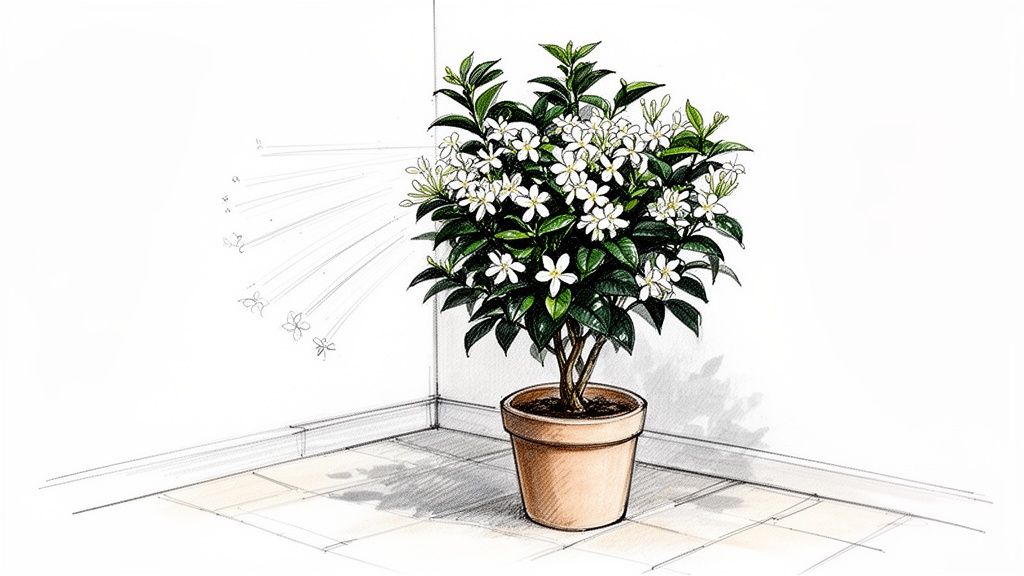
The magic of Jasmine sambac goes well beyond its stunning scent. This plant has a rich history, woven into cultures and traditions all over the globe. For centuries, its blossoms have been used to create fragrant garlands, flavour delicate teas, and produce some of the world's most treasured perfumes.
Imagine crushing a fresh blossom between your fingers – that immediate, unforgettable burst of sweetness is what has made it a favourite in gardens from ancient times to modern New Zealand patios. It has this incredible ability to turn a simple space into a fragrant sanctuary, and that’s what makes it so special.
A Plant With A Storied Past
Scientifically, it's known as Jasminum sambac L., and it happens to be one of the most economically important jasmine varieties grown worldwide. It likely got its start in the Himalayan foothills of India but has since travelled across continents, now thriving in South and Southeast Asia, as well as Central and South America. Its versatility allows it to grow as either a twining vine or a sprawling shrub, making it a brilliant and adaptable choice for all sorts of New Zealand garden designs.
This adaptability is a huge part of its appeal. You can train it to climb a trellis, let it cascade from a hanging basket, or prune it into a compact shrub for a pot. This flexibility means it fits in just about anywhere:
- Patios and Decks: Pop it in a container near a seating area to catch its incredible evening fragrance.
- Indoor Spaces: A bright, sunny spot indoors can become a fragrant oasis, especially during the cooler months.
- Garden Beds: In warmer, frost-free parts of New Zealand, it can be planted straight into the garden as a knockout feature shrub.
For those who love creating beautiful spaces, looking into thoughtful gifts for gardeners can spark some great ideas for tools and decor that pair perfectly with plants like the gorgeous Jasmine sambac.
More Than Just A Pretty Flower
Beyond its looks, Jasmine sambac holds deep cultural value. In many parts of Asia, it’s a powerful symbol of love, purity, and good fortune. The flowers are used in religious ceremonies, weddings, and daily rituals, connecting people to tradition and nature.
By bringing this plant into your home or garden, you’re not just adding a decorative touch; you’re welcoming a piece of living history. In the sections to come, we'll walk you through everything you need to know to help this scented jewel thrive, from creating the perfect environment to pruning for a massive flush of those heavenly blooms. Get ready for a seriously rewarding growing journey.
Creating The Perfect Home For Your Jasmine
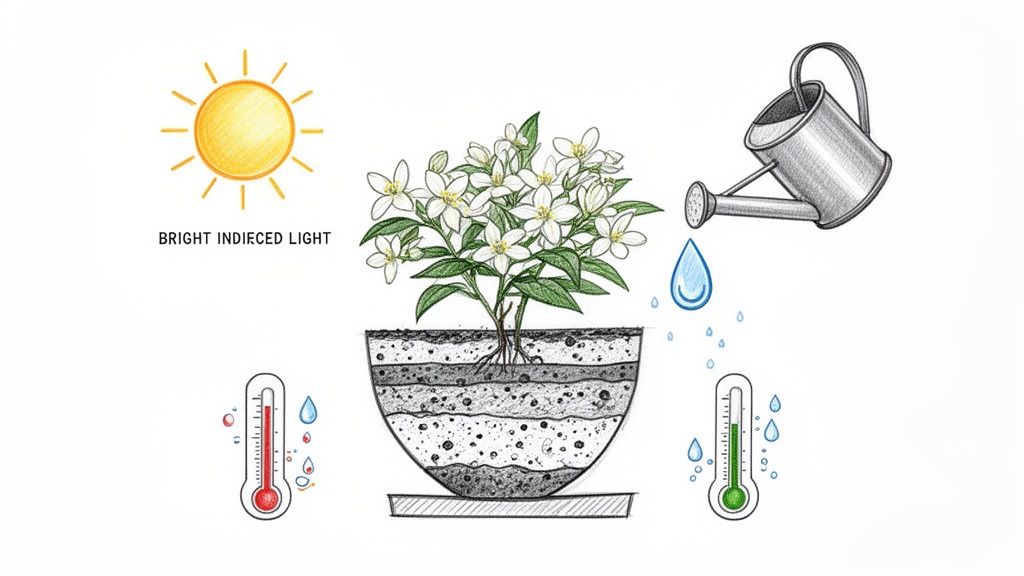
To get those incredible, fragrant blooms from your Jasmine sambac, the first step is to recreate the subtropical conditions it loves. Think of yourself as a host for a very special guest; if you provide the right environment, your jasmine will thank you with endless flowers. And the good news? It's completely achievable, even with New Zealand's unique climate.
Success really comes down to four key things: light, soil, water, and temperature. Get these right, and you've built a stable, nurturing foundation for your plant to not just survive, but to truly thrive.
The Right Amount Of New Zealand Sun
Light is probably the single most important ingredient for encouraging flowers. Jasmine sambac needs at least six hours of bright, indirect sunlight every day. But what does "bright, indirect" actually look like in New Zealand, where our sun can be surprisingly fierce?
Think of a spot that gets drenched in gentle morning sun but is protected from the harsh afternoon glare. For an indoor plant, an east-facing window is usually the sweet spot. Outdoors, a place on the deck or patio that gets dappled shade in the afternoon is perfect. Too much direct, scorching sun, especially in summer, will just burn the leaves and stress the plant out.
If you notice the leaves looking a bit pale or yellow, it might be getting too much sun. On the flip side, if you've got lots of lush green growth but no flowers, your jasmine is probably crying out for a bit more light to fuel its blooms.
Building The Perfect Soil Foundation
The ideal home for your jasmine's roots is a soil that strikes a perfect balance. It needs to be rich enough to feed the plant but loose enough to drain well and prevent root rot. A heavy, soggy soil is the fastest way to an unhappy jasmine.
You can easily whip up a fantastic blend with just a few ingredients:
- Premium Potting Mix: This will form the base of your soil.
- Perlite or Pumice: Add a good handful to keep things light and airy, creating little air pockets for the roots.
- Compost or Worm Castings: Mix in a scoop of this good stuff to provide a slow, steady release of nutrients.
Getting the soil mix right is a game-changer for the long-term health of your plant. For a more detailed guide on creating the perfect foundation for your indoor beauties, check out our post on crafting your own indoor potting mix.
Demystifying The Watering Routine
Watering is more of an art than a strict science. The best advice is to listen to your plant. Instead of sticking to a rigid schedule, get into the habit of checking the soil first. The winning technique here is "slow and deep." When the top few centimetres of soil feel dry, give it a thorough watering until you see water run out of the drainage holes.
This approach encourages the roots to grow down deep and strong, searching for moisture. Watering a little bit every day just creates a weak, shallow root system.
In a Kiwi summer, especially during those warm, humid spells from December to February, you might need to water every few days. But come winter (June to August), the plant slows right down. You’ll want to cut back on watering significantly, letting the soil dry out much more between drinks.
Temperature and Frost Protection
As a subtropical native, Jasmine sambac loves warmth and humidity but absolutely hates frost. It's happiest when the temperature is hovering between 18°C and 29°C.
In many parts of the North Island, you can get away with leaving it outdoors all year in a sheltered spot. But if you're in an area that gets frosts, like the central North Island or most of the South Island, growing it in a pot is the way to go. This means you can easily bring it inside or into a greenhouse when winter temperatures dip below about 4°C, keeping it safe until spring.
Jasmine Sambac Annual Care Calendar For New Zealand
To keep things simple, here’s a seasonal guide to caring for your Jasmine sambac in the Southern Hemisphere. Following this rhythm will help you stay on top of its needs as the New Zealand seasons change.
| Season (NZ) | Key Tasks | Light & Water Needs | Feeding Schedule |
|---|---|---|---|
| Spring (Sep - Nov) | Prune back any dead or leggy growth to encourage new shoots. Repot if necessary. | Increase watering as growth resumes. Ensure it gets plenty of bright, indirect light. | Start feeding with a balanced liquid fertiliser every 2-4 weeks. |
| Summer (Dec - Feb) | Main flowering season! Deadhead spent blooms to encourage more flowers. Watch for pests. | Water frequently, especially during heatwaves. Protect from harsh afternoon sun. | Feed every 2 weeks with a high-potassium fertiliser to support flowering. |
| Autumn (Mar - May) | Reduce pruning. Tidy up the plant and prepare it for the cooler months. | Gradually reduce watering as temperatures drop and days get shorter. | Taper off feeding. A final feed in early autumn is usually enough. |
| Winter (Jun - Aug) | Protect from frost! Bring potted plants indoors or to a sheltered location. | Water sparingly, allowing the soil to dry out between waterings. Plant is dormant. | No feeding required. Let the plant rest. |
This calendar provides a great baseline, but always remember to observe your plant. Factors like the specific location of your home and the microclimate in your garden can mean you’ll need to make small adjustments. Happy growing.
Pruning And Propagating For A Fuller Plant
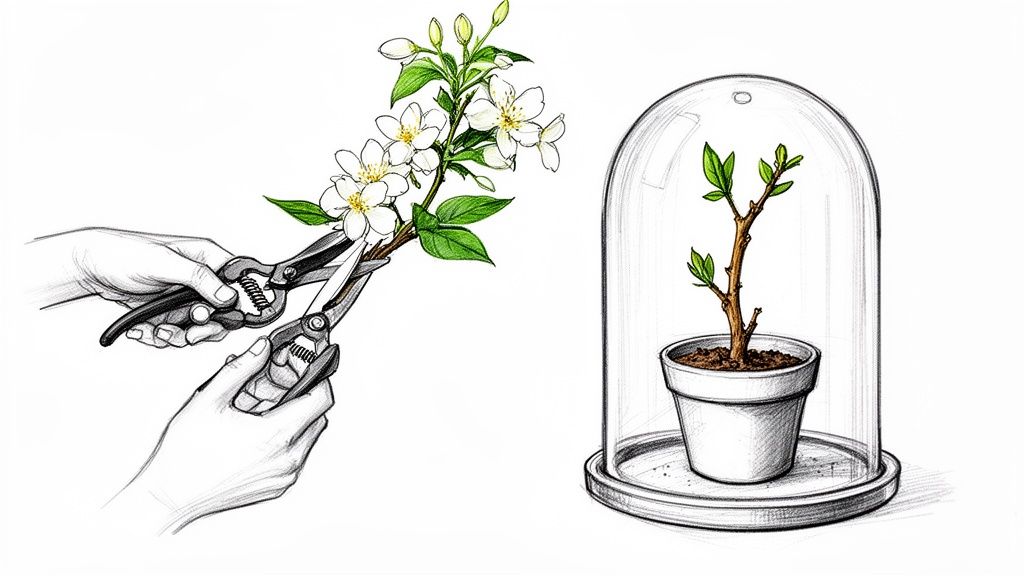
To keep your Jasmine sambac looking its best—lush, full, and dripping with those heavenly scented flowers—a little strategic snipping goes a very long way. Pruning isn't just about hacking it back to control its size; it’s about encouraging a flush of vigorous new growth, which is exactly where your future flowers will appear.
Think of it as a friendly conversation with your plant, gently guiding it towards its most beautiful and productive self. Better yet, those offcuts are perfect for propagation, letting you turn one beloved plant into many more for yourself or to share.
When And How To Prune Your Jasmine Sambac
When it comes to pruning, timing is everything. The golden rule for Jasmine sambac is to give it a tidy-up right after its main flowering burst has finished. Here in New Zealand, that’s usually in late summer or early autumn, around March and April. Pruning at this time gives the plant plenty of time to recover and push out new growth before its winter slowdown.
Resist the urge to prune in late autumn or winter. This can trigger new, tender shoots that are really vulnerable to cold damage. Pruning too early in spring is also a mistake, as you'll end up cutting off the very wood that's gearing up to produce that season's blooms!
You can take two main approaches to pruning, depending on what your plant needs:
-
A Light Trim for Shaping: This is your regular maintenance prune. After the flowers fade, simply snip off the spent clusters and trim back any long, wayward stems to keep a tidy, compact shape. This encourages the plant to branch out, creating a much fuller, bushier look.
-
A Hard Prune for Rejuvenation: If you’ve got an older plant that’s looking a bit sparse and leggy, a harder prune can work wonders. In late summer, you can confidently cut the main stems back by up to one-third. It might look a bit drastic at first, but this shock to the system stimulates strong new growth right from the base, effectively resetting the plant for a lush comeback.
Pruning is your tool for directing the plant's energy. A light trim says, "Get bushier," while a hard prune says, "Let's start fresh." Both are vital techniques for managing the long-term health and flower production of your Jasmine sambac.
Turning One Plant Into Many Through Propagation
One of the most satisfying parts of gardening is creating new plants from scratch. Luckily, propagating Jasmine sambac is surprisingly simple, and the cuttings from your late-summer prune are the perfect candidates. The goal is to take semi-hardwood cuttings—stems that are firm and mature but not yet old and woody.
Just follow these steps for a great strike rate:
- Select the Right Stem: Look for a healthy, vigorous stem from this season's growth. It should be firm, green, and completely free of any pests or diseases.
- Make the Cut: Using clean, sharp secateurs, snip off a section about 10-15 cm long. Make your cut just below a leaf node (the little bump where leaves emerge), as this is where rooting hormones are most concentrated.
- Prepare the Cutting: Gently strip the leaves from the bottom half of the stem, leaving just two or three pairs at the very top. If these leaves are quite large, you can snip them in half horizontally to reduce water loss while the cutting has no roots.
- Encourage Rooting: This step isn't strictly necessary, but dipping the cut end into rooting hormone powder or gel will seriously boost your chances of success. It gives the cutting the kickstart it needs to develop new roots.
- Plant the Cutting: Grab a small pot and fill it with a free-draining propagation mix, like potting mix blended with perlite or sand. Poke a hole with a pencil, insert your cutting about halfway down, and gently firm the mix around it.
- Create a Humid Haven: Cuttings need high humidity to form roots without drying out. You can create a mini-greenhouse by covering the pot with a clear plastic bag or the top half of a plastic bottle. Pop it in a warm spot with bright, indirect light.
Keep the soil lightly moist, but never soggy. In about six to eight weeks, give the cutting a very gentle tug. If you feel resistance, you've done it! Your new Jasmine sambac has roots and is ready to be potted up into its very own home.
How To Encourage More Blooms
One of the questions we get asked most often about Jasmine sambac is a simple but heartfelt one: "Why won't my plant flower?" You’ve given it the perfect spot and cared for it diligently, yet all you're seeing is lush green leaves instead of those famously fragrant white blooms.
It’s a frustrating situation, but the solution is usually just a simple tweak. Think of your jasmine like a little flower factory. For it to run at full capacity, it needs the right fuel, the right working hours, and a safe, pest-free environment. When the flowers stop, it’s a sign that one of these key things is out of balance. Let's run through the common culprits and get your plant back to blooming.
Diagnosing a Lack of Flowers
More often than not, the reason for a non-blooming Jasmine sambac is a simple lack of sunlight. While it definitely appreciates being shielded from our harsh NZ afternoon sun, it still needs at least six hours of bright, indirect light every day to build up enough energy for flowering. A plant tucked away in a shady corner might look healthy and green, but it just won't have the fuel to produce blossoms.
Another common issue is feeding it the wrong thing, or at the wrong time. It’s easy to assume any old plant food will do, but different nutrients do very different jobs. A fertiliser high in nitrogen, for instance, will encourage vigorous, leafy growth—but it does so at the expense of flowers. Your plant will look wonderfully green, but you'll be left wondering where the blooms are.
Finally, stress is a major flower-stopper. This can come from a few places:
- Incorrect Watering: Both overwatering (which leads to root rot) and underwatering (causing drought stress) will put flowering on hold.
- Being Root-Bound: A plant crammed into a pot that’s too small is too stressed to even think about flowering.
- Temperature Stress: Sudden cold snaps or a touch of frost are huge stressors that will shut down blooming immediately.
The Secret to a Perfect Feeding Schedule
To get that beautiful cascade of flowers, you need to feed your Jasmine sambac a fertiliser rich in potassium (K). Potassium is the nutrient that directly fuels flowering and fruiting. A balanced liquid fertiliser with a slightly higher 'K' number is perfect.
The goal is to feed for flowers, not just for leaves. During the peak growing and flowering season here in New Zealand—from late spring through summer (roughly November to February)—you should feed your jasmine every two to four weeks. This steady supply of nutrients gives it everything it needs to keep the flower factory running smoothly.
As autumn rolls in, you can start tapering off the feeding. Stop completely during the winter dormancy period from June to August. Trying to force growth with fertiliser during its natural rest time will only weaken the plant in the long run. For a deeper dive into plant nutrition, check out our complete guide to choosing the right fertilisers for your plants.
Tackling Common Pests in NZ Gardens
Even a perfectly fed and watered plant can struggle if it’s fighting off pests. In New Zealand gardens, Jasmine sambac is most tempting to sap-sucking insects that drain its energy.
Aphids: These tiny, pear-shaped insects love to cluster on new growth and flower buds. A sharp spray of water from the hose can often knock them off. For a more stubborn infestation, a spray of organic insecticidal soap is very effective.
Spider Mites: These pests are almost impossible to see with the naked eye, but you’ll spot their tell-tale fine webbing, usually on the undersides of leaves. They thrive in dry, warm conditions. Misting your plant to increase humidity can help, and a thorough treatment with a miticide or neem oil spray should clear them up. Make sure you get under all the leaves.
Mealybugs: Look for little cottony white masses, especially in the nooks where stems and leaves meet. If you only see a few, you can dab them with a cotton bud dipped in rubbing alcohol. For a bigger outbreak, neem oil is your best friend.
Preventing Root Rot and Other Diseases
The most common disease to hit Jasmine sambac is root rot, which is almost always caused by overwatering and soil that doesn’t drain well. The first signs are usually yellowing leaves, wilting, and a plant that just looks sad.
To prevent this, always use a pot with good drainage holes and a light, airy potting mix. The golden rule is to let the top few centimetres of soil dry out completely before you water it again. If you suspect root rot has already set in, you need to act fast. Gently take the plant out of its pot, trim off any brown, mushy roots with a sterile pair of snips, and repot it into fresh, dry soil.
By mastering these simple troubleshooting steps, you can keep your plant healthy, fragrant, and blooming beautifully for years to come.
Bringing The Fragrance Of Jasmine Indoors
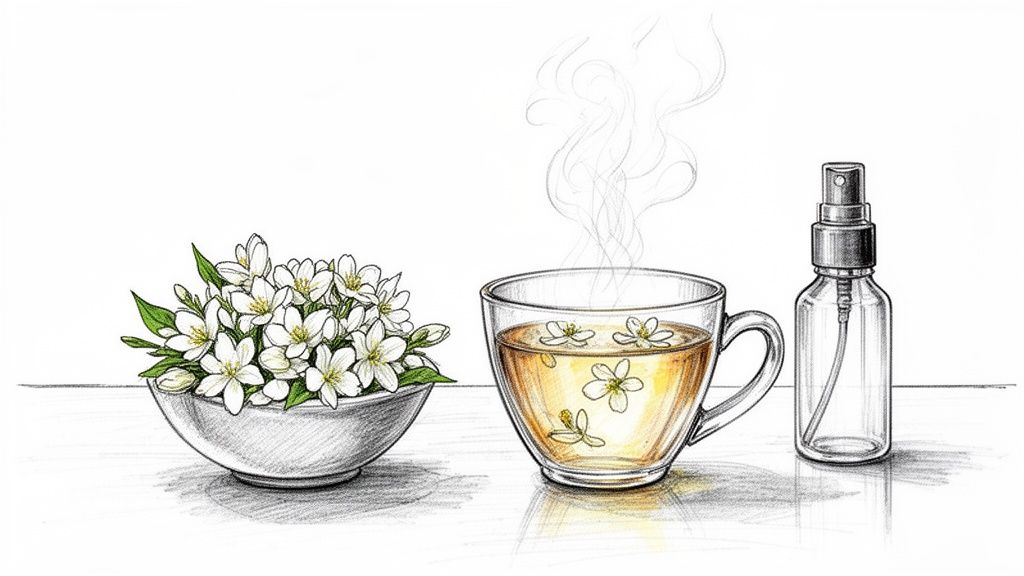
That intoxicating scent of Jasmine sambac is far too wonderful to be kept just in the garden. While growing this plant is rewarding in itself, the real joy comes when you start weaving its fragrant blossoms into your everyday life. This is how you can turn your plant from a simple green feature into a source of pure sensory delight.
To really capture the flower’s full potential, you need to harvest them at their peak. The absolute best time to pick the blossoms is in the very early morning, just as the dew is settling. This is when the volatile oils responsible for that incredible fragrance are at their most concentrated, before the sun’s warmth has a chance to dissipate them.
Crafting Your Own Jasmine Tea
One of the most classic ways to use your harvest is by making your own bespoke jasmine tea. Commercial jasmine teas are made by layering tea leaves with fresh blossoms, and it’s a process you can easily replicate at home for a truly authentic flavour. It’s a simple, beautiful ritual that connects you directly to your garden.
The whole process is wonderfully straightforward and doesn't require any special gear, just a bit of patience.
- Harvest Your Blossoms: As we mentioned, pick your Jasmine sambac flowers in the early morning. You'll want a generous handful to get a good infusion.
- Choose Your Tea Base: Start with a high-quality loose-leaf green or white tea. These more delicate teas provide the perfect canvas, allowing the jasmine’s floral notes to shine without being overpowered.
- Layer and Infuse: Find an airtight container and create alternating layers of your tea leaves and the fresh jasmine blossoms. It's best to start and end with a layer of tea.
- Wait for the Magic: Seal the container and pop it in a cool, dark spot for at least 24 hours. During this time, the tea leaves will naturally absorb the jasmine's essential oils and aroma. For a stronger flavour, you can swap the old flowers for fresh ones and repeat the process for another day.
- Remove and Store: Once the infusion is done, gently sift out the jasmine blossoms. Your tea leaves are now beautifully scented and ready to be stored in an airtight container for your next brew.
Simple Home Aromatherapy Ideas
Beyond a calming cuppa, the flowers from your Jasmine sambac can be used to create simple, natural fragrances for your home. It’s a lovely way to enjoy its scent without any artificial additives, turning your living space into a serene sanctuary.
A fragrant water mist is one of the easiest ways to get started. Just place a handful of fresh blossoms in a spray bottle filled with distilled water. Let it sit for a few hours to infuse, then lightly mist your linens, curtains, or the air to release a subtle, calming aroma.
Adding a few fresh petals to a warm bath is another touch of simple luxury. The steam will release the jasmine's fragrance, creating a spa-like experience that helps to soothe the mind and reduce stress after a long day.
It's no surprise that Jasmine sambac is a star in the world of perfumery, often featured in exquisite niche floral fragrance perfumes for its rich, heady scent. By bringing its blossoms indoors, you’re tapping into a long and beautiful tradition of celebrating this flower's captivating aroma.
Styling And Sourcing Your Plant
So, you've got the care down pat. Now for the fun part: finding the perfect spot for your Jasmine sambac to really shine. This plant is a natural showstopper, and its versatility means it can slide into almost any aesthetic, whether you're creating a lush, tropical patio or keeping things clean and minimal indoors. The trick is to play to its strengths—that gorgeous climbing or cascading habit and, of course, the intoxicating fragrance.
Styling Ideas
Indoors, a hanging basket is a spectacular choice. Imagine its trailing stems creating a living curtain of glossy leaves and fragrant white flowers in a bright hallway or near a sunny window. If you're after a more structured look, pop a pot with a small trellis or obelisk behind it. You can gently guide the vine upwards to form a beautiful, fragrant pillar of green.
Outdoors, the possibilities really open up. Train your jasmine up a trellis against a warm, sunny wall on your deck to create a stunning vertical feature. We especially love planting it near a seating area or by an entryway. On a warm evening, its scent becomes the most incredible natural air freshener you could ask for.
Finding Your Perfect Plant In New Zealand
When you're ready to bring this fragrant beauty home, sourcing a healthy, well-cared-for plant is absolutely crucial. A strong start makes all the difference. Keep an eye out for plants with vibrant, deep green leaves, free from any yellowing or signs of pests. You want a plant that looks robust and full of life, not leggy or stressed.
Buying from trusted local sellers is a smart move, as it ensures your plant is already acclimatised to New Zealand's unique conditions. That’s a big deal for a subtropical species like Jasmine sambac. Reputable growers will send you a plant with a strong, established root system, giving it the best possible head start in its new home.
Choosing where to buy your next green companion is a big decision for any plant lover. For a simple way to browse a huge variety of healthy plants from trusted growers across the country, check out our guide on how to buy plants online in NZ.
Here at Jungle Story, we connect you with New Zealand’s best plant sellers, making sure you receive a top-quality Jasmine sambac. But we don't stop there. You'll also find everything you need to create its perfect environment—from premium potting mixes and organic fertilisers to stylish pots that'll complement your decor. We’ve brought it all together in one place to make your growing journey as simple and successful as possible.
Jasmine Sambac FAQs
We get a lot of questions from Kiwi gardeners about growing Jasmine sambac. Here are some quick answers to the most common ones, building on what you've learned so far to help your plant thrive.
Can Jasmine Sambac Survive a New Zealand Frost?
In a word, no. Jasmine sambac is a tropical plant and is not frost-tolerant at all.
If you live in a region that gets frosts, like much of the South Island or the central North Island, you'll absolutely need to grow it in a pot. This way, you can easily move it indoors or into a sheltered spot like a greenhouse through our winter months (June to August).
Protecting it from any temperature dipping below 4°C is the key to keeping it happy and healthy long-term.
How Often Should I Repot My Jasmine?
As a general rule, plan on repotting your container-grown Jasmine sambac every two to three years. Your plant will give you some pretty clear clues when it's ready for a bigger home.
Look for roots snaking around the base of the pot or even poking out of the drainage holes – that’s your signal.
Spring is the perfect time for the job, just as the new growing season kicks off. When you do repot, choose a new pot that's only one size up from its current one and use a fresh, high-quality potting mix to give it the best start.
Why Are My Jasmine Leaves Turning Yellow?
Yellowing leaves can be a bit of a distress signal, and it usually points to one of a few things. The most common culprit is overwatering, which is a fast track to root rot. Make sure you're letting the top few centimetres of soil dry out completely between waterings.
If your watering is on point, it could be a nutrient issue, often a lack of iron. A dose of balanced liquid fertiliser during spring and summer should sort it out. And finally, don't forget to play detective – flip the leaves over and check for common pests like spider mites, as they can also cause discolouration.
Ready to bring that incredible fragrance into your life? At Jungle Story, we connect you with New Zealand's best growers, so you can be sure you're getting a healthy, vibrant Jasmine sambac delivered right to your door. Explore our collection and find the perfect plant for your home or garden today. Find your Jasmine Sambac at https://junglestory.co.nz.