
Every great New Zealand garden starts with what’s under your feet. Forget the plants for a moment—it’s the soil that does the real work. The best stuff is a living, breathing ecosystem that gives roots everything they need: a firm footing, food, water, and air. Getting to know your soil is the first, and honestly most important, step to a garden that truly thrives.
Why Great Soil Is Your Garden’s Secret Weapon
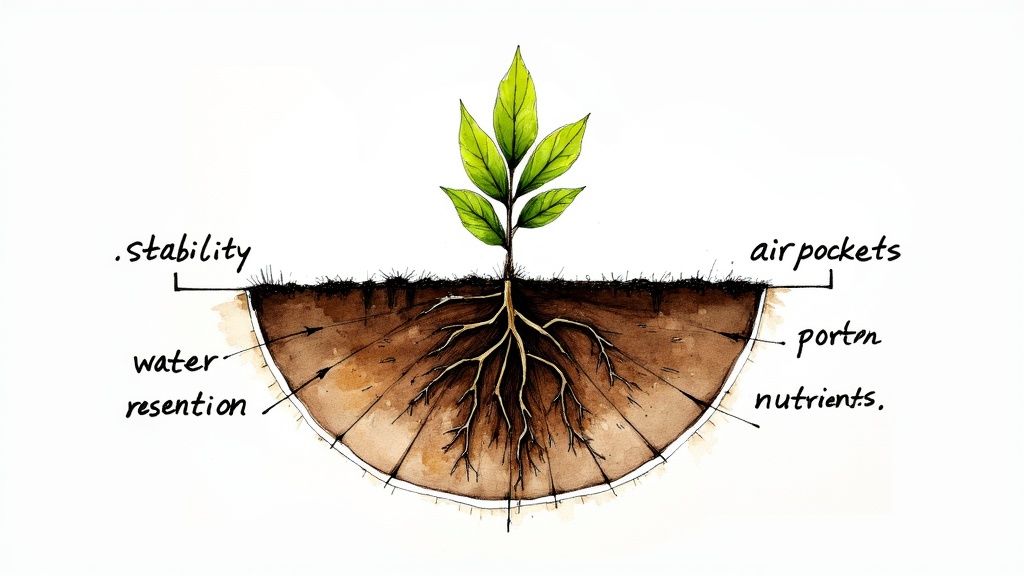
It’s easy to get distracted by the beautiful flowers or the promise of homegrown veggies, but the real magic is happening underground. Don't think of soil as just dirt. Think of it as your plant's home—its foundation, its pantry, and its plumbing all rolled into one. A plant stuck in poor soil is like a house built on shaky ground; it’s always going to struggle.
Good soil is so much more than a place for roots to hang out. It’s a bustling community of minerals, decaying organic matter, air, and water all working together. Getting that balance right is the difference between a plant that just survives and one that flourishes.
The Four Pillars of Plant Health
Healthy soil has a few critical jobs to do, and if it's not doing them well, your plants will feel it. From the toughest natives to the most delicate annuals, none of them will reach their potential without a solid foundation.
Here’s what top-quality soil delivers:
- Anchorage: Strong roots need something to grip onto. This stops your plants from being flattened by the first decent gust of wind or heavy downpour.
- Nutrients: Soil is nature’s pantry. It stores all the essential minerals plants need to grow and makes them available for the roots to slurp up.
- Water: It has to hold onto enough moisture to keep plants happy between waterings but also let the excess drain away. Soggy roots are a recipe for rot.
- Airflow: Yes, roots need to breathe! Good soil is full of tiny air pockets that supply the oxygen they need to function and absorb nutrients properly.
Good soil structure doesn't just happen; it's created. By understanding what your garden soil is made of, you can actively improve it, turning a challenging patch of ground into a fertile haven.
This guide is going to walk you through the basics of soil, from figuring out what you’re dealing with in your own backyard to mixing the perfect blend for your pots. Whether you’re battling stubborn Auckland clay or dealing with sandy Canterbury soils, you’ll learn what you need to make it better. By the end, you'll see that putting a bit of time and effort into your soil is the single best thing you can do for your garden.
Understanding What Makes Soil Healthy
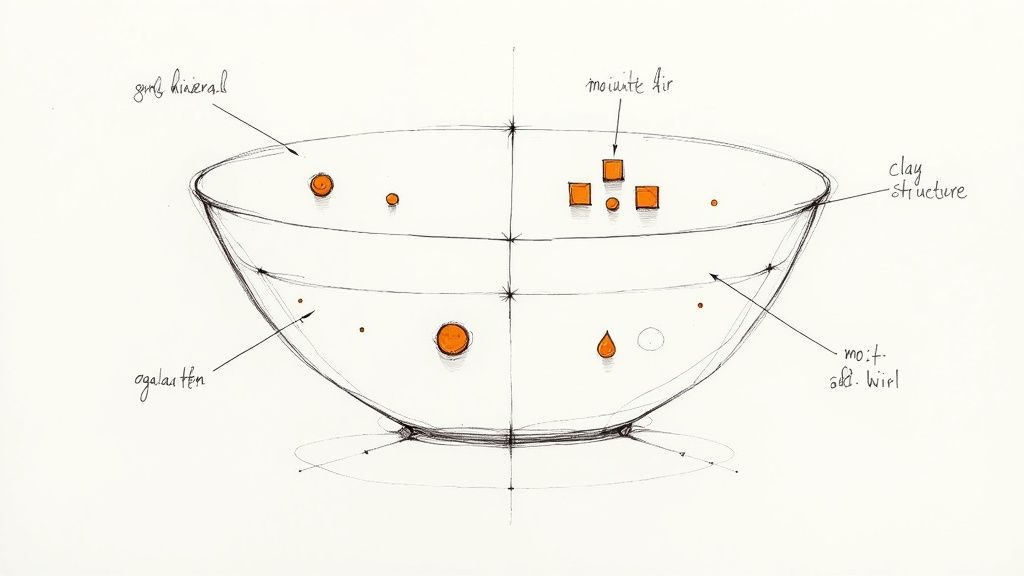
It’s easy to think of soil as just… well, dirt. But healthy soil is so much more than that. It’s a bustling, living ecosystem, and getting it right is the secret to a thriving garden.
Think of it like baking a cake. You can’t just throw random ingredients in a bowl and expect a masterpiece. You need the right things in the right amounts. The foundation of your soil 'cake' is its mineral base, which is basically tiny particles of weathered rock. We sort these by size into sand, silt, and clay. The unique combination of these three is what gives your soil its core texture.
This texture dictates almost everything—how quickly it drains after a good soaking, how much air can get to the roots, and how well it holds onto nutrients. Get this balance right, and your plants have a fantastic foundation to grow. Get it wrong, and you’ll be in a constant battle with waterlogged roots or soil that dries out in a flash.
The Four Essential Ingredients of Great Soil
Every handful of good soil is a careful blend of four key components. Each one has a critical job, and if any are out of whack, your plants will feel it. Getting your head around these elements is the first step to creating the perfect home for your plants.
Here’s the ideal recipe:
- Minerals (45%): This is the bulk of your soil—the sand, silt, and clay particles that give it structure.
- Organic Matter (5%): Think of this as the flavour and richness. It’s all the decomposed plant bits, microbes, and other good stuff that feeds your plants.
- Water (25%): This is the moisture held in all the tiny gaps, dissolving nutrients so plants can drink them up.
- Air (25%): Just as important as water, these are the pockets of oxygen that allow roots to breathe and beneficial microbes to thrive.
The gold standard for garden soil is what we call loam. It’s not dominated by any one mineral type but has a beautiful balance of sand, silt, and clay. This magical mix gives you the best of all worlds: drainage from the sand, nutrient retention from the clay, and a stable structure from the silt.
Of course, these percentages are just an ideal. In reality, the soil across New Zealand is incredibly varied, from the rich volcanic loams in Taranaki to the heavy clays up in Northland. Manaaki Whenua Landcare Research even maintains a National Soils Database with detailed profiles for about 1,600 soil sites and thousands more observations. This incredible resource shows just how diverse our country's soil is and helps gardeners and farmers alike make smarter decisions. You can explore New Zealand's national soil data on the NEDC website for a closer look.
Why Organic Matter Is So Important
While it might seem like a small part of the recipe at just 5%, organic matter is the absolute hero of soil fertility. It’s the lifeblood of your garden, acting like a slow-release pantry packed with all the nutrients your plants crave.
This is the good stuff—the compost, leaf mould, and decomposed material that gives soil that rich, dark colour and wonderful earthy smell. Organic matter is also teeming with billions of microscopic helpers like bacteria and fungi. They’re the engine room of the soil, breaking everything down and serving up nutrients in a form that plants can actually use.
But it does more than just feed plants. Organic matter is like a sponge, dramatically improving your soil’s ability to hold water, which is a real lifesaver during our dry Kiwi summers. It also helps bind tiny soil particles together, creating a better, more crumbly structure with plenty of air pockets. For any gardener, regularly adding compost is the single best thing you can do to improve your soil, no matter what type you’re starting with.
While organic matter provides a fantastic base of nutrients, you might sometimes need to give your plants an extra boost. For a deeper dive, check out our guide on choosing the right indoor plant fertilizer.
Identifying Common New Zealand Soil Types
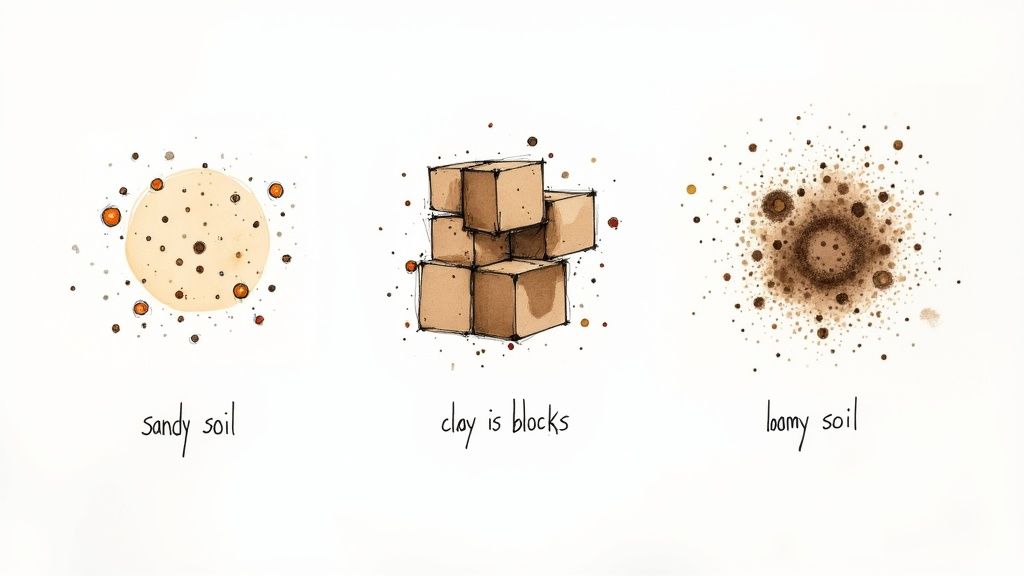
New Zealand’s incredible geology means the soil in your garden could be worlds apart from what’s just down the road. One backyard might be blessed with rich, dark volcanic loam, while another is stuck with dense, sticky clay. Getting to grips with the fundamental nature of your soil is like having a secret map to gardening success; it tells you what will thrive, what will struggle, and exactly how you can make things better.
Before you can start improving your patch, you need to become a bit of a soil detective. The three main characters you'll come across are sandy soil, clay soil, and the much-loved loam. Each has its own distinct personality, with unique strengths and weaknesses that directly impact how well your plants grow. Getting to know them is the first real step towards a garden that truly flourishes.
Getting a Feel for Your Soil
The easiest way to figure out your soil type needs no fancy gear—just your own two hands. This simple "squeeze test" gives you instant clues about your soil's texture and what it's made of. It's a foundational skill for any Kiwi gardener wanting to properly understand their patch of earth.
Grab a handful of slightly damp soil (not sopping wet or bone dry) and give it a firm squeeze in your palm.
- Does it feel gritty and fall apart almost instantly? You’ve likely got sandy soil. The large particles just don’t stick together.
- Does it feel slick and mould into a tight, solid ball? This is the classic signature of clay soil. Its tiny particles bind together like modelling clay.
- Does it hold its shape but crumble easily when you poke it? Congratulations, you've hit the jackpot! This is loam, the perfectly balanced soil every gardener dreams of.
This hands-on approach is surprisingly accurate. The way the soil behaves when you squeeze it reveals the dominant particle size, which is really what defines its type.
The Main Soil Players in Kiwi Gardens
While your garden’s soil will always be a unique blend, it usually leans towards one of three main types. New Zealand’s landscape is incredibly varied; roughly three-quarters of our soils come from sedimentary rock and are often clay-based with pretty low natural fertility. But you’ll also find wonderfully fertile alluvial soils in river basins, which is why places like Hawke's Bay are perfect for growing fruit. To dig a bit deeper, you can learn more about New Zealand's unique soil composition and get a better sense of your local conditions.
Let’s break down the big three you’ll find in gardens across the country.
1. Sandy Soil
Think of a day at the beach. Sandy soil is made of large, coarse particles with big gaps between them. This is fantastic for drainage—water zips right through, so you're unlikely to have issues with root rot. The catch? It drains so well that it doesn't hold onto water or nutrients for long, meaning plants can get thirsty and hungry fast. It also feels gritty to the touch and tends to warm up quickly in the spring.
2. Clay Soil
Clay soil is the complete opposite. It's made of tiny, fine particles that pack together tightly, leaving very little room for air or water to move. This means it holds onto moisture and nutrients exceptionally well, which can be a huge bonus. The challenge is that it can become a waterlogged bog in winter and bake hard like concrete in a dry summer, making it tough for roots to push through. When wet, it feels sticky and slick.
3. Loam: The Gardener's Dream
Loam is the perfect middle ground. It has a balanced mix of sand, silt, and clay particles, giving you the best of all worlds. You get the excellent drainage of sand, the nutrient-holding power of clay, and a wonderful, crumbly texture that’s a dream for roots to explore. This is the soil we all aim to create by amending what we’ve already got.
To make things even clearer, here’s a quick rundown of what to look for.
At-a-Glance Guide to Common Garden Soil Types
| Soil Type | Feel and Texture | Key Advantage | Main Challenge | Ideal for Plants Like |
|---|---|---|---|---|
| Sand | Gritty, coarse, and doesn't hold a shape | Excellent drainage, warms up fast in spring | Dries out quickly, poor nutrient retention | Drought-tolerant plants, root vegetables (carrots, spuds) |
| Clay | Sticky and smooth when wet, hard when dry | Holds water and nutrients extremely well | Poor drainage, prone to compaction, hard to work with | Perennials, shrubs, and trees that need lots of moisture |
| Loam | Spongy, crumbly, and slightly moist | Balanced drainage and nutrient retention | The ideal soil – not many challenges! | Just about everything! Most vegetables and flowers. |
This table should help you quickly pinpoint what you’re working with and what its natural tendencies are.
By identifying your primary soil type, you're no longer gardening in the dark. You can choose plants that are naturally suited to your conditions and, more importantly, you know exactly what to add to make your soil even better.
Understanding whether you're working with porous sand or stubborn clay is incredibly empowering. It transforms you from someone who just owns plants into a true gardener—one who nurtures the very foundation of their garden's health. This knowledge is your starting point for building the perfect soil for whatever you want to grow in your New Zealand backyard.
How to Test and Improve Your Garden Soil
Figuring out what kind of soil you have is a massive first step. But now the real fun begins: making it even better for your plants. Before you start chucking in compost and sheep pellets, though, there’s one more crucial piece of the puzzle to understand – your soil’s pH level.
Think of soil pH as the gatekeeper to all the nutrients your plants need. Your soil could be packed with goodness, but if the pH is way off (too alkaline or too acidic), your plants simply can't access it. It’s like having a pantry full of tinned food but no can opener.
Most plants you’ll find in Kiwi gardens are happiest with a pH somewhere between 6.0 and 7.0, which is a nice sweet spot from slightly acidic to neutral. You don't need a fancy lab; a simple home testing kit from the garden centre will give you a great reading.
Your Soil Improvement Toolkit
Once you know your soil’s texture and pH, you can start choosing the right ingredients to bring it to life. The end goal is always to nudge your soil closer to that perfect, crumbly loam structure we all dream of. Luckily, some of the best soil conditioners are Kiwi garden staples.
Here are the heavy hitters you'll want on hand:
- Compost: This is the absolute champion of soil improvement, no question. It pumps in nutrients, helps sandy soil hold water, and works wonders to break up dense clay.
- Sheep Pellets: A classic for a reason! They add a gentle, slow-release dose of nitrogen and precious organic matter.
- Coir (Coconut Fibre): A game-changer for improving moisture retention. It acts like a natural sponge, holding onto water that would otherwise just drain straight through your sandy or free-draining soil.
Amending your soil isn’t a one-and-done job; it's more like an ongoing conversation. Every time you add organic matter, you’re not just feeding this season's plants—you’re building a healthier, more resilient garden ecosystem for years to come.
Practical Recipes for Common NZ Soils
Improving your soil is a marathon, not a sprint. It’s all about consistently adding the right stuff to gently steer it in a better direction.
For Heavy Clay Soil:
Your main mission here is to open up the dense structure and improve drainage. Autumn is the perfect time to get this done, as it gives the amendments all winter to work their magic.
- Spread a generous layer of compost (5-10cm thick) right over the top.
- Follow that with a good sprinkle of sheep pellets.
- Gently fork these into the top few centimetres of soil. Don’t go crazy over-mixing it; the winter frosts and earthworms will do most of the hard work for you.
For Sandy Soil:
With sand, the challenge is getting it to hold onto water and nutrients. You can amend sandy soil any time of year, but it’s especially beneficial just before planting in spring.
- Work in plenty of compost to give the soil some body and much-needed water-holding capacity.
- Mix in coir fibre to act as a sponge for moisture.
- A top layer of mulch, like bark or pea straw, is a great finishing touch to help stop the sun from evaporating all your hard work during our hot, dry summers.
Making your own compost is easily one of the most rewarding things a gardener can do. If you're keen to give it a go, check out our simple guide on how to start composting.
Beyond the Basics: Soil Health Monitoring
For most of us in our backyards, a few visual checks and simple tests are all we need. On a larger scale, though, soil health is serious science. The New Zealand soil quality monitoring programme, for example, builds on studies from as far back as 1995 and keeps a close eye on our nation's soil across different land uses.
It measures key elements like copper, where background levels are typically 7 to 25 mg/kg, and zinc, which sits around 24 to 44 mg/kg. These numbers show just how important careful management is for maintaining healthy soil for plants.
In bigger agricultural operations, amazing new technologies are changing the game. Farmers are now using everything from soil sensors to drones in agriculture to get a bird's-eye view of their fields, helping them pinpoint issues like nutrient deficiencies or water stress with incredible precision.
Creating The Perfect Potting Mix for Containers
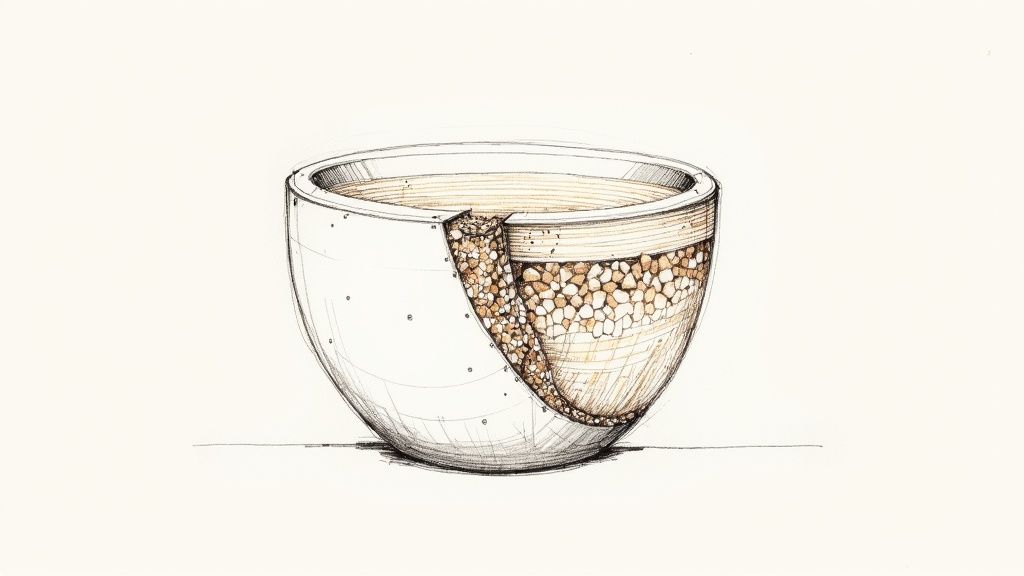
Container gardening opens up a whole new world, but it requires a totally different mindset when it comes to soil. One of the most common mistakes I see is people simply scooping soil from their garden into a pot. It seems logical, but it almost always ends in disappointment.
Garden soil is just far too dense and heavy for the confined space of a pot. It compacts down very quickly, squeezing out all the precious air pockets that roots need to breathe. This leads to poor drainage, waterlogged soil, and ultimately, a very unhappy, struggling plant. A purpose-built potting mix is really the only way to give your container plants the right balance of air, water, and nutrients to truly thrive.
The Building Blocks of a Great Mix
Crafting your own potting mix is surprisingly easy and puts you in complete control. Think of it like being a chef—you're just combining a few key ingredients to create the perfect recipe for your plants. A good mix typically comes down to three core components: structure, moisture retention, and aeration.
These are the essentials you’ll want to have on hand:
- Structure and Bulk: This is the foundation of your mix. Composted bark fines or coir (coconut fibre) are brilliant for this, as they provide substance without compacting down.
- Moisture Retention: This ingredient acts like a sponge. Coir is excellent here, as is peat moss. Both hold onto water and release it slowly to the plant's roots as needed.
- Aeration and Drainage: This is what keeps the mix light and stops it from becoming a muddy mess. Pumice or perlite are fantastic natural options. These little volcanic rocks create tiny air pockets, ensuring water drains freely and roots get plenty of oxygen.
Learning to create your own potting mix is one of the most empowering skills a gardener can pick up. It frees you from the one-size-fits-all bags and lets you create bespoke soil for any plant, from a fussy succulent to a hungry tomato plant.
Once you understand what each ingredient does, you can customise your mix for just about anything. For a deeper dive into creating the perfect blend for your houseplants, you can learn more about crafting the ideal indoor potting mix in our detailed guide.
Simple Potting Mix Recipes for Success
When you've got your ingredients, you're ready to start blending. Don't worry about precise measurements; the 'parts' can be whatever you like—a scoop, a bucket, or an old plant pot—as long as you keep the ratios consistent.
Here are three tried-and-true recipes that cover most container gardening needs.
General All-Purpose Mix
This is a fantastic starting point for most annuals, perennials, and houseplants. It hits that sweet spot between good drainage and moisture retention.
- 2 parts compost or high-quality composted bark fines
- 1 part coir or peat moss
- 1 part pumice or perlite
Fast-Draining Succulent and Cacti Mix
Succulents absolutely hate having wet feet, so this recipe is all about maximum drainage to prevent root rot. The goal is to get water in and out quickly.
- 1 part compost
- 2 parts pumice
- 1 part coarse sand
Rich Mix for Hungry Vegetables
Veggies and other heavy-feeding plants in containers need a mix that holds onto plenty of moisture and nutrients to fuel all that rapid growth.
- 2 parts high-quality compost
- 1 part coir or peat moss
- 1 part pumice
- A generous handful of sheep pellets or a slow-release fertiliser for that extra kick
Mixing these yourself doesn't just save you money in the long run; it guarantees your potted plants have the absolute best foundation for a long and healthy life.
Got Questions About Soil? We’ve Got Answers.
Getting your hands dirty with soil can bring up a lot of questions. We’ve pulled together some of the most common queries we get from New Zealand gardeners to give you clear, straightforward answers. Think of this as your go-to guide for troubleshooting common soil conundrums.
Can I Reuse Old Potting Mix for New Plants?
It’s tempting, for sure, but it’s best to be careful. While you can reuse old potting mix, you can’t just scoop it into a new pot and call it a day. After a season of growing, old mix is usually compacted, all its nutrients have been used up, and it could be hiding pests or diseases from its last tenant.
If you want to give it another go, you’ll need to revitalise it properly. Start by breaking up all the clumps and sifting out any old roots or bits of debris. To bring it back to life, you'll need to mix it with at least 50% fresh potting mix, a generous scoop of compost, and a slow-release fertiliser to stock the pantry back up.
Here’s the one rule you should never break: never reuse soil from a plant that was diseased. Nasty pathogens can hang around in the soil and will jump straight onto your new plant. For hungry plants like veggies, it's always best to start fresh each season to ensure they have everything they need for a bumper harvest.
What Is the Difference Between Compost and Soil?
This is a brilliant question, and it really gets to the heart of what makes a garden thrive. The simplest way to think about it is this: soil is the house, and compost is the food in the pantry.
Soil is the mineral part—the sand, silt, and clay—that gives your plants a physical structure to anchor their roots into. It's the medium they live in. Compost, on the other hand, is pure, decomposed organic matter. It’s a soil amendment that you add to your soil to make it better, not something plants typically grow in by itself.
When you add compost, you’re infusing your soil with essential nutrients and improving its texture. It also feeds the billions of tiny, beneficial microbes that create a living, healthy ecosystem underground. Plants live in soil, but it’s the compost that helps them truly flourish.
How Can I Tell if My Soil Has Poor Drainage?
Poor drainage is a huge problem, especially for those of us with heavy clay soil, and it can be a death sentence for many plants. Thankfully, there's a simple ‘hole test’ you can do to check it out.
- Dig a hole in your garden bed about 30cm deep and 30cm wide.
- Fill it to the top with water and let it drain completely. This just gets the surrounding soil saturated.
- Fill the hole with water a second time, and this time, check your watch.
If the water is gone within a few hours, your drainage is looking good. But if it’s still sitting there after six to eight hours, you’ve definitely got a drainage issue. Another dead giveaway is seeing puddles lingering on the surface long after it has rained.
Are Coffee Grounds Good for My Garden in New Zealand?
They certainly can be! Used coffee grounds can be a great addition to your garden, but moderation is key. They offer a nice little boost of nitrogen and other trace minerals. Being slightly acidic, they’re particularly great for acid-loving plants like azaleas, rhododendrons, and blueberries.
How you use them matters, though. Try to avoid dumping a thick layer straight onto the soil, as it can form a hard crust that repels water when it dries out. A much better approach is to lightly scratch the grounds into the top few centimetres of soil. Or even better, just toss them into your compost bin where they’ll break down with everything else and contribute to a beautifully balanced soil conditioner.
At Jungle Story, we’re firm believers that amazing plants start with amazing soil. Whether you need the perfect potting mix for your indoor jungle or quality amendments for your garden beds, we have what you need to build the perfect foundation for your plants.
Explore our wide range of soil and plant care products today at https://junglestory.co.nz.