
You know the classic Bird of Paradise – that flash of brilliant orange and electric blue that instantly brings a tropical vibe to any space. But what if that same iconic shape came in a breathtaking shade of pure, molten gold?
Meet Strelitzia reginae 'Mandela's Gold'. This isn't your average houseplant. It's a living piece of botanical history, a true collector's gem that brings a whole new level of sunny sophistication to Kiwi homes and gardens.
Your Golden Ticket to a Tropical Paradise
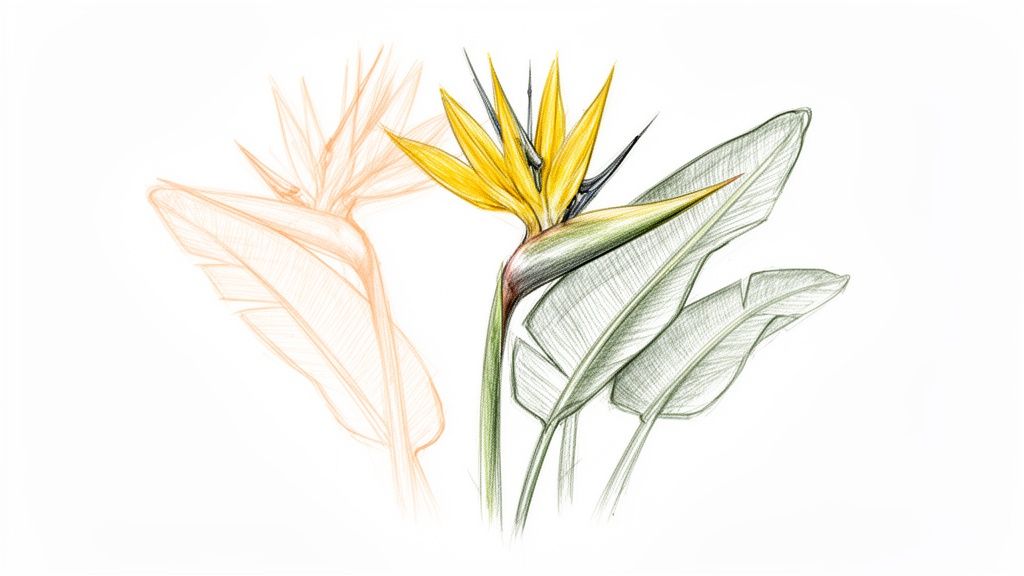
For New Zealand plant lovers, this cultivar is the absolute pinnacle of tropical elegance. It has all the drama we love from the Strelitzia family – those big, bold, paddle-shaped leaves and that strong, upright posture – but its flowers are in a league of their own. This golden stunner is a naturally occurring wonder, first discovered and cultivated at the famous Kirstenbosch National Botanical Garden in South Africa.
A Flower with a Famous Name
The story behind this plant is just as special as its looks. Back in 1996, this unique yellow Strelitzia was officially named in honour of Nelson Mandela, a tribute to his incredible work for peace and reconciliation.
This connection elevates the plant from being just another pretty face to a powerful symbol of hope and resilience. It makes it a truly meaningful addition to any plant collection.
Owning a 'Mandela's Gold' is like cultivating a piece of history. Its name serves as a constant reminder of strength and beauty, making the arrival of each golden bloom a particularly special event for any gardener.
For a quick overview of what makes this plant a must-have, here’s a look at its key stats.
Mandela's Gold At a Glance
| Attribute | Specification for NZ Gardeners |
|---|---|
| Common Name | Mandela's Gold, Yellow Bird of Paradise |
| Scientific Name | Strelitzia reginae 'Mandela's Gold' |
| Plant Type | Evergreen, perennial |
| Mature Size | 1-1.5 metres tall and wide |
| Sun Exposure | Full sun to partial shade (more sun for best flowering) |
| Soil Type | Rich, well-draining potting mix or loam |
| Soil pH | Slightly acidic to neutral (6.0-7.0) |
| Flowering Season | Late winter to late spring in New Zealand (approx. August - November) |
| Flower Colour | Bright yellow sepals with blue petals |
| Hardiness | Frost-tender; best in warmer NZ regions or as an indoor plant |
| Water Needs | Moderate; allow top soil to dry out between waterings |
| Native To | South Africa (cultivated variety) |
As you can see, its care requirements are very manageable, making this piece of botanical art accessible to dedicated gardeners here in New Zealand.
What Makes Mandela's Gold So Special
It really comes down to its rarity and that one-of-a-kind colour. While the orange Bird of Paradise is a familiar sight in warmer Kiwi gardens, the golden version is much harder to come by. Choosing a Strelitzia 'Mandela's Gold' means you're investing in a specimen that will definitely get people talking.
Here’s why it stands out for Kiwi gardeners:
- Unique Colour Palette: The clear yellow and soft blue flowers offer a refined alternative to the common orange, fitting beautifully into modern and minimalist aesthetics.
- Collector's Prestige: Its famous namesake and scarcity make it a prized possession for serious plant collectors and enthusiasts.
- Tropical Drama: It provides all the lush, jungle-like foliage and architectural structure of a standard Bird of Paradise, creating a stunning focal point.
- Accessible Luxury: Despite its rarity, it requires the same care as the common Strelitzia, making this piece of botanical luxury achievable for dedicated gardeners.
This guide will walk you through everything you need to know to help this golden treasure not just survive, but truly flourish in your New Zealand home.
Creating the Ideal Habitat in Your Kiwi Home
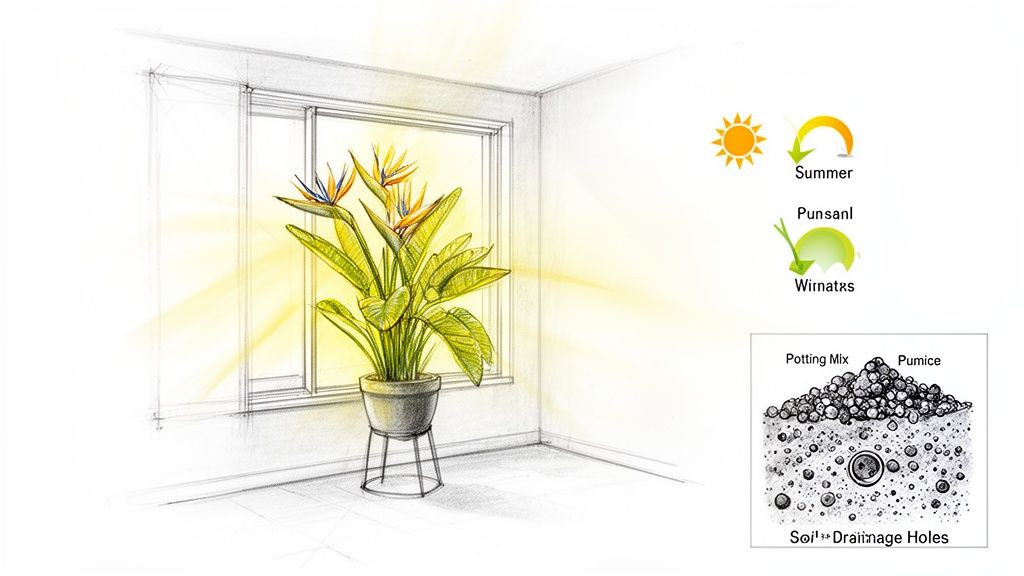
To really see your Strelitzia 'Mandela's Gold' shine, the goal is to mimic the bright, balmy conditions of its South African homeland right here in New Zealand. Think of yourself as a habitat designer for your plant. Getting the basics of light, soil, and water just right from the start is the key to a happy plant that puts on a spectacular show.
This plant has become a real standout for Kiwi indoor gardeners and landscapers. It's prized for those rare yellow flowers and its big, greyish-green leaves that can reach up to 1.5 metres tall. It’s worth knowing that young plants often take 4-5 years to flower for the first time, so a little patience goes a long way.
Mastering the Art of Kiwi Sunlight
"Bright, indirect light" is a term we hear a lot, but it's easier to achieve in a New Zealand home than you might think. Your Golden Strelitzia needs lots of light to fuel its growth and push out those incredible flowers. But watch out for that harsh, direct afternoon sun—especially in summer—as it can easily scorch the leaves.
The perfect spot? A room with a large, north-facing window is ideal, giving it consistent, bright light all day without the burn. An east-facing window is another great option, catching that gentle morning sun. If a west-facing window is all you've got, just pull the plant back a metre or so from the glass to soften the intensity.
- Auckland & Northland: The strong, consistent light up here is perfect. A spot near a window, maybe with a sheer curtain for the hottest summer afternoons, is all you need.
- Wellington & Central NZ: On those brilliantly clear days, be mindful. A sunroom is great, but make sure there’s enough airflow to stop it from getting too hot.
- Christchurch & South Island: The lower angle of the winter sun is a real bonus. Pop your plant right in a north-facing window during the cooler months (June to August) to soak it up.
The Perfect Potting Mix Recipe
When it comes to soil, the number one rule for a Strelitzia 'Mandela's Gold' is excellent drainage. These plants absolutely hate having "wet feet," and soggy soil is the quickest path to root rot. Making a chunky, airy mix is essential, and thankfully, it's easy to do with supplies from any garden centre.
Here’s a great DIY recipe for a happy Strelitzia:
- Start with a quality potting mix as your base (60%).
- Add pumice or perlite to create air pockets for drainage (30%).
- Mix in orchid bark for extra chunkiness and aeration (10%).
This blend closely mimics the gritty, free-draining soil of its native environment. Understanding the importance of proper drainage is vital, as it ensures the roots can breathe and access oxygen, which is just as crucial as water. For a deeper dive, check out our general guide on https://junglestory.co.nz/blogs/plant-care/bird-of-paradise care.
Your Seasonal Watering Schedule
How often you water your Golden Strelitzia will change quite a bit with our Kiwi seasons. The trick is to watch the plant and let it tell you when it’s thirsty, rather than sticking to a rigid calendar.
Always check the soil before you water. The finger test is your best friend—poke your finger about 5 cm deep into the soil. If it feels dry, it's time for a drink. If you feel any dampness, hold off for a few more days.
During the main growing season—our long, warm spring and summer (September to February)—your plant will be much thirstier, and you'll likely water it deeply once a week. But as the days get shorter and cooler in autumn and winter (March to August), its growth slows right down. You’ll need to water far less, maybe only once every two to three weeks, letting the soil dry out more between drinks.
A Feeding and Repotting Routine for Golden Blooms
While getting the light, soil, and water right builds a solid foundation for a happy plant, a smart feeding and repotting routine is what really unlocks the spectacular flowering potential of your Strelitzia 'Mandela's Gold'. Think of it as giving your plant the focused energy and space it needs to put on a show. This is how you go from lush foliage to that stunning display of golden blooms.
Just like a top athlete needs the right fuel to perform, your Strelitzia relies on a steady supply of nutrients during its growing season to produce those incredible flowers. In fact, skipping this step is one of the most common reasons these plants fail to bloom, even when they look perfectly healthy otherwise.
Crafting a Kiwi Feeding Schedule
For us here in New Zealand, the feeding calendar lines up perfectly with our warmer months. The whole idea is to provide nutrients when the plant is actively growing and can actually use them.
Start feeding your Strelitzia 'Mandela's Gold' in early spring, around September, when the days get longer and you start seeing signs of new growth. Keep this up right through to late summer and early autumn, easing off around March or April as its growth naturally slows down for winter.
During these months, a monthly feed with a balanced liquid fertiliser is perfect. This plant is wonderfully low-fuss, which is great for beginners. Just giving it full sun and a monthly dose of a 3:1:5 fertiliser during summer is a fantastic way to encourage those golden blooms. For a bit more inspiration, you can find additional insights on growing Strelitzia from international experts.
Decoding Fertiliser Labels
When you're browsing the garden centre, you'll see bags of fertiliser with three numbers on them. This is the NPK ratio, a simple code that tells you the balance of the key nutrients inside.
- N (Nitrogen): This is all about promoting lush, green leaf growth.
- P (Phosphorus): This helps develop strong roots and supports the flowering process.
- K (Potassium): This is crucial for overall plant health, disease resistance, and encouraging vibrant blooms.
For your Strelitzia, you'll want to look for a fertiliser that's higher in Potassium (K) to really push it to flower. A formula designed for flowering plants or even citrus often works a treat.
Knowing When to Repot
Strelitzias are a bit famous for flowering best when they're slightly root-bound, so there’s no need to rush into repotting every year. A snug pot sends a signal to the plant that it's time to put its energy into reproducing (making flowers!) rather than just growing more leaves. But, of course, there comes a time when the pot is just too tight.
Keep an eye out for these tell-tale signs that it's time for a bigger home:
- Roots are sneaking out of the drainage holes.
- The plant is literally pushing itself up and out of the pot.
- Water rushes straight through the pot without soaking in, meaning there are more roots than soil.
- The plastic nursery pot is starting to bulge or lose its shape.
The best time to repot in New Zealand is in early spring (September/October), right as the plant is heading into its active growing season. This gives it plenty of time to get settled in its new space.
When picking a new pot, only go up one size – that’s about 5 cm wider in diameter. If you go too big, the plant will spend all its energy filling the pot with roots, and you could be waiting years for it to flower again. As you prepare the new pot, our guide on creating the perfect indoor potting mix has all the tips you need for top-notch drainage.
Making More: How to Propagate Your Strelitzia
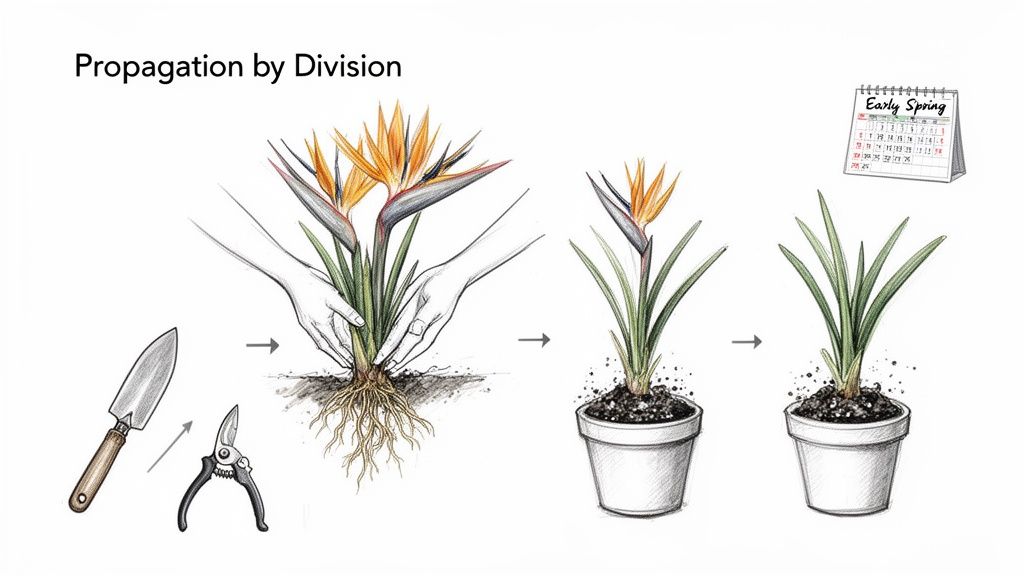
One of the real joys of growing a happy Strelitzia 'Mandela's Gold' is the ability to create more. Propagating your plant lets you fill your home and garden with its golden glow or share this stunning cultivar with friends. It's an awesome way to get hands-on with your plant's life cycle.
There are really two ways to go about it. The most common route is division, which is basically separating a large plant into smaller ones. Think of it like getting a few new plants for the price of one. The other path is growing from seed, which is a long game but incredibly satisfying when you finally see that first little sprout.
Method 1: Division (The Fast Track)
If you want a new, decent-sized plant without the long wait, division is your best bet. This simply means splitting up a big, established clump into smaller, individual plants. For us here in New Zealand, the perfect time to tackle this is in early spring (September to October), right as the plant is waking up and pushing out new growth.
First, get your gear ready. You’ll need a clean, sharp spade or knife, maybe a tarp to keep the mess contained, and of course, new pots with fresh potting mix. Don't skip this next part: give your cutting tool a good wipe-down with rubbing alcohol to stop any nasty diseases from getting into the fresh cuts.
Here’s how to do it, step-by-step:
- Get the Plant Out: Gently work the plant out of its pot. If it’s in the garden, you'll need to dig around the entire clump to lift the whole root ball.
- Size It Up: Once it's free, you’ll see the plant is made up of several "fans," which are just individual plants all joined at the base. Look for the natural places where they seem to want to separate.
- Make the Cut: With your sterilised knife, make a clean, firm cut through the root ball to separate the fans you’ve chosen. Here's the golden rule: every new piece must have at least 3-4 leaves and a good chunk of roots. This is absolutely non-negotiable if you want it to survive.
- Pot Up the Newbies: Plant each new division into its own pot with a quality, free-draining mix. A snug-fitting pot is best, as it encourages the roots to get established faster.
- Aftercare: Give them a light watering and tuck them away in a spot with bright, indirect light. Keep them out of direct sun while they recover from the shock of the move.
Method 2: Growing From Seed (The Patient Gardener’s Game)
Growing Strelitzia 'Mandela's Gold' from seed is a marathon, not a sprint, but the payoff is huge. The seeds have a really tough outer shell that needs a bit of a nudge to let water in and start the germination process. We call this scarification.
To prep your seeds, first pull off that little bright orange, fluffy tuft (it's called an aril). Then, gently nick the hard seed coat with a file or a piece of sandpaper—be careful not to go too deep and damage the inside. After you've roughed them up, soak the seeds in lukewarm water for 24-48 hours to soften them up even more.
Sowing seeds is an act of faith. The germination timeline for Strelitzia can be all over the place, often taking anywhere from 2 to 12 months. The trick is to keep things consistently warm and moist during the long wait.
Plant the soaked seeds about 2.5 cm deep in a good seed-raising mix. A heated propagator is fantastic for this, but a warm spot in the house will also do the trick. Keep the soil moist but never soggy. If you stick with it, you'll eventually be rewarded with tiny green shoots—the very first glimpse of your homegrown golden treasure.
Right, let's talk troubleshooting. Even a stunner like the Strelitzia 'Mandela's Gold' can have an off day. Think of this as your plant first-aid guide, built for the unique ups and downs of growing in New Zealand.
Whether it's a confusing leaf or an unwanted six-legged visitor, we'll sort it out. Most of the time, your Strelitzia is just trying to tell you something about its environment. Learning to read those signs is the real secret to keeping your golden beauty looking its best.
What Are Its Leaves Trying to Tell Me?
Those big, beautiful leaves are more than just decoration; they’re a direct line of communication. If you're seeing yellowing, curling, or splitting, it's rarely for no reason. It's your plant's way of giving you feedback on its care routine.
Why Are My Strelitzia’s Leaves Turning Yellow?
Yellow leaves, or chlorosis as it’s technically known, are almost always about water. Here in New Zealand, the number one culprit is overwatering, especially during our cooler, damper winters from June through August. When the soil is constantly soggy, the roots can't breathe. They start to rot and can no longer send nutrients up to the leaves.
On the other hand, underwatering can also lead to yellowing, but those leaves will usually feel dry and crispy to the touch. The first step is always to check the soil. If it’s wet, step away from the watering can and make sure the pot has good drainage. If it's bone dry, it's time for a proper, thorough soak.
The biggest mistake I see is people watering on a strict schedule. Your plant's thirst will change dramatically between a hot Auckland summer and a chilly Dunedin winter. Your best tool is the good old 'finger test'—just poke your finger about 5 cm deep into the soil to check the moisture level before you water.
Why Are the Leaves Splitting?
Don't panic! Leaf splitting is completely normal for a Strelitzia and isn't a sign that you're doing anything wrong. In their native South African home, the leaves are designed this way to let strong winds pass through without ripping the entire leaf from the stem. It's a clever survival trick.
While you can't stop it entirely, you can sometimes lessen it by keeping the humidity up, which can be a challenge indoors when the heat pump is blasting and drying out the air.
The Big Question: Why Won't It Flower?
It’s a classic story: you've got a Strelitzia with lush, gorgeous leaves, but it just won't bloom. It can be incredibly frustrating. If your Strelitzia 'Mandela's Gold' is at least three years old and still hasn't flowered, it almost always comes down to one of these three things:
- Not Enough Light: This is the most common reason by a long shot. Your plant needs several hours of bright, indirect sunlight every day to store up enough energy to produce those incredible flowers. A dim corner simply won't do.
- Too Much Room: It might sound strange, but Strelitzias actually flower best when their roots are a bit crowded in the pot. If you've just repotted it into a much bigger container, the plant will pour all its energy into filling that new space with roots, putting flowering on the back burner.
- It’s Hungry: Flowering takes a massive amount of energy. A regular feed with a high-potassium fertiliser during the growing season (spring and summer here in NZ) gives it the fuel it needs to put on a show.
Dealing With Pests in NZ
Even indoor plants can get gatecrashers. For Strelitzia in a Kiwi home, the two most likely culprits you'll encounter are mealybugs and spider mites.
- Mealybugs: These pests look like tiny bits of white cotton fluff. They love to hide in the nooks and crannies where the leaves meet the stem, sucking the sap and weakening the plant.
- Spider Mites: These guys are tiny and tough to spot with the naked eye, but you'll know they're there by the fine, delicate webbing they leave on the undersides of leaves. They thrive in dry air.
For both of these pests, always start with the gentlest approach. You can often just wipe them off with a cloth dipped in a light mix of water and dish soap. If you've got a more stubborn infestation, a spray of neem oil, which you can find at any local garden centre, is a fantastic eco-friendly solution. Wiping the leaves down every now and then not only keeps them glossy and dust-free but is also a great way to stop pests from setting up shop in the first place.
When you're trying to figure out what's wrong, it helps to have a quick reference. Here’s a simple table to help you diagnose and fix the most common issues you might face with your Mandela's Gold.
Strelitzia Mandela's Gold Troubleshooting Guide
| Symptom | Potential Cause | Solution |
|---|---|---|
| Yellowing, mushy leaves | Overwatering / Root rot | Allow soil to dry out completely. Check for drainage and reduce watering frequency. |
| Yellowing, crispy leaves | Underwatering | Give the plant a thorough soak until water runs out the bottom, then resume a consistent schedule. |
| Brown, crispy leaf edges | Low humidity / Salt buildup | Increase humidity with a humidifier or pebble tray. Flush the soil with water every few months. |
| No flowers (on a mature plant) | Not enough light / Pot is too big | Move to a brighter spot with indirect sun. Wait until the plant is more root-bound before repotting. |
| White, cotton-like spots | Mealybugs | Wipe off with a damp cloth and soapy water. Treat with neem oil for persistent infestations. |
| Fine webbing under leaves | Spider Mites | Increase humidity. Wipe leaves and treat with an insecticidal soap or neem oil spray. |
| Split or tearing leaves | Natural process / Low humidity | This is normal! You can slightly increase humidity, but you can't prevent it completely. |
Remember, observation is your best tool. A quick daily check-in with your plant will help you spot these signs early, making them much easier to solve. Happy growing
Styling and Sourcing Your Golden Strelitzia
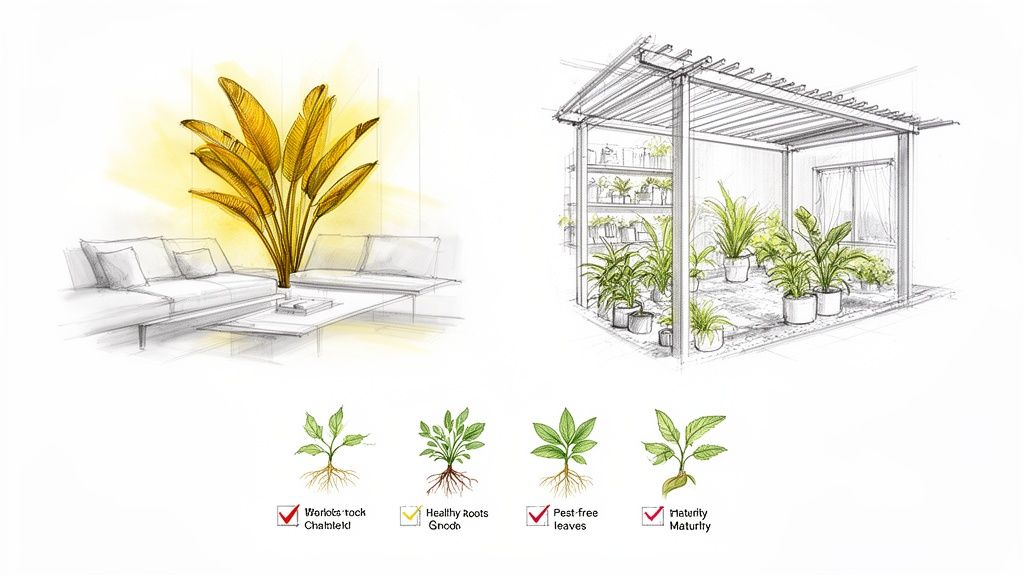
Bringing a Strelitzia Mandela's Gold into your home is more than just plant care; it’s about styling a living work of art. With its incredible architectural leaves and those rare, breathtaking golden flowers, this plant is a natural showstopper, destined to be the centrepiece of any space you put it in.
Indoors, that dramatic, upright form makes an instant focal point. Pop it in a simple, elegant pot, and it becomes a piece of living sculpture in a minimalist living room. The contrast of its bold leaves against clean lines and neutral colours is just stunning—it immediately draws the eye and adds a burst of sophisticated, tropical life.
If you've got a sheltered courtyard or patio, it can bring that lush, resort-like vibe to your outdoor space. If you're looking for more ways to integrate that green, leafy feel throughout your home, you can find heaps of inspiration from tropical interior design ideas.
Finding a Healthy Plant in New Zealand
Getting your hands on a healthy Strelitzia Mandela's Gold is the crucial first step. Whether you're wandering through a local nursery or browsing online from a trusted Kiwi seller, knowing what to look for makes all the difference in bringing home a plant that will thrive from day one.
Here’s a quick checklist for picking a winner:
- Vibrant, Strong Leaves: The leaves should be firm, upright, and have a good, even colour. Steer clear of any with lots of yellowing, brown spots, or sad, drooping foliage.
- Pest-Free Guarantee: Always have a good look under the leaves and where the stems join the base. You're checking for sneaky pests like mealybugs (they look like little bits of white fluff) or spider mites (look for fine, silky webbing).
- Check the Roots: If you can, gently slide the plant out of its plastic nursery pot. Healthy roots are firm and whitish-yellow, and they smell earthy. If they look mushy or dark brown, that's a red flag for root rot.
- Understand Its Age: Just remember, these beauties take their time. It can be 3-5 years before they’re mature enough to flower. A smaller, younger plant will be easier on the wallet, but you'll need a bit more patience.
When you bring a new plant home, it’s like asking it to move house. Expect a brief period of adjustment as it gets used to the new light, temperature, and humidity levels in your space.
Settling Your New Plant In
Once you've made your choice, a gentle transition is key to keeping your new plant happy and stress-free. Resist the urge to repot it straight away, unless the soil is in really bad shape. Give it a couple of weeks to just get used to its new surroundings first.
Find its permanent spot and keep a close eye on its watering needs while it settles in. This little quarantine period is also a great habit to get into, just to make sure no unwanted pests have hitched a ride home with it. Follow these simple steps, and your Strelitzia Mandela's Gold will make the move from the nursery to its new forever home without a fuss.
And if you’re keen to add to your indoor jungle, check out our list of other great indoor houseplants that do brilliantly in Kiwi homes.
You’ve Got Questions, We’ve Got Answers
Even with the most detailed guide, there are always a few specific questions that pop up. Here are some of the most common queries we get from fellow Kiwi gardeners about growing the magnificent Strelitzia mandela's gold.
How Long Until My Strelitzia Mandela's Gold Will Flower in New Zealand?
Patience is definitely a virtue with this one. A young 'Mandela's Gold' will typically take around 3 to 5 years to reach maturity and show off its first incredible golden flowers.
Of course, the exact timing depends on giving it the best possible conditions. Plenty of bright light and a consistent feeding routine through our spring and summer months (September to February) are key. You'll likely find that plants grown outside in the warmer parts of the North Island might flower a bit sooner than those kept indoors year-round down in the cooler south.
Is Strelitzia Mandela's Gold Toxic to Pets?
Yes, this is a really important one for pet owners. Strelitzia plants, including 'Mandela's Gold', are considered mildly toxic to both cats and dogs if they decide to have a nibble.
The seeds and leaves can cause an upset tummy, leading to things like vomiting or diarrhoea. We always recommend placing your plant well out of reach of curious pets. If you have a known chewer, it might be safer to choose a different, non-toxic plant for your home.
Can I Grow Mandela's Gold Outside in the South Island?
While 'Mandela's Gold' is a bit more sensitive to frost than its orange cousin, you absolutely can grow it outdoors in the milder pockets of the South Island, like Nelson or along sheltered coastal bits of Canterbury.
The secret is finding a very protected spot, shielded from frost and those chilly southerly winds. Tucking it in against a north-facing wall is a great strategy. For areas that get regular frosts, you’ll need to wrap it in frost cloth over winter or, better yet, grow it in a large pot that can be whisked away to a sheltered spot when the temperature drops.
Why Are the Leaves on My Bird of Paradise Splitting?
Seeing splits in the leaves can be alarming, but it's a completely natural feature of Strelitzia plants and not usually a sign that you're doing anything wrong.
In their native environment, the leaves are actually designed to split. This clever adaptation allows strong winds to pass right through without snapping the entire leaf off the stalk, which would cause far more damage. While you can't stop it entirely, keeping the humidity up can sometimes reduce the amount of splitting, especially for plants living indoors with you.
Ready to bring this golden treasure into your home? Explore our collection at Jungle Story and find the perfect Strelitzia 'Mandela's Gold' to start your journey. Shop Now at junglestory.co.nz