
There's nothing quite like the taste of a sun-warmed fig picked straight from the tree, and growing your own here in New Zealand is not only possible but surprisingly easy. Whether you've got a sunny patio in Northland or a sheltered spot down south, fig trees are exceptionally well-suited to our climate.
This guide is all about what really works for Kiwi gardeners.
Why Fig Trees Thrive in New Zealand Gardens

Forget any ideas you have about figs being a fussy, Mediterranean-only fruit. The truth is, these hardy trees have a long and storied history in Aotearoa, which makes them a fantastic, and fitting, addition to the local garden. Their secret is their adaptability, allowing them to flourish in various conditions as long as they get the sun and warmth they crave.
The connection between fig trees and New Zealand actually goes back further than most people realise. These trees have a rich heritage dating to the late 19th century, when some varieties were brought over by members of the Armed Constabulary. For a long time, many of these heritage trees grew wild without much care, which sadly led to a loss of named varieties.
Today, dedicated growers are rediscovering this history. It's fascinating to learn more about the efforts to preserve these unique heritage figs and their special value.
Perfect for the Kiwi Climate
So, what is it about our climate that figs love so much? Most of New Zealand offers the perfect balance of conditions they need to fruit successfully.
- Plenty of Sunshine: Most regions get enough sunlight hours, especially in summer, to ripen the fruit and develop those incredibly rich, sugary flavours.
- Mild Winters: Our winters generally aren't severe enough to cause significant damage to dormant trees, a real advantage in the North Island and coastal areas.
- Adaptable Nature: Figs aren't too fussy about soil, as long as it's well-draining. This makes them a wonderfully forgiving choice for many Kiwi backyards.
The real magic of growing figs in NZ is the flavour. A fig ripened on the branch under the Kiwi sun has a depth and sweetness you simply can't find in imported fruit from the supermarket.
By choosing the right variety for your region and following a few simple care routines, you can be well on your way to a bountiful harvest. I'll walk you through everything you need to know, skipping the generic advice to give you practical steps that work for our unique conditions.
Choosing the Best Fig Variety for Your Climate
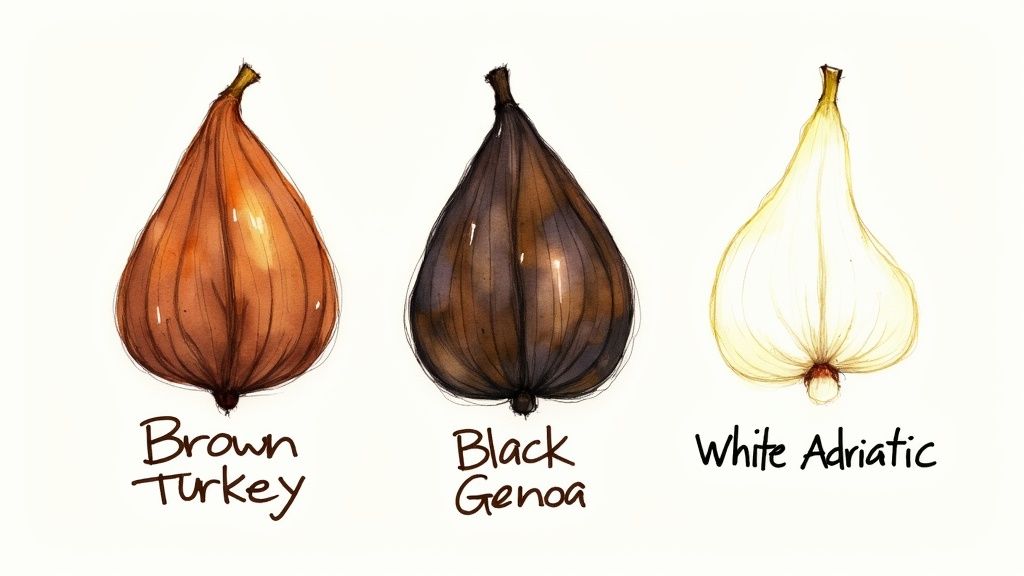
Picking the right fig variety is hands down the most critical decision you’ll make. This isn't just about grabbing any old plant from the garden centre; it’s about playing matchmaker between a cultivar and your specific Kiwi climate to guarantee a sweet, plentiful harvest. A tree that flourishes in the 'winterless' north might just sulk and struggle in a cooler southern garden.
Thankfully, fig trees (Ficus carica) are pretty adaptable, which is why they’ve become such a favourite for home gardeners across New Zealand. From Northland right down to Wellington, people are successfully growing delicious figs simply by choosing a variety that suits their local weather.
The one non-negotiable? Sun. You absolutely need to give your tree at least 6 to 8 hours of direct sun each day. That's what develops those all-important sugars in the fruit.
Reliable Favourites for Most NZ Gardens
For most of us, a few tried-and-true varieties consistently deliver the goods. These are the ones you'll see most often, and for good reason—they're tough, productive, and taste incredible.
'Brown Turkey' is probably the most reliable fig for New Zealand conditions. It's incredibly hardy and handles cooler temperatures far better than most, making it a safe bet for gardeners in the lower North Island and even in sheltered spots in the South Island. The fruit is a lovely medium size with sweet, bronze skin and rich, amber flesh.
'Black Genoa' is another absolute superstar, especially if you're in a warmer part of the country. It produces huge, dark-skinned figs with luscious, deep red flesh inside. This one is a seriously prolific fruiter and can often give you two crops a year when it's happy. It’s a brilliant choice for gardens from Auckland northwards.
Exploring Unique and Speciality Varieties
Once you move past the common workhorses, you'll find some truly special varieties that offer unique flavours and growing habits. If you've got the perfect spot, these can be incredibly rewarding.
- 'White Adriatic': Don't be fooled by the name—the skin is a greenish-yellow, but the inside is a vibrant strawberry red. It has an intensely sweet, rich flavour that fig lovers go crazy for. It really needs a long, hot summer to fully develop those sugars.
- 'Mrs Williams': This one produces a large, dark-skinned fig with a very sweet, juicy red pulp. It's a vigorous grower and another fantastic option for warmer parts of the country, known for pumping out a reliable and heavy crop.
- 'Vlasoff': A hardy character that's well-suited to a whole range of NZ climates. It gives you medium-sized, purple-skinned fruit with a classic sweet flavour, making it a versatile and dependable choice.
Insider Tip: Think about what you really want the figs for. If you're dreaming of making jars of fig jam, a super-productive variety like 'Black Genoa' is perfect. But for the simple pleasure of eating them fresh off the tree, the unique flavour of a 'White Adriatic' is hard to top.
Finding Your Perfect Fig Tree
With a few great options on the table, it helps to see them side-by-side. Use this table to find the perfect fig tree by comparing top varieties suited to NZ climates, focusing on fruit type, regional suitability, and key growing characteristics.
Comparing Popular Fig Varieties for New Zealand
| Variety Name | Ideal NZ Region | Fruit Flavour and Size | Insider Tip |
|---|---|---|---|
| Brown Turkey | Nationwide, especially cooler areas | Medium-sized, bronze skin with sweet amber flesh. A classic, reliable flavour. | The go-to for gardeners in cooler climates or those wanting a foolproof starter fig. |
| Black Genoa | Warmer regions (Auckland & North) | Large, dark purple skin with deep red, luscious flesh. Very sweet. | Can produce two crops a year ('breba' and main), extending your harvest season. |
| White Adriatic | Hot, sunny climates (Hawke's Bay, Gisborne) | Medium, green-yellow skin with vibrant strawberry-red flesh. Intensely sweet. | Needs maximum heat to develop its amazing flavour. A real connoisseur's choice. |
| Mrs Williams | Warmer North Island regions | Large, dark skin with juicy, sweet red pulp. A heavy and reliable cropper. | A vigorous grower, so give it a bit of space to thrive. Great for big harvests. |
| Vlasoff | Adaptable to most regions | Medium-sized, purple skin with a well-balanced sweet flavour. | A great all-rounder if you're not sure which to pick. Hardy and dependable. |
Ultimately, the best choice comes down to your garden's microclimate and your personal taste. Any of these will reward you with delicious fruit when given the right care.
Understanding Breba vs Main Crop
Here's a crucial bit of fig knowledge for Kiwi gardeners: understanding their fruiting habit. Some varieties can give you two distinct crops in a single season.
First up is the 'breba' crop. This develops on last year's woody growth and ripens in early summer, usually around December or January in New Zealand.
Then you have the 'main crop'. This one forms on the new, green growth from the current season and ripens later, from late summer right into autumn (February–May).
Varieties like 'Black Genoa' are famous for producing both, giving you a wonderfully extended harvest. On the other hand, 'Brown Turkey' is mostly grown for its super-reliable main crop. If you're in a cooler region with a shorter growing season, your best bet is to focus on a variety with a strong main crop to ensure success.
And if you're looking to grow more than just figs, you can find a wide selection of other plants perfect for your garden by exploring our range of fruit trees for NZ conditions.
How to Plant Your Fig Tree for a Strong Start
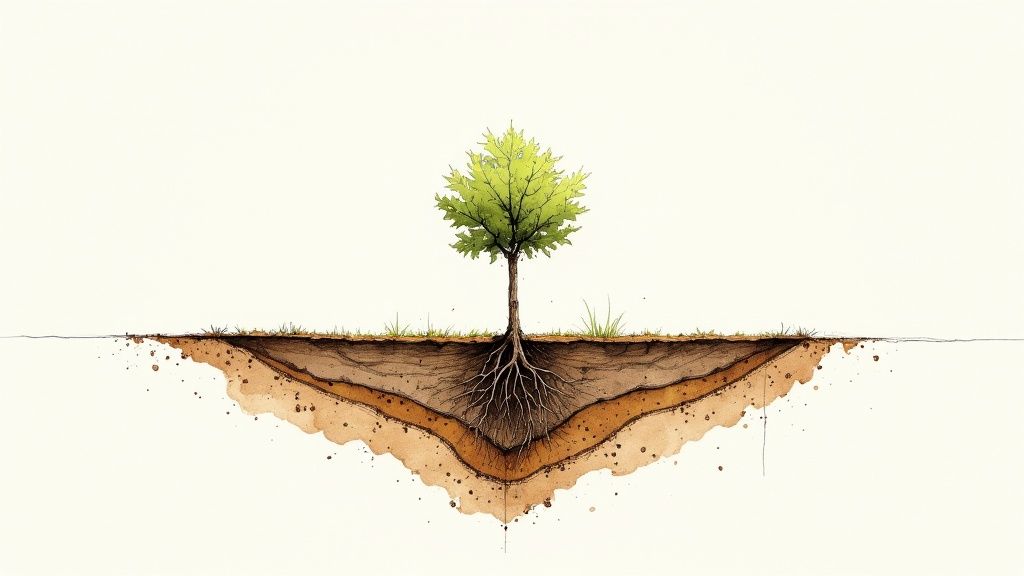
A future harvest of sun-warmed figs doesn't just happen. It all starts on planting day. Getting your tree settled in correctly from the very beginning is the single best thing you can do to ensure it thrives for years, even decades, to come.
The process itself isn't complicated, but a little attention to detail now will set your fig up for a strong, vigorous life. These steps are tailored specifically for Kiwi gardeners, keeping our unique seasons and conditions in mind.
Finding the Perfect Time to Plant
Timing is everything, especially in New Zealand. The ideal window to plant a fig tree is during its dormancy in the cooler months. You'll want to get your tree in the ground sometime between June and early August.
Planting in winter gives the tree a chance to settle in and establish its root system without the added stress of supporting leaves or fruit. Once spring rolls around, it’ll be primed and ready to burst into new growth. Trying to plant in the peak of a Kiwi summer can shock the tree, stunting its growth and leaving it vulnerable.
Scouting the Ideal Location
Before a shovel even touches the dirt, you need to find the perfect spot. Figs are absolute sun worshippers—their location is non-negotiable if you want a decent crop of fruit.
Here’s what to look for:
- Maximum Sunshine: Find the sunniest place in your garden. We’re talking a bare minimum of 6-8 hours of direct sun each day through the growing season. A north-facing aspect is usually your best bet.
- Shelter from the Southerly: Protect your tree from those cold, harsh southerly winds. Planting it against a warm, reflective wall or a solid fence can create a perfect microclimate, trapping heat and helping the fruit to ripen.
- Excellent Drainage: Figs absolutely hate "wet feet." Their roots will quickly rot in heavy, waterlogged soil. If your garden has heavy clay, consider planting on a slight mound or in a raised garden bed to guarantee good drainage.
Take your time with this. Watch how the sun moves across your garden for a few days before you commit to a spot. A good location is the difference between a tree that just survives and one that truly flourishes.
Preparing the Soil and Digging the Hole
Once you've locked in the perfect site, it's time to prep the ground. Figs aren't terribly fussy about soil type, but they'll always appreciate a well-prepared home.
Start by clearing away any weeds or grass in a one-metre diameter circle. This gets rid of any competition for water and nutrients while your young tree is getting established.
When you're ready to dig, the goal is a hole that is twice as wide as the tree's root ball, but only just as deep. If you dig too deep, the tree can sink over time, which often leads to problems later on. The extra width gives the roots plenty of loosened soil to expand into.
If your soil is a bit poor or compacted, now's your chance to improve it. Mix the soil you've dug out with a generous amount of good-quality compost or well-rotted manure. This will improve both its structure and fertility, giving your fig a fantastic head start.
Settling Your Tree Into Its New Home
Whether your tree is a bare-root specimen ordered over winter or a container-grown plant from a garden centre, the planting technique is much the same.
For a potted tree, gently ease it out of its container. If the roots are tightly coiled (a sign of being root-bound), carefully tease them out with your fingers to encourage them to grow outwards into the new soil. For bare-root trees, make a small mound of soil in the bottom of the hole and spread the roots out over it like a fan.
Place the tree in the centre of the hole, making sure the top of the root ball sits level with the surrounding ground. Backfill with your improved soil mix, gently firming it down as you go to get rid of any large air pockets.
Give the tree a deep, thorough watering right after planting. This is much better than little splashes every day, as it helps settle the soil properly around the roots.
Finally, apply a thick layer of mulch (pea straw, bark chips, or compost all work well) around the base, but be sure to keep it a few centimetres away from the trunk itself. Mulch is a gardener's best friend—it suppresses weeds, holds onto precious moisture during dry spells, and slowly improves the soil.
It can be tempting to feed your new tree straight away, but hold off on the fertiliser. Wait until you see the first signs of active growth in spring before giving it any plant food.
For those interested in other hardy and productive plants, our guide on how to care for an indoor olive tree has some great tips that can be adapted for various potted plants.
Your Seasonal Fig Tree Care and Pruning Plan
Healthy, productive fig trees don’t happen by accident, but their year-round care is refreshingly straightforward once you get into the rhythm. The key is to follow a simple seasonal plan tailored to our Kiwi climate. Getting this right is what encourages that vigorous growth and maximises your harvest, year after year.
Let's walk through the essential jobs for each season, from the spring feed that wakes them up to that all-important winter prune.
Spring Kickstart: September to November
As the weather warms up and the days get longer, your dormant fig tree will practically burst back to life. Spring is all about giving it the energy it needs for a huge season ahead.
Your main job here is a good feed. Once you see those first new leaves starting to unfurl, it's time to apply a balanced fertiliser. A general-purpose fruit tree mix is perfect, but even a generous helping of well-rotted compost or sheep pellets worked gently into the soil around the base will do the trick. This initial boost supports the strong branches and lush foliage that will power your summer fruit crop.
Also, keep an eye on soil moisture, especially in late spring when those dry spells can kick in. A thick layer of mulch applied now—think pea straw or bark chips—will help lock in moisture, keep the roots cool, and stop the weeds from taking over.
Summer Maintenance: December to February
Summer in New Zealand is when the real magic happens. Your tree is in full-on growth mode, and those tiny green figs are starting to swell. The focus now shifts to smart watering and protecting your precious, developing fruit.
During hot, dry periods, consistent watering is absolutely crucial. A deep soak once or twice a week is far more effective than a light daily sprinkle. This encourages the roots to grow deeper into the soil, making the tree much more resilient. If your fig is in a pot, you'll likely need to water it daily as they dry out incredibly fast in the summer sun.
This is also when you'll discover you aren't the only one who loves figs. Birds can strip a tree bare in a single morning. The most effective defence, hands down, is netting the entire tree just as the figs begin to soften and show a hint of colour. It’s a bit of a faff, but it guarantees you get to enjoy the harvest you’ve worked so hard for.
One of the most common mistakes I see is inconsistent watering in summer. This really stresses the tree, leading to fruit dropping or splitting just as it’s about to ripen. Aim for deep, regular watering to keep the soil consistently moist but not waterlogged.
Autumn Harvest: March to May
This is the season of reward! Depending on your variety and where you are in NZ, the main fig crop will be ripening from late summer right through autumn.
Knowing when to pick is an art you'll quickly master. A ripe fig will:
- Feel soft when you give it a gentle squeeze.
- Droop downwards on its stem, looking heavy.
- Show its full colour (e.g., a deep purple for 'Black Genoa').
- Sometimes, a tiny, sticky drop of nectar appears at the 'eye' (the little hole at the bottom).
Figs don't ripen any further once picked, so resist the temptation to grab them early. The best way to be sure? The taste test. A perfectly ripe, sun-warmed fig straight from your own tree is an unforgettable experience.
It's amazing how well the broader Ficus genus adapts to our climate. The impressive Moreton Bay fig (Ficus macrophylla), for example, has become a common sight in northern New Zealand. Though it's not a fruiting variety for us, its ability to thrive shows just how suitable our conditions are. You can read about its naturalisation and characteristics to learn more about this fascinating relative.
Winter Pruning: June to August
Winter, when your fig tree is completely dormant and leafless, is the perfect time for pruning. This is probably the most important job for the tree's long-term health and productivity. Don't be intimidated; the goal is actually quite simple.
The main aim is to create an open, 'vase shape' with 3-5 main scaffold branches. This structure lets sunlight and air right into the centre of the tree, which dramatically improves fruit ripening and reduces the risk of fungal diseases.
When pruning a young tree, you’re focused on establishing this core shape. For a mature tree, it’s more about maintenance:
- Remove any dead, diseased, or crossing branches first.
- Cut back about one-third of last season's growth to encourage new fruiting wood.
- Get rid of any suckers growing from the base of the tree.
Figs produce their main crop on new wood—the branches that will grow in the coming spring. By pruning correctly in winter, you stimulate this new growth, setting yourself up for a bumper crop next summer. Always use sharp, clean secateurs or a pruning saw to make clean cuts that will heal quickly.
To make it even easier, here's a quick-glance calendar to keep you on track throughout the year.
A New Zealand Gardener's Fig Tree Calendar
| Season (Southern Hemisphere) | Primary Focus | Actionable NZ Tips |
|---|---|---|
| Spring (Sep - Nov) | Growth & Establishment | Feed with a balanced fertiliser or compost as soon as new leaves appear. Apply a thick layer of mulch to retain spring moisture. |
| Summer (Dec - Feb) | Fruit Development & Protection | Water deeply and consistently, especially during dry spells. Net trees just as fruit begins to colour to protect from birds. |
| Autumn (Mar - May) | Harvest | Pick figs when they are soft, drooping, and have full colour. Check daily, as they ripen quickly. They won't ripen further off the tree. |
| Winter (Jun - Aug) | Pruning & Structure | Prune while the tree is dormant. Aim for an open 'vase shape' and remove about a third of last year's growth to stimulate new wood. |
Following this simple rhythm puts you in sync with your fig tree's natural cycle, making the whole process feel less like a chore and more like a rewarding partnership.
Solving Common Fig Tree Problems
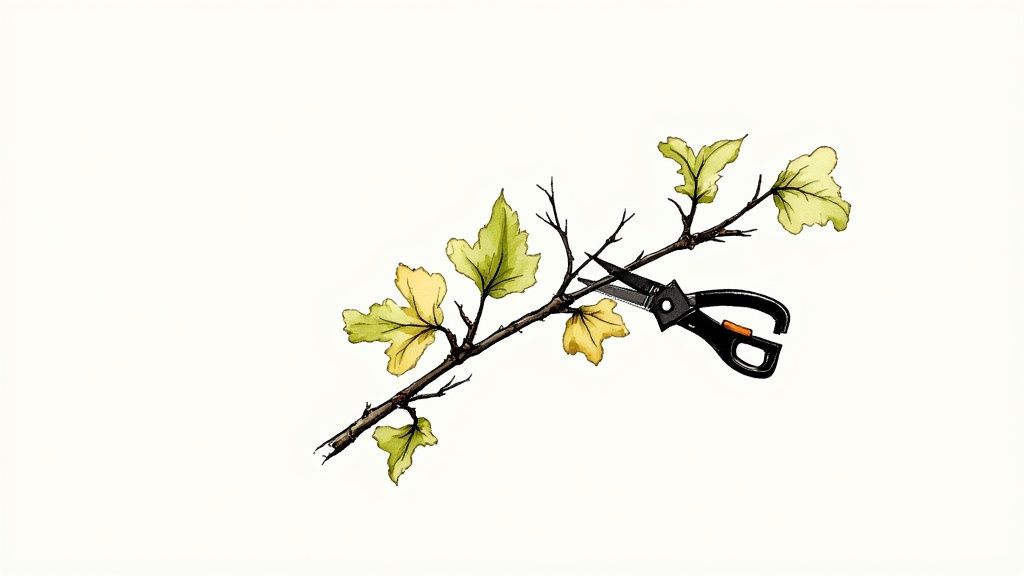
Even the most well-loved fig trees can hit a rough patch. But don’t worry—most of the common issues Kiwi gardeners face are surprisingly easy to sort out once you know what to look for. Think of this as your field guide to troubleshooting your fig tree.
We'll cover everything from those alarming yellow leaves to a disappointing lack of fruit. By learning to read the signs, you can give your tree what it needs to thrive for years to come.
Decoding Yellow Leaves
Seeing leaves turn yellow and drop off is easily the most common concern for fig owners. It's the tree's classic signal for stress, but you need to play detective to figure out the exact cause.
Nine times out of ten, the culprit is water—either too much or too little. Overwatering is a frequent mistake, particularly in heavy clay soils. If the soil is constantly soggy, the roots can't breathe, leading to yellow leaves and the risk of root rot.
On the flip side, an intense, dry Kiwi summer can cause the tree to shed leaves simply to conserve moisture. The best way to check is to stick your finger into the soil. If it’s bone dry, it’s time for a deep, consistent watering. If it’s sodden, you’ll need to hold back and let things dry out.
A few other things could be at play:
- Nutrient Deficiency: If your watering is on point, a lack of nitrogen might be the issue, causing older leaves to yellow. A balanced fruit tree fertiliser in spring should do the trick.
- Transplant Shock: It's totally normal for a newly planted tree to drop some leaves while it settles into its new home. Give it time, and it should bounce back.
- Seasonal Change: Remember, fig trees are deciduous. It's perfectly natural for them to turn yellow and drop all their leaves in autumn before they go dormant for winter.
Why Is My Fig Tree Not Fruiting?
It’s incredibly frustrating to wait patiently for your first harvest, only to be met with a bare tree. The good news is that the reasons are usually simple and fixable. Age is the most common factor; a young fig tree often needs 2-3 years in the ground before it's mature enough to produce a decent crop.
Pruning at the wrong time is another classic error. Most fig varieties in NZ produce fruit on new spring growth. If you give the tree a hard prune in spring, you're literally cutting off that season's potential harvest. The right time to prune is in winter when the tree is fully dormant.
Finally, figs are sun-worshippers. They need at least six hours of direct sun every day to get the energy they need to make and ripen fruit. A tree tucked away in a shady corner might look leafy and green, but it’s unlikely to ever give you a good crop.
The most common reasons a fig tree fails to fruit are its youth, incorrect winter pruning, or insufficient sunlight. Patience and proper placement are your best tools for encouraging a bountiful harvest.
Dealing With Pests and Diseases in NZ
While they're generally tough characters, fig trees in New Zealand can have a few issues, especially in our more humid regions.
Fig Rust is a fungal problem that shows up as small, yellowish-orange spots on the tops of leaves, with rusty-brown powder underneath. It loves warm, humid weather—sound familiar? While it looks dramatic, it rarely does serious harm. Good air circulation from proper pruning is your best defence. Always make sure to clean up and dispose of fallen leaves in autumn to prevent spores from overwintering.
Scale insects can also be a pain. They look like tiny, immobile bumps on stems and under leaves, where they suck sap and weaken the plant. For a small infestation, you can often just scrape them off. For a bigger problem, treating with horticultural oil during the winter dormant season is effective.
Of course, the biggest "pest" for any fig grower is often birds. They have an uncanny sense for knowing the exact day your figs are perfectly ripe. The only foolproof solution is to drape the entire tree in bird netting a few weeks before the fruit starts to soften. It’s a small effort for a big reward. These and other creative solutions are part of creating a resilient outdoor space, and you can explore more garden ideas for NZ homes to inspire your next project.
Got Fig Questions? We've Got Answers
When you start growing figs here in NZ, a few common questions always seem to pop up. Whether it’s about growing in pots or figuring out the perfect harvest time, getting the right advice can make a massive difference.
Here are some quick, straightforward answers to the queries we hear most often from fellow Kiwi gardeners.
Can I Successfully Grow a Fig Tree in a Pot?
Absolutely! Growing a fig in a large container is a brilliant solution, especially if you're tight on garden space or live in one of New Zealand's cooler spots. A pot means you can shuffle the tree to a sheltered location for winter, like a covered deck or up against a warm house wall.
Just be sure to pick a decent-sized container—think at least 50-60 cm wide and deep—with plenty of drainage holes. Always use a high-quality potting mix, not soil from the garden, as it gives the roots the aeration and drainage they need to thrive.
Keep in mind that potted plants dry out much faster, so you’ll need to be on top of watering during the hot summer months. They also depend entirely on you for food, so a feed with a slow-release fertiliser in spring is a must for good growth and plenty of fruit. Pruning also becomes extra important to keep the tree at a manageable size.
Growing a fig in a pot gives you ultimate control over its environment. It's the perfect solution for urban gardeners or those in frost-prone areas, ensuring you can still enjoy a delicious homegrown harvest.
When Is the Best Time to Harvest Figs in New Zealand?
The fig harvest season in NZ really depends on the variety you're growing and your local climate. Generally, though, you can expect to be picking fruit from late summer right through into autumn.
Some varieties give you a lovely bonus 'breba' crop. This early crop grows on last year's wood and usually ripens around December or January.
The main crop, however, is the big one. It grows on the new branches from the current season and is typically ready from late February through to May. You'll know a fig is perfectly ripe when it feels soft to a gentle squeeze, hangs down a little on its stem, and has developed its full, rich colour. They won't ripen once picked, so resist the temptation to harvest them early!
Do Fig Trees Need a Pollinator to Produce Fruit?
This is a great question, and the answer is wonderfully simple: no! The common fig varieties sold and grown across New Zealand are self-fertile.
This clever trait, known as parthenocarpy, means they produce fruit all on their own without needing another tree for pollination. You only need one plant to get a reliable and bountiful crop.
This makes them an incredibly low-maintenance and dependable choice for the home garden. You don't have to worry about planting partners or attracting specific insects like the fig wasp, which other types of figs around the world rely on. It’s one of the main reasons fig trees are such a rewarding choice for Kiwi gardeners of all skill levels.
At Jungle Story, we provide a huge selection of healthy, high-quality plants to help you create your dream garden. Explore our full range and find the perfect addition to your home today at https://junglestory.co.nz.