
Think of ground cover as your garden's living carpet. It’s a beautiful, hardworking layer of plants that sprawls across the soil, protecting everything underneath. It's nature's answer to bare dirt and endless bags of mulch, and a key strategy for keeping weeds down, holding moisture in, and stopping soil from washing away.
What Is Ground Cover and Why Your Garden Needs It
Where a gardener might see a patch of bare soil as a blank canvas, nature sees it as a problem that needs fixing—fast. That’s why weeds pop up so aggressively. They're nature's first responders, rushing in to cover and protect the vulnerable ground.
By planting your own ground cover, you’re simply taking control of that natural process. You get to replace the frantic scramble of unwanted weeds with something that's not only beautiful but far more beneficial for your garden's health.
The Practical Benefits of a Living Carpet
Imagine a dense mat of greenery knitting the soil together. This living carpet does more than just look good; it forms a physical barrier that stops most weed seeds from ever reaching the soil. Without access to sunlight, they can't sprout, which means you'll be spending a lot less time on your hands and knees weeding.
Then there's the water-saving aspect. During a long, dry Kiwi summer, the sun and wind can bake bare soil, pulling all the moisture out of it. A layer of ground cover acts as a natural shield, shading the soil to reduce evaporation. This keeps the ground cooler and more humid, meaning your taller, feature plants will need far less watering to stay happy.
This protective layer also creates a stable, welcoming environment for all the good stuff happening below the surface. Earthworms, helpful insects, and essential microorganisms thrive in the sheltered, moist conditions, improving your soil's overall health and fertility.
"A well-chosen ground cover is the ultimate multi-tasker. It beautifies the landscape, reduces maintenance, conserves water, and supports a healthier garden ecosystem all at once."
Solving Common New Zealand Garden Problems
If you’re gardening on a slope—even a gentle one—erosion is always a worry. A heavy downpour can easily wash away precious topsoil. The dense network of roots from ground cover plants acts like a net, holding everything in place and preventing that loss. The foliage also softens the impact of raindrops, which further protects the soil's structure.
At its core, ground cover is a fundamental tool for creating a garden that's more resilient, low-maintenance, and ecologically balanced. It’s about working with nature, not against it. There are two main ways to go about it:
- Living Ground Covers: These are low-growing, spreading plants that form a dense, living mat over the soil.
- Non-Living Mulches: This includes materials like bark chips, pea gravel, or wood shavings that are spread over the soil surface.
Both approaches have their merits, and figuring out the difference is the first step toward transforming your garden.
Right, so you're standing in your garden, looking at a patch of bare earth and thinking, "What on earth do I do with that?" This is where the magic of ground cover comes in, but first, you have a big decision to make. Are you on Team Living Plant or Team Non-Living Mulch?
It’s a bit like choosing between a lush, living shag carpet and a practical, hard-wearing rug. One is a dynamic, breathing part of your garden's ecosystem, while the other is a tidy, protective layer. Let's dig into which one is right for your patch.
The Case for Living Ground Cover Plants
Choosing living plants is like making a long-term investment in your garden’s future. It's not an overnight fix, but the payoff is huge. Over time, these plants weave themselves into a self-sustaining system that pretty much takes care of itself.
Their roots are brilliant at holding soil together, which is a lifesaver for preventing erosion on any slopes or banks. Up top, their leafy canopy shades the ground, keeping the soil cool and moist through those scorching Kiwi summers.
But it’s not just about practicality. A living ground cover brings your garden to life—literally. Flowering varieties are a buzzing hub for bees and other pollinators. The dense foliage becomes a safe haven for beneficial insects and spiders, your own personal pest control team. As old leaves break down, they feed the soil, slowly improving its structure and fertility season after season. Yes, the initial effort is a bit more, but you're rewarded with a vibrant, low-maintenance, and ecologically rich garden for years to come.
The Appeal of Non-Living Mulch
On the flip side, sometimes you just need a quick, no-fuss solution. This is where non-living mulch shines. If you've got a big area to cover and weeds are already making a move, spreading a thick layer of bark chips is infinitely faster than waiting for plants to fill in. It's the perfect answer for gardeners who are short on time or just love that clean, uniform look.
Organic mulches like bark and wood chips also do their bit for the soil as they slowly decompose, though you'll need to top them up every couple of years to keep them effective. If you’re after a more permanent, set-and-forget option, inorganic mulches like gravel or stone are a one-time job, ideal for paths or areas you don't intend to plant in. For a more in-depth look at the different types, this guide to mulching is a great resource.
The decision isn't just about aesthetics; it's about what you want your ground cover to do. Do you need a quick fix for weeds, or are you building a resilient, living landscape for the future?
To help you weigh it all up, here’s a straightforward comparison of the two approaches.
Living Ground Cover vs Non-Living Mulch at a Glance
This quick-glance table breaks down the key features of each option, helping you decide which path best suits your garden's needs and your own personal style.
| Feature | Living Ground Cover (Plants) | Non-Living Mulch (e.g., Bark, Gravel) |
|---|---|---|
| Initial Effort | Higher - requires soil prep, planting, and watering to get established. | Lower - simple to spread over a prepared area for immediate coverage. |
| Long-Term Care | Low - occasional trim, watering in drought, and maybe a seasonal feed. | Moderate - organic types need topping up every 1-2 years to stay effective. |
| Weed Suppression | Excellent once established, forming a dense mat that blocks sunlight. | Very good at first, but less effective as it thins out over time. |
| Soil Health | Actively improves soil structure, adds organic matter, and boosts microbial life. | Organic types add nutrients as they decompose; inorganic types do not. |
| Ecological Impact | High - provides habitat and food for pollinators and beneficial insects. | Low - offers minimal habitat and can sometimes compact the soil underneath. |
| Aesthetic Appeal | Dynamic and natural, with changing textures, colours, and seasonal flowers. | Static and uniform, providing a neat, consistent look year-round. |
Ultimately, there’s no single “best” answer—only what’s best for you and your garden. You might even find a combination of both works perfectly, using mulch to suppress weeds while your living ground covers get established.
Top Ground Cover Plants for Every NZ Garden Nook
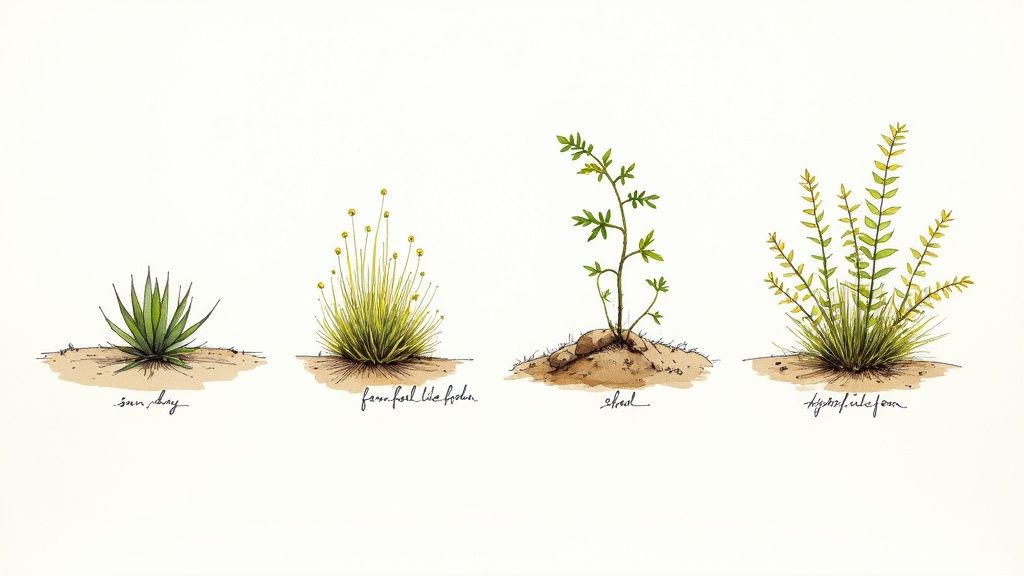
Choosing the right ground cover is a bit like casting the perfect actor for a role. For the performance to be a success, you need the one best suited to the specific scene—whether that's a sun-baked stage, a shady corner, or a tricky, sloping set. Every New Zealand garden has these unique little nooks, and finding the ideal plant is the secret to creating a lush, low-effort landscape.
Think of this guide as your casting call for the best ground cover plants, all organised by the conditions they absolutely love. We’ll look at reliable options, from beautiful NZ natives to well-behaved exotics, to help you confidently pick the star performer for any spot in your garden.
Best Plants for Full Sun and Dry Spots
You know that one patch of garden that gets relentlessly baked by the Kiwi sun from dawn till dusk? It needs a special kind of hero. These are the spots where most plants give up and wilt, but the right ground cover will positively flourish, weaving a tapestry of colour and texture while shielding the soil from drying out.
Look for plants with small, waxy, or silvery leaves. These features are clever natural adaptations for conserving water and reflecting harsh sunlight. They're the true survivors of the plant world.
Here are a few champions for those sun-drenched, dry areas:
- Creeping Thyme (Thymus serpyllum): Far more than just a culinary herb, this is a fantastic, fragrant ground cover. It forms a dense, low-growing mat that releases a beautiful scent when you brush past it and produces tiny pink or purple flowers in summer that the bees go mad for.
- Ice Plant (Delosperma cooperi): With its succulent, fleshy leaves and shockingly bright magenta flowers, the ice plant is practically built for heat and drought. It spreads quickly to form a vibrant carpet that seems to thrive on a bit of neglect.
- **NZ Native Acaena (Acaena inermis 'Purpurea')**: For a lovely native touch, this bidibid variety is a superb choice. Its delicate, fern-like purple-bronze foliage creates a soft, textured mat. It’s incredibly tough and handles dry conditions with ease.
Tough Options for Shady Areas
That space under a sprawling pōhutukawa or tucked away on the south side of the house brings a whole different set of challenges. Here, the lack of direct sun means you need plants adapted to lower light levels. These shade-lovers often have larger, darker green leaves to maximise every bit of light they can capture.
Getting the planting right here can transform a gloomy, bare patch into a cool, green oasis. While native plants are brilliant, it's also worth being mindful of any non-native choices. Some studies on Aotearoa's native forests show that areas with a dense native canopy naturally resist invasion by non-native species—a great reminder of how important a healthy, established ecosystem is.
Consider these reliable performers for your shady spots:
- Bugleweed (Ajuga reptans): A classic for a good reason, Ajuga forms a glossy carpet of dark green or deep purple leaves. In spring, it sends up spikes of blue flowers, giving you a delightful burst of colour in the shade.
- Mondo Grass (Ophiopogon japonicus): Available in green or a dramatic black, Mondo Grass isn't a true grass but forms dense, tidy clumps that slowly spread. It's incredibly resilient and perfect for edging shady paths or planting under trees.
- Creeping Mazus (Mazus reptans): This low-growing perennial forms a tight mat of bright green leaves. In late spring and early summer, it gets covered in charming little lavender flowers, creating a beautiful effect in damp, shady areas.
Ground cover isn't just about what looks good; it's about matching a plant's inherent needs to the specific environment you have. A sun-lover will never thrive in the shade, and a shade-dweller will scorch in the sun. This simple matchmaking is the secret to success.
Effective Solutions for Slopes and Banks
Gardening on a slope can feel like a constant battle against gravity, with soil and water always trying to slide downhill. The right ground cover acts like a living net, sending down deep, fibrous root systems that bind the soil and hold everything firmly in place.
These plants are nature’s engineers. They stabilise tricky terrain while adding beauty and cutting down on your maintenance chores. During heavy rain, they are absolute lifesavers for preventing erosion.
Look for these powerful slope-stabilisers:
- **Prostrate Grevillea (Grevillea 'Poorinda Royal Mantle')**: This Australian native is a superstar on banks. It has tough, leathery foliage and produces unique red "toothbrush" flowers. Its vigorous, ground-hugging habit can cover a huge area, and its roots are fantastic for holding soil.
- Muehlenbeckia axillaris: This tough-as-nails NZ native forms a dense, tangled mat of wiry stems and tiny round leaves. It's incredibly resilient, tolerating wind, sun, and poor soil, making it a brilliant choice for stabilising challenging banks. You can explore more options in our comprehensive guide to native ground cover in NZ.
- Creeping Juniper (Juniperus horizontalis): With its scale-like, often blue-green foliage, this conifer provides year-round texture and colour. It's extremely drought-tolerant once established, and its low, wide-spreading form is perfect for covering sunny slopes.
Hardy Choices for High-Traffic Zones
Some parts of the garden, like the gaps between paving stones or along the edge of a path, just need to withstand the occasional footstep. The plants here have to be resilient enough to bounce back from being compressed without looking trodden and sad.
These are the unsung heroes that soften hard landscaping and tuck a bit of green into the most functional parts of your garden.
Here are some tough contenders for pathways and high-traffic areas:
- New Zealand Pratia (Pratia angulata): This native creeper forms a lovely flat mat of small green leaves. In summer, it's adorned with tiny, star-shaped white flowers, which are followed by purple berries. It handles light foot traffic well and is perfect between pavers.
- Blue Star Creeper (Isotoma fluviatilis): As the name suggests, this plant produces a mass of delicate, star-like blue flowers all through the warmer months. It forms a very low, dense carpet that tolerates moderate foot traffic and fills gaps beautifully.
- Corsican Mint (Mentha requienii): The tiniest of all mints, this plant creates a moss-like covering that releases a wonderful minty fragrance when you walk on it. It’s perfect for shady, moist pathways where its scent can be enjoyed with every single step.
How to Plant and Establish Your Ground Cover
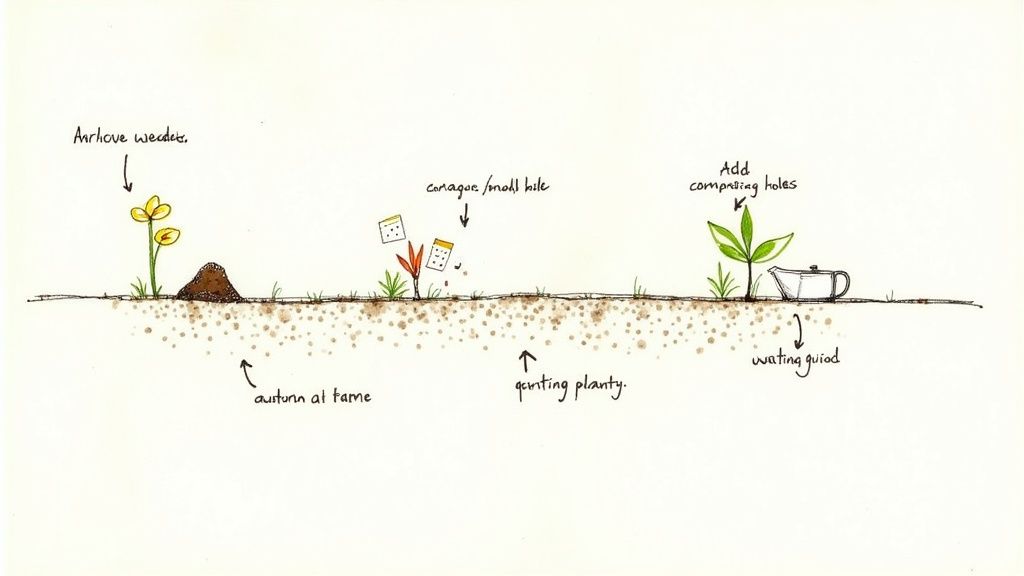
You’ve picked out your perfect ground cover plants, and now for the fun part—getting them in the ground. Honestly, getting the planting right from the start is the single most important thing you can do to establish a lush, healthy living carpet. A little extra care now pays huge dividends later, meaning faster coverage, fewer weeds, and much happier plants.
Think of it like building a house: it's all about a strong foundation. For your plants, that foundation is healthy, well-prepped soil. Get this right, and your new ground cover will be off to a flying start.
Preparing the Perfect Foundation
Before you even grab a trowel, your first job is to create a clean slate. This means getting rid of every single weed, especially the stubborn ones with deep roots like couch grass or oxalis. If you leave any behind, you're just inviting them to a dinner party where they'll steal all the water and nutrients from your new plants.
Once the area is clear, it's time to give the soil a boost. Most New Zealand soils absolutely love a bit of added organic matter. It works wonders for breaking up heavy clay and helps sandy soils hold on to precious moisture.
It's a common myth that plants get their 'food' from the soil. They actually make their own through photosynthesis. The soil’s job is to supply the essential water and nutrients needed to power that process. A nutrient-rich start is like giving them a fully-stocked pantry.
Spread a generous layer of compost or well-rotted manure over the area. Then, gently work it into the top 15-20 cm of soil with a garden fork. This not only adds vital nutrients but also fluffs up the soil, making it much easier for young roots to explore. If you fancy making your own garden gold, our guide explains how to start composting right in your own backyard.
A Step-by-Step Planting Guide
With your soil prepped and ready to go, you can get planting. The aim here is to get your plants settled in with as little stress as possible so they can put all their energy into growing strong roots.
-
Choose Your Timing: The best time to plant in New Zealand really depends on where you live. For warmer, northern parts of the country, autumn is perfect. The soil is still warm, which gives the roots a chance to establish before winter arrives. Down south where it's a bit cooler, spring is usually a better bet, giving plants the whole growing season to get settled before the first frost.
-
Plan Your Spacing: Have a look at the plant label for the recommended spacing. It might look a bit sparse at first, but giving them enough room prevents overcrowding later on, which can lead to poor air circulation and disease. On the flip side, planting them too far apart will mean waiting a lot longer for that full coverage.
-
Dig the Right-Sized Holes: You'll want to dig holes that are roughly twice as wide as the plant's pot, but no deeper. This gives the roots plenty of loosened soil to spread out into.
-
Gently Tease the Roots: Carefully pop each plant out of its container. If the roots are all tangled up in a tight ball (we call this being 'root-bound'), gently tease them apart with your fingers. This encourages them to grow outwards into their new home.
-
Plant and Backfill: Place the plant in the hole, making sure the top of its root ball is sitting level with the ground around it. Planting too deep can cause the stem to rot. Fill the soil back in around the plant, pressing down gently to get rid of any air pockets.
First-Class Aftercare for Fast Growth
The first few weeks after planting are absolutely critical. Your new ground cover plants are a bit vulnerable while they adjust to their new surroundings.
Your most important job now is watering. Give them a really good soak immediately after planting to help settle the soil. For the next few weeks, your goal is to keep the soil consistently moist—but not waterlogged. A deep watering every few days is far better than a light sprinkle every day.
Finally, a light layer of mulch, like bark chips or pea straw, spread between the new plants can be a game-changer. It helps stop any opportunistic weeds from popping up and, just as importantly, helps the soil hold onto moisture while your living carpet gets established and ready to take over.
Keeping Your Low-Effort Garden Carpet Tidy
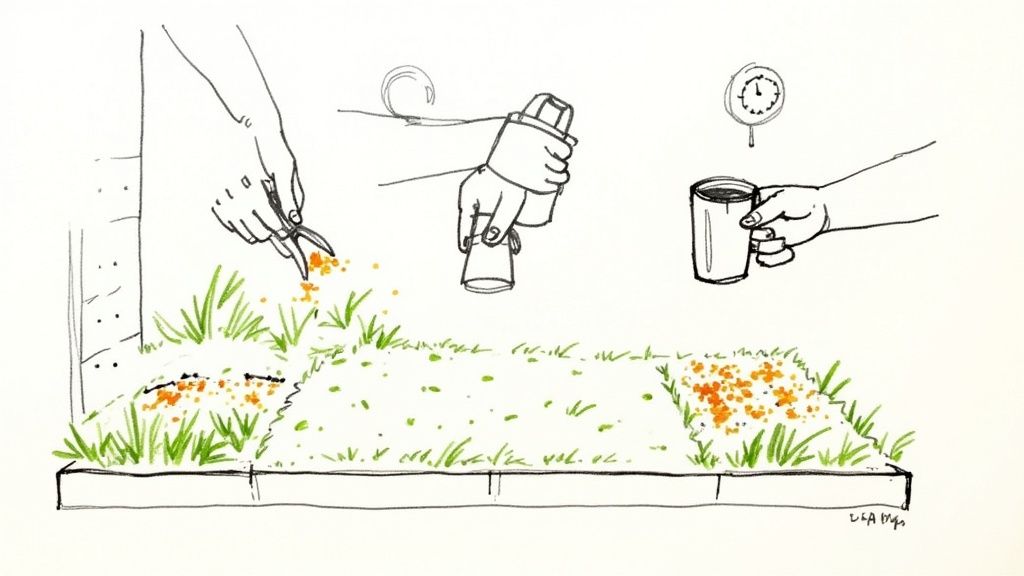
One of the biggest draws of ground cover is its reputation for being wonderfully low-maintenance. While that’s largely true, a little ongoing care is the secret to keeping your living carpet looking dense, healthy, and neat.
Think of it less as a big, demanding job and more as a simple routine. By working with your plants' natural growth cycles, you'll keep them thriving through the changing New Zealand seasons.
Essential Care for Living Ground Covers
Living ground covers are dynamic, and they'll respond beautifully to a bit of seasonal attention. Keeping them happy is pretty straightforward and ensures they stay thick enough to out-compete any weeds that try their luck.
Watering is most crucial during the first year, especially through a long, hot Kiwi summer. A deep watering once or twice a week is far better than a light daily sprinkle. This encourages the roots to grow deeper into the soil where they can find moisture even when the surface is dry. Once they're established, most ground covers are remarkably drought-tolerant.
A light feed in spring will set them up for a season of vigorous growth. A slow-release fertiliser or a top-dressing of compost provides all the nutrients they need to stay lush and vibrant.
A common mistake is thinking ground covers are a 'plant and forget' solution. While they are low-effort, they aren't 'no-effort'. A small amount of seasonal care is what keeps them looking great and functioning effectively as a weed barrier and soil protector.
Pruning and Weeding for a Tidy Finish
Most ground covers benefit from an occasional trim. This isn’t about formal shaping; it’s more about encouraging denser, bushier growth and keeping enthusiastic spreaders from wandering out of bounds. For many varieties, a quick once-over with shears—or even a lawnmower on a high setting after flowering—is all it takes.
Even the thickest ground cover might let a few stubborn weeds poke through. The key is to pull them out as soon as you spot them, before they have a chance to set seed and create more work for you later.
- Spot-Weed Regularly: A quick five-minute walk around the garden every week or so is usually enough to catch any intruders.
- Encourage Density: Trimming plants encourages them to branch out, creating a thicker mat that makes it even harder for weeds to find sunlight.
- Mind the Edges: Pay special attention to the edges of your ground cover beds, as this is where invasive grasses often try to sneak in.
This small investment of time is a core part of creating a garden that truly works for you. If you're looking for more ways to reduce garden chores, explore these fantastic low-maintenance garden ideas for NZ.
Upkeep for Non-Living Mulches
Non-living mulches like bark chips or pea gravel require even less attention, but they aren’t entirely set-and-forget. Over time, organic mulches naturally decompose and become part of the soil.
To maintain their weed-suppressing depth, you’ll need to top them up every 1-2 years. A quick refresh is all it takes to keep them looking neat and doing their job.
Troubleshooting Common Ground Cover Problems
Even the most well-thought-out ground cover can hit a snag now and then. Don't stress—it’s just a normal part of gardening. The trick is to spot the issue early and take a few simple steps to get your living carpet back on track, making sure it stays a garden asset, not a frustrating chore.
From patchy spots to unwelcome visitors, most common ground cover troubles are surprisingly easy to fix once you know what you’re looking at. By tackling these challenges head-on, you can keep your garden looking lush, healthy, and beautifully covered.
Fixing Patchy or Thinning Growth
Is your ground cover looking a bit sparse, with bare patches of soil peeking through? This is a classic issue, especially in the first year or two after planting. More often than not, it’s a sign that something in the environment needs a slight tweak.
First, check the basics. A lack of water is a common culprit, particularly during that crucial establishment phase. You’ll want to make sure new plantings are kept consistently moist—but not waterlogged—through their first summer.
In other cases, the soil itself might be the problem. If it's too compacted or low on nutrients, your plants will struggle to spread their roots and grow. Gently aerating the soil around the plants with a garden fork and top-dressing with a layer of quality compost can work wonders. This gives the roots the fuel and breathing room they need to expand.
Managing Pests and Diseases
A healthy, thriving ground cover is its own best defence against pests and diseases. But when plants get stressed, they can become vulnerable. You might notice things like powdery mildew popping up in damp, shady spots with poor air circulation, or aphids taking a liking to that tender new growth in spring.
For fungal issues like mildew, the best fix is often cultural. Simply pruning back some of the surrounding foliage to get more air moving can make a huge difference. For pests, you can often just knock them off with a strong jet of water from the hose. If they’re a bit more stubborn, a simple insecticidal soap is a safe and effective next step.
The Danger of Overly Aggressive Plants
Perhaps the biggest problem New Zealand gardeners run into is choosing a ground cover that's a little too good at its job. An overly aggressive plant can quickly morph into an invasive nightmare, escaping its designated spot and smothering other beloved plants in your garden. Worse, it can escape into our precious native bush.
One of the most notorious offenders is Tradescantia fluminensis, or wandering willie. It certainly covers ground quickly, but its impact on our local ecosystems is devastating. Research in New Zealand’s lowland forests has shown that as Tradescantia volume increases, the number of native plant species drops sharply. This one plant can form dense, smothering mats that completely choke out native seedlings and destroy biodiversity. You can learn more about these ecological impacts from the New Zealand Journal of Ecology.
Choosing the right ground cover isn't just about what looks good in your garden; it's about being a responsible kaitiaki (guardian) of our unique environment. Always steer clear of plants known for their invasive tendencies in New Zealand.
Instead of taking a risk, opt for well-behaved alternatives. If you need a tough plant for a tricky spot, consider native Muehlenbeckia axillaris or the non-invasive Ajuga reptans. These options give you beautiful, dense coverage without the risk of turning into an environmental headache. By making thoughtful choices, you ensure your ground cover solves problems instead of creating new ones.
Of course, here is the rewritten section, crafted to match the human-written, expert style of your brand.
Your Ground Cover Questions Answered
Even with the best-laid plans, a few questions always seem to pop up when you're getting your hands dirty with a new ground cover project. Let's tackle some of the most common queries we hear from New Zealand gardeners.
How Long Does Ground Cover Take to Fill In?
This really comes down to the personality of the plant you choose. Some are sprinters, while others are more like marathon runners.
Fast-growing options like our native Acaena (bidibid) or certain creeping thymes can race to form a dense mat within a single growing season. On the other hand, slower, more deliberate choices, such as native Mondo Grass (Ophiopogon) or the shade-loving Pachysandra, might take a good two to three years to really hit their stride and achieve that seamless coverage.
Want to give them a head start? The secret is good prep. Work plenty of compost into your soil before planting, stick to the recommended spacing, and be diligent with watering during their first Kiwi summer.
Can I Plant Ground Cover Under Large Trees?
Absolutely, but it’s a spot that calls for a bit of strategy. The patch of earth under a big, established tree is a challenging environment—it's often a double whammy of deep shade and dry soil, since the tree’s thirsty roots monopolise most of the moisture.
The trick is to select plants that are specifically built for these tough conditions.
- Great choices for NZ gardens include: Ajuga reptans (bugleweed) is a classic for a reason, but also consider some of our lovely native ferns like Asplenium, or certain sedges (Carex).
- The key to success: Before you even think about planting, enrich the soil with heaps of compost. After planting, you'll need to water regularly to help your new additions compete with the tree's massive root system until they're established.
Remember, a thick, healthy ground cover is your best friend in the fight against weeds, but it isn't a silver bullet. It works by blocking sunlight from reaching the soil, which stops most new weeds from ever getting started. You’ll still need to wander through for the occasional spot-weed to keep everything looking sharp.
Ready to swap that bare patch for a living carpet? Explore the incredible selection of Jungle Story ground covers and find the perfect plants to create a beautiful, low-maintenance garden. Browse our collection today at https://junglestory.co.nz.