
Imagine a stunning garden that thrives without demanding all your free time. In New Zealand, our passion for the outdoors doesn't always translate into a love for endless weeding, constant watering, and meticulous pruning. The great news is that a beautiful, vibrant garden and a relaxed weekend are not mutually exclusive concepts. This guide is dedicated to achieving that perfect balance, exploring a curated collection of practical and stylish low maintenance garden ideas nz homeowners can implement with confidence.
We've gathered eight distinct approaches tailored for New Zealand's diverse climates, from the subtropical north to the cooler south. Whether you're drawn to the rugged beauty of a native plant sanctuary, the clean lines of a gravel and stone-scape, or the vibrant colours of a Mediterranean-inspired retreat, you'll find actionable strategies here. We'll move beyond simple plant lists to cover smart design, efficient irrigation, and soil preparation techniques that minimise future work. This article provides the blueprint for creating an outdoor space that enhances your home and lifestyle, giving you more time to fire up the barbecue, relax with a book, and simply enjoy the beautiful environment you’ve created. Let's dig into designing a garden that works for you, not the other way around.
1. The Ultimate 'Set and Forget': The Native New Zealand Plant Garden
For a truly effortless landscape, the most effective of all low maintenance garden ideas in NZ is to embrace the flora that has thrived here for millennia. A native New Zealand plant garden is a living testament to working with, not against, our unique environment. These plants are perfectly adapted to local soil types, rainfall patterns, and climate variations, meaning they require minimal intervention once established. This approach significantly reduces the need for watering, pest sprays, and artificial fertilisers, creating a resilient, self-sustaining ecosystem that also provides a crucial habitat for native birds and insects.
This method moves beyond just planting and celebrates the nation's biodiversity. It’s an authentic Kiwi garden that reflects the natural character of its surroundings, from the rugged coastlines to the lush forests.
How to Implement a Thriving Native Garden
Success with a native garden comes from smart planning rather than hard labour. The key is choosing the right plant for the right place.
- Analyse Your Site: Is your garden coastal and windswept, or a sheltered, damp gully? Plants that thrive in one area may struggle in another. For example, use tough, salt-tolerant species like Coprosma repens (taupata) for coastal exposure.
- Group for Success: Arrange plants with similar needs together. Create a dedicated 'dry bank' with drought-tolerant species like tussock grasses (Chionochloa) and certain hebes, minimising the need for any supplemental watering.
- Start with Pioneers: Begin with hardy, fast-growing pioneer species. Harakeke (flax), pittosporums, and various hebe species establish quickly, providing shelter for more delicate plants to be added later.
- Mulch Generously: During the initial establishment phase (the first one to two years), apply a thick layer of bark or woodchip mulch. This suppresses weeds, retains soil moisture, and reduces root stress, which is the most labour-intensive part of the process.
By focusing on establishment, you front-load the work, creating a garden that largely takes care of itself in the long term. For more in-depth guidance, you can explore a comprehensive guide on creating a native New Zealand garden and get inspired by the beauty of our local flora.
2. Embrace Modern Simplicity: The Gravel and Stone Garden
For a sleek, contemporary, and incredibly low-maintenance solution, consider replacing lawn and garden beds with a gravel and stone landscape. This xeriscaping approach uses various grades of gravel, pebbles, and strategic boulders as the primary ground cover, punctuated by hardy, drought-tolerant plants. This design is perfectly suited to New Zealand’s diverse climates, providing excellent drainage in high-rainfall areas like Wellington and minimising water usage in drier regions like Central Otago. It’s a sophisticated, architectural style that dramatically cuts down on mowing, weeding, and watering.
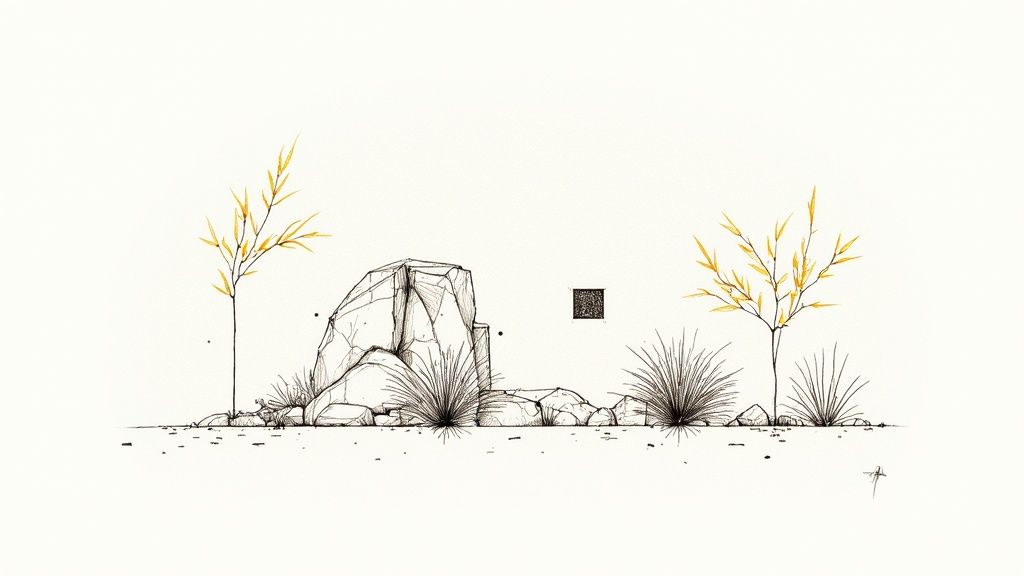
This method creates a garden that is visually striking year-round, relying on texture and form rather than high-maintenance floral displays. It’s an ideal choice for busy homeowners, new builds in areas like Auckland's residential developments, or as a practical solution for challenging sloped sites.
How to Implement a Clean Gravel and Stone Garden
A successful gravel garden is all about the groundwork. Proper preparation is the key to creating a truly low-maintenance space that suppresses weeds and looks sharp for years to come.
- Lay a Weed-Proof Foundation: Before laying any stone, install high-quality landscape fabric across the entire area. This is the most crucial step for preventing weeds from growing up through the gravel, which will save you countless hours of maintenance later.
- Source Locally and Vary Textures: Reduce costs and environmental impact by choosing local stone varieties, like greywacke or river stones. Create visual depth and interest by using a mix of materials, such as fine Oamaru chip for pathways and larger river pebbles for feature areas.
- Select Resilient Plants: Choose plants that thrive in free-draining, dry conditions. Succulents, sedums, ornamental grasses like Carex testacea, and tough natives like Marlborough rock daisies (Pachystegia) are excellent choices that require minimal care.
- Ensure Proper Drainage: When designing the space, make sure there is a slight gradient to direct water away from the house foundations. While gravel helps with drainage, proper grading prevents water from pooling.
By investing time in the setup, you create a striking and enduring landscape that demands very little from you, making it one of the smartest low maintenance garden ideas NZ homeowners can adopt.
3. Succulent and Alpine Garden
For those with sunny, dry, or exposed sites, a succulent and alpine garden offers a striking and exceptionally low-maintenance solution. This style combines water-storing succulents with tough, mountain-dwelling alpine plants, both of which are naturally adapted to thrive with minimal water and in well-draining conditions. It's a perfect choice for challenging spots like rockeries, gravel areas, or sunny banks where other plants might struggle, making it one of the most resilient low maintenance garden ideas in NZ. This approach creates a garden of intriguing textures, sculptural forms, and surprising bursts of colour, all while demanding very little from the gardener.
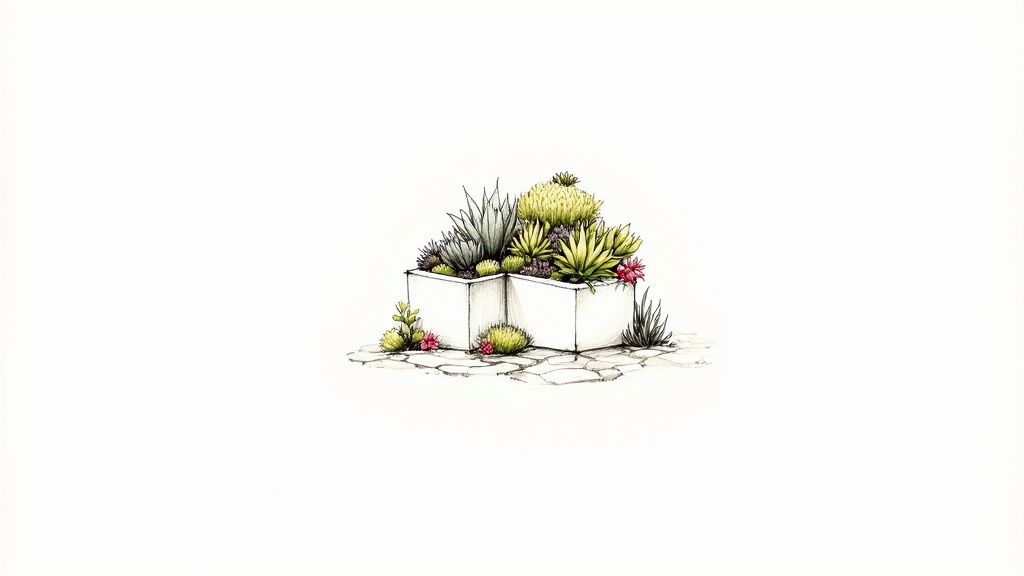
This garden style is a masterclass in drought tolerance, turning a potential gardening challenge into a stunning feature. From the geometric rosettes of echeverias to the delicate flowers of alpine saxifrages, it provides year-round visual interest without the need for constant watering or feeding.
How to Implement a Succulent and Alpine Garden
The foundation of a successful succulent and alpine garden is getting the drainage absolutely perfect. These plants despise "wet feet" and will rot in heavy, waterlogged soil.
- Prioritise Drainage: The most crucial step is to ensure water can escape freely. If you have clay soil, create raised beds, mounds, or a dedicated rock garden. Amending the soil with plenty of grit, pumice, or coarse sand is essential.
- Select for Your Climate: While many succulents thrive in warmth, choose cold-hardy varieties like Sempervivums and specific Sedums for southern regions like Central Otago. For alpines, many are perfectly suited to the South Island's climate but may need protection from intense summer sun further north.
- Mulch with Gravel: Unlike traditional gardens, avoid organic mulches like bark, which can hold too much moisture and cause rot around the plant's crown. A top dressing of gravel or small stones is ideal; it suppresses weeds, retains a small amount of moisture deep in the soil, and provides a clean, modern aesthetic.
- Group Wisely: Even within this category, water needs can vary slightly. Group thirstier succulents together and place true drought-lovers, like many cacti, in the driest, sunniest spot to simplify care.
By focusing on creating the right environment from the outset, you establish a self-sufficient garden that thrives on neglect. The New Zealand Alpine Garden Society provides a wealth of local knowledge for those looking to explore this rewarding style.
4. The Ornamental Grass Garden: Movement and Texture Made Easy
For a garden that offers year-round texture, movement, and architectural form with minimal fuss, an ornamental grass garden is an outstanding choice. This style leverages the hardiness and structural beauty of various grasses, creating a dynamic landscape that sways and rustles in the wind. Perfectly suited to New Zealand's variable climate, from windy Wellington hillsides to the dry Canterbury Plains, these gardens are inherently drought-tolerant once established and provide valuable habitat for beneficial insects and birds, making them one of the most sustainable low maintenance garden ideas in NZ.

This approach creates a soft, naturalistic feel that complements both modern and traditional architecture. It's a design that looks beautiful through every season, often peaking in interest during autumn and winter when seed heads catch the light.
How to Implement a Thriving Ornamental Grass Garden
Creating a stunning grass garden is about bold planting and strategic selection. The main effort is in the initial planting, after which the garden largely manages itself.
- Mass for Impact: The key to a high-impact grass garden is mass planting. Instead of dotting individual plants around, group five or more of the same species together to create dramatic drifts of colour and texture.
- Mix Evergreen and Deciduous: Combine evergreen species like Carex with deciduous grasses that provide stunning autumn colour and winter structure. This ensures the garden never looks bare.
- Choose the Right Size: Be mindful of the mature size. Use smaller grasses like blue fescue (Festuca glauca) for edging and larger species like Miscanthus or native toetoe as focal points or screens.
- Plant in Autumn: The best time to plant most ornamental grasses in New Zealand is autumn. This allows their root systems to establish over the cooler, wetter months before the summer heat arrives.
- Leave Winter Seed Heads: Resist the urge to cut back deciduous grasses in autumn. Their seed heads provide crucial food for birds and look spectacular when frosted over in winter (June-August). A single annual cut-back in late winter is all that's required.
By embracing this style, you create a visually captivating garden that demands little more than an annual trim. To explore options perfectly suited for our local conditions, you can find a wealth of information on native New Zealand grasses and start designing your own graceful landscape.
5. Embrace the Sun with a Mediterranean-Style Garden
For those living in New Zealand's sun-drenched, drier regions, one of the most stylish and practical low maintenance garden ideas NZ has to offer is the Mediterranean-style garden. This approach takes inspiration from the sun-baked landscapes of Southern Europe, focusing on plants that thrive in heat and survive with minimal water once established. It’s a perfect solution for areas like Hawke's Bay, Marlborough, and Central Otago, transforming challenging, dry sites into aromatic, beautiful, and productive spaces.
This garden style is more than just a collection of plants; it's an aesthetic that evokes a sense of relaxed, sun-soaked living. It combines aromatic herbs, silvery foliage, and rugged textures to create a landscape that is both visually appealing and remarkably self-sufficient, significantly reducing your watering and maintenance duties.
How to Create Your Own Mediterranean Oasis
Success with a Mediterranean garden hinges on replicating the hot, dry, and free-draining conditions these plants adore. The focus is on preparing the site correctly to ensure plants flourish without constant fuss.
- Prioritise Drainage: Mediterranean plants detest "wet feet." If you have heavy clay soil, improve it by incorporating generous amounts of grit, sand, or fine gravel to open up the structure and allow water to drain freely.
- Choose Sun-Loving Plants: Select species that are naturally adapted to dry conditions. Think rosemary, lavender, thyme, olive trees, and ornamental grasses. For cooler regions, ensure you pick frost-hardy varieties that can withstand winter chills.
- Mulch with Gravel or Stone: Instead of traditional bark mulch which can retain too much moisture, use a layer of gravel, pebbles, or crushed shells. This suppresses weeds, conserves soil moisture, and reflects heat, keeping plant roots happy.
- Group Plants Wisely: Arrange plants with similar, minimal water needs together. This creates hydrozones, allowing you to water efficiently only where and when it's absolutely necessary, primarily during the crucial establishment phase after planting in spring (September-November).
By focusing on excellent drainage and smart plant selection, you can cultivate a stunning garden that not only survives but thrives through long, hot Kiwi summers with very little effort.
6. Embrace Control with a Raised Bed Garden System
For gardeners grappling with poor soil quality, drainage issues, or physical limitations, a raised bed garden system offers a highly structured and efficient solution. This method involves creating elevated planting containers, which you then fill with a premium soil mix. This gives you complete control over the growing environment, sidestepping common New Zealand garden challenges like heavy clay or waterlogged winter soils. This controlled approach drastically reduces maintenance, particularly weeding, soil amending, and pest management, making it one of the most practical low maintenance garden ideas NZ has to offer.
The contained nature of raised beds prevents soil compaction and allows for excellent aeration and drainage. It also warms up faster in spring, extending the growing season. This system is particularly popular in urban settings and community gardens across New Zealand, from Christchurch to Auckland, where space and soil quality can be limited.
How to Implement a Low-Fuss Raised Bed System
Building an effective raised bed garden is straightforward, with the initial setup being the main investment of time and effort. Once established, the upkeep is minimal.
- Prioritise Accessibility: Construct your beds no wider than 1.2 metres. This ensures you can comfortably reach the centre from either side without ever stepping on and compacting the soil. Consider varying heights for ergonomic benefits, especially for those with mobility issues.
- Choose Durable Materials: Use untreated, long-lasting timber like macrocarpa or recycled materials for the frame. Avoid treated pine where you plan to grow edible crops, as chemicals can leach into the soil.
- Invest in Quality Soil: This is the most critical step. Fill your beds with a high-quality, free-draining mix of compost, topsoil, and a little bit of peat or coconut coir. This perfect start minimises the need for ongoing fertilising.
- Install Efficient Irrigation: Incorporate a soaker hose or a drip irrigation system during setup. This delivers water directly to the plant roots, reducing water waste and preventing fungal diseases that can arise from overhead watering.
By concentrating your resources—good soil, water, and nutrients—into a defined space, you create a highly productive garden that requires significantly less work to maintain throughout the year.
7. The Ultimate Green Carpet: The Groundcover Garden
For those looking to eliminate vast, high-maintenance lawns or tackle difficult-to-mow areas, the groundcover garden is one of the most practical low maintenance garden ideas in NZ. This approach uses a living carpet of low-growing, spreading plants to cover the soil, effectively suppressing weeds, retaining moisture, and reducing erosion on slopes. Once established, this dense mat of foliage provides year-round texture and colour with minimal upkeep, making it an ideal solution for areas under large trees, steep banks, or any space where traditional turf grass struggles.
This method transforms problem spots into features of interest. Instead of fighting a losing battle with a patchy lawn, you create a dynamic, textured landscape that thrives in challenging conditions, from the shaded understory of an Auckland garden to the windswept banks of a Wellington section.
How to Implement a Thriving Groundcover Garden
Establishing a successful groundcover garden is about creating the right conditions for rapid, dense growth. The initial effort pays off with years of low-effort beauty.
- Choose the Right Plant for the Place: Your success hinges on matching the plant to your specific conditions. Use shade-lovers like Pachysandra terminalis or native Parataniwha (Elatostema rugosum) for damp, shaded areas, and tough, sun-loving species like creeping thyme or Acaena inermis 'Purpurea' for hot, dry spots.
- Plant Densely for Faster Coverage: While it may cost more initially, planting your groundcover plugs closer together than recommended will significantly speed up the time it takes for them to join up and form a solid mat. This reduces the window for weeds to establish.
- Mulch to Begin: Before the plants have fully covered the ground, apply a layer of fine bark or pea straw mulch between them. This is crucial for suppressing weed competition and retaining soil moisture during the critical establishment phase.
- Select Non-Invasive Species: Be mindful of your choices, as some groundcovers can become aggressive. Opt for well-behaved varieties or native options like Muehlenbeckia axillaris to avoid creating a future problem for your garden or local ecosystem.
By focusing on a strong start, you create a self-sufficient green carpet that outcompetes weeds and requires almost no ongoing work. To discover the perfect plants for your project, you can explore an extensive list of native ground cover options for NZ and start your lawn-free journey.
8. Embrace Flexibility with a Container and Pot Garden
For ultimate control and adaptability, a container and pot garden is one of the most versatile low maintenance garden ideas NZ has to offer. This approach involves growing plants exclusively in containers rather than in the ground, making it perfect for renters, small spaces like balconies, or properties with poor soil. It minimises heavy digging and weeding while allowing you to create curated plant arrangements and move them to suit the sun or your design preferences.
This method transforms gardening from a permanent land alteration into a dynamic and portable hobby. It's an ideal solution for creating lush patios in urban centres like Auckland or vibrant herb gardens on Wellington balconies, offering a green escape without the long-term commitment of in-ground planting.
How to Implement a Thriving Container Garden
Success with containers is all about setting up the right foundation, which significantly reduces ongoing work. It’s about creating the perfect micro-environment for each plant from the start.
- Prioritise Drainage: Ensure every container has adequate drainage holes. Without them, water pools at the bottom, leading to root rot, which is a common issue in New Zealand's wetter regions.
- Use Quality Potting Mix: Avoid using soil straight from the garden, as it compacts easily, drains poorly in pots, and can introduce weeds and diseases. A high-quality, free-draining potting mix provides the ideal balance of aeration, moisture retention, and nutrients.
- Group for Impact and Efficiency: Arrange pots with similar watering and light requirements together. This creates a stronger visual statement and streamlines your watering routine, turning it into a quick and simple task.
- Match Plant to Pot Size: Select plants that are appropriately sized for their container. A plant in a pot that is too small will become root-bound and require constant watering, while a small plant in a massive pot can struggle with overly moist soil.
- Consider Self-Watering Options: For busy individuals or those who travel, self-watering containers are an excellent investment. These systems provide a consistent water supply from a built-in reservoir, dramatically cutting down on daily maintenance.
Low Maintenance Garden Ideas Comparison
| Garden Type | Implementation Complexity 🔄 | Resource Requirements ⚡ | Expected Outcomes 📊 | Ideal Use Cases 💡 | Key Advantages ⭐ |
|---|---|---|---|---|---|
| Native New Zealand Plant Garden | Moderate - requires initial soil prep and plant selection | Moderate - higher initial plant cost, low water & maintenance long-term | Supports local ecosystems, low maintenance, authentic NZ aesthetic | Ecological gardens, biodiversity support, low maintenance native hubs | Extremely low water use, natural pest resistance, wildlife habitat |
| Gravel and Stone Garden | Moderate to High - needs proper installation, drainage setup | Medium to High - costly materials and installation, minimal ongoing cost | Durable, excellent drainage, modern aesthetic | Sloped or poor drainage areas, contemporary landscaping | Almost no watering, great weed suppression, long-lasting |
| Succulent and Alpine Garden | Moderate - focus on drainage and plant grouping | Low to Moderate - drought-tolerant plants, well-draining soil essential | Unique textures/forms, pest resistant, year-round interest | Small spaces, containers, drought-prone areas | Exceptional drought tolerance, low fertilizer needs, architectural interest |
| Ornamental Grass Garden | Low to Moderate - planting but requires annual cut-back | Low - minimal watering post-establishment, low maintenance | Movement, texture, seasonal interest, erosion control | Variable NZ climates, privacy screening, erosion-prone slopes | Low water, minimal pruning, wildlife habitat, privacy screening |
| Mediterranean-Style Garden | Moderate - needs good drainage and frost protection | Moderate - drought-tolerant plants, some maintenance | Culinary/herbal garden, water-wise, aromatic | Dry regions in NZ, Mediterranean-like climates | Water-efficient, culinary & aromatic plants, bee-friendly |
| Raised Bed Garden System | Moderate to High - construction and soil filling required | Medium - higher upfront for materials/soil, efficient watering | Better soil/drainage, easier access, reduced weeds | Variable soil/wet climates, small accessible plots, urban gardening | Easier maintenance, better soil control, accessibility for all |
| Groundcover Garden | Low to Moderate - intensive initial planting for coverage | Low to Moderate - plants generally hardy, some trimming required | Weed suppression, erosion control, self-maintaining | Slopes, shaded/difficult areas, low-maintenance landscapes | Eliminates mowing, erosion control, drought tolerant |
| Container and Pot Garden | Low - easy setup, requires pot selection and soil fill | Low to Moderate - cost of pots and quality potting mix | Flexible arrangement, controlled growing conditions | Small/urban spaces, renters, poor soil conditions | Portable, no ground prep, good drainage control, indoor options |
Your Low-Effort, High-Reward Garden Awaits
Creating a stunning garden in New Zealand doesn't have to mean endless weekends of weeding, watering, and pruning. As we've explored, the secret lies in strategic design and intelligent plant selection. By embracing the principles of low-maintenance gardening, you can cultivate a beautiful, thriving outdoor space that enhances your lifestyle rather than demanding all your free time. It's about shifting the focus from constant work to lasting enjoyment, creating a personal sanctuary that is both beautiful and sustainable.
Throughout this guide, we've journeyed through a variety of concepts, each offering a unique pathway to a more manageable garden. From the resilient, self-sufficient ecosystems of native New Zealand plantings to the stark, architectural beauty of a gravel and stone garden, the options are as diverse as our Aotearoa landscapes. We've seen how succulents and alpines offer sculptural interest with minimal water needs, and how ornamental grasses can provide year-round movement and texture without constant attention. Each of these low maintenance garden ideas for NZ proves that less effort can yield extraordinary results.
Key Takeaways for Your Effortless Garden
To synthesise these ideas into actionable steps, remember these core principles:
- Right Plant, Right Place: This is the golden rule. A sun-loving Mediterranean plant will struggle in a damp, shady corner, demanding more of your care. Respecting a plant's natural preferences for sun, soil, and water is the single most effective way to reduce maintenance.
- Embrace Hardscaping and Mulch: Gravel, pavers, stones, and a thick layer of organic mulch are your best allies. They suppress weeds, retain soil moisture, and create a clean, organised structure that drastically cuts down on upkeep.
- Think in Layers and Textures: A truly engaging low-maintenance garden isn't just about a few hardy shrubs. It’s about combining textures—the soft plumes of grasses, the bold forms of succulents, the dense mat of groundcover—to create visual depth and interest that doesn't rely on fussy, flowering annuals.
- Water Wisely: Group plants with similar water needs together (a concept known as hydrozoning). Installing a simple drip irrigation system on a timer can automate this crucial task, ensuring plants get what they need without waste or effort.
Your Next Steps to a Thriving Outdoor Space
The journey towards your ideal garden is an exciting one. Start small. You don't need to overhaul your entire property overnight. Choose one concept that resonates with you, perhaps converting a troublesome patch of lawn into a groundcover garden or setting up a collection of feature pots on your deck.
The value of mastering these approaches extends beyond just saving time. A well-designed, low-maintenance garden is more resilient to New Zealand's varied climate, from summer droughts to winter downpours. It promotes biodiversity, especially when incorporating native species, and ultimately provides a more profound connection to nature without the associated stress. Your garden should be a source of peace and pride, a high-reward retreat that you have cleverly designed to care for itself.
Ready to bring your low-maintenance vision to life? The foundation of any great garden is healthy, high-quality plants chosen for their resilience and beauty. At Jungle Story, we specialise in curating a diverse range of native, drought-tolerant, and architectural plants perfect for creating the effortless Aotearoa garden you've been dreaming of.