
Picking the right plant containers in NZ is one of the most important first steps you'll take for your garden. It’s best to think of a pot as your plant’s home—it needs to be the perfect size and made from the right material to help it thrive in our unique New Zealand climate. This guide is all about helping you choose containers that not only look fantastic but also encourage strong, healthy growth.
Your Guide to Choosing the Right Plant Pot
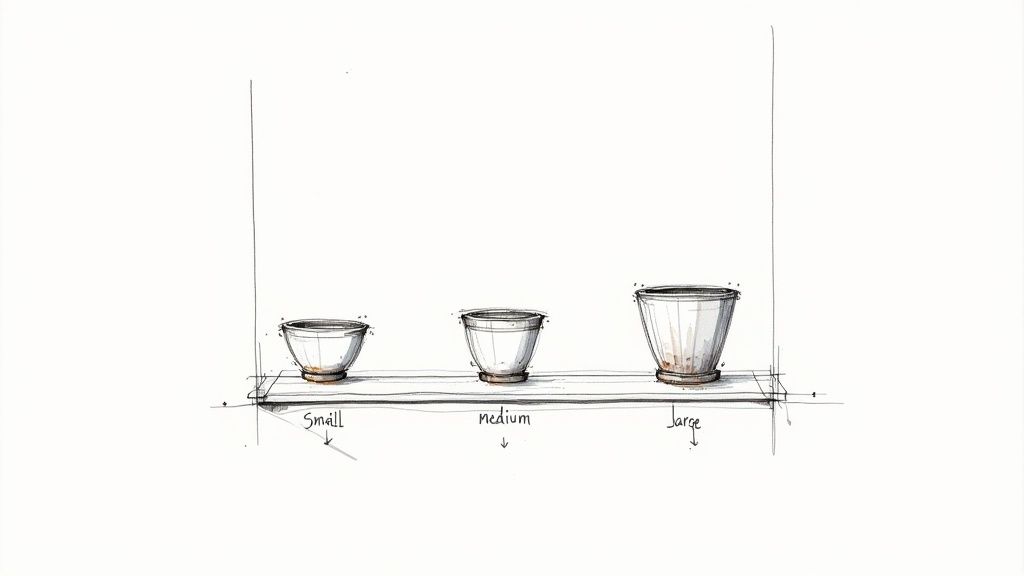
Starting a container garden is such an exciting way to bring life and colour to any space. It doesn't matter if you have a sunny Auckland balcony, a small Christchurch patio, or a big backyard in the Waikato. The right container is so much more than something to hold soil; it's a vital part of your plant's ecosystem, directly impacting moisture, root temperature, and its overall health.
This guide will give you the essential knowledge to make smart choices right from the get-go, giving your plants the best possible chance to flourish.
Key Considerations for Kiwi Gardeners
Before you head out to buy your next pot, it really helps to understand the key things that make a container garden work. Getting these basics right will save you a world of time and prevent some of the most common gardening frustrations down the track.
Here’s what we’ll walk through to set you up for success:
- Material Matters: We’ll look at how different materials like terracotta, plastic, and glazed ceramic really perform in different New Zealand conditions.
- Sizing and Drainage: Learn the 'Goldilocks' rule for getting pot size just right and why good drainage is absolutely non-negotiable for healthy roots.
- Style and Function: Get tips on how to match your containers to your plants and your personal garden vibe, creating a look that’s cohesive and beautiful.
With more of us Kiwis living in apartments and townhouses, container gardening has become the go-to solution for creating our own green havens. This trend is part of a bigger picture in the New Zealand Garden Supplies Retailing industry, which has seen a real boom in smaller potted plants perfect for balconies and indoor spaces. It's one of the main reasons why understanding how to choose the right plant containers in NZ is more important than ever.
Once you start seeing a plant pot as a crucial piece of equipment rather than just a decoration, your focus shifts. You start thinking about creating the perfect environment for growth. This simple change in mindset is the secret to a brilliant container garden.
For those of you focused on bringing the green indoors, choosing the right pot is just as critical. For more specialised tips, check out our guide on choosing indoor plant pots.
Understanding Plant Pot Materials in the NZ Climate
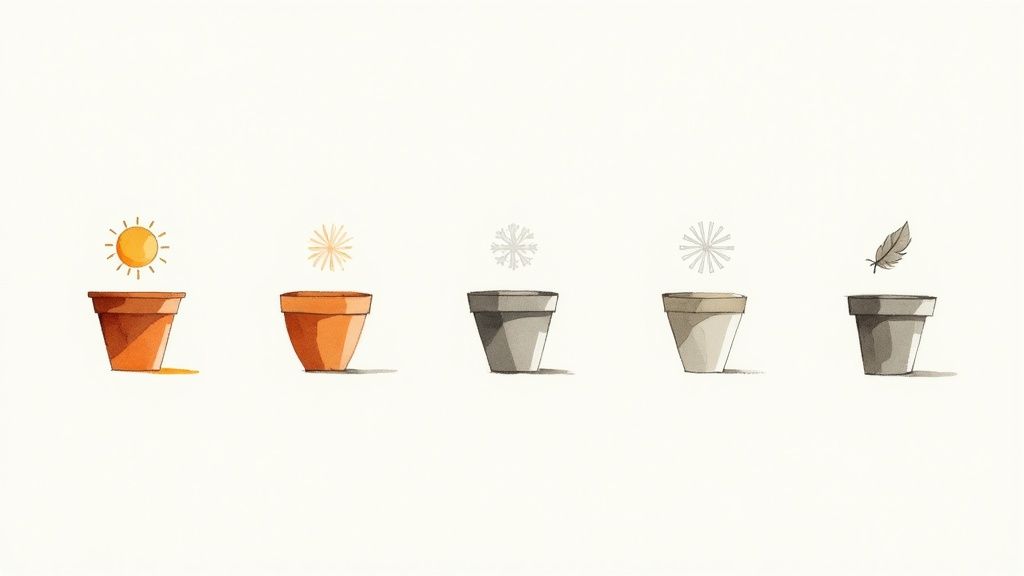
Choosing a pot for your plant is about so much more than just how it looks. Think of it as picking the right coat for the weather – different materials offer different levels of insulation, breathability, and moisture control. For us gardeners across New Zealand, from the subtropical north to the frosty south, the material of a pot plays a massive part in a plant's daily survival.
The right choice can shield roots from a scorching Hawke's Bay summer sun or stop them from freezing solid during a Southland winter. Let’s dive into the most common materials you’ll find for plant containers in NZ and see how they stack up in our unique climate.
The Classic Choices: Terracotta and Ceramic
Terracotta is that classic, rustic choice so many of us love. Made from natural, porous clay, these pots are brilliant for plants that absolutely hate wet feet – think succulents, cacti, and Mediterranean herbs like rosemary and lavender. The clay literally breathes, letting moisture and air pass right through its walls.
Of course, that breathability can be a double-edged sword here in NZ. While it’s great for preventing root rot in a damp Auckland winter (June - August), it also means the soil dries out incredibly fast on a hot summer's day. If you’re a fan of terracotta, just be ready to water more often, especially for any pots sitting on a sun-drenched deck.
Glazed ceramic pots are like terracotta’s stylish, less-breathable cousin. That shiny glaze seals the porous clay, so these containers hold onto moisture for much longer. This makes them a fantastic pick for thirsty plants like ferns and peace lilies, cutting down on your watering duties.
The trade-off? They're usually heavier and a bit pricier. A big thing to consider for those in colder regions is their weakness against frost. Any moisture absorbed by unglazed bits can freeze, expand, and crack the pot. A heavy frost in Christchurch or Dunedin could easily damage a prized ceramic planter left out in the elements.
A plant pot isn't just a holder; it's an active environmental system. The material you choose dictates the temperature, moisture level, and airflow around your plant's roots—three of the most critical factors for healthy growth.
The Practical All-Rounder: Plastic
Let’s be honest, plastic pots are everywhere, and for good reason. They are cheap, lightweight, and come in every colour and shape imaginable. They’re also excellent at retaining moisture, which makes them a really practical choice for a huge range of plants and situations. Their light weight is a real bonus for balconies or for gardeners who love to move things around.
But this popular material has its downsides, especially under the powerful New Zealand sun. Dark-coloured plastic can absorb a shocking amount of heat. On a hot summer afternoon, the soil inside a black plastic pot can get hot enough to literally cook your plant's sensitive roots. Lighter colours are a much better choice to reflect that heat. Cheaper plastics can also get brittle and crack after a few seasons of harsh UV exposure.
Modern and Sustainable Alternatives
Beyond the big three, there’s a growing range of modern materials that offer some pretty unique benefits for Kiwi gardeners. These options often solve the common problems of weight, durability, and sustainability.
- Fibrecrete (or Fibrestone): This is a clever composite material that mixes cement with fibres. You get the solid, earthy look of stone or concrete, but it’s significantly lighter. It provides fantastic insulation against both heat and cold and is super durable, making it a great long-term investment for a special feature plant.
- Metal Containers: Planters made from galvanised or Corten steel give a very sleek, modern look. They are incredibly durable, but just like dark plastic, they can get seriously hot in direct sun. They’re probably best for plants that can handle warmer roots or in spots that get a bit of afternoon shade.
- Fabric Grow Bags: Once just for growing spuds, fabric pots are now a mainstream choice for all sorts of plants. Made from a breathable, felt-like fabric, they promote amazing aeration and stop roots from circling—a process called ‘air pruning’. They are lightweight, affordable, and perfect for gardeners with limited space, but they do dry out quickly.
If you’re keen on making sustainable choices, checking out guides on eco-friendly home accents can offer some great inspiration for materials that are both stylish and better for the planet.
To help you decide, here's a quick comparison of the most common materials you'll find.
Plant Container Material Comparison for NZ Gardeners
| Material | Pros | Cons | Best For |
|---|---|---|---|
| Terracotta | Excellent drainage, porous, classic look. | Dries out quickly, fragile, can crack in frost. | Succulents, cacti, herbs, and plants that prefer dry soil. |
| Glazed Ceramic | Retains moisture well, huge range of styles and colours. | Heavy, more expensive, can crack in heavy frost. | Moisture-loving plants like ferns and tropicals. |
| Plastic | Lightweight, affordable, excellent moisture retention. | Can overheat roots in sun, cheap versions can crack. | General-purpose use, hanging baskets, and indoor plants. |
| Fibrecrete | Lighter than concrete, durable, good insulation. | Can be more expensive than plastic or terracotta. | Feature plants, small trees, and long-term plantings. |
| Metal | Very durable, modern aesthetic. | Can get extremely hot, may rust if not treated. | Heat-tolerant plants or locations with afternoon shade. |
| Fabric Bags | Promotes healthy roots (air pruning), lightweight, good value. | Dries out very quickly, can degrade over time. | Vegetables, annuals, and gardeners short on space. |
Ultimately, the material you choose for your plant containers in NZ really does shape your gardening experience. So take a moment to match it to your plants, your local climate, and your own lifestyle.
Mastering Pot Size and Drainage for Healthy Roots
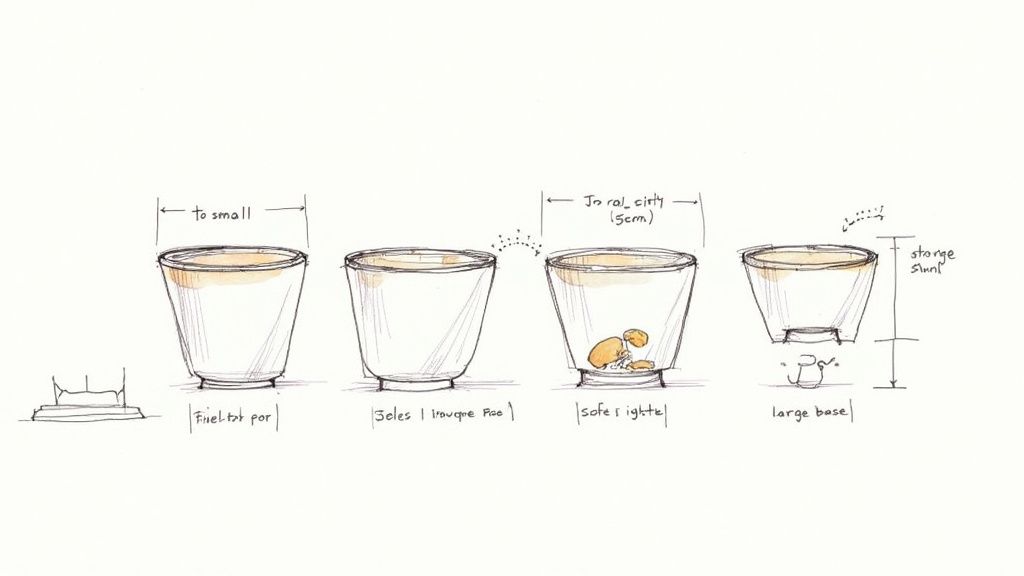
So, you’ve picked the perfect material for your pot. What’s next? Getting the size and drainage right. These two details aren't just minor tweaks; they're everything when it comes to growing a strong, healthy root system. In fact, getting them wrong is probably one of the biggest reasons a potted plant gives up the ghost.
Think of it as finding the perfect home for your plant’s roots—the engine room for its entire life. A well-sized pot with good drainage gives those roots the perfect mix of moisture, air, and room to stretch out, which is exactly what they need to support lush leaves and beautiful flowers.
Let’s break down how to nail these two critical factors every single time.
The Goldilocks Rule for Pot Sizing
When choosing a pot, you're looking for one that's 'just right'. It’s so tempting to pop a small plant into a huge pot, thinking you’re giving it heaps of room to grow and saving yourself a future repotting job. But this is a classic mistake that often does more harm than good.
A pot that’s way too big holds a massive amount of soil that the plant’s little root ball can't possibly reach. That extra soil stays soggy for ages after you water, creating a cold, damp environment that’s a perfect breeding ground for root rot and other fungal nasties. You essentially risk drowning your plant.
On the flip side, a pot that's too small is just as bad. It'll choke the roots and stunt the plant's growth completely. A root-bound plant dries out in a flash, can't take up nutrients properly, and will never live up to its potential.
The Simple Sizing Guideline: As a rule of thumb, when you repot, choose a new container that is only about 2-5 centimetres wider in diameter than the current one. This gives the roots enough fresh potting mix to grow into without creating a swamp.
This simple step-up approach encourages a dense, healthy root system that can make the most of the water and nutrients available, leading to a much happier plant all round.
Why Drainage Is Non-Negotiable
If there’s one non-negotiable for plant containers in NZ, it’s proper drainage. Without it, you’re setting your plant up to fail. The absolute must-have for any pot is at least one drainage hole at the bottom. These holes are the escape hatches for any excess water, making sure your plant's roots are never left sitting in a puddle.
Roots need oxygen just as much as they need water. When soil becomes waterlogged, all the air pockets are pushed out, and the roots literally suffocate. This is what leads to root rot, a condition that’s very hard to come back from. No matter how stunning a pot looks, if it doesn't have drainage holes, it should only be used as a decorative outer pot (a cachepot), not for planting directly into.
For plants that are extra fussy about wet feet, or for pots sitting on a deck or patio, using 'pot feet' can be a game-changer. These little risers lift the container just enough to improve airflow and stop the drainage holes from getting blocked.
Debunking a Common Drainage Myth
You've probably heard the old advice to put a layer of gravel, stones, or broken pottery at the bottom of a pot "for drainage." This is one of the most stubborn myths in gardening, and it actually makes things worse.
This layer doesn't help water escape. Instead, it creates something called a 'perched water table'. Water struggles to move from the fine-textured potting mix into the coarse gravel layer, so it backs up in the soil just above the gravel. This effectively raises the soggy zone right up to where your plant's sensitive roots are sitting.
- What to do instead: Just skip the gravel altogether.
- The better solution: Fill the entire container with a high-quality, well-draining potting mix.
- Worried about soil loss? If you’re concerned about mix washing out of the drainage holes, place a small piece of mesh, shade cloth, or even a coffee filter over the hole before you add the soil. It works a treat.
Matching Containers to Plants and Garden Styles
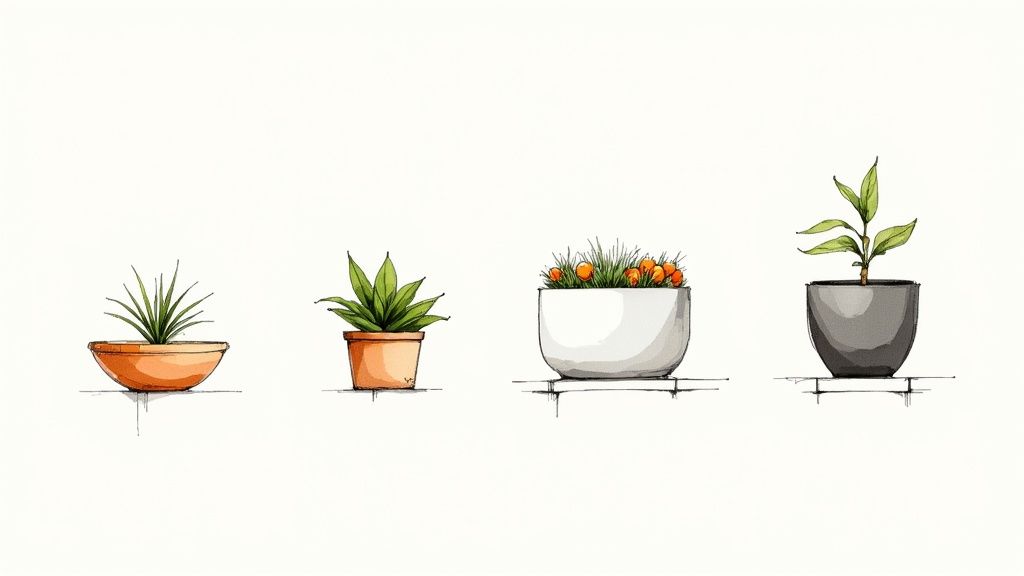
Okay, once you’ve figured out the practical stuff like material and size, the real fun can begin. Choosing a pot is where function and creativity meet, letting you pair the perfect container with the right plant to really bring your garden aesthetic to life.
Think of it this way: a container is more than just a home for your plant. It's a key design piece that shows off your personal style. This is your chance to think like an artist. The right pot can accentuate a plant’s best features—the silvery leaves of an olive tree, the cool sculptural shape of a succulent, or the soft cascade of a flowering annual. It’s all about creating a cohesive, stunning look.
Pairing Pots with Plant Personalities
Every plant has its own personality and its own set of needs, and the right container can make all the difference. Matching the pot's function to what the plant actually wants is the first step towards a display that doesn't just survive, but truly thrives.
Here are a few classic pairings that just work, especially for Kiwi gardens:
- Succulents and Terracotta Bowls: Terracotta is porous, which is a perfect match for succulents and cacti since they absolutely hate having wet feet. A wide, shallow bowl gives them space to spread out and really shows off their intricate forms.
- Ferns and Self-Watering Pots: Our moisture-loving native ferns do so much better with consistent hydration. A self-watering pot is an absolute game-changer, especially during a dry summer, as it provides a steady supply of water right where it's needed—at the roots.
- Citrus and Large, Stable Planters: Feature trees like lemons, limes, or even a young pōhutukawa need a solid foundation. A big, heavy container made from fibrecrete or glazed ceramic gives them the stability to handle a gust of wind and gives their roots plenty of room to grow.
A great container pairing doesn't just hold a plant; it elevates it. The pot becomes an extension of the plant's character, creating a single, harmonious piece of living art for your garden or balcony.
If you’re keen to explore more plant options, our guide has some fantastic ideas for plants for outdoor pots in NZ. It’s a great resource for finding the perfect green companion for your new containers.
Creating a Garden Style with Containers
Beyond just one-to-one pairings, plant containers NZ are powerful tools for setting the whole mood of your outdoor space. It doesn't matter if you have a sprawling backyard or a tiny city balcony; your choice of pots can pull your whole design together and create a specific atmosphere. They are the anchors of your garden's style.
So, think about the overall look you're going for. Are you aiming for a calm, modern retreat, or a vibrant, eclectic oasis? Your pots will play a massive role in making that vision a reality.
Style Inspiration for Kiwi Gardens
New Zealand's diverse landscapes give us endless inspiration. You can draw from your local environment or create a totally different world on your patio. The good news is that there’s a huge variety of pot styles readily available right across the country.
Thanks to robust import activity, our local garden centres are well-stocked. Rising containerised cargo volumes at major ports like Napier and Tauranga ensure we have a steady supply of horticultural goodies.
Here are a few style ideas to get the inspiration flowing:
- Modern Minimalism (Wellington Apartment): For a clean, urban space, think simple lines and a neutral colour palette. Sleek planters in grey, black, or white are perfect. Materials like fibrecrete or powder-coated metal create a sophisticated, uncluttered look that’s hard to beat.
- Rustic Country Charm (Waikato Cottage): To get that relaxed, traditional feel, you can’t go wrong with classic terracotta pots in different sizes. Their warm, earthy tones are the perfect complement to a cottage garden full of lavender, roses, and herbs. Let them age naturally to get that beautiful, weathered patina.
- Tropical Oasis (Bay of Plenty Bach): Create a lush, holiday vibe right at home with vibrant, colourful glazed ceramic pots. Bold blues, greens, and yellows will make tropical foliage pop. Try grouping different sizes together to get a dense, jungle-like effect that’s perfect for big-leafed plants like nikau palms or bird of paradise.
- Mediterranean Escape (Hawke's Bay Patio): Capture that sun-drenched Mediterranean feel with aged terracotta, light-coloured stone, or sand-textured pots. Fill them with olive trees, bougainvillea, and fragrant rosemary to complete the scene. For more ideas on how to group plants, looking at pre-designed succulent garden options can offer some fantastic inspiration.
Where to Find the Best Plant Containers in New Zealand
Alright, you've got the essentials down—material, size, and style. Now for the fun part: actually shopping for the perfect plant containers in NZ.
Thankfully, Kiwi gardeners are absolutely spoilt for choice. Whether you're after a bargain, a bespoke statement piece, or just the convenience of home delivery, there's an option for every budget and garden. The key is simply knowing where to look.
Let's break down the best places to find your next pot, from the big-name retailers to those hidden local gems.
Big-Box Stores for Variety and Value
For sheer range and accessibility, it’s tough to beat the big-box hardware and garden stores. Places like Bunnings and Mitre 10 are often the first port of call for many gardeners, and for good reason. They offer a massive selection of pots in just about every material you can think of, from your basic plastic and terracotta to more contemporary fibrecrete and glazed ceramics.
Their main drawcard is value. You can often snag multi-buy deals or find incredibly affordable basics, which is a lifesaver if you need to pot up a whole heap of plants without blowing the budget. You might have to hunt a bit for truly unique designs, but their huge inventory means you'll almost certainly find something that fits your practical needs.
Specialist Garden Centres for Expertise
If you're after higher-quality containers and some solid advice from people who know their stuff, specialist garden centres like Palmers or Kings Plant Barn are the way to go. These stores tend to curate their collections more carefully, often stocking premium brands and more unique, design-led pieces you won’t find elsewhere.
The real advantage here is the knowledge of the staff. They can give you tailored recommendations on which pot material and size will genuinely suit the specific plant you're buying for. That kind of personalised service is invaluable, especially if you're investing in a large feature pot for a treasured tree. If you're looking for pointers on big feature plants, our guide on choosing the right large outdoor plant pots in NZ has some great tips.
Boutique and Online Retailers
For anyone hunting for something truly special, boutique homeware stores and dedicated online retailers are a goldmine. These sellers often stock artisanal, handcrafted, or imported pots that are stunning design pieces in their own right. This is the perfect route when you need a real standout for a prominent spot, whether it's indoors or on the patio.
The online marketplace for plant containers nz is also booming. Let's be honest, the convenience of browsing from your couch and having heavy, awkward pots delivered straight to your door is a massive plus for a lot of us.
New Zealand’s freight and logistics infrastructure is the engine that gets these beautiful garden products to our doorsteps. As courier services expand, buying bulky items like plant pots online has become easier than ever. You can learn more about these developments in NZ logistics on Mordor Intelligence.
And don't forget to check out online marketplaces like Trade Me. You can find everything from second-hand bargains with wonderful, weathered character to brand-new pots from small local businesses. It's a great way to discover something unique while supporting other Kiwis.
Caring for Your Container Garden Through the Seasons
Choosing the perfect pot is a great start, but the real secret to a stunning container garden is what happens next: the year-round care. Your potted plants are completely reliant on you, and their needs change dramatically with our distinct Kiwi seasons. To keep them healthy and vibrant, you'll need to adapt your routine right alongside them.
From the scorching summer sun to a frosty winter morning, your plant containers in NZ face a unique set of challenges. Learning to read the signs and respond to these seasonal shifts will ensure your green companions don't just survive, but truly flourish.
Summer Survival Guide
The long, hot days of a New Zealand summer can be particularly tough on container plants. Pots, especially dark-coloured ones, can heat up like an oven, and the soil can dry out in what feels like minutes.
Your most important job from December through to February is effective watering. Check your pots daily—often this means once in the morning and again in the evening. When you do water, do it deeply until you see it running from the drainage holes. This makes sure the entire root ball gets a proper soak.
To help your pots cope with the heat, you can also:
- Group containers together: Huddling them creates a more humid microclimate, which reduces moisture loss for all the plants involved.
- Apply a layer of mulch: A simple covering of pea straw or bark chips helps insulate the soil, keeping it cooler and slowing down evaporation.
- Find some morning shade: If you can, position more delicate plants where they get a break from the intense afternoon sun.
Winter Protection Plan
Winter brings a completely different set of challenges, particularly for those of us in the cooler parts of the country. As plant growth slows right down, their need for water drops significantly. Overwatering is one of the biggest risks during the cooler months from June to August.
Always check the soil before you water in winter. The simple finger test is best—if the top few centimetres feel damp, hold off. Dormant plants sitting in cold, wet soil are prime candidates for root rot.
Frost is another major headache. Porous materials like terracotta can absorb water, which then freezes, expands, and cracks the pot. It’s a heartbreaking and completely avoidable problem.
To protect your vulnerable containers, try these simple tricks:
- Move them: Relocate sensitive pots to a sheltered spot, like under the eaves of the house or onto a covered porch.
- Wrap them up: For large pots you can't move, wrapping them in frost cloth or even bubble wrap provides some much-needed insulation.
- Use pot feet: Lifting containers off the cold, damp ground with pot feet is a game-changer. It stops the base from freezing solid and cracking.
Your Top Plant Container Questions Answered
Even after you've picked out the perfect pot, a few questions always seem to come up. Getting these sorted can be the difference between a thriving container garden and a bit of a frustrating learning curve.
Let’s dive into some of the most common queries we hear from fellow Kiwi gardeners.
Do I Really Need Rocks in the Bottom of My Pot?
This is one of the oldest myths in gardening, and the simple answer is no, you definitely don't. It sounds like it should work, but putting gravel or rocks in the bottom of a pot actually hinders drainage, rather than helping it.
What it does is create something called a 'perched water table'. Basically, the water pools in the soil directly above the rock layer, bringing the soggy, waterlogged zone right up to where your plant's roots are trying to breathe. This is a fast track to root rot.
The best thing you can do for your plants is to fill the entire container with a quality, free-draining potting mix. If you're worried about soil washing out of the drainage holes, just cover them with a small piece of mesh or even an old coffee filter before you add the soil. Easy as that.
How Do I Know When It’s Time to Repot?
Don't worry, your plant will give you some pretty clear signals when it's feeling a bit cramped and needs a bigger home. If you keep an eye out for these tell-tale signs, you can move it before it gets stressed and stops growing.
Here’s what to look for:
- Escaping Roots: The most obvious clue is seeing roots poking out of the drainage holes at the bottom.
- Stalled Growth: If a plant that was growing happily suddenly slows down or stops altogether during spring or summer (September to February), it might have hit the sides of its pot.
- Always Thirsty: A root-bound pot has more roots than soil, so it dries out incredibly fast. If you feel like you're constantly watering, it’s probably time for an upgrade.
- A Solid Root Ball: Gently slide the plant out of its pot. If the roots are a dense, tangled mass that holds the exact shape of the container, it's definitely time to repot.
Are Self-Watering Pots a Good Idea for NZ Gardens?
Self-watering containers can be a real game-changer, especially during those scorching Kiwi summers or for anyone who’s a bit time-poor. They give your plants a consistent supply of moisture right at the roots, which is a lifesaver for thirsty varieties like ferns, peace lilies, and most leafy greens.
But they're not the right fit for every plant. Anything that prefers to dry out completely between waterings—think succulents, cacti, or lavender—will likely suffer from root rot in the constantly moist environment of a self-watering pot. Save them for the plants that truly love to keep their feet wet.
At Jungle Story, we're all about helping you grow a garden you love. From the perfect pot to the healthiest plants, we've got what you need to make it happen. Check out our huge range of plants and containers at https://junglestory.co.nz and get your next green project started.