
There's nothing quite like stepping into your own garden to pick a fresh lemon. Whether it’s for a G&T, a zesty salad dressing, or that classic lemon meringue pie, homegrown citrus just has an unmatched flavour. Lucky for us Kiwis, our temperate climate is almost perfect for growing these vibrant, productive trees.
From the subtropical warmth of Northland down to the sunny pockets of the South Island, lemon trees can absolutely flourish with the right approach. They're not just about the fruit, either; their glossy green leaves and incredibly fragrant white blossoms add year-round beauty to any garden space, big or small.
Thriving in the Kiwi Climate
New Zealand is a great place for citrus, and you only need to look at our local growers to see the proof. While our industry is modest by global standards, commercial growers produce about 30,000 tonnes of citrus every year, and lemons are a huge part of that.
With over 316 growers looking after more than a million trees, it’s clear these plants do well here. Gisborne and Northland are the citrus powerhouses, but home gardeners all over the country can get fantastic results. You can read more about New Zealand's citrus industry and its scale to see just how well they perform.
This guide is designed to give you the confidence to start your own lemon-growing journey. I'll walk you through everything you need to know, from picking the perfect tree at the nursery to harvesting your very first juicy crop.
We'll cover all the key steps:
- Choosing the Right Variety: How to find a lemon tree that suits your garden's size and local climate.
- Perfect Planting Techniques: The right way to plant in both garden beds and containers for long-term health.
- Ongoing Care and Maintenance: Mastering the essentials of watering, feeding, pruning, and dealing with common pests.
- Harvesting and Enjoying: Knowing exactly when and how to pick your lemons for the best flavour.
A well-cared-for lemon tree is more than just a plant; it's a long-term investment in your garden that pays delicious dividends. The key is to really watch its needs and respond with consistent care, especially during those crucial first few years.
To help you get started on the right foot, I've put together a quick overview of the essential requirements for a healthy lemon tree in your backyard. This table gives you an at-a-glance summary of what your tree needs to not just survive, but truly thrive.
Lemon Tree Quick Start Guide for NZ Gardeners
| Aspect | Key Requirement | NZ Specific Tip |
|---|---|---|
| Sunlight | 6-8 hours of direct sun per day. | Find the sunniest, most sheltered spot in your garden, ideally north-facing, to protect it from cold southerlies. |
| Soil | Well-draining, slightly acidic soil. | If you have heavy clay soil, common in many NZ regions, plant in a raised bed or a large pot with quality citrus mix. |
| Watering | Deep, regular watering, especially when young. | Water deeply once a week during dry spells. Be mindful of summer water restrictions in your area. |
| Frost | Protection from heavy frosts is crucial. | In colder regions like Canterbury or Otago, plant against a warm wall or cover with frost cloth during winter nights. |
| Feeding | Regular feeding during growing seasons. | Use a specialised citrus fertiliser in spring and summer to support fruit development. Look for one with extra magnesium. |
Getting these basics right from the beginning will set you up for a happy tree and years of delicious, homegrown lemons.
Picking the Right Lemon Tree for Your Garden
Choosing the perfect lemon tree is the exciting first step, but walking into a Kiwi nursery can be a bit overwhelming with all the options. The best choice really boils down to your garden's specific conditions and what you actually want to do with the fruit.
Someone gardening in frosty Queenstown will need a much hardier variety than a grower in subtropical Northland. Likewise, if you're dreaming of sweet juice for drinks, your needs are totally different from a baker hunting for that classic, tart flavour.
A great way to narrow it down is to think about how you'll use your lemons. Are you picturing zesty baked goods, refreshing summer drinks, or do you just want a reliable all-rounder for everyday cooking? Each variety has its own personality, flavour profile, and growth habit.
Popular Lemon Varieties for Kiwi Gardens
Here in New Zealand, we're lucky to have a few standout varieties that just love our climate. Getting to know their individual quirks will help you find the perfect match for your backyard.
These are the top contenders you’ll likely come across:
- Meyer Lemon: This is easily the crowd favourite for home gardeners, and for good reason. It’s actually a cross between a lemon and a mandarin, which gives it a less acidic, slightly sweeter flavour and a thin, smooth skin. Meyers are super hardy, pump out heaps of fruit, and their compact size makes them brilliant for smaller gardens or big pots.
- Yen Ben Lemon: If you're after that classic, sharp-tasting lemon you find at the supermarket, Yen Ben is your tree. It produces a massive crop of juicy, highly acidic fruit with a powerful flavour that's perfect for cooking and baking. It's a vigorous grower and gets bigger than a Meyer, so make sure you give it a bit more room to stretch out.
- Lemonade Lemon: A quirky, homegrown hero! True to its name, the fruit has a sweet, low-acid flavour that tastes a lot like lemonade—you can even eat it straight off the tree. It’s a fantastic, fun tree for families, but it is a bit more sensitive to the cold than the other varieties.
While our mild, maritime climate is great for growing lemons, winter frosts can still be a challenge. Less hardy types like the 'Lemonade' lemon are more likely to suffer from cold damage. Commercial growers in Gisborne and Northland have the ideal conditions, but home gardeners have really embraced varieties like 'Lemonade' for its sweeter fruit. A common trick is to grow it in a large pot that can be shifted to a sheltered spot over winter. You can discover more about the unique New Zealand Lemonade tree and its specific care needs if this one catches your eye.
Short on Space? Consider a Dwarf Variety
Think you don't have enough space for a lemon tree? Think again. A dwarf lemon tree is the perfect solution for tight spots.
These aren't separate varieties, but rather standard types like Meyer or Yen Ben that have been grafted onto a special dwarfing rootstock called 'Flying Dragon'. This clever trick keeps the tree's final size down to around 1.5 to 2 metres, making them absolutely perfect for growing in a container on a sunny deck or patio. You get the same full-sized fruit, just on a much smaller, more manageable plant.
What to Look for at the Nursery
When you're ready to buy your tree, a quick health check at the nursery will set you up for success. Don't just grab the first one you see; take a moment to give it a once-over for signs of a strong, healthy plant.
Here’s what you should be looking for:
- Lush, Deep Green Leaves: Healthy foliage is the number one sign of a well-cared-for tree. Steer clear of any plants with yellowing, curled, or spotty leaves, as this can point to nutrient problems or pests.
- A Strong Graft Union: Nearly all lemon trees are grafted. Look for a noticeable bump or scar low down on the trunk—that’s the graft. Make sure it looks clean, fully healed, and isn't weeping or showing any signs of disease.
- No Pests: Have a good look under the leaves and around the new, tender growth for freeloaders like aphids or scale insects. Starting with a pest-free plant will save you a world of headaches later on.
- A Good Shape: Try to pick a tree with a balanced structure and several strong branches. This gives you a great framework for the tree to build on as it grows.
Choosing well at this stage is the best investment you can make for your future lemon harvests. A little time spent picking the right variety and a strong, healthy specimen will pay off for years to come.
Planting Your Lemon Tree for Long-Term Success
Getting the planting stage right is probably the most crucial part of growing a lemon tree. It’s the foundation you build for years of healthy growth and, of course, those zesty, home-grown lemons. Whether you're working with a spacious garden bed or a sunny patio pot, the core principles are the same.
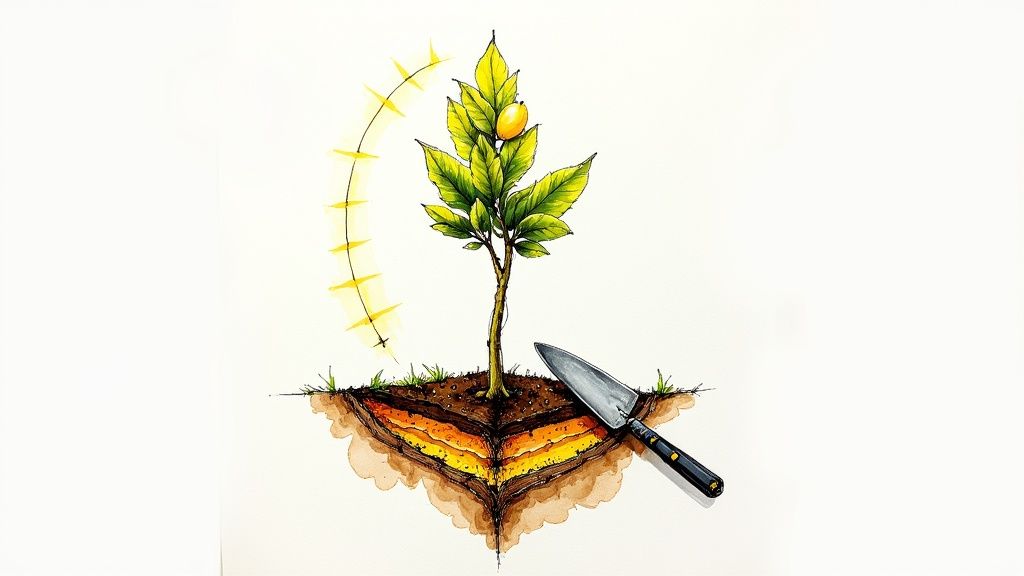
It all comes down to giving the roots the best possible environment to get established. You’re aiming to create a home for your tree that offers excellent drainage, the right soil structure, and plenty of room to expand. A strong start minimises transplant shock and really sets your tree up to thrive from day one.
Perfecting Your Planting Spot
Honestly, location is everything. Lemon trees are sun-worshippers and need a minimum of six to eight hours of direct sunlight every day to even think about producing fruit. Your first job is to scout out the sunniest, most sheltered spot you have. A north-facing position is the gold standard here in New Zealand, giving it maximum sun and protection from those chilly southerly winds.
Once you’ve found the perfect spot, it’s time to get your hands dirty and think about the soil. Lemons need well-draining, slightly acidic soil to be truly happy. If you're dealing with heavy clay soil—which is common across many parts of NZ—just digging a hole and dropping the tree in is a recipe for disaster. The clay acts like a bucket, trapping water and leading to root rot.
To get around this, you’ve got a couple of great options:
- Amend the Soil: Dig a hole that’s twice as wide and just as deep as the root ball. Mix the soil you’ve dug out with plenty of compost and a bit of sand or pumice to improve its structure and drainage.
- Build a Raised Bed: For really stubborn, poor-draining areas, creating a raised garden bed is a fantastic solution. You can fill it with a top-quality soil mix and give your tree the perfect conditions from the get-go.
The goal here is simple: make sure water can drain away freely. You want to prevent the tree's roots from sitting in a puddle. I always say a happy lemon tree has 'wet feet' but never 'soggy feet'.
This extra attention to site selection and soil quality is what separates a struggling tree from one that’s absolutely thriving. While commercial lemon growing is concentrated in sunny regions like Gisborne and Northland (where over 85% of NZ’s citrus is grown), home gardeners can succeed anywhere with the right prep work.
The Planting Process from Garden to Pot
Timing is also a big deal. Here in New Zealand, the sweet spots for planting a lemon tree are in spring (September to November) or autumn (March to May). Planting during these milder periods lets the tree settle in and establish its roots without the stress of extreme summer heat or winter frosts.
Planting in the Garden
After you’ve prepared your hole and soil mix, gently slide the tree out of its nursery bag. Have a look at the roots—if they’re circling tightly at the bottom, carefully tease them out to encourage them to grow outwards into the new soil.
The most common mistake I see is people planting too deep. You want to place the tree in the hole so that the top of its root ball sits just slightly proud of the surrounding ground level. Backfill with your amended soil, firming it down gently as you go to get rid of any sneaky air pockets.
Planting in a Container
If you're going the potted route, choose one that’s at least 50 litres and has plenty of drainage holes. It can be tempting to go for a massive pot right away, but this can lead to the soil staying too wet. It's much better to pot up in size every few years.
Use a high-quality potting mix designed for citrus, as it’ll have the right pH and drainage. Pop some mix in the bottom of the pot, position your tree so the top of its root ball is a few centimetres below the rim, and then fill in around it.
Essential First Steps After Planting
Once your tree is in its new home, a couple of final steps are critical for getting it off to a flying start.
First up, give it a deep, thorough watering right away. This is non-negotiable. It helps settle the soil around the roots and gets rid of any air pockets. It’s probably the most important drink your tree will ever get.
Next, spread a layer of mulch, like bark chips or pea straw, around the base. Be sure to keep the mulch a few centimetres away from the trunk itself to prevent collar rot. Mulch is a gardener's best friend—it helps hold moisture in the soil, keeps weeds down, and regulates the soil temperature. This one small step will reduce your watering duties and protect your young tree as it settles in.
Growing citrus is such a rewarding experience, and you can find more tips in our comprehensive guide on growing fruit trees in New Zealand.
Mastering Your Watering and Feeding Routine
Lemon trees have a bit of a reputation for being 'heavy feeders' and rather thirsty, and honestly, it's well-deserved. To get that incredible glossy foliage and a proper crop of juicy lemons, they need a consistent supply of both moisture and nutrients.
Getting this routine right is less about a rigid schedule and more about learning to read your tree's needs as they shift through our Kiwi seasons.
The real secret to successful watering is to aim for deep, infrequent soaks instead of light, daily sprinkles. A quick splash only moistens the top few centimetres of soil, which encourages shallow roots that are super vulnerable to drying out. A good, deep watering, on the other hand, encourages the roots to grow down deep where they're protected and can find more resources.
How to Water Your Lemon Tree the Right Way
The most reliable method to know when to water? Just check the soil yourself.
Poke a finger about 5-10cm deep into the soil near the base of the tree. If it feels dry down there, it’s time for a good, long drink. If it still feels a bit damp, you can hold off for another few days.
This technique is absolutely vital for trees in pots. They can dry out much faster than those in the ground, especially on a hot, windy summer day in a spot like Hawke's Bay or Marlborough. Remember, overwatering is just as dangerous as underwatering—it can lead to root rot, where the roots are basically starved of oxygen and start to die off.
As a rough guide, I water deeply once or twice a week during the active growing season (spring and summer) and pull right back over winter when the tree is dormant. But always, always let the soil be your ultimate guide.
The Art of Feeding a Hungry Lemon Tree
To fuel all that growth and fruit production, lemon trees need a steady diet. They're particularly hungry for nitrogen (for lush leaves) and potassium (for fruit development). A balanced citrus fertiliser is your best mate here; it's specifically formulated with the right mix of nutrients and essential trace elements like magnesium, iron, and zinc.
During the peak growing seasons of spring and summer, you'll want to feed your tree regularly. A slow-release granular fertiliser applied around the base of the tree every few months is a fantastic, low-maintenance option. Personally, for my container-grown trees, I like using a liquid feed every few weeks when I water to give them a more immediate boost.
Don't underestimate the power of organic matter, either. Working some well-rotted compost into the soil gives a slow-release source of nutrients and dramatically improves the soil structure. If you're keen to make your own black gold, our guide has simple steps on how to start composting at home.
To help you stay on track, here's a simple schedule that aligns with New Zealand's seasons.
Year-Round Lemon Tree Care Schedule for New Zealand
This seasonal breakdown covers the key tasks for keeping your lemon tree happy and productive throughout the year.
| Season (NZ) | Watering | Feeding | Pruning & Pest Check |
|---|---|---|---|
| Spring (Sep-Nov) | Increase frequency as weather warms. Water deeply 1-2 times per week. | Apply slow-release citrus fertiliser at the start of the season. | Prune off dead or crossing branches. Check for aphids on new growth. |
| Summer (Dec-Feb) | Water deeply 2-3 times per week, more for pots or during heatwaves. | Give a liquid feed every 2-3 weeks to support fruit development. | Watch for scale insects and mites. Check soil moisture often. |
| Autumn (Mar-May) | Reduce watering as growth slows and rain increases. Check soil first. | Apply a final dose of slow-release fertiliser to prepare for winter. | Lightly tidy up the tree. Check for any lingering pests. |
| Winter (Jun-Aug) | Water sparingly, only when the top 5-10cm of soil is dry. | No feeding required; the tree is dormant. | Keep an eye out for citrus verrucosis. Plan your spring prune. |
This table is a great starting point, but always remember to adjust based on your specific climate and your tree's condition.
Spotting Nutrient Deficiencies
One of the great things about lemon trees is they'll often tell you when they're missing something. Yellowing leaves, a condition known as chlorosis, is one of the most common signs. The pattern of the yellowing can give you clues:
- Nitrogen Deficiency: Older leaves turn a uniform pale green or yellow, and the whole plant just looks a bit stunted. This is the most common issue I see.
- Magnesium Deficiency: You’ll spot a very distinct V-shaped yellow pattern on older leaves, while the base of the leaf stays green.
- Iron Deficiency: This one affects the new, young leaves first—they turn yellow, but the veins stay dark green. It's more common in alkaline soils where the iron gets 'locked up'.
If you spot these signs, a dose of your regular citrus food will often sort it out. For a specific issue like a magnesium deficiency, dissolving a sprinkle of Epsom salts (magnesium sulphate) in water and applying it can work wonders. A healthy, well-fed tree is always more resilient and better equipped to fight off pests and diseases, which is exactly what you want for a massive harvest.
Pruning and Pest Control for a Healthy Tree
If you want to take your lemon tree from good to great, it all comes down to strategic maintenance. Sure, feeding and watering are the foundations, but it's the thoughtful pruning and proactive pest control that will keep your tree healthy, productive, and looking sharp for years to come. These jobs aren't tricky, but they make all the difference.
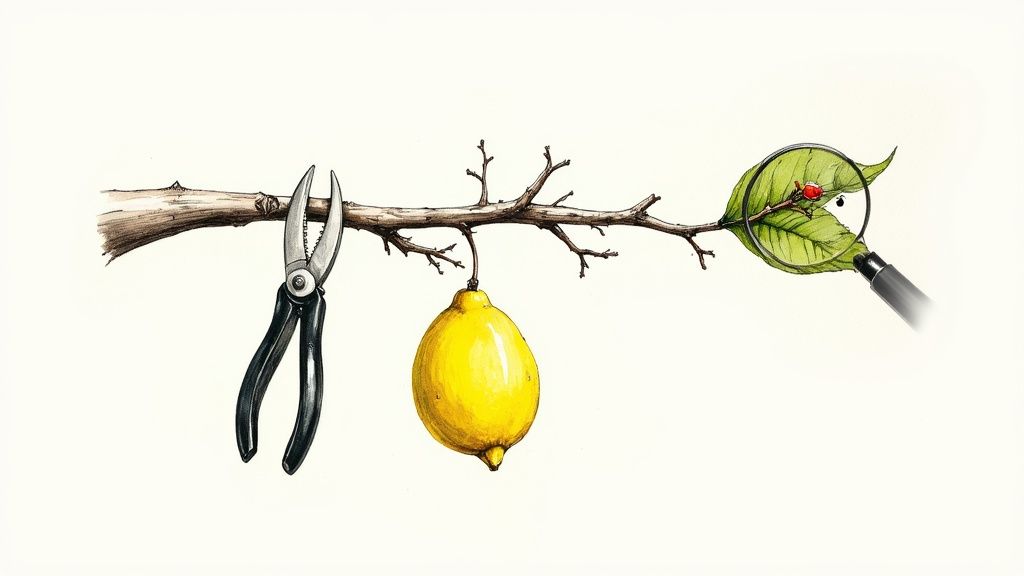
A well-pruned tree is about more than just keeping it a manageable size; you’re shaping it for better health and a bigger harvest. Likewise, getting on top of pests before they get a foothold means your tree can put its energy into growing juicy lemons, not fighting off invaders.
How to Prune Your Lemon Tree
The main idea behind pruning is to create an open, vase-like shape. This structure is key because it lets sunlight and air right into the centre of the tree, helping the fruit ripen evenly and dramatically cutting down the risk of fungal diseases that love damp, stagnant conditions.
Here in New Zealand, the best time for a prune is after the last of the fruit has been picked. This usually falls in late winter or early spring, around August or September. Timing it this way gives you a chance to tidy everything up just before the tree kicks into its new spring growth.
When you’ve got your tools ready, these are the branches to focus on:
- Dead or Damaged Wood: Anything that looks dead, broken, or diseased has to go. Snip it back to a point where you can see healthy, green wood.
- Crossing Branches: Have a look for branches that are rubbing against each other. This friction creates little wounds that are an open invitation for disease, so choose one to remove.
- Suckers: These are the really vigorous shoots that pop up from the base of the trunk, below the graft line. Whip them off as soon as you see them—they just steal energy from the main event.
- Inward-Facing Branches: Any branch growing back towards the middle of the tree should be pruned out to keep that open, airy structure we’re aiming for.
Always use sharp, clean secateurs or loppers. A clean cut heals much faster and is less likely to get infected. Wiping your tools with methylated spirits between cuts is a fantastic habit, especially if you're dealing with any diseased sections.
Managing Common Pests in NZ Gardens
Even the healthiest lemon tree will attract a few freeloaders from time to time. The trick is to spot them early and act fast. In Kiwi gardens, there are a few usual suspects that tend to show up on citrus trees.
Often, the first sign of trouble isn't a bug but a change in the leaves. If you're seeing persistent yellowing, it could be a nutrient issue rather than a pest. Our guide on what causes lemon tree leaves to turn yellow is a great resource for figuring out what’s going on.
Here are the main pests to keep an eye out for:
- Aphids: You’ll find these tiny green or black insects clustered on soft, new growth, often making the leaves curl up. A strong jet of water from the hose is often enough to blast them off, but a horticultural soap spray will also do the trick.
- Scale Insects: These look like little brown or white bumps stuck to stems and the undersides of leaves. They suck the sap out of the tree but can be managed by spraying with horticultural oil, which effectively smothers them.
- Citrus Verrucosis (Scab): This fungal issue creates corky, wart-like scabs on the fruit and leaves and is more common in wet, humid weather. Good pruning to boost airflow is your best line of defence, but a copper-based spray applied before flowering can also help.
When tackling pests, always start with the gentlest option first. A healthy tree in a thriving garden, full of beneficial insects like ladybirds, can often keep minor pest problems in check all by itself.
Harvesting Your Homegrown Lemons
After months of nurturing your lemon tree, the moment you’ve been waiting for is finally here. It’s time to enjoy the fruits of your labour—literally. But knowing the perfect time to pick is a bit of an art. Unlike a lot of other fruit, lemons won't continue to ripen once they're off the branch, so getting the timing right is everything.
Forget the calendar; your senses are your best guide. A ripe lemon should have a consistent, deep yellow colour all over. It'll also feel surprisingly heavy for its size, which is a great sign it's packed with juice. Don't be tempted by green fruit—while some recipes call for them, they just haven't developed that full, zesty flavour yet.
Knowing When and How to Pick
To really know if it's ready, give a lemon a gentle squeeze. You're looking for a slight give. It shouldn't be rock-hard, but it definitely shouldn't feel mushy either. Think plump and firm.
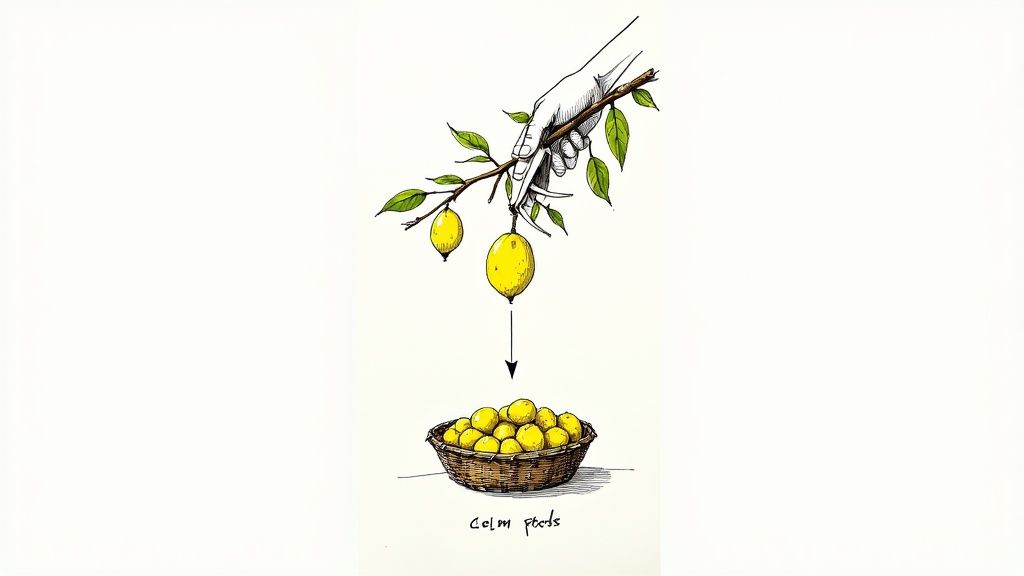
When you're ready to harvest, handle it with care. It's tempting to just yank the lemon off the branch, but please don't! You risk damaging the branch, or worse, tearing off a piece of bark. This creates a nasty wound on your tree that can invite in diseases.
The proper way is to use a clean, sharp pair of secateurs or garden snips.
- Cup the lemon gently in one hand to support its weight.
- With your other hand, snip the stem, leaving a tiny bit of it still attached to the fruit.
- This clean cut keeps the branch healthy and sets it up for the next round of fruit.
How you harvest is just as important as when. It’s not just about the lemon in your hand; it's about looking after the tree for all the harvests to come. A quick, clean snip is a simple step that makes a huge difference.
Once you’ve picked them, your lemons will keep quite happily in a fruit bowl for about a week. If you want them to last longer, pop them into the crisper drawer in your fridge. They can stay fresh in there for up to four weeks.
Ultimately, growing your own lemons here in New Zealand is an incredibly satisfying journey. You learn to tune into your plant's needs and see the direct results of your care. There's nothing better than using citrus you've grown yourself, from a little tree to a bountiful harvest.
Your Lemon Tree Questions, Answered
Even with the best plan, you’re bound to have a few questions pop up when you start growing lemon trees. It’s all part of the fun! To help you get ahead of some common hurdles Kiwi gardeners run into, I’ve put together a few of the most frequent queries with some clear, simple advice.
Why Are the Leaves on My Lemon Tree Turning Yellow?
Yellow leaves on a lemon tree here in New Zealand are almost always a cry for help. It usually points to one of two things: a nutrient shortage or a watering problem.
Most often, the culprit is a lack of nitrogen. You'll spot this when older leaves start turning a pale, uniform yellow. The other prime suspect is overwatering, which is especially easy to do during our wetter winter months from June to August. When the soil is constantly soggy, the roots can't breathe, leading to root rot and, you guessed it, yellow foliage. Before you even think about grabbing the hose, always check that the soil is dry a few centimetres down.
Sticking to a regular feeding schedule with a good citrus fertiliser during spring and summer will usually sort out most nutrient issues.
How Long Until My Lemon Tree Produces Fruit?
Patience really is a virtue when you're waiting for that first lemon. A new tree you've bought from a nursery will typically take about two to three years before it starts giving you a decent crop.
Sure, some super-keen varieties like Meyer might surprise you with a lemon or two in their first year, but it's best not to expect a big harvest straight away. In those first couple of years, the tree is pouring all its energy into establishing a strong, healthy root system. This groundwork is vital for supporting big, bountiful harvests down the track.
If you want to encourage fruiting, just focus on the essentials: plenty of sun, consistent water, and regular feeds during the growing season.
Don't try to rush it. A tree that builds a deep, strong root system before fruiting heavily will be healthier and more productive for years. Think of these first two years as an investment in future lemon meringue pies.
Can I Grow a Lemon Tree in a Pot?
Absolutely! Growing a lemon tree in a pot is a brilliant option, especially if you're working with a small garden, a deck, or a patio. It gives you total control over the growing conditions and means you can shift the tree to a sheltered spot if nasty weather rolls in.
For the best shot at success, go for a dwarf variety like 'Meyer' or 'Genoa'. These are grafted onto a special rootstock that keeps them nice and compact. Start with a big container—at least 50 litres—to give the roots plenty of room to grow, and make sure it has excellent drainage holes at the bottom.
Always use a high-quality citrus potting mix; it's specially formulated with the right pH and structure for lemon trees. Just remember that potted trees dry out a lot faster and need more frequent watering and feeding than their garden-planted mates, particularly during our hot summer months.
At Jungle Story, we're passionate about helping Kiwis succeed in their gardening adventures. Find the perfect lemon tree and all the supplies you need to get started on our online marketplace. Explore our extensive collection and begin your citrus journey today at https://junglestory.co.nz.