
If you’re after a bit of quick privacy in your Kiwi backyard, you’re in luck. Some of the best fast-growing hedge plants in NZ include Griselinia littoralis, various Pittosporum, and even natives like Tōtara. These beauties can shoot up and form a dense, living screen in just a couple of years, turning an exposed section into your own private haven.
Choosing the Right Hedge for Your NZ Garden
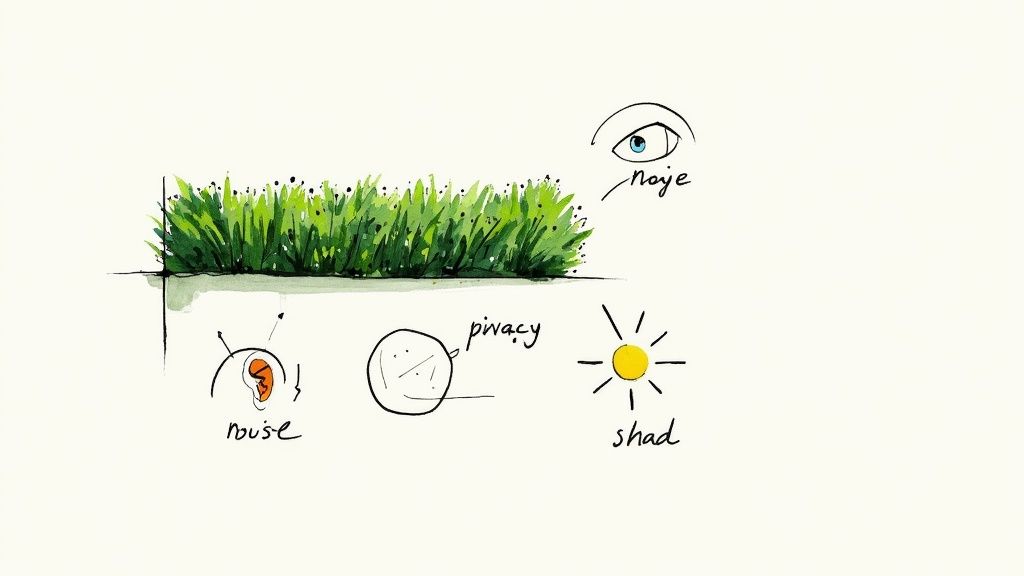
Finding the perfect fast-growing hedge starts long before you even think about visiting a nursery. The real secret to a thriving, low-fuss living wall is getting to know your own backyard's unique personality and matching it with the right plant. A bit of planning now prevents a world of headaches later and ensures your hedge doesn't just grow, but truly flourishes.
Before you fall in love with a particular look, take a good, honest look at your garden's conditions. A plant that adores the damp, shaded spots of a Waikato garden might really struggle in the scorching summer sun of Hawke's Bay. In the same way, a hedge destined for a windy Wellington property needs to be far tougher than one tucked away in a calm Canterbury suburb.
Define Your Hedge's Purpose
First up, what do you actually need this hedge to do? Are you looking for an impenetrable screen to block out the neighbours, or do you just want a lovely green border to frame your garden beds? The answer will point you directly to the right type of plant.
- Privacy Screening: You’ll be after something with dense foliage that grows thick and bushy from top to bottom.
- Windbreaks: Look for hardy, flexible plants with strong root systems that can take a good battering from the elements.
- Formal Boundaries: Slower-growing, fine-leafed plants that love a sharp, frequent trim are perfect for this.
- Informal Borders: Flowering or native species can create a softer, more natural look that also gives local wildlife a helping hand. Plants already adapted to our climate are a great place to start, and you can get more ideas for creating a native NZ garden over on our blog.
Match the Plant to Your Space
This is a big one: always consider the plant's mature size. Choosing a hedge that wants to grow ten metres tall when you only have space for two means you're signing up for a lifetime of relentless pruning. A much smarter approach is to pick a variety whose natural height and spread fit the space you have.
A common mistake is planting vigorous growers too close to paths or foundations. Always check the mature width of your chosen plant and leave it enough room to fill out without causing dramas down the track.
Some of our native options, for instance, are surprisingly quick off the mark. The revered Tōtara (Podocarpus totara) is a fantastic choice for a formal or security hedge. We’ve seen it put on 50 to 80 centimetres of growth in just two years, making it a brilliant contender for fast privacy.
Top Performers for Fast Privacy Screening
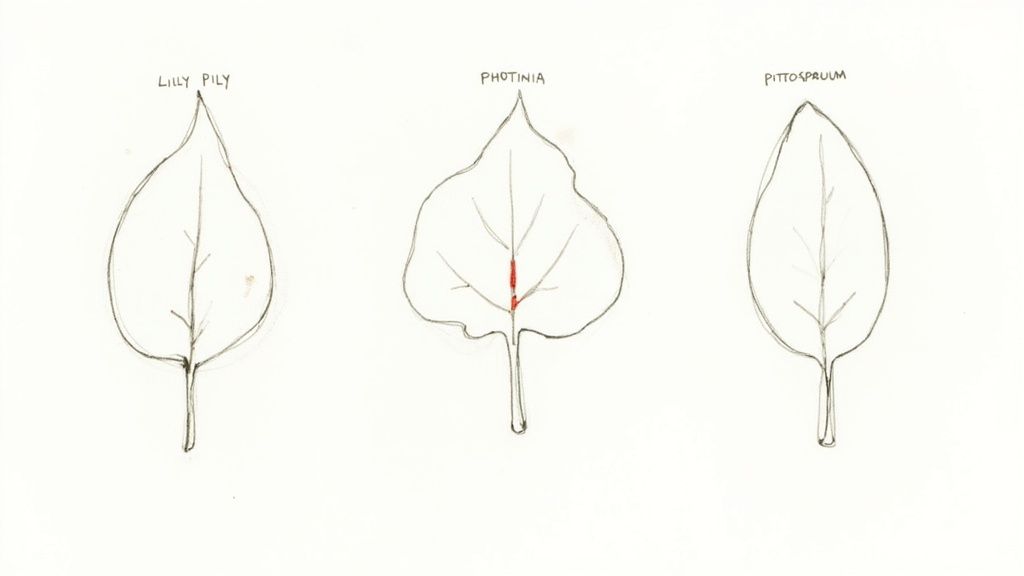
Alright, with the planning sorted, it’s time to get to the good bit—the plants that will turn your boundary into a living, breathing green wall. New Zealand’s climate is wonderfully forgiving, which means we’re spoilt for choice when it comes to hedging.
I’m going to walk you through some of the most reliable and speedy options that I’ve seen perform consistently well right across the country. We’ve got everything from hardy natives to colourful exotics.
Each one has its own personality—its unique growth habit, foliage, and what it needs from you. Getting to know these traits is the secret to choosing a hedge that doesn't just grow fast but also fits your garden's vibe and, just as importantly, your lifestyle.
Griselinia Littoralis: The Resilient Favourite
When you picture a classic Kiwi hedge, there's a good chance Griselinia littoralis, or Kapuka, is what comes to mind. This native evergreen is probably one of our most popular choices, and for very good reason. Its lush, apple-green, glossy leaves knit together to form a dense and vibrant screen that looks stunning all year round.
But its real superpower is its resilience. Griselinia is an absolute champion in coastal spots, shrugging off salt spray and wind without a fuss. It’s also incredibly versatile; you can clip it into a sharp, formal shape or let it grow a little more relaxed for a softer, more natural feel.
While it can grow into a tree of 10 metres or more in the wild, it's usually kept as a hedge anywhere from 2 to 8 metres tall. Its dense foliage establishes a privacy screen remarkably quickly.
Photinia 'Red Robin': For a Splash of Colour
If you’re after a hedge with a bit more pizzazz, you can’t go past Photinia 'Red Robin'. This plant puts on a stunning show. Its new growth emerges in a brilliant, fiery red before settling into a deep, glossy green. It's a real head-turner, especially after a trim in spring and summer when those red tips are at their most vibrant.
Photinia is a seriously vigorous grower and will give you a thick screen in a pretty short timeframe. The trick to getting the most out of that incredible colour is to prune it a couple of times a year. This not only encourages flushes of those beautiful red shoots but also keeps the whole plant dense and compact.
Expert Tip: To get your Photinia looking its best and encourage thick growth right from the base, don't be shy about giving it a good formative prune in its first couple of years. This sets it up for a strong, bushy structure for life.
Pittosporum Tenuifolium: A Versatile Native
Another absolute gem of a native is Pittosporum tenuifolium, often known as Kōhūhū. The best part about Pittosporum is the sheer variety—there are so many different cultivars available, offering an incredible range of leaf colours, shapes, and sizes. You can find everything from silvery greens to deep, moody purples, making it easy to find one that perfectly slots into your garden's colour palette.
What makes Pittosporum one of the top fast growing hedge plants NZ has to offer is its rapid, bushy growth and its ability to handle a wide range of conditions. It responds beautifully to clipping and can be shaped into just about anything, from a razor-sharp formal hedge to a more natural, undulating screen.
To see how these and other speedy options stack up, have a look at our guide to fast growing hedges in NZ.
A Quick Look at NZ's Fastest Growing Hedge Plants
To make things a bit easier, I've put together a quick-glance comparison table. Use this to see how our recommended hedge plants stack up and help you choose the best fit for your patch.
| Plant Name | Average Annual Growth | Ideal Conditions | Key Features | Maintenance Level |
|---|---|---|---|---|
| Griselinia Littoralis | Up to 60cm | Full sun to part shade; well-drained soil; coastal tolerant. | Lush, apple-green leaves; very hardy and reliable. | Medium |
| Photinia 'Red Robin' | Up to 50cm | Full sun for best colour; most soil types. | Striking red new growth; vibrant and decorative. | Medium to High |
| Pittosporum Tenuifolium | Up to 75cm | Full sun to part shade; adaptable to various soils. | Diverse foliage colours; fast, bushy growth habit. | Medium |
Choosing the right plant is the first big step towards creating that perfect living screen. Each of these options will get you there quickly, but they all offer a slightly different journey and a unique final look.
Preparing Your Site for Explosive Growth

A lush, thriving hedge doesn't just happen by magic. It’s the direct result of a well-prepared foundation. It's so easy to get excited and rush this crucial first step, but trust me, the groundwork you put in now will pay you back with vigorous, explosive growth later on.
Getting your planting area ready is without a doubt the most important thing you can do to ensure your fast growing hedge plants nz establish quickly and stay healthy. It’s all about creating an environment where the roots can spread out effortlessly from day one.
First things first, you need a clean slate. You’ll have to completely remove any grass, weeds, or old plants from the entire length of your planned hedge line. These unwanted guests will compete with your new plants for water and nutrients, slowing their growth right down.
Clearing the Way for Healthy Roots
For a truly clean break, digging out the existing turf is your best bet. I always recommend clearing a strip that’s at least 60-90cm wide. This gives your hedge plenty of breathing room as it grows, minimising competition and making ongoing maintenance so much easier down the track.
Once the area is clear, it's time to deal with the soil itself. Most Kiwi gardens, especially in newer subdivisions, suffer from some level of soil compaction. This dense, hard-packed soil makes it incredibly difficult for fine new roots to penetrate and find the resources they need.
Grab a garden fork and dig over the entire cleared strip. You want to break up the soil to at least one spade's depth, loosening and aerating it. This simple action transforms a dense, unforgiving patch of ground into a welcoming new home for your hedge.
Supercharging Your Soil
With your soil nicely de-compacted, the final—and most rewarding—step is to enrich it. Fast-growing plants are hungry plants. Providing them with a nutrient-rich foundation is the secret to getting that rapid screening effect you’re after.
Spread a generous layer of good quality compost, aged animal manure, or a quality garden mix over the prepared area. Then, just work this organic matter into the topsoil. This does two brilliant things: it provides a slow-release source of essential nutrients and dramatically improves the soil structure, helping it hold on to moisture during those dry summer spells.
While hedges are brilliant for privacy, if you're also looking for height and shade, you might want to explore some options for fast growing trees in NZ.
By investing a little time and effort into your site prep, you’re really setting your hedge up for immediate success. You’ll be rewarded with stronger plants, faster growth, and a healthier, denser screen in a much shorter timeframe.
Planting and Nurturing Your New Hedge
With your garden bed perfectly prepped, it's time for the most rewarding part: getting your new hedge plants into the ground.
Nailing this stage is crucial for establishing a healthy, vigorous hedge that will provide the privacy you're after. Get this right, and you’ll give your plants every possible advantage for a powerful start.
The first question is always about spacing. It’s tempting to plant them close together for an instant screen, but this can cause problems down the track – overcrowding, poor air circulation, and a fight for resources.
A good rule of thumb for most fast growing hedge plants NZ gardeners choose, like Griselinia or Pittosporum, is to space them between 60cm to 1 metre apart. For smaller plants, you can aim for the closer end of that scale.
Getting the Planting Depth Just Right
When you dig your planting holes, make them roughly twice as wide as the root ball, but no deeper. This is a really common mistake; planting too deep can effectively suffocate the plant by burying its root flare, which is where the trunk meets the roots.
Gently pop the plant in the hole, making sure the top of its root ball is level with or even slightly proud of the surrounding soil. Then, backfill the hole with that lovely enriched soil you prepared earlier, firming it down gently to get rid of any large air pockets.
Here's a simple but effective tip: create a small, raised ring of soil around the base of each plant after planting. This acts like a shallow basin, directing water straight to the root zone where it’s needed most and stopping any wasteful runoff.
The Critical First Year of Care
The first twelve months are the most important in your new hedge's life. Consistent care during this period really sets it up for years of strong, healthy growth. Your main focus should be on watering and keeping the weeds down.
Watering Your New Hedge:
- For the first few weeks, give your hedge a really deep soaking two to three times a week.
- After that initial month, you can usually pull back to a thorough watering once a week right through its first summer and autumn.
- The idea is to encourage the roots to grow deep into the soil searching for moisture. This makes the hedge far more resilient to drought in the long run.
Once your entire hedge is planted and well-watered, finish the job with a generous layer of mulch. Applying a 5-7cm layer of bark chip, pea straw, or compost around the base of the plants is your secret weapon. Just make sure it's not touching the stems.
Mulch is fantastic for suppressing weeds, holding onto precious soil moisture, and regulating soil temperature, giving your new hedge the absolute best start in life.
Pruning Your Way to a Dense, Healthy Hedge
Pruning is where the magic happens. It’s the art of turning a simple row of shrubs into a single, seamless, living wall. For a lot of Kiwi gardeners, this is the most intimidating part of having a hedge, but it's much more straightforward than you might think. The whole point is to encourage thick, bushy growth right from the bottom, so you end up with a solid screen instead of a bunch of leggy, see-through plants.
Think of it in two main stages. First, you have formative pruning, which you’ll do in the hedge’s first couple of years. This is absolutely crucial. It’s where you build a strong, multi-stemmed framework that will support the hedge for its entire life. I know it feels wrong to cut back a plant you’re trying to make grow tall, but this early trim is exactly what creates that dense structure right from the ground up.
After that, it's all about maintenance pruning. This is just the regular trimming you’ll do once the hedge is established to keep it neat, tidy, and at the size you want.
When to Prune Your Hedge in New Zealand
Timing is everything. You want to work with your plant's natural growth cycle, not against it. Here in our Southern Hemisphere climate, the golden rule is to prune just after the main growth spurts have finished.
- Late Spring/Early Summer: This is usually the first haircut of the season, done once that vigorous spring rush has started to slow down.
- Late Summer/Early Autumn: A second trim tidies things up before winter rolls in, making sure your hedge looks sharp through its dormant period.
Try to avoid any heavy pruning in late autumn. Any new growth that pops up might not have enough time to harden off before the first frosts hit. Likewise, it's best not to trim during the peak of a scorching, dry summer, as this can put a lot of stress on the plants.
If there’s one thing to remember about fast growing hedge plants in NZ, it’s this: be consistent. A regular, light trim is so much better for the plant's health than a rare, severe hack-back. It also makes the job a whole lot quicker and easier for you each time.
Tools and Techniques for a Perfect Finish
Having the right gear makes all the difference. It’s easier on you and results in cleaner, healthier cuts for the plant. For most hedges, a sharp pair of shears or a decent powered hedge trimmer will be your best mate. It's also a good idea to keep a pair of secateurs or loppers handy for any thicker, woodier stems you come across.
Want those satisfyingly straight lines? Grab two stakes and run a string line between them at your target height. It’s a simple trick, but it’s the secret to getting a professional-looking, level finish.
Always aim to shape the hedge so the top is slightly narrower than the base. This classic tapered 'A' shape is a game-changer because it allows sunlight to get right down to the lower branches, stopping them from getting all bare and leggy over time.
Finally, remember that fast-growing hedges are hungry hedges. After giving them a good trim, reward your plants with a dose of slow-release fertiliser and a good, deep watering. This gives them the nutrients they need to bounce back quickly and push out a fresh, healthy flush of growth, keeping your green screen vibrant and dense for years.
Common Questions About Fast Growing NZ Hedges
Even the most seasoned gardener has questions before they start a new project. We get asked all the time about the nitty-gritty of planting a hedge, so we've put together the most common queries we hear from Kiwis to help you start with confidence.
Getting these practical details sorted from the outset helps you plan your project, manage your expectations, and avoid any nasty surprises down the track.
How Quickly Can a Hedge Provide Privacy in NZ?
This is the big one, isn't it? The good news is, you won't be waiting forever. While it does depend on the species and your specific garden conditions, many popular fast growing hedge plants in NZ can form a solid screen between 1.5 to 2 metres high within just 2-3 years.
The trick to hitting that timeline comes down to three things: spending time on excellent soil prep, being vigilant with watering in that first year, and doing some early formative pruning. You want to encourage the plant to bush out sideways, not just shoot for the sky.
When Is the Best Time to Plant a Hedge in New Zealand?
Hands down, autumn is the perfect time to plant a hedge here in New Zealand. The soil is still warm from summer, which gives the roots a fantastic opportunity to get established before winter’s chill sets in.
Planting in autumn gives your hedge a massive head start, so it’s ready for a burst of growth the moment spring arrives. If you miss that window, early spring is your next best bet, just be ready to water more often as the days get longer and hotter.
Are Native NZ Plants a Good Option?
Absolutely. Choosing natives means you're planting something that's already perfectly suited to our unique climate and soils. This usually translates to a hardier hedge that needs less fussing over.
Native species are brilliant, relatively fast-growing options. They don't just create beautiful, resilient hedges—they also provide valuable food and habitat for local birdlife, which is a huge win for your garden's ecosystem.
Some of our top native picks include:
- Griselinia littoralis (Kapuka): A true Kiwi classic, loved for its glossy leaves and ability to handle coastal conditions.
- Pittosporum tenuifolium (Kōhūhū): Incredibly versatile, with heaps of different cultivars offering a range of colours and textures.
- Podocarpus totara (Tōtara): A handsome and surprisingly quick grower that forms a dense, more formal-looking screen.
How Often Will I Really Need to Prune a Fast Hedge?
Let's be honest—a fast-growing hedge needs regular attention to keep it looking sharp and prevent it from taking over. For most vigorous varieties, you should plan for at least two solid trims a year.
The first is usually in late spring or early summer, right after that first big growth spurt. A second tidy-up in late summer or early autumn gets it looking smart for winter. This regular maintenance is the secret to keeping your hedge dense, healthy, and at the perfect height for your space.
Ready to create your own living screen? Explore a huge range of fast growing hedge plants NZ gardeners love at Jungle Story. From hardy natives to colourful favourites, find the perfect plants to bring your garden vision to life. Start your journey at https://junglestory.co.nz today.