
Picture a garden that feels effortlessly Kiwi, thrives with very little fuss, and hums with local wildlife. That's the beauty of bringing New Zealand's native grasses into your backyard. They are a stunning, sustainable alternative to the classic lawn, offering incredible texture, colour, and movement to any space.
Why Native Grasses Are a Game-Changer for Your Garden
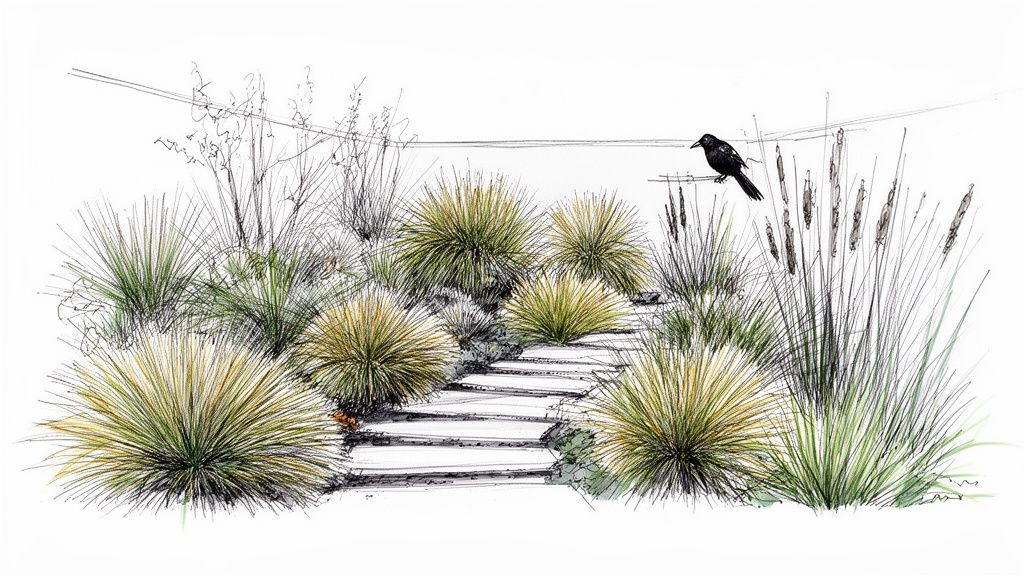
When we think of gardening, our minds often jump to colourful flowers and perfectly manicured lawns. But a different kind of beauty is taking root in Kiwi gardens, one led by the subtle elegance of our own native grass NZ species. These plants aren't just background fillers; they are foundational pieces that can completely define your garden's character, creating a space that feels truly connected to the landscapes of Aotearoa.
Think of them as the perfect self-sufficient addition to your garden. Because they’ve spent millennia evolving to suit New Zealand's unique climate and soils, they are naturally tough and resilient. That means less time spent watering, fertilising, and mowing, and more time actually enjoying the beautiful environment you’ve brought to life.
Built for New Zealand Conditions
Unlike many introduced plants that can struggle with our specific conditions, native grasses are perfectly adapted. They are masters of survival, thriving in spots where other plants might give up. This inbuilt toughness makes them a smart, sustainable choice for any modern gardener.
The benefits go far beyond just being easy to look after. Weaving them into your garden design has some key advantages:
- Drought Tolerance: Once they're established, many native grasses need very little water, making them brilliant for getting through our hot, dry summers.
- Wildlife Support: They offer crucial food and shelter for native insects, lizards, and birds, helping to restore a bit of the local ecosystem right in your backyard.
- Year-Round Interest: Most NZ native grasses are evergreen, so they provide texture and structure even in the depths of winter, from June to August.
- Authentic Kiwi Vibe: Nothing creates a more genuine Aotearoa feeling than a garden filled with plants that actually belong here.
By choosing native grasses, you're not just planting a garden; you're helping to weave a small piece of New Zealand's natural heritage back into the landscape. They are a statement of sustainability and a celebration of our own unique beauty.
Creating a garden with these incredible plants is such a rewarding experience. If you’re looking for more inspiration on how to get started, you can find some fantastic native garden ideas for NZ that show you how to combine different species for stunning results. These grasses are a versatile tool for any design, from wild, meadow-like plantings to structured, modern arrangements.
The Wild Heritage of New Zealand's Grasslands
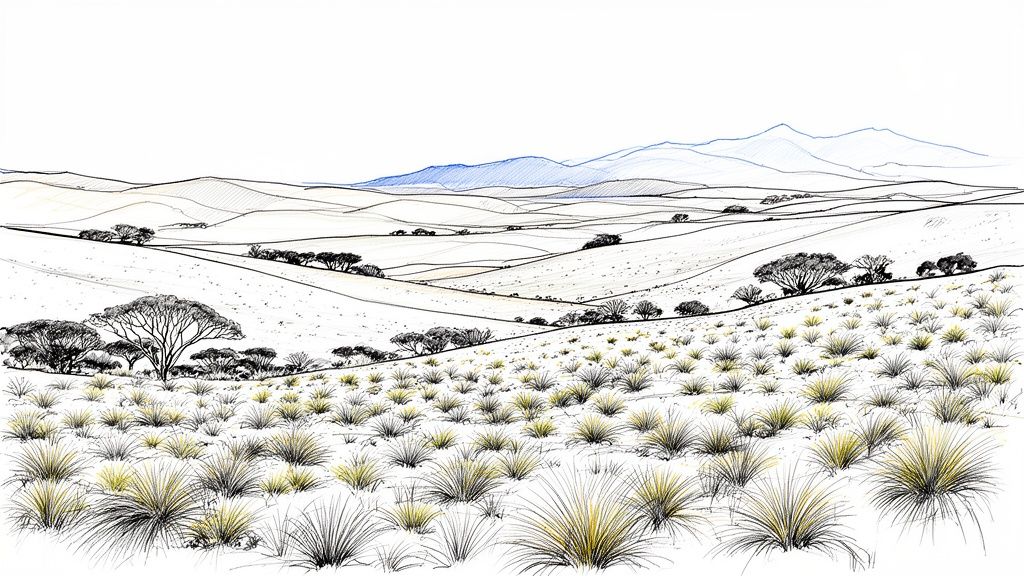
To really get why a native grass is so special in your garden, it helps to picture the vast, wild landscapes they once called home. Before people arrived, Aotearoa was a stunning mosaic of dense forest, wetlands, and sweeping grasslands. These weren't manicured lawns; they were powerful, self-sustaining ecosystems shaped by wind, rain, and a completely unique evolutionary past.
These ancient grasslands, called tussocklands, were unlike anything else in the world. They evolved over millions of years without any large, hard-hoofed grazing animals like sheep or cattle. This is the secret behind their iconic look.
Without the constant pressure of being eaten, our native grasses developed their characteristic tussock or clumping form. This dense, fountain-like shape was a clever adaptation that helped them conserve moisture, protect the delicate growing points deep within the clump, and muscle out other plants for sunlight and space.
A Landscape Transformed
The arrival of humans triggered a dramatic reshaping of New Zealand's plant life. After widespread fires cleared drier forest areas, tussock grasslands hit their peak in the early 19th century, blanketing an enormous part of the country.
Historically, these grasslands covered roughly 31% of New Zealand's mainland—that's about 83,700 square kilometres. This immense coverage was vital for holding the soil together in our mountainous high country and supported an incredible diversity of unique insects, lizards, and birds. You can dive deeper into the history of NZ grasslands on Te Ara.
But the arrival of European settlers marked a huge turning point. Farmers saw the high country not as a balanced ecosystem, but as potential pasture for sheep and cattle. To make the land carry more stock, vast areas of tussock were burned and oversown with imported European grasses, causing a sharp, irreversible decline in our native grasslands.
The Ecological Role of Native Grasslands
This history isn't just a story; it underscores the vital jobs these plant communities perform. Understanding their wild origins shows us exactly why protecting and replanting them is so critical for the health of Aotearoa.
Their role in the environment is powerful and has many layers:
- Soil and Water Guardians: The deep, fibrous root systems of tussocks are amazing at holding soil together. They prevent erosion on steep slopes and stop sediment from washing into our precious waterways.
- A Unique Habitat: Tussocklands provide a specialised home for a whole range of native fauna, from the secretive tussock butterfly to endemic skinks and geckos that find shelter within the dense foliage.
- Natural Water Filters: The thick ground cover these grasses create slows down rainfall, giving it time to soak into the ground instead of just running off. This process naturally filters the water and recharges our groundwater supplies.
The resilience of a tussock is a quiet lesson in survival. It doesn’t fight the wind; it moves with it. By planting native grasses, we bring a piece of that enduring, wild spirit into our own gardens.
When you plant a Chionochloa rubra (red tussock) or a silver tussock (Poa cita) in your garden, you're doing more than just adding texture and colour. You are connecting with this deep heritage. You're planting a living piece of New Zealand's natural history, one that carries the story of our ancient landscapes and gives us a powerful way to support our environment today.
Choosing the Right Native Grass for Your Garden
With so many stunning options available, picking the perfect native grass for your garden can feel a little daunting. But it doesn't have to be. The real secret is simply matching the plant's natural habitat with your garden's unique conditions and what you want to achieve with your design.
If you get to know a few of the most popular and adaptable groups, you'll be able to choose species that won't just survive in your garden—they'll absolutely thrive. Let’s dive into some of the true stars of the New Zealand native grass world.
Meet the Main Players
Some of the most garden-worthy native grasses belong to a few key families. While the diversity out there is incredible, getting your head around these three is a fantastic starting point for any project.
-
Chionochloa (Snow Tussocks): Think of these as the majestic giants. They're often found in wild alpine and subalpine landscapes, and they bring that same sense of rugged, dramatic beauty to a garden. Snow Tussocks generally form large, dense clumps with a flowing habit that makes them incredible feature plants.
-
Poa (Silver and Blue Tussocks): This group is incredibly versatile and found all over the country. Species like Poa cita (silver tussock) are finer and smaller than their Chionochloa cousins, with gorgeous silvery-green leaves that shimmer and move in the slightest breeze. They’re brilliant for mass planting on banks, creating soft garden borders, or adding texture to mixed beds.
-
Carex (Sedges): Now, while these are technically sedges, not true grasses, we use them in much the same way in our gardens. And for good reason! Carex are famous for their incredible colours, offering everything from vibrant lime green and rich coppery-browns to fiery oranges. Many are perfectly suited to those damper or shadier spots where other grasses might give up.
The sheer variety within these groups is mind-boggling. In New Zealand's native grasses, the genus Poa is a standout with a massive 42 species. Not far behind is Chionochloa with 36 species, and Rytidosperma with 20 taxa. It all adds up to 218 grass taxa in the NZ botanic region—every one of them a monocotyledonous plant in the Poaceae family. The depth of our native flora is truly something special. You can read more about the scientific findings on New Zealand grass diversity to get a sense of this richness.
Quick Guide to Popular New Zealand Native Grasses
To make choosing a little easier, it really helps to see the key features of different plants side-by-side. Before you look, have a think about what you need the plant to do. Are you after a tall, architectural specimen? A colourful, spreading ground cover? Or maybe just something tough-as-nails for a tricky spot?
This table breaks down some of the most popular choices, helping you match a grass to your specific garden needs. Don't forget to look at the mature size—what looks like a tiny plant in the garden centre can grow into something quite substantial over a few years!
| Common Name / Species | Mature Size (H x W) | Foliage Colour | Best Use In Garden | Sunlight Needs |
|---|---|---|---|---|
| Red Tussock (Chionochloa rubra) | 1.2m x 1.2m | Coppery-red to bronze | Striking feature plant, wetlands, mass planting | Full sun to light shade |
| Silver Tussock (Poa cita) | 60cm x 60cm | Silvery-green to tawny | Soft borders, mass planting on dry banks, meadow look | Full sun |
| Gossamer Grass (Anemanthele lessoniana) | 80cm x 80cm | Green, orange, and red hues | Colourful filler, mass planting, underplanting | Full sun to part shade |
| Orange Sedge (Carex testacea) | 50cm x 50cm | Olive green turning bright orange in sun | Edging, containers, adding vibrant colour | Full sun for best colour |
| Purei (Carex secta) | 1m x 1m | Bright green to yellowish-green | Beside ponds, wet areas, rain gardens | Full sun to light shade |
| Blue Tussock (Festuca actae) | 40cm x 40cm | Intense silvery-blue | Rock gardens, containers, modern designs, coastal areas | Full sun |
Making a great choice really comes down to finding the right plant for the right place. With this cheat sheet, you’re well on your way to picking a winner that will look fantastic for years to come.
Choosing Based on Your Garden's Conditions
The best gardens—the ones that look effortless—are always the ones where the plants are happy. Before you even think about buying, take a good, hard look at the spot you want to plant in. Is it baked by the sun all day long? Or is it in a damp, shady corner under a big tree?
Your garden's specific environment—its soil, sunlight, and moisture levels—is the ultimate guide. Choosing a native grass NZ species that naturally thrives in those conditions is the secret to a low-maintenance, beautiful result.
A hot, dry, sun-blasted bank, for instance, is the perfect home for the tough and drought-tolerant Silver Tussock (Poa cita). On the other hand, the damp soil beside a pond or stream is exactly where Purei (Carex secta) wants to be, where it will happily form its distinctive trunk-like base over time.
And if you’re looking for lower-growing plants to fill in the gaps, our guide on native ground cover plants in NZ offers some fantastic companions that work beautifully alongside tussocks. By simply observing your site and choosing your plants accordingly, you’re setting yourself up for success right from the get-go.
How to Design Your Landscape with Native Grasses
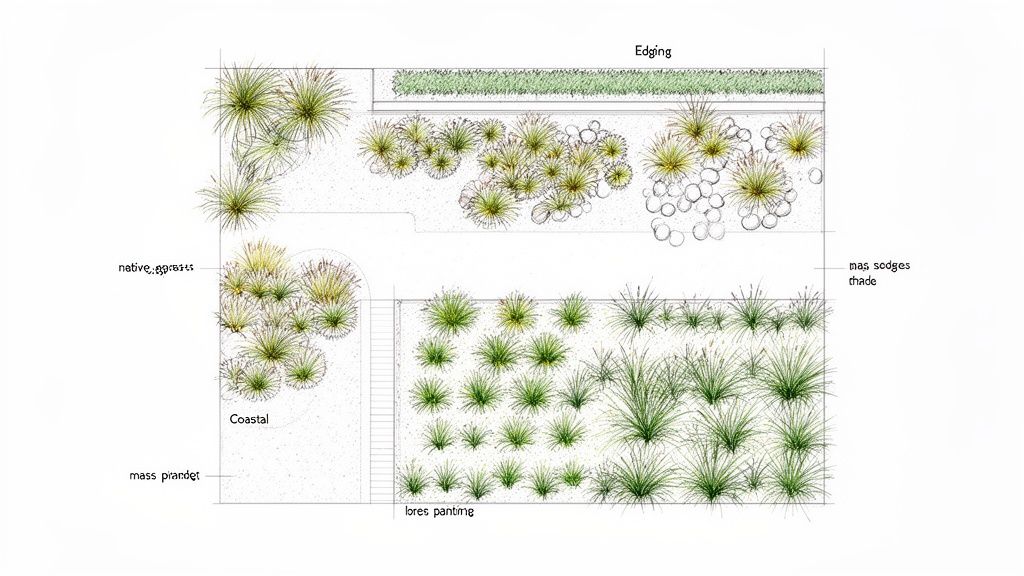
This is where the fun really starts. Designing with New Zealand’s native grasses is like painting with texture and movement. They're incredibly versatile, capable of creating anything from sleek, modern lines to a wild, wind-swept meadow that feels like it’s always been there.
Think of them as the ultimate garden problem-solvers. They can turn those tricky, awkward spots into some of your favourite features. The trick is to step back and think about the overall feel you’re going for. Are you after a soft, flowing river of tussocks, or a few bold, sculptural clumps to make a statement?
Creating Different Garden Aesthetics
Native grasses are wonderfully adaptable and can slide into just about any garden style, whether you’ve got a sharp new-build or a classic villa.
-
Modern and Minimalist: For that clean, architectural vibe, you want grasses with a strong form. Planting the silvery-blue clumps of Festuca actae (Blue Tussock) in a simple grid or a straight line creates a powerful sense of rhythm and order. It’s a look that prioritises form and texture over a riot of colour.
-
Naturalistic Meadow: To capture the untamed beauty of Aotearoa’s high country, plant your grasses in big, informal drifts. Mix a few different species together, like Silver Tussock (Poa cita) and the beautiful coppery Gossamer Grass (Anemanthele lessoniana). This gives you a layered, multi-tonal tapestry that shimmers and changes with the seasons.
-
Lush and Subtropical: We often picture grasses in dry, open spaces, but many thrive in richer, moister soil. Try pairing them with broad-leaved natives like harakeke (flax) and rengarenga lilies. The fine textures of sedges like Carex testacea weave through the larger leaves, creating a garden that feels dense, layered, and full of life.
Practical Design Solutions for Your Garden
Beyond looking good, native grasses are brilliant at solving everyday landscaping headaches. They offer incredibly low-maintenance fixes for those spots where nothing else seems to want to grow. This is where their real value shines.
Think about the problem areas in your own garden—that steep bank that’s a nightmare to mow, the windswept corner by the coast, or that shady patch under the old pōhutukawa. There's almost certainly a native grass that will not just survive there, but absolutely thrive.
The best garden designs are the ones that work with nature, not against it. When you choose the right native grass for the right spot, you create a garden that is both beautiful and resilient, meaning less work for you.
Let’s get into a few specific ways you can put these plants to work.
Using Grasses for Specific Landscape Jobs
Here are some of the most effective ways to use native grasses in your garden plan:
-
Mass Planting on Banks: To stop soil from eroding on a slope, you can't beat the dense, fibrous root systems of tussock grasses. Planting a tough species like Poa cita en masse creates a beautiful, wavy carpet that holds the soil in place. Best of all, it means no more mowing a dodgy slope.
-
Creating Dramatic Features: A single, well-placed tussock can be a real showstopper. A mature Red Tussock (Chionochloa rubra) or a big Snow Tussock makes a powerful statement in a gravel garden or a large pot.
-
Softening Borders and Edges: Use smaller, finer grasses like orange sedge (Carex testacea) or blue tussock to line pathways and garden beds. Their soft forms spill gently over hard edges, blurring the lines for a much more natural, settled-in feel.
-
Ground Cover and Underplanting: While not a classic lawn, some species are fantastic for filling gaps. Spreading sedges can form a lovely textured ground cover in damp or shady spots under trees, keeping weeds down and adding another layer of interest.
For a deeper dive into crafting a garden that celebrates Aotearoa's unique plants, our complete guide to creating a NZ native garden is packed with more ideas.
Tailoring Choices to Your Site
This is the most crucial step: matching the plant to the place. No matter how great your design is, it will only succeed if you choose species that are happy in the conditions you’ve got.
- For Coastal Spots: Salt spray and wind can be brutal. Go for tough characters like Blue Tussock (Festuca actae) and certain coastal varieties of Poa, which are built for these conditions.
- For Dry, Sunny Areas: Sun-baked, dry spots are perfect for drought-tolerant grasses. Silver Tussock and Gossamer Grass will love it, and their colours often get even more intense in the bright sun.
- For Wet or Shady Corners: Don't give up on those damp, dark corners! This is where sedges come into their own. Purei (Carex secta) is perfect for boggy ground or pond edges, while many other Carex species will happily colonise the shady spots under trees.
Planting and Caring for Your Native Grasses
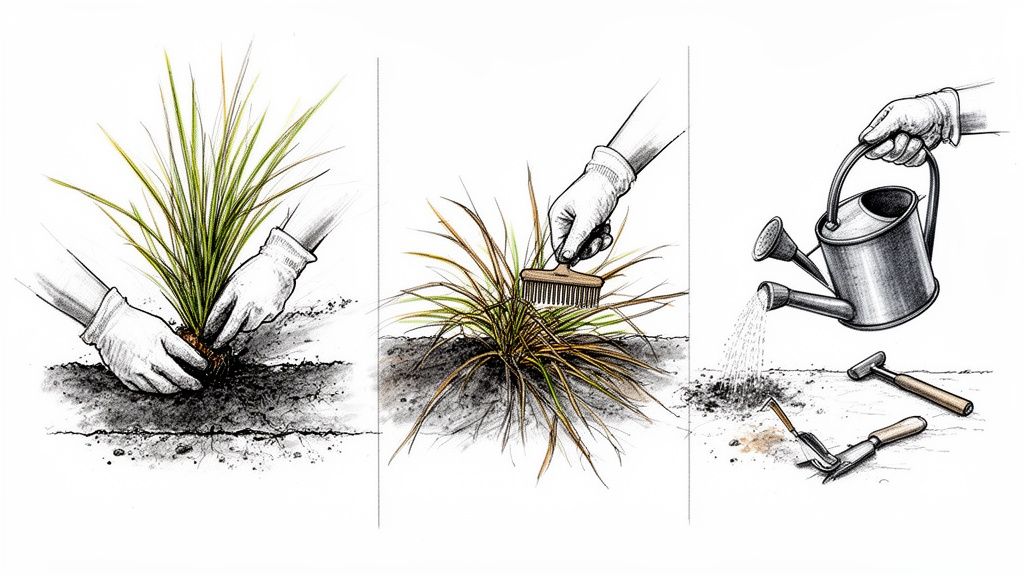
Right, you’ve picked the perfect native grass for your garden—now it's time to get your hands dirty. The good news is these plants are famously low-maintenance, but giving them a solid start is the secret to getting them established properly so they look fantastic for years.
Putting in a little effort now sets the stage for a healthy, resilient plant that will reward you with incredible texture and form with almost no ongoing fuss. A few simple steps at the beginning will save you a whole lot of work down the track.
Finding the Best Time to Plant
When it comes to giving your new plants the best chance to settle in, timing is everything. In New Zealand, the two golden windows for planting native grasses are autumn (March to May) and spring (September to November).
Planting in autumn lets the roots establish themselves in warm, moist soil over the cooler months, getting them ready to handle their first summer. Spring planting works well too, as the rising soil temperatures kickstart strong new growth, but you’ll need to be a bit more vigilant with watering over the following summer. For some extra ideas, you might find these tips on planting grass seed useful, even though the timing advice is for a different climate.
Preparing the Ground for Success
Most of our native grasses evolved to thrive in soils that aren't particularly rich or fertile. In fact, their biggest enemy is often soil that stays too wet, especially during winter. For most tussock species, good drainage is completely non-negotiable.
Before you dig, take a moment to prepare the site:
- Clear the Area: Rip out all the weeds and any existing lawn from your planting spot. This gets rid of the competition for water and nutrients.
- Assess Your Soil: If you’re working with heavy clay that turns to bog in winter, you’ll need to improve the drainage. Digging in some sand or fine gravel can make a world of difference.
- Avoid Over-Fertilising: Unlike a lot of garden plants, native grasses don't need rich compost or fertiliser chucked in the planting hole. They're adapted to low-nutrient conditions, and adding too much can just encourage soft, weak growth that’s prone to disease.
The most common mistake gardeners make with native grasses is being too kind. Think lean and mean—well-drained, average soil is far better for them than a rich, heavily composted bed.
The Planting Process Made Simple
Once your site is prepped, planting is dead simple. The goal is to get the plant into the ground with minimal disturbance to its root system.
Dig a hole that’s slightly wider and deeper than the pot the grass came in. Gently slide the plant out of its container and tease out any roots circling at the bottom—this encourages them to grow outwards into the new soil instead of staying in a tight ball.
Place the plant in the hole, making sure the top of its root ball is level with the surrounding ground. Backfill with the soil you removed, firming it gently around the plant to get rid of any air pockets. Finish up by giving it a really deep watering to help settle the soil and hydrate the roots.
Ongoing Care and Maintenance
This is where native grasses truly shine—their care routine is wonderfully simple. Once they’re established, they’re some of the most self-sufficient plants you can have in your garden.
Your main jobs will be watering while they’re getting settled and a bit of simple grooming to keep them looking sharp. These plants are built for Aotearoa's conditions, so they don’t ask for much.
Watering and Feeding Your Grasses
During their first year, and especially over their first summer, give your grasses a deep watering once or twice a week. This encourages the roots to grow deep into the soil, which is the secret to their future drought tolerance.
After that first year, most tussocks will only need a drink during very long, dry spells. And as mentioned, they rarely need fertiliser. If you feel they need a bit of a boost, a very light sprinkle of a slow-release native plant food in spring is more than enough.
The Secret to Tidy Tussocks
Over time, the older leaves in the centre of a tussock will naturally die off. This is perfectly normal, but if too much dead material builds up, it can reduce air circulation and make the plant look untidy. Whatever you do, never cut tussocks back hard like you might with ornamental grasses from the Northern Hemisphere—this can kill them.
Instead, the best technique is combing. Just pop on a pair of gardening gloves and run your fingers through the clump from the base upwards, gently pulling out the dead, straw-coloured leaves. This easy grooming session, done once a year in spring, is all it takes to keep your native grasses looking vibrant and healthy.
Common Questions About Growing Native Grasses
Getting started with native grasses can bring up a few questions. That's perfectly normal. Let's run through some of the most common queries gardeners have, so you can feel confident bringing these incredible plants into your space.
Can I replace my lawn with native grass?
It’s a great thought, but for the most part, no. While a few species like Microlaena stipoides (weeping grass) can create a sort of low-mow meadow effect, our native tussock grasses just aren't built for a traditional, flat, mowable lawn.
They don't form that dense turf you can kick a ball on. Instead, they shine when used to create stunning, low-maintenance meadows, soften garden borders, or stand as sculptural features. Think flowing textures, not a bowling green.
How often should I water my native grasses?
Once they’re settled in, you’ll be amazed at how little water they need. During their first year, give them a regular drink, especially over the hot, dry summer months. This helps them send down deep, strong roots.
After that first year, they're incredibly self-sufficient. You'll only need to think about watering them during a really prolonged, harsh drought. In fact, overwatering is a common mistake and a sure-fire way to do them more harm than good.
Do native grasses die back in winter?
Most of our native grasses are evergreen, which is a massive plus for the garden. They hang in there all year round, giving you colour, shape, and structure right through the bleakest months.
Sure, their growth slows right down from about June to August, and you might see some of the older leaves browning off, but they won't disappear completely like many grasses from the Northern Hemisphere.
This evergreen nature is a huge advantage. It makes native grasses an excellent choice for keeping your garden looking alive and interesting through winter when so many other plants are taking a nap.
Ready to bring the unique beauty and tough-as-nails resilience of native New Zealand grasses to your garden? Explore a wide selection of stunning species at Jungle Story and find the perfect plants to create your own slice of Aotearoa. Find your ideal native grass online today at https://junglestory.co.nz.