
Picture a garden that doesn't just look incredible, but one that practically takes care of itself while perfectly capturing the unique spirit of Aotearoa. This is exactly what native grasses bring to the table. They're the secret to creating resilient, gorgeous, and low-maintenance landscapes that feel right at home in New Zealand's environment. Far more than simple groundcover, these plants offer a masterclass in year-round texture, colour, and life.
Why Choose Native Grasses for Your Garden
For a long time, many Kiwi gardeners didn't give the humble tussock a second glance, but that's changing. We're finally rediscovering just how valuable our native grasses are in our own backyards. They're no longer seen as just wild fillers; they're now celebrated as sophisticated, architectural plants that form the very backbone of modern, eco-friendly garden design.
Think of them as the quiet heroes of the garden. While flowers might steal the show with seasonal bursts of colour, native grasses provide a constant, dependable beauty that gracefully evolves throughout the year. Their subtle elegance creates the perfect backdrop, allowing other plants to truly stand out.
The Benefits of a Native Grass Garden
Opting for native grasses unlocks a host of advantages that go well beyond just looking good. These are living pieces of New Zealand's natural heritage, plants that have spent millennia adapting to thrive in our unique conditions. That built-in resilience is their superpower.
By welcoming them into your garden, you get:
- Low-Maintenance Resilience: Native grasses are famously tough. Once they're settled in, they need very little watering, hardly any fertiliser, and are naturally resistant to a lot of local pests and diseases.
- Drought Tolerance: Many species, especially those from the drier eastern parts of the South Island, are incredibly good at handling dry spells. This makes them a brilliant choice for water-wise gardening.
- Year-Round Interest: They provide an ever-changing spectacle, from the fresh green shoots of spring to the warm golden tones of summer and the stark, frosted beauty of winter.
- A Connection to Place: Planting native grasses helps you create a garden that feels authentically Kiwi. It echoes the textures and colours of our wild landscapes, from windswept coastal dunes to our iconic alpine tussocklands.
When you plant native grasses, you're doing more than just landscaping—you're becoming part of a vital conservation story. Every tussock planted helps rebuild and support Aotearoa's biodiversity.
This shift towards native grasses is all about creating gardens that work with our environment, not against it. It’s about designing spaces that are not only beautiful and practical for us but are also a lifeline for local wildlife, providing crucial food and shelter for native insects and lizards. They connect your backyard to the bigger ecological picture, transforming it into a small sanctuary that reflects the true character of New Zealand.
Right, if you’re looking to get into native grasses, it helps to know the main families you'll be dealing with. Think of it less like a botany lesson and more like meeting the different branches of a big, sprawling family. Each has its own personality, and you don’t need to be an expert to see the unique traits that make each group special.
New Zealand is home to an incredible range of grasses. We've got an estimated 218 distinct types from the Poaceae family alone, which is a massive part of our natural biodiversity. The biggest players are the Poa genus with 42 different taxa and Chionochloa with 36, but you’ll also come across Rytidosperma, Lachnagrostis, and Festuca. This variety is a testament to how well our grasses have adapted to every corner of the country, from windswept coastlines to our iconic alpine tops. You can explore the full catalogue of these fascinating species to really get a feel for their place in our environment.
The Hardy Tussocks: Chionochloa
When you picture a classic New Zealand mountain landscape, you're almost certainly thinking of Chionochloa, our famous snow tussocks. These are the absolute titans of the native grass world, forming those vast, golden grasslands that define our high country.
But they're more than just a pretty face. These tussocks are genuine ecological workhorses.
- Soil Anchors: Their deep, fibrous root systems are fantastic at gripping onto soil, holding steep, erosion-prone slopes together.
- Micro-Habitats: The dense, arching clumps create a sheltered little world at their base, offering a safe haven from harsh winds and frost for countless native insects, lizards, and even other small plants.
- Water Sponges: They soak up rainfall like a natural sponge and release it slowly, which is crucial for regulating water flow in alpine catchments.
In a garden setting, species like Red Tussock (Chionochloa rubra) provide bold structure and stunning colour all year round, effectively bringing a piece of the wild Southern Alps right to your backyard.
The Versatile Poa and Delicate Festuca
Come down from the rugged peaks and you'll find the incredibly versatile Poa and Festuca families. These grasses are typically smaller and more delicate than the commanding snow tussocks, but they're no less important and offer some brilliant options for home gardeners. Poa species are found all over New Zealand, popping up everywhere from coastal dunes to the forest floor.
One of the most popular is the Silver Tussock (Poa cita), loved for its fine, shimmering leaves that seem to dance in the slightest breeze. On the other hand, Blue Tussock (Festuca actae) is prized for its striking, intense silvery-blue foliage, making it a standout feature in a rockery or along a border.
The New Zealand Plant Conservation Network has a fantastic visual overview of the diversity within our native grass families.
This visual guide really drives home the sheer variety, from tall, flowing tussocks to smaller, clumping grasses. Getting your head around this diversity is the first step to choosing plants that will not only look great but will actually thrive in your garden’s specific conditions and support the local ecosystem.
Alright, you’ve got the basics down, so let's get to the exciting part—picking the perfect native grasses for your own Kiwi garden.
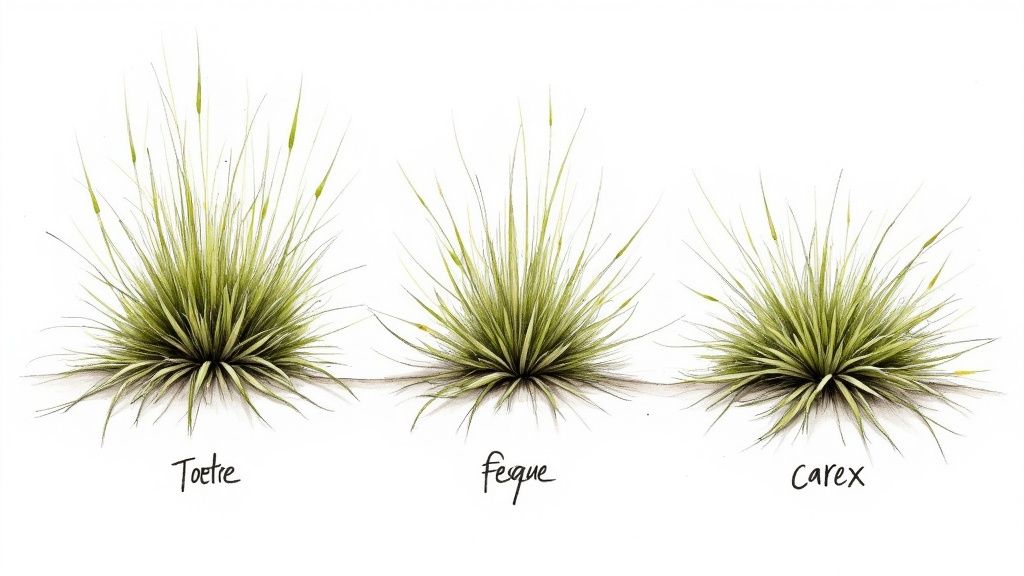
Walking into a nursery can feel a bit overwhelming with all the choices, but there are a few standout species that gardeners across New Zealand come back to time and time again. They’re popular for a reason: they’re reliable, beautiful, and incredibly versatile. These are the tried-and-true natives that just work.
Think of this as your shortlist. We'll explore a few readily available species, each with its own unique personality. From the glowing copper tones of sedges that are the ultimate companion plants, to the strong, architectural presence of our iconic tussocks, there’s a grass for every job.
The Ever-Popular Carex Family
Now, while they’re technically sedges and not true grasses, you simply can't have a New Zealand native garden without something from the Carex family. They are loved for their fine, weeping foliage and an incredible colour palette that ranges from bright green to deep bronze and fiery orange. Honestly, they fit into almost any garden style you can imagine.
-
Orange Sedge (Carex testacea): This one is a true Kiwi garden classic. It forms a lovely, arching clump of fine, olive-green leaves that switch to a brilliant coppery-orange, especially when it gets plenty of sun. It's incredibly hardy and looks fantastic in mass plantings, along borders, or just adding a pop of warm colour to pots.
-
Red Rooster Sedge (Carex buchananii): If you’re after something a bit more upright and striking, Carex buchananii is a fantastic pick. Its fine, reddish-brown foliage creates a really unique vertical accent that contrasts beautifully with silver or green-leafed plants. It also adds wonderful texture and movement, especially in breezy spots.
Chionochloa rubra: The Red Tussock
You can't talk about popular native grasses in NZ without mentioning the majestic Red Tussock (Chionochloa rubra). This is a bigger, more structural grass that brings a slice of the South Island high country right into your garden. It’s a real statement plant that demands attention.
Its broad, reddish-bronze leaves form a large, graceful weeping clump that can reach over a metre tall and wide. Red Tussock is also incredibly tough, handling wet feet and windy spots much better than many other tussocks. You can use it as a bold feature on its own or plant a few together to create a dramatic, meadow-like feel that hints at its natural home.
If there's one secret to success with NZ native grasses, it's this: try to mimic their natural home. Plants from alpine areas generally love open, sunny sites with good airflow, while those from the forest floor might need a bit more shade and moisture.
This simple approach helps ensure your chosen plants don't just survive, but truly thrive, showing off their best colours and form.
Anemanthele lessoniana: The Graceful Pheasant's Tail
Previously known as Stipa arundinacea, the Pheasant's Tail Grass (Anemanthele lessoniana) is one of our most beautiful and popular natives, and for good reason. It creates a soft, arching mound of fine green foliage that gets these stunning streaks of orange, red, and gold, especially during the cooler months from autumn through winter.
But what really makes it special are its feathery, smoke-like flower heads that appear in late summer, hovering over the leaves like a delicate haze. It's an incredibly graceful plant that adds softness, movement, and colour all year round. It also self-seeds quite happily, letting you create beautiful, natural-looking drifts over time.
Festuca actae: The Iconic Blue Tussock
For a real pop of colour, you can’t beat the Blue Tussock (Festuca actae). This small, clumping grass is prized for its intense, silvery-blue foliage that creates a stunning visual contrast against darker plants or gravel mulches. It’s a firm favourite for modern, minimalist gardens, rockeries, and pots.
It forms a neat, hedgehog-like tuft, usually growing to about 30 cm high. To keep that vibrant blue looking its best, it needs a spot in full sun with very well-drained, low-fertility soil. Its compact size and striking colour make it one of the most useful and admired small native grasses NZ has to offer.
Choosing the Right Native Grass for Your Garden
To help you decide which of these popular grasses might be right for your space, here’s a quick comparison table. It breaks down the key features to help you match the plant to the place.
| Common Name | Scientific Name | Typical Height | Foliage Colour | Best For |
|---|---|---|---|---|
| Orange Sedge | Carex testacea | 30-50 cm | Olive green to bright orange | Mass planting, borders, pots |
| Red Tussock | Chionochloa rubra | 1-1.2 m | Reddish-bronze | Feature plant, wet areas, screening |
| Pheasant's Tail Grass | Anemanthele lessoniana | 60-80 cm | Green with orange/red tints | Soft borders, meadow planting |
| Blue Tussock | Festuca actae | 20-30 cm | Intense silvery-blue | Rock gardens, containers, contrast |
Each of these grasses brings something special to the garden, from the fiery drama of a Red Tussock to the cool, calm blue of a Festuca. Hopefully, this gives you a great starting point for bringing these beautiful, hardy NZ natives into your own backyard.
Landscaping Ideas With Native Grasses
Alright, you've met some of Aotearoa's most popular native grasses. Now for the exciting bit—picturing them in your own garden. It's time to move beyond plonking a single tussock in the lawn and start thinking about how to really weave these incredible plants into your landscape. With the right design, your backyard can become a living, breathing space that shifts beautifully with the seasons.
Think of your garden as a blank canvas. Native grasses are your textural paint, bringing depth, movement, and subtle colour that pulls the whole picture together. Their soft, flowing forms are fantastic for breaking up the hard, straight lines of modern homes, creating a much more natural and welcoming atmosphere.
Create a Tussock Meadow
One of the most striking ways to use native grasses NZ is by planting them in large groups. Forget dotting individual plants around; grouping them creates a cohesive, breathtaking effect that echoes the wild tussocklands of New Zealand. This approach is absolutely perfect for bigger spaces, tricky slopes, or even for replacing a patch of high-maintenance lawn.
To get this look right:
- Mix your species: Try combining the fiery, coppery tones of Carex testacea with the silvery-blue shimmer of Poa cita for a dynamic effect.
- Play with height: Use taller grasses like Red Tussock (Chionochloa rubra) towards the back, with shorter species clustered in front. This creates wonderful layers of texture.
- Let it flow: Plant in organic, curved drifts instead of rigid lines. This gives you that natural, windswept feeling that comes alive with the slightest breeze.
This mass-planting strategy doesn't just look amazing—once established, it's also a great way to suppress weeds and cut down on your mulching chores.
Soften Hard Edges and Borders
Native grasses are absolute masters at softening the hard edges of paths, driveways, and garden beds. Their fine, weeping foliage spills gently over concrete or timber, beautifully blurring the lines between the built and natural elements of your garden.
It’s like adding a soft, living trim to your landscape. A row of Pheasant's Tail Grass (Anemanthele lessoniana) along a driveway, for example, adds graceful movement and gorgeous colour all year round. Smaller grasses like Blue Tussock (Festuca actae) are ideal for lining a garden path, with their neat clumps providing a border that’s tidy but not harsh.
The real magic happens when you start mixing textures. Pair the fine leaves of a grass with the bold, solid forms of flaxes (harakeke), the broad leaves of a cabbage tree (tī kōuka), or the dense foliage of a hebe. This contrast makes each plant's unique character really pop.
This technique is key to creating a richer, more complex garden that feels genuinely Kiwi. For more inspiration on combining different plant forms, you might want to check out our general guide on landscaping ideas in NZ. It can help you build a layered and captivating outdoor space that truly celebrates the unique beauty of New Zealand’s native flora.
How to Plant and Care for Your Native Grasses
One of the best things about choosing native grasses for your garden is just how beautifully low-maintenance they are. But like any plant, a bit of care at the start can be the difference between a grass that just survives and one that truly thrives.
Think of it as setting them up for success. Getting these grasses established is straightforward, but it all starts with putting the right plant in the right place. A little attention on day one means a long, healthy life with minimal fuss from you later on.
Finding the Perfect Spot
Before you even grab a spade, take a look around your garden. Most of our native grasses have two things in common: they love sunshine and they need excellent drainage. They’ve evolved in places where their roots are never left sitting in water.
Picture where they grow in the wild—windswept coastlines, open tussocklands, and rocky hillsides. These aren't exactly spots with heavy, damp soil.
To get it right, look for a part of your garden that:
- Gets at least half a day of direct sun, if not more.
- Doesn't have water pooling after a downpour. If you're working with heavy clay, your best bet is to build up the garden bed with a gritty, sandy mix to help water drain away.
The golden rule for native grasses is simple: when in doubt, add more grit. Good drainage is far more important than rich soil. They are tough plants, evolved for tough conditions; soggy, overly fertile soil is their kryptonite.
A Step-by-Step Planting Guide
The best times to get your native grasses in the ground are autumn (March to May) and spring (September to November). Planting in autumn is often ideal. It gives the roots time to settle in over the cooler, wetter months, preparing them for the stress of their first summer.
Follow these simple steps for a successful planting:
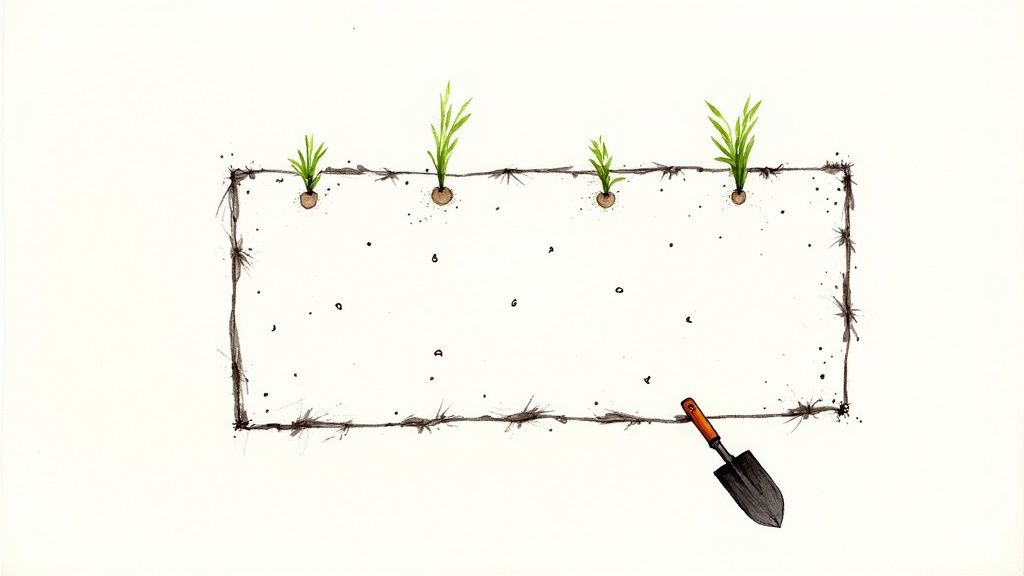
- Prep the Hole: Dig a hole that’s a bit wider and deeper than the pot the grass came in. This gives the roots room to stretch out.
- Check the Drainage: A quick and easy test: fill the hole with water and see how fast it disappears. If it's still sitting there after an hour, you'll need to improve the drainage by mixing in sand or fine gravel.
- Position Your Plant: Gently ease the grass from its pot. If you see roots circling at the bottom, carefully tease them out. Place it in the hole so the top of its root ball is level with the surrounding soil. Planting too deep is a common mistake and can cause the base of the plant to rot.
- Backfill and Water: Fill the hole back in with soil, gently firming it around the roots. Finish with a deep watering to settle everything in and get rid of any air pockets.
Once it's planted, a layer of gravel or stone chip mulch looks fantastic. It also helps keep the soil cool and weeds down without trapping too much moisture right against the plant’s base.
Watering and Feeding
Now for the best part: once they’re established, your native grasses need very little from you.
During their first summer, you might need to give them a deep watering once a week, especially if it's been particularly dry. After that first year, they should be perfectly happy with just natural rainfall.
As for fertiliser? It’s best to skip it entirely. NZ native grasses are adapted to our naturally low-fertility soils. Adding rich fertilisers just makes them grow soft, floppy, and weak, and rolls out the welcome mat for weeds.
The Secret to Tidy Tussocks
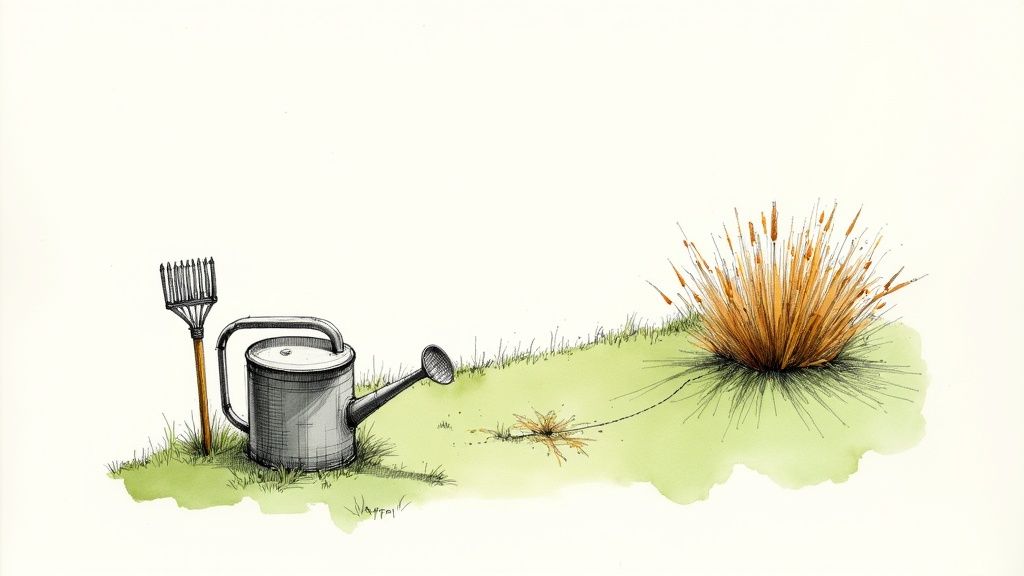
Over time, you’ll notice the older leaves at the base of your tussocks turning brown. This is completely natural. To keep them looking sharp and encourage fresh, healthy growth, you don't need secateurs. Instead, you "comb" them.
It's as easy as it sounds. Put on a pair of garden gloves and simply run your fingers through the clump, starting from the base and pulling upwards. The dead leaves will come away easily, leaving the vibrant green or coppery foliage behind.
This simple grooming trick mimics natural processes, improves air circulation through the plant, and keeps it looking tidy. It’s the perfect technique for a low-effort garden. If you're looking for other low-maintenance ideas, you might want to check out our guide on fast-growing hedges in NZ.
The Ecological Role of Native Grasslands
When you decide to plant native grasses, you're doing so much more than just adding greenery to your garden. You're actually playing a part in a huge conservation story, connecting your backyard to the vast, windswept tussocklands that are such an iconic part of Aotearoa’s natural heritage. Every single clump you put in the ground helps to rebuild these vital ecosystems.
It’s hard to imagine now, but before towns and farms reshaped the land, indigenous grasslands were a massive feature of the New Zealand landscape. At the time of European settlement, these ecosystems covered about 30% of the entire country. Today, that figure has plummeted to just 13%, a stark drop caused mostly by changes in how we use the land.
This isn't just a scenic loss; it's a huge blow to our country's ecological health. From the short tussocks of the eastern South Island to the towering ones in our high country, these grasslands are anything but simple fields. They are incredibly complex and busy communities that provide enormous benefits to the wider environment.
Anchors of the Land and Keepers of Water
One of the most critical jobs our native grasslands perform is protecting our precious soil and water. The best way to think of a dense tussock clump is as a powerful, living anchor. Its deep, fibrous root system is a master at binding soil together, which makes it brilliant at preventing erosion on steep hillsides and exposed slopes.
This is especially important in New Zealand's dynamic landscapes, where a single downpour can wash away tonnes of vulnerable topsoil. The benefits are massive:
- Erosion Control: That dense net of roots holds soil firmly in place, dramatically reducing how much sediment runs off into our streams and rivers.
- Water Filtration: As rain flows through the tussocks, the dense foliage and root systems act like a natural filter, trapping pollutants before they ever reach our waterways.
- Flood Mitigation: Tussocklands behave like giant sponges. They soak up heavy rainfall and release it slowly, which helps to regulate river flows and lessen the impact of floods downstream.
Building Biodiversity from the Ground Up
Native grasslands are far from empty. In fact, they are absolutely humming with life. They provide essential food, shelter, and breeding grounds for a huge array of native fauna that have evolved right alongside them for thousands of years.
The dense base of a single tussock clump creates its own unique microclimate—a sheltered, humid little world that’s protected from harsh sun, frost, and wind. This sanctuary is a lifeline for countless creatures.
By bringing native grasses into your garden, you’re basically hanging out a 'vacancy' sign for local wildlife. You provide the structure, and nature will bring in the tenants, from the tiniest insect to our precious native lizards.
This simple act turns your garden into a functioning piece of a much larger ecological corridor. These grasses are particularly vital for:
- Native Invertebrates: A whole host of insects, spiders, and wētā depend on tussocks for their entire life cycle.
- Lizards (Mokomoko): Our native geckos and skinks find refuge from predators and harsh weather within the dense foliage.
- Birds: Species like the pīpīwharauroa (shining cuckoo) and mātātā (fernbird) rely on grasslands for foraging and nesting.
Carbon Sinks and Climate Allies
Beyond their immediate benefits for soil, water, and wildlife, our native grasslands also have a big part to play in the fight against climate change. Like all plants, grasses pull carbon dioxide from the atmosphere. But grasslands are especially good at storing that carbon for the long term.
A huge amount of this carbon isn't stored in the leaves, but deep within the extensive root systems and the soil itself. This makes healthy grasslands stable and effective carbon sinks, locking away atmospheric carbon for centuries. By restoring these ecosystems—even on a small scale in your own garden—you’re contributing to this massive global effort.
Every tussock you plant helps weave a stronger, more resilient ecological fabric across New Zealand. Your efforts connect directly to the bigger story of preserving and rebuilding Aotearoa's unique biodiversity. If you're keen to see how these plants can fit into a wider plan, check out our guide to creating a beautiful and functional NZ native garden.
Common Questions About Growing Native Grasses
Diving into the world of native grasses can bring up a few questions, especially if you're used to more traditional gardening. To help you get started with confidence, we’ve answered some of the most common queries Kiwi gardeners have about growing these resilient plants.
When Is the Best Time to Plant Native Grasses in New Zealand?
The ideal times to get your native grasses in the ground are autumn (March to May) and spring (September to November).
Planting in autumn is often my top recommendation. It allows the roots to get established over the milder, wetter winter months, giving them a strong head start before the summer heat kicks in.
Spring planting is also a great option. The soil is warming up, which encourages plenty of new growth, but you’ll need to be prepared to water your new plants a little more frequently through their first summer to ensure they don't dry out.
Do I Need to Fertilise My Native Grasses?
In almost all cases, the answer is no. Our native grasses are champions of tough love, having adapted to thrive in New Zealand's naturally low-fertility soils. Honestly, they just don't need the extra nutrients.
In fact, applying fertiliser can do more harm than good. It often encourages lush, soft growth that makes the grasses floppy and weak, while also creating the perfect conditions for weeds to take over. You’ll get much healthier, hardier plants by sticking to their natural preference for lean soil.
How Do I Tidy Up My Tussock Grasses?
Forget the shears and secateurs; you don't need to prune tussocks like other ornamental grasses. The best way to spruce them up is to simply "comb" them. Pop on a pair of garden gloves and gently run your fingers through the clump from the base upwards.
This simple grooming lets you pull out any dead, brown leaves (known as thatch) without wrecking the plant's beautiful natural shape. It also improves air circulation and keeps your tussocks looking their best.
Can I Grow Native Grasses in Pots?
Absolutely! Many species of native grasses NZ are fantastic for container gardening. It’s a wonderful way to bring that unique texture and movement to patios, decks, and balconies where garden space is limited.
Smaller species are particularly well-suited for pots. Look for varieties of:
- Carex (sedges)
- Festuca (like Blue Tussock)
- Poa (like Silver Tussock)
Just make sure you choose a quality potting mix with excellent drainage and select a pot that gives the plant enough room to grow.
Ready to bring the beauty and resilience of Aotearoa's native flora to your backyard? Explore the incredible selection of native grasses and other stunning plants at Jungle Story. Find the perfect species for your garden today at https://junglestory.co.nz.