
Welcome to your complete guide for choosing the very best outdoor plant pots NZ has to offer. Whether you're working with a sprawling Canterbury garden or a compact Auckland patio, the right pot is so much more than a simple container—it's your plant's home. It's the foundation for healthy growth and a key design piece for your outdoor space.
Choosing the Right Pot for Your Kiwi Garden
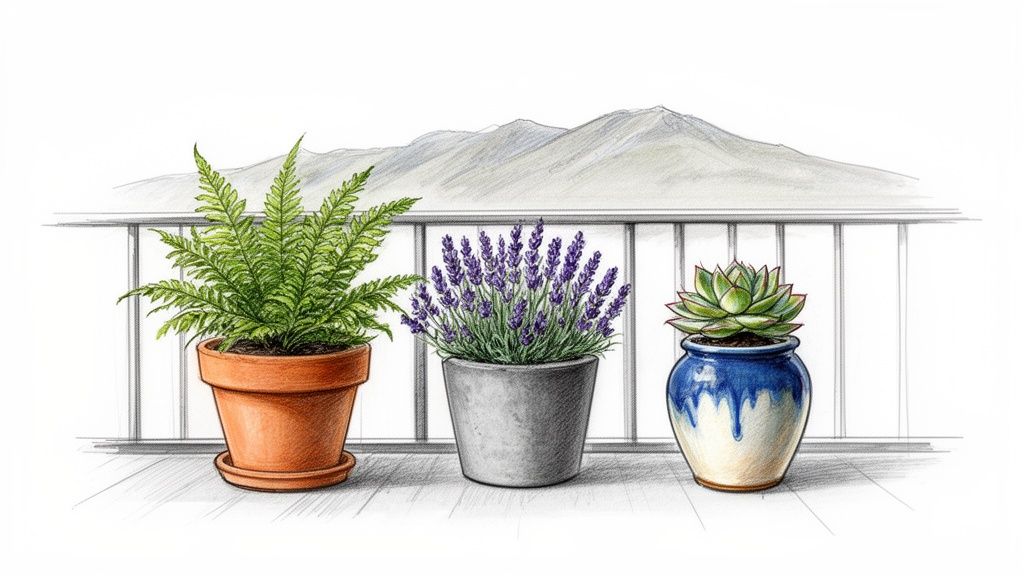
Finding the perfect outdoor plant pot in New Zealand is all about balancing looks with practicality. Your choice will influence everything from how often you need to water to how well your plants handle our famously unpredictable weather—you know, the kind that can deliver four seasons in a single day.
A pot's main job is to create a stable, nurturing environment for a plant's root system. That means it needs to shield delicate roots from the scorching summer sun you'd find in Hawke's Bay, while also offering protection from the surprise frosts that can pop up in the South Island.
Why Your Pot Choice Matters
Choosing a pot is a critical decision that directly impacts your success as a gardener. A great pot does more than just hold soil; it supports a thriving little ecosystem for your plant. We'll be walking through these key factors to help you make an informed choice:
- Material Suitability: Different materials like terracotta, fibreglass, and ceramic handle moisture, heat, and cold in completely different ways.
- Correct Sizing: A pot that's too big or too small can lead to root rot or stunted growth. Getting it just right is crucial.
- Effective Drainage: This is non-negotiable. Proper drainage is the secret to preventing waterlogged soil and keeping roots healthy and happy.
- Aesthetic and Style: Let's be honest, pots are also a fantastic way to express your personal style and boost your home's kerb appeal.
Think of a plant pot as the foundation of a house. If the foundation is unstable, poorly insulated, or the wrong size, the house won't flourish. The same principle applies to your plants—the right pot provides the stability and protection they need to thrive.
Throughout this guide, we'll break down all these essential elements. Our goal is to give you the knowledge you need to pick outdoor plant pots that not only look fantastic but also create the perfect home for your plants to prosper in New Zealand's unique climate. Let's dig in.
Matching Pot Materials to the New Zealand Climate
Choosing the right material for your outdoor pot is one of the biggest decisions you'll make for your garden. It’s about so much more than just looks; the material you pick has a direct say in your plant's health, how much work you’ll have to put in, and whether your pot will survive our wild and wonderful Kiwi climate.
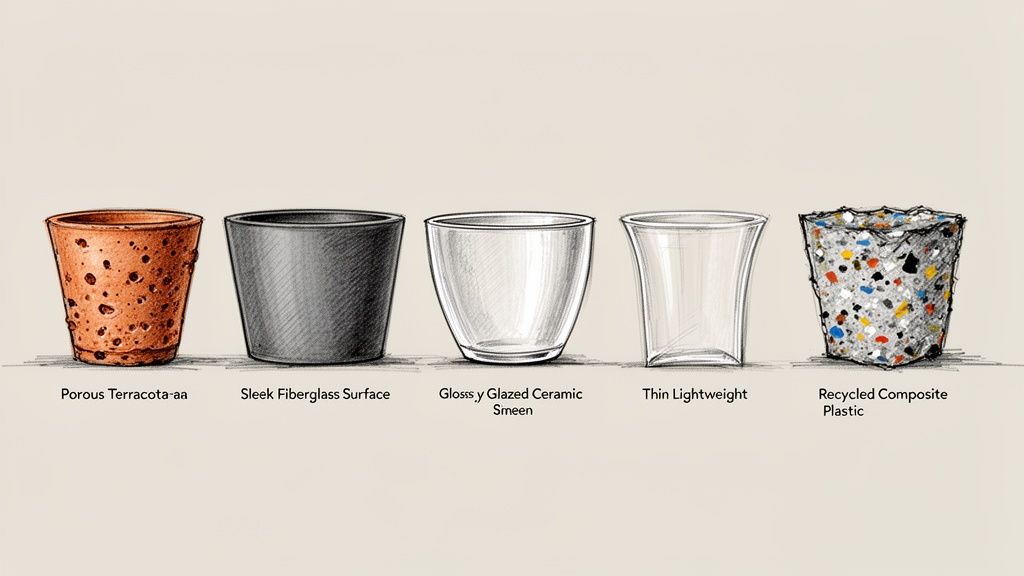
Think of it like this: a pot needs to stand up to everything from a scorching Northland summer sun to a frosty Southland morning. It’s the protective shell for your plant’s delicate roots. You wouldn't wear a light jacket in a southerly buster, and your plants need the right "coat" too.
Let's dig into the most common materials for outdoor plant pots NZ gardeners use, breaking down what works where, and why.
Terracotta and Clay
You can't beat the classic, rustic charm of a terracotta pot. They just seem to fit into any garden. Made from natural clay, their signature move is porosity—they actually breathe, letting air and moisture move right through the walls.
This is a massive win for plants that hate having 'wet feet,' like succulents, cacti, and Mediterranean herbs such as rosemary and lavender. The soil dries out more evenly, which helps you dodge the dreaded root rot, a real risk in the more humid parts of New Zealand.
But that porosity is also its Achilles' heel. In places that get a proper frost, like Central Otago or inland Canterbury, any moisture soaked into the clay can freeze, expand, and crack the pot wide open. For that reason, it’s often a safer bet in milder, northern climates, unless you’re prepared to haul them undercover for the winter (our colder season from June to August).
Glazed Ceramics
Glazed ceramic pots are a stunning middle ground. You get the earthy feel of clay but with much better moisture control. A slick layer of glaze on the outside (and sometimes inside) seals the pot, stopping water from evaporating through the sides.
This makes them a fantastic choice for thirsty plants like ferns or for gardens in windy spots like Wellington, where pots can dry out in a flash. The glaze is also a huge part of their appeal, coming in an endless rainbow of colours and finishes to match your style.
The main trade-offs are weight and fragility. A big glazed pot can be seriously heavy, so don't plan on moving it often. They can also chip if knocked, and just like their unglazed cousins, they can still crack in a hard frost if water gets into any unglazed bits, like the base.
Fibreglass and Lightweight Composites
If you want a modern look that's tough as nails, fibreglass and other composites are hard to go past. These pots are made from a mix of resin and fibreglass, often cleverly moulded to look like heavy stone or concrete, but they weigh a tiny fraction of the real thing.
Their biggest plus is sheer resilience. They stand up to our fierce UV rays, so their colour won't fade after one summer. They’re also frost-proof, making them a brilliant, worry-free option for gardeners anywhere in the country, from Cape Reinga to Bluff.
When choosing a pot, think of it as a long-term home for your plant. A durable, weather-appropriate material like fibreglass is like building a house with solid insulation and a weatherproof roof—it protects the inhabitants from whatever the elements throw at them.
The only thing to watch is heat. Dark-coloured fibreglass pots can get pretty toasty in direct sun, which can cook the roots of sensitive plants. You can get around this by picking lighter colours or just being extra diligent with the watering can during a heatwave.
Plastic and Recycled Options
There's no denying it: plastic pots are the most affordable and lightweight choice out there. Their versatility means you can find them in any shape, size, or colour imaginable, making them perfect for gardeners on a budget or for balconies and decks where you might need to move things around.
Modern plastics are a world away from the flimsy pots of old; they often have UV inhibitors built in to stop them from going brittle and faded. Because they're non-porous, they hold onto moisture really well—great for thirsty plants, but it does mean you have to be on your game with drainage to stop the soil from getting waterlogged.
Even better, eco-conscious gardeners can now find heaps of pots made from recycled plastics. They give waste materials a second life as a functional, attractive home for your plants. They might not have the premium feel of ceramic, but for sheer practicality, they’re unbeatable. They’re tough, frost-resistant, and a great all-rounder for the diverse New Zealand climate.
To make things a bit easier, here’s a quick-reference guide to help you compare the main players at a glance.
Outdoor Pot Material Comparison for NZ Gardens
| Material | Pros | Cons | Best Suited For |
|---|---|---|---|
| Terracotta | Porous (good for drainage), classic look, affordable | Prone to frost cracking, dries out quickly, can be heavy | Milder climates; succulents, cacti, and plants that prefer dry soil. |
| Glazed Ceramic | Excellent moisture retention, huge range of colours & styles | Heavy, can chip or crack, still vulnerable to hard frosts | Thirsty plants like ferns; decorative feature pots in sheltered spots. |
| Fibreglass | Lightweight, UV resistant, frost-proof, very durable, modern look | Dark colours can overheat in sun, can be more expensive | All NZ climates; gardeners wanting a low-maintenance, long-lasting pot. |
| Plastic | Very lightweight, budget-friendly, holds moisture well | Can look cheap, may become brittle over time without UV protection | Balconies, renters, budget-conscious gardeners, moisture-loving plants. |
Choosing the right material really just comes down to balancing your garden's needs, your local weather, and your personal style. Each has its place, and the perfect pot is out there waiting for you
Mastering Pot Size and Drainage for Healthy Plants
Once you’ve settled on the right material, your next two big decisions are size and drainage. These are the unsung heroes of container gardening. They work quietly behind the scenes, but getting them right gives your plants the absolute best shot at thriving.
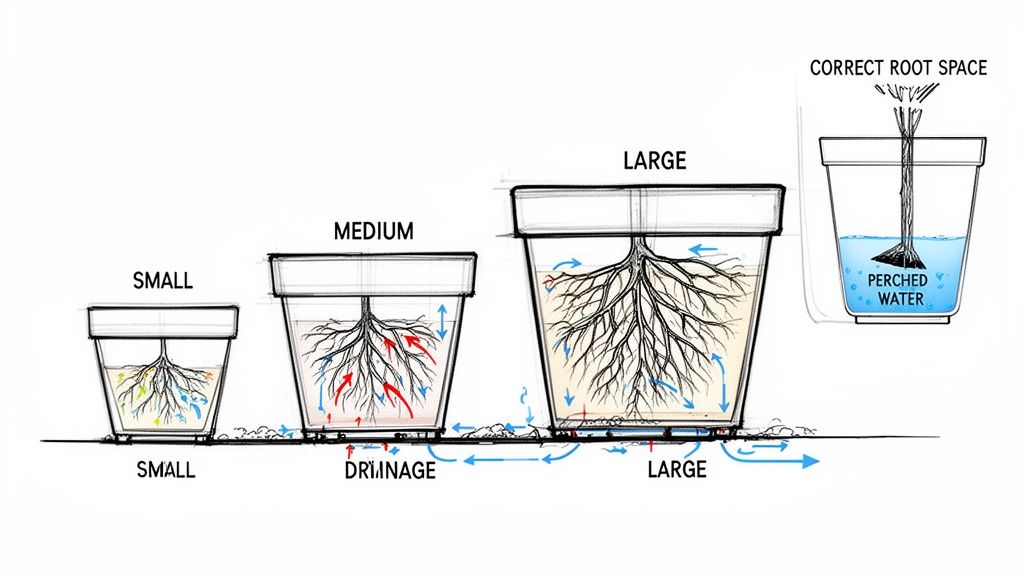
Think of it like buying a pair of shoes: too tight, and you can’t move; too loose, and you’ll trip over. Plants feel much the same way about their home. Nailing the size and drainage is fundamental to growing the kind of beautiful plants every Kiwi gardener hopes for.
The Goldilocks Rule of Pot Sizing
Finding the perfect pot size is a classic 'Goldilocks' situation—it can’t be too big or too small. It needs to be just right. It’s always tempting to put a small plant into a massive pot, thinking you’re giving it heaps of room to grow, but this usually backfires.
A pot that’s way too large holds a volume of soil that the plant's tiny root system simply can't draw moisture from. All that extra soil just stays damp for ages, creating the perfect soggy conditions for root rot, a fungal disease that can kill a plant surprisingly fast.
On the flip side, a pot that’s too small is just as bad. It constricts root growth, effectively stunting the plant and limiting its potential. The tiny amount of soil also dries out in a flash, meaning you'll be watering constantly, especially during a hot Kiwi summer.
The ideal pot size gives a plant’s roots enough space to grow for the next one to two years. A good rule of thumb is to choose a new pot that is roughly 5-10 cm wider in diameter than the current one for smaller plants. For larger, faster-growing specimens, go for 10-15 cm wider.
This gives the roots enough fresh potting mix to expand into without overwhelming them with excess moisture. If you’re sizing up something truly substantial, our guide to selecting large outdoor plant pots in NZ has some more specific advice.
Why Drainage Is Absolutely Non-Negotiable
If there’s one golden rule in container gardening, it's this: your pot must have drainage holes. No exceptions. Without a way for excess water to escape, the soil becomes a waterlogged bog. Plant roots need oxygen to survive, and when the soil is saturated, they literally drown.
This is especially crucial here in New Zealand, where a sudden downpour can quickly flood a pot that doesn't drain properly. Every outdoor pot should have at least one decent-sized drainage hole, though several smaller ones are even better for ensuring water is released evenly.
Debunking the Gravel Myth
You’ll still hear the old advice to add a layer of gravel or broken pottery to the bottom of a pot to "improve drainage." Unfortunately, this is a persistent myth that actually makes things worse.
This practice creates what’s known as a 'perched water table.' Instead of helping water drain out, it causes it to pool in the soil just above the gravel layer. The roots end up sitting in stagnant water—a fast-track to root rot.
To make sure your plants are never left with wet feet, just follow these simple tips:
- Check Before You Buy: Always flip a pot over to check for holes. If you fall in love with a decorative pot that doesn't have any, just use it as a 'cachepot' by placing a plastic nursery pot (with holes!) inside it.
- Use Pot Feet: This is a game-changer. Elevating your pots off the ground with pot feet or even a few bricks allows air to circulate underneath and ensures water can drain away freely.
- Prevent Blockages: To stop soil from washing out or clogging the hole, you can place a piece of mesh, a coffee filter, or a curved bit of broken terracotta over the hole before you add your potting mix.
Styling Your Outdoor Space Like a Pro
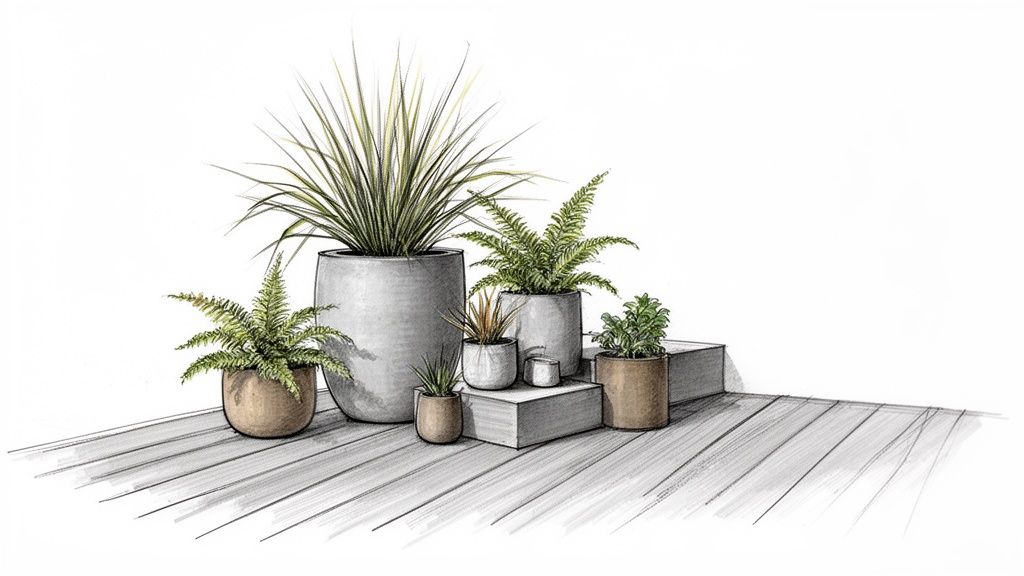
We've talked through the practical bits, now for the fun stuff. Your outdoor pots are so much more than just containers for dirt; they're powerful design tools that can completely transform the vibe of your garden, deck, or patio.
Think of your pots as outdoor decor. They’re the accessories that tie the whole space together, just like cushions or art do for a living room. A bit of thoughtful placement can create flow, inject a pop of colour, or become a stunning focal point that draws the eye.
Creating a Cohesive Theme
One of the easiest ways to get that polished, pulled-together look is by sticking to a consistent theme. This doesn’t mean everything has to be a perfect match, but it should feel intentional. You can nail this by focusing on a specific colour palette or sticking to a single material.
For instance, a collection of terracotta pots in different shapes and sizes gives off a warm, Mediterranean feel that never goes out of style. Or, you could group sleek, dark grey fibreglass planters to create a sharp, contemporary look that works beautifully with modern Kiwi architecture.
A cohesive theme acts as a visual anchor. By repeating a specific colour, material, or style, you create a sense of rhythm and harmony that makes the entire space feel more organised and professionally designed.
This simple approach helps narrow down your choices and ensures your collection of outdoor plant pots NZ looks curated and stylish, rather than cluttered and accidental.
Embracing the Eclectic Mix
Of course, a single theme isn't the only way to go. If you're after a more relaxed, bohemian, or character-filled garden, an eclectic mix-and-match approach can be amazing. The secret is to aim for deliberate variety, not random chaos.
It's all about playing with contrast in a balanced way. Mix up different textures, materials, sizes, and colours to build a display that’s dynamic and full of interest. A smooth, glazed ceramic pot can look fantastic sitting next to a rustic, weathered concrete one.
To really elevate your garden's aesthetic, take a look at these brilliant outdoor living space design ideas which can help you master the art of the perfect mix. The goal is to make your collection look like it’s been personally curated over time.
Using Pots to Create Focal Points and Depth
Strategic placement is everything. You can guide the eye, create different "zones," and add layers to your outdoor area with just a few clever tricks.
- The Statement Pot: A single, oversized planter is a powerhouse. Pop it at the end of a path, by the front door, or on a deck to grab attention. Plant it with something dramatic—like a spiky cabbage tree or a flowing ornamental grass—for maximum impact.
- The Power of Three: It's a classic design trick for a reason. Grouping pots in odd numbers, especially threes, just works. Arrange three pots of varying heights and widths in a tight cluster to create a lush, full mini-garden.
- Creating Height and Layers: Don't just line everything up on the ground. Use plant stands, steps, or even an old tree stump to stagger their heights. This simple technique adds vertical interest and depth, stopping your display from looking flat and one-dimensional.
At the end of the day, styling your outdoor space is all about choosing plants and pots you love. If you’re looking for a bit of inspiration on what to plant, you can find heaps of ideas in our article on the best plants for outdoor pots in NZ. Let your creativity run wild and have fun turning your garden into your own stylish retreat.
Caring for Your Pots Through the Seasons
Choosing the perfect outdoor pot is just the beginning. Looking after that investment is what will keep your Kiwi garden looking sharp year after year. New Zealand’s weather is famously all over the place—from a biting South Island frost to a sweltering Hawke's Bay summer—so a bit of seasonal care is needed to protect both your pots and the plants inside them.
This isn't just about keeping things looking nice; it's about making them last. A few simple steps throughout the year can prevent cracks, stop your plants from getting stressed out, and keep nasty diseases at bay. It’s how you make sure your pots stay a beautiful, durable part of your outdoor space for a long, long time.
Preparing for a Frosty Winter
For a good chunk of New Zealand, especially down south and across the central North Island, winter means frost. When water in the soil or the pot material itself freezes, it expands. That expansion can exert some serious pressure, leading to cracks—especially in porous materials like terracotta.
To keep your pots safe, try these simple but incredibly effective tricks:
- Get Their Feet Off the Ground: Pop your pots up on 'pot feet,' a couple of bricks, or even some wooden blocks. This simple move stops the base from freezing to the ground and lets all that extra winter rain drain away, preventing the soil from turning into a solid block of ice.
- Move Them if You Can: For smaller or more delicate pots, like your favourite ceramic or a classic terracotta, moving them to a sheltered spot can be a game-changer. Tuck them up against the house, under the eaves, or onto a covered deck.
- Ease Up on the Watering: Plants barely grow in the colder months (June to August), so they need far less water. Overwatering in winter is one of the quickest ways to cause root rot, and it just adds more water to the pot that could potentially freeze.
Think of it like winter-proofing your house. You lag the pipes to stop them from bursting, right? Lifting your pots is the garden version of that—it stops frost damage by improving drainage and breaking contact with the frozen ground.
Managing a Hot Summer
The intense Kiwi summer sun, especially in places like Marlborough or the Bay of Plenty, brings a whole different set of problems. Pots can dry out shockingly fast, which stresses the plants and can even scorch their roots, particularly in dark-coloured containers.
Here’s how to keep your potted plants happy during a heatwave:
- Mulch the Topsoil: This is a total game-changer. A layer of mulch, like bark chips or pea straw, spread over the soil surface acts like a protective blanket. It can reduce moisture evaporation by up to 70% and keeps the roots nice and cool.
- Water Deeply and Early: Give your pots a good, thorough soak first thing in the morning before the day really heats up. This lets the water get deep into the soil with less being lost to evaporation, setting the plant up for the heat ahead.
- Give Them Some Shade: A little bit of relief from the direct sun during the hottest part of the day can prevent leaf scorch. If you can, shift pots to a spot that gets afternoon shade, or even use a temporary shade cloth for really sensitive plants.
Cleaning Pots Between Plantings
Finally, a bit of good old-fashioned hygiene is key to healthy plants. Whenever a plant dies or you’re ready for a repot, always give the container a proper clean before you use it again. Old soil can be hiding pests and diseases just waiting to jump on your new plant.
Start by giving the pot a good scrub with a stiff brush and some warm, soapy water to get rid of any leftover soil and mineral gunk. Then, to sanitise it, let it soak for at least 10 minutes in a solution of one part bleach to nine parts water. Give it a final rinse with clean water, let it air-dry in the sun, and it’ll be perfectly ready for its new home.
Finding the Best Outdoor Plant Pots in New Zealand
Knowing what you want is one thing, but actually finding it can be another story. Tracking down the perfect outdoor plant pots nz gardeners are after can feel like a real mission, especially when you have something special or seriously large in mind.
Your local garden centre is a great place to start, of course. But you’re often limited by what they can physically fit in the store. And let’s not even get started on the logistics of wrestling a heavy concrete or massive fibreglass pot into your car—it often ends with needing a trailer or forking out for a hefty delivery fee.
The Shift to Shopping Online
This is where buying your pots online really comes into its own. Dedicated online marketplaces, like our own here at Jungle Story, have completely changed the game for Kiwi gardeners. We act as a central hub, connecting you with a massive network of trusted sellers from all over the country.
Instead of being stuck with what one shop has on its shelves, you suddenly get access to a huge, curated collection. It means you’re far more likely to find that one-of-a-kind, handcrafted ceramic pot or the exact set of sleek, modern planters you’ve been dreaming about.
Why It Just Makes Sense to Buy Pots Online
Shopping for pots online has some clear perks over the old-school retail runaround, making it a brilliant option for new gardeners and seasoned pros alike.
- So Much More Choice: Online platforms bring together pots from heaps of different sellers. This gives you an incredible variety of materials, sizes, and styles that no single physical store could ever hope to stock.
- No More Heavy Lifting: This has to be the biggest win. You can have your chosen pots, no matter how big or heavy, delivered right to your doorstep, anywhere in New Zealand. Easy as.
- Discover Hidden Gems: You’ll stumble across unique pots from boutique sellers and specialised artisans you’d probably never find in your local area.
Shopping for pots online is like visiting a nationwide garden show from the comfort of your couch. You can browse an enormous range, compare options in a flash, and get your perfect find delivered right to you—skipping all the logistical headaches.
Supporting a Growing Kiwi Passion
It’s no secret we love our gardens, and the demand for quality outdoor pots is booming. New Zealand's Garden Supplies Retailing industry recently pulled in a massive $621.9 million in revenue, which really shows how much we love getting our hands dirty.
With over 86% of Kiwis now living in urban spots, there's a huge demand for stylish, durable pots that work perfectly on balconies, decks, and patios. Online marketplaces are perfectly set up to meet this need by connecting you with sellers who specialise in pots made for our unique climate and who offer nationwide delivery. You can check out more stats on this growing market over at IBISWorld.
Whether you’re a home gardener on the hunt for the perfect little succulent pot or a landscaper trying to source massive feature pots for a project, online platforms make it simple to find exactly what you’re after. And with secure payments and expert advice often just a click away, it’s never been easier to get your hands on the best outdoor plant pots in the country. For more tips, have a look at our guide on choosing the right outdoor planter pots in NZ.
Still Got Questions?
Even after covering the basics, a few specific questions always seem to pop up when you're on the hunt for the perfect outdoor pot. Let's tackle some of the most common queries we hear from Kiwi gardeners.
What Are the Best Frost-Proof Pots for the South Island?
If you're in a colder spot like the South Island where a good frost is a regular occurrence, you need materials that won't crack under pressure. Your best bets are fibreglass, high-quality thick plastic, and solid concrete or stone pots. These can handle the freeze-thaw cycle without breaking a sweat.
Standard terracotta, on the other hand, is a bit of a risk. It's porous, so it soaks up water which then expands as it freezes, often leading to cracks. If you're set on that classic terracotta look, make sure you look for 'frost-resistant' varieties—they're fired at much higher temperatures, making them denser and far less likely to absorb water.
How Often Should I Repot My Outdoor Plants in NZ?
For most container plants here in New Zealand, a good rule of thumb is to repot every 2-3 years, though fast-growing plants might need it sooner. Spring (September to November) is the perfect time for the job; the warmer weather gives your plant the whole growing season to settle into its new home.
Keep an eye out for these tell-tale signs that it's time for an upgrade:
- Roots are making a break for it through the drainage holes.
- Water seems to rush straight through the pot without actually soaking in.
- The plant looks a bit top-heavy for its container or starts wilting more than usual.
Can I Plant Directly into a Pot with No Drainage Holes?
Honestly? We really wouldn't recommend it. Planting directly into a sealed pot (sometimes called a cachepot) is a fast track to waterlogged soil and root rot, which is fatal for most plants. Roots need to breathe, and without drainage, they effectively drown.
The trick is to use that beautiful decorative pot as a 'cover pot'. Just keep your plant in its plastic nursery pot (the one with holes!) and pop it inside the fancier one. When it's time to water, you can lift the inner pot out, let it drain completely, and then slide it back in. It’s the best of both worlds—you get the look you want without compromising your plant's health.
This simple method not only keeps your plants happy but also makes repotting down the line a whole lot easier.
Ready to find the perfect home for your outdoor plants? At Jungle Story, we connect you with New Zealand's best sellers, offering a huge range of high-quality outdoor plant pots to suit any style or climate. Explore our collection and have your favourites delivered right to your door. Start your search at https://junglestory.co.nz.