
Some houseplants are just green. Others are living works of art. The Calathea Medallion definitely falls into the second category, celebrated for its absolutely breathtaking foliage. It boasts large, medallion-like leaves painted with intricate patterns of deep green, flashes of silvery-pink, and a rich, moody burgundy on the underside. This isn’t a static decoration; it’s a living sculpture that brings a gentle rhythm to your home.
A True Living Work of Art
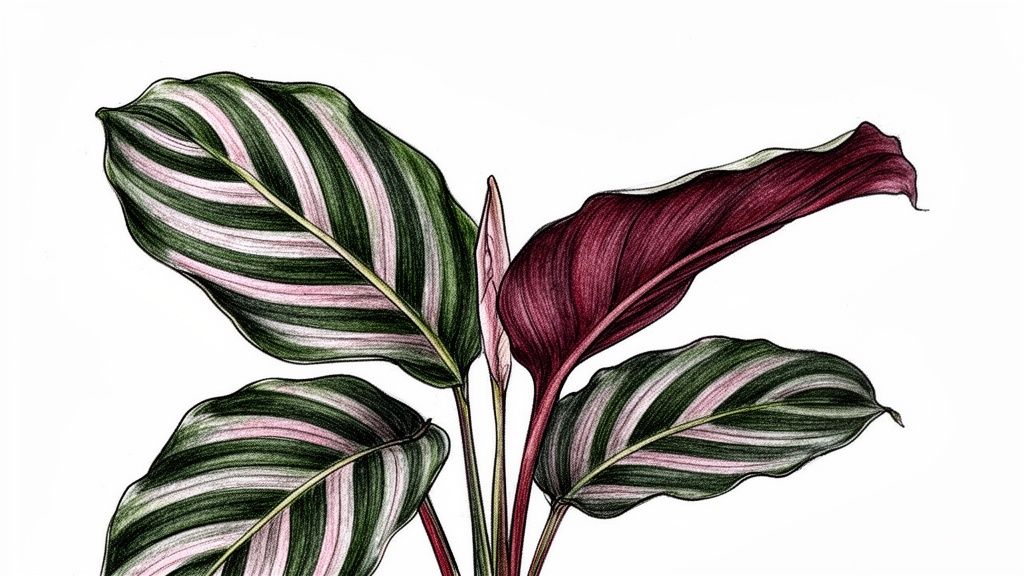
The Calathea Medallion truly earns its name from those spectacular leaves. Each one looks like a masterpiece, a tiny canvas adorned with intricate brushstrokes. The top surface shows off a mesmerising pattern of feathered bands in shades of lush green and silvery-pink, all radiating out from the central vein.
But the show doesn't stop there. Flip a leaf over, and you'll find a stunning contrast—a deep, uniform burgundy that adds real depth and drama. This striking two-toned display makes it a captivating centrepiece, no matter which way you look at it.
The Daily Dance of a Prayer Plant
One of the most enchanting things about the Calathea Medallion is its daily movement, a fascinating phenomenon called nyctinasty. It’s a trait shared with other members of the beloved "prayer plant" family.
As evening draws in, you'll notice the leaves slowly rise and fold upwards, almost like hands coming together in prayer. Then, come morning, they gracefully lower and open again to greet the day's light. This gentle, rhythmic dance gives the plant a unique personality, making it feel truly alive in your space.
This movement is more than just a charming quirk; it’s a clever natural adaptation. Back in its native tropical habitat, this motion helps the plant catch as much light as possible during the day and conserve precious moisture at night.
The Calathea Medallion’s ability to move its leaves throughout the day isn't just a visual treat; it's a constant, subtle reminder of the life and energy a houseplant can bring into your home, connecting you with the natural world.
New Zealand's Indoor Plant Darling
It’s really no surprise that the Calathea Medallion has become one of New Zealand's most sought-after indoor plants. Its unique beauty and dynamic nature have captured the hearts of plant lovers all over the country.
Since becoming widely available around 2018, its popularity has absolutely surged, making it a staple in Kiwi homes and offices. In fact, Calathea varieties, including the striking Medallion, now represent an estimated 25% market share in the tropical houseplant world. You can discover more insights about the popularity of these plants from NZ's leading growers.
While it does have a reputation for being a bit particular, this guide is here to demystify its care. We’ll show you that meeting its needs is a rewarding challenge, helping you unlock its full potential and proving why it’s worth that little bit of extra attention.
Recreating a Tropical Paradise in Your NZ Home
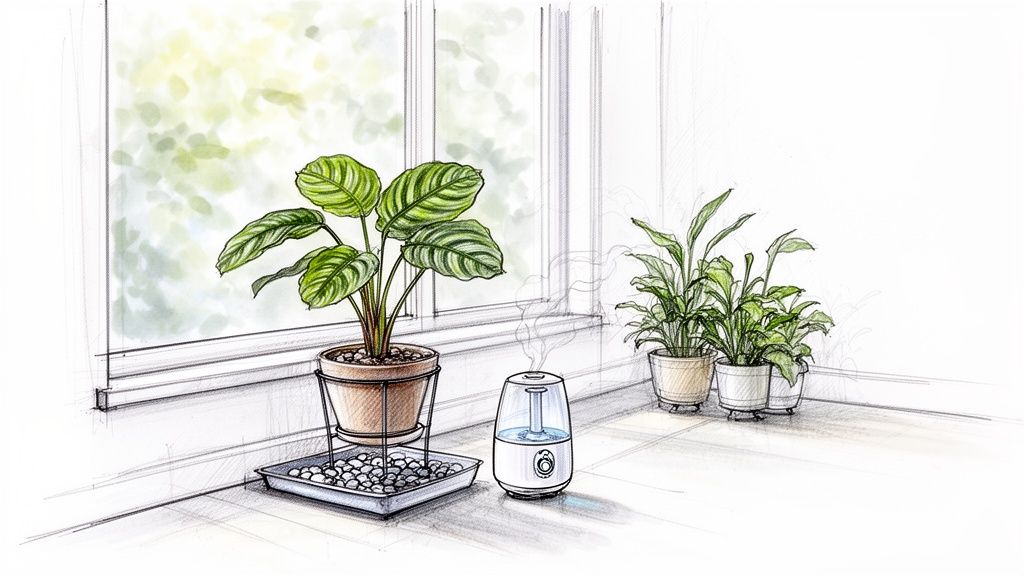
The secret to a happy Calathea Medallion? Make it feel like it never left home. These plants come from the humid, dappled floors of South American rainforests, so the trick is to mimic those conditions inside your New Zealand house.
If you can nail the three big ones—light, humidity, and temperature—you’ll have a thriving, stunning plant on your hands. Getting this balance right is truly the most important part of caring for a Medallion.
Finding the Perfect Light
Imagine the kind of light that filters down through a dense jungle canopy. It’s bright and lively, but never harsh or direct. That’s exactly what your Calathea is looking for.
Pop it in direct, intense sun, and you'll quickly see scorched leaves. The beautiful patterns will fade, the edges will turn crispy and brown, and the whole plant will look stressed. The goal is always bright, indirect light.
In a typical Kiwi home, you’ve got a few great options:
- Near an east-facing window: This spot is often the sweet spot, giving your plant gentle morning sun that won't cause any harm.
- A few metres back from a north-facing window: North-facing windows get the most intense light here in New Zealand, so setting your plant back a bit protects it from the harsh midday glare.
- In a room with a west-facing window: Just make sure it’s out of the direct path of that strong afternoon sun. A sheer curtain can be your best friend here, diffusing the light perfectly.
You’ll know you’ve got the lighting right when the leaf colours stay deep, rich, and vibrant. If the patterns start to fade, it might need a bit more light; if you see scorching, it's getting too much.
Boosting Indoor Humidity
Okay, let's talk about humidity. This is probably the number one thing that trips people up, especially when our Kiwi winters hit. We crank up the heat pumps and heaters, and all that dry air is the absolute enemy of a tropical plant.
A Calathea Medallion is basically a living hygrometer. Its leaves will tell you when the air is too dry, usually by developing those dreaded brown, crispy edges. You want to aim for 50% humidity or higher to keep it looking lush.
Luckily, it’s pretty easy to bump up the humidity. You can try one of these methods, or even combine them:
- Group Your Plants: Plants naturally release moisture through transpiration. Huddle your houseplants together and they'll create their own humid little microclimate. It’s a win-win for everyone.
- Use a Pebble Tray: Find a shallow tray, fill it with a layer of pebbles and some water, and sit your plant pot on top. Just make sure the pot isn't sitting in the water. As the water evaporates, it provides a lovely, localised humidity boost right where it’s needed.
- Invest in a Humidifier: If you're really serious about your plant game, a small humidifier is the most effective way to go. Placing one nearby guarantees consistent humidity levels and a very happy Calathea.
Maintaining a Stable Temperature
Your Calathea Medallion enjoys the same sort of temperatures we do, which makes things easy. It’s happiest in a stable environment, somewhere between 18°C and 24°C.
The biggest threat in our homes is sudden change. Cold draughts from doors and windows or a blast of hot air from a heating vent can really shock the plant, causing its leaves to wilt or droop. Keep it somewhere with a consistent, cosy temperature, away from any sudden fluctuations.
To truly recreate a tropical paradise in your home, consider incorporating design elements like vibrant patterns and textures, such as exotic banana leaf wallpaper.
Calathea Medallion Care at a Glance
For a quick summary, here’s a look at the ideal conditions for your Calathea Medallion throughout the New Zealand seasons.
| Care Factor | Ideal Condition | NZ Spring and Summer Notes | NZ Autumn and Winter Notes |
|---|---|---|---|
| Light | Bright, indirect light | Protect from harsh, direct midday sun. Move further from north-facing windows if needed. | Light is less intense; can be moved slightly closer to a window, but still avoid direct sun. |
| Humidity | 50% or higher | Generally higher natural humidity, but may still need a boost on very hot, dry days. | Crucial! Use a humidifier or pebble tray to combat dry air from indoor heating. |
| Temp. | 18°C - 24°C | Keep away from the direct path of air conditioning units to avoid sudden cold blasts. | Avoid cold draughts from windows and doors. Keep away from direct heat sources like heaters or fireplaces. |
| Watering | Keep soil consistently moist, but not waterlogged | Water more frequently as the plant is in its active growing season. Check soil every few days. | Reduce watering frequency. Allow the top few centimetres of soil to dry out before watering again. |
Keeping this table in mind will help you stay on top of your plant's needs as the weather changes, ensuring it stays happy and healthy all year round.
Mastering the Art of Watering and Feeding
Figuring out the right watering routine can feel like the biggest challenge when you first bring a Calathea Medallion home. But honestly, it doesn't have to be stressful. The secret is to ditch the strict calendar and start paying attention to what your plant is telling you. Once you get the hang of it, you'll be rewarded with those lush, vibrant leaves Calatheas are famous for.
You'll often hear the phrase "keep the soil evenly moist, but not soggy." It sounds a bit vague, right? Here’s a better way to think about it: imagine a sponge you've just wrung out. It's damp and holding water, but it's not dripping wet. That’s the perfect state for your Calathea's roots—plenty of moisture with enough oxygen to breathe.
The Right Way to Water
The most reliable way to know when it's time for a drink is the good old finger test. Schedules just can't keep up with changes in light, temperature, or humidity. Simply poke your finger about 3-5 cm deep into the soil. If it feels dry at the top but you can still feel a bit of coolness or moisture deeper down, it's watering time.
During the long, warm days of a New Zealand summer (roughly December to February), your plant is in full growth mode and will be much thirstier. You might find yourself watering it every 5-7 days. But as the days get shorter and cooler through autumn and winter, its growth naturally slows. It'll need far less water then, maybe only every two weeks or so.
Another game-changing tip is to be picky about your water. Calatheas are notorious for being divas about the chlorine, fluoride, and other minerals in our tap water. These can build up over time and are often the culprit behind those dreaded crispy, brown leaf edges.
To keep your Calathea Medallion looking flawless, try not to use water straight from the tap. Rainwater is fantastic, as is filtered water. If tap water is your only option, let it sit out in an open container overnight. This gives some of the chemicals a chance to evaporate, making it much kinder to your plant.
When you do water, give it a proper drench. Pour water slowly and evenly over the soil until you see it flowing freely out of the drainage holes. This makes sure the entire root system gets a good drink. Just remember to tip out any excess water that collects in the saucer afterwards. Letting your plant sit in a puddle is the quickest way to cause root rot.
Feeding Your Calathea Medallion
Think of fertiliser as a nutrient boost for your plant, fuelling its growth and keeping those beautiful leaf patterns looking sharp. But just like with water, timing is everything. Your Calathea only needs feeding during its main growing season here in New Zealand, which is spring and summer (September to February).
During these active months, feed your plant every 4-6 weeks using a balanced liquid fertiliser for indoor plants. The key here is to dilute it to half the strength recommended on the bottle. Calathea roots are quite delicate and can easily be burned by a solution that's too potent. It’s always better to under-fertilise than overdo it. For a deeper dive, check out our guide on finding the best indoor plant fertilizer for your collection.
Once autumn rolls around, it's time to put the fertiliser away. Your plant is heading into a rest period for the cooler, darker months (June to August) and simply won't use the extra nutrients. Feeding it during this dormancy can cause harmful salts to build up in the soil. Wait until you spot the first signs of new growth in spring before you start your feeding routine again.
Choosing the Right Soil and When to Repot
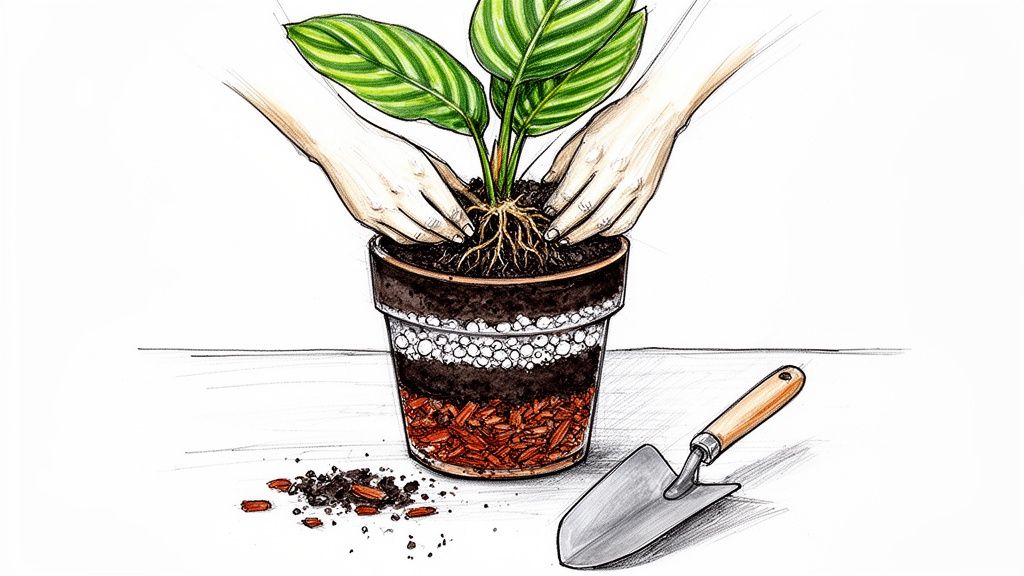
A happy Calathea Medallion starts right from the soil. The potting mix you choose is the absolute foundation for a thriving plant, creating the perfect balance of moisture, nutrients, and air for its delicate root system. Getting this part right is every bit as crucial as nailing its light and water needs.
Think of your plant’s roots like its lungs—they have to be able to breathe. Most standard, off-the-shelf potting mixes are just too dense for a Calathea. They compact over time, trapping water and suffocating the roots, which is a fast track to the dreaded root rot. What you’re aiming for is a soil blend that holds moisture without ever becoming a swamp.
Crafting the Perfect Soil Mix
Mixing your own soil is surprisingly simple and makes a massive difference to your plant's health. The goal is a light, airy, and free-draining blend that still retains enough water to keep those roots hydrated. The best mix for your Calathea Medallion will feel a lot like the rich, loamy floor of its native rainforest home.
Here’s a simple, proven recipe for the ideal Calathea mix:
- High-Quality Potting Mix (2 parts): This acts as the base, providing structure and essential nutrients.
- Perlite (1 part): These little white volcanic rocks are your secret weapon for aeration. They create tiny air pockets in the soil, preventing compaction and letting oxygen flow freely to the roots.
- Orchid Bark (1 part): This chunky material is brilliant for improving drainage. It lets any excess water run straight through while still holding onto a bit of moisture.
Just combine these three ingredients, and you’ve got a custom soil blend that your Calathea will absolutely love. This mix gives you that perfect "well-wrung-out sponge" consistency that these plants crave.
Knowing When It’s Time for a New Home
Repotting shouldn’t be a rigid, yearly schedule. It’s far better to let your plant tell you when it needs an upgrade. Repotting can be a bit stressful for a plant, so it's best to do it only when necessary, ideally during its main growing season in the New Zealand spring or early summer.
Keep an eye out for these tell-tale signs that your Calathea Medallion is feeling a bit cramped:
- Roots Escaping: If you can see roots poking out of the drainage holes, it’s a definite sign it has run out of space.
- Sluggish Growth: Is it spring, but your plant isn’t putting out new leaves? If everything else seems fine, it might be root-bound and struggling to find nutrients.
- Water Rushes Through: When you water, does it seem to pour straight out the bottom? This often means the pot is more roots than soil, and it's time for a new home.
When you do repot, choose a new pot that is only slightly larger—about 3-5 cm wider in diameter. Jumping to a pot that's too big can cause the soil to stay wet for too long, which increases the risk of root rot.
To repot, gently slide the plant out of its current pot and carefully tease apart any tightly wound roots. Pop it into the new pot with your fresh, airy soil mix, give it a light watering, and return it to its usual spot. It might look a little sulky for a few days while it recovers from the move, but it will soon bounce back with fresh energy.
Troubleshooting Common Calathea Problems
Even the most seasoned plant parent will see their Calathea Medallion look a little off from time to time. Don’t panic—it’s not a sign of failure! Think of it as your plant’s way of talking to you, telling you what it needs. This section is your personal plant clinic, here to help you translate those signals and get your Medallion back to its glorious self.
Spotting the signs early is the secret to a quick recovery. By learning to "read" the leaves, you can make simple tweaks that will have your plant looking lush and vibrant again before you know it.
Decoding Leaf Signals
Your plant’s foliage is a brilliant billboard for its health. Crispy, brown edges are probably the most common complaint we hear from Calathea owners here in New Zealand, but yellowing or drooping leaves are just as important to watch out for.
Let's break down what your plant is trying to tell you:
- Crispy Brown Edges or Tips: This almost always points to one of two things: humidity or your water. The air in many Kiwi homes, especially with the heat pump running in winter, is just too dry for these rainforest natives. Tap water, with its chlorine and other minerals, can also cause a build-up in the soil that leads to those burnt-looking tips.
- Yellowing Leaves (Especially Lower Ones): If you spot leaves turning yellow, often feeling a bit soft or mushy, overwatering is the most likely culprit. When the soil stays soggy for too long, the roots can't get any oxygen, and you start seeing the early signs of root rot.
- Drooping or Wilting Leaves: A droopy Calathea Medallion is the classic sign of thirst. This isn't the same as its daily prayer-like movement; this is a more dramatic, sustained wilt. It’s a clear signal that the soil has gone bone dry and the plant can't hold its leaves up.
It's important to distinguish between the natural nyctinastic movement (the daily "praying" motion) and genuine wilting. Wilting is a stress signal, while the daily up-and-down dance is the sign of a healthy, happy plant. A thirsty Calathea will stay droopy day and night until it gets a drink.
Tackling Common Pests
While a healthy Calathea Medallion is pretty tough, a stressed plant can sometimes attract a few unwelcome visitors. The two you’re most likely to encounter are spider mites and fungus gnats.
Spider Mites are tiny arachnids that are almost impossible to see with the naked eye. The first clue is usually fine, silky webbing under the leaves or where the leaf meets the stem. They absolutely love dry conditions, which makes them a common nuisance in heated homes.
To get rid of them:
- Isolate your plant immediately to stop them from spreading to your other green friends.
- Give the whole plant a good rinse under a lukewarm shower. Pay special attention to the undersides of the leaves to physically wash the mites off.
- Wipe every leaf down with a solution of neem oil and a tiny drop of dish soap mixed with water. You'll need to repeat this every 5-7 days until there are no more signs of them.
Fungus Gnats are those annoying little black flies that look a bit like fruit flies buzzing around your pots. They are drawn to consistently moist soil, as it’s the perfect place to lay their eggs. The adult flies are just a nuisance, but their larvae can munch on your plant’s delicate roots. If you see this issue on other prayer plants, our advice in the Calathea Dottie care guide might also come in handy.
To manage them:
- Let the top few centimetres of soil dry out completely between waterings. This makes the soil much less appealing for them.
- Pop some yellow sticky traps in the pot to catch the adult flies and break the life cycle.
- Try "bottom watering" your plant. This keeps the top layer of soil drier, robbing them of their favourite breeding ground.
How to Style and Where to Buy Your Plant
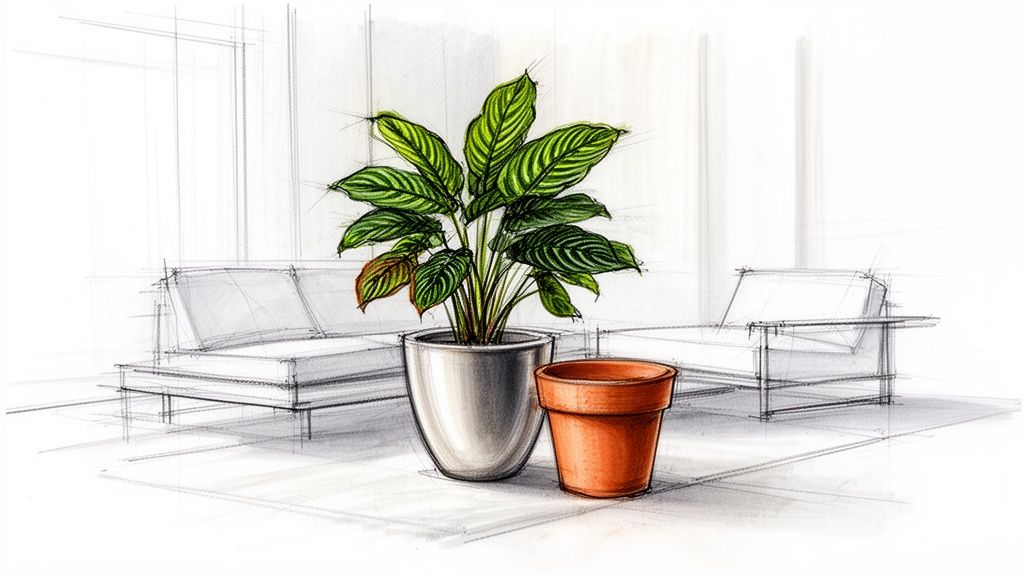
Once you get the hang of its care, the Calathea Medallion is more than just a houseplant—it becomes a living piece of art in your home. Its bold, painterly leaves can elevate any space, acting as a stunning focal point that adds a touch of natural elegance.
Styling this plant is really all about highlighting its incredible foliage. The right pot makes all the difference. A sleek, minimalist pot in a neutral tone like white, grey, or black lets those intricate leaf patterns do all the talking.
On the other hand, an earthy terracotta pot creates a gorgeous contrast, playing up the plant’s lush greens and rich burgundy undersides. It’s a more rustic choice that adds a warm, organic feel to your decor.
Finding the Perfect Placement
Where you place your Calathea Medallion can completely change the atmosphere of a room. Its lush shape and daily leaf movements bring a unique energy to any spot you choose.
Here are a few ideas to show off its beauty:
- Living Room Feature: Pop it on a stylish plant stand or a side table where you can admire its leaves up close. It adds an instant touch of jungle luxe and a calming vibe to your main living space.
- Bedroom Oasis: A Calathea Medallion in the bedroom creates a wonderfully serene feel. Its gentle ‘praying’ motion at night adds a peaceful rhythm to the room, perfect for unwinding.
- Bathroom Spa: If your bathroom gets good, bright, indirect light, it’s the ideal home! The naturally higher humidity will keep your plant happy, turning your bathroom into a spa-like retreat.
How to Choose a Healthy Plant
Bringing home a healthy Calathea Medallion is the first step to success. Here in New Zealand, the indoor plant scene has exploded, with sales jumping by 65% in the last three years. With over 22,000 of these plants shipped across NZ in the first quarter of the year alone, it helps to know what to look for when you’re ready to buy.
Before you commit, give the plant a quick health check. You want to see vibrant, glossy leaves without any brown spots, yellowing, or crispy edges. A happy plant looks full, lush, and well-cared for.
Gently check under the leaves and where they join the stems for any signs of pests, like fine webbing or tiny dots. The soil should feel evenly moist but definitely not waterlogged.
When you're ready to find your perfect match, you can explore our curated selection of healthy, vibrant plants right here at Jungle Story. Check out our stunning Calathea Medallion collection to start your journey with a plant you can trust.
Frequently Asked Questions
Even with the best advice, a few questions always come up when you're getting to know a new plant. Here are the most common ones we get from Calathea Medallion owners around New Zealand, with some quick answers to help you and your plant get along beautifully.
Why Are My Calathea Leaves Turning Brown at the Edges?
This is easily the most frequent issue we see, and it almost always points to one of two things: a lack of humidity or the type of water you're using. Calatheas are jungle floor natives, so they absolutely crave moist air. In many Kiwi homes, especially when the heat pump is running through winter, the air just gets too dry for them.
To fix this, you can:
- Group your Calathea Medallion with other plants. They'll create a little humid microclimate together.
- Pop the pot on a shallow tray filled with pebbles and water.
- For the most consistent results, use a small room humidifier nearby.
On top of that, these plants can be a bit sensitive to the minerals and chemicals found in our tap water. Switching to rainwater or filtered water can make a massive difference and stop those crispy brown tips from appearing on new leaves.
Remember, brown tips are a message, not a failure. Your plant is just asking for a bit more moisture in the air or a cleaner drink. Tweaking these two things is the secret to lush, perfect foliage.
Is This Plant Too Hard for a Beginner?
The Calathea Medallion often gets labelled as an intermediate-level plant, but we reckon a dedicated beginner can absolutely nail it. It’s certainly less forgiving than something like a Snake Plant, but it's a fantastic teacher that will quickly make you a more observant plant parent.
The real key is consistency. If you can provide stable conditions—evenly moist soil that's never soggy, high humidity, and bright, indirect light—it will reward you with stunning growth. Our temperate NZ climate gives you a great head start; your main job will be managing the indoor humidity to keep it happy.
How Often Should I Actually Water My Plant?
It's best to forget a strict schedule. How often you need to water depends entirely on your home's environment, which changes with the seasons. Instead of watering every Tuesday, get into the habit of checking the soil with your finger.
Push your finger about 3-5 cm into the potting mix. If it feels dry at the top but there's still a hint of moisture further down, it's time for a drink. During a warm New Zealand summer, this might be every 5-7 days. In a cool, dark winter, it could be every two weeks or even longer. The goal is to keep the soil consistently moist, like a wrung-out sponge—never let it dry out completely or sit in a puddle.
Ready to bring this living work of art into your home? At Jungle Story, we have a beautiful selection of healthy, vibrant Calathea Medallions ready for their new home. Find your perfect plant with us today!