
There's a reason the Calathea orbifolia has captured the hearts of so many Kiwis—its magnificent, silver-striped leaves are a genuine showstopper. This tropical beauty brings a slice of the rainforest right into your home, captivating everyone with its bold patterns and the curious way it moves throughout the day.
Meet The Calathea Orbifolia: An Indoor Icon

The Calathea orbifolia’s story starts on the forest floors of Bolivia, where it flourishes in the dappled sunlight filtering through a dense jungle canopy. Its large, round leaves are a work of art, adorned with elegant, silvery-green stripes that look almost as if they've been hand-painted.
But its beauty is more than just static. As a member of the 'prayer plant' family, the Orbifolia has a fascinating daily rhythm. You'll notice its leaves rise and fold upwards at night, much like hands in prayer, before lowering again with the morning sun. This movement, known as nyctinasty, brings a dynamic, living quality to your indoor plant collection.
From Prohibited Plant To Kiwi Favourite
For a long time, getting your hands on one of these plants in New Zealand wasn't straightforward. For over a decade, the Calathea orbifolia was tangled up in evolving houseplant regulations. Before 2021, you could have technically been breaking the law by owning or selling one without an official thumbs-up.
That all changed when the New Zealand Plant Producers Inc (NZPPI) successfully applied for EPA approval, officially rolling out the welcome mat. This move sent sales soaring, with commercial growers ramping up availability by an estimated 40-50% in just two years. You can read the full story about its journey to legal status in NZ.
Now widely and legally available, the Calathea orbifolia has cemented its place as a must-have for Kiwi plant lovers, celebrated for bringing that lush, tropical vibe to homes all over the country.
This guide is here to give you everything you need to help your Calathea orbifolia thrive. We’ll cover it all, from mastering its specific needs to troubleshooting common issues, with tips tailored for New Zealand’s unique indoor growing conditions.
Creating The Perfect Rainforest Environment At Home
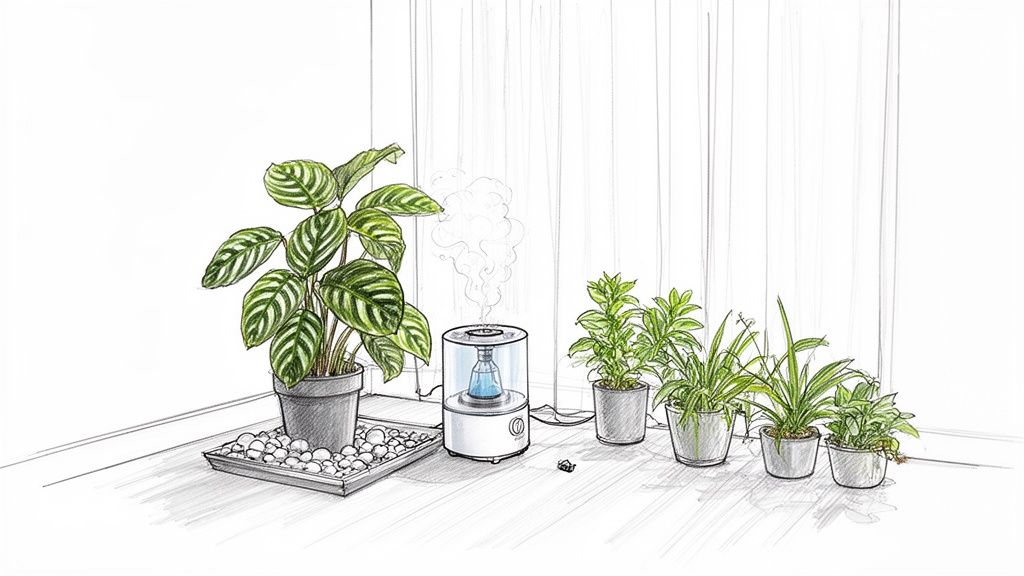
If you want your Calathea orbifolia to really flourish, the trick is to think like a rainforest. Your goal is to recreate its native home on the Bolivian forest floor right here in New Zealand. This all comes down to getting three things just right: light, water, and that all-important humidity. Get this trio working in harmony, and you'll see your plant go from just surviving to truly thriving.
This Bolivian beauty has completely captured the hearts of Kiwi plant lovers, quickly becoming a best-seller for homes and offices across the country. And it’s easy to see why. With those incredible silver-striped leaves that can grow up to a stunning 30-40cm wide, it’s the perfect statement piece for those shadier spots many of our homes have.
To give you a quick snapshot of its needs throughout our distinct seasons, here's a handy guide.
Calathea Orbifolia At-A-Glance Care For NZ Seasons
| Care Aspect | Summer (Dec-Feb) | Winter (Jun-Aug) |
|---|---|---|
| Light | Bright, indirect light. Protect from harsh afternoon sun. | Can be moved closer to a window to catch weaker light. |
| Watering | Water when top 2-3 cm of soil is dry, likely once a week. | Reduce watering; let soil dry out more between drinks. |
| Humidity | Maintain high humidity (50%+). Mist regularly on hot days. | Crucial! Combat dry air from heaters with a humidifier. |
| Fertiliser | Feed with a balanced liquid fertiliser every 4-6 weeks. | Pause feeding until spring growth begins. |
This table is a great starting point, but always remember to observe your plant—it will tell you what it needs! Now, let's dive deeper into each of these care elements.
Decoding Bright Indirect Light
"Bright, indirect light" is one of those phrases we see everywhere, but what does it actually mean? Just picture the light filtering down through a thick jungle canopy. That's the gentle, dappled sunshine your Calathea orbifolia craves.
The intense, direct New Zealand sun, especially in summer, is way too much for its delicate leaves. It will scorch them in a heartbeat, leaving you with sad brown patches and crispy edges.
So, where’s the sweet spot in your home?
- Near a window: Try placing it a metre or two back from a north or east-facing window. This gives it brightness without the burn.
- Sheer curtains are your friend: A window dressed with a sheer curtain is perfect. It acts like a diffuser, softening any harsh rays.
- Naturally bright rooms: Any room that gets plenty of light but no direct sunbeams hitting the plant is an excellent choice.
Here's a simple trick: hold your hand up in the spot you're considering. If it casts a soft, slightly blurry shadow, the light is probably perfect. A sharp, well-defined shadow means it’s too direct. For more ideas on plants that love these conditions, check out our guide to the best low-light houseplants for Kiwi homes.
Mastering The Art Of Watering
Watering is a real balancing act. Give it too much, and you risk the dreaded root rot. Too little, and you’ll get droopy, sad-looking leaves. The secret is to ditch a rigid schedule and check the soil instead.
Gently push your finger about two centimetres into the topsoil. If it feels dry to the touch, it's time for a drink. If you feel any moisture, hold off for another day or two.
When you do water, be thorough. Let the water run all the way through until it drains from the bottom of the pot. Just be sure to tip out any excess water sitting in the saucer afterwards—no plant likes wet feet!
Pro Tip: Calatheas can be a bit fussy about tap water. The minerals and chemicals can sometimes cause brown, crispy leaf tips. To keep your Orbifolia looking its absolute best, try using rainwater or filtered water when you can.
The Secret To Lush Leaves Is Humidity
This is it. The most critical, and most often forgotten, part of Calathea care. Our homes, especially with heaters and heat pumps blasting during a Kiwi winter, are usually far too dry for these tropical divas. Low humidity is the number one culprit behind those frustrating crispy brown edges on the leaves.
For your Calathea orbifolia to be truly happy, it needs the air to have a humidity level above 50%. Getting a handle on the best humidity level for home in general can make a massive difference for your plants and your own comfort.
Here are three easy ways you can boost the humidity around your plant:
- Group Your Plants: Plants naturally release a little moisture into the air. By grouping a few of them together, you create a wonderfully humid little microclimate.
- Use a Pebble Tray: Find a shallow tray or saucer, fill it with a layer of pebbles, and add water until it’s just below the top of the stones. Place your plant pot on top. As the water evaporates, it will humidify the air right where your plant needs it.
- Mist It Up: A light misting with a spray bottle a few times a week gives a nice, temporary humidity boost, just like a passing rainforest shower.
Soil, Fertiliser, And Repotting For Long-Term Health
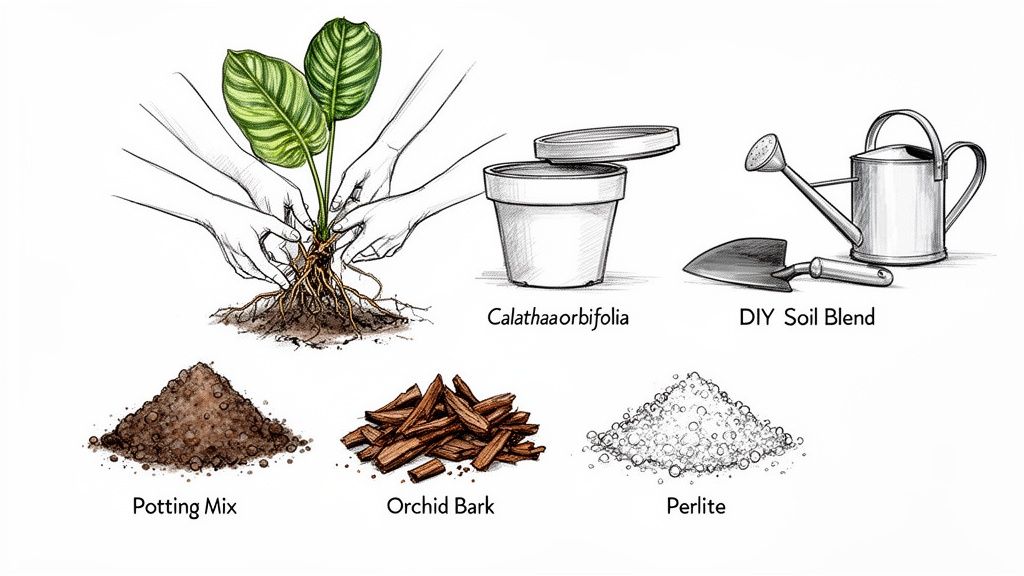
So, you've nailed the everyday environment for your Calathea. Brilliant. Now let's get into the foundations that will keep it happy for the long haul. Getting the soil, feeding schedule, and repotting rhythm right is how you get a Calathea orbifolia that doesn't just survive, but truly flourishes. These are the things that keep its root system healthy, ensuring it has the perfect blend of moisture, air, and nutrients to support those incredible leaves.
Crafting The Perfect Soil Mix
The real secret to a happy Calathea orbifolia is all in the soil. This plant needs a potting mix that can do a bit of a balancing act: it has to hold enough moisture to stay consistently damp, but drain well enough to stop the roots from getting waterlogged. Your standard, off-the-shelf potting mix is usually a bit too dense for the job.
Whipping up your own blend is the best way to get this balance just right. Here’s a simple recipe that’s never let me down:
- 60% Premium Potting Mix: This is your base, giving the plant nutrients and structure to hold onto.
- 20% Perlite: Those little white volcanic rocks are fantastic for creating air pockets, which massively improves drainage.
- 20% Orchid Bark: The chunky bits of bark stop the soil from compacting and give the roots even more room to breathe.
Mix these three together and you’ll have a light, airy medium that feels a lot like the rich, loamy floor of a rainforest—exactly what your Calathea is looking for. If you want to dive deeper into this, check out our guide on crafting your own indoor potting mix.
Feeding Your Calathea Orbifolia
Think of fertiliser as a seasonal vitamin boost for your plant. When it's actively growing, your Calathea will be grateful for the extra nutrients to push out all that new foliage. Here in New Zealand, that active season runs right from spring through to autumn.
During these warmer months, I recommend feeding your plant with a balanced liquid fertiliser every four to six weeks. Just make sure you dilute it to half the strength recommended on the bottle—their roots can be a bit sensitive and you don't want to burn them.
Knowing when not to fertilise is just as important. Come winter (around June to August), your plant will slow right down and go into a dormant phase. It's resting. Continuing to feed it can actually do more harm than good, so it’s best to stop in autumn and only start up again when you spot the first signs of new growth in spring.
Knowing When And How To Repot
Sooner or later, your thriving plant is going to need a bigger home. Repotting a Calathea orbifolia isn't tricky, but knowing the signs and following a few key steps will make the whole process much less stressful for the plant.
You’ll know it’s time for a new pot when you see these classic signs:
- Roots are poking out of the drainage holes at the bottom.
- The plant is literally lifting itself up and out of the pot.
- Water rushes straight through when you water it—a sure sign the pot is more root than soil.
This usually happens every 18 to 24 months. When you do repot, only go up one pot size, which is about 2-4 cm wider in diameter. A pot that's too big will hold onto too much water in the excess soil, which is a one-way ticket to root rot. Just gently tease out the old roots, settle the plant into its new home with your fresh potting mix, and give it a good, thorough watering.
Solving Common Calathea Orbifolia Problems
Even the most attentive plant parent will see their Calathea orbifolia have an off day. Don't worry if you spot a problem; these plants are famously communicative. The real trick is learning to read their signals so you can step in before a small issue becomes a big one.
Think of those gorgeous leaves as a daily health report. A slight droop, a yellowing edge, or a crispy tip are all just little messages telling you that something in its environment needs a tweak. A quick and confident response will keep your plant thriving.
Diagnosing Common Leaf Issues
Almost every question we get about Calathea orbifolia comes back to its leaves. Brown, crispy edges are hands down the number one complaint, and they can be incredibly frustrating to see on such a beautiful plant.
This is the classic sign of low humidity. The air in most Kiwi homes, especially with a heater or heat pump running through winter, is just far too dry for this rainforest native. The other major culprit is minerals in our tap water, which can build up in the soil and burn the plant’s delicate leaf tips.
Just remember, those brown tips won't ever turn green again. The goal is to stop them from spreading. Focus on boosting humidity with a pebble tray or regular misting, and try switching to rainwater or filtered water if you suspect your tap water is the problem.
Yellowing leaves are another common SOS signal. While it’s normal for one or two old, lower leaves to yellow and die off over time, if it’s happening across the plant, that's a red flag. This almost always points to overwatering and the first signs of root rot. Always, always check that the top few centimetres of soil are dry before you even think about grabbing the watering can.
Tackling Unwanted Pests
Because Calathea orbifolia loves a humid environment, it can sometimes attract pests that enjoy the same conditions. Ironically, the most common pest—spider mites—actually shows up when the air is too dry. These tiny troublemakers are hard to see until they've spun their fine, web-like nests on the undersides of the leaves.
If you spot them, here's how to fight back:
- Wipe them out: Grab a damp cloth and gently wipe down every single leaf, top and bottom.
- Bring in the big guns: A gentle, store-bought insecticidal soap or a neem oil solution is a safe and effective way to deal with an infestation.
- Make it humid: Spider mites absolutely hate moisture, so cranking up the humidity is a great way to show them they're not welcome.
To help you figure out what's going on at a glance, we've put together this quick diagnostic table.
Common Calathea Orbifolia Issues And Solutions
| Symptom | Likely Cause | Solution |
|---|---|---|
| Brown, Crispy Leaf Edges | Low humidity or minerals in tap water. | Increase humidity with a pebble tray, humidifier, or misting. Use rainwater or filtered water. |
| Yellowing Leaves | Overwatering leading to potential root rot. | Allow the top layer of soil to dry out completely before watering again. Ensure good drainage. |
| Drooping or Wilting Leaves | Underwatering or extreme temperature fluctuations. | Check soil moisture and water thoroughly if dry. Move the plant away from drafts or heat sources. |
| Faded Leaf Colour | Too much direct sunlight. | Move the plant to a spot with bright, indirect light to prevent leaf scorch and colour loss. |
Hopefully, this chart helps you quickly pinpoint the problem and get your Calathea back to looking its best. A little bit of observation goes a long way
Styling And Propagating Your Calathea Orbifolia
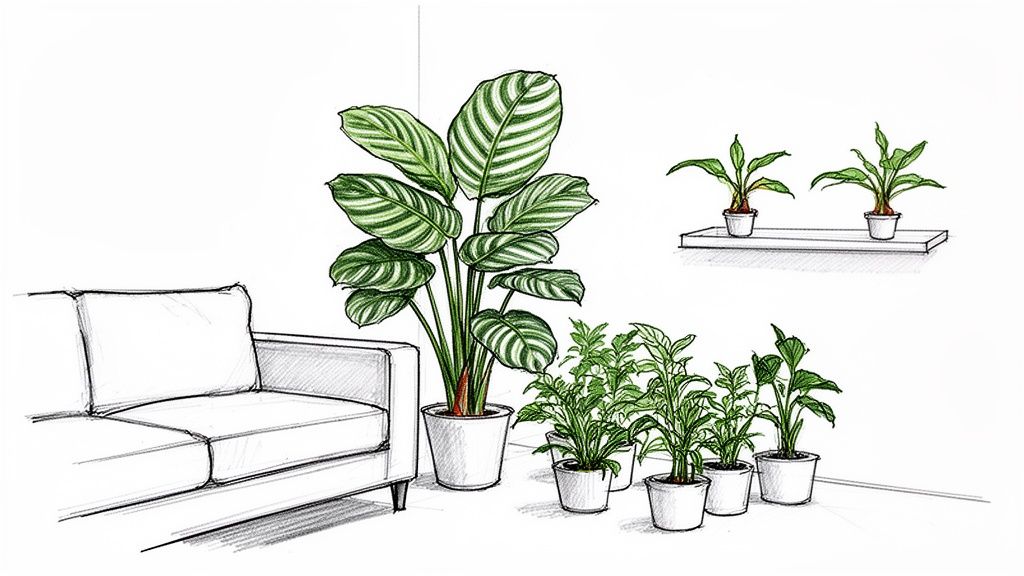
With its bold, painterly leaves, the Calathea orbifolia isn't just a plant; it's a living piece of art. Styling this beauty is all about letting that incredible foliage take centre stage. Its sheer size and striking pattern make it a perfect statement piece, easily anchoring a living room corner or breathing life into an empty hallway.
Because it craves moisture, your plant will feel right at home in a bathroom or kitchen. The steam from showers and cooking naturally boosts the humidity, creating the perfect environment for it to thrive. It's a win-win: your Orbifolia is happy, and you get a touch of lush, spa-like greenery in these often-overlooked spaces.
Creating A Cohesive Indoor Jungle
The Calathea orbifolia loves company, especially from plants that enjoy similar conditions. Grouping it with other humidity-loving friends creates a stunning visual display and, more importantly, a beneficial microclimate where they can all flourish together.
Consider pairing it with these companions:
- Peace Lilies (Spathiphyllum): They share a love for indirect light and consistent moisture, and their deep green leaves create a beautiful contrast with the Orbifolia’s silvery stripes.
- Ferns (like Boston or Maidenhair): These are classic rainforest floor dwellers that absolutely thrive in the high humidity your Calathea needs.
- Other Calatheas or Marantas: Nothing beats grouping different 'prayer plants' together. You get a dynamic collection of varied patterns and colours that all follow the same simple care routine.
How To Propagate By Division
One of the most rewarding parts of owning a mature Calathea orbifolia is the ability to create new plants for free. The best and safest way to do this is propagation by division, which is easiest to do during its regular repotting in spring.
Follow these simple steps to turn one plant into many:
- Gently Remove the Plant: Carefully ease the entire plant out of its pot. It helps to gently shake off the excess soil so you can get a clear look at the root system and rhizomes.
- Identify the Divisions: Look for natural clumps or sections in the root ball. A healthy, viable division will have its own set of roots and at least two or three healthy leaves attached.
- Carefully Separate: Using your hands, gently tease the sections apart. If they are tightly bound, you can use a clean, sharp knife to make a clean cut through the rhizomes connecting them.
- Pot Up Your New Plants: Pop each new division into its own container with a fresh, suitable potting mix. Make sure the pot is just big enough to comfortably house the new root system—not too big!
- Provide Aftercare: Water your new plants well and place them in a spot with medium, indirect light and high humidity. This helps them recover from the shock and settle into their new homes.
This process can feel a bit daunting at first, but Calatheas are surprisingly resilient. For an extra boost, you could dip the newly separated roots into a rooting hormone to encourage faster establishment. You can learn more about how to effectively use rooting hormone in New Zealand to give your new plants the best possible start.
A Healthy Start: Your Plant Arrival Guide
There's nothing quite like the excitement of bringing a new Calathea orbifolia into your home. Giving it the right start is your first step towards a long and happy life together, and knowing what to look for makes all the difference, whether you're picking one out yourself or unboxing a delivery from us.
So, what does a healthy plant look like? You want to see vibrant, turgid leaves that feel firm to the touch, not limp or wilting. Look for lush, consistent colouring without any significant brown spots, yellowing patches, or crispy edges. It’s always a good idea to peek at the undersides of the leaves and the soil surface for any tell-tale signs of pests, like fine webbing or tiny insects.
Your Plant’s First Few Days At Home
When your new plant arrives, remember it’s had quite a journey. It needs a moment to breathe and adjust to its new surroundings. This process, called acclimatisation, is absolutely crucial for preventing shock and helping it settle in.
Resist the temptation to repot your new Calathea orbifolia straight away. It's already dealing with a brand-new environment, and adding the stress of repotting is just too much at once. Give it at least a few weeks to get its bearings before even thinking about a new pot.
Here’s a simple checklist to follow on arrival:
- Unbox with care: Open the package gently. Be mindful of those beautiful, delicate leaves and stems as you unpack.
- Find a temporary spot: Pop it in a location with medium, indirect light and good humidity. Steer clear of any drafts or direct sun for now.
- Hold the water: The soil will likely be moist from its travels. Check it with your finger; only water if the top few centimetres feel dry to the touch.
- Quarantine is key: We can’t stress this enough. Keep your new plant separate from your existing collection for a week or two. This is the best way to ensure any sneaky, hidden pests don’t get a chance to spread.
Following these simple steps will help your new plant settle in smoothly, building your confidence as a plant parent from day one.
Common Questions Answered
Here are a few quick answers to the questions we get asked most about looking after a Calathea orbifolia here in New Zealand. Think of this as a little extra guidance for those common head-scratchers, helping you feel totally at ease with your gorgeous new plant.
Is Calathea Orbifolia Toxic To Pets?
Great news for all you animal lovers out there! The Calathea orbifolia is considered non-toxic to both cats and dogs. This makes it a perfectly safe and stunning addition to homes with curious furry family members, so you can enjoy those magnificent leaves without a worry in the world.
Why Has My Plant Stopped Praying?
This famous daily movement, where the leaves rise and fall, is a natural rhythm called nyctinasty, and it’s all tied to the plant's day-and-night light cycle. If you've noticed your Calathea orbifolia has stopped its daily "prayer," it's usually a hint that its lighting is a bit off. The first thing to check is that it’s getting consistent, bright indirect light during the day, followed by proper darkness at night.
Keep in mind that major stress can also interrupt this beautiful routine. Things like severe underwatering, a waterlogged pot, or a sudden cold snap can cause the plant to halt its movements. If the light seems fine, have a quick check of its other core conditions.
Can I Use New Zealand Tap Water?
This really comes down to where you live and what your local water supply is like. Calatheas are well-known for being sensitive to the chlorine, fluoride, and other minerals often present in tap water. These are usually the culprits behind those frustrating brown, crispy edges on the leaves.
For best results, we always recommend playing it safe with rainwater or distilled water. If you have to use tap water, a good trick is to fill your watering can and let it sit out overnight. This gives some of the chlorine a chance to evaporate, making it a bit kinder to your plant’s delicate roots.
Ready to bring this rainforest icon into your home? Find the perfect Calathea orbifolia and all the care essentials you need right here at Jungle Story. Shop our collection now!