
Fancy harvesting your very own 'citrus caviar' straight from your Kiwi backyard? It’s not just a dream. You can absolutely grow a thriving finger lime tree in NZ, whether you're in the balmy North or the cooler spots down South. This unique Aussie native is quickly becoming a darling for gardeners and foodies all over the country, and I'm here to show you exactly how to get it right.
So, Why Are Finger Limes NZ's Next Big Thing?

The finger lime, or Citrus australasica if you want to get technical, is so much more than just a piece of fruit—it's a whole culinary experience. Hailing from the subtropical rainforests of Australia, these small, sausage-shaped citrus are packed with tiny, jewel-like pearls that burst in your mouth with a zesty explosion. It’s this incredible texture that has earned them the very fitting nickname ‘citrus caviar’.
But this captivating fruit is no longer reserved for high-end restaurant kitchens. Passionate gardeners across Aotearoa are discovering that growing a finger lime tree is a totally doable and incredibly satisfying project. With a bit of know-how, this exotic-looking plant can adapt beautifully to many of our local climates.
What to Expect on the Growth Journey in New Zealand
Before you rush out to the garden centre, one of the first things to get your head around is the need for patience and choosing the right plant. Growing finger limes here is still a relatively new game, and local nurseries are focused on cracking the code to speed up their naturally slow growth.
A tree grown from a simple seed can take up to a staggering 15 years to mature and give you any fruit. For the average home gardener hoping for a harvest this decade, that's just not practical.
This is where a bit of clever horticultural magic comes in. To slash that waiting time, commercial plants are grafted onto more vigorous citrus rootstocks. Here in New Zealand, that usually means using proven performers like Trifoliata or the pioneering Flying Dragon rootstock. This simple trick fast-forwards the fruiting timeline significantly, with grafted trees often producing a harvest in just three to five years. You can learn more about these innovative cultivation techniques and how Kiwi growers are making it happen.
For a quick overview, here's what your finger lime will need to feel at home in your garden.
Finger Lime At a Glance for Kiwi Gardeners
| Growth Aspect | NZ-Specific Recommendation |
|---|---|
| Climate | Adapts from subtropical Northland to cooler areas with frost protection. |
| Sunlight | Needs a full sun position, at least 6-8 hours of direct sunlight per day. |
| Soil | Free-draining is non-negotiable. Use a quality citrus mix. |
| Watering | Water regularly, especially when young, but let the soil dry slightly between waterings. |
| Frost | Young trees are frost-tender. Protect them or bring pots indoors over winter. |
| Container Growing | Excellent choice for pots, allowing you to move it for winter shelter. |
Ultimately, with the right plant and a little care, you'll be well on your way to enjoying your own homegrown citrus caviar.
Why They Thrive in Kiwi Backyards
So, what makes the finger lime such a great match for New Zealand gardens? It comes down to a few key traits that make them surprisingly easy-going:
- Climate Versatility: While they're subtropical at heart, many finger lime varieties—especially those grafted onto cold-hardy rootstocks—can handle the light frosts common in many parts of the country.
- Perfect for Pots: Their relatively compact size makes them fantastic candidates for container gardening. This is a huge win for those in cooler regions, as you can simply move the pot to a sheltered porch or into a greenhouse during the harshest winter weather.
- A Taste of Something New: That tangy, vibrant flavour brings a whole new dimension to Kiwi cuisine. It's the perfect partner for our world-class seafood, summer salads, and refreshing drinks.
This guide will walk you through every step of the journey, from picking the perfect plant to the thrill of harvesting your very first crop.
Choosing the Best Finger Lime Variety for Your Garden

The secret to a fantastic harvest starts long before you even pick up a spade. Success really begins at the garden centre. Choosing the right plant can be the difference between a thriving, fruit-laden tree and years of frustration. When you're looking for a finger lime tree in NZ, it’s about more than just grabbing the healthiest-looking one; it's about matching a variety to your garden's unique conditions and, of course, your own tastes.
First up, let’s talk about colour and flavour, because this is where the fun begins. Finger limes aren't a one-size-fits-all fruit. Their pulp, often called 'citrus caviar', comes in a stunning array of colours, each with its own subtle taste. You'll find varieties with vibrant emerald-green pearls that deliver that classic, zesty lime punch—perfect for dressing up seafood or adding a kick to a cocktail. Others might have beautiful blush-pink or deep ruby-red vesicles, which tend to be a little sweeter and more aromatic, making them incredible in desserts or salads.
When you're browsing, have a good look at the plant tags. Nurseries around New Zealand are getting better at offering a great selection of named cultivars. Don't be shy about asking the staff for their recommendations based on the colour and flavour profile you're after.
Why Grafted Trees Are a Must-Have
While the fruit colour is exciting, the single most important detail to look for on any plant tag is the word 'grafted'. For the home gardener, this is pretty much non-negotiable. A grafted tree is basically two plants fused into one. The top part (the ‘scion’) is the finger lime variety you actually want to eat, while the bottom part (the ‘rootstock’) is a different, much tougher citrus variety.
Choosing a grafted tree is the single most important decision you'll make. It drastically reduces the time to your first harvest from a potential 15 years for a seed-grown tree down to just 2-4 years.
This clever horticultural partnership gives your finger lime a massive head start in life. The rootstock is specifically chosen for its vigour, its resistance to disease, and—crucially for many of us Kiwis—its ability to handle colder temperatures. It acts like the engine of the plant, driving strong, resilient growth that a finger lime's own root system just can't manage on its own.
Understanding Rootstocks: The Secret to NZ Success
Here in New Zealand, one of the most common and reliable rootstocks you’ll come across is called 'Flying Dragon'. This particular variety is a total game-changer, especially if you're gardening in one of the cooler parts of the country. 'Flying Dragon' is a type of Trifoliata orange (Poncirus trifoliata), which is famous for its incredible cold-hardiness.
By grafting a subtropical finger lime onto this tough-as-nails base, growers have created a plant that can handle light frosts and thrive in climates that would otherwise be completely unsuitable. It’s what makes growing a healthy finger lime tree in NZ possible, from a warm Auckland patio right down to a sheltered spot in Christchurch.
Here’s a quick look at how the two options stack up:
| Feature | Grafted Finger Lime Tree | Seed-Grown Finger Lime Tree |
|---|---|---|
| Time to Fruit | 2-4 years | Up to 15 years |
| Cold Tolerance | Good, especially on 'Flying Dragon' rootstock. | Poor, very sensitive to frost. |
| Vigour & Growth | Strong and reliable, driven by the rootstock. | Very slow and often weak. |
| Disease Resistance | Enhanced, inherits resistance from the rootstock. | Susceptible to common soil diseases. |
Ultimately, investing in a grafted tree means you're investing in a faster, healthier, and far more resilient plant. While you're at the garden centre, our guide to other fruit trees that grow well in NZ might also be handy for planning the rest of your home orchard. When you buy your plant, remember you're not just buying a finger lime; you're buying a carefully engineered system designed for success in our unique Kiwi conditions.
How to Plant Your Finger Lime Tree for Success

Getting your finger lime in the ground correctly is more than just digging a hole; it’s about setting the stage for years of healthy growth and incredible harvests. The decisions you make on planting day—where you put it, how you prep the soil—will echo through the life of your tree. I've tailored this process specifically for our New Zealand conditions to give your tree the absolute best start.
First up, you need to scout the perfect location in your own garden. This is a balancing act. At its core, the finger lime is a subtropical plant, which means it’s a total sun-worshipper. It needs a spot that gets a solid 6-8 hours of direct sun each day. Take a moment to watch how the sun moves across your property during the day and think about the seasons.
A north-facing spot is the gold standard here in NZ, offering the most light and warmth. But sun is only half the story. You also have to shield your young tree from its greatest nemeses: bitter southerly winds and sharp frosts. Finding a sheltered nook against a fence, wall, or tucked in with other larger shrubs can create a cosy microclimate where it will truly flourish.
Preparing the Perfect Soil
If there's one thing finger limes are fussy about, it's their feet. They simply cannot tolerate wet, boggy soil, making drainage the single most important factor for success. Most Kiwi backyards, whether you're on heavy clay or sandy loam, will need a bit of work to create the perfect home for your finger lime tree in NZ.
The aim is to create a rich, free-draining soil with a slightly acidic pH, ideally somewhere between 5.0 and 6.5. This mimics the loose, loamy earth of their native rainforest habitat.
- For Planting in the Ground: Dig a hole twice as wide and about the same depth as the plant's root ball. Don't just chuck the old soil back in. Instead, create a special blend by mixing your garden soil with a high-quality citrus and fruit tree planting mix. A few spades of compost or well-rotted manure will add fantastic organic matter, boosting both nutrients and drainage.
- For Heavy Clay Soils: If you're dealing with heavy clay, breaking it up is non-negotiable. Adding gypsum can work wonders on the soil structure. An even better solution is to build a raised garden bed or mound up the soil, which physically lifts the root system out of the soggy ground.
Here's a golden rule to remember: The hole you dig isn't just a space for the plant. It's your one chance to create the perfect long-term environment for its roots. Good prep now saves you a world of headaches later on.
The Planting Process Step-By-Step
With your spot picked and your soil prepped, it's time for the big moment. The ideal time to plant a finger lime in New Zealand is during spring, from September onwards, as soon as the danger of a hard frost has cleared. This gives your tree the whole warm growing season to settle in and establish a strong root system before winter arrives.
Follow these steps for a perfect planting:
- Ease It Out: Carefully slide the tree from its nursery pot. If the roots are all tangled and coiled (a sign of being root-bound), gently tease them apart. This encourages them to spread out into their new home.
- Get the Height Right: Place the tree in the middle of your hole. This is critical: make sure the top of the root ball is level with, or even a smidge higher than, the surrounding ground. Planting too deep is a common mistake and can lead to collar rot right at the base of the trunk.
- Backfill and Settle: Fill the hole with your prepared soil mix, gently firming it down around the root ball as you go to get rid of any big air pockets.
- Water In Thoroughly: Give your new tree a really deep, long drink of water. This is crucial for settling the soil properly around the roots and giving it a boost of hydration.
- Stake for Support: A stake is a young tree's best friend, especially for the taller, grafted varieties. It offers stability against the wind, preventing the new roots from being rocked around and helping the trunk grow straight and strong.
A Year of Finger Lime Care in New Zealand
Getting your finger lime settled in is one thing, but keeping it happy and productive year-round is where the real magic happens. Think of it less as a set of chores and more as a rhythm you get into with your tree, following New Zealand’s unique seasons. Master these simple, year-round tasks, and your finger lime tree in NZ will go from being a quirky novelty to a stunning, productive feature in your garden.
Watering Your Finger Lime Tree Correctly
Getting the watering right is probably the biggest hurdle for new citrus growers. It’s a classic mistake. Finger limes come from a rainforest environment, but ironically, they absolutely hate having 'wet feet'. Your goal is to keep the soil consistently moist but never soggy—a fine balance, especially with our country’s often unpredictable weather.
For a brand-new tree, you’ll want to water it deeply and regularly during its first year. This is crucial for helping it establish a strong, deep root system. That means giving it a really good soak once or twice a week, particularly during those dry spells in summer. Once it's established, it becomes surprisingly drought-tolerant. Still, for the best fruit, you’ll want to keep up a regular watering routine, especially during the critical flowering and fruiting periods in spring and summer.
Not sure when to water? Just poke your finger about 5 cm into the soil. If it feels dry down there, it’s time to give it a drink. If you’re growing in a pot, you'll need to do this check more often, maybe every few days in the peak of summer, as pots dry out much faster.
A Simple Feeding Schedule for Kiwi Gardeners
Finger limes aren’t greedy feeders, but a well-timed meal gives them the energy they need for lush growth and a bumper crop of that citrus caviar. A good quality, balanced citrus fertiliser from your local garden centre has all the right stuff.
The real trick is to time the feeding with the tree's natural growth spurts. Feed your tree from early spring (September) through to late summer (early March) to give it nutrients right when it needs them most.
Here’s a simple schedule that works a treat:
- Early Spring (September): Give it the first feed as the weather warms up and the tree starts to wake up for spring.
- Early Summer (December): A second application helps fuel the tree as it develops flowers and starts setting its fruit.
- Late Summer (February/Early March): One last feed for the season helps the tree ripen its current fruit and build up energy reserves for the winter ahead.
Here's a crucial tip: when your tree is fruiting, wait until the tiny fruit are over 1cm long before you fertilise. Feeding them when they're too small can sometimes shock the tree into dropping its precious cargo.
The Art of Pruning Your Finger Lime Tree
When it comes to pruning finger limes, less is definitely more. It's not about aggressive shaping; it's about maintaining the tree's health and structure. These trees naturally grow into a pretty tidy shape all on their own, so a hard annual prune isn't needed and can actually set you back. Remember, the fruit grows on last season's wood, so hacking too much off means a smaller harvest next year.
The best time for a light trim is in autumn, right after you’ve picked the last of the fruit. This timing means you won't accidentally snip off the branches that will give you next season's crop.
Focus your secateurs on these key areas:
- The Three Ds: Always start by removing any wood that is Dead, Damaged, or Diseased. It’s the golden rule of good plant hygiene.
- Airflow: Thin out any branches that are crossing over each other or getting too crowded in the centre of the tree. Good air circulation is your best defence against fungal problems.
- Rootstock Suckers: If your tree is grafted (look for the lumpy join near the base of the trunk), keep a sharp eye out for any shoots growing from below that graft. These are suckers from the rootstock and they will steal energy from your finger lime. Snip them off as soon as you see them.
Surviving a Cold Kiwi Winter
The final piece of the puzzle is getting your tree through the winter, especially if you’re gardening in the frost-prone central North Island or most of the South Island. Young trees are the most vulnerable.
For trees in the ground, your best bet is to drape them with frost cloth on those clear, cold nights. Make sure the cloth reaches all the way to the ground to trap the radiant heat rising from the soil. If your tree is in a pot, the solution is even easier: just move it! A sheltered spot under a porch, against a warm, north-facing wall, or even inside a greenhouse will keep it safe and sound.
While your tree is taking a winter holiday indoors, why not try another gardening project? Our guide on how to create a terrarium is a great way to keep your green thumb busy. By following these simple steps through the seasons, you’ll be setting your finger lime up for a long, healthy, and very fruitful life.
Harvesting and Using Your Homegrown Citrus Caviar
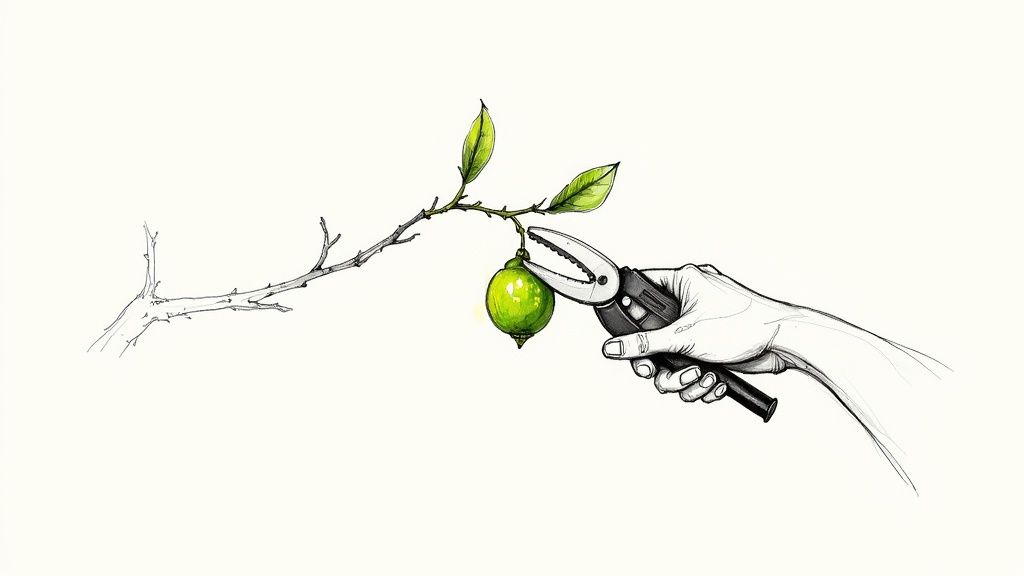
This is the moment all your patience pays off. After a few years of nurturing your tree with careful watering and feeding, it’s finally time to enjoy the fruits of your labour. So, how can you tell when a finger lime is perfectly ripe and ready to pick? Unlike a lemon that shouts its readiness with a vibrant yellow, finger limes are a bit more subtle.
The main harvest window for a finger lime tree in NZ typically runs from late autumn into early winter, so think May through to July. Don't just watch the calendar, though. The best way to know for sure is to get hands-on. A ripe finger lime will feel plump and full, and it should come away from the stem with just a gentle twist. If you have to give it a proper yank, it needs more time.
Signs of a Perfect Harvest
Keep an eye out for fruit that has reached its mature colour—whether that’s a deep green, rich purple, or even a dark brown, depending on the variety you're growing. The skin should be firm but have a slight give when you squeeze it gently. A rock-hard fruit isn’t ready yet.
One of the biggest clues is when the fruit starts to fall from the tree on its own. If you spot a few perfect-looking finger limes on the ground, it’s a great sign that the others on the tree are ready for picking.
Remember, the fruit grows on last season's wood, so be gentle during the harvest to ensure you get another great crop next year. Using a pair of snips gives you a clean cut, but you can also carefully twist them off by hand.
From Tree to Table: Your Citrus Caviar
Once your harvest is gathered, the real fun starts. Slice a finger lime open and you’ll find the treasure inside: tiny, jewel-like vesicles that burst with an intense, zesty flavour. This is your very own 'citrus caviar', and its uses are nearly endless.
Getting the caviar out is easy. Just slice the fruit in half and squeeze it gently from the bottom up, almost like a tiny tube of toothpaste. The little pearls will spill out, ready to add a pop to any dish.
Here are a few classic Kiwi pairings to get you started:
- Seafood's Best Mate: Spoon the pearls over freshly shucked oysters or seared scallops. That bright, acidic pop is a perfect match for rich seafood.
- Next-Level Salads: Scatter them through a summer salad for a surprising burst of flavour and texture. They’re fantastic with avocado and feta.
- A Better G&T: Drop a spoonful into your gin and tonic. The pearls float and fizz, slowly infusing your drink with fresh lime.
- Dessert With a Twist: Fold them through a creamy cheesecake filling or use them to top a pavlova for a modern, zesty finish.
While still a pretty niche crop in New Zealand, local interest is growing fast. Statistics are still emerging, but as more data is collected, experts believe plantings could increase significantly over the next decade, driven by home cooks and chefs alike. You can explore more about the potential of this crop from international symposiums.
One of the best things about finger limes is how well they freeze. You can freeze the fruit whole or squeeze the pearls out into a small container. It’s a brilliant way to keep that taste of summer on hand for months. If you enjoy growing your own food, you might also like our guide to some great indoor houseplants, some of which can also be edible.
Troubleshooting Common Finger Lime Problems in NZ
Even the most loved finger lime can throw you a curveball now and then. But don't panic—most of the common issues are surprisingly easy to sort out once you know what you’re looking at. Think of this as your troubleshooting guide to keeping your finger lime happy and healthy in your NZ garden.
The great thing about finger limes is their natural resilience; they’re often tougher than their more common citrus relatives. That said, they aren't completely invincible when it comes to pests and diseases.
Identifying and Managing Common Pests
Have you noticed your tree’s leaves looking sticky or, worse, covered in a black, soot-like film? You're almost certainly looking at the calling card of sap-sucking insects. That black gunk is called sooty mould, and it's not a disease itself. It's actually a fungus that feeds on the sweet, sticky "honeydew" left behind by pests like scale and aphids.
- Scale Insects: These little blighters look like small, barnacle-like bumps stuck fast to the stems and under the leaves. They suck the sap right out of your plant, weakening it over time.
- Aphids: You'll find these tiny, pear-shaped insects huddled together on fresh new growth, also feasting on sap.
The trick to getting rid of both the pests and the mould is to go straight for the source: the insects. A simple, effective fix is to spray the tree with a horticultural oil, like a conqueror or mineral oil, which you can pick up from any good garden centre in New Zealand. It works by smothering the pests.
To get the best results, follow the directions on the label. A good routine is to spray in winter when the tree is dormant. Be thorough! You need to get right under the leaves and along all the stems where these guys love to hide.
Solving Common Plant Health Issues
Pests aside, your tree might show other signs of unhappiness. Yellowing leaves and fruit dropping off are probably the two most frustrating problems, but they usually point to simple fixes related to watering or feeding.
Yellowing Leaves (Chlorosis)
If the leaves on your finger lime are turning yellow but the veins are staying green, it’s a classic sign of a nutrient shortage. It’s usually a lack of magnesium or iron, and this is super common for trees in pots where nutrients can wash out with every watering.
A quick fix is a dose of Epsom salts (for magnesium) or a specialised citrus fertiliser that includes a good mix of trace elements. Just be sure to stick to a regular feeding schedule throughout the growing season, from spring through to late summer.
Sudden Fruit Drop
It's heartbreaking to see all your tiny, precious finger limes fall to the ground. This usually happens for a couple of key reasons:
- Water Stress: The tree gets stressed from either too much or too little water, so it drops its fruit to save energy. Get in the habit of checking the soil moisture regularly. You're aiming for consistently damp, but never soggy.
- Nutrient Imbalance: Fertilising at the wrong moment can give the tree a shock. Here's a crucial tip for Kiwi gardeners: wait until the fruit are at least 1cm long before you even think about fertilising during the fruiting season. Feeding them when they're still tiny is a sure-fire way to make them drop.
By learning to read these signals from your tree, you can step in quickly to fix any problems and keep your finger lime thriving.
Frequently Asked Questions for Kiwi Gardeners
Right, you've decided to give these amazing little trees a go, but you've probably got a few questions buzzing around your head. It's totally normal! Let's tackle some of the most common queries we hear from Kiwi gardeners to get you growing with confidence.
How Long Until I Get Fruit From My Finger Lime Tree?
This is the big one, isn't it? The wait for that first harvest really comes down to the kind of tree you start with. If you buy a grafted tree—which is what you'll find at any decent nursery in New Zealand—you're on the fast track. You can expect to be enjoying your own citrus caviar within 2 to 4 years.
Now, if you were to try growing one from a seed, you'd be playing a much, much longer game. A seed-grown tree can take up to 15 years to mature enough to fruit. Honestly, it's just not a practical path for home gardeners, which is why nurseries here stick exclusively with grafted plants.
Can I Grow a Finger Lime Tree in a Pot?
You absolutely can! In fact, growing a finger lime in a container is a brilliant move, especially if you're in one of New Zealand's cooler spots. A pot gives you total freedom to whisk your tree away to a sheltered spot, like under a verandah or into a greenhouse, to protect it from those nasty winter frosts.
When it comes to picking a pot, think big. You'll want something that’s at least 40-50 litres to give the root system heaps of space to spread out. The most critical thing, though, is drainage. Make sure your pot has plenty of drainage holes and fill it with a top-quality, free-draining potting mix designed for citrus.
Top Tip: Those classic terracotta pots look stunning, but they dry out like nobody's business in the summer sun. If you go for terracotta, you might want to seal the inside or just be ready to water it a bit more often to keep your tree happy.
How Do I Protect My Finger Lime From Frost?
Young finger lime trees are particularly susceptible to frost, so a little protection goes a long way. For trees planted out in the garden, your number one defence is good old frost cloth. On those cold, clear nights, just drape it right over the tree, making sure the cloth reaches the ground. This simple trick traps the radiant heat escaping from the soil and creates a cosy little microclimate for your plant.
If your tree is in a pot, it's even easier. Just move it! Bringing your plant under the cover of a porch, up against a warm, north-facing wall, or into a greenhouse during the coldest spells is the surest way to see it through a chilly Kiwi winter.
Are Finger Lime Trees Self-Fertile?
Yes, they are! Finger lime trees are self-fertile, which is fantastic news because it means you only need one tree to get fruit. The flowers contain both male and female parts and can pollinate themselves without needing a partner tree nearby.
That said, having other citrus trees or just a garden buzzing with bees and other pollinators can often lead to a bigger and more reliable harvest. More pollinators mean more successful flower pollination, so it's always a bonus if your garden is a friendly place for bees.
Ready to start your citrus caviar journey? At Jungle Story, we connect you with trusted New Zealand sellers offering high-quality, grafted finger lime trees perfect for your garden. Find your perfect finger lime tree and get growing today!