
A beautiful frangipani fruit salad can turn a simple dessert into a memorable centrepiece, capturing the vibrant colours and intoxicating scent of a New Zealand summer. This guide will show you how to safely use these gorgeous blooms to lift your everyday fruit salad into something truly special. It’s all about crafting an experience that celebrates the tropical plants so many of us love to grow.
Bringing Your Tropical Garden to the Table
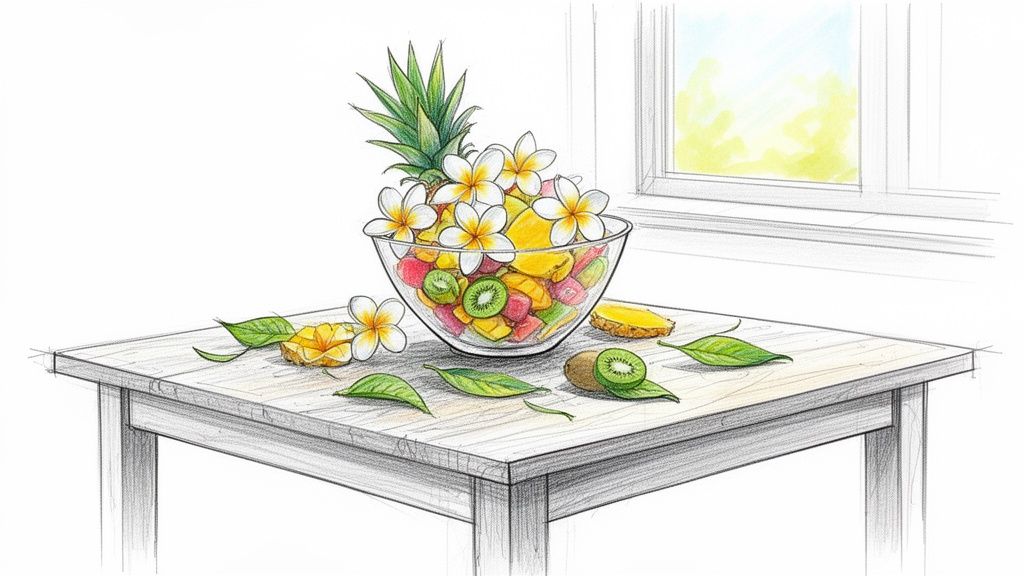
There’s something magical about bringing elements from the garden directly to your dinner table. Here in New Zealand, our temperate climate allows a stunning variety of flora to thrive, and using edible flowers is a beautiful way to connect with the seasons.
This is more than just a recipe; it's an invitation to get creative with the ingredients growing right outside your door. We'll walk you through everything you need to know to create a show-stopping frangipani fruit salad, from flower safety to flavour pairings.
Why Frangipani?
For many Kiwis, the frangipani, or Plumeria, is a symbol of a tropical paradise. Its sweet, delicate perfume is instantly recognisable, and its colourful blooms are a highlight of the summer months from December through to April. Weaving them into a dish offers a really unique sensory experience.
The goal is to balance the flower’s subtle floral notes with juicy, seasonal fruits, creating a dessert that becomes a talking point at your next barbecue or brunch.
The aptly named 'fruit salad' frangipani variety has seen a huge surge in popularity among home gardeners. In New Zealand's tropical plant scene, these tri-coloured blooms—a stunning mix of pink, yellow, and white petals—have seen a 35% year-on-year increase in demand. While the classic white-and-yellow types are still common, the visual appeal of the fruit salad variety makes it a real garden favourite. You can find out more about the rise of these vibrant frangipanis from Matakana specialists.
This guide will give you the confidence to explore the world of edible flowers, starting with one of our most beloved tropical plants. For more inspiration on what to grow, check out our guide on thriving tropical plants in NZ. We'll cover everything you need to know to make sure your culinary creations are both safe and spectacular.
A Quick Guide to Using Edible Frangipani Flowers
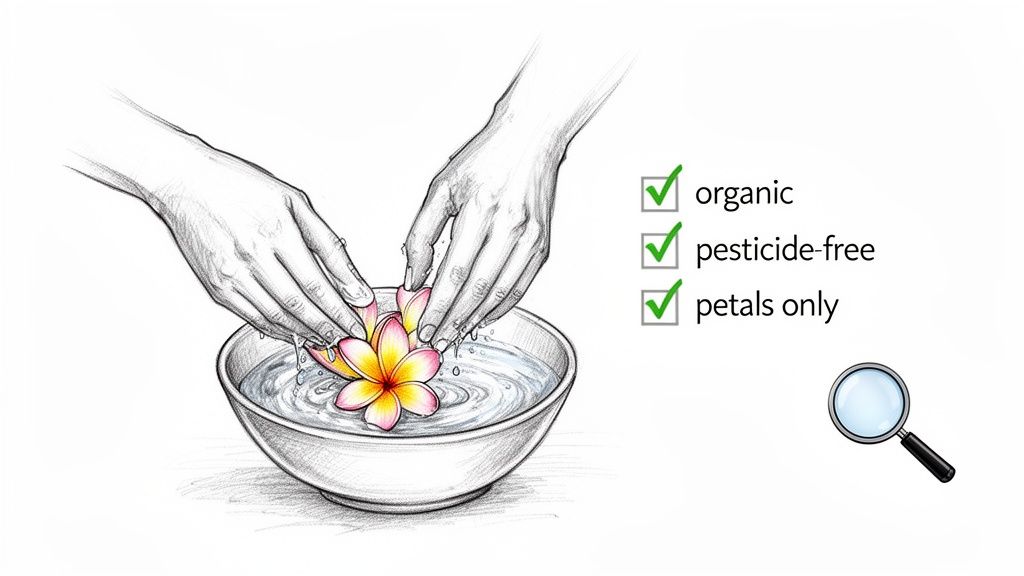
Before you scatter these gorgeous petals over your fruit salad, it's absolutely vital to know they’re safe to eat. When you're working with edible flowers, you have to be 100% certain they're clean, non-toxic, and haven't been near any chemical sprays.
The golden rule is this: only ever use flowers that have been grown organically. This means no pesticides, no fungicides, nothing you wouldn't want anywhere near your food. Never, ever use flowers from a florist, a regular garden centre, or a public park, as these are almost always treated with chemicals that aren't safe for us to eat. The only truly safe sources are your own spray-free backyard or a trusted grower who specifically cultivates flowers for culinary use.
Getting Your Petals Ready
Once you’ve sourced your organic frangipanis, the prep is straightforward but important. For this frangipani fruit salad, we only use the petals. The little base of the flower and the stamen can be a bit bitter and the texture isn't quite right.
Here's my simple routine for perfect petals every time:
- Pick them in the morning. I find they're at their freshest and most hydrated after the morning dew has dried off.
- Give each flower a once-over. Check for any little bugs or blemishes and toss any that don't look perfect.
- Gently separate the petals. Just pluck them away from the base of the flower.
- Give them a gentle wash. Pop the petals into a bowl of cool water and give them a light swish. Afterwards, I lay them out on a clean tea towel to air dry.
It's really important to remember that the white, milky sap from the frangipani plant is toxic if you eat it and can be a skin irritant. You'll find this sap in the stems and leaves, not the petals themselves, but it's always wise to handle the plant with care. Stick to these steps, and you can enjoy your beautiful garnish with complete peace of mind.
The Perfect Frangipani Fruit Salad Recipe
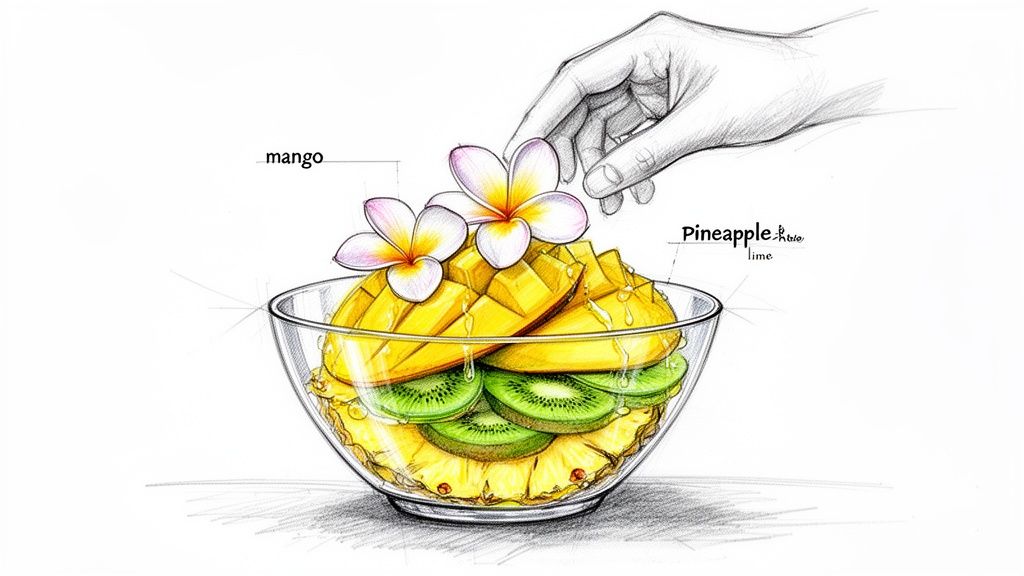
A truly great frangipani fruit salad is all about balance. You want each fruit to sing, with the frangipani’s incredible scent weaving through like a beautiful, lingering harmony.
Here in New Zealand, our summers give us an amazing bounty of fruit that pairs so well with floral notes. The trick is to find a mix of sweet and acidic flavours to keep things interesting on the palate.
Choosing Your Ingredients
Always start with produce at its absolute peak. A perfectly ripe mango or a drippingly juicy pineapple provides all the natural sweetness you need, allowing the delicate perfume of the frangipani to really shine through.
For the Fruit Salad (Serves 4-6):
- 1 large, ripe mango, peeled and diced into 2cm cubes. Its sweet, luscious texture is the heart of this salad.
- 1/2 a fresh pineapple, peeled, cored, and cut into chunks. This brings a fantastic tangy counterpoint.
- 3-4 Gold kiwifruit, peeled and sliced. A classic Kiwi touch for that unique tropical sweetness.
- 1 cup of strawberries, hulled and quartered. They add a pop of vibrant red and a lovely hint of tartness.
- Petals from 5-6 fresh, organic frangipani flowers, gently washed and patted dry.
For the Lime & Honey Dressing:
- Juice of 1 large lime. This brightens everything up and stops the fruit from browning.
- 1 tablespoon of quality runny honey. I love using Mānuka honey for its distinctly New Zealand flavour.
Putting It All Together
How you assemble this salad makes all the difference. Handle the fruit gently to keep its texture and shape intact.
Start by carefully combining the prepared mango, pineapple, kiwifruit, and strawberries in a large bowl.
In a separate small bowl, whisk the lime juice and honey together until the honey has completely dissolved. Drizzle this light dressing over the fruit, tossing gently just to coat everything. You want to complement the fruit’s natural sugars, not overpower them. If you’re making a bigger or smaller batch, knowing how to convert recipe servings is a lifesaver for getting the ratios just right.
For a beautiful presentation, I always serve this in a clear glass bowl to show off the gorgeous layers and colours. Just before you’re ready to serve, gently fold in about three-quarters of the frangipani petals. Save the rest to scatter over the top as a final garnish—this keeps them looking fresh and fragrant right until the first spoonful.
Creative Twists And Serving Ideas
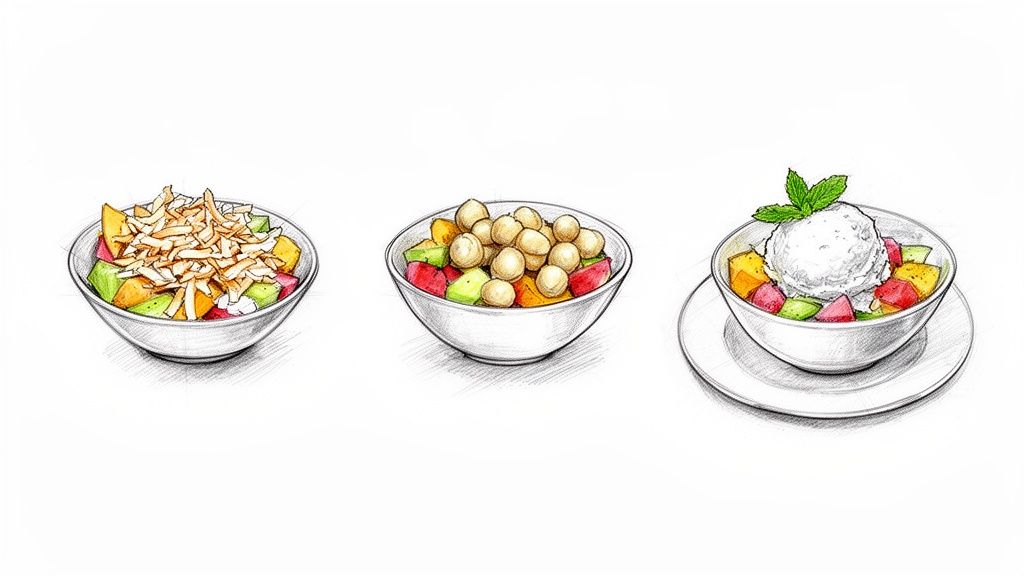
Once you've got the basic recipe down, this is where the fun really starts. A classic frangipani fruit salad is a beautiful canvas, and you can tweak it for any occasion or personal taste with just a few simple additions.
A great place to start is with texture. The soft fruit is lovely on its own, but a sprinkle of lightly toasted coconut flakes gives it a fantastic tropical crunch. I also love throwing in a handful of roughly chopped macadamia nuts for a buttery, creamy bite that works so well with the floral perfume of the frangipani.
Elevating Flavours And Aromas
Beyond texture, you can add layers of flavour to make the salad truly unforgettable. A few fresh mint or basil leaves, either finely chopped or simply torn, will cut through the sweetness with a surprising burst of freshness.
If you're feeling a bit more adventurous, try adding an ingredient with a completely different profile. A bit of vanilla from a scraped pod, folded into the dressing, introduces a warm, comforting note. For another aromatic experience, you could explore other tropical ingredients. Our guide on growing pandan in NZ might give you some fragrant inspiration for your next creation.
Pro Tip: For a subtle kick that really makes you think, add a tiny pinch of dried chilli flakes to your lime and honey dressing. That gentle warmth provides a wonderful contrast to the cool, sweet fruit.
Perfect Pairings And Serving Suggestions
How you serve your salad can take it from a simple dessert to the star of the show. At a warm Kiwi summer barbecue, it’s a brilliant side for grilled fish or chicken, cutting through the richness with its bright, clean flavours.
For a more decadent dessert, these pairings are always a hit:
- Creamy Coconut Yoghurt: A generous dollop on top adds a tangy, rich element that balances the sweetness perfectly.
- A Scoop of Ice Cream: Vanilla bean or coconut ice cream melts into the fruit juices, creating its own luscious sauce.
- Refreshing Sorbet: For a lighter, fruit-forward option, a scoop of a complementary wild berry sorbet recipe is a wonderful accompaniment.

These ideas are just a starting point, of course. Don't be shy about experimenting with your own favourite seasonal ingredients to make this delightful frangipani fruit salad all your own.
Growing Your Own Edible Frangipani in NZ
There’s nothing quite like the garden-to-table experience of using flowers you’ve grown yourself. Cultivating frangipani (Plumeria) in New Zealand is surprisingly rewarding, and it gives you a completely safe, organic source for your next frangipani fruit salad.
These tropical beauties absolutely thrive in warmth and sunlight. You'll find the best spot for them is often in a pot on a sunny, north-facing deck or patio where they can soak up as much heat as possible. They’re pretty drought-tolerant, but they really despise "wet feet," so using a well-draining potting mix is crucial to prevent root rot, especially during our wetter months.
Seasonal Care for Kiwi Gardens
Looking after your frangipani follows a simple seasonal routine. During their growing season over summer (December to February), a regular feed with a liquid fertiliser will encourage lush new growth and plenty of beautiful blooms.
As the weather starts to cool down, their needs change quite a bit:
- Autumn (March to May): Once the leaves begin to yellow and drop, it's time to cut back on watering significantly. This is the plant’s natural way of entering its dormant period.
- Winter (June to August): If you live in a cooler part of the country, it's a good idea to bring potted frangipanis indoors or into a sheltered spot to protect them from frost. They need very little water during this time.
By keeping your plant healthy and—most importantly—completely free from pesticides and chemical sprays, you can be confident that every single flower is safe to eat. A well-cared-for frangipani will thank you with stunning, fragrant blooms perfect for any culinary adventure.
For a deeper dive into their specific needs, you can find more detailed advice on how to care for frangipani plants in NZ to keep them flourishing year after year.
Common Questions About Frangipani Fruit Salad
Bringing edible flowers from the garden to the kitchen often sparks a few questions. Making a frangipani fruit salad should be a joy, so getting a few key answers sorted first will help you serve it up with absolute confidence.
Let's dive into some of the most common queries we get from fellow Kiwi gardeners and food lovers.
Are All Frangipani Flowers Edible?
While Plumeria flowers are generally considered edible in moderation, the most important thing is how they're grown. You must only ever use flowers that you are 100% certain have been grown organically, with no pesticides or chemical sprays.
Never use flowers from a florist, garden centre, or public park unless they are specifically sold as food-grade. For total peace of mind, your best bet is always to use plants from your own spray-free garden or from a trusted edible flower supplier.
What Do Frangipani Flowers Taste Like?
Frangipani petals have a very subtle, slightly sweet floral flavour. To be honest, their real contribution to a dish is that incredible, almost jasmine-like perfume and their stunning looks, rather than a strong taste. This delicate profile is exactly why they work so well with tropical fruits—they complement without clashing.
Top Tip: I always recommend using only the petals for your frangipani fruit salad. The base of the flower can sometimes be a touch bitter, so it’s best to just pinch the petals off and discard the rest when you're prepping.
How Long Will The Salad Last?
This is definitely a salad that's at its best served fresh, ideally within a few hours of making it. Those delicate frangipani petals can start to look a bit sad and wilt over time, so adding them right at the last minute is key.
If you need to get a head start, you can mix the fruit and dressing and keep it covered in the fridge for up to 24 hours. Then, just before you're ready to serve, gently fold in the fresh petals. That way, they'll look vibrant and beautiful on the plate.
Ready to grow your own stunning and edible plants? Explore the beautiful range of tropical and flowering plants at Jungle Story and start your garden-to-table journey today. Find your perfect frangipani here: https://junglestory.co.nz