
The Frangipani Penang Peach is one of those special varieties that has become a real favourite here in New Zealand, and for very good reason. It’s got an incredible peach fragrance that fills the air on a warm evening, and the flowers themselves are a stunning apricot colour. What’s really handy for Kiwi gardens is its fairly compact size – you get that amazing tropical vibe without needing a massive amount of space. With the right approach, getting this beauty to thrive in our climate is totally doable.
Embracing a Tropical Treasure in New Zealand Gardens
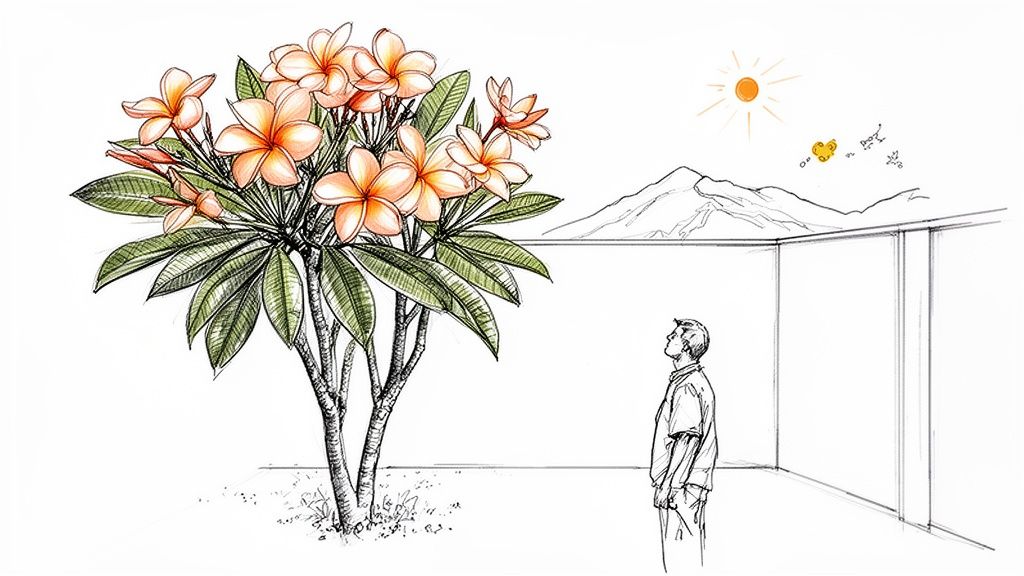
Picture stepping out into your garden and being hit by that sweet, heady scent of frangipani. For so many of us, it’s the smell of a summer holiday, and the Penang Peach brings that feeling right to your back door with its signature apricot-peach flowers and powerful fragrance. Its colouring is what really sets it apart; the blooms shade from golden yellow centres out to soft orange and pink at the edges, which looks fantastic against the dark green leaves.
This particular cultivar has really taken off across New Zealand, from the subtropical north right down to sunny, sheltered spots in the south. Unlike some of the bigger, more sprawling frangipani trees, the Penang Peach tends to have a more contained, branching shape. This makes it an ideal plant for smaller city gardens, tucked into a courtyard, or even grown in a large pot on a sunny deck.
Why Choose the Penang Peach?
So, what makes this frangipani a standout? It’s not just about its manageable size; it’s also known for being a really generous bloomer. Once it’s settled in, you can count on it to produce clusters of flowers all through the warmer months, usually kicking off in late spring and early summer and often going right through to autumn. That long flowering season means more time to enjoy its beauty and that incredible scent.
A few key things make it a Kiwi favourite:
- Intense Fragrance: The scent is often described as a rich peach or apricot smell, which really seems to dial up in the evenings.
- Unique Colour Palette: The flowers have a gorgeous blend of peach, apricot, and yellow that brings a lot of warmth to any garden design.
- Compact Growth: It’s perfectly suited to pots and smaller garden spaces, making it one of the more versatile tropical plants for NZ gardens.
A Rich Cultural History
While frangipani (or Plumeria) is originally from the tropical parts of the Americas, it’s become deeply woven into the cultures across the Pacific. Since it arrived here in the late 19th century, it has become a treasured ornamental plant in New Zealand and the Pacific Islands, loved for its role in traditional lei-making and its strong cultural symbolism.
Gardener's Tip: The vibrant colour of the Penang Peach looks brilliant set against native New Zealand greenery. Try planting it near things like harakeke (flax) or the silvery leaves of astelias to create a really lush, layered effect in your garden.
How to Find and Select a Healthy Frangipani Plant
Starting your frangipani journey with a robust, healthy plant is probably the most important decision you’ll make. It gives you a massive head start, especially in New Zealand’s climate where getting tropicals established can be a slow game. Whether you're wandering through a local garden centre or browsing online, knowing what to look for will save you from future disappointment.
One of the first choices you'll face is whether to go for an unrooted cutting or an established, potted plant. Cuttings are certainly cheaper, but they can be a bit of a gamble and definitely require patience. An established plant, on the other hand, is already growing with a proper root system, making it far more resilient and much more likely to flower sooner.
This is a huge advantage here in New Zealand. Frangipanis grow much slower in our cooler climate, maybe only 10 to 15 centimetres a year. Buying a more mature specimen gives you that instant impact. If you want to dive deeper into their growth habits, there's a helpful guide on general frangipani care in NZ that's worth a read.
Inspecting Your Plant in Person
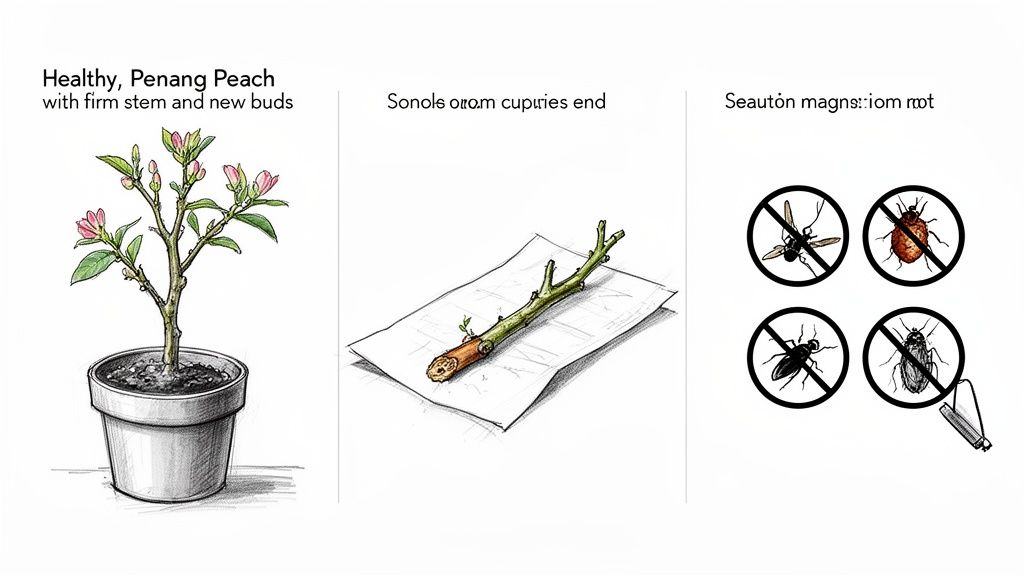
When you can see the plant firsthand, get your hands on it. Gently squeeze the main stem—it should feel firm and solid, a bit like a healthy carrot. Any softness or sponginess, particularly near the base, is a massive red flag for rot.
Have a good look at the branch tips for signs of life. You’re looking for small, emerging leaves or swollen nodes where new growth is about to pop.
Don't forget to check the undersides of any leaves for common pests like scale insects or mites. And peek at the potting mix; it should be well-draining, not soggy or compacted, which could hint at root problems. A healthy Penang Peach will look vibrant, even if it’s dormant for the winter.
A classic mistake is picking a plant just because it has a single flower on it. Your focus should be on the overall health of the stem and root system. A strong plant will give you beautiful flowers for years, while a weak one might not even make it through its first Kiwi winter.
Buying a Frangipani Online in NZ
Shopping online throws the doors open to specialist growers who often have the absolute best selection of Penang Peach. The key here is to look for sellers with clear, recent photos of the actual plant you’ll be getting, not just generic stock images. Reputable online nurseries in New Zealand will have detailed descriptions and plenty of positive customer reviews.
Before you hit 'buy', find out how they package their plants. It needs to be secured properly to stop branches from snapping and sent via a fast courier to cut down on transit stress. A good seller will often wait until Monday to ship, making sure your plant doesn't get stuck in a depot over the weekend. Never be shy about asking the seller questions about the plant's age and health before you commit.
To make things easier, I've put together a quick checklist to run through before you make a purchase, whether in-person or online.
Penang Peach Frangipani NZ Buyer's Checklist
| Inspection Point | What To Look For (Healthy Plant) | Red Flags To Avoid |
|---|---|---|
| Stem & Trunk | Firm, solid feel from base to tip. Smooth, unblemished bark. | Soft, spongy, or wrinkled sections, especially near the soil line. Dark spots or weeping sores. |
| Branch Tips | Swollen nodes or tiny, emerging green leaf claws (in growing season). Looks plump, not shrivelled. | Blackened, shrivelled, or mushy tips. Obvious signs of dieback. |
| Leaves (If Present) | Vibrant green colour (for Penang Peach). Glossy and upright. | Yellowing or browning leaves, spots, holes, or a dusty/webby appearance on the underside. |
| Roots (If Visible) | White or light-tan roots visible at the drainage holes. Not circling the pot excessively. | Dark brown or black, mushy-looking roots. A bad, sour smell from the soil. |
| Potting Mix | Looks free-draining (e.g., contains perlite or pumice). Is damp but not waterlogged. | Heavily compacted soil, green algae on the surface, or sitting in a saucer full of water. |
| Pest Check | No visible insects, fine webbing (spider mites), or sticky residue (honeydew). | Small white fluffy spots (mealybugs), brown bumps (scale), or tiny webs under leaves. |
Using this table as your guide will seriously boost your chances of bringing home a frangipani that will thrive from day one. It's all about choosing a strong contender that’s ready to handle the Kiwi climate.
Perfect Planting for the New Zealand Climate
Getting your Penang Peach settled into its new home correctly is probably the single most important thing you can do to ensure it thrives for years to come. Here in New Zealand, this means being pretty strategic about location and soil, because our conditions are a world away from a frangipani’s tropical homeland. Success really just comes down to mimicking that warmth and giving it perfect drainage.
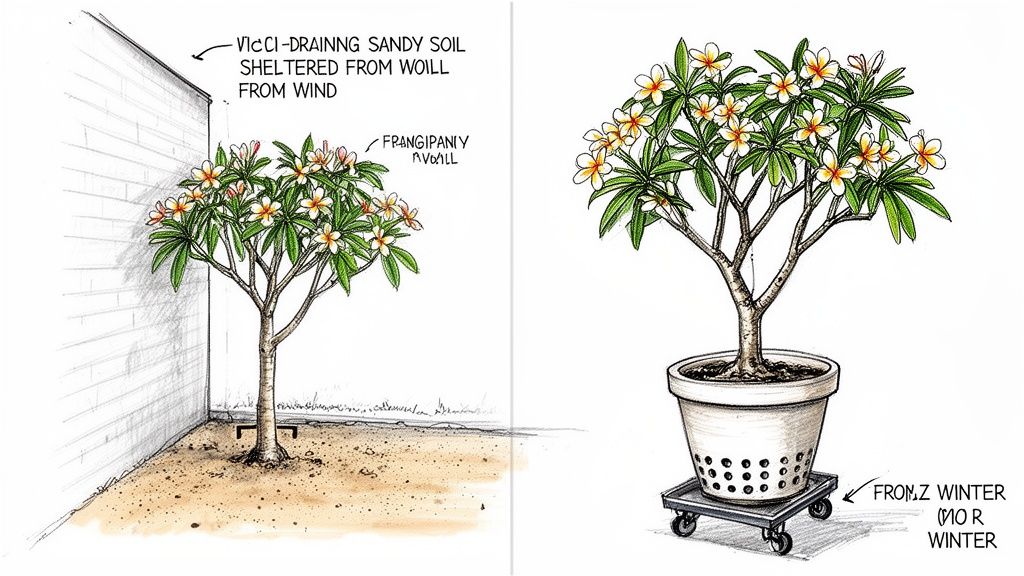
Think like a sunbather. Your frangipani wants the absolute hottest, sunniest spot you can offer. The classic ideal is against a north-facing wall or fence. This spot acts like a natural radiator, soaking up the sun’s heat all day and slowly releasing it overnight. This creates a cosy microclimate that helps shield the plant from the cold.
Protection from the wind is just as important. Strong gusts can easily snap branches and will definitely cool the plant down, causing unnecessary stress. Tucking it into a sheltered corner will make a massive difference to its overall health and its ability to pump out those incredible flowers.
Preparing the Perfect Garden Bed
Frangipanis have one major pet peeve: 'wet feet', especially during our cool, damp winters. If you’re dealing with heavy clay soil, which is common across so much of New Zealand, you absolutely must improve the drainage. Don't just dig a hole big enough for the plant; go much larger and work in generous amounts of sand, pumice, or even fine gravel.
The goal is to create a loose, gritty soil structure that lets water drain away freely. This is crucial for preventing the roots from sitting in cold, soggy soil, which is the number one killer of frangipanis. When you backfill the hole, it’s a great idea to build up a slight mound so the plant sits just above the surrounding ground level, which helps even more with runoff.
The Smart Choice of Container Growing
For many Kiwis, especially those in cooler or frost-prone areas, popping your Penang Peach in a pot is simply the best way to go. It gives you total control over its environment and, most importantly, the flexibility to move it somewhere safe when winter really sets in.
Choosing the right container and mix is key:
- Pot Size: Start with a pot that's only slightly larger than the current root ball. A pot that’s way too big holds onto excess soil, which stays wet for longer and seriously increases the risk of rot. You can always pot it up every few years as it grows.
- Drainage Holes: Make sure the pot has plenty of large drainage holes. If it only has one, it's well worth the effort to carefully drill a few more.
- Potting Mix: Use a top-quality, free-draining mix. A commercial cactus and succulent mix is an excellent, no-fuss option, or you can blend your own.
Here's a fantastic trick I always use for potted frangipanis: add a 2-3 centimetre layer of gravel or scoria at the very bottom of the pot before you add any soil. This creates a little drainage reservoir that guarantees the roots are never left sitting in water.
Nailing the soil blend is vital for success in a pot. A great starting point is to mix a standard potting mix with perlite or pumice at a ratio of about 2:1. Getting this right from day one really sets your plant up for a long and happy life.
A Year of Frangipani Care in New Zealand
Growing a happy Penang Peach Frangipani in New Zealand isn’t about non-stop fussing. It’s all about timing—giving it the right care during the right season and working with its natural rhythm.
These plants have a really distinct cycle of growth and dormancy, and your main job is to support that. This guide is your year-round playbook, walking you through everything from the first signs of life in spring to getting it safely through a frosty winter night.
Its needs change dramatically through the year. What works in the peak of a Northland summer could spell disaster in a chilly South Island winter. By tuning into these seasonal shifts, you give your frangipani the best shot at not just surviving, but truly thriving.
Spring Awakening (September – November)
As the soil warms and the days lengthen, you'll see your frangipani slowly stirring from its long winter nap. Now's the time to get it ready for the growing season.
The first sign is usually the tips of the branches starting to swell. Soon after, you'll spot small, green "claws" which will become the new leaves. This is your cue to start watering again, but take it easy. A light watering every couple of weeks is plenty to begin with. You can increase how often you water once the leaves properly unfurl and start getting bigger.
Once you have a decent amount of new leaf growth, it’s time for the first feed of the season. You want a fertiliser that’s high in potassium (K) and phosphorus (P) but low in nitrogen (N). This combo tells the plant to focus its energy on making flowers, not just heaps of leaves. A good quality hibiscus or even a tomato fertiliser usually has the perfect ratio.
Summer Thriving (December – February)
This is go-time for your Penang Peach. It should be basking in the sun and, hopefully, covered in those stunning, fragrant flowers. Your main jobs now are to stay on top of watering and just keep an eye on things.
In the middle of a hot, dry spell, a frangipani in a pot might need a drink every few days. One planted in the garden will be a bit more self-sufficient. The best way to know for sure is the classic finger test: stick your finger about 5cm into the soil. If it feels dry down there, it’s time for a proper, deep soak. Always aim for the soil at the base, not the leaves, as wet foliage can encourage fungal problems like rust.
Keep up the feeding every three to four weeks right through summer to keep the flowers coming.
Autumn Slowdown (March – May)
When the air starts to get a bit of a chill and the days get shorter, your frangipani will begin preparing itself for winter. You’ll see the leaves start to turn yellow and eventually drop off. Don’t panic—this is totally normal.
This is your signal to wind back your care routine, and it's a crucial step.
- Stop feeding: Don't give it any more fertiliser after the end of March. Feeding now encourages soft, new growth that will get zapped by the very first frost.
- Cut back on water: Drastically reduce how much you're watering. The plant isn’t growing anymore and needs very little moisture. Let the soil dry out almost completely between drinks.
This gradual transition helps the plant's stems to harden up, making them much more resilient to the cold that's on its way.
A classic mistake is seeing the yellowing autumn leaves and thinking the plant is thirsty. Watering it more at this stage is the fastest way to cause root rot. Just let it do its thing and enter dormancy gracefully.
Winter Survival (June – August)
For most of New Zealand, winter is the make-or-break season for a frangipani. The combination of cold and wet soil is its number one enemy. Your goal is simple: keep it dry and protect it from frost.
If your plant is in a pot, the fix is easy. Move it somewhere sheltered, like under the eaves of the house, onto a covered deck, or even into a garage or garden shed during the coldest parts of winter. Dormant frangipanis don't need light, just shelter from frost and rain. Benign neglect is the best approach here.
For frangipanis planted in the ground in frost-prone areas, you'll need to step in. Be ready to cover it with a layer of frost cloth on those clear, cold nights when a frost is forecast. For more tips on navigating the challenges of growing these tropical beauties, check out our comprehensive frangipani care guide for NZ.
And remember, a dormant frangipani needs almost no water over winter—our typical rainfall is more than enough.
Pruning, Propagating and Solving Common Problems
Knowing how to prune, multiply, and troubleshoot your frangipani is what separates the novices from the seasoned gardeners. These aren't just chores; they’re how you shape your plant's future, create new ones to share, and confidently tackle any curveballs nature throws your way. With a little insider knowledge, you can keep your Penang Peach looking its absolute best and even start your own little frangipani family.
When and How to Prune
The best time to get the snips out is late winter or the very beginning of spring—think late August or early September in NZ. You want to get in just before the new season's growth really kicks off. This timing gives the plant a chance to heal up before it starts pouring energy into new leaves and flowers.
Your main goal with pruning is to tidy things up. You're looking for any dead, damaged, or weak-looking branches, or maybe just trying to encourage a bushier, more compact shape.
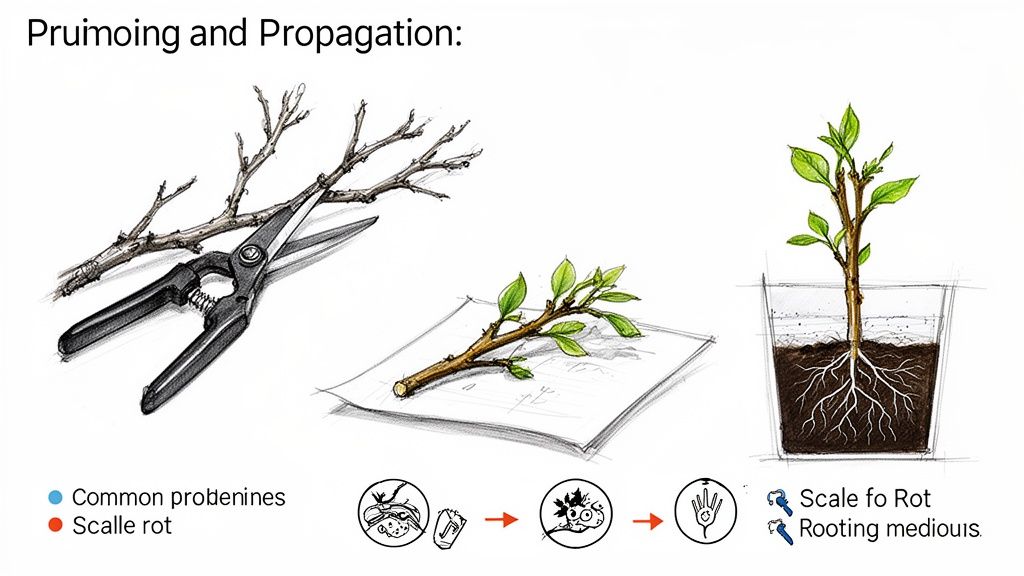
Grab a pair of clean, sharp secateurs and snip the branch back to a junction. You'll notice a white, milky sap bleeding from the cut. This is totally normal, but it can be a skin irritant, so popping on a pair of gloves is a good idea. Don't go crazy; a light tidy-up is usually all a frangipani needs.
How to Propagate Your Penang Peach
Don't you dare throw those pruned branches away! They're horticultural gold. Growing new frangipanis from cuttings is one of the most rewarding things you can do, and it’s surprisingly simple. It’s the perfect way to make more plants for your own garden or to gift to friends.
There is one step you absolutely cannot skip: curing the cutting. After taking a cutting about 30cm long, lay it somewhere dry and shady for at least a week. You're waiting for the cut end to completely dry out and form a hard callus. If you skip this, your cutting will almost certainly rot when you plant it.
Once it's cured, you can pop the cutting straight into a pot filled with a really free-draining mix—something like a cactus and succulent blend is perfect. Push it about 5-8cm deep and use a few stakes to keep it steady. Here’s the counter-intuitive part: don't water it for a few weeks. The cutting has no roots to absorb water, and a wet mix will just cause it to rot. You'll know you've succeeded when you see the first new leaves emerge; that's the sign that roots have finally formed below the surface.
Common Frangipani Issues in New Zealand
Even the most well-cared-for plant can run into trouble. The trick is to spot the signs early and act fast. Here in New Zealand, there are a few common culprits to keep an eye out for.
One of the biggest mistakes Kiwi gardeners make is panicking about frangipani rust. You'll see these alarming orange spots on the back of the leaves and think the worst, but it rarely causes serious harm. It’s mostly a cosmetic issue that crops up in humid weather.
To help you out, here’s a quick guide to what you might see on your frangipani and what to do about it.
Frangipani Troubleshooting Guide for NZ Gardeners
No plant is completely problem-free, but most frangipani issues are easy to manage if you know what you’re looking at. This table covers the most common troubles you're likely to encounter in a New Zealand garden.
| Problem | Key Symptoms | Recommended Solution |
|---|---|---|
| Stem/Root Rot | Soft, mushy, or blackened areas on the stem, especially near the soil line. Plant may look withered. | Caused by overwatering or poor drainage. Immediately stop watering. For potted plants, repot into fresh, dry, free-draining mix. Cut away any affected parts of the plant until you see healthy tissue. |
| Frangipani Rust | Small, orange-yellow powdery spots (pustules) on the undersides of leaves. Leaves may eventually turn brown and fall off. | A fungal issue common in late summer/autumn. Improve air circulation around the plant. Remove and dispose of affected leaves (do not compost). Spray with a copper-based fungicide as a preventative measure. |
| Scale Insects | Small, brown, or white bumps clustered on stems and the undersides of leaves. May be accompanied by a sticky black substance (sooty mould). | For light infestations, wipe them off with a cloth dipped in soapy water or spray with horticultural oil. This smothers the insects. The sooty mould will eventually wash off. |
By keeping these simple solutions in mind, you can tackle most problems before they become serious, ensuring your Penang Peach stays healthy and beautiful.
Right, even with all the steps laid out, you’re bound to have a few specific questions pop up. It happens to every gardener.
To finish things off, let's tackle some of the most common queries we get from fellow Kiwis trying their hand at growing a Penang Peach frangipani.
Will My Penang Peach Frangipani Survive a Frost?
This is a big one for many parts of New Zealand. The short answer? It depends.
A light, fleeting frost might just nip the leaves, but a hard, settled frost can be a death sentence, especially for a young plant. If you live in a frost-prone area, you absolutely need a game plan.
For frangipanis planted in the garden, get some frost cloth ready and be prepared to build a temporary shelter on those brutally cold nights. If your plant is in a pot, the solution is much easier: simply move it. A covered deck, a greenhouse, or even inside by a sunny window will do the trick until the danger passes.
How Often Should I Fertilise My Frangipani in New Zealand?
Timing is everything with feeding. You want to fertilise your Penang Peach only when it's actively growing, which in NZ is from spring through to the end of summer.
The key is to use a fertiliser that's low in nitrogen but high in potassium and phosphorus. This encourages a spectacular flower show instead of just a burst of leafy growth. Specialised hibiscus or even tomato fertilisers are often a perfect match.
Aim to feed it every 3-4 weeks, following the instructions on the packet. Once autumn rolls around, stop completely. The plant is heading into dormancy and doesn't need it.
A classic mistake is to continue feeding into autumn. This forces soft new growth at the worst possible time—that tender foliage will be the first thing to get hammered by the cold. Make sure you stop all feeding by the end of March.
Why Are the Leaves on My Frangipani Turning Yellow?
If you see yellowing leaves in autumn (March to May), don't panic. This is completely normal for a frangipani in New Zealand's climate. It’s just getting ready for its winter sleep, and shedding its leaves is part of the process.
However, if the leaves are turning yellow in the middle of summer, something’s not right. The most likely culprit is overwatering or poor drainage leading to root rot. Poke a finger into the soil or potting mix; if it feels soggy, you've found your problem.
Less commonly, yellowing can signal a nutrient deficiency, so double-check that you’ve been keeping up with a regular feeding schedule during the growing season.
Ready to bring the incredible fragrance and stunning beauty of the Penang Peach to your own patch? At Jungle Story, we connect you with trusted New Zealand sellers offering healthy, established plants that are ready to thrive.
Explore our collection and find your perfect tropical treasure today at https://junglestory.co.nz.