
So, you've decided to dive into the wonderful world of indoor orchids. That's fantastic! Learning how to care for orchids indoors is much easier than most people think. It really just comes down to getting a few key things right: good light, a simple watering technique, decent airflow, and the right food.
With a few tweaks to suit New Zealand's unique seasons, you'll see your orchids do more than just survive—they'll flourish.
Your Guide to Thriving Indoor Orchids in New Zealand
If you’ve ever been told orchids are fussy or difficult, let’s set the record straight. They can be incredibly straightforward and rewarding, especially when grown in a Kiwi home. Forget about complicated rules and intimidating jargon for a moment. The real secret is understanding what your plant needs and how that fits into our local environment. This guide is all about cutting through that confusion and giving you the confidence to get started.
Growing beautiful orchids isn't about having some magical 'green thumb'; it’s about creating the right little world for them inside your house. For instance, the ever-popular Phalaenopsis loves consistent warmth, making it a perfect housemate. On the other hand, a tough Cymbidium can handle our cooler spells just fine. It's all about trying to mimic their natural home.
Embracing Orchid Care in Kiwi Homes
It turns out, Kiwis are already pretty well set up for orchid success. Our love for indoor plants has created the perfect environment to welcome these stunning bloomers into any collection. Chances are, you’re already doing most of the right things.
Growing orchids successfully is about providing three key elements that differ from typical houseplants: the right potting medium, specific light conditions, and a careful watering routine. Get these correct, and you're 90% of the way there.
Many plant lovers across New Zealand are already juggling large green families. A 2022 survey of over 860 local hobbyists showed that while Monstera might be the most common plant, orchids fit right in. A surprising 19% of people own 31-50 plants, and another 17% have over 100!
The main shift for orchid care is getting your head around their potting mix. They don't live in soil. Instead, they need a coarse bark mix that lets air circulate and water drain away freely, which is crucial for preventing root rot in our sometimes-damp homes. If you're curious about what other Kiwis are growing, you can check out the full survey insights. This shared knowledge in our plant community makes adding an orchid to your home an exciting—and totally achievable—next step.
Choosing Your First Orchid and Potting Mix
Your journey into the world of indoor orchid care begins at the garden centre, and making a smart choice here really sets you up for long-term success. It’s easy to be dazzled by a wall of colourful blooms, but knowing what to look for beyond the flowers is the secret to bringing home a healthy, resilient plant.
Start by giving the orchid a good once-over. The leaves should be firm, a healthy medium-green colour, and free from any blemishes, yellowing patches, or pests. I'd steer clear of any plants with limp, leathery, or wrinkled leaves—those are often signs of dehydration or root problems lurking beneath the surface.
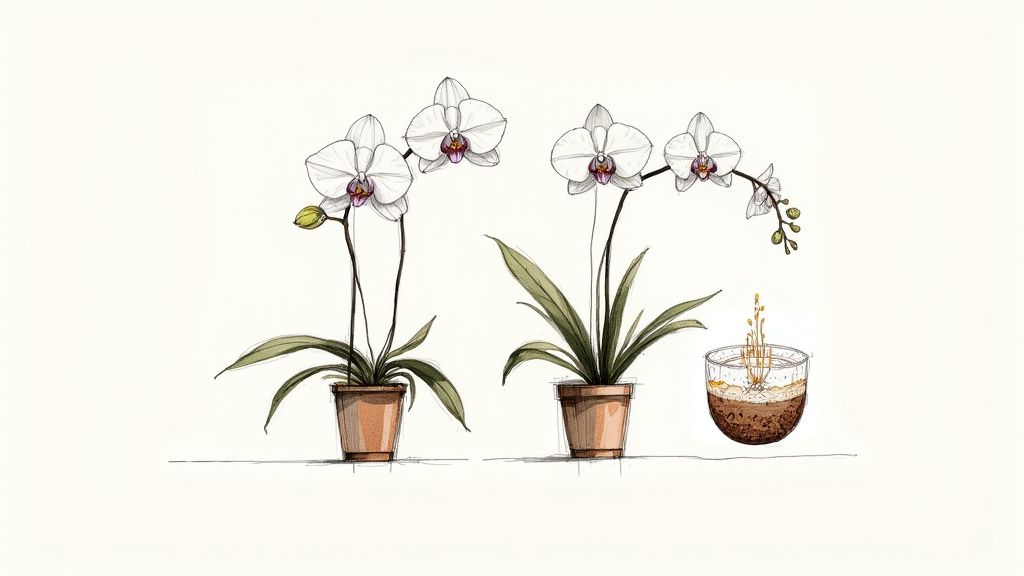
Selecting the Perfect Orchid for Your Kiwi Home
For anyone just starting out in New Zealand, two types of orchids are particularly well-suited to our indoor environments. They both offer stunning beauty but handle slightly different conditions you'd find in a typical Kiwi home.
- Phalaenopsis (Moth Orchid): This is the quintessential beginner's orchid for a reason. It absolutely thrives in the consistent warmth found in most of our homes, making it a reliable and forgiving choice. Pro tip: look for one with a few unopened buds still on its flower spike. This means you'll get to enjoy its blooming period for much longer once you get it home.
- Cymbidium (Boat Orchid): Known for being tough as old boots, the Cymbidium is a fantastic option if your home runs a bit cooler. These orchids have long, grassy leaves and produce the most spectacular flower spikes, often giving you a burst of vibrant colour through our cooler winter months from June to August.
Before you commit, try to gently lift the orchid from its pot, or at least peer through the clear plastic liner. Healthy roots are the engine of the plant. You’re looking for plump, silvery-green or whitish roots. If you see brown, mushy, or brittle roots, that’s a clear red flag—it almost always points to overwatering and rot.
The Secret to Success Is in the Mix
Now for what I consider the single most critical element of orchid care: the potting mix. This is where so many new owners go wrong. Orchids are epiphytes, which is a fancy way of saying they grow on other trees in nature, not in soil. Planting them in standard potting soil is the quickest way to kill them; it simply suffocates their roots and causes them to rot.
Their roots need exceptional airflow and drainage to mimic how they live in the wild. Here in New Zealand, the gold standard is a high-quality, coarse orchid bark mix. This chunky medium provides the perfect structure for them to grab onto.
The purpose of an orchid mix isn't to hold water like soil, but to anchor the plant while allowing water to drain away instantly and air to circulate freely around the roots. This is non-negotiable for preventing root rot, a common issue in our often-humid climate.
Choosing the right blend is paramount. A good mix will usually contain large pieces of pine or fir bark, sometimes with added perlite or charcoal to boost aeration and drainage even more. This foundation gives your orchid the airy, free-draining environment it desperately needs to establish a strong root system and truly thrive.
For a deeper understanding of what makes a great foundation for all your indoor plants, check out our detailed guide to selecting the right indoor potting mix. It’ll give you the confidence to provide the perfect home for your new orchid right from day one.
Getting Light, Water, and Humidity Just Right
Nailing the trifecta of light, water, and humidity is where many new orchid growers feel a bit lost, but it’s far simpler than it sounds. These three elements work together to create a stable environment that mimics an orchid's natural habitat. Once you understand the rhythm of your plant and your home, providing the right conditions becomes an easy and rewarding routine.
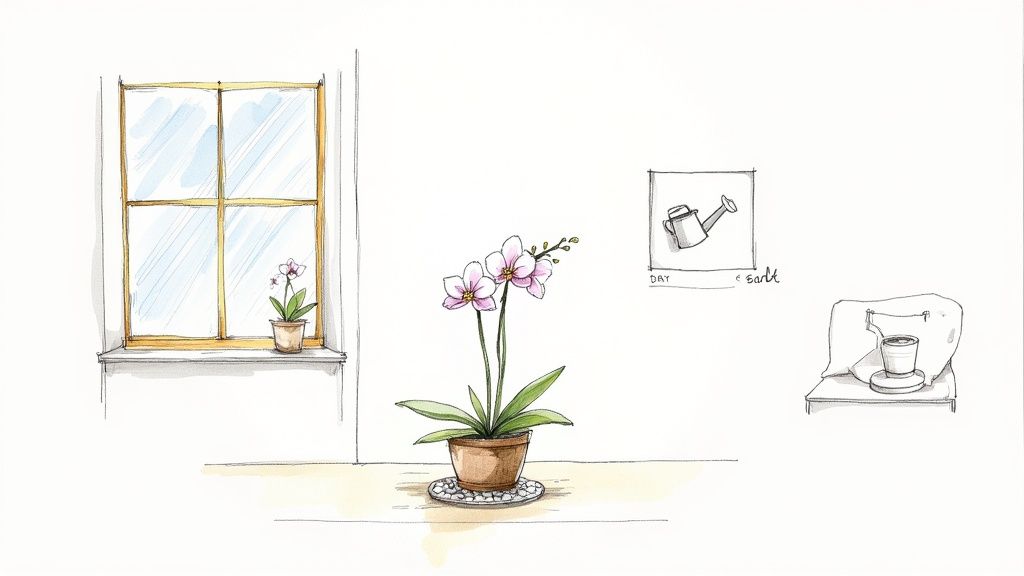
Many care guides talk about "bright, indirect light," but what does that actually mean in a New Zealand home? Our sun can be particularly harsh, especially during the summer months from December to February. Direct sunlight, even for a short while, can easily scorch an orchid's delicate leaves, leaving behind nasty brown or black patches.
The goal is to find a spot that’s brightly lit for most of the day but shielded from the sun's direct rays. Think of the dappled light under a tree canopy—that’s the quality you're aiming for. A spot near an east-facing window is often perfect, as it gets that gentle morning sun that isn’t strong enough to cause damage. A north-facing window is also a great choice, but you might need to place the orchid a metre or two back to soften the stronger midday light.
Decoding Your Orchid's Light Needs
The best way to tell if your orchid is getting the right amount of light is simply by looking at its leaves. The plant will give you clear signals, and learning to read them is a key part of becoming a confident orchid owner.
- Lush, medium-green leaves: This is the ideal colour. It tells you the orchid is happy and receiving the perfect amount of light to thrive.
- Dark green, floppy leaves: If the leaves are a deep, forest green, your orchid isn't getting enough light. It's working overtime to produce chlorophyll, and while it might look healthy, it won't have enough energy to produce flowers.
- Yellowish-green or reddish-tinged leaves: This is a classic sign of too much direct sun. It's a sign of stress and potential sun-scorch. If you see this, move your orchid to a less intense spot straight away.
Mastering the Art of Watering
Forget everything you know about watering other houseplants. When it comes to orchids, sticking to a rigid weekly schedule is often the fastest way to cause root rot. Instead, the "soak and dry" method is a foolproof technique that ensures your orchid gets exactly what it needs, right when it needs it.
The principle is simple: drench the potting medium completely, then let it dry out almost entirely before you even think about watering again. The chunky bark mix orchids love is designed specifically for this cycle. Just take your orchid to the sink and let tepid (room-temperature) water run through the pot for about a minute, making sure every piece of bark is saturated.
After its drink, it's absolutely crucial to let the pot drain completely. Never let an orchid sit in a saucer of water. This is a non-negotiable rule. A pot that feels surprisingly light when you pick it up is a good sign that it’s time for another soak.
The most common mistake in orchid care is overwatering. Orchids would much rather be a little too dry than a little too wet. Always check the potting mix with your finger; if it feels damp even an inch down, wait another day or two.
Creating a Humid Haven in Your Home
Orchids are tropical plants that thrive in humidity levels around 40-70%, which is often much higher than the air inside a typical heated Kiwi home. Dry air can lead to frustrating problems like "bud blast," where unopened buds shrivel and fall off, or brown, crispy leaf tips.
Luckily, you don't need expensive equipment to boost humidity. One of the simplest and most effective tricks is to create a pebble tray. Just fill a shallow tray with pebbles, add water until it sits just below the surface of the stones, and place your orchid pot on top. As the water evaporates, it creates a lovely pocket of humid air right where your plant needs it most.
Grouping your plants together also helps. As they transpire, they collectively raise the ambient humidity in their little microclimate. Since orchids thrive in consistent humidity, you might want to learn how to determine if your home's air is too dry to get a better handle on your indoor environment.
A Feeding and Repotting Schedule for Long-Term Health
Watering and light are the cornerstones of orchid care, but if you want your plant to truly flourish year after year, you need a smart feeding and repotting plan. Think of feeding as giving your orchid the steady energy it needs for those gorgeous blooms and glossy leaves. Repotting, on the other hand, is like moving it into a bigger, healthier home when it's outgrown the old one.
Mastering this rhythm is what separates an orchid that merely survives from one that genuinely thrives.
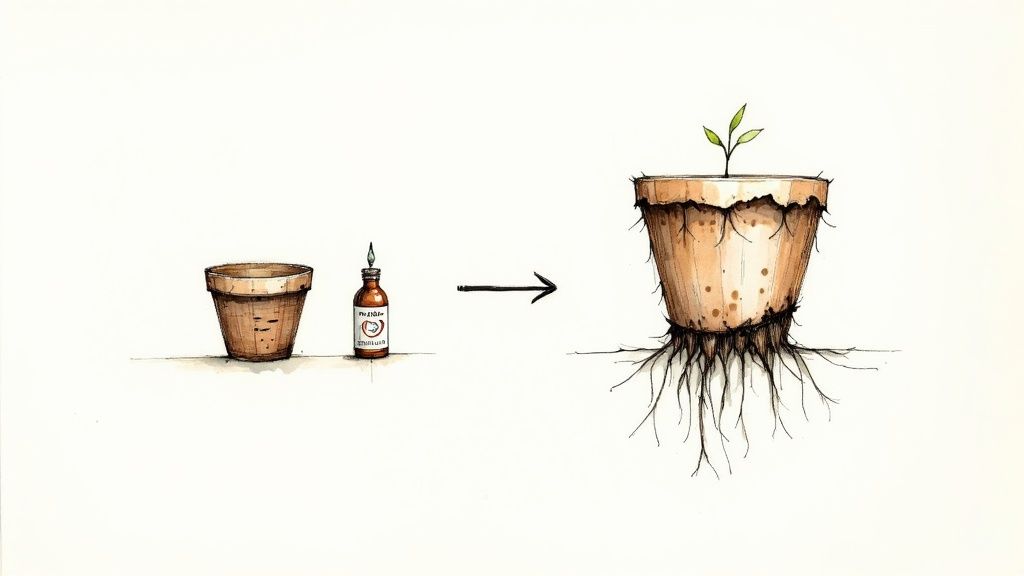
The good news is, it's not complicated. It’s all about tuning into your orchid’s natural growth cycles, which, for us here in New Zealand, line up perfectly with our seasons.
Crafting a Fertiliser Routine for Kiwi Seasons
Orchids aren't what you'd call heavy feeders. They much prefer a gentle, consistent supply of nutrients during their main growing season. For popular indoor varieties like Phalaenopsis and Cymbidiums, this is during our spring and summer, from about September through to February. This is their busy time—they're pushing out new leaves, growing roots, and storing energy for their next flower show.
Once the cooler, shorter days of autumn and winter roll around (March through August), your orchid naturally slows down and takes a rest. Continuing to fertilise during this period is a mistake. The plant can't use the nutrients, and the leftover salts can build up and damage the delicate roots.
I always tell people to follow the “weakly, weekly” method. It’s a simple mantra that helps you avoid fertiliser burn, which is a common and quick way to harm an orchid’s sensitive root system.
Instead of hitting your plant with a full-strength dose once a month, you give it a much more diluted solution more often. Here’s my go-to process:
- Find the Right Food: A balanced, water-soluble orchid fertiliser is what you want. A formula with a ratio like 20-20-20 is a fantastic all-rounder.
- Dilute It Right Down: This is the most important step. Mix the fertiliser to just one-quarter of the strength recommended on the packet. No stronger!
- Water First, Feed Second: Always give your orchid a good soak with plain water before you fertilise. This moistens the roots so they can absorb the nutrients without getting shocked or burned.
- Follow the Seasons: Stick to this routine about once a week or every fortnight, but only during the active growing season (spring and summer).
If you’re keen to learn more about feeding your entire collection of houseplants, have a look at our comprehensive guide on choosing an indoor plant fertiliser. It breaks down everything you need to know.
Knowing When It’s Time to Repot
Repotting can seem a bit intimidating, I get it. But it’s a crucial skill for long-term orchid care. The main goal isn’t just to get a bigger pot; it’s about replacing the old potting mix, which inevitably breaks down and compacts over time. A fresh mix is all about restoring that essential airflow and drainage that orchid roots crave.
Most orchids are happy being repotted every one to two years. But instead of just marking your calendar, learn to read the signs from your plant. It will tell you exactly when it's ready.
Look out for these classic clues:
- Escaping Roots: A tangled mass of roots climbing over the pot's edge is a dead giveaway that it's run out of room.
- Mushy Potting Mix: The chunky bark mix should be firm. If it looks soft, broken down, or almost like soil, it’s holding too much water and risking root rot.
- Slow Drainage: If water pools on the surface or takes ages to run through, the mix has become too dense and compacted.
- A Wobbly Plant: If your orchid feels top-heavy or unstable, it probably means the root system has nothing fresh to anchor itself into.
The perfect time for this task is right after your orchid has finished flowering. This is usually when it kicks into a new growth cycle, ready to push out new roots and leaves. By giving it a fresh home at this point, you’re setting it up for success without interrupting its blooming.
Troubleshooting Common Problems for Kiwi Growers
Even with the best intentions, things can sometimes go sideways with your orchid. Don't worry—it happens to all of us! The trick is learning to read the signs your plant is giving you and knowing how to respond. Think of it as becoming a plant detective; a few clues can tell you exactly what’s needed to get your orchid thriving again.
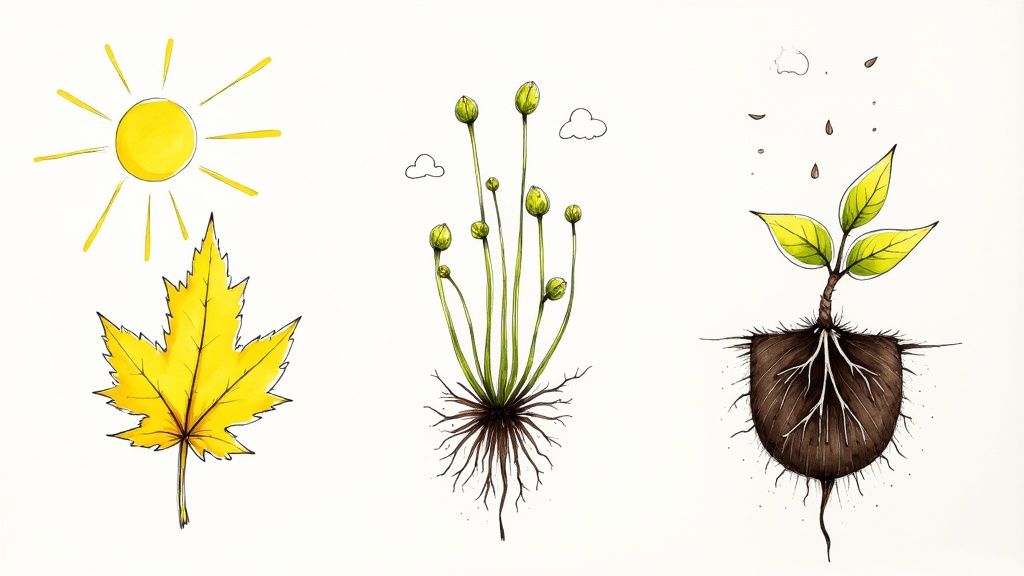
This section is all about decoding those common orchid SOS signals we often see here in New Zealand. From confusing leaf colours to pesky insects, we’ll walk through what to look for and, more importantly, what to do about it.
Decoding Leaf Discolouration
Yellowing leaves are easily the most common cry for help I hear about, but what it means depends entirely on which leaves are changing colour.
If it's just one of the oldest leaves at the very bottom of the plant turning yellow and eventually falling off, breathe easy. That’s just the natural life cycle, making way for new growth. But if you’re seeing yellow on multiple leaves, especially the newer ones, it’s time to investigate.
- Bright Yellow: This usually points to too much direct sun. Our New Zealand sun can be surprisingly harsh, and a leaf that looks bleached or scorched is a classic sign of sunburn. The fix is simple: move it to a spot with brighter, but indirect, light.
- Dull, Limp Yellow: When yellowing leaves are also floppy and soft to the touch, the prime suspect is overwatering. This is a sign that the roots are in trouble.
The Dreaded Root Rot
Root rot is the number one killer of indoor orchids, and it's almost always caused by letting the roots stay waterlogged. Healthy orchid roots are distinctive—they should be firm and silvery-green or white, plumping up to a vibrant green right after watering.
Rotten roots are the opposite: brown, mushy, and sometimes even a bit smelly. If you suspect rot, you need to act fast. Tip the plant out of its pot, grab some clean snips, and carefully trim off every single bit of mushy, dead root. Then, repot it into a fresh, dry orchid bark mix.
Your best defence against root rot is prevention. Let the potting mix dry out almost completely between waterings and never let your orchid’s pot sit in a saucer of water. This is the golden rule for keeping orchid roots healthy.
Handling Common Household Pests
Unfortunately, our indoor gardens can sometimes attract a few unwelcome guests. For orchids in New Zealand homes, the most common culprits are mealybugs and scale, both of which suck sap and weaken your plant.
- Mealybugs: These look like tiny bits of white fluff, often tucked away in the nooks where leaves join the stem.
- Scale: These present as small, hard brown bumps, usually found clinging to the undersides of leaves.
If you only spot a few, you can deal with them individually. Just dip a cotton bud in rubbing alcohol and touch each pest to remove it. For a more widespread issue, a good quality insecticidal soap or neem oil spray will do the trick. A soggy potting mix can also attract fungus gnats; if you see them buzzing around, our guide on how to get rid of fungus gnats has everything you need.
What Is Bud Blast?
There’s nothing more heartbreaking than watching your orchid’s beautiful, promising flower buds shrivel up and drop off before they even open. This frustrating phenomenon is called bud blast, and it's your plant's reaction to a sudden environmental shock.
The most common triggers are sudden temperature changes (like from a draughty window), exposure to ethylene gas from a nearby fruit bowl, or a drastic shift in its watering routine. The key to prevention is stability. Keep your budding orchid in a consistent environment, away from draughts and ripening fruit, and stick to its regular care schedule.
For a quick reference, here’s a simple table to help you diagnose any issues at a glance.
A Quick Guide to Solving Indoor Orchid Issues
| Symptom to Look For | Most Likely Cause | Your Actionable Solution |
|---|---|---|
| Yellow, scorched-looking leaves | Too much direct sunlight | Move the orchid to a spot with bright, indirect light, like behind a sheer curtain. |
| Limp, yellowing leaves and mushy brown roots | Overwatering / Root rot | Remove from pot, trim all rotten roots with sterilised snips, and repot in fresh, dry orchid bark. Adjust watering schedule. |
| Tiny, white fuzzy spots on leaves/stems | Mealybugs | Dab individual pests with a cotton bud dipped in rubbing alcohol. For larger issues, use neem oil or insecticidal soap. |
| Flower buds shrivel and fall off before opening | Bud blast (sudden environmental shock) | Ensure a stable environment. Keep away from draughts, ripening fruit, and avoid sudden changes in light or temperature. |
| Leathery, wrinkled leaves | Underwatering | Give the plant a thorough watering, allowing the pot to soak for 10-15 minutes, then drain completely. |
Think of this table as your first port of call. By paying attention to these early warning signs, you can catch minor issues before they become major problems and keep your orchid healthy and beautiful for years to come.
Getting Your Orchid to Flower Again
There's nothing quite like the satisfaction of seeing your orchid rebloom. It’s the ultimate confirmation that you've got things just right and have created a happy home for your plant. With a few simple tricks, you can coax both Phalaenopsis and Cymbidiums into putting on another spectacular show.
For the ever-popular Phalaenopsis, the main trigger is a subtle drop in temperature. These orchids are prompted to grow new flower spikes when they experience cooler nights. As our Kiwi summer gives way to autumn, simply letting the nighttime temperature in the room drop a little can be all it takes.
Nudging Your Phalaenopsis to Rebloom
Once your Phalaenopsis has dropped its last flower, don't rush to chop off the stem if it's still green. You've got a couple of choices here to encourage a second round of blooms.
- Trim for a second show: Scan the stem for a small, triangular bump—that's a node. Take a pair of clean, sharp snips and cut the stem about a centimetre above one of these healthy-looking nodes. This often convinces the plant to push out a new, smaller branch of flowers from that exact spot.
- Cut it back for a fresh start: If the stem has turned yellow or brown, its job is done. Cut it all the way back to the base of the plant. This lets your orchid focus its energy on growing strong new leaves and roots, building up the reserves it needs for a completely new flower spike next season.
Encouraging an orchid to rebloom isn't about forcing it. It's about mimicking the natural environmental cues that signal it's time. A gentle temperature drop is the most powerful message you can send.
The Secret to Cymbidium Spikes
Cymbidiums are a brilliant choice for New Zealand homes and are real troopers when it comes to reblooming. Their stunning flower spikes bring a splash of colour from winter all the way through to spring. The trick to getting them to flower reliably is a noticeable temperature difference between day and night.
This is most crucial during late summer and into autumn (think February to May). That temperature shift is the catalyst that tells the plant to start developing its flower spikes. Here in New Zealand, Cymbidiums are known as one of the easiest orchids to grow, both inside and out. Their spikes emerge on the previous year's growth, and the flowers open just in time for our late winter and spring.
When you're growing them indoors, make sure they're in a coarse bark mix to give their roots plenty of drainage and airflow. For more tips tailored to our local climate, it's worth checking out the advice on growing orchids in NZ.
Got Questions About Your Orchid? We've Got Answers
Stepping into the world of orchids can feel a bit mysterious at first, and it's totally normal to have a few questions. As a Kiwi grower, you're not alone! Here are some of the most common queries we hear, with straightforward advice to help you and your plant succeed.
Is the Ice Cube Watering Trick a Good Idea?
You've probably seen this "hack" online, but please, step away from the freezer! Watering your orchid with ice cubes is a big no-no. These are tropical plants, and the sudden, intense cold can shock their delicate root systems, causing serious damage.
The best way to water is always with tepid or room-temperature water. Give your orchid a good, thorough soak until water runs freely from the drainage holes, then let it drain completely. It’s a much kinder, more effective approach.
What Are These Roots Growing Outside the Pot?
Don't panic! Those wild-looking roots reaching out into the air are called aerial roots, and they're actually a sign of a very healthy orchid. In their natural habitat, many orchids are epiphytes, meaning they grow on the sides of trees. These aerial roots help them grip onto bark and pull moisture right out of the humid air.
As long as the roots inside the pot look firm and healthy, just let these adventurous roots do their thing. There’s no need to cut them off or try to stuff them back into the pot.
Think of aerial roots as your orchid's way of exploring its surroundings. They show the plant is vigorous and happy where it is, so it's best to simply leave them be.
How Can I Tell What Kind of Orchid I Have?
Knowing your orchid's name is the key to giving it the right care. By far the most common type you'll find in New Zealand homes is the Phalaenopsis, or Moth Orchid. You can spot it by its wide, flat, leathery leaves and a single, graceful flower spike that arches over.
Another popular variety is the Cymbidium, which has long, thin, almost grass-like leaves. Its flowers emerge from the base of plump, bulbous structures called pseudobulbs. If you're still stumped, snap a picture and bring it to your local garden centre—the plant experts there are usually fantastic at identifying them.
Feeling inspired to start your own orchid collection or find a new treasure? Explore a stunning range of orchids and all the essential care supplies at Jungle Story. We have the perfect plant and potting mix to help you create a beautiful indoor oasis. Visit us today at https://junglestory.co.nz.