
Walk into almost any sunny Kiwi home, and you're bound to spot a jade plant perched on a windowsill or tucked into a sheltered spot on the deck. It’s no accident this humble succulent, Crassula ovata, has become such a staple across New Zealand. We love it for its easy-going nature, striking tree-like form, and the touch of green it brings without demanding much in return.
Often called the 'money tree' or 'friendship plant', this guide is your complete roadmap to helping your jade thrive right here in Aotearoa.
Why Kiwis Love The Jade Plant
The popularity of the jade plant in NZ really comes down to one thing: it’s incredibly forgiving. Think of it as that stoic, low-maintenance friend who’s always there, looking steadfast and green, no matter what.
Because it stores water in its fleshy, oval leaves, it can handle a bit of neglect if you get busy and forget a watering session. It’s the perfect plant for our often hectic lives, happy to just get on with things without making a fuss.
A Symbol Of Good Fortune
There's more to the jade plant than just its good looks and hardy nature. It carries a rich history as a symbol of good luck, prosperity, and friendship. Those round, coin-like leaves are traditionally thought to attract wealth, hence the 'money tree' nickname.
This makes it a go-to gift for big life moments here in New Zealand—housewarmings, new jobs, or birthdays. Giving a jade plant is like offering a living, breathing wish for success. It’s also one of many thoughtful gifts for fellow plant lovers that celebrates a shared passion for green things.
Perfectly Suited For New Zealand's Climate
One of the jade plant’s biggest selling points is its incredible adaptability to our unique climate. From the humid, subtropical north to the drier, sun-drenched regions further south, it just seems to work.
Here’s why it feels right at home in Aotearoa:
- Drought Tolerance: It breezes through our classic dry summer spells, especially in places like Hawke's Bay or Marlborough.
- Sun Loving: It absolutely adores the bright, clear light New Zealand is known for. Give it enough sun, and you'll be rewarded with beautiful red-tinged edges on its leaves.
- Indoor & Outdoor Versatility: Keep it in a pot indoors all year round or let it flourish outside in frost-free areas. It's flexible enough for any living situation.
This guide will show you everything you need to know to ensure your jade plant nz doesn't just survive, but truly prospers.
How To Choose Your Perfect Jade Plant In NZ
The journey to a happy, thriving jade plant doesn't start when you bring it home—it begins the moment you step into the garden centre or browse an online nursery. Picking a healthy, robust specimen from the get-go is the single best thing you can do for your new green companion, giving it a massive head start in its new environment. With so many pots to choose from, it can feel a bit overwhelming, but a few simple checks will help you spot the perfect plant.
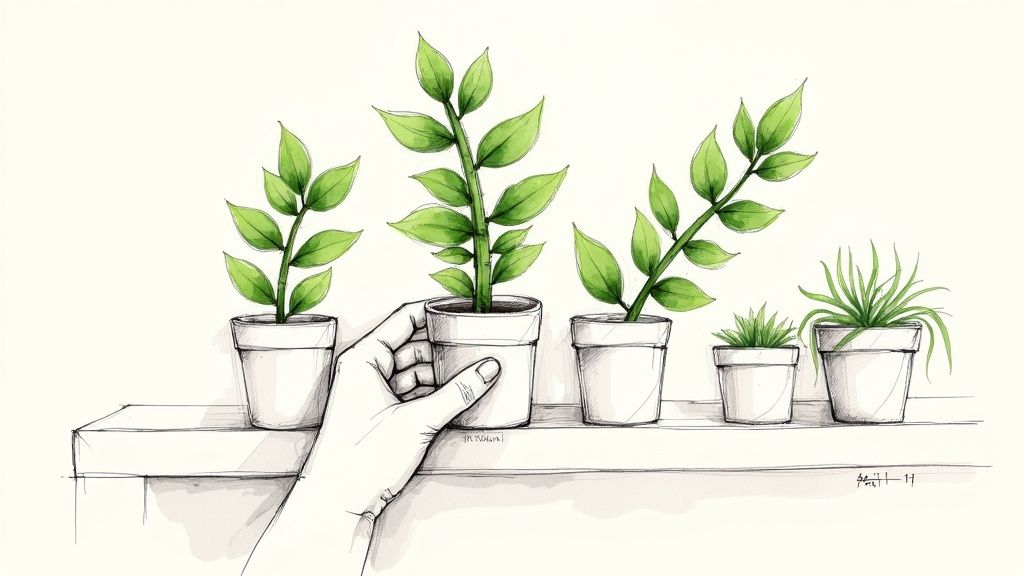
Think of yourself as a plant detective on the hunt for clues. A healthy jade plant should have strong, upright stems that feel firm to the touch, not soft or squishy. The leaves, however, are the real giveaway. You're looking for plump, glossy leaves with a deep, rich green colour.
That satisfying plumpness means the plant is well-hydrated and storing water efficiently, which is exactly what a happy succulent should be doing. Give a wide berth to any plants with wrinkled, yellowing, or fallen leaves—these are often the first signs of stress, usually from overwatering or other underlying issues.
What To Look For At The Nursery
Before you head to the checkout, give your potential new plant a gentle once-over. A quick health check now can save you a world of hassle later.
Here's a simple checklist to run through:
- Sturdy Stems: Look for a thick, woody base that can easily support the plant's weight. If the stems seem wobbly or thin, it could point to weak root development.
- Lush, Full Foliage: The plant should look full and well-balanced. Big gaps or "leggy" growth—where the stems are long and sparse—is a classic sign it hasn't been getting enough light.
- Pest-Free Guarantee: Have a good look under the leaves and around the stems. You're checking for unwanted hitchhikers like mealybugs (which look like little white cotton balls) or the fine webs of spider mites.
- Healthy Root System: If you can, have a sneaky peek at the drainage holes. Healthy roots are usually white or a light tan colour. If you see dark, mushy-looking roots, that’s a major red flag for root rot.
A healthy start is paramount. Choosing a plant with strong vital signs from a reputable NZ supplier means it's already acclimatised to local conditions, giving it a significant advantage for long-term health and growth.
Exploring Popular Jade Plant Varieties
The classic Crassula ovata is fantastic, but it's just the beginning! Nurseries across New Zealand are full of fascinating jade varieties, each with its own unique personality. They're so popular, in fact, that major nurseries grow and sell thousands of Crassula plants nationwide, making them a cornerstone of the Kiwi horticulture scene.
Here are a few popular varieties you're likely to stumble upon:
- Crassula ovata 'Gollum': Instantly recognisable by its quirky, tubular leaves that look like little trumpets with reddish, suction-cup tips. A truly fun and unusual addition to any collection.
- Crassula ovata 'Hummel's Sunset': This one is a real show-off. When it gets plenty of bright sun, the edges of its leaves turn spectacular shades of gold and red.
- Crassula arborescens (Silver Jade): Known for its beautiful silver-blue, rounded leaves that are often edged in purple, it offers a stunning colour contrast to the usual greens.
Once you've chosen your new friend, you'll want to show it off! You might want to explore the best indoor plant stands to give it pride of place. And if you're looking to expand your indoor jungle even further, check out our guide to other great indoor houseplants that get along beautifully with the resilient jade.
Mastering The Essentials Of Jade Plant Care
Alright, you've brought your perfect jade plant home. Now the real fun begins. The good news is that keeping it happy and healthy is surprisingly simple, especially with New Zealand's climate on your side. It’s less about having a green thumb and more about understanding four key things: light, water, soil, and food. Get these right, and your jade won't just survive—it'll absolutely flourish.
Think of your jade as a little sun-worshipper that still likes a bit of shade during the hottest part of the day. Nailing that balance is the first step to a picture-perfect plant.
The Right Amount Of Light
Jade plants are total sun-lovers. They crave at least four to six hours of bright, indirect sunlight every single day. This is what keeps their leaves that gorgeous, rich green colour and encourages a nice, compact shape.
Here in New Zealand, a north-facing window is usually the sweet spot for an indoor jade, giving it that consistent, gentle light it loves.
But be warned, our summer sun can be a bit full-on. Too much direct, scorching afternoon sun—especially from a west-facing window—can lead to sunburnt leaves. If you see brown spots or crispy edges appearing, your plant is telling you it's getting a bit toasted. The fix is easy: just pull it back from the window a bit or hang a sheer curtain to soften the light.
During the shorter, darker days of a Kiwi winter (June to August), you might need to shuffle your plant to a brighter spot to make sure it's still soaking up enough rays. Not enough light causes etiolation, which is when your plant gets "leggy" and starts stretching its stems out, desperately searching for the sun.
Perfecting The Watering Routine
If there's one mistake people make with jade plants, it's overwatering. It's the number one killer. These plants are succulents, built to handle dry spells by storing water in their plump leaves and stems. They'll forgive you for forgetting to water them far more easily than they'll forgive you for giving them too much love.
The golden rule is the ‘soak and dry’ method. Water the plant thoroughly until you see it draining from the bottom of the pot. Then—and this is the crucial part—let the soil dry out completely before you even think about watering it again.
Your finger is the best tool you have. Push it about five centimetres into the soil. If it feels totally dry, it's time for a drink. If you feel even a hint of moisture, step away and check again in a few days.
Naturally, how often you water will change with the seasons here in NZ.
- Spring & Summer (September - February): This is peak growing time. You might find yourself watering every 1-2 weeks, depending on how hot and humid it is.
- Autumn & Winter (March - August): Growth slows right down, and so does its thirst. You might only need to water once every 3-6 weeks. But always, always check the soil first.
Choosing The Right Soil
The right foundation is everything. For a jade plant, that means soil with fantastic drainage. Your standard potting mix just won't cut it—it holds onto too much water, which is a one-way ticket to root rot. And that’s usually game over for a succulent.
You're looking for a gritty, porous mix that lets water zip through, so the roots never sit in a bog. You can grab specialised cactus and succulent mixes from any good garden centre across New Zealand. They're usually packed with things like sand, perlite, or pumice to keep things light and airy. If you want to dive deeper into creating the perfect base, check out our guide on the best indoor potting mix.
And don't forget the pot! Always choose one with drainage holes. A terracotta pot is a brilliant choice because the porous clay helps the soil dry out more evenly.
Feeding Your Jade Plant For Lush Growth
Jade plants aren't greedy, but a little snack during their growing season can really kickstart some robust growth and keep those leaves looking lush. The trick is knowing when and what to feed them.
The main growing season in New Zealand runs from spring through to late summer, roughly September to February. This is the only window you should be feeding your plant. Giving it fertiliser during its winter dormancy can actually do more harm than good.
Use a balanced liquid fertiliser made for cacti and succulents, but dilute it to half-strength. A little feed once every 6-8 weeks during the growing season is plenty. A crucial tip: never fertilise dry soil, as it can scorch the roots. Give your plant a good watering first, then follow up with the diluted feed. That's all it needs to thrive.
Jade Plant Seasonal Care Calendar For New Zealand
To make things even easier, here's a quick cheat sheet for caring for your jade plant throughout the New Zealand year.
| Season (NZ) | Watering Frequency | Feeding Schedule | Key Activities |
|---|---|---|---|
| Spring (Sep-Nov) | Every 1-2 weeks, once soil is fully dry. | Feed once every 6-8 weeks with half-strength succulent fertiliser. | Check for new growth. A great time to prune or repot if needed. |
| Summer (Dec-Feb) | Every 1-2 weeks; check more often in heatwaves. | Continue feeding every 6-8 weeks. | Watch for sunburn. Move away from intense direct sun. |
| Autumn (Mar-May) | Reduce to every 2-4 weeks as growth slows. | Stop feeding by the end of March. | Tidy up the plant, remove any dead leaves. |
| Winter (Jun-Aug) | Infrequently, every 3-6 weeks or even less. Let it dry out completely. | No feeding at all. The plant is dormant. | Ensure it's getting enough light; move to a sunnier spot if needed. |
This calendar is a guide, of course. Always let your plant's needs, and the feel of its soil, be your ultimate decider.
Effortless Propagation From a Single Leaf
One of the best things about owning a jade plant is how incredibly generous it is. Seriously. Imagine turning that one plant you love into a whole family of them, ready to dot around your home or give away to friends—all from a single leaf or a small snippet of stem. This isn't some complex gardening secret; it's a simple, almost magical process that anyone can nail.
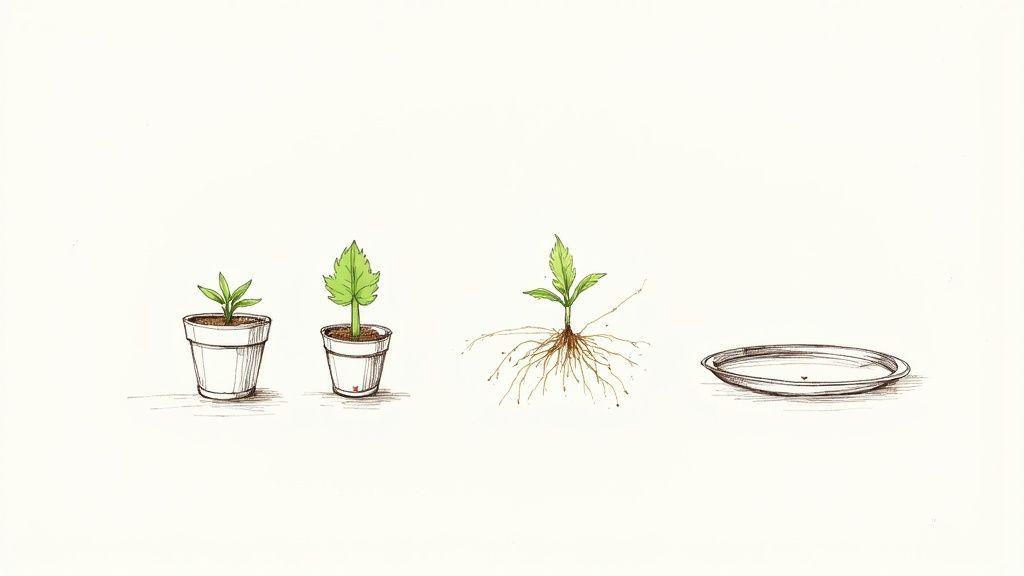
Propagation is basically just cloning your plant. You're creating a brand new, independent plant that's a perfect genetic copy of its parent. And for a tough succulent like the jade, the process is ridiculously easy. It’s a fantastic way to multiply your favourite varieties, save a plant that's had a bit of an accident, or create some really lovely, living gifts. The best part? It costs you nothing but a bit of patience.
Choosing Your Method: Leaf or Stem
You've got two main routes when it comes to propagating your jade plant in NZ: using a leaf or taking a stem cutting. Both work like a charm, but they give you slightly different results. A stem cutting will usually grow into a bigger, more established-looking plant much faster, simply because it already has a "trunk" to start with. Leaf propagation, on the other hand, is your go-to for making heaps of little plants all at once.
- Stem Cuttings: Perfect if you're already giving your plant a trim. Look for a healthy, mature stem that's at least 8-10 centimetres long.
- Leaf Cuttings: Ideal if a healthy leaf gets accidentally knocked off. Just make sure you've got the whole leaf, right down to the base where it attached to the stem.
No matter which you choose, the first step is the same. Grab a clean, sharp pair of scissors or a knife to make your cut. A clean slice helps stop any nasty infections and gives your cutting the best shot at success.
Step-By-Step Propagation Guide
Once you have your cutting, the most important part of the journey begins: patience. Rushing this is really the only way it can go wrong. Follow these simple steps for pretty much guaranteed success.
- Let It Callus: This is the non-negotiable step. After you take your cutting, pop it in a dry, shady spot for a few days, maybe even up to a week. You'll see the cut end dry out and form a hard, callous-like seal. This seal is crucial because it stops the cutting from rotting once it meets the soil.
- Prepare a Pot: Grab a small pot and fill it with a well-draining succulent or cactus mix. This gritty soil is the perfect environment for new roots to form without getting waterlogged.
- Plant Your Cutting: For a stem, just push the callused end about 2-3 centimetres into the soil—deep enough for it to stand up on its own. For a leaf, simply lay it flat on the soil's surface, making sure the callused end has gentle contact.
- Wait for Roots: This is where that patience really kicks in. Don't water it right away. Give it a week or two before you even think about giving the soil a light misting. Roots can take anywhere from a few weeks to over a month to start showing up.
- Nurture New Growth: Once you spot tiny new leaves or feel a bit of resistance when you gently tug the cutting (a sure sign of roots!), you can start watering it like a mature jade plant. Let the soil dry out completely between waterings. The original "mother" leaf will eventually shrivel up and fall off as the new plantlet gets established.
The best time to propagate your jade plant in New Zealand is during its active growing season in spring and early summer (September to December). The warmer temps and brighter light give your cuttings the energy they need to grow strong roots quickly.
While the process is similar for many succulents, you can find more specialised advice in our guide on how to propagate snake plants, which shares some of the same core principles. With a little care, you'll soon be watching your new baby jade plants begin their journey.
Troubleshooting Common Jade Plant Problems
Even the most bulletproof plants can have an off day, and your jade is no exception. When your plant starts looking a bit sad, it's usually sending a clear signal that something in its environment needs a tweak. Think of it as learning your plant's language.
This section is your go-to guide for figuring out what those signals mean, so you can get your green mate back to looking its best in no time.
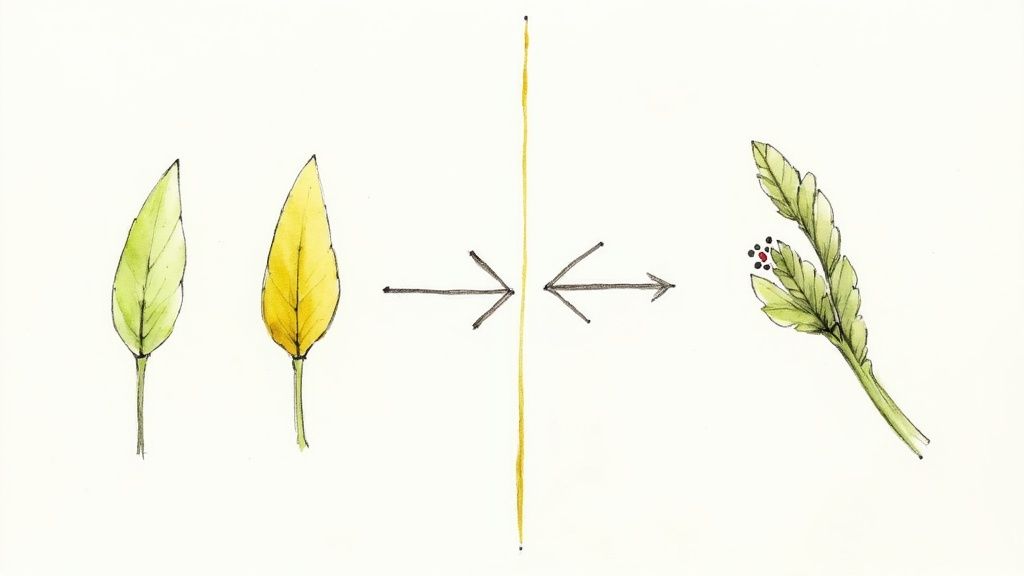
Honestly, most problems with a jade plant in NZ boil down to one of three things: water, light, or pests. A quick look at the leaves and stems is usually all it takes to play detective and find the culprit.
Decoding The Language Of The Leaves
Your jade plant’s leaves are like a living report card, telling you exactly how it’s feeling. Learning what to look for is the secret to great plant care.
If you spot something off, don't panic. Just run through this checklist to see what's up.
- Yellowing Leaves: This is the number one cry for help, and nine times out of ten it means overwatering. When the soil stays soggy, the roots can't breathe and start to rot. The leaves turn yellow, feel soft and mushy, and will fall off at the slightest touch.
- Shrivelled or Wrinkled Leaves: A classic sign of thirst. The plant is using up its water reserves faster than it can drink. A good, deep watering will usually have those leaves looking plump again within a day or two.
- Brown or Crispy Spots: Seeing scorched, dry patches? Your jade is probably getting sunburnt. This is a common one during our intense Kiwi summers if the plant is stuck in harsh, direct afternoon sun.
- Sudden Leaf Drop: If your plant suddenly sheds perfectly healthy-looking leaves, it's likely stressed. This can be triggered by a sudden temperature change, a cold draught, or even just moving it to a new spot.
A healthy jade plant has firm, plump, glossy green leaves. Any change from this is a direct message from your plant about what it needs. Learning to read these signs is your best tool for troubleshooting.
Dealing With Leggy Growth
Is your jade plant looking more like a lanky teenager than a sturdy little tree? That's what we call etiolation, or "leggy growth," and it's a dead giveaway that it's not getting enough light.
The plant literally stretches its stems, creating big gaps between the leaves as it reaches for the nearest light source. You can't shrink the stems that are already stretched, but you can easily fix it for all new growth.
Just move your plant to a brighter spot—a north-facing window is perfect—where it can get at least four to six hours of bright, indirect sunlight each day. To tidy up its current shape, you can prune the leggy stems back in spring. This will encourage it to branch out and grow back much fuller and more compact.
Tackling Common Pests In New Zealand
While jades are pretty tough, they aren't completely immune to pests, especially indoors. The most common freeloader you're likely to encounter is the mealybug.
Mealybugs are tiny, soft-bodied insects that look like little bits of white cotton fluff. They love to tuck themselves into the crevices where leaves meet the stem, sucking the life out of your plant and causing distorted growth. They also leave behind a sticky residue called honeydew, which can lead to sooty mould.
Here’s a simple, effective way to show them the door:
- Isolate the Plant: The moment you spot pests, move the infected plant away from your others to stop the invasion from spreading.
- Manual Removal: For a small infestation, dip a cotton bud in rubbing alcohol (or methylated spirits, which you can get anywhere in NZ) and dab it directly on each mealybug. The alcohol dissolves their waxy coating.
- Neem Oil Spray: If you're dealing with a bigger problem, mix up a spray bottle with water, a few drops of dish soap, and some neem oil. Spray the whole plant down, getting under the leaves and along the stems. Repeat this weekly until the pests are gone. It's a fantastic, eco-friendly option you can find at most garden centres.
Your Jade Plant Questions, Answered
We've covered a lot of ground, but sometimes you just need a quick, straight-up answer to a burning question. Let's get into the specifics that often trip up jade plant owners here in Aotearoa.
When Do Jade Plants Flower In New Zealand?
In New Zealand, you can expect to see jade plants flowering in our late autumn and winter, usually from around May to August. The trigger for these beautiful star-shaped flowers is a combination of shorter days and cooler nights.
To give your plant the best shot at blooming, make sure it gets plenty of bright, indirect light during the day but also experiences that natural drop-off in daylight hours. Tapering off your watering schedule a little in autumn also helps signal to the plant that it's time to put on a show.
Can I Grow My Jade Plant Outdoors In NZ?
You absolutely can, but it really depends on where you live. Jade plants love growing outdoors in New Zealand's warmer, frost-free spots like Northland, Auckland, and the coastal Bay of Plenty. Give them enough sun and space, and they’ll grow into impressive shrubs.
The catch is their serious aversion to frost, which will wreck their fleshy leaves. If you're in a colder region like Canterbury, Central Otago, or parts of the Waikato, it’s much safer to grow your jade plant in a pot. That way, you can easily shift it to a sheltered spot or bring it inside to ride out the winter freezes.
Knowing your local microclimate is everything. A jade that's thriving on a deck on the North Shore might need to be tucked away for winter just a few hours' drive south.
Why Are The Leaves Dropping Off My Jade Plant?
Nine times out of ten, leaf drop points to a watering problem. The most common culprit is overwatering, which leads to root rot. You’ll notice yellow, mushy leaves that fall off at the slightest touch.
On the flip side, letting your plant get bone-dry can also cause stress, making the leaves shrivel up and drop. Sudden shocks like a cold draught or an abrupt change in light or temperature can also cause it to shed leaves. Always check the soil first—if it’s soggy, let it dry out completely before you even think about watering again.
How Often Should I Repot A Jade Plant?
Jade plants are slow growers and actually prefer being a little snug in their pots, so they don't need repotting all that often. A good rule of thumb is to repot your jade plant in NZ every 2 to 4 years, or when you see roots making a break for it out of the drainage holes.
The best time for the job is during the main growing season in spring or early summer (that’s September to December for us). When you do move it, just go up one pot size and always use a fresh, well-draining potting mix made for succulents and cacti.
Ready to find your perfect jade plant or add another stunning variety to your collection? At Jungle Story, we connect you with New Zealand's best growers, offering a beautiful selection of healthy, happy plants delivered right to your door. Explore our range and start your own green story today at https://junglestory.co.nz.