
There's nothing quite like having your own supply of lemons, ready to be picked straight from the tree. That fresh, zesty flavour is a Kiwi staple, and growing your own is surprisingly straightforward. The real trick to success is picking the right variety for your spot, whether you’re in the sunny north or a sheltered nook further down the country.
Choosing the Right Lemon Tree for Your NZ Garden
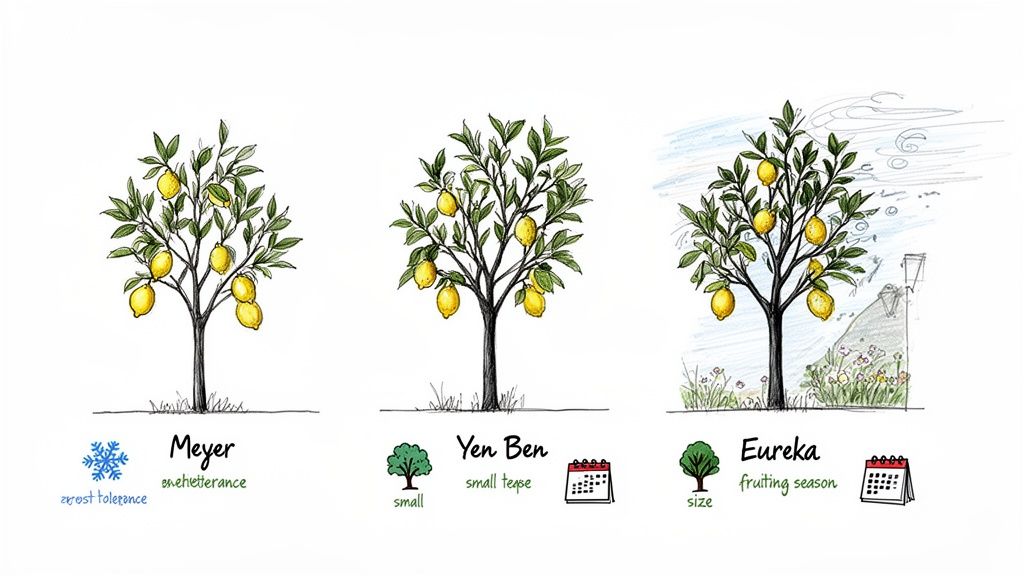
Getting this first step right makes all the difference. New Zealand’s climate is incredibly varied, so a lemon that thrives up in Northland might struggle through a Canterbury winter without a bit of help. Your choice here sets the stage for everything from the taste of your fruit to how much you’ll need to worry about frosts.
Before you head to the garden centre, have a think about what you really want from your tree. Are you after a constant supply of fruit for your gin and tonics? Or do you need that classic tart flavour for cooking and baking? Maybe you just need something tough enough to handle a surprise cold snap.
Top Varieties for Kiwi Gardens
The Meyer lemon is hands-down the most popular backyard lemon in New Zealand, and for very good reason. It's actually a cross between a lemon and a mandarin, which gives it a sweeter, less sharp flavour and a lovely thin, aromatic skin. They’re also naturally more compact trees and much more tolerant of cold than other types, making them a solid bet for most parts of the country. Best of all, they tend to produce fruit almost all year round.
If you’re after that classic, tangy lemon taste, the Yen Ben is a star performer. It gives you big, juicy, properly acidic lemons with a thin rind—absolutely perfect for drinks, dressings, or turning into marmalade. The main crop comes through our winter and spring, just when you need it most. It’s so good, in fact, that it’s become one of New Zealand's top export-quality lemons.
Another brilliant true lemon is the Eureka. This one's a vigorous grower that fruits year-round, hitting its peak in winter and spring. The lemons have that quintessential tartness, a thick skin, and very few seeds. The only catch is that Eureka isn't as frost-hardy as a Meyer, so it’s much happier in warmer, sheltered gardens in the North Island or in coastal spots.
To make the choice a bit easier, here’s a quick rundown of the most common varieties you'll find.
Top Lemon Varieties for New Zealand Gardeners
This table gives you a quick comparison of the most popular lemon trees available in NZ, helping you match a variety to your garden's climate and what you'll be using them for.
| Variety | Best For | Key Characteristics | NZ Climate Suitability |
|---|---|---|---|
| Meyer | All-round use, sweeter flavour, containers | Less acidic, thin skin, compact size, nearly year-round fruit. | Excellent. Very cold-tolerant, making it suitable for most of NZ. |
| Yen Ben | Classic tart flavour, cooking, drinks | Large, juicy, highly acidic fruit with a thin rind. Main crop winter/spring. | Very Good. Prefers warmer spots but handles light frosts once established. |
| Eureka | Year-round fruit, classic lemon taste | Thick-skinned, few seeds, vigorous grower. Main crop winter/spring. | Good. Needs a warm, sheltered, frost-free spot. Best for North Island/coastal areas. |
Ultimately, any of these will reward you with fantastic fruit. It's just about finding the one that feels right for your garden and your kitchen.
Considering Local Conditions
It’s easy to forget just how good our growing conditions are. While New Zealand’s lemon industry is tiny on a global scale—making up less than 0.05% of worldwide production—the quality is world-class. The success of our export lemons, especially the famous 'Yen Ben', shows just what can be achieved here. You can read more about our local citrus industry and its impressive reputation.
When you're picking a spot in your own garden, think about its unique microclimate. A sunny, north-facing wall can create a pocket of warmth that lets even a frost-tender Eureka thrive much further south than you’d think possible.
Planting and Potting Your Lemon Tree for NZ Conditions
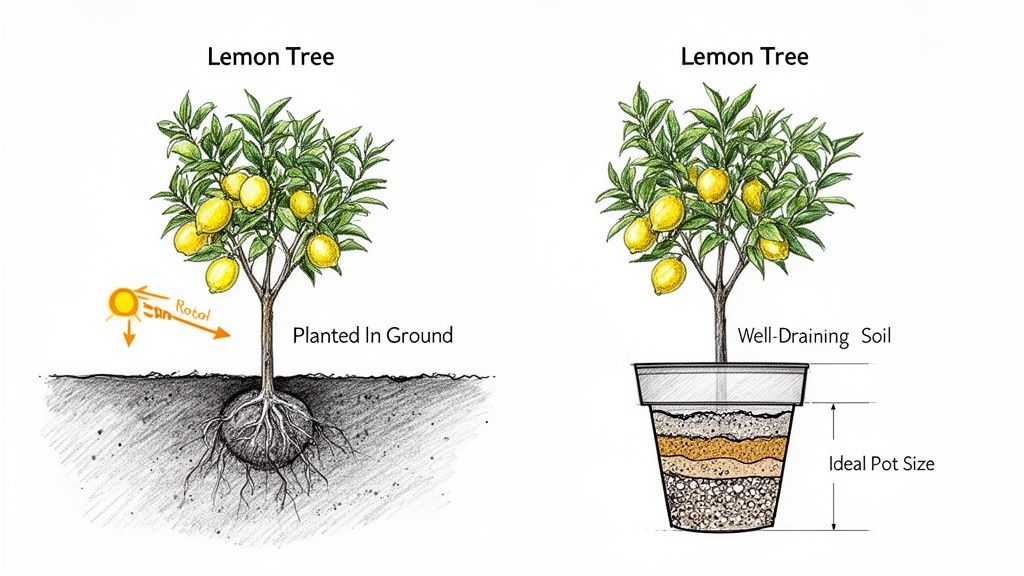
Giving your lemon tree the right start is probably the single most important thing you can do for its future health. Honestly, the decisions you make now—from where you plant it to the soil you use—will directly shape how well it establishes its roots and copes with our unique Kiwi conditions.
The best time to get a new lemon tree in the ground here in New Zealand is spring, usually from September through to November. This timing gives the tree the whole of the warmer season to settle in and develop a strong root system, making it far more resilient before its first winter rolls around. Always wait until the risk of the last frost has well and truly passed in your area.
Finding the Perfect Spot in Your Garden
Your lemon tree really only needs two things to thrive: sun and shelter. Go on a hunt for the sunniest spot in your garden, ideally one that gets at least six hours of direct sunlight each day. A north-facing position is the gold standard, as it maximises sun and often provides a bit of extra warmth from a wall or fence.
Shelter is just as crucial. New Zealand’s notorious winds, especially those biting southerlies, can really stress a young tree, stripping it of moisture and stunting its growth. Planting it near a protective wall, fence, or even a tough hedge can create a sheltered little microclimate where it will feel much happier.
Growing a Lemon Tree in a Pot
If you're short on garden space or live in one of the colder parts of the country, growing your lemon tree in a container is a brilliant solution. It gives you total control over its environment and lets you shift it to a protected spot when the weather turns nasty.
When it comes to picking a pot, think big. Start with a container that's at least 40-50 litres. This gives the roots plenty of room to stretch out and stops the soil from drying out too fast on a hot summer's day. Make sure the pot has plenty of large drainage holes—lemons absolutely hate having 'wet feet', and poor drainage is a fast track to root rot.
The right soil mix is non-negotiable for container-grown citrus. Standard garden soil will just compact over time, choking the roots and holding way too much water. You must use a specially formulated, free-draining citrus and fruit potting mix.
This type of mix is designed to give you the perfect balance of aeration, moisture retention, and nutrients. For a deeper dive into choosing the best medium for your container plants, you can learn more about creating the perfect potting mix and soil blend on our blog.
When you’re ready to plant, whether in a pot or the ground, dig a hole that’s twice as wide and just as deep as the root ball. Gently tease out any circling roots before you place the tree in the hole, ensuring the top of the root ball is level with the surrounding soil. Backfill the hole, gently firming the soil as you go, and give it a thorough watering to settle everything in and get rid of any air pockets.
Mastering Seasonal Lemon Tree Care in New Zealand

A healthy lemon tree in New Zealand has its own natural rhythm, one that lines up perfectly with our four distinct seasons. Think about it – what your tree needs in the heat of a Hawke's Bay summer is completely different from what it requires during a frosty Canterbury winter.
Getting this seasonal routine right is the secret to a tree that isn't just surviving but is genuinely flourishing. When you match your care—from watering and feeding to pruning and protection—with the time of year, you give your tree exactly what it needs, when it needs it. This simple approach prevents stress, sparks vigorous growth, and sets you up for an incredible harvest of juicy, homegrown lemons.
Summer Care: December to February
As the Kiwi summer really kicks in, your lemon tree goes into overdrive. All its energy is channelled into growing fruit and putting on new leaves. Your main jobs? Keeping it watered and fed.
During those hot, dry spells, a deep, thorough watering once or twice a week is far more effective than a quick daily sprinkle. You want to soak the entire root zone, which encourages the roots to grow deep down into the soil where it's cooler.
Potted trees are a different story. They can dry out in a single scorching afternoon, so you'll need to check the top few centimetres of potting mix every day. If it feels dry, give it a good drench until water runs freely from the drainage holes.
This is also peak feeding season. Apply a balanced citrus fertiliser every four to six weeks to fuel all that fruit development. A slow-release granular option is brilliant for trees in the ground, while a liquid feed works wonders for those in containers.
Autumn Prep: March to May
Autumn is a time of transition for your lemon tree. The intense growth of summer starts to ease off as the tree gets ready for the cooler months ahead. Your focus should pivot from encouraging growth to building up resilience for winter.
You can start to ease back on both watering and feeding now. The soil will naturally stay moist for longer as the temperatures drop, so always check before you water to avoid soggy, unhappy roots.
This is also the perfect time to lay down a thick blanket of mulch, like good-quality compost or bark chips, around the base of your tree. This acts like a duvet, insulating the roots from the cold and keeping those pesky winter weeds at bay.
Winter Vigilance: June to August
Winter is all about protection and a bit of planning. In many parts of New Zealand, frost is a real risk, especially for young, vulnerable trees. A single hard frost can easily damage tender new growth and can even be fatal for a small tree.
If you live in a frost-prone spot, be ready to cover your tree with frost cloth or even just an old sheet on clear, cold nights.
Pruning is the other key winter job. The best time to get the secateurs out is in late winter (around August), just before that big spring growth spurt begins. Focus on cutting out any dead, damaged, or crossing branches. This opens up the canopy, letting in more light and air, which not only keeps the tree healthy but makes harvesting a whole lot easier.
Our commercial growers know this cycle inside and out. It’s why New Zealand’s national lemon production, recently hitting 6.95 million kilograms, has its main harvest during late winter and early spring. By following their lead, we can get the best results in our own backyards. You can find more info on our country's production seasons over on Tridge.com.
Spring Renewal: September to November
Come spring, your lemon tree bursts back to life with a flush of new leaves and those incredibly fragrant blossoms. This is when it needs a serious energy boost to support all that new growth and set a heavy crop of fruit for the year.
Get back into your regular watering schedule as the weather warms up, and kick off your feeding routine again. An application of a quality citrus fertiliser right as you spot new growth will give the tree the essential nutrients it’s craving. It's a truly exciting time in the garden—those delicate white flowers are the promise of the zesty harvest to come.
To keep it all straight, here’s a simple calendar that breaks down the key tasks for each season.
Your Year-Round Lemon Tree Care Calendar for NZ
| Season (NZ) | Watering Focus | Feeding Focus | Key Action |
|---|---|---|---|
| Summer (Dec-Feb) | Deep, consistent watering 1-2 times weekly; daily for pots. | Apply balanced citrus food every 4-6 weeks. | Monitor for pests & ensure consistent moisture. |
| Autumn (Mar-May) | Reduce frequency as weather cools; check soil first. | Taper off feeding to harden growth for winter. | Apply a thick layer of mulch around the base. |
| Winter (Jun-Aug) | Water sparingly, only when dry. | No feeding required. | Prune dead/crossing branches & protect from frost. |
| Spring (Sep-Nov) | Resume regular watering as growth begins. | Apply citrus fertiliser at the first sign of new growth. | Watch for new blossoms & support new foliage. |
Having this seasonal flow in mind makes lemon tree care feel less like a chore and more like a partnership with nature, guiding your tree through its yearly cycle for the best possible results.
Solving Common Lemon Tree Pests and Diseases
Even the most loved lemon tree can hit a rough patch. Don’t panic; most problems are surprisingly simple to sort out once you know what you’re looking at. Think of it as your tree’s way of talking to you.
The trick is to get into the habit of really looking at your tree. A quick check of the leaves (top and bottom), branches, and any baby lemons whenever you're in the garden can make all the difference. Catching something early is always a much smaller job than tackling a full-blown invasion later on.
Identifying Common Kiwi Pests
Two of the most common gate-crashers on a lemon tree in New Zealand are scale insects and aphids. Both are sap-suckers, and while they won't kill your tree overnight, they'll certainly weaken it if you let them set up shop.
-
Scale Insects: These little guys look like small, raised bumps—often brown, black, or white—stuck to the stems, leaves, and even the fruit itself. The biggest giveaway is often the sooty mould they leave behind. It’s a black, dusty fungus that grows on the sticky "honeydew" the scale insects produce.
-
Aphids: We all know these tiny green or black critters. They absolutely love gathering on fresh, new growth, especially in the springtime. Just like scale, they also create honeydew, which means you’ll probably see ants farming them and that same black sooty mould appearing.
For both of these pests, your best bet is a good, thorough spray with horticultural oil. This stuff is brilliant because it works by smothering the insects, not poisoning them. Mix it up following the instructions on the bottle and give the entire tree a good drenching, making sure to get right under the leaves where they love to hide. Top tip: spray in the evening. This stops the sun from heating the oil and scorching the leaves.
Decoding Diseases and Deficiencies
Sometimes, it’s not bugs but the tree itself showing signs of stress. Learning to read what the leaves and fruit are telling you is a key part of lemon tree ownership.
Citrus verrucosis, which most of us just call citrus scab, is a classic. It’s a fungal problem that causes rough, corky, wart-like spots on the rind of the fruit. It looks a bit grim, but here’s the good news: the lemon inside is perfectly fine to eat! To keep it under control, prune out any really dense areas in winter to get more air moving through the branches. A preventative spray with copper oxychloride in spring can also help.
Yellowing leaves are another one that sends gardeners into a spin. It can mean a few things, but it often comes back to a nutrient issue. If it’s the older leaves turning yellow, it’s likely a lack of magnesium. If the new growth is coming through yellow, it’s probably short on nitrogen. Before you rush out for special supplements, just double-check that you’re giving it a good quality, balanced citrus fertiliser during the growing seasons.
We’ve got a whole guide on this if you want to dive deeper: why lemon tree leaves turn yellow.
A healthy tree is your best defence. Proper watering, seasonal feeding, and good airflow create an environment where pests and diseases struggle to take hold. A stressed tree, on the other hand, is an open invitation for problems.
Knowing the basics of identifying sick tree symptoms in general can be a huge help, too. A bit of vigilance and proactive care will see you through almost any issue, keeping your lemon tree happy and productive for years.
Harvesting Juicy Lemons and Propagating New Trees
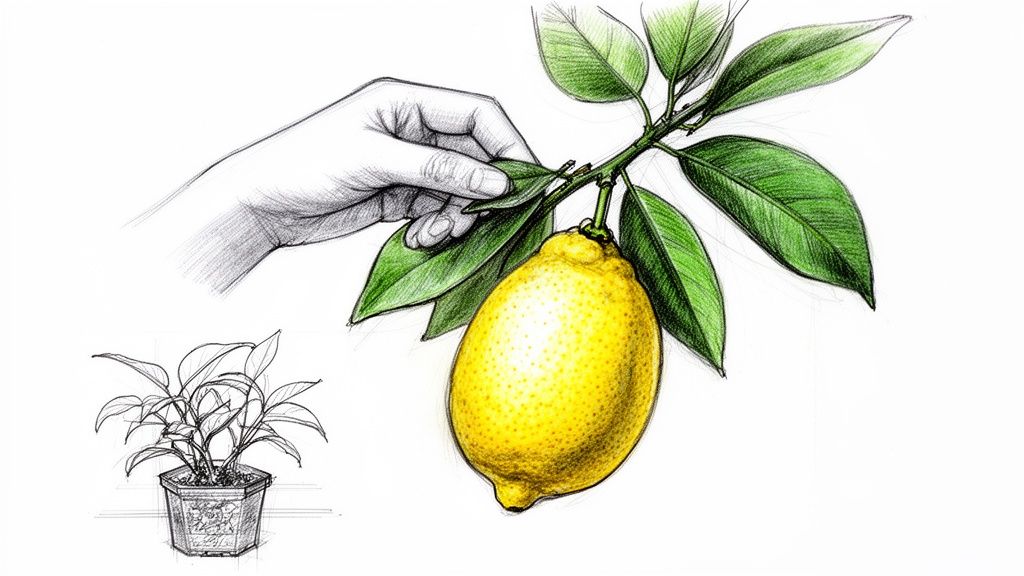
This is the moment all your hard work pays off—a tree laden with your very own zesty, homegrown lemons. The real trick to getting that peak flavour is knowing exactly when to pick them. Unlike a lot of other fruit, lemons won't sweeten up after they're off the branch, so patience is key.
You can actually leave lemons on the tree for quite a while, even after they've turned that beautiful bright yellow. They’ll just keep getting bigger and juicier. The perfect time to harvest is when the fruit feels heavy for its size and has a slight give when you gently squeeze it. A fully ripe lemon will have a rich, uniform yellow colour, though some varieties like the Meyer can get a lovely orange tinge.
How to Harvest Your Lemons
To get your lemons off the tree without causing any damage, grab a pair of clean, sharp secateurs or snips. Simply cut the stem close to the fruit, leaving a tiny bit of stem attached. This little bit of care prevents tearing the branch, which can leave an open wound for diseases to get in. Whatever you do, don't just twist or pull the fruit off—you risk damaging both the lemon and the delicate branches.
Remember that a lemon tree in New Zealand can fruit for months on end, especially hardy varieties like the Meyer. In fact, regular harvesting actually encourages the tree to produce more flowers, which means more fruit throughout the season!
Propagating a New Lemon Tree from Cuttings
Why stop at just one tree? Taking cuttings is a simple and incredibly satisfying way to grow your citrus collection or share the love with friends and family. The best time to give this a go is in late spring or early summer when the tree is full of life and actively growing.
Here’s a straightforward way to get started:
-
Select a Healthy Cutting: Look for a piece of semi-hardwood from this season's growth. You want a stem that’s about 15-20cm long, roughly the thickness of a pencil, and has no fruit or flowers on it. A good cutting will feel firm but still have a bit of flex.
-
Prepare the Cutting: Make a clean, angled cut just below a leaf node (where a leaf joins the stem). Carefully snip off all the leaves from the bottom two-thirds of the stem. This stops it from losing too much moisture. Just leave two or three leaves at the very top.
-
Plant Your Cutting: Dip the angled end into a rooting hormone powder to give it a head start. Plant it about 5-7cm deep into a pot filled with a free-draining seed-raising mix. Give it a good water, then pop a plastic bag over the top to create a mini-greenhouse. All it needs now is a warm, bright spot out of direct sunlight.
Keep the soil consistently moist but never soggy. With a bit of luck, you should see roots developing in about eight weeks. This whole process is much easier if you start with a healthy parent tree. For tips on shaping your tree to get plenty of good stems for cuttings, have a look at our guide on how to prune a lemon tree.
Your Top Lemon Tree Questions Answered
Even with the best of intentions, growing lemon trees can sometimes leave you scratching your head. We get it. Here are some of the most common puzzles Kiwi gardeners face, with straightforward answers to get your citrus back on track.
Why Are My Lemon Tree’s Leaves Turning Yellow?
Yellowing leaves (a condition called chlorosis) are a classic sign that your tree is trying to tell you something's not quite right. It usually points to one of three things: a nutrient shortage, wonky watering, or poor drainage.
Here in New Zealand, our heavy clay soils can be a real problem. They often get waterlogged, which basically suffocates the roots and stops them from taking up the good stuff. The most likely missing nutrients are nitrogen or magnesium.
First, check the soil. Is it soggy? If so, you’ll need to improve the drainage or cut back on watering. If the moisture feels about right, then it’s almost certainly a nutrition issue. A good dose of a specialised citrus fertiliser in spring and summer, one that contains trace elements like magnesium, should sort it out and bring back that lovely deep green.
A quick tip for diagnosing yellow leaves: If it's the older, lower leaves turning yellow, it's often a magnesium deficiency. If the new growth at the tips of the branches is looking pale, the tree is probably crying out for nitrogen.
How Often Should I Water a Potted Lemon Tree?
There’s no single answer here—it really depends on the season, the size of your pot, and where you've put it. Through a classic hot, dry Kiwi summer, a lemon tree in a container might need a decent drink every two to three days.
The best way to know for sure is the good old finger test. Poke your finger about 5cm into the potting mix. If it feels dry, it’s time to give it a thorough soak. Keep watering until you see it running freely from the drainage holes at the bottom.
Come winter, when the tree’s growth slows right down, you’ll want to pull back on watering significantly. Maybe just once every one or two weeks. Overwatering in the cold is the fast-track to root rot, which is a killer for citrus in pots.
Is It Really Possible to Grow a Lemon Tree in the South Island?
Absolutely! It takes a bit more thought and care, but a thriving lemon tree in the South Island is completely doable. Success all comes down to choosing the right variety and giving it a smart spot to live.
Go for a cold-hardy type like the trusty Meyer lemon. Plant it in the warmest, most sheltered, sunniest spot you can find. A nook against a north-facing wall is perfect, as the wall soaks up heat during the day and radiates it back out at night, creating a cosy microclimate.
Growing your lemon in a large container is another great strategy down south. It means you can physically move it to a more protected space—like under a covered porch or even into the garage—when a really nasty frost is forecast. For trees in the ground, wrapping them in frost cloth on those clear, frigid nights is a must, especially when they’re young and vulnerable. With a few precautions, you can be enjoying homegrown lemons no matter where you are in Aotearoa.
For all your gardening needs, from the perfect citrus potting mix to beautiful, healthy plants delivered to your door, explore the wide selection from trusted local sellers at Jungle Story. Find everything you need to start your citrus journey today at https://junglestroy.co.nz.