
Growing a lemon tree here in New Zealand is one of those classic Kiwi garden experiences, and for good reason. From the ever-reliable Meyer lemon, which seems to fruit almost constantly, to the sharp, classic tang of a Eureka, having your own tree means fresh citrus is never far away. It all starts with getting to know our unique growing conditions.
A True Kiwi Staple
The humble lemon tree isn't just another plant in the backyard; it's a real piece of our national story. For centuries, these hardy citrus trees have settled into our gardens, adapting to the local climate and becoming an almost iconic feature of the Kiwi home. When you have one, you're connected to generations of gardeners who've known the simple joy of picking a fresh lemon right off the branch.
Just how deep do these roots go? One of New Zealand's most incredible trees is an ancient lemon tree, planted around 1814 at the Rangihoua Bay mission site. It's thought to be the oldest surviving fruit tree in the entire country. For over two hundred years, it has thrived in Northland's subtropical climate, even outlasting the famous old pear trees in Kerikeri. You can read more about this amazing piece of our horticultural history over on the NZ Tree Crops Association website.
Why Lemons Love New Zealand
Our temperate climate really is the perfect spot for growing great lemons. A few key things work in their favour here:
- Plenty of Sun: Most parts of the country get more than enough sunshine to fuel strong growth and encourage a bumper crop of fruit.
- Mild Winters: While some spots get a decent frost, many regions—especially in the North Island and along the coast—have the mild winters that citrus trees absolutely love.
- Unique Microclimates: From the warmth of Northland down to the sunny pockets in Nelson and Canterbury, there’s almost always a sheltered, sunny spot for a lemon tree in a Kiwi garden.
A healthy lemon tree is more than just a plant; it feels like a symbol of a happy home. It represents abundance, zest for life, and the simple satisfaction of home-grown food, making it an essential for any Kiwi gardener looking to create their own slice of paradise.
This guide has been put together specifically for you, the New Zealand gardener. We’ll cover everything you need to know, from picking the right variety for your area to mastering the seasonal care that’s unique to our Southern Hemisphere seasons. Whether you're an old hand at this or just getting started, you'll find the confidence to grow a thriving lemon tree of your own.
Choosing the Best Lemon Varieties for Your NZ Garden
Picking the right lemon variety is hands-down the most critical decision you'll make. It’s the foundation for everything that follows. Not all lemon trees are created equal, and finding one that truly suits your local climate and what you want to do in the kitchen is the secret to a brilliant harvest.
Think of it like choosing a car. A hardy, forgiving Meyer is like a trusty family station wagon—perfect for almost any situation. A classic, zesty Eureka, on the other hand, is more like a high-performance sports car, built to deliver that sharp, acidic kick for specific recipes.
New Zealand’s climate is incredibly varied, from the subtropical warmth of the North to the cooler pockets of the South. The good news is, there’s a lemon tree for just about every backyard. Getting to know their individual personalities is the first step to finding your perfect match.
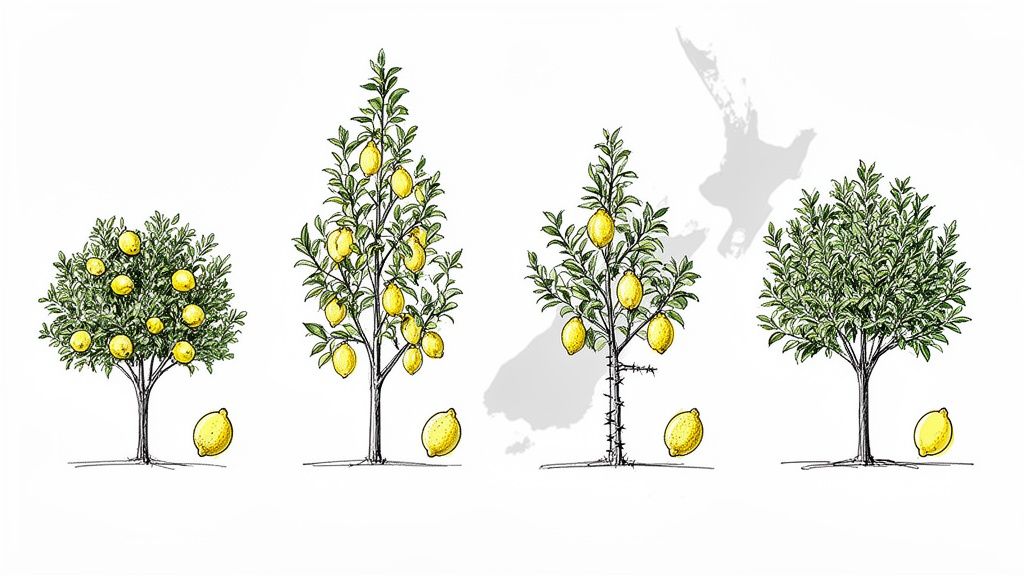
The Top Lemon Varieties for Kiwi Gardens
So, let's get into the most popular and reliable lemon trees you’ll find across New Zealand. Each one has its own flavour profile, growth style, and fruiting season, so one might be a better fit for your garden than another.
-
Meyer Lemon: Easily the most beloved backyard lemon in NZ, the Meyer is technically a cross between a lemon and a mandarin or orange. This gives it a much sweeter, less acidic fruit with a thin, aromatic skin. They are incredibly hardy, cope with cold better than most, and produce fruit almost year-round in warmer spots. A real workhorse.
-
Eureka Lemon: This is your classic, sharp-tasting "supermarket" lemon. The fruit is big, thick-skinned, and packed with acidic juice—perfect for cooking, baking, and G&Ts. Eureka trees are vigorous growers and are virtually thornless, but they’re not as tough in the cold as Meyers. They really thrive in the warmer, frost-free parts of the country.
-
Lisbon Lemon: Very similar in taste and look to the Eureka, the Lisbon is famous for its sheer vigour and heavy crops of acidic, juicy lemons. It’s a thorny, robust tree that can handle a bit more heat and cold than a Eureka, making it a solid choice for many North Island gardens.
-
Yen Ben Lemon: A descendant of the Lisbon, Yen Ben is a commercial favourite here in NZ. It’s prized for its smooth, thin skin and incredibly high juice content. It pumps out a huge crop of top-quality fruit, mostly through winter and spring, and has become a premium export variety, especially in markets like Japan.
Citrus has a long and storied history in New Zealand, stretching right back to the early 19th century. By 1963, lemons were already a well-established crop, covering 136 hectares of land. The classic Lisbon and Eureka types dominated, planted across 112 hectares, while the ever-popular Meyer variety took up the other 23 hectares. It’s a fascinating part of our horticultural story.
Lemon Variety Comparison for NZ Home Gardeners
To help you decide, here’s a quick side-by-side look at the most popular lemon varieties in New Zealand. Use this to compare their key features and find the perfect tree for your garden's conditions and your kitchen's needs.
| Variety | Best For | Fruit Profile | NZ Harvest Season | Frost Tolerance |
|---|---|---|---|---|
| Meyer | All-purpose, drinks, dressings, less acidic recipes | Sweeter, juicy, thin-skinned, less acidic | Year-round in warm areas, heaviest in winter | Good |
| Eureka | Classic culinary uses, baking, cooking, high-acid needs | Very acidic, thick-skinned, large fruit, few seeds | Late winter to late summer | Poor |
| Lisbon | Similar to Eureka, reliable heavy cropping | Highly acidic, juicy, seedy, thick-skinned | Winter and spring | Moderate |
| Yen Ben | High-quality juice, premium fruit, commercial standard | High juice content, acidic, smooth thin skin | Late autumn through spring | Moderate |
Ultimately, the choice comes down to your local climate and how you plan to use your lemons. For most Kiwi backyards, the resilient and sweet-fruiting Meyer is a foolproof starting point.
The Secret Ingredient Under the Soil: Rootstock
When you buy a lemon tree from a nursery, you’re almost always buying two plants grafted into one. There’s the scion (the top part that grows the lemons you want) and the rootstock (the root system it’s attached to). The rootstock is the unsung hero of the whole operation. It dictates the tree’s final size, its resistance to disease, and how well it copes with different soil types.
The rootstock is the tree's engine room. The right one gives your lemon the foundation it needs to thrive in your specific garden conditions, whether you're dealing with heavy clay or trying to grow in a cooler spot.
The most common rootstock for lemons in New Zealand is Trifoliata. It's a game-changer because it improves cold hardiness and provides fantastic resistance to root rot diseases—a massive advantage in our often-damp Kiwi climate. It also has a natural dwarfing effect, which helps keep the tree at a manageable size for the average backyard. If you're keen to branch out into other citrus, our broader guide on growing fruit trees in NZ has more tips. Always check the plant label when you buy; it should tell you exactly what rootstock you’re getting.
How to Plant Your Lemon Tree for Long-Term Success
Giving your lemon tree the right start is a bit like building a solid foundation for a house—get it right, and you're setting the scene for decades of healthy growth and heaps of fruit. Whether you're planting straight into the garden or opting for a pot, a little prep work goes a seriously long way.
The goal is to create a welcoming new home where your tree can happily stretch out its roots and settle in. Getting this initial stage right is probably the most critical part of growing lemons successfully here in New Zealand. Let's walk through the whole process, from picking the perfect sunny nook to getting your hands dirty.
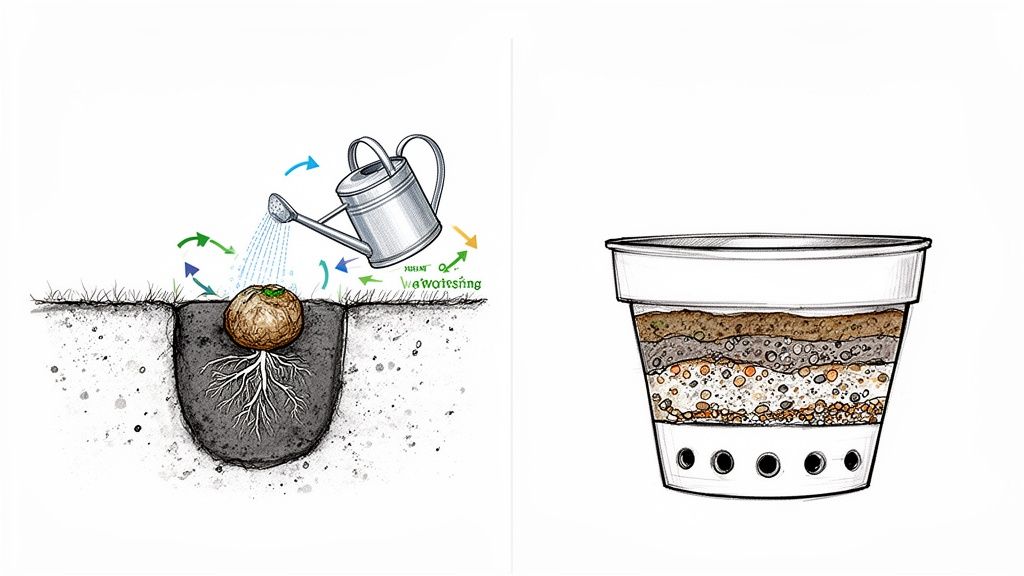
Finding the Perfect Spot in Your Garden
Before you even grab a spade, take some time to be an observer in your own garden. Lemon trees are total sun-worshippers and need at least six to eight hours of direct sun every day to really get going and produce fruit. But they absolutely despise a cold wind, so finding a sheltered spot is just as crucial.
Look for a place that is:
- North-facing: This is the jackpot orientation in New Zealand, capturing the most sun as it moves across the sky.
- Protected from Southerlies: A solid wall, a fence, or even a sturdy hedge can act as a brilliant windbreak against those chilly southerlies that can batter the leaves and knock off young fruit.
- Frost-free: Try to avoid low-lying pockets in your garden where cold air tends to pool. Planting up against a brick or concrete wall that soaks up heat during the day can create a lovely warm microclimate, giving your tree a bit of extra toastiness through winter.
Think of your garden as a collection of tiny microclimates. That warm, sunny corner right by the house might be several degrees warmer than an exposed spot in the middle of the lawn. You're looking for the five-star resort location for your lemon tree.
Preparing the Soil for Planting
Lemon trees aren't ridiculously fussy, but they do have their preferences. They love well-draining, slightly acidic soil, ideally with a pH somewhere between 6.0 and 7.0. Their absolute number one enemy is "wet feet" from poorly draining soil, which is a fast track to root rot.
If you're dealing with heavy clay soil, which is pretty common across parts of New Zealand, you'll need to improve its structure. The best way is to dig in generous amounts of compost or well-rotted manure. This helps break up the clay and allows air and water to move more freely. On the flip side, if your soil is super sandy, adding that same organic matter will help it hold onto precious moisture and nutrients.
For those of you growing in containers, picking the right growing medium is everything. A high-quality potting mix designed specifically for citrus or containers is your best bet. Whatever you do, avoid using soil from your garden in pots—it compacts down, drains poorly, and will make your tree miserable. To get the full rundown, check out our detailed guide on potting mix and soil selection.
Your Step-by-Step Planting Guide
Once you've scouted your location and prepped the soil, you're ready for the main event. Autumn and spring are the perfect planting seasons in New Zealand. The milder weather gives the tree a chance to establish itself without the stress of scorching summer heat or deep winter cold.
Here’s a straightforward process for planting in the ground:
- Dig the Right-Sized Hole: Your hole needs to be about twice as wide as the tree's root ball, but no deeper than the pot it came in. This encourages the roots to grow outwards into the surrounding soil.
- Inspect the Tree: Gently slide the tree out of its nursery bag or pot. A healthy tree has a firm root ball with light-coloured roots. If the roots are all tightly coiled up (what we call 'root-bound'), gently tease them apart with your fingers to encourage them to spread out once planted.
- Position the Tree: Pop the tree in the centre of the hole. The top of its root ball should sit level with, or even slightly above, the ground around it. Planting too deep is a classic mistake that can lead to collar rot at the base of the trunk.
- Backfill and Build a Moat: Fill the hole back in with your improved soil, gently tamping it down as you go to get rid of any big air pockets. It's a great idea to build a small mound of soil around the edge of the hole to create a watering basin.
- Water Thoroughly: Give the tree a really good, deep soaking right after planting. This settles the soil properly around the roots and is probably the most important drink it will ever get.
Mastering the Art of Watering and Feeding
If you want to take your lemon tree from just surviving to truly thriving, getting the watering and feeding right is where the magic happens. These two things work together to power everything—from lush, green leaves to a bumper crop of juicy lemons. For us here in New Zealand, that means getting in sync with our distinct seasons.
Think of watering less like a daily chore and more like giving your tree a deep, satisfying drink every now and then. Lemon trees much prefer deep, infrequent watering over a quick, daily sprinkle. When you water thoroughly, you encourage the roots to dig down deep in search of moisture, building a strong, resilient anchor for the tree.
Daily, shallow watering does the opposite; it keeps the roots close to the surface, making them vulnerable to drying out during a hot summer nor’wester. So, this deep-watering method is essentially training your tree to be tougher and more drought-tolerant over time.
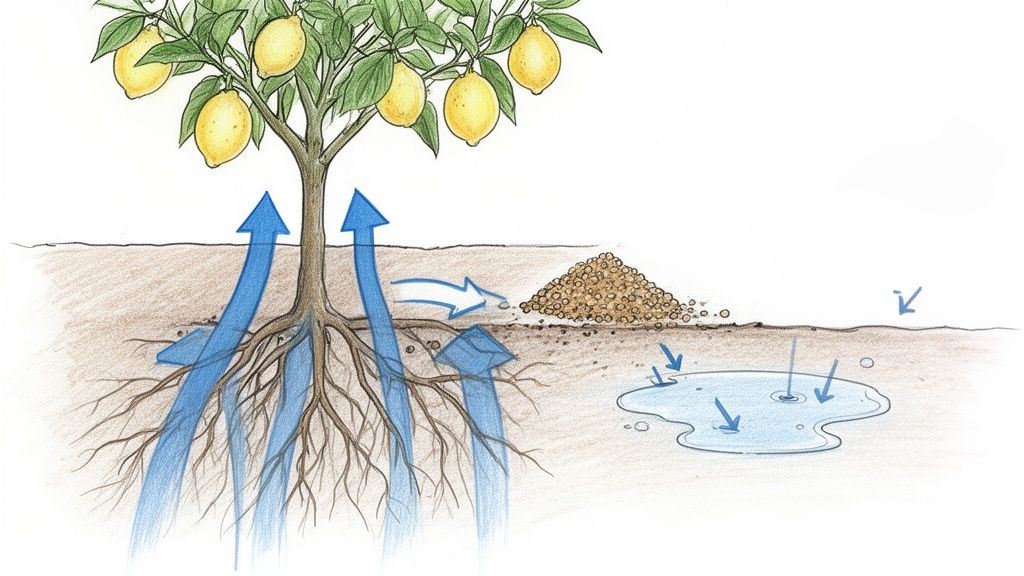
How and When to Water
The golden rule? Always check the soil first. Poke your finger about 5–10 cm down into the soil near the tree's base. If it feels dry at that depth, it’s time for a drink. If it’s still holding moisture, give it a few more days.
You’ll find your watering routine changes dramatically with the Kiwi seasons:
- Summer: Through the warm, dry months from December to February, your tree might need a deep soak once or even twice a week, especially if it’s growing in a pot.
- Winter: From June to August, growth slows right down. You’ll need to back off on the watering, maybe only giving it a drink every few weeks, as the soil stays damp for much longer. Overwatering in winter is a classic mistake and a fast track to root rot.
For lemon trees in containers, consistency is even more critical. Pots dry out far quicker than garden soil, so keep a close eye on them. And always, always make sure the pot has plenty of drainage holes.
A Seasonal Feeding Guide for NZ Lemon Trees
Lemon trees are hungry fellas and need a balanced diet to perform their best. Their nutritional needs shift throughout the year, focusing on new leaves at one point and developing fruit at another.
Think of fertiliser as a targeted meal plan for your tree. In spring, it needs a burst of energy for all that new growth. Come summer and autumn, it needs the right fuel to plump up its fruit for a great winter harvest.
In New Zealand, the two most important times to feed your lemon tree are in early spring (September/October) as new growth kicks off, and again in late summer (February/March) to support the fruit that’s developing.
The simplest approach is to use a quality citrus fertiliser. These are formulated with the perfect blend of nutrients that lemons crave:
- Nitrogen (N): The key ingredient for vibrant, green leaves. If your leaves are looking a bit yellow, a lack of nitrogen is often the culprit.
- Potassium (K): This is crucial for developing high-quality, juicy fruit.
Spotting Nutrient Deficiencies
Your tree’s leaves are like its own little report card—they’ll tell you exactly what’s going on. Yellowing leaves, known as chlorosis, are the most common sign that something is missing from their diet. Pay close attention to the pattern:
- Overall pale or yellow leaves: This usually points to a nitrogen deficiency. A good feed with citrus food should sort it out.
- Yellowing on older leaves but with a green V-shape at the base: This is a classic symptom of a magnesium deficiency. While your regular fertiliser helps, you can give it a quick boost by dissolving some Epsom salts (magnesium sulphate) in water and applying it.
By pairing a smart watering strategy with a timely feeding schedule, you’re giving your lemon tree all the support it needs to become a healthy, productive centrepiece in your Kiwi garden.
Pruning Your Lemon Tree for Health and Harvest
Pruning is one of those garden jobs that can feel a bit daunting. But for lemon trees here in New Zealand, a little trim really does go a long way. Think of it less like a major operation and more like a tidy-up to keep your tree healthy, productive, and looking sharp. A good prune is all about creating a strong, open structure that lets the sunshine and air right in.
This isn't just about looks. Good airflow through the canopy is your best defence against pesky fungal diseases. It also helps sunlight get deep into the tree, which is what you need to ripen a beautiful, even crop of lemons. Plus, you’re cutting out any dead or useless wood, which means the tree can redirect all its energy into growing healthy branches and, of course, more fruit.
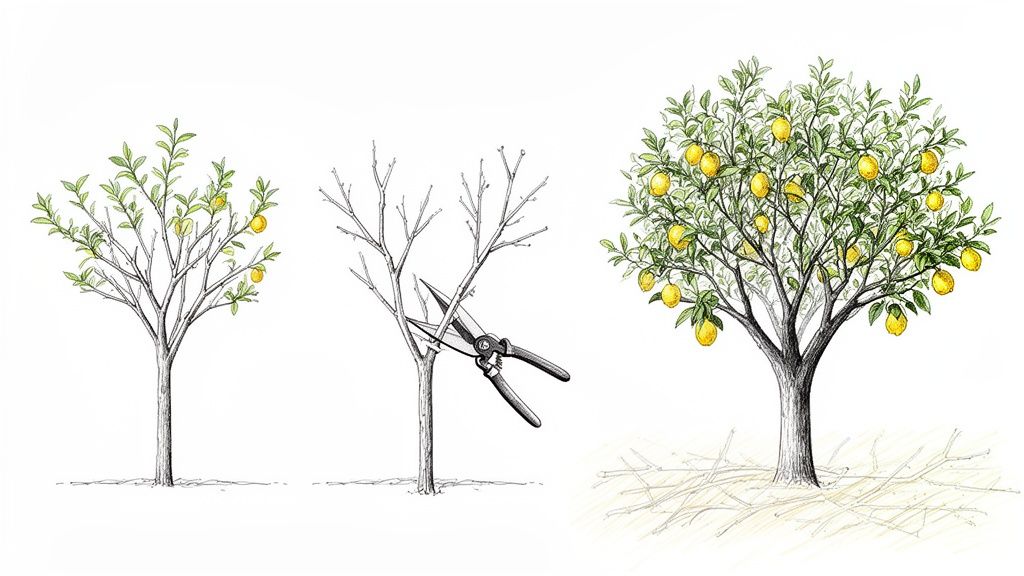
The Best Time to Prune in New Zealand
Timing is everything, especially with our unique seasons. The absolute best time to get your secateurs out is in late winter or early spring – think late August through to September. This sweet spot is just after you’ve picked most of the fruit, but before the tree kicks into its big spring growth spurt.
Pruning then gives the tree a chance to heal without the stress of harsh summer sun or deep winter frosts on fresh cuts. It's really important to wait until the risk of a hard frost has passed in your part of the country, as any new growth stimulated by pruning is super vulnerable to frost bite. A light trim in autumn to keep things in shape is fine, but save the bigger cuts for the end of winter.
How to Prune Your Lemon Tree
For a backyard lemon tree, the goal is a beautiful, open ‘vase’ shape. This structure lets light and air into every part of the tree, which is the secret to a healthy plant and a bumper harvest. You don't need to go crazy; a light, structural prune is always better than a harsh cutback.
Here’s what to look for:
- Dead, Damaged, or Diseased Wood: This is your number one priority. Snip off any branches that look brown, broken, or sickly. Always cut back to a healthy, green part of the wood.
- Crossing or Rubbing Branches: Any branches growing into each other need to go. They can create wounds that become an open invitation for pests and diseases. Pick the stronger of the two and remove the other.
- Water Shoots: You’ll spot these as vigorous, straight-up shoots, often growing from the main trunk. They almost never fruit and just steal the tree’s energy, so snip them off right at the base.
- Low-Hanging Branches: Trim any branches drooping too close to the ground. This gets the air moving underneath and makes it much easier to weed and mulch.
Pro Tip: Always use sharp, clean secateurs or loppers. A clean cut heals much faster and is less likely to get infected than a ragged tear. Wiping your blades with a bit of methylated spirits between cuts is a fantastic habit to get into.
Training a Young Lemon Tree
When your tree is young, the first few years are all about setting up a solid framework for its future. This isn't about heavy pruning – it's more about gentle guidance. The idea is to create a structure with three to four strong main branches that radiate out from the trunk.
As your tree grows, select these main branches and snip off any competing shoots. This encourages the tree to pour its energy into building a robust scaffold that will be strong enough to hold heavy crops of lemons for years to come. This early work is the foundation for a healthy, manageable, and seriously productive tree.
How to Manage Common Pests and Diseases
A healthy, well-fed lemon tree is its own best defence against trouble, but even the happiest plants can run into the odd pest or disease. The key isn't to panic, but to have a few simple, organic-first strategies up your sleeve. For us gardeners here in New Zealand, a preventative mindset and catching things early will keep most common issues from ever becoming a real headache.
The goal is to create an environment where pests and diseases simply don't feel welcome. Good air circulation, the right amount of water, and balanced nutrition make your tree a much less appealing target for unwanted visitors.
Identifying and Managing Common Pests
From tiny sap-suckers to burrowing grubs, a few common critters are worth keeping an eye out for. Acting fast when you spot them is the most important thing.
-
Aphids: You’ll often find these small, soft-bodied insects clustered on tender new growth in spring. A strong jet of water from the hose is usually all it takes to blast them off.
-
Scale Insects: These tricky pests look like tiny, raised bumps on stems and leaves. They suck the sap and weaken the tree, often going hand-in-hand with ants who "farm" them for the sweet honeydew they produce.
-
Citrus Borer: The larvae of the native Lemon Tree Borer beetle can cause serious damage by tunnelling into branches, causing them to wither and die. Pruning in autumn and winter, when the beetle isn't active, helps reduce the risk.
For persistent pests like scale and aphids, a horticultural oil spray is a brilliant organic solution. It works by suffocating the insects rather than poisoning them. Just be sure to apply it in the evening or on an overcast day to avoid scorching the leaves in the sun.
A healthy tree ecosystem is your greatest asset. Pests often target plants that are already stressed from poor watering, lack of nutrients, or insufficient sunlight. Keeping your tree in top condition is the most effective pest management strategy of all.
Tackling Common Lemon Tree Diseases
Fungal issues are the most common diseases you'll encounter with lemon trees in New Zealand, especially in our often-damp climate. As always, prevention beats cure.
-
Sooty Mould: This isn't really a disease itself, but a black, dusty fungus that grows on the sticky honeydew left behind by pests like aphids and scale. Get rid of the pests, and the sooty mould problem will disappear on its own.
-
Verrucosis (Citrus Scab): This fungal infection causes corky, scab-like lumps on the fruit's rind and can make the leaves look a bit distorted. The lemons are still perfectly fine to eat, and you can manage the disease by improving air circulation through good pruning.
-
Root Rot: This is the number one killer of citrus trees and is almost always caused by overwatering or planting in heavy, poorly draining soil. Making sure your tree has "dry feet" is absolutely essential for its long-term health.
The New Zealand citrus industry has focused on resilience for decades, using hardy trifoliate rootstock for lemons since the 1950s. Commercially, trees are considered mature at eight years and can be productive for over two decades, with Gisborne orchards hitting impressive yields of 27.4 tonnes per hectare.
A Quick Troubleshooting Guide
Use this simple table to quickly figure out what’s going on with your lemon tree and how to fix it.
| Symptom | Possible Cause(s) | NZ-Friendly Solution |
|---|---|---|
| Yellowing Leaves | Nutrient deficiency (especially nitrogen), overwatering. | Apply citrus fertiliser in spring/autumn. Check soil moisture before watering. Our guide on why lemon tree leaves turn yellow has more details. |
| Black, Sooty Film on Leaves | Sooty mould growing on honeydew from pests. | Find and treat the underlying pest (usually scale or aphids) with horticultural oil. |
| Raised Bumps on Stems | Scale insects. | Spray with horticultural oil, making sure you get complete coverage. |
| Warty Scabs on Fruit Rind | Verrucosis (Citrus Scab). | Prune to improve airflow. Copper-based sprays can be used as a preventative measure before the problem starts. |
While the specific pests and advice may differ slightly, general tips on warm weather insect management can add another layer to your approach. By keeping a close eye on your tree and acting promptly, you can ensure it remains a healthy, productive feature in your garden for years to come.
Common Lemon Tree Questions Answered
Even the most seasoned Kiwi gardeners run into the odd lemon tree puzzle. From leaves turning a worrying shade of yellow to a frustrating lack of fruit, some problems seem to pop up year after year. Let's tackle the most common questions we hear at the nursery and get your tree back to its happy, productive self.
Why Are My Lemon Tree Leaves Turning Yellow?
Yellowing leaves (a condition called chlorosis) are a classic sign your tree is trying to tell you something. More often than not, it's signalling a nutrient shortage, usually nitrogen or magnesium. But before you rush for the fertiliser, it could also be a red flag for soggy feet—too much water and poor drainage.
Your first move should be to check the soil. Poke your finger a few centimetres down. If it feels wet or boggy, you’ve found the culprit. Hold off on watering and let it dry out a bit. If the soil feels fine, then it's almost certainly a nutrition issue. A good feed with a balanced citrus fertiliser in spring and again in autumn will usually set things right.
Sometimes you might spot a very specific pattern: yellowing on the older leaves that forms a distinct V-shape. That’s a textbook case of magnesium deficiency. Thankfully, the fix is easy. Just dissolve some Epsom salts (magnesium sulphate) in water and pour it around the base of the tree.
Why Is My Tree Flowering but Not Fruiting?
It’s a real heartbreaker to see your tree covered in beautiful, fragrant blossoms, only for them to vanish without leaving any tiny lemons behind. It's a common complaint, especially for young trees. They often need a few years to build up enough energy to actually hold onto their fruit, so a little patience is key.
If your tree is mature, a few other things might be going on:
- Inconsistent Watering: Drastic swings between too dry and too wet while the tree is flowering or setting fruit can stress it out, causing it to drop everything.
- Not Enough Sun: Lemons are sun worshippers. They need at least six to eight hours of direct sunlight every day to have the energy to produce a decent crop.
- Nutrient Imbalance: Feeding your tree too much nitrogen is a common mistake. It encourages a riot of lush, green leaves but does nothing for flowers or fruit. Make sure you're using a proper citrus food that’s high in potassium to encourage fruiting.
How Do I Protect My Lemon from Frost?
For many of us in New Zealand, particularly inland or down south, protecting lemon trees from a winter snap is non-negotiable. Young trees are especially vulnerable, but even a well-established tree can get knocked back by a really cold night.
If your lemon is in a pot, the solution is simple: just move it somewhere sheltered. A spot against a warm, north-facing wall or under a covered deck is perfect. For trees in the ground, your best bet is to cover them with frost cloth on those clear, cold nights. Drape it so it reaches all the way to the ground—this traps the radiant heat coming up from the soil. Just remember to take it off in the morning so the tree can breathe and catch some sun.
Here's a handy tip: avoid giving your tree nitrogen-rich fertiliser late in autumn. This prevents a flush of soft, tender new growth just before winter, which is the first thing to get zapped by frost.
Ready to start your own citrus journey or add a new variety to your garden? Jungle Story connects you with New Zealand's best growers, offering a wide selection of healthy, high-quality lemon trees delivered right to your door. Explore our collection and find your perfect tree today at https://junglestory.co.nz.