
The secret to a great low-maintenance garden isn't just about picking tough plants; it's about finding the right plants for your patch of New Zealand. The best choices are those that are already suited to your local climate, meaning they'll need minimal fuss—less watering, pruning, and pest control—once they've settled in. Think of hardy natives like hebes and flaxes, or robust exotics such as lavender and succulents. These aren't plants that just survive; they're set up to thrive.
What 'Low-Maintenance' Really Means for a Kiwi Garden
The term ‘low-maintenance’ gets thrown around a lot. Let’s be clear: it doesn’t mean a garden you can plant and forget about completely. It’s about creating a beautiful space that works with you and our unique environment, not against it. It's about spending more time enjoying the view from your deckchair and less time wrestling with the garden shears.
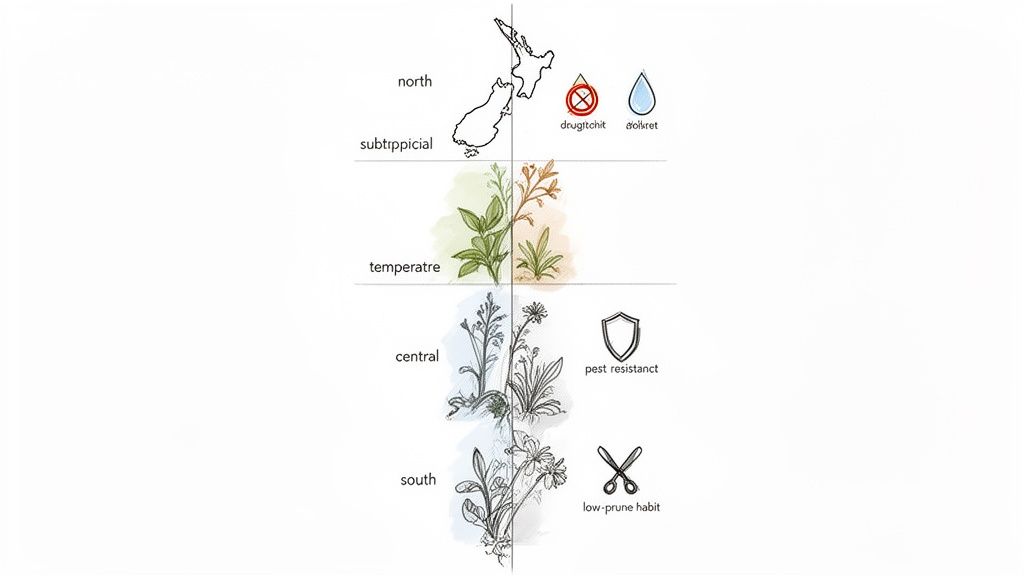
A plant that’s considered a breeze in a classic European cottage garden could easily turn into a demanding weed or a pest magnet here. Our intense sun, unpredictable rainfall, and wildly different regional climates—from the balmy, subtropical north to the frosty winters of Central Otago—are the real bosses. They dictate what a plant needs to truly flourish on its own.
The Core Traits of an Easy-Care Plant
So, what should you actually be looking for? The secret is to choose plants that have three key qualities built-in. An easy-care garden starts with a foundation of plants that naturally have these traits, slashing your workload right from the get-go.
These are the non-negotiables:
- Drought Resistance: Many parts of Aotearoa get hit with long, dry spells over summer. A plant that can handle weeks without a good drenching once it’s established is a massive time-saver.
- Natural Pest and Disease Resilience: Picking plants that common Kiwi pests tend to ignore or that naturally shrug off fungal diseases means you can put the spray bottle away.
- A Tidy Growth Habit: This is a big one. You want plants that grow into a pleasing shape all by themselves, without needing constant trimming to stop them from getting leggy or taking over the whole bed.
A truly low-maintenance garden isn't about finding plants that can merely survive neglect. It's about strategically choosing plants that are so well-suited to your garden's specific spot that they require very little from you to look their absolute best.
Working With Your Local Climate
Ultimately, the goal is to create a garden that largely takes care of itself. A plant that adores the humidity of Auckland will likely sulk and struggle in the dry, windy plains of Canterbury.
The first step is always to understand your own backyard’s microclimate—how much sun it gets, what the soil is like, and where the wind hits. By matching a plant’s natural preferences to what your garden already offers, you’re setting it up for a long and happy life. This simple shift in approach makes your garden a source of joy, not just another list of chores.
Choosing NZ Native Plants for Ultimate Resilience
The secret to a genuinely effortless Kiwi garden often lies right in our own backyard. New Zealand’s native plants are the ultimate masters of resilience, having spent thousands of years adapting perfectly to our unique soils, intense UV light, and often unpredictable weather.
Choosing natives is like hiring a team of experts who already know the job inside out. They’re pre-programmed to thrive here. That means they typically demand less water, fewer fertilisers, and a lot less fussing over pests compared to many exotic alternatives. You're basically harnessing nature's own design to create a garden that’s both beautiful and self-sufficient.
This natural adaptation is why Kiwi gardeners are turning to natives in droves. In fact, a nationwide survey revealed that at least 10 million native trees and shrubs are planted in New Zealand each year, with most shrub stands being under 20 years old. This highlights a massive, ongoing shift towards using locally adapted species that need fewer resources once established. You can find more details in the nationwide survey of planted native trees.
Structure and Texture Without the Work
One of the best things about native plants is their incredible diversity. They come in so many forms and textures, allowing you to build a visually interesting garden that holds its shape all year round. They provide the architectural 'bones' of a garden design with minimal intervention.
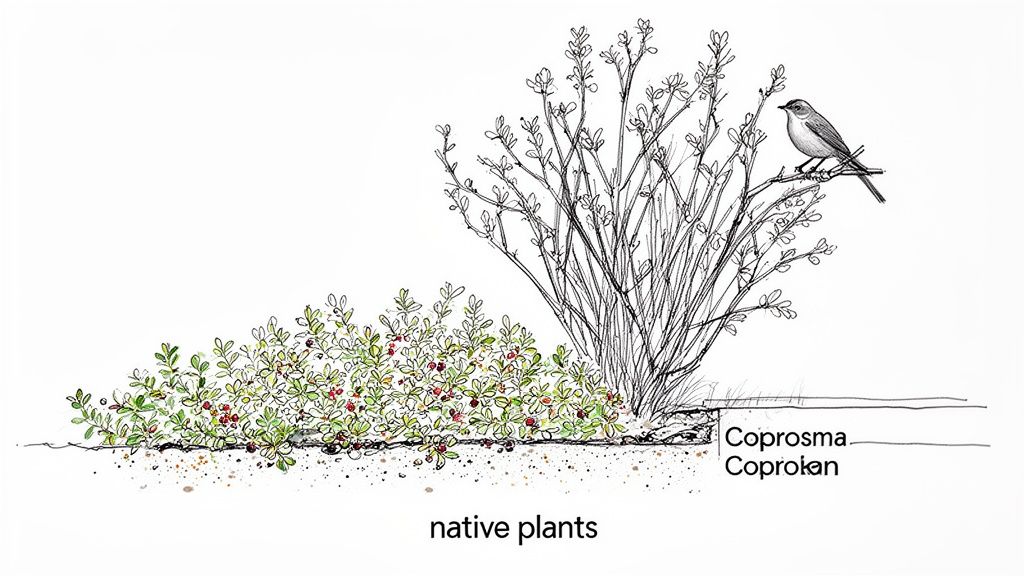
Take the wiry, tangled form of Corokia cotoneaster, also known as the wire-netting bush. Its zigzagging branches create a striking silhouette against a wall or fence, offering a sculptural element that requires almost no pruning to look fantastic. It gives you a stark, modern aesthetic and is incredibly tough, even in coastal conditions.
For softer textures, you can't go past the silvery-blue tussocks of Poa cita (Silver Tussock). They add movement and light to a garden bed and are exceptionally drought-tolerant once they get their roots down. They also provide a wonderful contrast to darker foliage plants.
Groundcover Plants That Do the Weeding for You
A dense layer of groundcover is one of the smartest moves for a low-maintenance garden. It effectively smothers weeds and reduces moisture loss from the soil, saving you time and water. Native groundcovers are especially good at this because they're adapted to outcompete local weeds.
A few excellent choices include:
- Coprosma 'Poor Knights': This vibrant, creeping coprosma forms a dense, glossy green mat that’s brilliant at suppressing weeds on banks or in garden beds.
- Muehlenbeckia axillaris (Pōhuehue): A tough-as-nails creeper that can handle sun, wind, and even a bit of foot traffic, forming a tight mat of tiny green leaves.
- Scleranthus biflorus: Often called the 'moss plant', this creates stunning lime-green cushions that look spectacular tucked between rocks or along pathways.
By selecting native plants, you're not just creating an easy-care garden for yourself; you're also building a valuable habitat. These plants provide essential food and shelter for our native birds, lizards, and insects, helping to restore a piece of local biodiversity in your own backyard. For a deeper dive into this topic, explore our complete guide to creating an NZ native garden.
Hardy Non-Native Plants That Thrive in New Zealand
While our native flora is incredible, New Zealand’s temperate climate is famously accommodating. This means we can borrow from a world of beautiful and tough non-native plants that flourish in Kiwi gardens with very little fuss. It really expands the creative palette.
These aren't just any exotic plants; they’re proven performers that have shown their toughness in local conditions. We hold them to the same strict criteria as our natives: drought-tolerant once established, great pest and disease resistance, and a growth habit that doesn't demand constant pruning.
By choosing the right exotic species, you can introduce different colours, textures, and fragrances without adding to your weekend workload.
Tough Succulents for Sunny, Dry Spots
When it comes to surviving a bit of neglect, succulents are the undisputed champions. Their clever ability to store water in their leaves makes them perfect for those tricky hot spots – think dry banks, gravel gardens, or pots on a sun-drenched deck where other plants would quickly crisp up.
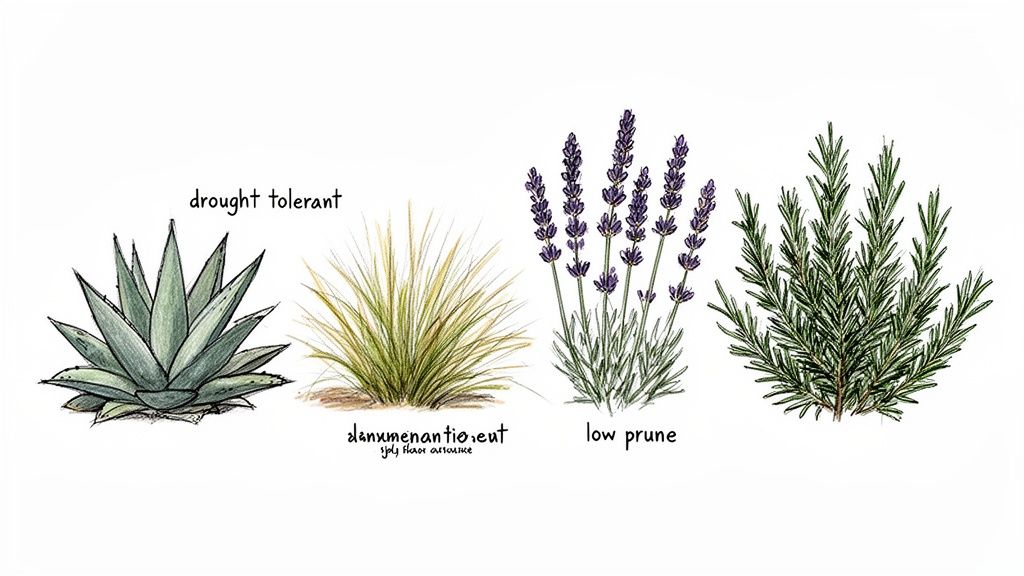
One of the most dramatic is the Agave, known for its strong, architectural rosettes. A variety like Agave attenuata (the foxtail agave) offers a softer look and is brilliant for adding a touch of the exotic. For ground-level interest, you can’t go past Sedum (stonecrop). Many types form dense, colourful mats that are fantastic for suppressing weeds and need virtually no care once they've settled in.
Don't mistake 'drought tolerant' for 'no water ever'. Even the toughest succulents like Agave will need consistent watering for their first few months in the ground to establish a strong root system. After that, they can largely fend for themselves.
Ornamental Grasses for Movement and Texture
If you want to add a sense of life and softness to your garden, ornamental grasses are an unbeatable choice. They catch the slightest breeze, creating gentle movement and sound, and their fine textures provide a beautiful contrast to bolder shrubs and perennials.
A few top performers for NZ gardens include:
- Miscanthus sinensis: Available in all sorts of sizes and colours, these grasses form elegant clumps and produce feathery plumes in late summer. They look absolutely spectacular when backlit by the sun.
- Pennisetum (Fountain Grass): Known for its graceful, arching form and fluffy, bottlebrush-like flowers, this grass adds a lovely, tactile quality to garden beds.
- Stipa (Feather Grass): These delicate, airy grasses create a shimmering, transparent effect that can really soften the hard edges of paths or patios.
Fragrant and Reliable Flowering Shrubs
For those who want colour and fragrance without the high maintenance, Mediterranean herbs and shrubs are a perfect fit. They’re naturally adapted to long, hot summers and poor soil, so they feel right at home in many parts of New Zealand.
Lavender is a classic for a reason. It thrives on sun and good drainage, producing those iconic purple flower spikes from late spring through summer that are an absolute magnet for bees.
Rosemary is another workhorse, offering fragrant evergreen foliage and delicate blue flowers. You can grow it as a hedge, a groundcover, or a standalone shrub, and it asks for little more than a sunny spot. Both are fantastic low maintenance outdoor plants NZ gardeners can rely on for year-round appeal.
Smart Garden Design to Minimise Your Workload
Choosing hardy plants is a great start, but an easy-care garden truly comes to life through clever, forward-thinking design. The most effective way to cut down your future workload is to create a garden where your plants are so happy, they practically look after themselves.
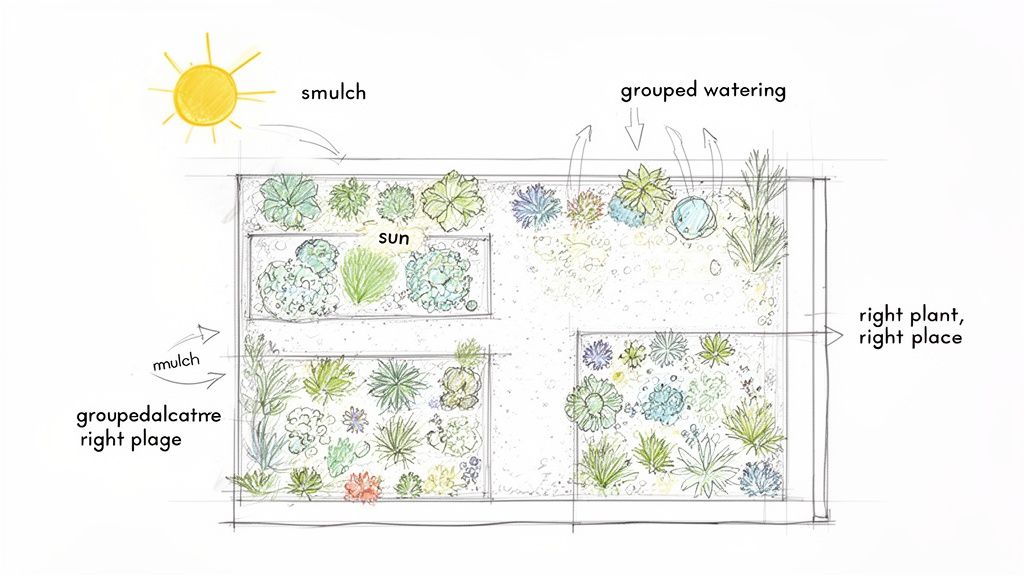
It all boils down to the golden rule of gardening: ‘right plant, right place’. Before you even pick up a spade, spend some time just watching your garden. Notice which areas get baked in the hot afternoon sun, which spots stay in cool shade, and where water tends to puddle after a good downpour.
When you match a sun-loving succulent to a sun-drenched spot or a delicate fern to a damp, shaded corner, the plant gets exactly what it needs from its environment. This simple act of observation stops you from fighting a losing battle, trying to force a plant to survive where it doesn’t belong. It'll save you countless hours of watering and worrying down the track.
Grouping Plants for Smarter Watering
Here’s a brilliant time-saving trick: group plants with similar needs together. Think of it as creating little communities or ‘hydrozones’ in your garden. By putting all your drought-tolerant Mediterranean herbs like rosemary and lavender in one bed, you create a zone that only needs an occasional drink.
Meanwhile, your thirstier perennials can be planted together elsewhere, letting you focus your watering efforts where they're needed most. This targeted approach prevents you from overwatering some plants while others wilt, and it makes your watering routine so much quicker. No more dragging the hose all over the garden from one thirsty plant to the next.
Work-Saving Layout Techniques
Beyond your plant choices, a few simple design decisions can dramatically cut down on maintenance. These small tweaks add up to a huge saving in effort throughout the year.
- Mulch is Your Best Friend: Applying a thick layer of mulch (like bark chip or pea straw) is one of the best things you can do. It keeps weeds down, holds onto precious moisture during our dry Kiwi summers, and helps regulate the soil temperature.
- Plan for Mature Size: Always check a plant's final size. That tiny shrub might look a bit lost now, but giving it enough room to grow means you won't be constantly pruning it back in a few years to stop it from swallowing its neighbours.
- Create Clean Edges: Simple, defined borders between your lawn and garden beds make mowing a breeze and give your garden a tidy, professional look without constant trimming.
A well-planned garden layout is like a good recipe—by combining the right elements in the right way, the final result is far greater than the sum of its parts. It becomes a self-sustaining system that works for you.
For those really tricky areas, considering options like drought-resistant lawn alternatives can be a game-changer. And if you want to dive deeper into the principles of effective layout, our guide to garden and landscape design has a heap of valuable insights.
Your Minimal-Effort Annual Garden Care Plan
The real magic of a low-maintenance garden isn’t just picking the right plants. It’s about creating a simple, effective routine that keeps everything looking sharp without swallowing your weekends. ‘Low maintenance’ should never mean ‘no maintenance’—instead, it’s about swapping endless odd jobs for a few focused tasks each season that give you the biggest bang for your buck.
This whole approach is about ditching the constant tinkering for a smart, once-a-year checklist. Forget the old myth that a beautiful garden needs constant feeding and fussing. When you have the right plants settled into healthy soil, your workload plummets, freeing you up to actually sit back and enjoy the space you’ve made.
Interestingly, it seems Kiwis get more satisfaction from a garden that requires a bit of attention, but not too much. An AUT-based study found that New Zealand homeowners with a higher number of native plants spent around 6–8 hours per week on garden care and actually reported higher enjoyment of their backyards. It seems that a moderate, satisfying level of involvement is the sweet spot. You can read more about the study on native plant adoption and homeowner satisfaction for the full picture.
Your Seasonal Action List
To keep things dead simple, let's focus on four key jobs spread throughout the year. This isn't some exhaustive list designed to overwhelm you; it's a high-impact plan to keep your low maintenance outdoor plants NZ garden thriving.
-
Late Winter Mulch Top-Up: As winter starts to wrap up (think late July to August), get out there and top up your garden beds with a thick blanket of mulch like bark chip or pea straw. This simple step locks in all that lovely winter moisture, keeps the soil warm for spring growth, and smothers the first wave of weeds before they even get started.
-
A Single, Strategic Prune: Most flowering shrubs only need one decent haircut a year to encourage heaps of blooms and keep a nice shape. The golden rule is simple: prune them immediately after they finish flowering. If you get the timing wrong, you risk snipping off next season’s flower buds.
-
Summer Watering Check: During the driest, hottest months, concentrate your watering efforts only on plants in their first year or anything in a pot. Your established, drought-tolerant champions should be perfectly fine on their own, which saves you a ton of water and time.
-
Autumn Tidy-Up: Once the weather starts to cool down, a quick tidy-up is all you need. Clear away any dead or diseased leaves and cut back perennials that have died down for the season. It preps the garden for winter and gets rid of hiding spots for pests.
Debunking the Feeding Myth
One of the biggest time-savers is realising that most tough, low-maintenance plants don't need regular doses of fertiliser, especially when they're in good soil. In fact, over-feeding can cause weak, sappy growth that basically sends out an open invitation to pests.
The best 'food' you can give your garden is organic matter. Healthy soil is the foundation of a healthy, self-sufficient garden.
Instead of reaching for a bag of fertiliser, focus on building up your soil structure naturally. A yearly layer of compost does far more good, creating a rich, living soil that provides all the nutrients your plants will ever need. If you're keen to make your own, our guide on how to start composting is the perfect place to begin. It's a simple shift in mindset—from 'feeding plants' to 'nurturing the soil'.
Got Questions About Your Easy-Care Kiwi Garden?
Even the most straightforward garden plans can leave you scratching your head. Let's dig into some of the most common questions Kiwi gardeners have when trying to create a beautiful outdoor space that doesn't demand all their time.
Getting these details right is often the last piece of the puzzle, turning a garden that needs you into one that simply works for you.
What Are the Best Plants for Heavy Clay Soils?
Ah, heavy clay soil. It’s a classic headache for so many New Zealand gardeners. In winter, it's a sticky, waterlogged mess, and in summer, it bakes harder than concrete. The trick is to pick plants with tough, powerful root systems that can push right through that dense structure.
A few excellent choices for conquering clay include:
- Astilbe: These perennials throw up gorgeous, feathery plumes in summer and really don't mind having "wet feet" over winter. This makes them a perfect fit for those damp, clay-heavy spots in partial shade.
- Heuchera (Coral Bells): Best known for their stunningly colourful leaves, these hardy characters are surprisingly happy in clay soils, just as long as they aren't sitting in a puddle all winter.
- Daylilies (Hemerocallis): These are as tough as old boots. Daylilies will pretty much thrive in any soil you throw at them, including heavy clay. As a bonus, their fibrous roots actually help to break up and improve the soil over time.
Here's a pro tip for dealing with clay: never, ever dig it over when it's soaking wet. You'll just compact it and ruin the structure. Instead, just keep layering organic matter like compost on top. The worms will do all the hard work of mixing it in for you.
How Do I Stop My Easy-Care Garden Looking Messy?
It’s a fine line, isn’t it? A "low-maintenance" garden can sometimes tip over into looking a bit wild and untidy. The secret to keeping things looking sharp—without creating more work—is all about structure and repetition.
Think of it as giving your garden strong "bones." This could be a neatly clipped hedge of Corokia or Teucrium fruticans, a clearly defined garden path, or even just a few ornamental grasses like Chionochloa rubra (Red Tussock) repeated through the beds. This repetition pulls everything together, making the design feel deliberate and preventing it from looking chaotic. And never underestimate the power of clean, crisp edges along your lawns and garden beds – it makes a world of difference.
What Are the Top Hardy Choices for Shady Spots?
Finding plants that truly flourish in the shade can feel like a mission, but there are plenty of tough, beautiful options that don't need direct sun. For that tricky dry shade, often found under established trees, you honestly can't go past our native Arthropodium cirratum (Renga Renga Lily) with its lush, broad leaves.
If you have damper, more sheltered shady spots, ferns are a fantastic choice. The native Asplenium bulbiferum (Hen and Chicken Fern) brings wonderful texture and life to a dark corner. Need a pop of colour? The classic Hosta is a brilliant performer in the shade, offering incredible foliage in all sorts of greens, blues, and golds. They're perfect for brightening up those gloomy parts of the garden.
Ready to build your own effortless Kiwi garden? At Jungle Story, we connect you with trusted local growers offering a massive selection of hardy native and exotic plants perfect for any low-maintenance project. Explore our collection and start creating your beautiful, easy-care outdoor space today. Find your perfect plants at https://junglestory.co.nz.