
The Monstera is an absolute icon. You’d be hard-pressed to find a plant more beloved in New Zealand homes, and for good reason – those dramatic, tropical leaves are pure magic. They have a unique way of transforming a room, giving it a splash of lush, jungle-like life.
This guide is written for Kiwi plant lovers, by Kiwi plant lovers. We'll cover everything you need to know to get your Monstera plant not just surviving, but truly thriving.
Why Every Kiwi Home Needs a Monstera

Take a peek inside any modern home in New Zealand, and there's a pretty good chance you'll spot the unmistakable silhouette of a Monstera. Often called the 'Swiss cheese plant', its famous split leaves have made it a bona fide superstar in the indoor plant world. But its charm goes far beyond just its good looks; this plant has a story that fits the Kiwi lifestyle perfectly.
Originally from the warm, humid jungles of Central America, the Monstera has settled in beautifully here in New Zealand. It does especially well in the warmer, frost-free parts of the North Island, showing a remarkable ability to adapt. And really, that's the key to its success here.
A Plant That Feels Right at Home
The journey of the Monstera to our shores is a cool one. Monstera deliciosa was first brought over for horticultural reasons, and it didn’t take long for everyone to see how resilient it was.
Despite its tropical roots, it’s proven itself as a long-lived perennial that can handle local conditions. The NZ Plant Conservation Network has even documented its widespread presence in vegetation surveys, which just goes to show it's a persistent and much-loved feature in our gardens, not an invasive pest.
The real magic of a Monstera is its ability to bring the outside in. Those big, sculptural leaves create a sense of calm and a connection to nature, making any room feel more alive and welcoming.
More Than Just a Pretty Leaf
For a lot of Kiwis, a Monstera isn't just another piece of decor. It’s an engaging hobby that connects us to the natural world. There's something uniquely satisfying about watching a new leaf slowly unfurl and develop its very first splits.
It’s this active growth and visual change that makes it one of the great indoor houseplants for everyone, from complete beginners to seasoned collectors.
This guide is your complete roadmap. We’ll walk you through everything, from choosing the perfect variety available locally to mastering its care through our very distinct Southern Hemisphere seasons. By the end, you’ll have all the confidence you need to grow a stunning Monstera that becomes a true centrepiece in your home.
Here is the rewritten section, crafted to sound like an experienced human expert and match the provided examples.
Choosing Your Perfect Monstera in New Zealand
Getting into the world of Monstera is a pretty exciting journey, and if you're in New Zealand, you're absolutely spoiled for choice. There's a fantastic range of varieties out there, so finding the one that perfectly fits your space and style is the first, fun step to creating your own indoor jungle. From the all-time classic to more unique trailing types, there’s a Monstera plant NZ homeowners will love.
Before we dive into the most popular varieties, let's take a look at what makes each of them special. Some are big and bold, while others are more delicate and vining. Understanding their unique traits will help you pick the perfect green companion for your home.
Popular Monstera Varieties in New Zealand
This table breaks down some of the most common Monstera you'll find here in Aotearoa, giving you a quick comparison of their looks, how tricky they are to care for, and what you can expect to pay.
| Variety Name | Common Name | Key Features | Care Level | Typical NZ Price |
|---|---|---|---|---|
| Monstera deliciosa | Swiss Cheese Plant | Large, iconic leaves with deep splits (fenestrations). A classic statement plant. | Easy | $20 - $80 |
| Monstera adansonii | Swiss Cheese Vine | Smaller, heart-shaped leaves full of oval holes. Great as a trailing or climbing plant. | Easy to Medium | $15 - $50 |
| Rhaphidophora tetrasperma | Mini Monstera | Not a true Monstera, but has a similar look with smaller, split leaves. Fast-growing climber. | Easy | $25 - $60 |
| Monstera siltepecana | Silver Monstera | Juvenile leaves have a beautiful silver-grey sheen with dark green veins. A unique climber. | Medium | $30 - $70 |
Of course, this is just the tip of the iceberg. Keep an eye out for rarer finds like the Monstera obliqua or variegated varieties, though be prepared for a higher price tag. No matter which you choose, you're getting a plant with bags of personality.
The most famous of them all has to be the Monstera deliciosa. This is the plant that usually pops into your head when you think 'Monstera', with its huge, glossy leaves that get those iconic splits—or fenestrations—as it gets older. It’s a real statement piece that can get quite large, making it a spectacular floor plant that just commands attention.
If you’re working with a bit less space or just love more delicate foliage, the Monstera adansonii is a brilliant choice. Often called the 'Swiss Cheese Vine', its leaves are covered in oval-shaped holes, giving it a lovely lacy look. It’s a super versatile climber or trailing plant, perfect for popping on a shelf or in a hanging basket where its vines can cascade down beautifully.
Where to Find Your Monstera
Once you’ve got a variety in mind, the hunt for a healthy plant begins. Luckily, Kiwi plant lovers have plenty of great options.
- Local Garden Centres: Places like Mitre 10, Bunnings, or Palmers are always an excellent starting point. They usually have a good stock of the common varieties, and the best part is you can inspect the plants in person.
- Specialised Online Nurseries: Online stores and dedicated marketplaces like Jungle Story can give you access to a much wider range, including some of the rarer finds. It’s a great way to find something a bit unique, delivered right to your door.
- Community Marketplaces: Don’t forget to check out Facebook Marketplace or local plant groups. You'll often find passionate growers selling cuttings or established plants, usually at a great price and with some friendly advice thrown in.
Your Pre-Purchase Health Check
Bringing home a healthy plant is the absolute key to long-term success. Before you hand over your money, take a moment to play plant detective and give your potential new friend a quick once-over. A few minutes of checking now can save you a world of hassle later on.
Think of it like a wellness check-up for your plant before it even comes home. A healthy start is the best foundation for vigorous growth, ensuring your Monstera thrives from day one.
Here’s a simple checklist to run through:
- Inspect the Leaves: You're looking for vibrant, glossy green foliage. A few minor tears or blemishes are normal, but steer clear of plants with a lot of yellowing, brown crispy edges, or lots of dark spots, which could be a sign of overwatering or disease.
- Check for New Growth: A healthy, happy plant is an actively growing one. Look for small, tightly furled new leaves poking out from the base or at the end of a vine. This is a fantastic sign that the plant is doing well.
- Lift the Pot: Does it feel surprisingly heavy for its size? This might mean the soil is waterlogged, which is a fast track to root rot. The soil should feel slightly moist, but definitely not soaking wet.
- Look for Pests: Carefully check the undersides of leaves and where the leaf stems meet the main stem. Keep an eye out for tiny webs (spider mites), small white fluffy spots (mealybugs), or any other unwelcome visitors.
- Examine the Roots: If you can, gently slide the plant out of its nursery pot. The roots should be firm and white or a light tan colour. If they look dark, mushy, or have a bad smell, that's a clear red flag for root rot.
By following these simple steps, you can confidently pick out a robust and pest-free Monstera. This careful selection process really sets you and your new plant up for a long and happy partnership.
Mastering Monstera Care for the NZ Climate
Growing a magnificent Monstera in New Zealand really comes down to one thing: understanding its needs throughout our distinct seasons. While these plants are pretty forgiving, giving them the right conditions is the difference between a plant that just survives and one that truly thrives, pushing out those incredible, split leaves we all love.
Think of your Monstera as a guest from the tropics. It’s used to the dappled sunlight of a jungle floor, not the full-on Kiwi sun. Getting the basics of light, water, and food right is your recipe for success.
Finding the Perfect Spot for Your Plant
The ideal home for your monstera plant nz is a room with plenty of bright, indirect light. An east-facing window is often perfect, as it catches the gentle morning sun. A spot a few metres back from a north or west-facing window works well too, just as long as the harsh afternoon sun can't hit the leaves directly and cause ugly scorch marks.
Here’s how to tell if the lighting is off:
- Too much light: You’ll start to see yellowing leaves or burnt, crispy brown patches.
- Not enough light: The plant might get ‘leggy,’ with long, stretched-out stems and fewer leaves. More importantly, a lack of light is the number one reason a mature Monstera won't develop its famous splits.
If you're thinking of adding some greenery to your outdoor areas, it’s best to stick with plants suited to our local environment. You might be interested in our guide to native grasses in NZ, which are fantastic low-maintenance options for those sunny garden spots.
The Art of Watering in the Southern Hemisphere
Watering is where so many new plant parents go wrong, especially with our humid summers and damp winters. The golden rule with Monstera is to let the top layer of soil dry out between waterings. Overwatering is the quickest path to root rot, a serious problem that can be tough to come back from.
The easiest way to check is to poke your finger about 2-3 cm deep into the soil. If it feels dry, it’s time for a drink. When you do water, give it a proper soak until water runs out the bottom, then make sure to tip out any excess from the saucer.
Remember this simple mantra: "When in doubt, let it dry out." Monstera are far more forgiving of being a bit too dry than they are of sitting in soggy soil.
Your watering routine will change quite a bit with the Kiwi seasons:
- Spring and Summer (September - February): This is peak growing time. Your plant will be thirsty, and you'll probably need to water it every 1-2 weeks.
- Autumn and Winter (March - August): Growth slows right down, and so does the plant's need for water. You might only water every 3-4 weeks, or even less. Always, always check the soil first.
Choosing the Right Soil Mix
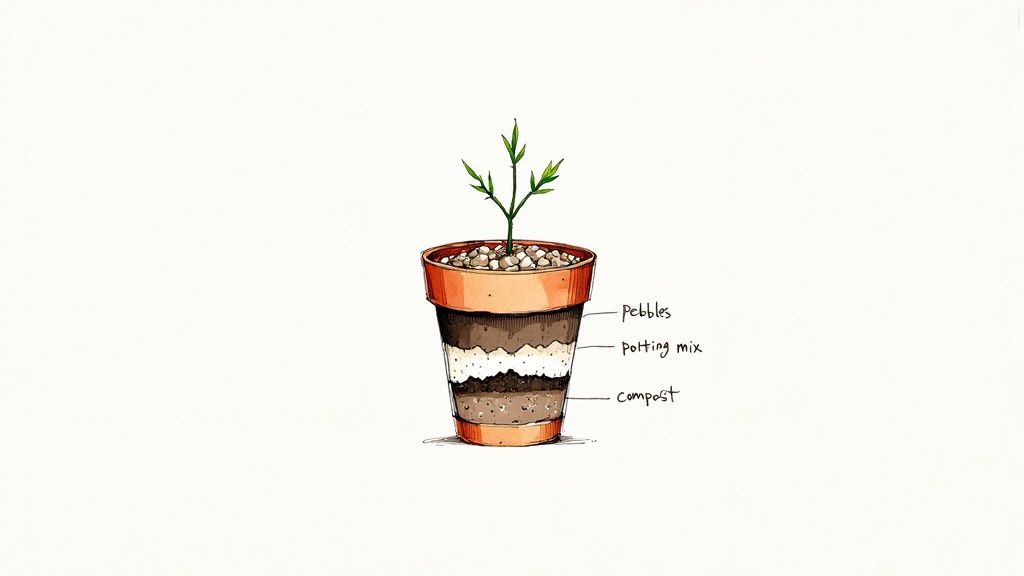
To protect their roots, Monstera need a potting mix with fantastic drainage. Your standard bag of potting mix is often too dense and holds on to too much water. You want something much chunkier and airier to create the perfect home.
It’s easy to whip up your own ideal blend. Just combine:
- 50% high-quality indoor potting mix
- 25% orchid bark
- 25% perlite or pumice
This mix gives the plant nutrients while making sure water drains freely and oxygen can reach the roots, just like the loose, organic-rich floor of its native jungle.
A Simple Fertilising Schedule for Kiwi Growers
A little bit of plant food goes a long way to support all that lush, leafy growth during the warmer months. Feeding just replenishes the nutrients in the soil that the plant uses up as it grows. For us here in the Southern Hemisphere, that means focusing on spring and summer.
A good rule of thumb is to feed your Monstera about four times a year. A balanced liquid fertiliser diluted to half a teaspoon per 2 litres of water is perfect. Applying this during the active growing season from spring through summer gives your plant the boost it needs to produce new leaves.
Steer clear of fertilising in autumn and winter when the plant is dormant. Feeding it during its rest period can actually burn the roots and do more harm than good. Once you master these simple care steps, you'll be well on your way to enjoying a happy, healthy Monstera for years to come.
Styling Your Home With a Monstera
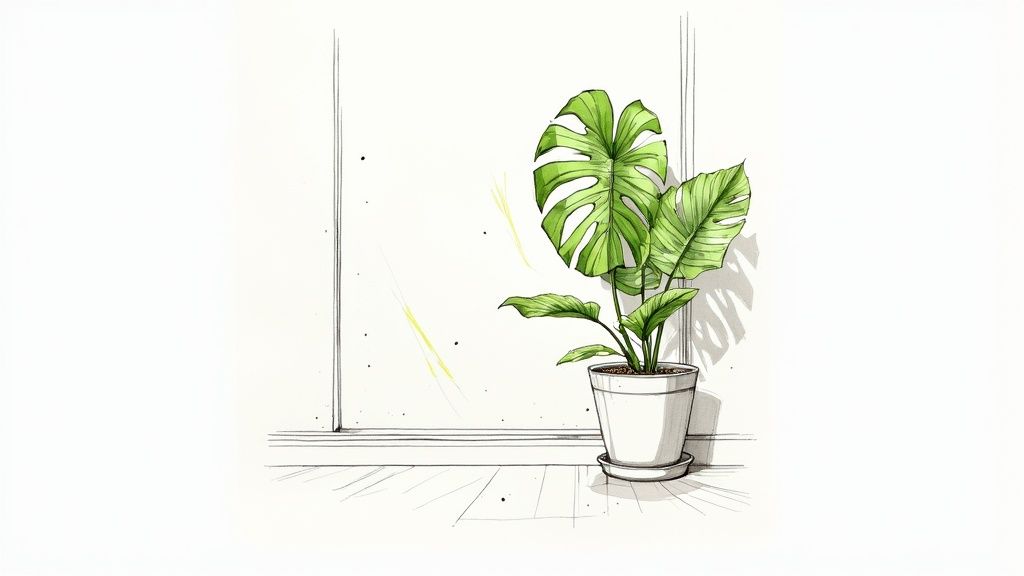
A Monstera is so much more than just another houseplant. Think of it as a living piece of art, one that can instantly lift the whole vibe of a room. With those bold, architectural leaves and lush presence, it brings a touch of the jungle right into your Kiwi home. Styling your Monstera is all about playing up its best features and weaving it into your space.
The real magic of the Monstera is just how versatile it is. Whether your home is minimalist and modern, bohemian and eclectic, or classic and cosy, there’s a spot for this plant. It really just comes down to thinking about placement, what pot you choose, and how you can encourage it to grow upwards.
Finding the Perfect Placement
Where you put your Monstera can completely change the feel of a space. To make it a real show-stopper, you want to find a spot that naturally draws the eye and gives the plant enough room to spread out those incredible leaves.
- Living Room Centrepiece: Pop a large, mature monstera plant nz in the corner of your living room, maybe next to the sofa or a comfy armchair. Its height adds a powerful vertical line that balances out the furniture.
- Bedroom Oasis: A smaller Monstera on a bedside table or dresser is perfect for creating a calming, sanctuary-like feel. It can make your bedroom feel like a total retreat.
- Lush Bathroom Addition: If you've got a bathroom with a window that gets bright, filtered light, the humidity will make your Monstera think it's back in the tropics. It’s an easy way to turn a functional space into a spa-like escape.
Think of your Monstera as a natural sculpture. Its job isn't just to fill an empty corner, but to create interest, shape, and life. The right placement lets you appreciate its unique form from every angle.
The key is to position it where its silhouette can really be admired. Try to avoid cramming it into a crowded spot where its beautiful leaves get lost. Give it the spotlight it deserves!
Choosing the Right Pot
The pot is the final piece of the styling puzzle—it’s the frame for your living artwork. This is your chance to connect the plant to your existing decor and really make it sing. The options are endless, but here are a few ideas to get you started.
- Modern and Minimalist: A simple ceramic pot in a neutral colour like white, grey, or black will let the Monstera's vibrant green foliage be the star of the show.
- Rustic and Natural: You can't go wrong with a classic terracotta pot. It gives off a warm, earthy feel that complements the plant's tropical roots and develops a lovely patina over time.
- Bohemian Vibe: For a more eclectic look, try a woven basket (just be sure to pop a waterproof liner inside!) or a pot with an interesting texture or pattern.
Encouraging Vertical Growth
As your Monstera gets older, it’s going to want to climb—just like it would in the jungle. Giving it some support not only keeps the plant looking tidy but also encourages it to grow those bigger, more dramatic leaves with all the splits (fenestrations). This is how you get that towering statement piece.
Using a moss pole or a simple trellis is the best way to go. A moss pole mimics the mossy tree trunks the plant would naturally cling to. Just gently secure the main stems to the pole with some plant ties. Over time, its aerial roots will latch on, pushing the plant to grow upwards with some serious vigour. Before you know it, you'll have a dramatic column of green that’s a true design feature in your home.
How to Propagate and Prune Your Monstera
One of the best things about owning a Monstera is discovering just how simple it is to make new plants and tidy up the one you have. Propagation is your ticket to multiplying your favourite plant for free, while a good prune keeps it looking full, healthy, and just the right size for your space. It's the perfect way to manage your indoor jungle and share the plant love with friends.
This might all sound a bit technical, but trust me, it’s surprisingly straightforward. With a clean pair of snips and a little patience, you'll be expanding your Monstera collection here in NZ in no time.
A Step-by-Step Guide to Propagation
The secret to making new Monstera plants all comes down to one key feature: the node. A node is that small, bumpy nub on the stem where new roots and leaves will eventually sprout from. Any cutting you take must have at least one of these to have a chance.
Ready to make a new plant? Here’s a simple process that works like a charm:
- Find Your Cutting: Have a good look over the stems of your mother plant. You're looking for a healthy section with at least one leaf and one node. A cutting with two or three leaves is even better.
- Make the Cut: Grab a clean, sharp pair of scissors or secateurs and snip about 1-2 cm below the node. A clean cut is crucial for preventing infection and encouraging healthy new roots.
- Choose Your Method: You can root your cutting in water or soil. I'm a big fan of water propagation because you get a front-row seat to watch the roots develop, which is incredibly satisfying!
- Root in Water: Pop the cutting into a clean glass or jar filled with room-temperature water. You'll want the node fully submerged, but try to keep the leaves from sitting in the water.
- Be Patient: Find a spot for your jar that gets bright, indirect light. Remember to change the water every 3-5 days to keep it fresh and full of oxygen. You should start seeing the first signs of root growth within a few weeks.
- Move to Soil: Once the new roots are about 5-8 cm long, your cutting is ready for its new home. Pot it up in a well-draining soil mix, give it a good drink of water, and treat it like the little baby plant it is until it gets established.
Propagation is such a fantastic way to turn one beloved Monstera into a whole family of plants. It’s a simple, sustainable way to fill your home with greenery or create thoughtful, living gifts for others.
The Art of Pruning Your Monstera
Think of pruning as giving your Monstera a bit of a haircut. It helps keep its size in check, encourages it to grow bushier, and generally keeps the plant looking tidy and well-cared-for. Don't be nervous about giving it a snip—these plants are incredibly tough.
The best time to prune your monstera plant nz is during its main growing season, which for us is in spring (September to November). This gives the plant plenty of energy to recover quickly and push out lots of lush new growth.
Here’s why and how you should get the snips out:
- To Control Size: If your plant is starting to take over the room, you can simply trim back some of the longer, wilder vines. Just be sure to always cut right after a node.
- To Encourage Fullness: Cutting back a stem actually encourages the plant to branch out from a node further down the vine. This leads to a much fuller, less "leggy" look.
- To Maintain Health: It's good practice to regularly remove any old, yellowing, or damaged leaves. Snip them off right at the base of their stem. This tells the plant to stop wasting energy on dying leaves and focus on healthy new ones instead.
Pruning techniques are pretty universal for many houseplants. These same principles apply when you’re tidying up other popular aroids. You can learn more by checking out our guide on caring for an Anthurium, another one of our tropical favourites.
Right, let's dive into some plant first-aid. Even the most loved-up Monstera can have an off day. But don't stress – it's usually just your plant's way of telling you it needs something tweaked. Think of this as your guide to decoding those little cries for help and getting your green buddy back on track.
Most of the time, the fix is surprisingly simple once you know what you’re looking for. The leaves are the biggest clue-givers, so it's time to play plant detective and figure out what they're trying to say.
Why Are My Monstera's Leaves Turning Yellow?
That moment your heart sinks when you spot a vibrant green leaf starting to yellow – we’ve all been there. It's probably the most common Monstera issue, and nine times out of ten, it’s all about the water.
- Overwatering: This is the absolute number one culprit for a monstera plant nz, especially during our cooler, damp winters when they just don't need as much to drink. If the soil feels constantly soggy and the yellowing comes with mushy, dark stems, you're definitely overdoing it.
- Underwatering: It’s less frequent, but still a possibility. If your plant is thirsty, the leaves will often look limp and sad, and you'll notice the soil is bone-dry, maybe even pulling away from the edges of the pot.
The trick is to get into a new habit: always check the top few centimetres of soil before you even think about watering. If it's still damp, hold off.
What Do Brown Spots and Crispy Edges Mean?
When you see brown marks popping up, your mind should immediately go to light and humidity. The type of spot tells you exactly what the problem is.
- Crispy Brown Patches: These are basically sunburn spots. That intense New Zealand sun, especially when it's beaming through a north-facing window, can easily scorch the leaves. The fix? Just shuffle it back a bit, into a spot with plenty of bright, indirect light but out of those harsh direct rays.
- Brown Edges or Tips: If just the very edges or tips are going brown and crispy, the air around your plant is probably too dry. This is super common in winter when we've got the heating on full blast. A little misting every few days or popping a humidifier nearby will make a world of difference.
Don't panic when you see a problem. Try to think of it like a conversation with your plant. Yellow leaves might be saying, "I'm too wet!" while brown spots could be a plea for, "Less direct sun, please!"
Pests and Other Oddities
Even our indoor plants can get gate-crashers. In New Zealand, the usual suspects for Monstera are mealybugs and fungus gnats. Mealybugs look like tiny bits of white cotton fluff, often tucked away where the leaf joins the stem. Fungus gnats are those annoying little black flies that buzz around the soil.
Thankfully, both are pretty easy to deal with. A bit of neem oil, which you can grab from any garden centre, works wonders. Just follow the instructions on the bottle for diluting it and give the affected areas a good spray.
On a more interesting note, while we grow them for their stunning leaves, Monstera can actually produce fruit. It's pretty rare in our climate, but in perfect indoor conditions, they can sometimes flower. This fruit takes a whopping 10 to 14 months to ripen and is only edible when it's perfectly ready – otherwise, it can be toxic. You can find out more about this unusual Monstera fruit from specialtyproduce.com.
Frequently Asked Questions

Even after you've done all the research, there are always a few lingering questions that pop up. Let's tackle some of the most common queries from fellow Monstera plant NZ enthusiasts to clear things up.
Can I Grow My Monstera Outside in New Zealand?
Yes, you can—but where you live in Aotearoa makes all the difference. In warmer, frost-free spots like Northland, Auckland, or the Bay of Plenty, your Monstera can absolutely thrive outdoors.
The trick is to find a sheltered position that gets lovely dappled light, much like the jungle floor it calls home. Keep it away from harsh, direct sun which will burn the leaves, and protect it from strong winds that can easily shred them. Most importantly, it needs to be safe from frost, as a single cold snap can do some serious damage.
Why Are My Monstera Leaves Not Splitting?
This is the big one! It’s a classic sign that something isn't quite right, and it almost always comes down to two things: light and age. Those beautiful, iconic splits (known as fenestrations) are a sign of a mature, happy plant.
Young Monsteras will always have solid, heart-shaped leaves; it's just part of their growth cycle. But if you have a mature plant that's still pushing out solid leaves, it's begging for more bright, indirect light. Shift it to a brighter corner, and you should see the new leaves that emerge start to show those coveted splits.
Think of it this way: the splits are your plant’s way of saying "thank you" for giving it the perfect spot. More light gives it the energy it needs to produce those big, impressive, fenestrated leaves.
Is the Monstera Plant Toxic to Pets?
Unfortunately, yes. Every part of the Monstera is toxic to cats and dogs if they decide to have a nibble. The leaves and stems contain tiny, sharp crystals called insoluble calcium oxalates, which cause immediate irritation and painful swelling in the mouth, tongue, and throat.
You might see symptoms like excessive drooling, pawing at the face, or vomiting. To keep your furry friends safe, it’s crucial to place your Monstera plant nz somewhere they can't reach.
Ready to get your own indoor jungle started? Here at Jungle Story, we link you up with New Zealand's best growers. You can find everything from the classic Monstera deliciosa to some truly rare gems. Take a look through our marketplace and find the perfect plant to bring your space to life.
Find your perfect Monstera and more at https://junglestory.co.nz.