
If you're a Kiwi gardener looking for that special something to make your plants truly thrive, you've probably heard whispers about seaweed fertiliser. It’s one of the best-kept secrets for lush, healthy gardens, but it’s not quite what you think. It's less of a 'plant food' and more of a powerful health tonic for your plants and the soil they live in.
Why Seaweed Fertiliser Is a Kiwi Gardener's Secret Weapon
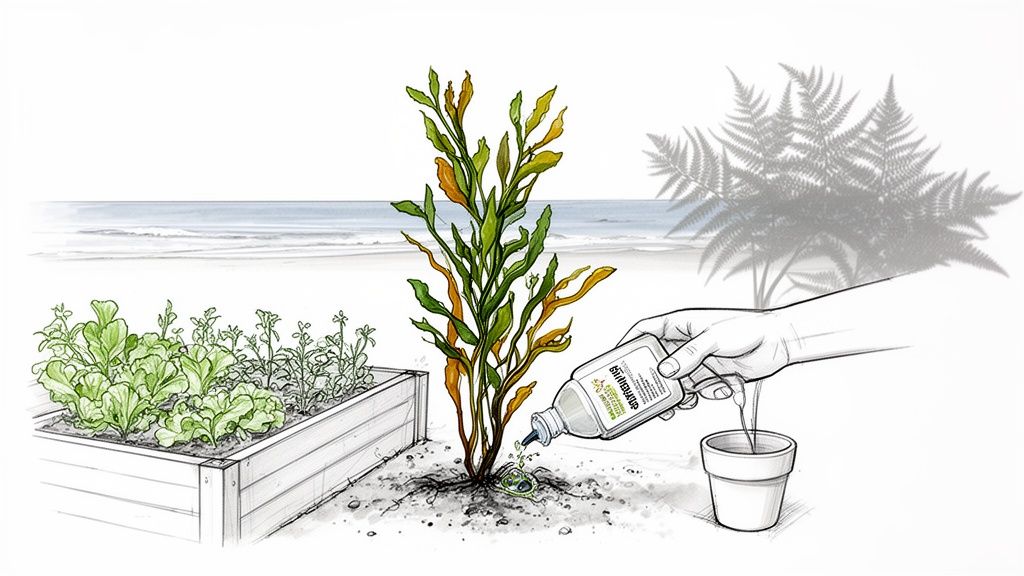
Ever feel like your regular fertilisers are just missing something? You feed your plants, but they still look a bit… meh. While traditional NPK (Nitrogen, Phosphorus, Potassium) fertilisers are great for providing the basic macronutrients—the "meat and potatoes" of a plant's diet—they don't cover the whole picture of plant wellness.
This is exactly where seaweed fertiliser comes in. Made from nutrient-dense kelp harvested from our coastal waters, this stuff is a treasure trove of over 60 trace elements, minerals, vitamins, and natural growth hormones. It takes a completely different approach. Instead of force-feeding, it works from the ground up, strengthening the plant's own internal systems and revitalising the soil.
More Than Just a Fertiliser
Imagine your garden soil is a bustling ecosystem. A standard fertiliser is like dropping off a food parcel. Seaweed, on the other hand, is like investing in the whole community's health and infrastructure. It gets the beneficial microbes in the soil buzzing with activity, which in turn helps to unlock existing nutrients and make them readily available for your plants. It creates a healthier, more resilient environment for roots to flourish.
For New Zealand gardeners, this is a game-changer. Our weather can be all over the place—a sudden southerly blast, a long dry spell. Plants treated with seaweed develop stronger cell walls and more extensive root systems, making them far better equipped to handle whatever the climate throws at them.
This conditioning effect is why you see such a dramatic difference. You’re not just feeding; you’re building a foundation for long-term health and vitality. To get a better sense of how this fits in with other options, you can explore the different types of fertilisers for plants in our detailed guide.
Key Benefits for Your Garden
It doesn't matter if you're tending to an indoor jungle in Auckland or a veggie patch down in Canterbury, the results speak for themselves:
- Promotes Robust Root Development: It stimulates a dense, fibrous root system, which is the engine for absorbing water and nutrients.
- Enhances Plant Resilience: Your plants will be tougher and better able to shrug off stresses from pests, frost, and drought.
- Boosts Flowering and Fruiting: The natural growth hormones give plants the nudge they need to produce more impressive flowers and a bigger harvest.
- Improves Soil Structure: It helps bind tiny soil particles together, which means better drainage in heavy soils and better water retention in sandy ones. It's a win-win.
How Seaweed Actually Nourishes Your Plants
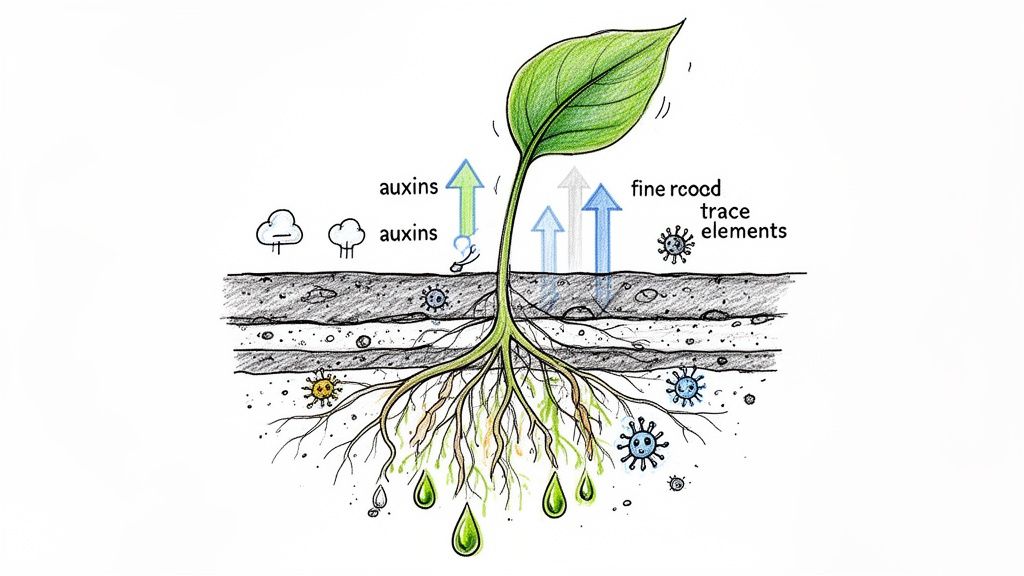
To really get what makes seaweed fertiliser a game-changer, it helps to think of it less like a single meal and more like a complete wellness package for your plants. It doesn't just feed them; it builds a better system from the soil up, laying the groundwork for real, lasting health. That holistic approach is what really sets it apart from your standard fertilisers.
At its heart, seaweed is brimming with a complex cocktail of goodies that plants absolutely love. We're talking a massive spectrum of over 60 micronutrients and trace elements – things like iron, manganese, zinc, and boron. These are the botanical equivalent of our essential vitamins; plants only need them in tiny amounts, but they have a huge impact on overall health and are often missing from Kiwi garden soils.
But that's not all. Seaweed is also packed with complex carbohydrates called alginates. When you add these to your soil, they work like a natural conditioner, binding tiny soil particles together. This simple action dramatically improves aeration and water retention, creating the perfect five-star resort for roots to breathe, grow, and thrive without getting waterlogged.
The Power of Natural Growth Hormones
What really makes seaweed stand out is its rich supply of natural plant growth hormones, also known as phytohormones. You can think of these as powerful messengers that tell the plant how and when to grow.
These hormones are like the traffic controllers and project managers for your plant. They direct all the key processes—cell division, root development, flowering—making sure everything happens on schedule and runs smoothly.
The two big players you’ll find in seaweed fertiliser are:
- Auxins: These are the root champions. More auxins mean a bigger, stronger root system, which allows the plant to pull more water and nutrients from the soil. This is a massive help for young seedlings or transplanted plants trying to find their feet.
- Cytokinins: Think of these as the 'get bushy' hormones. Cytokinins fire up cell division and shoot growth, encouraging more branching and lush foliage. The result is a healthier-looking plant with more leaf surface to soak up the sun.
Supercharging Your Soil's Ecosystem
Beyond feeding the plant directly, seaweed fertiliser does something just as important: it nurtures a thriving community underground. The nutrients and carbohydrates it brings to the party are a gourmet meal for beneficial soil microbes, like bacteria and fungi. A happy microbial population is basically the engine room of fertile soil.
These tiny helpers get to work breaking down organic matter, unlocking nutrients that are already in your soil but are otherwise locked away from your plants. This creates a brilliant, self-sustaining cycle of fertility. A well-fed microbial community builds healthier soil, which grows stronger, more resilient plants that can shrug off pests, diseases, and our famously unpredictable New Zealand weather.
Ultimately, you’re not just feeding your plant; you’re building it a healthier, more vibrant home to live in.
Choosing the Right Seaweed Fertiliser for Your Garden
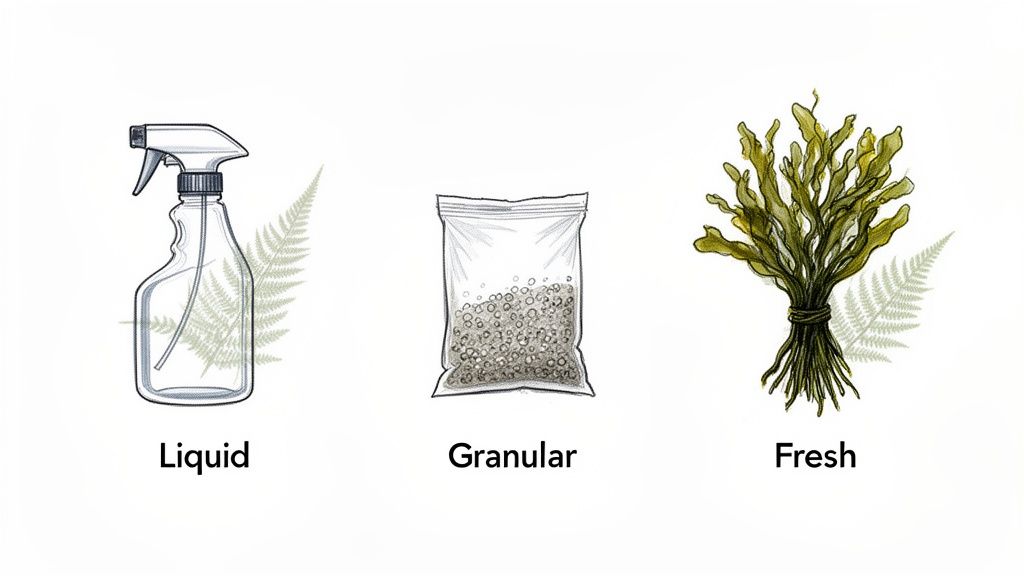
Stepping into a garden centre can feel a bit overwhelming, with shelves packed with different forms of seaweed fertiliser. Each one has its own unique strengths, and picking the right one is the key to getting the best results for your garden—whether that’s a sunny balcony in Wellington or a sprawling veggie patch in the Waikato.
It’s less about finding a single "best" option and more about choosing the most effective tool for the job. Let’s break down the main types you’ll find on the shelves in New Zealand so you can figure out what your plants really need.
Liquid Seaweed Concentrates
Liquid seaweed is easily the most versatile and popular choice out there. It comes as a concentrated extract that you simply dilute with water, making it incredibly cost-effective. Think of it as the espresso shot of the plant world—potent, fast-acting, and ready to go.
Because it’s already in liquid form, the nutrients are immediately available for your plants to soak up through their roots or even their leaves (foliar feeding). This makes it perfect for giving a quick boost to struggling plants or providing a regular feed for hungry ones.
- Best for: Indoor plants, potted outdoor plants, delicate seedlings, and as a foliar spray for a rapid pick-me-up.
- Application: Dilute it in a watering can for a good soil drench or use a sprayer to apply it directly onto the leaves.
- Speed: Very fast-acting. You’ll often see a visible difference within a few days.
Granular and Powdered Seaweed
If liquid feed is a quick boost, then granular or powdered seaweed is more like a slow-cooked meal for your soil. These are dried and processed seaweed meals that you mix directly into your garden beds, potting mix, or compost heap. They release their nutrients gradually as the microbes in the soil get to work breaking them down.
This slow-release action makes granular seaweed a fantastic soil conditioner. It works away quietly for several months, improving soil structure, feeding the beneficial microbial life, and providing a steady, gentle supply of trace elements. It’s the ideal 'set and forget' option for long-term garden health.
When you're setting up new garden beds or preparing your soil in autumn, mixing in some granular seaweed is a brilliant way to build a rich, fertile foundation. It ensures your soil is teeming with life and nutrients, ready for spring planting.
Fresh or Composted Seaweed
For Kiwis lucky enough to live near the coast, there’s always the option of collecting your own fresh seaweed. This is a fantastic, free resource, but it comes with one very important rule: never apply fresh, salty seaweed directly to your garden. The high salt content can seriously damage your soil and harm your plants.
To use it safely, fresh seaweed needs a little bit of prep. It’s pretty straightforward:
- Rinse Thoroughly: Get the hose out and give it a really good rinse to wash off as much of that surface salt as possible.
- Chop It Up: Use some garden shears or even run over it with a lawnmower to chop it into smaller pieces. This increases the surface area and helps it break down faster.
- Compost It: The best approach is to add it to your compost bin. It acts as a fantastic 'green' material, accelerating the whole composting process.
- Make 'Seaweed Tea': Another option is to steep the rinsed seaweed in a bucket of water for a few weeks. This creates a nutrient-rich liquid feed you can dilute and use.
By processing it correctly, you can turn a beachcombing find into a powerful, homemade fertiliser to enrich your soil naturally.
A Seasonal Guide to Using Seaweed Fertiliser in New Zealand
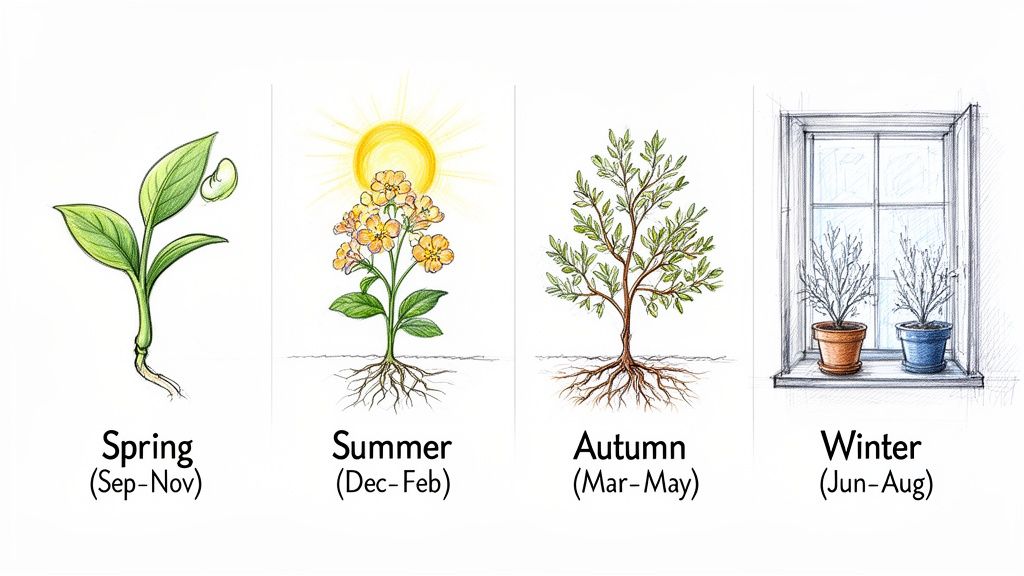
Like all good gardening, getting the best out of seaweed fertiliser is all about timing. Your plants have different needs throughout the year, and matching your feeding schedule to New Zealand’s unique seasons is the secret to unlocking their full potential.
Think of it as working with your garden's natural rhythm. This way, you’re giving your plants exactly what they need, right when they need it—from the first flush of spring growth to their quiet rest in winter.
Spring Kick-Start (September – November)
As the soil warms up and the days get longer, plants are waking up from their winter slumber, and they're hungry. This is when they put on a massive growth spurt, and seaweed fertiliser is the perfect energy boost to get them going.
A liquid seaweed feed every 2-4 weeks during spring fuels all that new growth—leaves, stems, and especially roots. It's fantastic for giving young seedlings and newly transplanted greenery a strong start, helping them establish a robust root system for the season ahead.
Summer Support (December – February)
Summer in Aotearoa can be harsh, with intense sun and dry spells that really put our plants to the test. This is where seaweed fertiliser acts less like a food and more like a protective tonic.
The natural goodies in seaweed help plants manage water better and toughen up their cell walls, making them far more resilient to heat stress.
Keep up a diluted liquid feed every few weeks. It's best to apply it in the cool of the early morning or evening to avoid any risk of leaf scorch. This consistent support helps keep flowers blooming and veggies producing, even when the heat is on.
For your veggie patch, this regular boost can mean a much bigger, tastier harvest. If you want to dive deeper, check out our guide on the best fertiliser for vegetables to use alongside your seaweed routine.
Autumn Strengthening (March – May)
With the days getting shorter and cooler, the focus shifts from producing leaves and fruit to preparing for the winter ahead. Applying seaweed fertiliser in autumn is all about helping plants "harden off" and build up their reserves.
This is a great time for a good soil drench. The nutrients will strengthen the plant’s entire structure, toughening it up against the coming cold and frosts. For lawns, an autumn feed promotes deep root growth, which is the key to a lush, healthy turf come springtime.
Winter Care (June – August)
While things slow down outside, our indoor plants still appreciate a bit of TLC. Their growth will have slowed right down, so you can cut back feeding to just once every 4-6 weeks. A light seaweed application gives them essential trace elements without pushing new growth they can't support.
Outdoors, winter is the perfect time to prep your soil. You can mix granular seaweed meal into garden beds that are resting for the season, or toss fresh, rinsed seaweed onto your compost heap. It will break down slowly over the cooler months, enriching the soil and creating a beautifully fertile base for your spring planting.
The Sustainability of Seaweed Fertiliser in New Zealand
When you grab a natural product for your garden, you want to know it’s as good for the planet as it is for your plants. Luckily for us Kiwi gardeners, the local seaweed fertiliser industry is built on really responsible, sustainable practices. It's a choice you can feel good about.
Unlike some industries that go in for heavy harvesting, New Zealand’s approach is a lot gentler. Most of the seaweed that ends up in your fertiliser isn't actually pulled from living marine ecosystems.
Instead, it’s gathered after it has naturally washed up on our shores following storms or big tides. This method, known as beach-cast collection, is a brilliant way to use a natural resource that would otherwise just break down on the sand. It means our vital underwater habitats are left completely undisturbed.
This approach keeps our beautiful coastal environments healthy while giving us the perfect raw material for powerful plant boosters.
Supporting a Local, Green Economy
By choosing a seaweed fertiliser NZ product, you're doing more than just giving your garden a treat; you’re backing a local, green industry. It’s a world away from relying on imported synthetic fertilisers, which usually carry a hefty carbon footprint from their manufacturing and long journey across the ocean.
Choosing a New Zealand-made seaweed product means you're investing in local jobs and sustainable resource management. It's a simple switch that aligns your gardening practices with a commitment to protecting our unique natural heritage.
This local focus is quietly changing how we think about agriculture and gardening here in Aotearoa. New Zealand's growing seaweed sector puts most of its harvest into creating high-value products for our farms and gardens. While there were 170 marine farms as of 2020, mostly tucked away in the Marlborough Sounds, the industry still leans heavily on wild and beach-cast collections of species like Ecklonia radiata.
The interesting part? The demand for these amazing natural biostimulants is actually growing faster than the current supply.
A Natural Cycle from Coast to Compost
The journey of seaweed from the ocean to your garden is a perfect example of a circular, natural process in action. Once it’s collected from the beach, it’s processed with minimal fuss to keep its potent mix of nutrients and growth hormones intact. What you get is a product that feeds your soil without dumping in any harsh, synthetic chemicals.
This sustainable loop can even continue right in your own backyard. Using leftover seaweed is a fantastic way to supercharge your own compost heap. If you’re keen to get started, you might find our guide on how to start composting at home helpful for turning your garden waste into "black gold." It’s another simple step towards a more self-sufficient, eco-friendly garden.
Got a Few Questions About Seaweed Fertiliser?
It's only natural to have a few questions before you start using something new in your garden. We get it. Think of this as your quick-fire guide to clearing up any lingering doubts about using seaweed fertiliser here in New Zealand.
Let’s run through some of the most common questions we hear from Kiwi gardeners.
Can You Overdo It With Seaweed Fertiliser?
This is one of the best things about the stuff – it's incredibly forgiving. Unlike synthetic chemical fertilisers that can easily "burn" your plants' roots, seaweed is more of a gentle tonic. It's naturally low in NPK, so it’s very hard to cause any real damage.
That said, more isn't always better. While a slightly stronger mix is unlikely to hurt your plants, sticking to the recommended dilution rates on the bottle is just good practice. It saves you money and gives your plants the steady, consistent goodness they need to thrive without being overwhelmed.
Does It Count as a Complete Fertiliser?
Great question. This really gets to the heart of what seaweed fertiliser does. While it’s bursting with a huge range of micronutrients, trace elements, and growth hormones, it's not a complete NPK fertiliser on its own. It provides all the essential "vitamins and minerals" but not the main "carbohydrates, fats, and proteins" that really hungry plants need.
Think of it like this: seaweed fertiliser is the ultimate health supplement, while a balanced NPK fertiliser is the main meal.
For heavy feeders like your tomato plants or citrus trees, especially when they're fruiting, you’ll get the best results by using seaweed alongside a good quality plant food. It’s the perfect partnership for a happy, productive garden.
How Often Should I Be Using It?
The best timing really depends on the season and what you’re growing. As a general guide for your New Zealand garden, here’s what we recommend:
- Spring & Summer (September - February): This is peak growing time. Applying a liquid seaweed solution every 2-4 weeks is perfect for most plants, whether they're in pots on the deck or out in the garden.
- Autumn & Winter (March - August): As growth slows right down, you can pull back to once every 4-6 weeks. This helps keep your plants healthy and resilient without pushing out soft new growth that could get zapped by the cold.
Of course, always have a quick look at the product label, as concentrations can vary a bit from brand to brand.
Is Seaweed Fertiliser Good for Native NZ Plants?
Absolutely! Our native flora—think hebes, flaxes, pōhutukawa, and ferns—respond beautifully to it. Many of our natives have adapted to soils that are naturally low in phosphorus, which means they can be quite sensitive to traditional, high-phosphorus fertilisers.
Because seaweed is naturally low in phosphorus, it gives them a gentle, balanced feed that supports strong, healthy growth without upsetting the soil conditions they’ve evolved to love. It’s a fantastic, safe choice for keeping your native garden looking its best.
What Makes It a Sustainable Choice for New Zealand?
Choosing a seaweed-based product is a smart move for any eco-conscious gardener. It's a fantastic local alternative, especially when you consider the rising cost and environmental footprint of traditional fertilisers. In 2022, New Zealand's fertiliser imports hit a record high of nearly NZ$1.5 billion, which really highlights our reliance on imported, synthetic options. This price volatility has helped spark a shift toward local biostimulants like seaweed that boost plant health more naturally.
Unlike raw phosphates that can be hard for plants to absorb, seaweed delivers nutrients in a form they can readily use, all while feeding the beneficial microbial life in our precious soils. You can read more about New Zealand's fertiliser trends and sustainable alternatives to see the bigger picture.
Ready to give your plants the natural boost they deserve? Explore the incredible selection of plants and garden care essentials at Jungle Story. From indoor ferns to outdoor fruit trees, we connect you with trusted New Zealand sellers to help you create the garden of your dreams. Find everything you need to get growing at https://junglestory.co.nz.